
Standing in Victory, Part 2


Neither the weakest Christian nor the strongest Christian struggles toward victory - he stands in it. Nor does either fight to achieve a blessing. The Christian steps up by faith and accepts all that God has for him. In Jesus Christ, this is our position. If you are a believer in the Lord Jesus, regardless of how weak you are or how worldly and carnal you may be - in the sight of God, you are on redemption ground in Jesus Christ. That is our position.
Guest (Female): God loves you.
Guest (Male): Hello friends, welcome to Grace Thoughts, the radio ministry of Grace Connection Church with Pastor Tim Kelley. Grace Thoughts has been dedicated to preaching a clear gospel of grace for over 20 years. Here is Pastor Kelley.
Tim Kelley: Here is the city of Jericho. It's a walled city. It's a daunting city with very thick walls, very militaristic. You can imagine there's a level of pride that's inside the city. These little Israelites marching around blowing trumpets—what are they going to do? Really, what are they going to do? They're going to hit me with their sickle, their shovel, their spade? We have six-foot walls with archers on top, and what are they going to do to knock us down? There's a level of pride up there.
But within the city, there was one life. There was one person in that entire city that believed in the true God, had faith in the true God. The person that they chose that had this faith wasn't really the best churchgoer. In fact, hopefully, she didn't know many people in a church at all. She was an interesting character. She had not the best moral character, didn't have the best reputation in the city. She was the city prostitute. And she was the one that God's people went and she helped God's people.
When that city was delivered to God, she was the one that was spared. There was one life. Now, Rahab believed in a living God and was not ashamed to reveal that she did. Her faith, this prostitute's faith, was of such quality, at least, that we find reference to it in Hebrews chapter 11, the heroes of faith. Rahab is mentioned. You have all the biggies in there: Abraham, Joshua, Isaac, Moses, Samson, and then you have Rahab. What did Rahab do? She was a prostitute and she hid a couple guys. Threw them on some hay. That's what she did. We're talking about her thousands of years later. She was known for her faith.
Her personal resume—I love this—prostitute, did not disqualify her from being ignored by God or being used by God. God looked at her and didn't say, "You're a prostitute. I'm sorry, there's not much I can do with that. I'm God, I'm holy, righteous, pure, and you're just the opposite. I can't really do much with that." No, He said, "Here's a girl who has faith." But God, she's dirty. I know, but she has faith. I can clean her up. She has faith. I can clean up dirty people. She has faith.
Not only do I know who she is, I'm going to use her. And not only am I going to use her, I'm going to use her in a dynamic way to a place where they'll be talking about this little prostitute's name for centuries to come. She's going to be a hero of the Christian faith, one of them. When Jericho fell and they saved Rahab, she went on to have a child, and the child's son was Boaz. Boaz later on married this girl named Ruth, who happened to be King David's great-great-grandmother.
Then you skip ahead to the New Testament, you go to Matthew 1:5, you find out that this prostitute was in the genealogy of the Lord Jesus Christ Himself. There she is. You can read it, Matthew 1:5. There's Rahab. There's Jesus, the whole genealogy of family, and there's the prostitute Rahab. What did she do to get there? Just believed. Just believed that God was who He said He was.
How do we get to Canaan today? How do we get into the full finished work and full blessings of Jesus Christ today? We believe. We believe He did what He said He did. We believe we are who He says we are and that He'll do what He said He'd do. And we just believe it. When He says I'm complete in Christ, we believe it. When He says I'm a new creature, we believe it. When He says I'm seated together with Christ in the heavenly places, we believe it. When He says we're the righteousness of Christ, we believe it.
Because we've earned any of those things? No, I'm Rahab. We believe it because He is a gracious God who gives me that position simply by faith, by me believing it. Oh, could we rehearse these truths. I was telling somebody this past week, in light of last Sunday's or last Wednesday's message, for years I knew the song, "Jesus loves me, this I know, for the Bible tells me so." I know God loved me. I just don't think He liked me.
I thought I was somehow an irritant to Him because I was an irritant to myself. And my wife seems irritated sometimes with me, so I thought I must be really irritant to God in all my peculiarities, my inconsistencies, my doubts, the things I struggle with, my thought life. I must be an irritant. God has to be fed up with the fact that I can't seem to do the same thing right over a long period of time.
That's a great thought to have if you're a human being, but it's just not anything to do with God. He doesn't see us like that. In fact, He called me a friend in John 15:15. That word friend means "like." It doesn't mean love; it means like. He likes me. Just like Mikey—he likes it. Mikey tried it; he likes it. So God cared for this one soul. When Abraham was beckoning, bargaining with God about Sodom, he bargained for one soul. Is there ten? Is there five? God said, "Yeah, okay, okay, I'll spare the city."
Jesus, in His last week of His life—lots of stories, I'll just pick up two of them. He comes off the Mount of Transfiguration, sets His face like flint towards Jerusalem. In Jerusalem, I'm going to die, be crucified, and resurrect and redeem mankind. My mission, my purpose, why God has sent me here. Along the way, a woman with an issue of blood grabs the hem of His garment and asks for mercy. And He looked at her and said, "I'm on a mission. I can't stop. I have to get to Jerusalem and redeem mankind." Or did Jesus Christ stop just for a moment to touch that woman's life?
There was a beggar called Bartimaeus. He enters the city. "Son of David, be merciful on me." The disciples come along, "Hey, Bartimaeus, calm down, calm down. This is a very busy man. He's been healing people, casting out demons all day. Leave Him alone. Give Him a break, will ya?" Bartimaeus, give Him a break. Shut up. "No! Son of David, be merciful to me!" And Jesus looks him in his face, asks him this question: "What do you want Me to do for you?"
But Jesus, aren't You on the way to Calvary? Yes, but not there yet. What can I do for you, Bartimaeus? "I want to see." Be it unto you according to your faith. So what does redemption look like? He loves one soul, and you could be that one soul, my friends. Canaan life, the life of full blessing—what does it look like? How do we know when it's kicked in and we're functioning or walking in it? Again, this is an ongoing life illumination.
Well, let's use the illustration really of going back to the chapter in Numbers with Reuben, Gad, and Manasseh, the three tribes. Remember they were on the verge, they'd been 40 years in the wilderness. They were about to go into the Promised Land, and those three tribal leaders come up—Reuben, Gad, and Manasseh—and they come to Moses and say, "Look Moses, we're on the east side of the Jordan and the Promised Land is on the west side of the Jordan. Why don't you let us just stay here? Let us stay here because this is a pretty nice area. There's the river, the land is fertile."
And this is what they said: "It's easier for us here. If we go over there, there's no one really to fight there. If we go over there, we got to fight." Now, they promised to go across with the other tribes, and they did, and they helped clear out the land, and then they came back. But the idea was this land's already enemy-free. It's fertile, it's a little easier. So we'll stay on the east side of the Jordan and let the rest of our brothers and family go to the west side of the Jordan.
But God saw a very distinct difference between those two locations. On the east side of the Jordan, it was still called the wilderness. On the west side of the Jordan, it was called the Promised Land, the land of full blessing. The very best that God had for them was on the west side of the Jordan. The east side of the Jordan had a measure of that, looked pretty cool, but God said, "That's the wilderness. That's not My very best. You can settle for that if you want, but you're not settling for My very best. My very best is over here, and if you want My very best, you need to go over this and settle there."
Now, before I go any further with this, I want to settle some things because this raises questions. First of all, neither the weakest Christian nor the strongest Christian struggles towards victory. They stand in victory. Understand that. It's not me doing anything; we stand in victory. Nor does either fight achieve a blessing, but he steps in faith. We accept all that God has for us. That's how we find our blessing. We don't necessarily fight. When we war, the war is with ourselves usually.
We have a position in Christ. Now, no matter how weak I am, maybe even worldly or carnal I may be, or how feeble my faith is, it still doesn't change my standing in Christ. When I'm placed in Christ, born again, my name is written, my friends, I belong to Him. I'm a partaker of His nature. When He died, I died. When He was buried in Romans 6:1-6, I was buried. When He was resurrected, I resurrected. When He ascended, I ascended.
So I participate in His nature, no matter how I may be in my Christian life here. We stand in this unmerited favor and mercy. So I'm talking about the saved here; I'm not talking about the unsaved. And we're going to talk a little bit about that Sunday morning—people where you don't actually see any transformation. Is there salvation? Good question, isn't it? You have to come Sunday morning to hear the answer of it.
But there's a choice to be made, and this is the choice: Where do I want to live? Do I want to live on second best, the east side of the Jordan, or do I want to live in the best of the best, the west side of the Jordan? Do I want to live in the good life of the wilderness, or do I want to live in a land of God's very best, the land of His promise, the land of full blessing? When some choose Canaan—"I want to go to God's very best"—you can see it in their lives.
When someone says, "Nah, I just want to stay on the east side," what they've done is they've drawn a line. They're born again, they're saved, they're going to heaven, they have their name written in the Lamb's Book of Life, but they've drawn a line. And this is how far I'm going. God, I'm going to give You a lot of my life. I'm just not giving You all of it. You can control a lot about me, God, and I'm going to let You influence me to a great measure, but I'm still going to measure my own life to myself in some areas.
I'll let You do this with me, I'll let You do that with me, I'll let You do this with me, but You're not getting my past. I'm not going to be that vulnerable with You, Lord. You're not getting my wounds, You're not getting my pain, You're not getting those things. I'm going to keep those things and still let them dominate my life. I won't go over to Canaan; I'm going to stay right here. I can still enjoy this right here, but I don't have to go over here because when I get over here on the other side of Canaan, into Canaan, it's a little scary sometimes.

About Grace Thoughts
Grace Thoughts with Pastor Tim Kelley is dedicated to proclaiming the simple, age-old message of Grace - the complete Gospel of Jesus Christ. We believe not only that this is still a relevant message; it is indeed the only message. Grace Thoughts will help you take the message of the Cross and make it practical for today's diverse challenges.
About Tim Kelley
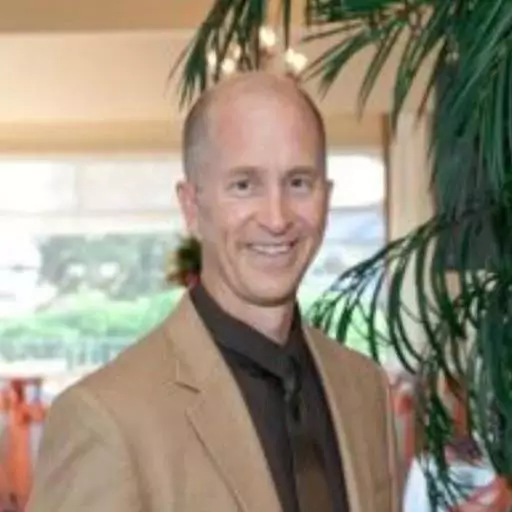
Tim Kelley, at the age of 18, surrendered his life and heart to Jesus Christ. After receiving his degree in Biblical Studies, he relocated to St. Petersburg, Florida. In July of 1989 he became the senior pastor of Grace Connection Church and launched a local radio broadcast called “Grace Thoughts”, a daily radio program broadcast in the Tampa Bay region http://wtis1110.com/ and is now heard at www.oneplace.com. Pastor Kelley is now in his 33th year in public ministry here in the Tampa Bay area. He is an avid sports fan of the Boston Red Sox, New England Patriots, and the Boston Celtics. As you may have guessed, our pastor grew up in New England in the Plymouth Mass. area. Pastor Kelley’s two greatest and heartfelt passions are teaching and preaching a clear gospel of God’s grace and its impact in our daily lives, as well as his love and compassion for people (even if they are not New England Fans). Pastor Kelley has a Master’s Degree in Biblical Studies and is currently pursuing a second Masters in Counseling, graduating in May 2013. He is happily married to his beautiful wife of 27 years, Peggy. They have one child at home, Sadie Lynne. Their beautiful daughter Hannah Grace, in February 2012, went home to be with the Lord, due to a firearm mishap after a church service. Pastor Kelley and Peggy have started the Hannah Grace Foundation in memory of their daughter, which raises funds for the housing, care and education of children and young adults, here locally in the Tampa Bay region, throughout America as well as the third world.
Contact Grace Thoughts with Tim Kelley
Grace Thoughts
P.O. Box 41734
St Petersburg, FL 33743
727-492-2058