
Still Loved Still Held
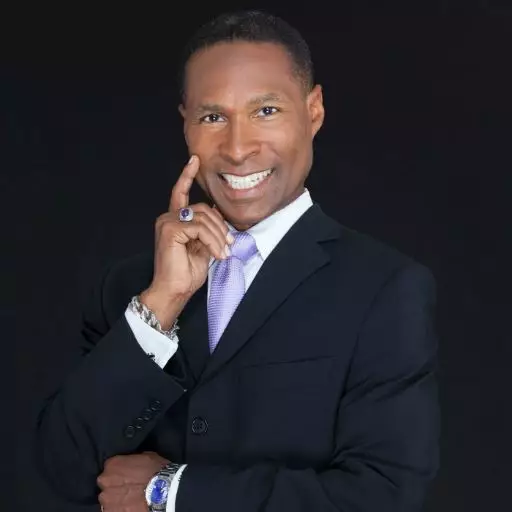
Enjoy this message from Rev. Henry P. Davis III.
Rev. Dr. Henry P. Davis III: Hi, I'm Henry Davis, pastor of the First Baptist Church of Highland Park in Landover, Maryland, a Bible-believing, Christ-centered, and Spirit-led congregation. I want to welcome you to our radio broadcast and remember, there's power at the park.
I want you to turn your attention to the Old Testament book of Isaiah. Isaiah, the 49th chapter, verses 14 through 16, New Living Translation: "Yet Jerusalem says, 'The Lord has deserted us, the Lord has forgotten us.' Never can a mother forget her nursing child? Can she feel no love for the child she has born? But even if that were possible, I would not forget you. See, I have written your name on the palms of my hands. Always in my mind is a picture of Jerusalem's walls in ruins."
You may go to your seats around the building. I want to look in this service and setting at that 16th verse. "See, I have written your name on the palms of my hands. Always in my mind is a picture of Jerusalem's walls in ruins." That's the picture in my mind. There are some things you know in your head that life will occasionally make you question in your heart. You know God is good. There is no question that you know God is faithful. You know God loves you. You know God has kept you. You know God promised never to leave you nor forsake you. But every now and then, life will hit you with something that makes what you know collide with what you feel.
If we're going to be honest about faith, we have to make room for those moments. Faith is trusting God in those moments. Moments that you did not expect, that you did not anticipate, but I still put my full trust in God. Unshakable, faith strong. Faith is not the absence of bewilderment. Faith is deciding that even when I cannot understand the hand of God, I can trust the heart of God. Isaiah 49 speaks to people who are living in that tension.
The larger context of the text is exile. God's people have experienced displacement, disruption, disappointment, and in fact, devastation. Their circumstances have become so painful that their circumstances begin rewriting their theology. Listen to what Zion says in verse 14: "The Lord has deserted us, the Lord has forgotten us." Notice, God never said that. Pain said that. Disappointment said that. Exile, where they were placed, that's what was speaking loudest. Sometimes you have to be careful because your pain can become a preacher and start preaching negativity into your life.
Pain will preach sermons to you that God never wrote. You know, I've had some time to work on this one. Pain will tell you God has forgotten you. Pain will tell you God doesn't care anymore. Pain will tell you if God loved you, you wouldn't be going through this. Pain will tell you maybe you're by yourself. Isaiah 49 is God's response to the sermon pain has been preaching. God's answer is not primarily an explanation. God doesn't give Zion a lecture. God gives Zion an assurance of love.
Matter of fact, modern terminology and modern singing: "Blessed assurance, Jesus is mine! Oh, what a foretaste of glory divine!" This is what somebody needs this morning. You may not have every answer. You may not understand everything that happened. You may not know why some things unfolded the way they did, but here is what you can know: you are still loved. You're still held. I'm holding you, God. Even when you can't hold yourself, you are still in his hands.
The image in the text becomes progressively more intimate. Verse 14 gives us the fear of abandonment. Verse 15 gives us the love of a mother. Verse 16 gives us the hands of God. God keeps bringing the picture closer and closer and as he brings them closer, he then says, "Look at my hands." When you look at his hands, you can discover three things. One, life can make you wonder whether God has forgotten you. That wonder. "Has God forgotten me? Has God missed what I'm dealing with, what I'm going through?"
Verse 14 says, "Yet Jerusalem says the Lord has deserted us, the Lord has forgotten us." Don't rush past that first word, "yet." God has just spent the preceding verses talking about restoration, deliverance, comfort, and compassion. Verse 13: "For the Lord has comforted his people and will have compassion on them in their suffering." Immediately, verse 14 says, "Yet Jerusalem says..." God says, "I have compassion." Zion says, "You forgot me." God says, "I'm comforting you." Zion says, "You deserted me."
Isn't it amazing how different God's reality can be from our emotional interpretations? That's really what I would call the tension of the faith. Pain really can distort your perspective. The Hebrew idea behind forgotten carries a sense of being ignored, overlooked, or no longer remembered with care. Zion is not merely asking, "Does God remember my address?" Zion is asking, "Do I still matter to God?" That's the question that anybody in this room could ask or anybody who's online.
I thank God for even folk online who have been sending cards and messages. Matter of fact, I read one yesterday: "I'm your online member." Do I still matter to God? That's a much deeper question. Sometimes the real question beneath our prayers isn't "God, where are you?" It is, "God, do I still matter to you?" When the diagnosis comes, when the relationship changes, when the job disappears, when your child is struggling, when grief walks into your house, when you have been strong for everybody else and suddenly you discover you're tired too.
Life can make you wonder. Scripture makes room for honest faith. When you read the Bible, you understand that scripture understands honest faith. God understands your humanity. He understands you are not a Marvel character. I know Spider-Man's making a whole lot of money right now in the movies, but you are not a Marvel character. I love the Bible because the Bible doesn't sanitize believers. David asked in Psalm 13:1, "O Lord, how long will you forget me? Forever?"
Jesus himself cried from Calvary, "My God, my God, why have you forsaken me?" Biblical faith does not require emotional dishonesty. You can love God and still have questions. You can trust God and still have tears in your eyes. You can worship and still wonder. You can believe and still have moments when you say, "Lord, I don't understand this." The issue is not whether questions come, the issue is where you take your questions. Zion complains to God. She thinks that God has forgotten her.
Think about that. The very act of crying out to God is evidence that somewhere beneath the pain, faith is still alive. We got the pain, but we still have faith. Here's the other thing: don't make permanent conclusions from temporary circumstances. Some things are going to come and you're going to have trouble. Trouble might come but trouble won't last. Here's the danger: never let a bad chapter make you misread the whole book. Just because you've had a bad chapter, I'm moving past that. I'm moving past that.
Your present pain is a chapter. Your disappointment is a chapter. Your setback is a chapter. Your frightening moment is a chapter. But God is still writing the book. Langston Hughes talked about dreams being deferred because he understood something about the tension between what is promised and what is presently experienced. The African-American spiritual tradition knows something about singing hope while standing in hardship. I can be in a hard moment, but I'm trusting God because I'm understanding this is only a chapter.
Our ancestors could sing, "He's got the whole world in his hands." Not because their circumstances suggested it, but because their faith declared something their circumstances could not erase. Sometimes faith has to tell feelings, "You don't get the final vote." The feelings I have are not going to be the ruling factor in my life because life can make you wonder. You think I'm going under? It can make you wonder. But wondering doesn't mean you've been abandoned. That's the human side of us.
We go through the challenge, but as I go through the challenge, I still hold on to God even with my questions and my pain and my not understanding why. I had a whole lot of time to sit around at the house and think about wondering why, trying to retrace steps. "What did you do? What can you do differently?" All this. But here's the second thing: God's love is stronger than your worst moments. You can have a bad moment, but I serve a great God who keeps on doing great things, keeps on blessing me over and over and over again.
Here it is: verse 15 says, "Never can a mother forget her nursing child? Can she feel no love for the child she has born?" Now God, what he does, he changes the imagery. Zion says, "You forgot me." God says, "Let me tell you how I love you." God reaches for one of the most intimate pictures available in the human experience: a nursing mother holding her child. That's the image. Zion is coming up with these problems, but what God said, "Let's go back to a mother nursing her child."
God could have described himself as a warrior. God could have said, "I'm a king. I'm a judge. I'm a commander." But when God's hurting people wonder whether they are still loved, God chooses the tenderness of motherhood. You remember mothers? You'd have a fall and they'd say, "Let me kiss it." It wasn't any medicine in the kiss, but when they kissed it, you felt better. It was something about how a mother is able to speak to us. There is room in our theology for the strength of a father and the tenderness in a mother's embrace.
That's God. God can show you strength. But God can also show you love. The same God who can show you strength is the same God who can show you love. God's love is really tender love. The Hebrew language is especially rich. The word translated "feel no love" is connected to racham, racham, racham, compassion, mercy, deep affection. It's related to the Hebrew word for womb. In other words, God describes divine compassion with language suggesting a love that is deep.
You can't limit the love of God. It's visceral. It's intimate. It's protective. God isn't saying, "I tolerate you." God isn't saying, "I put up with you." God isn't saying, "You're lucky I haven't gotten rid of you." God says three words in the English language: "I love you." Somebody needs to hear that this morning. Christianity is not fundamentally the story of humanity trying to convince an angry God to love us. The gospel is the story of a loving God coming after people who could never save themselves.
For this is how God loved the world: he gave his only begotten Son. Love sent Jesus. Love carried the cross. Love endured Calvary. Love entered the grave. And then love got up Sunday morning. Here it is: God's love survives our worst moments. No matter how the moment is, no matter how dark it is, God's love is a survival strategy. Then comes the most powerful words in the passage: "But if that were possible, I would not forget you." I'm not going to forget you.
God takes the strongest human analogy imaginable and then says, "My love goes farther than that." You can't limit how far I can go with my love for you. Even the best human love has limitations. Human beings get tired. Human beings get distracted. Human beings disappoint us. Folk say they're with you all the way. You look around? Gone. They leave. But God says, "I will not forget you." I am not going to forget you.
Thank you to somebody who sent me some soup the other day. Thank you, God, I'm not going to be forgotten. And that's why Paul can say in Romans 8: neither death nor life, nor angels nor demons nor principalities, neither fears for today nor worries about tomorrow, not even the powers of hell can separate us from the love of God revealed in Christ Jesus. Here it is: I'm still loved and I'm still held. Not loved because everything went right. I'm still loved when it went wrong.
I'm not loved because I performed perfectly. I'm still loved when I stumbled. I'm not loved because I never doubted. I'm still loved when I questioned God. Not loved because I had a perfect week. I'm still loved after whatever the week has been. That's the grace of God. And that's why we got to call that grace amazing. I can't put any limits on it. Grace says your worst moment does not have the authority to cancel God's love. Your failure doesn't get the final word. Your fear doesn't get the final word.
Your disappointment doesn't get the final word. Your past doesn't get the final word. I don't care what your past has looked like. God still says, "Come unto me." All ye that labor and are heavy laden, then God says, "I'm going to give you rest." Love gets the final word. The greatest evidence of that love is Jesus Christ. Romans 5:8: "But God showed his great love for us by sending Christ to die for us while we were still sinners."
He didn't wait for you to get straight. He didn't wait for you until you got better. He loved us while we were still. Still, still, still, still struggling. Still sinful. Still confused. Still becoming who you're going to become. And if God loved me while I was still, surely God can love me where I am right now. God did it then. I was a wretch undone. God can do it now. And I'm still in process. I'm not everything I'm going to be, but every day with Jesus is sweeter than the day before.
I thank God I can look back not to go back, but I can look back and thank God for how far he's brought me. And God still has more for us to do. Here's my third point: your name is still in his hands. Verse 16: "See, I have written your name on the palms of my hands." Now, here it is. This is really the heart of this message. God says, "See." In other words, Zion, you're looking at your circumstances. Now I need you to look somewhere else.
You're wrapped up in your agenda. You're looking at Babylon. Look at my hands. Look at you're looking at your past. Look at my hands. You're looking at what you lost. Look at my hands. You're looking at what scared you. Look at my hands. You're looking at what changed. I'm telling you, look at my hands. God says, "Your name is engraved." The imagery is stronger than merely writing something in ink. If I wrote it in ink, I could wipe it away. But the scripture says it's engraved.
The Hebrew word carries the idea of inscribing, engraving. It's carved in. Ink can fade. Paper can tear. Computer files can disappear. Memories can weaken. But God says, "I have engraved you." God doesn't need a reminder to remember you. He don't need a sticky note. He don't need to put something on the refrigerator with a magnet. The imagery is designed to tell you: you are permanently before me. And notice where God puts the engraving. He doesn't put it on the wall. It's not on a tablet.
It's not tucked away somewhere. It's on the palms of my hands. Your name is positioned where God symbolically says, "I am always seeing you. I'm seeing you all the time." And you're not just in God's plan. You're in God's hands. There's a difference between being on somebody's schedule and being in somebody's hands. Schedule, hands. A schedule tells me you have something planned for me. Hands tell me you're holding me.
Jesus says in John 10:28: "No one can snatch them away from me." That's security. Isaiah says your name is engraved in his hands. That's intimacy. Psalm 139 says his hand guides you. That's direction. Psalm 37 says though you stumble, you will never fall because the Lord holds you by the hand. That's stability. In other words, I've got security in his hands. I have intimacy in his hands. I have direction in his hands. I have stability in his hands. No wonder the old church says, "I put it all in his hands."
And that's where we're going to wrap it up. Because God says, "See." So before you leave here today, look at the hands. Look at the hands. When you wonder whether God remembers you, look at the hands. When life has shaken you, look at the hands. When circumstances don't make sense, look at the hands. When tears fill your eyes, look at the hands. Because your name is still there. Engraved. I may be shaken, but my name is still there.
I may have some difficult days, but my name is still there. I may have walked through some dark valleys, but my name is still there. I may not know what tomorrow holds. But my name is still there. And if my name is in his hands, then I am in his hands. And I've learned something about his hands. These are the hands that formed Adam from the dust. These are the hands that held Israel through the wilderness. These are the hands that touched blinded eyes.
These are the hands that touched lepers that nobody else wanted to touch. Yeah, these are the hands that touched the blinded eye and now it starts to see. These are the hands that lifted Peter when he started sinking. These are the hands that broke bread and fed five thousand. These are the hands that washed the disciples' feet. And one Friday, love stretched those hands out on a cross. Nails through his hand. Blood from his hand. Our salvation purchased from these wounded hands.
When Jesus got up from the grave, Thomas saw him a little bit later. Thomas said, "I need some evidence." Jesus didn't give Thomas an argument. Jesus said, "Look at my hands." Church, that's still the answer. When you wonder whether he loves you, look at his hands. Calvary says you're loved. The empty tomb says you're held. Grace says you've not been forgotten. And in his hands, his hands say your name is still there. When I'm strong, I'm in his hands. When I'm weak, I'm in his hands.
When I'm searching, I'm in his hands. When I have questions, I'm in his hands. When the sun is shining, I'm in his hands. When storms start raging like it did last night, I'm still in his hands. When I understand what God is doing, I'm in his hands. And when I didn't understand a thing, I'm still, I said I'm still in his hands. And I've lived long enough to know: his hands are better than my hands. My hands can get tired. But his hands don't get tired.
My hands can lose their grip. His hand is always strong. My hands can't control tomorrow. But God already has tomorrow in his hands. My hands can't fix everything. But there is nothing too hard for his hands. So I don't know what tomorrow is bringing, but I know who's holding me. I don't know whatever twist and turn the road may take, but I know whose hands I'm in. I don't have every answer, but I've got assurance: I'm still loved, still held, still his, still here, still standing. I'm still in his hands.
If there is somebody out there today who's listening to me, you have tried your whole life trying to figure it out. Hold on to everything. Trying to hold it together with your own hands. Your future, your family, your pain, your gift, your mistakes, your fears. And you're tired. You're tired of holding it together. Jesus says, "Give it to me." Do I have a witness? Give it to me. My hands are better than your hands. Nail-scarred hands, reaching for you. Not to condemn you, but to receive you.
Not to push you away, but to pull you closer. Not because you've gotten everything right, but because God loves you. You don't have to clean yourself up before coming to Jesus. Some say, "I'll come down the aisle when I get myself together." You can't get yourself together. You've got to turn it over. Turn it over to the Lord. Come just as you are because the same hands that were wounded for you are the same hands stretched out, saying "come on." And once you're in his hand, Jesus says this: no one can snatch you away.
Today, give him your heart. Today, give him your life. Today, give him your past. Today, give him your addiction. Today, give him your pain. Today, give him your future. And discover you'll have the blessed assurance. I'm loved. I'm held. I'm in his hand. Yes. Yes. No matter what happened a couple of weeks ago, we are still. Yes, in his hand. I've got clapping in my hands. I've got joy in my heart. Why? Because I know, I know I'm in his hand. You're in his hand.
Walk on, children. Keep on praising. Keep on lifting. Keep on giving God the glory. Can't nobody do me like the Lord. I know he's all right. I know he's all right. He's able. Won't he do it? He'll make a way out of no way. Open doors no man can open. Shut doors. Yes. Yes. Hallelujah, yes. Can't nobody do me like the Lord. I'll run on, I'll run on and on and on. Yes, yes. I'm in his hand. Still love, still held, in the hands of God. Nobody like the Lord. Still love, and you're still held. Our church not going to fall apart. We are in the hands of God. And as we in those hands, the scripture says your name engraved. That's my trust. That's my belief. That's my strength.
You've been listening to the radio broadcast of the First Baptist Church of Highland Park in Landover, Maryland. If you want to receive a CD or DVD of what you have just heard, please call 301-773-6655 or visit us on the World Wide Web. And remember, there's power at the park.
Past Episodes
Video from Rev. Dr. Henry P. Davis III
About First Baptist Church of Highland Park
About Rev. Dr. Henry P. Davis III
Since 1982, Dr. Henry Pinckney Davis III has been preaching the Gospel of Jesus Christ, having been licensed and ordained at the St. Paul Baptist Church of Atlantic Highlands, New Jersey, under the pastoral leadership of his father, Dr. Henry P. Davis, Jr. His preaching is relevant, challenging, and inspirational. In 2000, Dr. Davis was called to pastor the First Baptist Church of Highland Park in Landover, Maryland. Dr. Davis formerly pastored the Second Canaan Baptist Church in Harlem, New York (1993-2000), and the Community Baptist Church in Lakehurst, New Jersey (1988-1993).
Dr. Davis leads a “Bible Believing, Christ Centered & Spirit Led Congregation” with an active membership of over 3,000 Disciples who are engaged in Kingdom Building through more than 80 ministries. The church has five worship assemblies each week with three weekend worship services — Saturdays at 6:30 p.m.; Sundays at 7:30 a.m. and 10:45 a.m., and two on Wednesdays, which we refer to as Wonderful Wednesdays With Jesus, at 12:00 noon is The Power Hour and at 6:45 p.m., which is a time of corporate Prayer, Praise, Worship, and The Word. First Baptist Highland Park is a progressive and visionary church that offers a Christian school (Highland Park Christian Academy - Pre-K - 8th Grade) and numerous Bible study groups. The church also has a senior citizens center and offers ministries to reach out to the youth, young adults, couples, singles, prisoners, sick, bereaved and widowed.
Dr. Davis, a native of Wichita Falls, Texas, studied at Oral Roberts University, (Tulsa, Oklahoma) later graduated from Norfolk State University, (Norfolk, Virginia) with a B.A. in English; Fairleigh Dickinson University (New Jersey) with a Master of Public Administration; New Brunswick Theological Seminary (New Jersey) with a Master of Divinity (M.DIV.); and United Theological Seminary (Dayton, Ohio) with a Doctor of Ministry (D.Min.). Dr. Davis has been the recipient of numerous awards and citations, including being inducted into the Martin Luther King Jr. Board of Preachers at Morehouse College of Atlanta, Georgia in 2007.
He can be heard every Sunday at 6:30 a.m., (www.wpgc.com) EST and Saturday at 7:30 a.m. EST on Praise 104.1 FM (www.praisedc.com), and live streaming of worship services are available through https://fbchighlandpark.org/ and www.streamingfaith.com. On-demand worship services can also be accessed from www.LightSource.com.
Dr. Davis and his wife Weptanomah have one daughter and one son.
Contact First Baptist Church of Highland Park with Rev. Dr. Henry P. Davis III
Mailing Address
6801 Sheriff Road
Landover, Maryland 20785
Telephone
301-773-6655
301-773-1347 (fax)
