
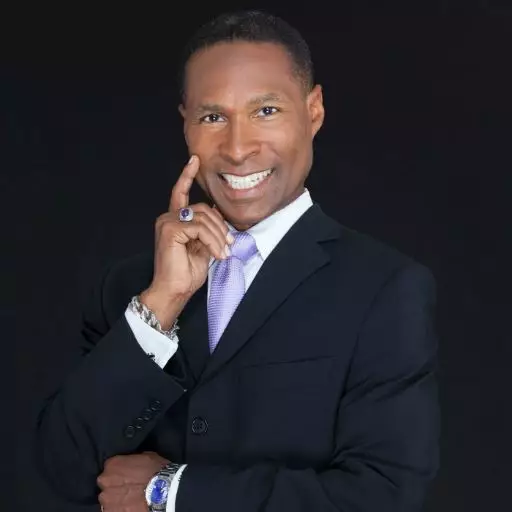
We Ain't Playing


Enjoy this message from Rev. Henry P. Davis III.
Rev. Dr. Henry P. Davis III: Hi, I'm Henry Davis, pastor of the First Baptist Church of Highland Park in Landover, Maryland. A Bible believing, Christ centered, and spirit led congregation. I want to welcome you to our radio broadcast and remember, there's power at the park.
Turning in our Bibles to the book of Exodus. That's where we turned last night, we kicked and moved into this weekend in the book of Exodus and we come back in that same book this morning. Certainly, we're grateful for the worship Saturday, but also we're grateful as we gather this morning, all to God's glory.
In chapter one is where we'll turn our attention and turn our spotlight in terms of the message which we share as we come to the end of February and of course, now in the month of March and the merging and really the coming together of Black history and women's history. And so, I wanted to even today, merge that thought together even as we come and look at the Word of God.
It is in the first chapter of Exodus and I drop down from what I looked at last night and even picking up the reading at verse number 15 and we're going to share in reading through verse number 21. Exodus chapter one, 15 through 21, you find these words recorded, New Living Translation.
Then Pharaoh, the king of Egypt, gave this order to the Hebrew midwives Shiphrah and Puah. When you help the Hebrew women as they give birth, watch as they deliver. If the baby is a boy, kill him. If it is a girl, let her live.
But because the midwives feared God—this is powerful—they refused to obey the king's orders. They allowed the boys to live, too. So the king of Egypt called for the midwives. "Why have you done this?" he demanded. "Why have you allowed the boys to live?"
The Hebrew women are not like the Egyptian women, the midwives replied. They are more vigorous and have their babies so quickly that we cannot get there in time. So God was good to the midwives and the Israelites continued to multiply—talked some about that multiplying last night—growing more and more powerful. And because the midwives feared God, he gave them families of their own.
Amen. You may go to your seats around the building. Twenty-first verse, and because the midwives feared God, he gave them families of their own. That's not great English, but I want to tag this text, "We Ain't Playing." We ain't playing. Tell your neighbor, "We ain't playing."
Family, there comes a moment in every believer's life when faith stops being casual and starts being costly. There comes a moment when following God means you cannot go along just to get along. Brother Williams, good to see you in worship. We're praying for you as well, transition of your wife, and certainly we stand with you in faith.
There comes a moment when you have to make a decision. Who do I fear most? God or Pharaoh? Because you cannot serve both. Our text drops us into one of the darkest seasons in Israel's history. A new Pharaoh has risen in Egypt. He does not know Joseph. He does not respect Joseph's legacy. And because he fears their growth, he tries to control their future.
Verse 16 reveals his evil order. He says, "Kill the Hebrew boys at birth." Destroy their future before it begins, stop their destiny before it can develop. But Pharaoh made one critical mistake. He issued his order to the wrong women. These women said, "We ain't playing."
Verse 17 says because the midwives feared God, they refused to obey the king's orders. And verse 21 says, and because the midwives feared God, he gave them families of their own. They were there to serve others, but now God repositions them to be blessed.
In other words, what God does, God rewards their courage because they were being women of courage. Secondly, God honored their resistance. Thirdly, God blessed their faithfulness. And that brings us to our first reality. They feared God more than Pharaoh.
Everybody feared Pharaoh. Pharaoh controlled the economy. He controlled tariffs. Even when the court votes one way, Pharaoh could go in another direction. Pharaoh could even decide to bomb Iran without giving anyone a heads up in the Congress.
Pharaoh, Pharaoh controlled the army. Pharaoh controlled their environment. But the midwives understood something. Pharaoh may be powerful, but God is sovereign. The Hebrew word for fear is yare, which means reverence, it means awe, it means recognizing who truly holds power.
They understood Pharaoh could take their job, but only God controlled their destiny. Pharaoh could threaten their position, but only God controlled their purpose. This is the same spirit that lived in Harriet Tubman. Harriet broke the law to obey God. She walked back into danger again and again, and when asked why, she said, "I freed a thousand slaves. I could have freed a thousand more if only they knew they were slaves."
In other words, she took those who had a mentality to get out of where they were. But she said you've got some others who are our color but not our kind. They look like us, but they march to a different beat. Harriet Tubman did not fear slave catchers. She really, ultimately feared disappointing God. In other words, she wasn't playing.
When you fear God more than people, you stop compromising. I don't have to apologize for who I am. I can stand on the promises of God. Stop shrinking. Your faith is not and should not be a shrinking faith. I like the words of my colleague Reverend Dr. Maurice Watson, who says you ought to let God be as large as possible.
Stop apologizing for being obedient to God because you have to realize there are too many persons who are apologizing for their faith instead of standing firm, instead of understanding that God brought me through before and God can do it again, instead of understanding that I can throw up both my hands and give God praise. I can worship him from the rising of the sun to the going down of the same and know he is Lord.
He's a very present help. Thank God he can show up and he can show out. He's a God who can fight our battles, he can give us what we need just when we need it. I don't have to apologize. I don't have to apologize. I know who God is. I don't have to apologize because I know where I once was.
I know God turned my life around. I know a relationship with Jesus has made a difference in my life. I'm not going to be ashamed of him because I don't want him to be ashamed of me. We ain't playing. That's why we got up early this morning. We ain't playing. We came to lift up the name of Jesus.
We ain't playing. We come to put our hands together, throw back our head and let the world know we ain't playing. We're not going through church performance. May Davis, when you sing, that's not performance. That's real. That's fire, that's joy. The joy of the Lord is my strength. I told you, we ain't playing.
If you're going to worship the Lord, you've got to go full throttle. That's what I told the folk last night. I said if I come to church, I'm not playing. I told them last night, I said I'm going to go hard because you have to understand if God be for you, he's more than the world against you.
That leads me to my second point. They used courage in quiet places. Notice, they didn't protest publicly, they didn't hold rallies, they simply refused privately. Their courage showed up in quiet rooms. A delivery room is a quiet room, the midwives, it's an unseen space.
Because real courage isn't always loud. Sometimes courage whispers, "I will obey God anyway." Shadrach, Meshach, and Abednego, that's what they said, "We're going to obey God anyway." Moses said, "We're in the middle of the sea, but we're going to stop right here and have a praise party. We're going to praise God right where we are. I will obey God anyway."
Most revolutions don't start on stages. They start in kitchens. They start in living rooms. They start in prayer closets. That's how Black mothers protected their sons when systems tried to destroy them. I'm reading a book now. I can't put it in the bookstore, but I'm reading a book. It's an autobiography of Allen Iverson.
I said I can't put it in the bookstore, but I still pull out of it some great nuggets. And Iverson was a little boy. His mother had him as a teenage mother. And when he was real young, he said he asked his mother, "You think someday I can be a professional athlete?"
And he was little, he was little, but his mother looked at him. She said, "You can be anything you want to be." And Iverson said he carried that all the way through school. Matter of fact, when they asked, "What you going to be when you grow up?" he said, "I'm going to be a pro athlete." Everybody laughed. But they not laughing now.
AI, the answer, Bubba Chuck, all that kind of thing. Georgetown, Philadelphia 76ers, all of that. But I'm telling you, it's how powerful words can be. He said he saw how serious his mother was. His mother wasn't playing when she said, "You can be whatever you want to be."
That's how grandmothers prayed grandchildren into destiny. Matter of fact, you still got to pray back. We got some grandparents in here, we praying for our grandchildren because we want them to rise. That's how your story survives. The old African village, the Griot would come to make sure they knew something about their history.
We want you to understand what we've come through, what we're going through, what we've dealt with. Because we don't want you to be ignorant of your past, because your past can affect your present. That's why Pharaoh wants to take certain books out. Come on somebody.
We want to sanitize slavery. We want to make it a good thing. Come on somebody. We want to ignore the lynchings and we want to ignore the pain and we want to ignore—but I thank God that you meant it for evil, but God can turn it around for good. Somebody behind the scenes wasn't playing. And because of their courage, God responded. I thank God that God can respond to you. We serve a God who's not a statue. I thank God he's a God who can move in every situation. I thank God he can show up and he can show out.
I thank God that he can make a way out of—I think I got some witnesses in here. You prayed to God and God answered your prayer and God is moving right now. We ain't playing. That's why we got up this morning. Woke up this morning with my mind stayed on Jesus. Woke up not ashamed of the gospel. Woke up, I got a praise and I got to get it out.
Thank God I put my shouting shoes on. I came here—there used to be a brother in our neighborhood used to grow up, when we went around, they called him Big Mark. Big Mark loved to party. And Mark knew how to find the party. But one of the things I remember about Big Mark is that every time he went to a party, I could see him.
This is before I saw John Thompson sitting on the sidelines of Georgetown with a towel over his shoulder. But the first person I saw with a towel was Big Mark. Big Mark would have a towel over his and he would be heading to the party. In other words, he was heading to the party to sweat.
Come on somebody. The sweat hadn't started, but Mark would be on his way trying to find the party. And Mark would have a towel because he's getting ready to sweat. He came in to get uncomfortable. I thank God we got too many cute folk today. We don't want to praise God.
Yeah, we had a man preach revival at my dad's church back years ago. And I told somebody it was during the era of the Jheri curl. Some of y'all remember it because y'all used to wear it. Remember the old Jheri curl. And I remember Reverend Dr. T.H. Rankin Jr. Rankin Jr. pastored in Newark and he had a Jheri curl.
He would come in nice and slick and he preached one night. And I love Reverend Rankin. He'd preach and then after the sermon, he'd go in the back and change and put on a brand new suit and come back for benediction. But during the service, Rankin Jr., his hair slicked back, and I preached one sermon, Kelvin, and he said, "Sometimes you got to get ugly for Jesus."
And that day, that slicked back hair, he shook it out. Juice was flying everywhere. His hair was everywhere. But what I'm trying to tell somebody, we got too many folk trying to be cute for others. Sometimes you got to roll up your sleeves. Sometimes you got to get down on your knees.
Do I have a witness out there? It's more than us just being Sunday morning Christians. That's why I intentionally—you know I got five services every week, so I can dress different for each one of them. Amen. I don't have to wear the same thing. I love it. I love the variety. I love it.
I mean, I can come on Saturday night with my Jordans and come back on Sunday morning with a different look. And come on a Wednesday, one look, and come back Wednesday night with another look. I thank God and even next service, I'm not going to look the same. But what I'm trying to tell folk all the time, it's not in what I look like on the outside. It's what's on the inside.
I wish I had a witness in here. Somebody who's not ashamed. And this my third point. God blessed the women who protected destiny. Verse 21, because they feared God, he gave them families of their own. God rewarded their faithfulness. They protected others' children, God gave them their own legacy.
They preserved destiny, God preserved their future. And can I tell you something this morning? When you protect what God has assigned to you, God will protect what belongs to you. Devil can't steal my joy. I got joy, I get joy when I think about what the Lord has done in my life.
I have a joy that the world didn't give me, Rambo, and the world can't take KK. I thank God I can praise him. This really is the story of Black women in America. Women who cleaned other people's houses. They were cleaning houses and toilets and they were taking care of babies, while at the same time protecting their own children's future.
Women who worked two jobs to make sure destiny survived. Women who prayed when nobody saw them. And because of them, we're here. They weren't playing. I thank God that I can give God praise this morning. I can give God praise. I feel like preaching this morning.
Because Pharaoh thought he was stopping destiny, but he was actually positioning deliverance. Do I have a witness here? Because one of those baby boys they saved was a baby boy by the name of Moses. And Moses would grow up and walk back into Pharaoh's palace.
And he would declare, "Let my people go." We're going home, Highland Park. Which means your obedience today is connected to somebody else's breakthrough tomorrow. Do I have a witness here? I thank God that somebody who rose up this morning. And I need about 50 of y'all to testify.
"I'm not playing with my faith anymore. I'm not playing with my calling anymore. I'm not playing with my obedience anymore." Because when you fear God more than people, God will bless your house. Hallelujah. God will bless your family. God will bless your future.
God will bless your finances. You ought to slap somebody and tell them, "We ain't playing." Say it again. "We ain't playing." Say it like you mean it. "We ain't playing." And if you ain't playing, you can stand on your feet, throw your head back, and give God praise.
Because what tried to stop you couldn't stop you. What tried to break you couldn't break you. What tried to bury you couldn't bury you. Because God—I said because God has the final word. And if you believe, you ought to praise his name. Yes! He's a mighty good God.
Yes! He's a way maker. Yes! He's a doctor in a sick room, lawyer in a courtroom. Can't nobody! Can't nobody! Do me like the Lord. Yeah! Yeah! We ain't playing. God has been too good to us. And I thank God that the best is yet to come.
Won't start nothing won't be nothing. But if you mess with me, I'm going to keep on lifting up my hands. I'm going to keep on giving God the praise. Hallelujah. Because every time I turn around, I'm trying to stop, I'm trying to quit. But when I think of the goodness of Jesus and all he's done for me, my, my, my, my soul got to cry out.
We ain't playing. We ain't playing. No! No! If you came for lazy, sleepy, early worship, you came to the wrong church. Because if you come here, our greeters are going to greet you at the door and say, "We ain't playing." Hey! Hey! Hey! We ain't playing.
And that's the word that somebody needs to take and you look the devil in his face say, "No, we're not hanging out anymore. I've messed around too long. I've lived beneath the blessing line too long. And today, I have decided to follow Jesus. We ain't playing. I shouldn't have picked that with Dr. Eleanor White in the room, but we ain't playing."
You've been listening to the radio broadcast of the First Baptist Church of Highland Park in Landover, Maryland. If you want to receive a CD or DVD of what you have just heard, please call 301-773-6655 or visit us on the World Wide Web, fbhp.org. And remember, there's power at the park.
Featured Offer

The Christian Education Ministry is one of the primary ministries to the body of Christ at First Baptist Church of Highland Park. The Christian Education Ministry is comprehensive, far-reaching, and multifaceted inclusive of disciples of all ages. Characterized by its diversity, it offers opportunities for Bible study and spiritual growth through the identification, use, and development of one’s spiritual gifts.
Past Episodes

Video from Rev. Dr. Henry P. Davis III
Featured Offer
The Christian Education Ministry is one of the primary ministries to the body of Christ at First Baptist Church of Highland Park. The Christian Education Ministry is comprehensive, far-reaching, and multifaceted inclusive of disciples of all ages. Characterized by its diversity, it offers opportunities for Bible study and spiritual growth through the identification, use, and development of one’s spiritual gifts.
About First Baptist Church of Highland Park
About Rev. Dr. Henry P. Davis III
Since 1982, Dr. Henry Pinckney Davis III has been preaching the Gospel of Jesus Christ, having been licensed and ordained at the St. Paul Baptist Church of Atlantic Highlands, New Jersey, under the pastoral leadership of his father, Dr. Henry P. Davis, Jr. His preaching is relevant, challenging, and inspirational. In 2000, Dr. Davis was called to pastor the First Baptist Church of Highland Park in Landover, Maryland. Dr. Davis formerly pastored the Second Canaan Baptist Church in Harlem, New York (1993-2000), and the Community Baptist Church in Lakehurst, New Jersey (1988-1993).
Dr. Davis leads a “Bible Believing, Christ Centered & Spirit Led Congregation” with an active membership of over 3,000 Disciples who are engaged in Kingdom Building through more than 80 ministries. The church has five worship assemblies each week with three weekend worship services — Saturdays at 6:30 p.m.; Sundays at 7:30 a.m. and 10:45 a.m., and two on Wednesdays, which we refer to as Wonderful Wednesdays With Jesus, at 12:00 noon is The Power Hour and at 6:45 p.m., which is a time of corporate Prayer, Praise, Worship, and The Word. First Baptist Highland Park is a progressive and visionary church that offers a Christian school (Highland Park Christian Academy - Pre-K - 8th Grade) and numerous Bible study groups. The church also has a senior citizens center and offers ministries to reach out to the youth, young adults, couples, singles, prisoners, sick, bereaved and widowed.
Dr. Davis, a native of Wichita Falls, Texas, studied at Oral Roberts University, (Tulsa, Oklahoma) later graduated from Norfolk State University, (Norfolk, Virginia) with a B.A. in English; Fairleigh Dickinson University (New Jersey) with a Master of Public Administration; New Brunswick Theological Seminary (New Jersey) with a Master of Divinity (M.DIV.); and United Theological Seminary (Dayton, Ohio) with a Doctor of Ministry (D.Min.). Dr. Davis has been the recipient of numerous awards and citations, including being inducted into the Martin Luther King Jr. Board of Preachers at Morehouse College of Atlanta, Georgia in 2007.
He can be heard every Sunday at 6:30 a.m., (www.wpgc.com) EST and Saturday at 7:30 a.m. EST on Praise 104.1 FM (www.praisedc.com), and live streaming of worship services are available through https://fbchighlandpark.org/ and www.streamingfaith.com. On-demand worship services can also be accessed from www.LightSource.com.
Dr. Davis and his wife Weptanomah have one daughter and one son.
Contact First Baptist Church of Highland Park with Rev. Dr. Henry P. Davis III
Mailing Address
6801 Sheriff Road
Landover, Maryland 20785
Telephone
301-773-6655
301-773-1347 (fax)