
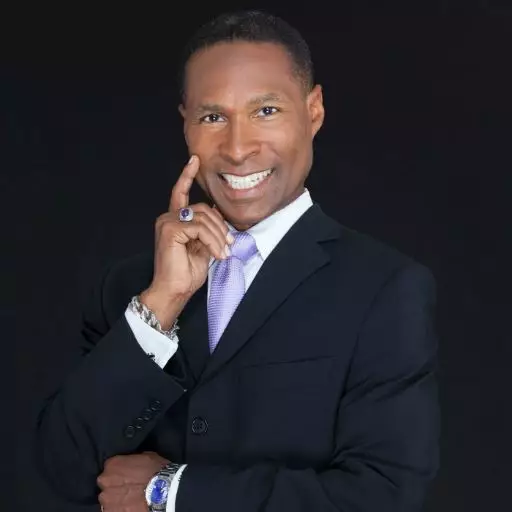
Look Who Brought You Through


Enjoy this message from Rev. Henry P. Davis III.
Rev. Dr. Henry P. Davis III: Hi, I'm Henry Davis, pastor of the First Baptist Church of Highland Park in Landover, Maryland. A Bible-believing, Christ-centered, and spirit-led congregation. I want to welcome you to our radio broadcast and remember, there's power at the park.
Let's turn our Bibles to Joshua chapter 4. That's where we want to look in this service. I've been dealing with some familiar passages this weekend and I've been preaching from the theme, "Stand Like You Know God is With You." You ought to stand like you know, you better act like you know that God is with you.
Joshua chapter 4, beginning at verse 1. New Living Translation: "When all the people had crossed the Jordan, the Lord said to Joshua, 'Now choose 12 men, one from each tribe. Tell them, "Take 12 stones from the very place where the priests are standing in the middle of the Jordan. Carry them out and pile them up at the camp where you will camp tonight."'"
Now you need to know there's a miracle, and so that's the reason they were standing in the middle of the Jordan River able to pick up rocks. They're standing in the middle of the Jordan River picking up rocks. The ground is dry. Whole other sermon, I preached that a couple weeks ago.
So Joshua called together the 12 men he had chosen, one from each of the tribes of Israel, and told them, "Go into the middle of the Jordan in front of the Ark of the Lord your God. Each of you must pick up one stone to carry it out on your shoulder, 12 stones in all, one for each of the 12 tribes of Israel.
We will use these stones to build a memorial. In the future, your children will ask you, 'What do these stones mean?' Then you can tell them, 'They remind us that the Jordan River stopped flowing when the Ark of the Lord's Covenant went across.' These stones will stand as a memorial among the people of Israel forever."
So the men did as Joshua had commanded them. They took 12 stones from the middle of the Jordan River, one for each tribe, just as the Lord had told Joshua. They carried them to the place where they camped for the night and constructed the memorial there.
Joshua also set up another pile of 12 stones in the middle of the Jordan at the place where the priests who carried the Ark of the Covenant were standing, and they are there to this day. These are the words of God. You may go to your seats around the building.
I come back to verses 6 and 7 because that will be sort of our launchpad. "When you will use these stones to build a memorial. In the future, your children will ask you, 'What do these stones mean?' Then you can tell them, 'They remind us that the Jordan River stopped flowing when the Ark of the Lord's Covenant went across.' These stones will stand as a memorial among the people of Israel forever."
Look who brought you through. Look who brought you through. Thank you to our dancers as well for their ministry today. One of the greatest dangers facing God's people is not forgetting God's commandments; it is forgetting God's intervention.
The earlier service, I was talking about "Stand Anyway" and, of course, I lifted the story of Shadrach, Meshach, and Abednego. Stand anyway, stand in spite of. The same people who shouted after Jericho would complain in the wilderness. The same disciples who watched Jesus feed 5,000 later worried about lunch.
Human beings have remarkably short memories. One of the things that we need to have as believers is a good memory. Remember what God has done. Be reminded of God's intervention, His presence, His power, His purpose. Human beings have remarkably short memories.
We remember pain longer than we remember God's provisions. We remember disappointment longer than deliverance. We remember our scars longer than our savior. That is why Joshua 4 is not merely about 12 rocks. It is about preserving memory.
Israel has just crossed the Jordan River and they crossed the Jordan River, which you need to know, during flood season. This was no shallow creek. At harvest time, the Jordan River overflowed its banks. You can find that in Joshua 3:15. Humanly speaking, crossing was impossible.
Yet, the moment the priests carrying the Ark stepped into the rushing water, the Bible says the river stopped. Israel walked across on dry ground. Matter of fact, not only does it stop, but the water backs up. Israel, just as their parents had crossed the Red Sea some 40 years earlier.
The miracle was not only that God opened the river. The miracle was that He commanded them to remember it. "One thing that I've done that you can see, but the next thing I'm doing is I want you to memorialize the memory. I want you to etch this memory in your spirit."
The reason why I need for you to etch it in your spirit is because some challenges are going to come your way and when the challenges come, I want you to think of this. That's the miracle. The miracle was that He commanded them, "I want you to remember."
Notice the sequence. God performs the miracle in Joshua chapter 3. He commands the memorial in Joshua chapter 4. God understands something about us. If we do not intentionally remember His faithfulness, we will eventually explain it away.
That's why you've got to read the Word of God every day. That's why you've got to pause, praise, and take all of that in, because you don't want any of it to move away. The great theologian Walter Brueggemann writes that Israel's identity was sustained by the disciplined practice of remembering.
They had to be disciplined in their practice of remembering. They did not simply process history; they rehearsed it. They rehearsed it until every generation knew that they existed because of the mighty acts of God. Forgetfulness leads to fear. Memory strengthens faith.
Let me give you an example. This choir can get up and sing melodiously today, but before they could sing with the kind of strength they had, they had to rehearse. And not only did they rehearse it once, but they went over it again. "Stop! Let me hear this section. Let me hear this section." They rehearsed it.
This past week, we funeralized a lady who led our drama ministry for many years, Mary Smith. And Mary Smith would rehearse and they would rehearse. And I'm looking at some of the people who acted, and you would have... and then when we got closer to the performance, you would have a long rehearsal.
Then she would bring food and you would go over the parts over and over again because the moment's going to come and I'm not going to have the script. I'm operating now on memory. You don't want to have to go into the emergency room and the doctor is still reading up on the procedure.
"I think that's on page 249," and you're laying there and they're trying to figure out how I'm going to work on you. I want to have memory. I heard a preacher preach a sermon years ago. He got to preaching and a breeze came through the church and his papers flew off the pulpit and it was a mess.
It was tough. He picked it up, he didn't know the order of the pages anymore, and he was just gone. It was all out of order. And all and I heard a lady just go, "Lord help him!" The stones are not for God. God doesn't need reminders.
The stones are for people who one day will face another river. You will face another river, and when I face that river, I want to have the memory of the stone. The sermon asks one question: when somebody looks at your life, can they tell who brought you through?
Can they tell? Can I look at you and see? Because I didn't bring myself through. None of us in here, we have come through not because of ourselves, but we've come through because of the power of God. Even when we weren't believers, God was still watching out over us.
He was still watching, looking. Three things we want to look at. Number one: never forget what God has already done. Oh yeah, when I think about what He's done, He's done it before, and as Ty Tribbett said, He can do it again.
I can look back over my life, back not to go back, but look back to thank God for how far He has brought me. The second thing is: your testimony is somebody else's theology. You have to realize that some people are not going to read the Bible, but they're going to read you.
There's folk in here, you have survived a cancer diagnosis, you've survived a bad relationship, you've survived having a pink slip, you've survived family drama, but you're still in the house of God. You don't look like what you've been through. You've got a whole lot to praise God for.
Number three: the God who opened yesterday's river is already preparing tomorrow's victory. Thank You, Lord. He's already done and opened up the river, but now He's already preparing the victory. What lies ahead? God is not finished with me yet.
When you were laying in the ground, Reverend Nicole, with that blood after that gunshot, God could say, "I'm going to get you out of this." And God can not only get us out and take us out, but God's got more for us to do. Thank You, God.
The first thing is: never forget what God has already done. Notice where God tells them to collect stones. He tells them to collect stones not from the riverbank, not from dry land, but from the middle of the Jordan River. The very place that had once been impossible to stand became the place where they gathered evidence of God's power.
That is extraordinary. God tells them to carry out of the crisis the very evidence that He had been there. "I need for you to carry out the evidence." The Hebrew word translated memorial, "zikron", means far more than recalling information. It signifies a covenant act of remembrance that shapes identity.
Israel was not simply remembering an event. They were rehearsing the faithfulness of God so that future obedience would be fueled by past grace. My future obedience is now fueled by my past grace. I am standing on my history. E.K. Bailey in Dallas, Texas, would remind persons to stay close to the text.
He was known for expository preaching, taking out of the text, not "eisegising" the text, which is putting into it, but exegetical preaching specifies in verse number 3: 12 stones were for each tribe. Every tribe had a testimony. No tribe could say God brought them through, but not us.
The miracle embraced the whole covenant community. I need for each one, each tribe to grab a stone. The miracle embraces all of us. God was teaching them that every family, every generation, every tribe had a place in His story.
Many of us have forgotten what we once prayed for. The job you now have that you complain about, you once begged God to provide. The house that needs repairs was once your impossible dream in your dream house. The family that sometimes frustrates you is the same family you cried for.
Memory protects gratitude. Here it is. Many of our elders can remember when they had to sit in segregated waiting rooms, drink from colored water fountains, or work jobs where dignity was denied. Yet, they also remember how God made a way out of no way, opened doors that no one expected, sustained them through seasons that should have broken them down.
Those memories became stones that they still pray. Some of us remember when we were travel south and we packed fried chicken in the car. Greasy fried chicken with a paper bag because we were driving south and some places we couldn't stop.
So we had to make sure we had some good food in the car. Do I have a witness here? Some of us remember the stones. I remember the first time I went to see my grandparents and I had to use the restroom. I was in Texas and I said, "I need to use the restroom."
They said, "It's that way." And I walked to the kitchen and I said, "I don't see anything." They said, "It's not there. You got to keep walking." "Walk where? All I see is a backyard and I see a little house across the yard."
They said, "Yeah, that's where you're walking to." Some of y'all remember that. That's the outhouse. I did walk across the yard, got to the outhouse, and all of a sudden, all of the urges I had, I'm good. I'm good. I haven't been drinking any coffee and I haven't been eating anything I shouldn't have been eating, so I can make it.
A young entrepreneur often keeps the first dollar earned, the first business card, the first key to a small office, not because those objects have power, but because they remind them where they started. God told Israel to do something similar: to keep visible reminders of invisible grace.
I need for you to keep a visible reminder. Visible, I need to see where God has brought me from. Matter of fact, I keep visible reminders. Matter of fact, the Bible I had in college is in my office right now. My college Bible. Because when I went to church, I carried my Bible.
I can remember one morning going to church, it was raining and I was running getting on the church bus and I dropped my Bible in a puddle of water. You can still see the water stains of that drop. But I've never gotten rid of that Bible because that Bible is my reminder of God's hand bringing me through.
Thank You, God, for speaking to me. Thank You for holding me up. I ended up, I have a prayer altar downstairs, and that prayer altar has now been in three churches. It was in my first church, it was in my second church, and it's in this church.
Three times. So every day I can realize because it is a visible reminder of the hand of God. God's grace. You got to remember God's work. Remembering God's work is never meant to end with us. Remembering the work of God is something that you got to pass on to somebody else.
That's why every believer needs to have a testimony. You might not know how the books of the Bible... I was messing with the folk at the sanctuary and I said we're going to look at a book. I said, "Let's look at the book of Hezekiah." But you know Hezekiah don't have a book.
What I'm trying to say to us, you got to understand that the testimony should not end with you. Your testimony needs to be shared with somebody else. Who woke you up this morning? Who started you on your way? Thank God that one time you were in one place in your life, but thank God how the Lord elevated you.
You got a whole lot to praise God for. The second thing is: your testimony is somebody else's theology. Here it goes right back to the text. In the future, your children will ask. Your children will have... look at verse 6, verse 7.
"We will use these stones to build a memorial. In the future, your children will ask you, 'What do these stones mean?' Then you can tell them, 'They remind us that the Jordan River stopped flowing when the Ark of the Lord's Covenant went across.' These stones will stand as a memorial among the people of Israel forever."
God expected questions. He said it: in the future, your children going ask. Now any parent who's in here right now, one of the stages you're going to go through with raising a child is a child asking you questions. And then you're going to get so tired of answering those questions.
Now y'all got grandchildren. Those grandchildren are asking you questions and then you're going to get so tired, "Because I said so!" Because you get tired of going through question after question after question. "Why is it this, and why is it that, and why is it this, and why...?"
God said, "I expect your questions." And He intentionally, because what God does, He creates within us curiosity. Curiosity, the stones became a classroom. I can ask a question and I can learn a lesson, and learn a lesson as to how it is you got from point A to point B to point C.
Notice this: the children did not witness the miracle, but they inherited the testimony. Faith is always one generation away from extinction if stories stop being told. In the African village, they called him the griot.
The griot was the one who they would go to and talk to about history. Where we've come, where's our family from, what are our family roots. Dr. Gardner Taylor often said that faith is caught as well as taught.
Long before children understand doctrine, they observe lives shaped by God's faithfulness. For many people, your testimony becomes their first lesson in theology. I might not go to a seminary class or Bible school, but I'm watching you. I'm watching the hand of God on your life.
They may never read about Augustine, they may never read all of these theologians, they may never read about Calvin, they may never walk through the doors of a seminary, but they will read your endurance. They will study your forgiveness. They will remember how you worshipped while you were grieving.
You just buried a relative and yet you're in church giving God praise and not giving up on God. You're not throwing in the towel. I looked in this earlier service and many of us, we buried relatives but we've come back to church believing God that You can walk me through any situation.
Your life may become, Dr. Warner, the first Bible someone takes seriously. I look at you and I see the hand of God. Cancer survivor. Broken relationship. I see the hand of God. You still have a smile. You still have joy. The world didn't give it to you and the world can't take it away.
One of the great books that I read in seminary was written by Dr. Fred Craddock, and he reminds us in that book that stories often carry truth farther than arguments. Israel's children would learn who God was not through some abstract lecture but through a pile of stones and a parent's story.
Somebody is borrowing faith from your story right now. Matter of fact, you don't even know who's borrowing your story. Somebody is watching you right now and carrying what God has put in you to help them. Your grandchildren, your children, a coworker, a new believer.
Someone is watching from the edge of hope. Don't rob them by remaining silent. When you remain silent about the goodness of God, you are robbing somebody else who could be blessed by your story. There's somebody around you who needs to know what brought you through.
What helped you during a tough time? What kind of tools did you utilize? Brothers, we come back on Monday nights to the locker room and one of the things that we do in the locker room is share stories. Powerful stories. First half, we do Bible and books, but then we talk about experiences.
Something about those experiences that people are able to share. "I know it was the hand of God. I know the only way I got through it was because of God." So when you don't share your story, you're robbing them by remaining silent. Tell what God has done.
In many African American families, we have recipes, photographs, worn Bibles, military medals, church fans, handwritten funeral programs that have become treasured heirlooms. I in fact have a bunch of recipes my late mother left.
The problem is, my wife will tell you she's in this service, I haven't taken them out to do anything with them other than have them. I got them. I have her cast-iron skillet, or cast-iron pot, that many a family she fried fried chicken in that pot.
I still got that pot. Now I am not frying any chicken, but I got the pot. The memory is there. The memory allows me to reflect. And you got to tell stories because the things that we keep... and I know I'm guilty of it. I got stuff that I just can't let go of.
My wife, she can let stuff go. I don't know how she does it. And she's the one who taught me about Salvation Army, Goodwill, and I learned all that. Because I like to keep stuff. Every now and then when I'm go out of town, she'll take some stuff and get rid of it for me.
She said, "I want to see if you remember what was in this box." Memories tell stories. Joshua says God's faithfulness should also become a family heirloom. Here it is. But the greatest encouragement is this: the God who worked then has not retired now.
One thing about God, God does not retire. We got some retirees in here. I can remember our late head of security when he had retired his job, he had a baseball cap, he came to work and he said, "I'm retired." He was just walking with such... Brother Aubrey Lewis said, "I'm retired."
What I'm trying to say to somebody is that God does not retire His blessings. Here's my third point: the God who opened yesterday's river is already preparing tomorrow's victory. Somebody ought to get that today.
The memorial looked backward, but faith looks forward. The same God who stopped one river would soon bring down the walls of Jericho. Joshua had no idea what was ahead, but God did. Before Israel reached Jericho, God had already prepared the victory.
Notice that Joshua also set up another group of stones in the middle of the Jordan River. Those stones, verse 9, would disappear beneath the returning waters. Not every evidence of God's work remains visible. Some reminders would be seen only by God.
There are victories that only heaven fully knows. There are prayers God answered that you never even realized He protected you from. There were accidents that never happened. Matter of fact, I was on my way home last night from church and I was at a corner and I was in the left lane.
There's a gentleman who was in the right lane and here we are at a stoplight. I'm in the left lane, he's in the right lane. We're at a stoplight and we make a left and follow the road. That's what you normally do, right?
We're at a stoplight, I'm in the far left, he's right of me, and we're going to make a turn and drive. He decides from the right lane to not make a left turn, but he decides he wants to make an immediate left in front of me. My basketball skills came out and the grace of God. It's called peripheral vision.
He cut me, and when he cut me, I stopped and blew because I said, "Why in the world... where did you get your driver's license from?" But I thank God we had had great worship last night. I'm not going to get upset. I'm thanking God that no accident happened.
You figured it out. I know where I'm going. And I saw him a little bit later because he's going down the road, he turned, I see him turn into the parking lot of a Catholic church so he can go whatever direction he was going.
Now old me, I would have pulled in there with him. Had a little conversation. But you can't do that these days. You really can't. That can go left real fast. So I just kept riding. Not going to think about it again, just going to praise God and just go ahead.
But the memory, what I'm trying to say to you, you never know how God is showing up, how God is watching, how God is protecting, how God is keeping. Whole lot could have happened to any of us today, but God steps in and He always steps in right on time.
He's an on-time God. Do I have a witness in here? He woke me up this morning, started me on my way. I've got a whole lot to praise God for. Diseases that never developed, enemies who never succeeded, doors that quietly closed because God was guarding your future.
Isaiah 41:10 is the bridge back to our weekend theme: "I am with you." The promise that carried Joshua across the Jordan is the same promise that carries believers today. Because God's presence is not confined to one generation.
I'm standing here generationally so and thankful that I had a mother and a father who loved the Lord. Grandparents who loved the Lord. Grandparents who praised God. His faithfulness, the faithfulness of God does not expire. His power does not diminish.
His covenant does not weaken. The God who opened yesterday's river is already standing in tomorrow's challenge. I can't see it, but God can. Somebody is worried about what tomorrow holds. Joshua would tell you, before you arrive there, God is already there.
The God who made a way before has not forgotten your address. Come on, somebody. I wonder if there's anybody in the sanctuary today who has a few stones to show. Not literal stones, but your stone is your scar.
Your scar that became your sermon. Tears that became your testimony. Hospital rooms that became your hymn. Layoff notice that became your new opportunity. That funeral service that became proof that God's grace can hold a broken heart together.
When I look back over my life, I don't just see what I survived. I see who brought me through. I'm not lucky, but I'm blessed. It wasn't a coincidence. It wasn't my education alone. It wasn't my connection. It wasn't who's in your family.
It wasn't my strength, but it's the strength of God. Every river we've crossed, every time He opened up a door, every burden that we've carried, He strengthened me. Every fire I survived, He stood beside me. Every dark night became my light.
And if He brought me through yesterday, He will not abandon me tomorrow. That's why I can stand! Not because I've never faced trouble, but because I know who brought me through. Trouble might come, but trouble won't last always and ultimately.
Every stone in Joshua points to another memorial. On that night before the cross, Jesus took some bread and a cup. He said, "We're going to do this in remembrance of me." Hallelujah! That's a memory.
Next week, we'll gather around the table and we'll have communion as a memory. God has always known that His people need holy reminders. That's why once a month, we break bread, drink from the cup. We get a reminder that Jesus died for us.
The cross is our greatest memorial. The empty tomb is our greatest testimony. When fear whispers that you won't last, look at the cross. When doubt tells you God has forgotten you, look at the empty tomb. When tomorrow seems uncertain, look who brought you through!
The same Savior who conquered death, burial, and the grave is the same God moving right now! "I am with you always." So don't forget, don't grow silent, don't lose heart, don't throw in the towel!
Keep telling the story because somebody's faith is waiting to be strengthened by the memory of God's faithfulness. Look who brought you through! Look who made a way! Put clapping in my hands, put running in my feet, joy in my heart!
Look who brought you through! Same God who brought you through before, same God bringing you through right now! I will, I will bless the name of the Lord! I will, I will give God the glory!
I will lift up my hands and give God praise! Ain't He alright? Ain't He alright? Say yeah! Yeah! Yeah, yeah, yeah! Look who brought you through! I know beyond any shadow of a doubt, nobody but Jesus! Nobody but the Lord!
Thank You for dying on the cross, but thank You for getting up! Up, up, up! I know some folk going to see Spider-Man today, but I thank God there's another character and His name is Jesus. Jesus can make a way out of no way. Nothing is too hard for the God we serve.
Announcer (Male): You've been listening to the radio broadcast of the First Baptist Church of Highland Park in Landover, Maryland. If you want to receive a CD or DVD of what you have just heard, please call 301-773-6655 or visit us on the World Wide Web. And remember, there's power at the park.
Past Episodes

Video from Rev. Dr. Henry P. Davis III
About First Baptist Church of Highland Park
About Rev. Dr. Henry P. Davis III
Since 1982, Dr. Henry Pinckney Davis III has been preaching the Gospel of Jesus Christ, having been licensed and ordained at the St. Paul Baptist Church of Atlantic Highlands, New Jersey, under the pastoral leadership of his father, Dr. Henry P. Davis, Jr. His preaching is relevant, challenging, and inspirational. In 2000, Dr. Davis was called to pastor the First Baptist Church of Highland Park in Landover, Maryland. Dr. Davis formerly pastored the Second Canaan Baptist Church in Harlem, New York (1993-2000), and the Community Baptist Church in Lakehurst, New Jersey (1988-1993).
Dr. Davis leads a “Bible Believing, Christ Centered & Spirit Led Congregation” with an active membership of over 3,000 Disciples who are engaged in Kingdom Building through more than 80 ministries. The church has five worship assemblies each week with three weekend worship services — Saturdays at 6:30 p.m.; Sundays at 7:30 a.m. and 10:45 a.m., and two on Wednesdays, which we refer to as Wonderful Wednesdays With Jesus, at 12:00 noon is The Power Hour and at 6:45 p.m., which is a time of corporate Prayer, Praise, Worship, and The Word. First Baptist Highland Park is a progressive and visionary church that offers a Christian school (Highland Park Christian Academy - Pre-K - 8th Grade) and numerous Bible study groups. The church also has a senior citizens center and offers ministries to reach out to the youth, young adults, couples, singles, prisoners, sick, bereaved and widowed.
Dr. Davis, a native of Wichita Falls, Texas, studied at Oral Roberts University, (Tulsa, Oklahoma) later graduated from Norfolk State University, (Norfolk, Virginia) with a B.A. in English; Fairleigh Dickinson University (New Jersey) with a Master of Public Administration; New Brunswick Theological Seminary (New Jersey) with a Master of Divinity (M.DIV.); and United Theological Seminary (Dayton, Ohio) with a Doctor of Ministry (D.Min.). Dr. Davis has been the recipient of numerous awards and citations, including being inducted into the Martin Luther King Jr. Board of Preachers at Morehouse College of Atlanta, Georgia in 2007.
He can be heard every Sunday at 6:30 a.m., (www.wpgc.com) EST and Saturday at 7:30 a.m. EST on Praise 104.1 FM (www.praisedc.com), and live streaming of worship services are available through https://fbchighlandpark.org/ and www.streamingfaith.com. On-demand worship services can also be accessed from www.LightSource.com.
Dr. Davis and his wife Weptanomah have one daughter and one son.
Contact First Baptist Church of Highland Park with Rev. Dr. Henry P. Davis III
Mailing Address
6801 Sheriff Road
Landover, Maryland 20785
Telephone
301-773-6655
301-773-1347 (fax)