
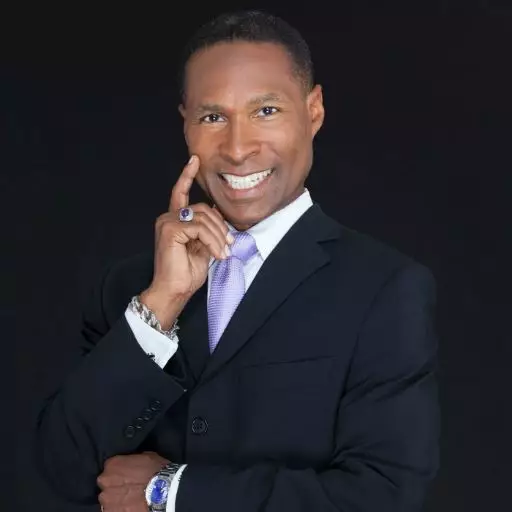
God Is In The Middle Of This


Enjoy this message from Rev. Henry P. Davis III.
Rev. Dr. Henry P. Davis III: Hi, I'm Henry Davis, pastor of the First Baptist Church of Highland Park in Landover, Maryland. A Bible-believing, Christ-centered, and Spirit-led congregation. I want to welcome you to our radio broadcast. And remember, there's power at the park.
Guest (Male): In this service, I want to look at the book of beginnings, Genesis 50, the Joseph story. So, you would peel your eyes down to verse number 15, and I'll be reading from 15 through 21. Hear the words of the Lord as we dig into this text. 50th chapter, last chapter, 15 through 21. New Living Translation.
"But now that their father was dead, Joseph's brothers became fearful. 'Now Joseph will show his anger and pay us back for all the wrong we did to him,' they said. So they sent this message to Joseph: 'Before your father died, he instructed us to say to you: "Please forgive your brothers for the great wrong they did to you, for their sin in treating you so cruelly." So we, the servants of the God of your father, beg you to forgive our sin.'"
When Joseph received the message, he broke down and wept. Then his brothers came and threw themselves down before Joseph. "Look, we are your slaves," they said. But Joseph replied, "Don't be afraid of me. Am I God, that I can punish you? You intended to harm me, but God intended it all for good. He brought me to this position so I could save the lives of many people. No, don't be afraid. I will continue to take care of you and your children." So he reassured them by speaking kindly to them. Amen. Just the fact that he could speak kindly.
"You intended to harm me, but God intended it all for good. He brought me to this position so I could save the lives of many people." I want to talk in this service: God is in the middle of this.
Church, one of the hardest things about walking with God is learning that what is happening to you is not necessarily all that is happening. You can see betrayal, you can see pain, you can identify the people who did it to you. You can remember what they said, you can point to the place where everything went wrong, and still not see everything God is doing in the middle of it.
That's Joseph's testimony. When we arrive at Genesis 50, Joseph can finally look backward over his life. The pit is behind him. Potiphar's house is behind him. The false accusation is behind him. Prison is behind him. The forgotten promise of the cupbearer is behind him. And now Joseph is standing in Egypt with authority he never imagined having.
But his brothers are terrified. Their father Jacob has died, and they start thinking, "Now Joseph is going to get us." They remember what they did. Joseph remembers what God did. They remember the pit they threw him in. Joseph sees the providence of God. They remember their conspiracy. Joseph sees God's choreography.
They meant what they meant, and Joseph sees what God meant. And Joseph gives us one of the greatest statements about divine providence anywhere in Scripture. "You intended to harm me, but God intended it all for good." Don't move too quickly past that. Joseph does not say, "You didn't hurt me." He does not say that it wasn't a bad thing that you did. He does not say that I have forgotten what you've done. He does not say, "God made you do it." He simply says, "You meant it for evil."
Joseph names evil, evil. But that's important. Biblical faith does not require us to sanitize our suffering. Faith does not require an abused person to call abuse good. Faith does not require oppressed people to pretend oppression didn't happen. Faith does not require us to baptize injustice and call it the will of God.
There are some things God allows that God does not author. There are some things human beings do out of jealousy, hatred, greed, prejudice, selfishness, racism, violence, and sin. But I’ve got to give you something to shout about this morning. Human beings can initiate something without getting the final interpretation of what they have done.
Somewhere between what they meant and what God means is the mysterious territory that we call the providence of God. And somebody walked into church this morning wondering, where is God in all of this? God sent me with a word for you: God is in the middle of this. You can't see the ending yet. You don't understand the process yet. You don't know how all the pieces fit yet.
But Romans 8:28 lets us know all things work together for good. And in Genesis chapter 50, verse 20, he shows us how God works. Number one, people mean it for evil, but God can have another plan. Joseph said, "You intended to harm me." Don't miss Joseph's emotional maturity. He doesn't rewrite history. His brothers hated him. They stripped him. They threw him into a pit. They sold him. They went home and allowed their father to believe that his son was dead.
Joseph experienced the trauma of betrayal at the hands of people who shared his blood. Now, I know that's getting heavy because somebody, you've had some family folk who share the same blood with you, but they have come up against you. Sometimes the deepest wounds don't come from strangers. They come from people who knew your name. They know people who knew your heart, people who sat at your table, people who knew what would hurt you and did it anyway. Because there ain't no drama like family drama.
And so family drama can work its way into our lives. Joseph acknowledges human intentions. "You intended to harm me." Intent matters. Joseph doesn't say it was a misunderstanding. No, you meant it. There is liberation in being able to tell the truth about what happened without allowing what happened to define who you become.
Our ancestors understood something about this. They could name slavery for the evil that it was. They could name segregation. They could name lynching. They could name Jim and Jane Crow. They could name discrimination. They could name the cruelty inflicted upon black bodies. And yet somehow they could sing, "Through many dangers, toils, and snares I have already come." They did not call danger good. They declared that God was greater than the danger. That's a different kind of idea.
Human intention does not have divine authority. Don't give it divine authority. You meant it for evil, but God can turn it around for good. In other words, you can shut a door, but God says I can open another door. Let me loosen up in here because I've got a whole lot more to drop on you this morning. And so your enemies might have intention, but they don't have ultimate authority.
Somebody in this house can understand the reality. You don't have the final authority. I know that unto the Lord I have my strength comes from. You didn't give me my strength. Somebody may have plotted against you. Somebody might have planned against you. Somebody may have hoped it would destroy you. But people who have intentions concerning you do not have jurisdiction over your destiny.
God has a destiny designed for you. Joseph's brothers could determine that Joseph went into the pit, but they could not determine where Joseph would come out. Do I have a witness in here? They could sell him to Egypt, but they couldn't stop Egypt from becoming the place where God was going to elevate him.
They could remove his coat of many colors his father gave him, but they couldn't remove the calling God placed on him. Somebody needs that word: people can touch your coat without touching your calling. They can change your circumstances without canceling your purpose. God has a purpose for you, and I’ve got to put my trust in the Lord.
The other thing about it is that God can write another ending. The brothers had one narrative: let's get rid of Joseph. God had another narrative: I'm going to position Joseph. They saw disposal, God saw deployment. They saw a slave, God saw a deliverer. They saw somebody they wanted removed, God saw somebody he was preparing to use. And that's why you've got to be careful about putting a period where God has only put a comma.
I've got some witnesses in here because what they meant is not necessarily what God means. You thought it was rejection, God may use it for redirection. You thought it was an ending, God may use it as an entrance. You thought you had been buried, God may have said I'm just planting you. Because God is in the middle of this.
And my second point: God can work through what he did not author. Now, this is where the theology gets important because somebody could hear Joseph say, "God intended it for good," and you could conclude then God must have caused the evil. No, let's dig a little deeper. We need better theology than that.
James tells us that God is not the author of evil. God is not the author of confusion. Joseph's brothers made real choices. Potiphar's wife made a real choice to lie on him. The injustice Joseph experienced was real. God did not need to manufacture evil in order to accomplish good. God is so sovereign that he can take what evil produces and make evil serve purposes it never intended to serve.
That's the kind of God that we serve. God can turn that thing around. You have to know it this way: God's sovereignty is greater than human sin. Joseph said, "You intended, but God." There it is. Two of the strongest words in the Bible: "but God." Human intention meets divine intervention. Hatred runs into holiness. Conspiracy runs into sovereignty. Evil runs into providence. And evil discovers you don't get the last word.
And that means God does not have to be the author of your trouble in order to become the redeemer of your trouble. Cancer is not good. Betrayal is not good. Injustice is not good. Racism is not good. Poverty is not good. Violence is not good. Broken is not good. But God is good!
But not only is God good, God is great and he's greatly to be praised. Because God is good, God can enter situations that are not good and begin working toward redemption. God works without endorsing evil. This is the mystery of the text. God never says the pit was good, but God used the pit. God never says slavery was good, but God worked through slavery. I heard somebody say slavery was good. No, it wasn't good. But even in those situations, God can show up.
And whenever God shows up, he can show out. God never says that a false accusation was good. Somebody knows about that today because somebody's lied on you. Somebody has made up some stuff about you. But I thank God, but God worked through the accusation. I'm a witness to that. God can work through it. Even though you might have meant it for evil, I'm going to bring that rascal down. But God said, "I'm going to lift him up!"
God never said prison was good, but God worked in the prison. And maybe that's the word somebody needs this morning. Stop looking for God only in places that look like God. Sometimes God is working in places that look completely God-forsaken. Joseph did not know when he was in the pit that God was working on it. He did not know while he was in Potiphar's house that God is working on it. He did not know when he was falsely accused that God is working on it.
He didn't know sitting in prison, God is working on it. He didn't know when the cupbearer forgot about him after making a promise that God is working on it. And I wonder if somebody can look in your own situation this morning and say, "I don't understand it, but God is working on it." I don't like it, but God is working on it. I wouldn't have chosen it, but God is working on it. I don't know how it ends, but God is working on it. Because providence often makes sense backwards.
Here it is, backwards. Here's our problem: we want Genesis 50 understanding while we're still living in Genesis 37. We want to understand the palace while we're still in the pit. But sometimes God doesn't explain himself while he's working. Joseph couldn't connect the dots forward; he had to connect them backward.
That's why some of us can look back now and say, "I didn't understand it then, but now I see it." That closed door saved me. Do I have a witness in here? That disappointment matured me. That season strengthened me. That struggle deepened my prayer life. That heartbreak taught me discernment. That wilderness showed me who God was. I wouldn't want to live it again, but I wouldn't surrender what God taught me while I was going through it.
I don't want to go back there, but I learned some lessons while I was in that season. God was in the middle of it. And my third point: what hurt you can still become part of what helps somebody else. Here's where Joseph's story moves beyond Joseph. Verse number 20: "He brought me to this position so I could save the lives of many people."
That's it. Joseph finally understands this wasn't only about me. The destination of providence was bigger than Joseph's promotion. God didn't elevate Joseph just so Joseph could say, "Look at me." God positioned Joseph so hungry people could eat. That changes the entire interpretation of the story. Your survival may carry somebody else's salvation.
Joseph survived the pit not merely for Joseph. Joseph survived the prison but not merely for Joseph. Joseph got to the palace but not merely for Joseph. There were lives connected to his survival. There were families connected to his faithfulness. There were generations connected to his endurance.
And sometimes you don't know why God keeps sustaining you, but maybe somebody else is attached to your "yes." When you say "yes," your children can be blessed. When you say "yes," grandchildren can be blessed. When you say "yes," your family can be blessed. When you say "yes," your church can be blessed. When you say "yes," your community can be blessed. Somebody you haven't even met yet, your survival will be somebody else's testimony.
You don't know who you'll encounter and how you're going to bless them. You don't know, it could be a child, it could be a co-worker. In matter of fact, you have heard people come back to you and tell you how your witness impacted their life. You weren't even trying to talk to them. You weren't even trying to impact them. But when God starts shining through your life, there is no limit to what God can do.
Pain can become ministry without pain becoming good. Notice the distinction. We don't glorify trauma. We glorify the God who can redeem trauma. The scar is not beautiful because the wound was good. The scar is beautiful because the wound did not kill you. And some of the most powerful ministry you'll ever have will come from the places where you've been wounded.
I love biographies and I love to listen to the stories of great people and how they become great. But one of the things that I consistently learn while reading biographies is the challenges that we never hear about. We never hear about the pain. We never hear about the disappointment. We never hear about the dark nights. We don't hear about those lonely moments. Because when you've been through something, you start talking differently.
You've got a different kind of testimony. You can come in here and lift up your hands and give God praise. I can't sit down on my praise. I've got to let go and let God. Because when I think of His goodness, when you've cried, your comfort is differently. When you've been broken and when you have been broke, you help differently. When you've been rejected, you embrace differently. When you've grieved, you sit beside grieving people differently. When you've needed grace, you give grace differently.
Sometimes we have blood drives. Many people do not participate in blood drives. But there are some people in this room who know something about needing blood. And once you are sitting there and your blood count is low, and then they bring in that bag and they put that blood in your body, and when that blood comes in your body, you start to feel stronger. You feel stronger in that moment.
What I simply want to say to you, that once that happens to you, you start looking at a blood drive differently. Because you have to understand that I'm looking at somebody else who made a sacrifice for me. I'm not even to Jesus yet, but when I think about the blood that has been shed for my life, I've got to give God praise.
When you've needed grace, you give differently. God says, "I can use that too." Joseph refuses to become what hurt him. This may be Joseph's greatest miracle. The greatest miracle isn't that Joseph reached the palace. The greatest miracle may be that the palace didn't turn Joseph into a Pharaoh.
Joseph now has power over the very people who once had power over him. He could destroy them. But in verse number 21, he says, "No, don't be afraid. I will continue to take care of you and your children." That's maturity. That's healing. That's freedom. Joseph refuses to reproduce the violence that wounded him. That's liberation. Because liberation isn't merely getting out of somebody else's prison. Liberation is making sure that their hatred doesn't remain imprisoned inside of you.
You don't become bitter because somebody else treated you badly. You don't have to become cruel because somebody was cruel to you. You don't have to become hateful because somebody hated you. Why? Because love gets the last word. Joseph has enough power to get revenge, but enough healing to choose mercy. And isn't that what Jesus does for us?
Church, I came to tell somebody: God is in the middle of this. Not just at the beginning, not just when everything works out, but God is with us in the middle. In the confusing middle, in the painful middle, in the waiting middle, in the crying middle, in the "I don't know what God is doing" middle. God is there.
And if you have a question about that, you can ask Joseph. Where was God when your brothers hated you? In the middle of it. Where was God when they threw you in a pit? In the middle of it. Where was God when you were sold into slavery? In the middle of it. Where was God when you were falsely accused and lied on? In the middle of it. Where was God when you were forgotten in prison? In the middle of it.
And maybe that's somebody's testimony this morning. I know you got up early this morning, but God is in the middle of it. I couldn't see Him, but He was there. I couldn't feel Him, but He was there. I couldn't trace Him, but He was there. But while Joseph was going down, God was working. While Joseph was waiting, God was working. While Joseph was crying, God was working. While Joseph was wondering, God was working.
And by the time Joseph got to Genesis chapter 50, he could look back over the whole journey and declare, "Now I see it! You meant it for evil, but God. You tried to break me, but God. You tried to bury me, but God. You counted me out, but God. You thought the pit was my ending, but God." And somebody ought to thank God for that conjunction. Junction, junction, what's your function? But God. Two words that can turn the whole story around.
I was lost, but God. I was broken, but God. I was sinking, but God. I was guilty, but God. I was headed the wrong way, but God. When I couldn't get to God, God came looking for me because there is another Joseph in the Bible. Can I call His name? It begins with J. Jesus was betrayed. Jesus was sold. Jesus was falsely accused. Jesus suffered at the hands of sinful humanity too.
They put nails in His hand. They put nails in His feet. They hung Him on a cross. They put Him in a borrowed tomb. Humanity meant the cross as an instrument of shame and death. But God was in the middle of it! Because what looked like defeat on Friday was redemption unfolding. What looked finished at the tomb wasn't finished at all. Because early Sunday morning, God turned an execution into salvation. And that's why I know God can turn it!
He can turn it! He can turn pain into purpose. He can turn wounds into witness. He can turn scars into sermons. He can turn setbacks into setups. He can turn victims to vessels. He can turn survival to service. He can take what somebody meant for evil and make it serve something good. So don't give up in the middle. Don't quit in the middle. Don't lose your faith in the middle. Don't judge your whole story by the chapter you're in right now.
Because God is in the middle of it. And if God is in it, He is working. If He's working, He's not finished. And if He's not finished, there's still more to the story. Do you love Him this morning? There's still more to the story. God's not through with you yet. Unto Him, I give Him the praise. I give Him the glory. I thank You, God, for every round goes higher. Higher! Higher in Your right!
He is our Alpha and Omega. He is our beginning and our end. I thank You, God, from the rising of the sun to the setting of the same. He will, He will, He will bless you. Over and over, and over, and over, and over, and over, and over, and over! He's not through with you yet. I give Him the praise. And I'm going to give Him the praise in the middle of it. Say yes! Say yes!
There is still more to your story. There is still more to your story. God's not through with you yet. If you woke up this morning, breath in your body, there is more to your story. Ain't He alright? Yes! More to your story. More blessing, more healing, more doors to be opened, more souls to be saved. There is more to your story.
Rev. Dr. Henry P. Davis III: You've been listening to the radio broadcast of the First Baptist Church of Highland Park in Landover, Maryland. If you want to receive a CD or DVD of what you have just heard, please call 301-773-6655, or visit us on the world wide web. And remember, there's power at the park.
Featured Offer

The Christian Education Ministry is one of the primary ministries to the body of Christ at First Baptist Church of Highland Park. The Christian Education Ministry is comprehensive, far-reaching, and multifaceted inclusive of disciples of all ages. Characterized by its diversity, it offers opportunities for Bible study and spiritual growth through the identification, use, and development of one’s spiritual gifts.
Past Episodes

Video from Rev. Dr. Henry P. Davis III
Featured Offer
The Christian Education Ministry is one of the primary ministries to the body of Christ at First Baptist Church of Highland Park. The Christian Education Ministry is comprehensive, far-reaching, and multifaceted inclusive of disciples of all ages. Characterized by its diversity, it offers opportunities for Bible study and spiritual growth through the identification, use, and development of one’s spiritual gifts.
About First Baptist Church of Highland Park
About Rev. Dr. Henry P. Davis III
Since 1982, Dr. Henry Pinckney Davis III has been preaching the Gospel of Jesus Christ, having been licensed and ordained at the St. Paul Baptist Church of Atlantic Highlands, New Jersey, under the pastoral leadership of his father, Dr. Henry P. Davis, Jr. His preaching is relevant, challenging, and inspirational. In 2000, Dr. Davis was called to pastor the First Baptist Church of Highland Park in Landover, Maryland. Dr. Davis formerly pastored the Second Canaan Baptist Church in Harlem, New York (1993-2000), and the Community Baptist Church in Lakehurst, New Jersey (1988-1993).
Dr. Davis leads a “Bible Believing, Christ Centered & Spirit Led Congregation” with an active membership of over 3,000 Disciples who are engaged in Kingdom Building through more than 80 ministries. The church has five worship assemblies each week with three weekend worship services — Saturdays at 6:30 p.m.; Sundays at 7:30 a.m. and 10:45 a.m., and two on Wednesdays, which we refer to as Wonderful Wednesdays With Jesus, at 12:00 noon is The Power Hour and at 6:45 p.m., which is a time of corporate Prayer, Praise, Worship, and The Word. First Baptist Highland Park is a progressive and visionary church that offers a Christian school (Highland Park Christian Academy - Pre-K - 8th Grade) and numerous Bible study groups. The church also has a senior citizens center and offers ministries to reach out to the youth, young adults, couples, singles, prisoners, sick, bereaved and widowed.
Dr. Davis, a native of Wichita Falls, Texas, studied at Oral Roberts University, (Tulsa, Oklahoma) later graduated from Norfolk State University, (Norfolk, Virginia) with a B.A. in English; Fairleigh Dickinson University (New Jersey) with a Master of Public Administration; New Brunswick Theological Seminary (New Jersey) with a Master of Divinity (M.DIV.); and United Theological Seminary (Dayton, Ohio) with a Doctor of Ministry (D.Min.). Dr. Davis has been the recipient of numerous awards and citations, including being inducted into the Martin Luther King Jr. Board of Preachers at Morehouse College of Atlanta, Georgia in 2007.
He can be heard every Sunday at 6:30 a.m., (www.wpgc.com) EST and Saturday at 7:30 a.m. EST on Praise 104.1 FM (www.praisedc.com), and live streaming of worship services are available through https://fbchighlandpark.org/ and www.streamingfaith.com. On-demand worship services can also be accessed from www.LightSource.com.
Dr. Davis and his wife Weptanomah have one daughter and one son.
Contact First Baptist Church of Highland Park with Rev. Dr. Henry P. Davis III
Mailing Address
6801 Sheriff Road
Landover, Maryland 20785
Telephone
301-773-6655
301-773-1347 (fax)