
Fellowship in the Word
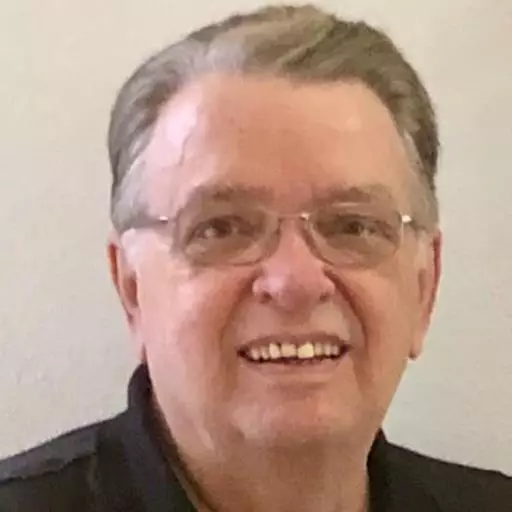
Bil Gebhardt
When You Hit Rock Bottom, Look Up - Part 1


Bil Gebhardt: I have no control over other people. So it comes down to him and me. That becomes the issue in my life when I find myself in this spot. And this past year, this has been my darkest time. This has been my rock bottom. This has been the time that’s most difficult for me. Ironically, as I tried to work myself through this, the first thing that really started happening to me that helped me a great deal, I found not through friends counseling me, although you guys were fine, I'm not saying you weren't, but not that way at all. I was just reading the Bible when I was reading a section you’d never expect to find it there, but I did.
Guest (Male): Today on Fellowship in the Word, Pastor Bill Gebhardt challenges you to become a fully functioning follower of Jesus Christ. Thank you for joining us today on this edition of Fellowship in the Word with Pastor Bill Gebhardt. Fellowship in the Word is the radio ministry of Fellowship Bible Church located in Metairie, Louisiana. Let’s join Pastor Bill Gebhardt now as once again he shows us how God’s word meets our world.
Bil Gebhardt: We don't need to be looking for it. It'll find you. It finds all of us. And it comes on us as a dark cloud or a wet blanket and it covers us and it changes us. And the reason is that the life that we always felt that we would always live has changed, and we find ourselves at rock bottom in our lives. It comes with many faces. Sometimes it’s betrayal. Someone you had trusted had betrayed you and it causes an enormous amount of pain. Often it comes with loss: loss of a loved one, loss of your health, loss of your financial security.
Sometimes it comes as consequences to your own choice. You actually realize that I am now reaping what I’ve sown and you find yourself in a difficult spot. And sometimes, by the way, we have no idea what it comes; it comes like an accident. You happen to be in the wrong place at the wrong time and everything in your life changes. Job was right when he wrote this: “Man is born to trouble as surely as sparks fly upward.” So if you’ve never had rock bottom, you can look forward to it in your future. And if you’ve had rock bottom in the past, you may find it again. And some of us are in rock bottom even at this moment.
Joe Stowell writes this: “Given the inevitability of trouble, it's no surprise that we spend great amounts of time, energy and money trying to overcome our problems. Counselors, psychologists, psychiatrists are in an abundant supply. Group therapy sessions are crowded. Support groups for nearly every affliction imaginable are available. There are groups for addiction, for abuse, for stress, for grief, overeating. You want it, help in some point of your life, you can find it. There are big-ticket seminars everywhere. Meditation says that you’ll feel better if you just get in touch with yourself. And there are even health clubs that offer exercise programs and group activities to make your life be able to cope with the despair you find yourself in. In fact, in America, trying to sell hope is a billion-dollar business in our country.”
Often when we find ourselves at what I would call rock bottom, one of the biggest problems that we have is a very simple one: we always ask the wrong question. Always. It’s just who we are. What’s the question? Why? Why? Why me? Why now? Why did this have to happen? Why didn't God stop it? Why are there so many other people that don't seem to have trouble at all? Why don't people care? Why don't people understand? The problem with that is there’s tremendous danger in the "why" zone. It's a very difficult place to be. If you stay there, you’ll become cynical, bitter, hardened, angry, confused, because just like with Job, one thing you often never get from God is why.
You see, that’s not the answer that he gives. In fact, the question that God wants us to have is a very different one. You see, when you read the book of Jonah, you come away with something from the book. The whole book up until the end is only about the “why” question, and it got nowhere. That’s why he had friends. His friends came and said, “I'll tell you why. I know why.” And they didn't know why at all. They had no idea why. But at the end of the book, the question is the right question: who? It’s the question of who, not the question of why.
And when it comes down to the “who” question, there are only three possibilities: there's God, there's me, and there's you, others. Now one thing I’ve learned over the years is not hard to figure out; I have no control over you. I have no control over other people. So it comes down to him and me. That becomes the issue in my life when I find myself in this spot. And this past year, this has been my darkest time. This has been my rock bottom. This has been the time that’s most difficult for me. Ironically, as I tried to work myself through this, the first thing that really started happening to me that helped me a great deal, I found not through friends counseling me, although you guys were fine, I'm not saying you weren't, but not that way at all. I was just reading the Bible when I was reading a section you’d never expect to find it there, but I did.
So I’d invite you to open your Bibles to Jonah chapter 2. You all know the story of Jonah. Let me summarize the first chapter the best I can. God said, “Go.” Jonah said, “No.” God said, “Oh.” You see, God wanted him to go several hundred miles to the east and he wanted to go 2,400 miles due west to Tarshish, where modern-day Portugal and Spain is. He wanted to get as far away from God as he could. And so he gets into a ship, and there is a storm on the Mediterranean Sea so intense that professional sailors are panicking, and Jonah is sleeping down in the bottom of the ship. He’s as calm as could be.
Then they finally bring him up. They prayed to their gods. They did everything they could. They were pagans at the time. They did everything they could and they said, “Who are you?” and he said, “I'm a Hebrew and I follow the living God.” And Jonah did say this: “If you want this storm to stop, just throw me overboard.” And you know what the pagans said? “No. We’ll do everything we can to save your life.” And eventually, Jonah said, “No, you have to throw me over.” And so Jonah gets thrown overboard. Verse 15 of chapter 1 says they picked up Jonah and they threw him into the sea and the sea stopped its raging. But don't miss this: “Then the men feared the Lord, Yahweh, greatly. They offered a sacrifice to the Lord and made vows.”
Notice there is a revival on the boat. These people who are pagan are overwhelmed by the calming of the sea and throwing Jonah in there. They offer sacrifices to God. It’s a picture of what’s supposed to happen in Nineveh. Jonah’s going to do the same thing in Nineveh, except with 600,000 people. So the pagans come to faith, but it’s not because of Jonah. It’s in spite of Jonah. And so Jonah gets thrown overboard, and it says the Lord appointed a great fish to swallow Jonah, and Jonah was in the stomach of the fish for three days and three nights. Now there’s all kinds of speculation, tiring speculation, and I’ve read guys that talk this; this could only be a sperm whale.
Now let me explain something here. Do you think the God who created everything knows the difference between a mammal and a fish? Do you think he has any idea? The other thing, even a sperm whale, the esophagus of a sperm whale is somewhere between 16 up to 20 inches, so it’s a tight squeeze in there to try to get in there. You see, it doesn't tell us that because it doesn't need to. It says God appointed or designated a fish. It could be any fish God made. He made it. He can do what he wants. There’s a story I read years ago of a skeptic who was making fun of a little girl about Jonah being swallowed by a fish.
And he said, “You really believe that a man was swallowed by a fish and then lived in the fish for three days?” and she said, “I do.” He said, “Could you explain that to me?” and she said, “No, no. But when I get to heaven, I’m going to ask Jonah.” And he said, “But what if Jonah’s in hell?” She said, “Well, then you can ask him.” It’s a great story. Anyway, so Jonah hits rock bottom and we understand why. This is an important point: Jonah is at the darkest, I don't know anyone who could hit rock bottom quite like Jonah did, but it’s all of his own doing. Jonah is reaping what he’s sown. Jonah was sinful and disobedient to his God. He’s a prophet of God, and he would not listen to God at all, so he’s reaping what he’s sown.
Jonah’s situation is unique in its own way. So it says then Jonah prayed to the Lord his God from the stomach of the fish. And sometimes people do this often, I’ve had discussions with people and they always want to say why in the world do you have to pray? I don't know why they think it’s tedious, but why do you have to? Because if, and they always get theological on me then, if God knows everything and he knows what I’m going to say before I pray, why am I praying to him? He already knows. First of all, I could tell you well, God commands us to pray and that should be enough, but apparently for a lot of people, it’s not.
But the other point is this: God is sovereign and he’s sovereign over the ends, how something turns out. He’s also often sovereign over the means. How do you get there? And prayer, by the way, is a very important part of it. Hold your place there because I want to show it to you. Go with me to Mark chapter 9 and verse 20 and there’s a story here. It’s a familiar story. Mark 9 and verse 20. It says this: they brought the boy to him. And when he saw him immediately, he said the spirit threw him into a convulsion, and falling on the ground, he began rolling around and foaming at the mouth. And Jesus asked his father and said, “How long has this been happening to him?” and he said, “From his childhood.”
I often think of that. Just imagine if he’s like a teenager and for 10 years that’s been going on in a little boy’s life and you’re the father. Could you imagine just how horrible a feeling that would be? He says it has often thrown him both into the fire and into the water to destroy him. So it’s tried to drown him and burn him. I couldn't even imagine this. And so he says what a lot of us would, “And if you can do anything, take pity on us and help us.” Now you’d want to think right there that Jesus would be like, “Man, I know how you feel. You’re a great father. You love your little guy.” Jesus doesn't say anything like that. What does Jesus say? “If you can? If you can? You’re asking me if you can?”
You see what he’s saying. If you can, what kind of who do you think I am? If you can? Wow. He says, “All things are possible to him who believes.” Of course. Now I identify with the father here in certain times in my life. Immediately the boy’s father cried out and said, “I do believe. Help my unbelief.” Doubt is part of your spiritual journey. You have great faith for some things and almost none for others. It goes together. Both of those things happen. He said, “Help my unbelief.” So he says then when Jesus saw the crowd was rapidly gathering, he rebuked the unclean spirit and said to him, “You deaf and mute spirit, I command you come out of him and do not enter him again.”
And after crying out and throwing him into a terrible convulsion, it came out and the boy became so much like a corpse that most of them said, “He’s dead.” But Jesus took his hand and he raised him up and he got up. So this is this wonderful, this wonderful miracle that Christ performs on the demoniac here. And he says and when he came into his house, his disciples began questioning him privately. And they said, because they were doing this, “Why couldn't we drive him out? We tried often to drive him out,” because they drove out other demons. “Why can't we do it?” Notice what Jesus said. He said at this time, “This kind cannot come out by anything but prayer.”
So what’s the means for the exorcism? Prayer. You see, sometimes prayer is the means that God uses for his end. So our praying is a very important part of this. Now let’s go back to Jonah and Jonah’s prayer. And I found some interesting points as I went through Jonah’s prayer. The first thing Jonah does is he says this: “I called out to my distress to the Lord and he answered me and I cried for help from the depth of Sheol and you heard my voice.” Now this is interesting. Jonah is praying and what Jonah is saying is he did two things. First it says he called, he said first he called out in his distress and secondly he cried for help.
The Hebrew word is exactly the same. This is called from the psalm, this is synonymous parallelism. He’s writing this. He cries out this way. But the interesting thing is in the first one, he says, “I called out to the Lord in my distress,” and it’s a perfect tense in Hebrew. It just means a natural way where I cried out to the Lord. But the second one, when he says, “I cried for help,” that’s a piel stem. And piel in Hebrew means emphatic, emotional. I cried out because I cried out. That’s an important thing. So the first thing I learned from this was when you’re at rock bottom, your prayer life should be passionate. Your prayer should match your circumstance.
And he said, “I cried out. I just cried.” And if you’ve ever been like that, you see, this is not a time, what we often do is this is not a time for some cursory prayer. Not a time like that. I mean I was so distressed, I had someone one time tell me that when they went through a really difficult time and they were told to pray, I can't remember the number, but so many “Our Fathers”. That’s ridiculous. First of all, Jesus said when he said “Our Father”, don't have vain repetition. So what’s the church do? “Let’s repeat it every time. We’ll repeat it over.” Jesus said, “Don't.” So what are you praying “Our Fathers” for? That doesn't match this.
This is crying out. Remember I always tell you in Philippians 4 when he says that we’re to be anxious for nothing but in everything with prayer and supplication with thanksgiving let your request be known to God. And that word supplication is pour out your emotions. Pour out your emotions. Pour out how you feel. And when you’re at rock bottom, you and I both know how you feel. You feel a lot of things and they’re all negative. You feel it. You just feel this agony of this pain. This is not a time for that kind of prayer. There’s no rote prayer. I can remember I was probably 6 years old and my mother taught me a prayer. I would never use it. I remember my mother taught me this prayer.
She said, “Here’s the prayer,” and I learned it. “Now I lay me down to sleep. I pray the Lord my soul to keep. And if I die before I wake, I pray the Lord my soul to take.” That scared the bejesus out of me. I didn't even know what that meant. Like, I’m going to die and the Lord’s going to take my soul? But I did pray because she said, “That’s how you pray,” so I prayed that. But I added one thing. “And if I die before I wake, I pray the Lord my soul to take and please don't let me have a bad dream.” I can remember putting that in there because as a little guy, I didn't want to have a bad dream. And that was the only honest part of the prayer.
You see, I mean that’s the whole point of this. So he tells us your prayer should fit the situation. That’s the way this whole thing works for all of us. That’s just the way it comes out to each and every one of us. We should pray our heart. That’s the way this thing should work. So now let’s look at what he does when he cries out and what he says. He said, “I cried out for help from the depth of Sheol and you heard my voice. For you cast me into the deep into the heart of the seas, and the current engulfed me and your breakers and billows passed over me.” Now the next thing that you should be able to do when you pray this way: identify the cause that’s causing you so much lament.
It’s harder than you think because, by the way, does Jonah identify the cause? No. He doesn't. But Jonah thinks he is. You see, why is Jonah in such a difficult spot? Well, he says it right there: “You cast me into the deep into the heart of the seas. You did this to me.” Is that the cause? No. His sinful unbelief of God and his disobedience caused this. Not that. He didn't deal with it, though. He just blamed it on God. “You did this to me.” And by the way, sometimes we’re in difficult circumstances, the one thing I hear over and over again is that. And it’s hard to find in counseling, but it’s worth it. We’re angry at God. “God did this to me. Look what he did.”
No, I think of this. You and I are sinful people. We live on a cursed planet and we all have free will. And the consequences of all that is life stinks. And it’s going to stink for a long time forever until there’s a new heaven and new earth. It’s not listen, we used to say this to our boys all the time when they were little and they said but one of the most important lessons to learn in life is don't expect life to be fair. Life isn't fair. Don't expect it to be. It’s not fair and by the way when it’s not fair isn't it interesting the first thing you say, “Hey, that’s not fair.” But if I ask you do you think life’s fair, “Oh no, life’s not fair for everybody else, but it should be fair to me.”
You see, that’s what happens. So what he does is he doesn't take responsibility at all. And so he begins to talk about this. Notice he says and the current engulfed me and your breakers and billows passed over me. I’m in over my head here. I couldn't imagine what this was like. This is not like, you don't think a fish swallowed him it’s like a little Holiday Inn for three days. It’s not like that. He’s by the way think of the one thing if you’re in there for three days and three nights, it’s dark. It’s pitch black and then you’ve got all this stuff around you. So he says, “Your breakers and billows have passed over me. So I said, ‘I’ve been expelled from your sight.’” It means this: he cannot, he cannot, he said, sense God’s presence in his life. By the way, that’s a common characteristic when you’re going through a really difficult, horrible rock bottom experience.
Guest (Male): You’ve been listening to Pastor Bill Gebhardt on the radio ministry of Fellowship in the Word. If you ever miss one of our broadcasts or maybe you would just like to listen to the message one more time, remember that you can go to a great website called oneplace.com. That’s oneplace.com and you can listen to Fellowship in the Word online. At that website, you will find not only today’s broadcast but also many of our previous audio programs as well. At Fellowship in the Word, we are thankful for those who financially support our ministry and make this broadcast possible. We ask all of our listeners to prayerfully consider how you might help this radio ministry continue its broadcast on this radio station by supporting us monthly or with just a one-time gift.
Support for our ministry can be sent to Fellowship in the Word, 4600 Clearview Parkway, Metairie, Louisiana 70006. If you would be interested in hearing today’s message in its original format, that is as a sermon that Pastor Bill delivered during a Sunday morning service at Fellowship Bible Church, then you should visit our website fbcno-la.org. That’s fbcno-la.org. At our website, you will find hundreds of Pastor Bill’s sermons. You can browse through our sermon archives to find the sermon series you are looking for or you can search by title. Once you find the message you are looking for, you can listen online or if you prefer you can download the sermon and listen at your own convenience. And remember, you can do all this absolutely free of charge. Once again, our website is fbcno-la.org. For Pastor Bill Gebhardt, I’m Jason Gebhardt thanking you for listening to Fellowship in the Word.
Featured Offer

Past Episodes
- A 20/20 Vision of God
- A Disturbing Sermon On The Mount
- A Long Glimpse of Heaven
- Abraham: The Friend of God
- American Idols
- Are You Happy?
- Challenges of Our Times
- Christianity And America
- Christmas
- Colossians
- Contentment
- Conversations with Jesus
- Easter
- Ecclesiastes
- Elements Of The Abundant Life
- Ephesians
- Esther
- Experiencing The Abundant Life
- Exploring Ephesians
- Extraordinary Women of The Bible
- Haggai
- Happiness
- Happy Days
- History's Darkest Days
- Hopeful Reminders
- How Should Image Bearer's Live?
- How to Change Your Life
- How To Live In The Last Days
- How To Live In These Last Days
- I Am Who You Say I Am
- Improving Your Attitude
- Independent
- Isaiah
- It's All In Your Head
- It's Time to Face Your Fears
- Lessons From Joshua
- Lessons In The Storm
- Life is War
- Living a Foolproof Life
- Living A Grace Filled Life
- Living a Great Life God's Way
- Living In A Pagan Culture
- Personal Fears
- Philippians - The Journey to Joy
- Pondering Job
- Practicing The Presence Of God
- Psalm 23
- Psalms For Everyday Living
- Psalms for Life
- Put On Your Thinking Cap
- Seven Choices
- Simply Follow
- Sins Of The Mind
- Spiritual Guardrails
- Spiritual Journey
- Spiritual Snapshots
- Spiritual Warfare
- Spiritual Warnings
- Sunny Dark Days
- Thanksgiving
- The Authentic Life
- The Bedrock Choices of Life
- The Choices Of The Abundant Life
- The God-Centered Life
- The Greatness of Grace
- The Hall of Faith
- The Importance Of Our Words
- The Ineffective Church In America
- The Journey to Joy
- The Power of Sin
- The Road Less Traveled
- The Upside of Down
- The Victorious Christian Life
- The Weight of our Words

Featured Offer
About Fellowship in the Word
Pastor Bil Gebhardt, challenges you weekly to become a fully functioning follower of Jesus Christ in his 30 min Fellowship in the Word broadcast.
About Bil Gebhardt
Contact Fellowship in the Word with Bil Gebhardt
Info@fbcnola.org
http://www.fbcnola.org
Fellowship in the Word
4601 Shores Drive
Metairie, LA 70006
504-456-9099