
Fellowship in the Word
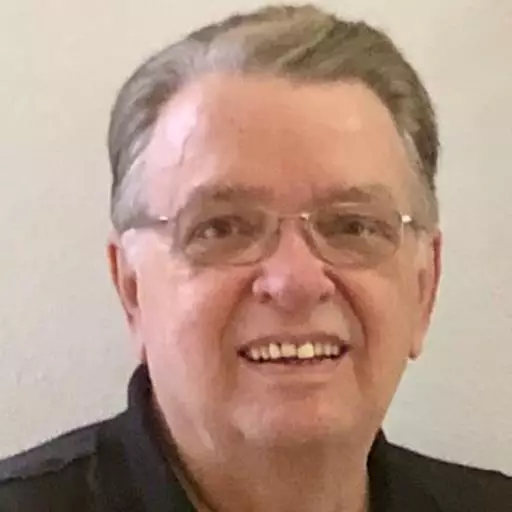
Bil Gebhardt
The Question - Part 1


Narrator: Today on Fellowship in the Word, Pastor Bill Gebhardt challenges you to become a fully functioning follower of Jesus Christ.
Bil Gebhardt: Let me say it this way, think for a moment back to the biggest regret of your life. The thing you regret more than anything else in your life that you did. And now, be honest with yourself, did you really spend time with the question, "Is this the wise thing to do?" before you did it? And the answer is almost always, of course not. You just did it, and then you had the regrets.
Narrator: Thank you for joining us today on this edition of Fellowship in the Word with Pastor Bill Gebhardt. Fellowship in the Word is the radio ministry of Fellowship Bible Church, located in Metairie, Louisiana. Let's join Pastor Bill Gebhardt now as once again he shows us how God's Word meets our world.
Bil Gebhardt: Besides Jesus Christ, you and I have something in common. We have both done our share of really stupid things. Stuff that we wish we could forget. Stuff that we regret. Money that we wish we hadn't spent. Invitations that we wish we hadn't accepted. Relationships that we wish we had never gotten involved in. Jobs we wish we had never taken.
Partnerships that we wish we had never entered into. Contracts that we wish we had never signed. And places that we wish we had never gone. You look back on your life and you wonder, how could I have been that dumb? How could I have been so blind?
And some of the stupid things that we've done in the past are not really big deals, but others are. You know, it's one thing to buy some bad stock based on a bad tip. It's another thing to find yourself $25,000 in credit card debt. You know, it's one thing to go out on a date that maybe you shouldn't have gone out on. It's another thing to find yourself in a long-term relationship that you virtually regret every day of.
In fact, what we find among ourselves is sort of a principle here. I don't believe any of us planned to mess up our lives, but on the other hand, I think there are very few people that actually plan not to mess up their lives. To have a failing marriage, no one plans that. To have irresponsible or codependent children, nobody plans that. To become an addict or an alcoholic, nobody plans that.
To be buried in debt. These are all situations that I've run into in counseling. And the question that is usually asked by people is this one, "How did this happen to me? How did this happen to me?" The problem is that that's the wrong question.
Many of the greatest regrets of our lives are regrets because we failed when we were making the decision or the choice to ask the right question. You see, if you ask the right question, it'll save you time and money and stress and tears and regrets.
In fact, if you ask the right question, it can touch every area of your life. It's a question that literally could fool proof your life. It's a question that in the Word of God is hidden in plain sight for all of us to see, but it's not a question that you really want to ask when you're making choices.
You see, we can make a bad decision or a poor choice, and it's astounding how we can justify it and the words that we use when we're making this process. We say things like, "Well, this isn't going to hurt anybody. I can handle this. I can quit whenever I want to." That's a classic. "I can quit whenever I want to. I have needs."
"Hey, we all need to live a little." "I mean, after all, I live in the real world." Those are the things that we say when we make really poor choices with our life. The right question cuts through those excuses like a hot knife through butter.
You see, our propensity for self-deception makes it difficult for us to ask the right question, but we have to ask it. Open your Bibles to Ephesians chapter 4. A great epistle. The Apostle Paul sort of takes all of his thoughts in Romans and he he pares it down in Ephesians. It's sort of the Magna Carta of Christianity. If you want to know what it's like, he spends the first three chapters telling believers, just in Ephesus, just like you and me, what it means to be a Christian, this this new identity that we have. We're not the people that we were.
He he tells us what it means to be, one of his favorite phrases, "to be in Christ." He gives us all of these spiritual resources that are ours. And then in chapter 4, he turns the corner and he says, "Now that you know who you are, this is how you should act."
And so when he gets to chapter 4, verse 1, he says, "Therefore I, the prisoner of the Lord, implore." He says, "you to walk," and anytime you see walk it's a metaphor for life. He said, "to live in a manner worthy of the calling for which you have been called." He said, "You need to act out and live out the life of who you really are."
And then in verse 14 he says, "As a result, we're no longer children tossed," he says, "here and there by waves and carried about by every wind of doctrine and by the trickery of men, by craftiness and evil scheming." He said, "But here's what we should be doing. But speaking the truth in love, we are to grow up in all aspects in him, who is the head, even Christ."
In verse 17 he says, "We are to walk no longer as the Gentiles walk in the futility of their mind." In verse 22, he says, "In reference to your former manner of life, you lay aside the old self which is being corrupted in accordance with the lust of deceit, and that you be renewed in the spirit of your mind, you put on your new self, which is in the likeness of Christ." He says, "which has been created in righteousness and holiness and truth."
In verse 25, he says, "We're to lay aside all falsehood." In verse 26, "We can be angry, but we're not to sin." In verse 28, he says, "that he who steals must steal no longer, but rather he must labor, performing with his own hands what is good so that he will have something to share with those who have need." He then says, "Let no unwholesome word proceed from your mouth."
In verse 31, "Let all the bitterness and wrath and anger and clamor and slander be put away from you along with all malice. You need to be kind to one another, tender-hearted, forgiving each other, just as God in Christ also forgave you." And then in 5:1, he says this, "Therefore, be imitators of God as beloved children."
So in chapter 4, verse 1, he says, "Walk in a manner worthy of your calling." And I think all of us say, "I think I can do that. I'd like to do that." And then in chapter 5, he says, "Let me express that differently. Be imitators of God."
Now, when you hear that and you're honest, what are you thinking? "Come on. Yeah, I'm going to imitate God." That's what he says. "Imitate God."
Well, there's a problem. God's holy, and I'm unholy. You see, God's perfect, and as you know, I'm imperfect. You see, how do I imitate God? Why does he give us that kind of standard? In fact, in chapters 4 and 5, he gives us all these values and all these virtues that we are to live out in our life as Christians and to be imitators of God. Who can pull that off?
It's almost like Paul anticipates that that's the way people will think. You see, and he makes a shift. He says, "Maybe I can help you. Whenever you think, what do I have to do to imitate God? You're kind of overwhelmed, because there's another question that naturally comes to your mind. It's much more important, how do I imitate him? How do I do that?
You want me to walk in a manner worthy of my calling. You want me to to live out my life, what it means to be a Christian. You want me to be an imitator of God as one of his children. How do I do that?" Well, Paul says, "There's a way." And that's what he picks up in verse 15 of chapter 5. Three verses. He says this, "Therefore," once again, "Be careful how you walk, be careful how you live. Not as unwise, but as wise. Making the most of your time because the days are evil."
"So then, do not be foolish, but understand what the will of the Lord is." Right there in those verses is the question. Hidden in plain view. Question that can change your life. A question that can change your future. Question that can change today.
A question you and I need to ask ourselves with every choice, every decision that we make. The question is this, "What is the wise thing to do?" See, that's not a question that comes natural for most Christians. Here's the kind of questions a lot of Christians talk to me about. "Uh, Pastor, uh, what I want to know is how close to the line of sin can I go, actually be here, before I step over? How how close can I get right here?"
"How close can I get to being wrong and still be right?" By the way, that's the kind and based on that, that's why you have the regrets you do. That's the choices and the decisions that you make. You see, "What can I do and still have the minimum of consequences in my life?"
In other words, we wouldn't say it this way, "How unethical, how immoral, and how insensitive can I be and still be able to manage the outcome?" That's what we ask ourselves. And God is not mocked when it ends up happening, you reap what you sow. And for a lot of us, it's a lot of regrets.
Now, if you are sitting there piously and thinking, "But that's not the way I think at all." Well, let me try this picture. Has this thought ever crossed your mind? "How far over the speed limit can I drive and still not worry about getting pulled over by a policeman?" You ever thought that? Ever? Of course you have. In fact, usually we know somebody. Like, "I know a guy who knew a policeman." And a state trooper said that, "They'll give you 78 miles an hour on the interstate before they pull you over." So what's your new speed limit?
78 miles an hour. But what does the sign say? "Speed limit 70." And it doesn't underneath it say "negotiable." It doesn't it doesn't say that. But that's the way we think. You see, that just reveals our heart. "How far can I go and not have to face the consequences?"
See, "How many times can I take this drink that?" You see, "How far can I go? How much can I do and not be an alcoholic and not be an addict? How far can I go?" That's the question that we ask ourselves. Now, as Christians, I know we have limits. All of us do. If you know Christ, you have limits. But for most of us, I'm afraid it's more like this. "Whenever God said, 'Thou shalt not,' that's my limit."
So we pretty much are Ten Commandment kind of people. You know, once you break one of the Ten Commandments, you know, "I think I went over the line there." Now, the implication of that for us though is fatal, because it's this. When you think, "Okay, I know what my limit is: 'Thou shalt not.'"
"And anything that God hasn't said that 'thou shalt not,' means to me, 'thou shalt.'" You see, if God hasn't said I can't do it, then I can. And I'm going to. And then we reap what we sow. The Apostle Paul said in 1st Corinthians 6, he said, "You know, all things are lawful for me, but all things are not profitable. All things are not expedient."
What is Paul applying there? Wisdom. Paul says, "Just because I can do it, doesn't mean it's the wise thing to do." In fact, I think the Lord is telling us here what Jesus said in John 10 when he said, "I have come to give you life and to give it to you abundantly." It's a life that God intends for you to live as one of his children. And God says, "Look, one of the things you have to learn to do in your life is you have to be careful how you live."
"You have to be careful how you live. You have to make wise choices if you're going to reap what I have for you." Let me say it this way. Think for a moment back to the biggest regret of your life. The thing you regret more than anything else in your life that you did.
And now be honest with yourself, did you really spend time with the question, "Is this the wise thing to do?" before you did it? And the answer is almost always, of course not. You just did it, and then you had the regrets.
That's why this question is so important. Let's look at these verses a little more carefully. Paul says, "Therefore, be careful how you live." He says, "Not as unwise, but as wise." Unwise is the word a-sophia. The word wise is the word wisdom is sophia. Don't live a-sophia, live sophia. A synonym for a-sophia means foolish. He is saying, "Don't be foolish."
"What you need to do is you need to live as a wise person." And every time you and I make a choice, as a believer in Jesus Christ, this is the extremes of that choice: I can make an unwise choice or I can make a wise choice. Notice what Paul was saying to the Ephesians and to us, "You have to be careful."
You see, this requires a lot of thought and prayer on your part. You actually have to be careful how you live. He says then, "Making the most of your time." He says, "You need to be careful how you live. Don't live foolishly, live wisely, but you need to make the most of your time." And that term "making the most of," "making the most of," is one word in Greek. It's the word "exagorazo."
Now, you say, "Well, what's that mean?" It means every other time it's in the New Testament, it's translated "redeem." In fact, you have been exagorazo'd by the blood of Christ. You have been redeemed by the blood of Christ. And so you could say, "Here, redeem your time." It would be the same thing. He says, "Make the most of your time." And the word time is not the word "chrono," which we get chronograph from. It doesn't he's not talking about the hours, the days, the months. He's not talking about that. He's talking about something else. He's talking about the word "kairos" and it's your time.
Making the most of your time. Making the most of your life. The word "kairos" means allotted. It's an interesting word. Your allotted time. You need to make the most out of your allotted time. Now, notice what he means by this. He is not saying to us, "Oh boy, now I'm going to feel guilty because I'm going to have to be one of these guys. I'm going to have to keep a day planner and see if I waste any time. I got to be serving Jesus every moment of every day." That's not what he means.
What he means is this, "Don't waste your time by making foolish choices. Don't do that. Make the most of your time by making wise choices with your life, asking yourself the question, 'What is the wise thing to do?'" And then he says, "Notice, making the most of your time because the days are evil."
Now the Ephesians are like, "What?" "Yeah, the days are evil." Hold your place there and go back to chapter 2 of Ephesians just for two verses. Chapter 2, and verses 1 and 2. He says, "And you were dead in your trespasses and sins," and then he says this, "in which you formerly lived or formerly walked, according to the course of this world."
He says, "according to the prince of the power of the air." He said, "of the spirit that is now working in the sons of disobedience." So he tells the Ephesians, "You know what? Do you know why your world was so evil? Because it's controlled by the evil one. That's why."
He said, "And that's the way it is." And it was for them. To live in Ephesus, if you would visit the ruins in Ephesus today, there are areas still carved out near the temple sites where they have all kinds of phallic images because it was part of their worship. In fact, if you were going to worship in the temple in Ephesus, the two things that were most important for a worship service was drunkenness and prostitution.
That was worship in Ephesus. That's what these people were doing before they came to Christ. And he says, "Look, I know that the culture you grew up in has a sort of grip on you." "And you fight this temptation of going back to living the way you had." Just like you and I. Nothing's really changed.
Years and years ago, I think when I was a little boy, they used to say things like, "Don't go looking for trouble." I don't think today you have to go looking for it. I don't think you have to go looking for trouble. I think trouble's everywhere. I think our culture is is showing over and over again by all the ways you market culture that it's sliding and it's changing. And he says, "That's all the more reason that you be careful how you live, that you be careful to make wise choices and not foolish ones, that you make the most of the opportunity called your life because the days in which you live," he said, "are evil. There is no morally neutral climate in which we live."
He said almost the same thing to the Romans in Romans 12 when he said, "Don't let the world squeeze you into its mold." That is so much easier to have happen than you think it is. The world can set our priorities. It sets so many of our goals and ambitions. So he said, "So then do not in verse 17, be foolish. Do not be foolish." And then he says, "But understand what the will of the Lord is."
Narrator: You've been listening to Pastor Bill Gebhardt on the radio ministry of Fellowship in the Word. If you ever miss one of our broadcast or maybe you would just like to listen to the message one more time, remember that you can go to a great website called onplace.com. That's onplace.com, and you can listen to Fellowship in the Word online. At that website, you will find not only today's broadcast but also many of our previous audio programs as well.
At Fellowship in the Word, we are thankful for those who financially support our ministry and make this broadcast possible. We ask all of our listeners to prayerfully consider how you might help this radio ministry continue its broadcast on this radio station by supporting us monthly or with just a one-time gift. Support for our ministry can be sent to Fellowship in the Word, 4600 Clearview Parkway, Metairie, Louisiana 70006.
If you would be interested in hearing today's message in its original format, that is, as a sermon that Pastor Bill delivered during a Sunday morning service at Fellowship Bible Church, then you should visit our website fbcno.org. That's fbc nola.org. At our website, you will find hundreds of Pastor Bill's sermons. You can browse through our sermon archives to find the sermon series you are looking for, or you can search by title. Once you find the message you are looking for, you can listen online, or if you prefer, you can download the sermon and listen at your own convenience.
And remember, you can do all this absolutely free of charge. Once again, our website is fbcno.org. For Pastor Bill Gebhardt, I'm Jason Gebhardt. Thanking you for listening to Fellowship in the Word.
Featured Offer
Past Episodes
- A 20/20 Vision of God
- A Disturbing Sermon On The Mount
- A Long Glimpse of Heaven
- Abraham: The Friend of God
- American Idols
- Are You Happy?
- Challenges of Our Times
- Christianity And America
- Christmas
- Colossians
- Contentment
- Conversations with Jesus
- Easter
- Ecclesiastes
- Elements Of The Abundant Life
- Ephesians
- Esther
- Experiencing The Abundant Life
- Exploring Ephesians
- Extraordinary Women of The Bible
- Haggai
- Happiness
- Happy Days
- History's Darkest Days
- Hopeful Reminders
- How Should Image Bearer's Live?
- How to Change Your Life
- How To Live In The Last Days
- How To Live In These Last Days
- I Am Who You Say I Am
- Improving Your Attitude
- Independent
- Isaiah
- It's All In Your Head
- It's Time to Face Your Fears
- Lessons From Joshua
- Lessons In The Storm
- Life is War
- Living a Foolproof Life
- Living A Grace Filled Life
- Living a Great Life God's Way
- Living In A Pagan Culture
- Personal Fears
- Philippians - The Journey to Joy
- Pondering Job
- Practicing The Presence Of God
- Psalm 23
- Psalms For Everyday Living
- Psalms for Life
- Put On Your Thinking Cap
- Seven Choices
- Simply Follow
- Sins Of The Mind
- Spiritual Guardrails
- Spiritual Journey
- Spiritual Snapshots
- Spiritual Warfare
- Spiritual Warnings
- Sunny Dark Days
- Thanksgiving
- The Authentic Life
- The Bedrock Choices of Life
- The Choices Of The Abundant Life
- The God-Centered Life
- The Greatness of Grace
- The Hall of Faith
- The Importance Of Our Words
- The Ineffective Church In America
- The Journey to Joy
- The Power of Sin
- The Road Less Traveled
- The Upside of Down
- The Victorious Christian Life
- The Weight of our Words

Featured Offer
About Fellowship in the Word
Pastor Bil Gebhardt, challenges you weekly to become a fully functioning follower of Jesus Christ in his 30 min Fellowship in the Word broadcast.
About Bil Gebhardt
Contact Fellowship in the Word with Bil Gebhardt
Info@fbcnola.org
http://www.fbcnola.org
Fellowship in the Word
4601 Shores Drive
Metairie, LA 70006
504-456-9099