
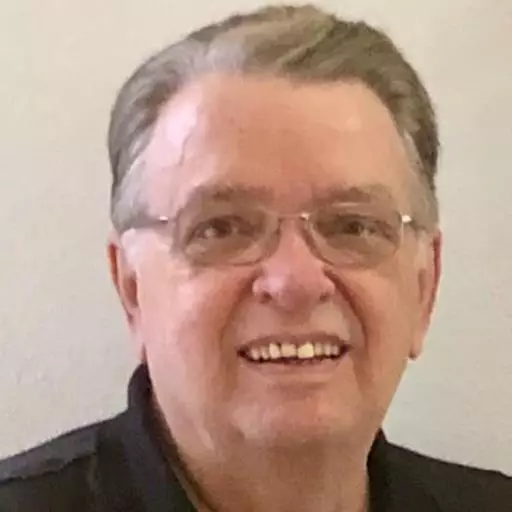
God Fights For You - Part 2


Bil Gebhardt: Now Jesus isn't panicking. Why? Because Jesus said, "I said we're going to the other side." If Jesus says you're going to the other side, where are you going? The other side. So, notice they shake him up, wake him up, and say to him, "Don't you care that we are perishing?" That's an interesting question to ask Jesus Christ, isn't it? He just goes like this, and the sea is like glass. And what did he say? "Oh, you men of little faith."
Circumstances rob us of our faith. We get in a tough predicament and just like Jacob or the disciples, we figure out a scheme and a plan to work our way out of this. So, God decides what he's going to do here. God decides that he's going to do something different here. God decides, "I've got to teach him a lesson here," and that's the crossroads moment for Jacob.
Then Jacob was left alone, and it's a short passage, and a man wrestled with him until daybreak. If there are 200 commentaries on Genesis, there are about 100 different views here. Who's the man? You see, who's the man that wrestles with them? He wrestles with them all night. Jacob will tell us who he thinks he is. I guess I owe it to you to tell you what I think it is. I think he's the Son of God. He is the Angel of Yahweh. He is the Angel of God in the Old Testament, the Son of God.
He's not Jesus Christ because remember, Jesus Christ was born in Bethlehem, fully God and fully man. He's the eternal Son of God. So, it says he wrestled with him until daybreak. And when he saw that he had not prevailed against him—now, this is interesting. He gives Jacob, I think, a lot. I can't imagine what the night was like. I think Jacob needed to stop and rest at times. I'm not too sure about the Son of God. I don't think he had to too much.
But there were probably some headlocks and a lot of sweat. They're just going on and on here, trying to do it, and Jacob can't prevail. And so finally, by daybreak, the Son of God says this is long enough. He touched the socket of his thigh, so the socket of Jacob's thigh was dislocated while he wrestled with him. In the way I see it, Jacob's doing a lot of things like that and finally, the sun's coming up and the Son of God just went click and now has dislocated his hip.
Jacob's hip is now dislocated. That becomes a permanent sign, by the way. He'll limp the rest of his life. So, it says then he said, "Let me go, dawn is breaking." And he said, "I will not let you go unless you bless me." He's tenacious for this. He wants to earn this. So, he said to him, "What is your name?" And he said, "Jacob." Now, it's a nice name for us, and if you have a son named Jacob, that's wonderful. But the name in Hebrew means a heel-grabber.
He was grabbing Esau's heel. He's a heel-grabber. He spent his whole life grabbing heels. It means deceitful scheming, a lot of things. That's who Jacob is. "That's my name. My name is Jacob." He tells him that honestly. And he said, "Your name shall no longer be Jacob, but Israel, for you have striven with God and with men and have prevailed." I'm going to change your name. That's where the name Israel comes from.
Israel means God fights. That's what Israel is. Israel's name means God fights. In other words, what's God trying to tell them? "I fight." You see, who fights for Abraham? God. Isaac? God. Jacob? God. Jacob just doesn't see it that way. He says, "Your name is going to be God fights." Then Jacob said to him, "Please tell me your name." But he said, "Why is it you ask my name?" And he blessed him there with that term, "Your name's changed to Israel."
So, every time you'd meet someone in that culture that understood your language, you'd say hello. When they say, "What's your name?" you'd say, "My name is God fights," instead of heel-grabber. My name means God fights. Wow. So, Jacob named the place Peniel, for he said, "I have seen God face to face and yet my life has been preserved." That's interesting.
Alan Ross, a fine Old Testament scholar, says that Jacob explained that seeing Esau's face was like seeing the face of God. This statement refers directly to the preceding narrative in which Jacob saw God face to face in the nocturnal struggle and was delivered. Having seen God's face, he now could see Esau's, or Esau's favorable reaction was like God's gracious dealings just prior to this meeting.
And so what happens therefore in this day, the sons of Israel do not eat sinew of the hip which is on the socket of the thigh because he touched the socket of Jacob's thigh in the sinew of the hip. This is interesting. That's not in the law. The law doesn't come for 400 years. There is no law. There's nothing written in Scripture. This is Genesis, written 400 years later. So, the point is, the Jews decided on their own will never eat meat from the hip because of what happened to Jacob.
This wasn't God's idea; this was their idea. So, as soon as chapter 33 starts, it's fascinating to me because God says, "Okay, let's test this. If we're going to do this, let's just test how this is going to work." So, Jacob lifted up his eyes and he looked, and here comes Esau right the next day. Here he comes. 400 men are with him. Jacob said, "Whoa." Now remember, what did God just teach him? God fights, right? Why did he show him the angels? "I got this."
Jacob says, "I've got to work this out. I've got to make this happen." So, it says he saw him coming, so he divided the children among Leah and Rachel and the two maids. Now watch this. He put the maids and their children in front. He's a fine father. This is Father's Day. Jacob is a fine father. "Look, you guys die first. That's okay with me." First the maids and your kids, then Leah, but Rachel and Joseph stay with me.
But you'll find he'll go in front of them, but that was his plan. He himself passed on ahead of them. He bowed down to the ground seven times until he came near his brother. One last way to manipulate him. "I got this. When I'm pretty far away, I'm going to bow down and put my forehead on the ground. Take a few steps, bow down again, put my forehead on the ground." Seven times.
Now, in that culture, there's only one person you'd ever do that to: a king or a Pharaoh. If you're going to meet someone like that, that's what he says. "That's how I'm going to treat Esau." Now, Esau's just his brother. He has no title. In fact, he doesn't even have a birthright. He doesn't even have the blessing of Isaac. "But I'll do this seven times. That'll impress him."
Then Esau ran to meet him. What do you think Jacob's thinking? "Oh, jeez. Everything I tried hasn't worked." So, Esau ran to meet him, embraced him, fell on his neck, kissed him, and they wept. Wow. Reminds me of the New Testament, the Prodigal Son. Remember after he squandered the whole inheritance, he thinks the father's running to judge him, and the father runs to him and kisses him? Same thing here. Why did Esau do that? Because God got it.
All the planning and scheming that Jacob did was all hypothetical. None of it was true. God had already worked in Esau's heart. Esau was so happy to have his brother back that he wept. He couldn't wait to be with his brother again and be part of his brother again. Jacob was just like we are. You get so worried and full of anxiety about things that never happen. And so, that's what he did. He said he ran to him, kissed him on the neck, and he wept.
And he lifted up his eyes and he saw the women and children. He said, "Who are these with you?" And they said, "The children whom God has graciously given to your servant." And then the maids came with their children, they bowed down. Leah likewise came with her children, they bowed down, and afterward, Joseph came with Rachel and they bowed down. And he said, "What do you mean by all this company which I have met?" And he said, "I just want to find favor with my lord." He can't stop.
But Esau said—you see, remember he's offered him all this stuff. I love what Esau says here. "I have plenty, my brother. Let what you have be your own." Now, if Esau was from New Jersey, what would he say? "Forget about it. I don't want your stuff. I don't want a bunch of stuff. Why would you think I want your stuff?" No, he doesn't. He said, "That's not the case at all."
Jacob said, "No, please, if now I find favor in your sight, then take my present from my hand, for I see your face as one sees the face of God and you have received favorably." He said, "I finally see you for what you are. I saw God's face yesterday, now I saw your face today, and it's all going pretty well." So, please take the present. He wants to take the grace that God gave Jacob and then give that grace to Esau.
Esau says, "No, I'm really not going to go into that." Esau said, "Let us take our journey and go, and I'll go before you." Now Jacob's thinking—you see, there's something about a Jacob. They don't trust people. They don't trust anybody. Jacob doesn't trust anybody. He thinks everybody's just like him, and when he got there and found Laban, he found a guy worse than him.
And so consequently, he said, "No, no, my lord knows that the children are frail." This is new. Look how sickly my kids look. "My children are frail and that the flocks and herds which are nursing are to a care to me, and if they are driven hard in one day, the flocks will die." They've come 500 miles. They made a journey of 500 miles. "No, it'll kill them if I have to go with you. We don't want to kill the little children." What is he doing? He's doing what he always does.
"Please let my lord pass before his servant, and I will proceed at my leisure according to the pace of the cattle that are before me and according to the pace of the children until I come to my lord at Seir." Esau said, "Please let me leave with you some of the men who are with me. They'll give you more protection." He said, "No, what need is there? Let me find favor in the sight of my lord." "I don't want any more security and I don't trust your men."
So, Esau returned that day on his way to Seir. But Jacob journeyed to Succoth, built himself a house, made booths for his livestock, and therefore he named the place Succoth. He didn't go to Seir. "I'm not following him into that land. I'm not going to let him do that to me. I'm going to build my own place." Wow. See, the message here is a simple one: God fights. God fights for his people.
It's not new. God fights. That's what he's saying, that's why he made your name like that. God fought and softened Esau's heart. God fights for flawed people just like you and me. He fights for us because we're his. You no longer have to scheme your way through life like Jacob. He was known as a schemer the first part of his life because his name was Jacob. The second part of his life he's known as a limper who says, "But God fights."
What a wonderful message that is for us. God fights for me and for you. That's a point, that's what his grace is. Two passages I want to look at as we close. The first one is in 2 Kings, chapter 6, verse 11. This is an amazing story and a rare one. But Aram, the king of Aram, is at war with the king of Israel. Elisha is a prophet to the northern kingdom of Israel. As they're going to go battle, every time Aram and his army moves, the king of Israel already knows what they're going to do and how many of them there are because Elisha is telling the king of Israel.
That's an amazing thing. Now, Aram's upset with this. He's pretty upset about this whole idea of all this intel getting out. So, in verse 11 it says, "Now the heart of the king of Aram was enraged over this thing, and he called his servants and he said to them, 'Will you tell me which of us is for the king of Israel?' Somebody on the inside is leaking all this information." Well, one of his servants said, "No, no, my lord O king, it's Elisha, the prophet who is in Israel. He tells the king of Israel the words which you speak in your bedroom." What a great way to do it. He tells them every word you have because he's the prophet.
He said, "Well, go and see where he is that I may send and take him." And he said, "We don't have to go and see, he's in Dothan." So, he sent horses, chariots, and a great army there, and they came at night and they surrounded the city. So, he sent a whole army to get Elisha. So, next morning, when an attendant of the man of God, an attendant of Elisha, had risen early and gone out before an army with horses and chariots circling the city, and his servant said to him, "Alas, my master, what are we going to do? We're dead men. There's an army here just for us."
Notice what Elisha said. "Do not fear, for those who are with us are more than those who are with them." And I'm sure the servant thought, "What?" Elisha prayed and said this, "Lord, I pray you open the eyes that he may see." And the Lord opened the servant's eyes and he saw and behold, the mountain was full of horses and chariots of fire all around Elisha. The angel army was there. Elisha never had to see it. He believed it. You know why? Because God fights.
That's what Elisha believed. The servant had to see it. It's one of the few times you get someone to see it. But it's just like in our own life. Do you understand what that means? See, God's grace isn't some unmerited favor he saved you with in the past. God's grace is with you every single day of your life and every day into the future. God fights for us. You see, he died for us and God fights for us. This is a hard lesson for us.
One more passage, Matthew, the Sermon on the Mount, chapter 6 and verse 25. This is Jesus speaking. Jesus says, "For this reason, I say to you, do not be worried about your life as to what you will eat, what you will drink, nor your body, nor he said what you will put on. Is not life more than food and the body more than clothing?" Jesus' command: don't worry about stuff. Now, I'm sure in this astute congregation, none of you ever have. We've never worried about money or anything, never. Don't we? Jesus said don't do that.
"Wait a minute." He said, "Look at the birds of the air, they do not sow, they do not reap, they do not gather into barns, yet your heavenly Father feeds them. Are you not worth much more than they?" He said, "Let me try another angle. And who of you by being worried will add a single hour onto his life? Tell me how worrying helps you." It can hurt you. You have enough stress in your life, you can get all kinds of side effects and consequences from it.
"And why are you worried about clothing? Observe how the lilies of the field grow, they do not toil nor do they spin, yet I say to you that not even Solomon in all of his glory was clothed like one of these. For if God so clothes the grass of the field which is alive today and tomorrow thrown into the furnace, will he not more than clothe you?" Now here's the point: "You of little faith."
See, that's his issue. You have little faith. Why are you doing this? He said, "Do not worry then, saying 'What shall we eat? What shall we drink? Or what shall we wear?' The Gentiles, that's the unbelievers, eagerly seek all these things. Your heavenly Father knows what you need, and you need all these things. Seek first his kingdom and his righteousness, and all these things will be added to you." That's his word to you. So, do not worry about tomorrow; tomorrow will take care of itself.
An oxymoron is a Christian who worries. You see, and this is hard for us. This is one of these principles that's easy for us to understand and very hard for us to apply. You remember the story Jesus said to his disciples—and by the way, almost all of them were fishermen and fished their whole lives as professional fishermen on the Sea of Galilee. Jesus said, "Hey, we're going to the other side. Let's get in a boat." So, they get in a boat and a storm comes up. Jesus goes down in the bottom of the boat and falls asleep. He's sound asleep.
Meanwhile, the boat's in the water, the water's in the boat, the storm is up, and the disciples are panicking. Now, Jesus isn't panicking. Why? Because Jesus said, "I said we're going to the other side." If Jesus says you're going to the other side, where are you going? The other side. So, notice they shake him up, wake him up, and say to him, "Don't you care that we are perishing?" That's an interesting question to ask Jesus Christ, isn't it? He just goes like this, and the sea is like glass. And what did he say? "Oh, you men of little faith."
You see, you little faith. Circumstances rob us of our faith. We get in a tough predicament and just like Jacob or the disciples, we figure out a scheme and a plan to work our way out of this. And what God is telling you: "Look, I got it. I fight for you." That's the point. That's the point he wanted Jacob to have for his whole life. And by the way, think about it from one other sidebar. God made covenants with Abraham and then obviously with the nation Israel thousands of years ago.
And then, when you think about it, for the last nearly 2,000 years, there wasn't even a nation Israel. But God said, "I made the promise. I made the promise. Is there a nation Israel now?" I mean, it's an amazing thing. And I remember reading even in a library at the seminary, people would say a lot of guys would say, "That can't be possible. There's never been a nation in the history of the world that wasn't a nation for 2,000 years and then's going to be one again. That doesn't ever happen."
The guy wrote that in the 1930s. In 1948, there's a nation. Why is that? God fights. God says, "I got this." You see, that's the point. As a child of God, you and I have to remember that we have to stop scheming and start trusting the God who fights for us. Let's pray.
Father, this kind of lesson is so easy for us when we're not in a difficult time. But when we find ourselves in difficult times, it becomes very hard. We try every possible way that we can work our way through this, manipulate everything we can or anyone we can to come out for our common good. And it's not like the Scripture says that we shouldn't plan or we shouldn't be industrious; we should. But in the end, Father, we know something: we trust you. Anything in our life that you said you got, you got. And that should relieve us of a tremendous amount of anxiety, worry, and fear. And that's why the apostle Paul told the church of Philippi that when you learn this lesson, you can have a peace beyond all comprehension, a peace that is everlasting. Jesus said, "My peace I'll give to you, a supernatural peace." But Father, we have to trust you rather than trusting in our own schemes. We pray this in Jesus' name, Amen.
Jason Gebhardt: You've been listening to Pastor Bil Gebhardt on the radio ministry of Fellowship in the Word. If you ever miss one of our broadcasts, or maybe you'd just like to listen to the message one more time, remember that you can go to a great website called OnePlace.com. That's OnePlace.com, and you can listen to Fellowship in the Word online. At that website, you will find not only today's broadcast but also many of our previous audio programs as well.
At Fellowship in the Word, we are thankful for those who financially support our ministry and make this broadcast possible. We ask all of our listeners to prayerfully consider how you might help this radio ministry continue its broadcast on this radio station by supporting us monthly or with just a one-time gift. Support for our ministry can be sent to Fellowship in the Word, 4600 Clearview Parkway, Metairie, Louisiana, 70006.
If you would be interested in hearing today's message in its original format, that is as a sermon that Pastor Bil delivered during a Sunday morning service at Fellowship Bible Church, then you should visit our website, FBCNola.org. That's FBCNola.org. At our website, you will find hundreds of Pastor Bil's sermons. You can browse through our sermon archives to find the sermon series you are looking for or you can search by title.
Once you find the message you are looking for, you can listen online, or if you prefer, you can download the sermon and listen at your own convenience. And remember, you can do all this absolutely free of charge. Once again, our website is FBCNola.org. For Pastor Bil Gebhardt, I'm Jason Gebhardt, thanking you for listening to Fellowship in the Word.
Featured Offer

Past Episodes
- A 20/20 Vision of God
- A Disturbing Sermon On The Mount
- A Long Glimpse of Heaven
- Abraham: The Friend of God
- American Idols
- Are You Happy?
- Challenges of Our Times
- Christianity And America
- Christmas
- Colossians
- Contentment
- Conversations with Jesus
- Easter
- Ecclesiastes
- Elements Of The Abundant Life
- Ephesians
- Esther
- Experiencing The Abundant Life
- Exploring Ephesians
- Extraordinary Women of The Bible
- Haggai
- Happiness
- Happy Days
- History's Darkest Days
- Hopeful Reminders
- How Should Image Bearer's Live?
- How to Change Your Life
- How To Live In The Last Days
- How To Live In These Last Days
- I Am Who You Say I Am
- Improving Your Attitude
- Independent
- Isaiah
- It's All In Your Head
- It's Time to Face Your Fears
- Lessons From Joshua
- Lessons In The Storm
- Life is War
- Living a Foolproof Life
- Living A Grace Filled Life
- Living a Great Life God's Way
- Living In A Pagan Culture
- Personal Fears
- Philippians - The Journey to Joy
- Pondering Job
- Practicing The Presence Of God
- Psalm 23
- Psalms For Everyday Living
- Psalms for Life
- Put On Your Thinking Cap
- Seven Choices
- Simply Follow
- Sins Of The Mind
- Spiritual Guardrails
- Spiritual Journey
- Spiritual Snapshots
- Spiritual Warfare
- Spiritual Warnings
- Sunny Dark Days
- Thanksgiving
- The Authentic Life
- The Bedrock Choices of Life
- The Choices Of The Abundant Life
- The God-Centered Life
- The Greatness of Grace
- The Hall of Faith
- The Importance Of Our Words
- The Ineffective Church In America
- The Journey to Joy
- The Road Less Traveled
- The Victorious Christian Life
- The Weight of our Words

Featured Offer
About Fellowship in the Word
Pastor Bil Gebhardt, challenges you weekly to become a fully functioning follower of Jesus Christ in his 30 min Fellowship in the Word broadcast.
About Bil Gebhardt
Contact Fellowship in the Word with Bil Gebhardt
Info@fbcnola.org
http://www.fbcnola.org
Fellowship in the Word
4601 Shores Drive
Metairie, LA 70006
504-456-9099