
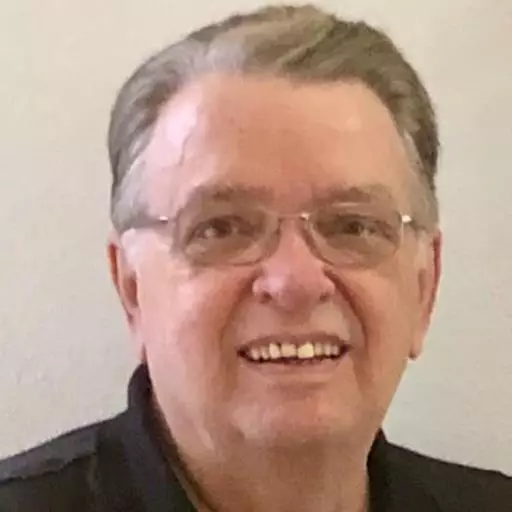
By Learning To Strengthen Yourself - Part 2


Bil Gebhardt: There is no posture for prayer. No wonder Paul said "pray without ceasing." It's not a matter that I have to bow my head, close my eyes, and fold my hands if I'm praying. He said "pray without ceasing." One of the great beneficiaries of all that kind of prayer, without question, is it can change you. It can change you because you're practicing the presence of God in your life. You are strengthening yourself.
Prayer should not be a hamster on the wheel of worry, thinking, "I've got to pray about this, I've got to pray about this." That is just getting the wheel going. It should be a bridge that connects us in faith to our Father.
Jason Gebhardt: Today on Fellowship in the Word, Pastor Bil Gebhardt challenges you to become a fully functioning follower of Jesus Christ. Thank you for joining us today on this edition of Fellowship in the Word with Pastor Bil Gebhardt.
Fellowship in the Word is the radio ministry of Fellowship Bible Church, located in Metairie, Louisiana. Let's join Pastor Bil Gebhardt now as once again he shows us how God's Word meets our world.
Bil Gebhardt: Moreover, David was greatly distressed because the people spoke of stoning him. All the people were embittered. They said, "We lost our kids, our little boys and little girls and our wives because of you! We even followed you to this godforsaken place in the land of the Philistines and now they're dead, or as good as dead."
It says David was greatly distressed. I would imagine so. Up until now, I would say this was the lowest point in David's life. Notice the next word, though: "But." Even though he's greatly distressed, David strengthened himself in the Lord his God. David strengthened himself.
Do you do that? Most Americans don't, and most Christian Americans don't. That's kind of the issue here. We think, "I need more medication. I'm having a bad day. I need four glasses of wine a night." We feel we have to. We think, "I need a fine therapist. I need something to strengthen me." But do you strengthen yourself?
That's a very important thing here. David strengthens himself in the Lord, Yahweh, the personal covenant-keeping God. And then a most important word: his God. Not the God, but his God. Remember the 23rd Psalm: "The Lord is my shepherd." He strengthened himself in the Lord his God. This is my God.
One of the things I'm sure David did at that time, and the reason he could strengthen himself in his God, is he remembered. That's something we need to do if we are going to strengthen ourselves. We need to remember. Think in David's case: he slew Goliath. He cut off Goliath's head and he took it to Jerusalem for all the Jews to see it. Goliath had all these incredibly large weapons. David took all of them and put them in his tent. David could never use those weapons; he couldn't even lift them.
Why did David put those weapons in his tent? Every time he came into that tent, he said, "Lord, thank you. Thank you. Look what you did with that giant." He remembered what God had done. That's how you strengthen yourself in God. Remember David said to the giant, "You uncircumcised Philistine, you who dares to taunt the armies of the living God, you can't do that."
In a sense, he strengthens himself. But then he takes a major step. David said to Abiathar the priest, "Please bring me the ephod." So Abiathar brought him the ephod. The ephod is part of the garments of the high priest. There's a breastplate that the high priest wears. It's nine inches by nine inches and it has 12 stones in it representing the 12 tribes of Israel. It can only be used by the high priest and the leader of the nation in conjunction. The high priest was with David.
Consequently, he asks him to bring it. They're going to do something here with what they had called the Urim and the Thummim. These are a way of describing how the stones worked. Urim means "lights," and Thummim means "perfection." They would ask a question and then they would discern what the will of God was. Now, understand a bunch of things. No one really knows exactly how it worked.
Josephus, the great Jewish historian, said the priest could read the light sequence, yes or no, but no one else has ever said that but Josephus. Some said they pulled the stones out and rolled them like casting lots and then read it. No one knows. The reason they did it was because there was no Holy Spirit yet to ask to discern God's will. More so in this case, Samuel was dead. Samuel was the prophet priest and the high priest of Israel. You couldn't go to Samuel and ask him either.
That's what ended up happening. David, in strengthening himself, decided it was going to all come through prayer. He inquired of the Lord and said, "Shall I pursue this band? Shall I overtake them?" As prayers go, that is called short and sweet. That's all he said. That's all he wanted to know. And the Lord said to him, "Pursue, for you will surely overtake them and you will surely rescue all."
If you read the story, that's exactly what happens. The prayer strengthened David. I want you to see, as I build on this, how this works for us. Go with me to Philippians chapter 4 and verse 6. This fits the context perfectly. We've come to this verse often, but we're going to look at it a little bit differently today. Here's the commandment from God: "Be anxious for nothing."
How many people in this room have violated that this week? God says it so clearly: be anxious for nothing. Don't be anxious. Anxiety is just part of our flesh. We go into worry and anxiety as naturally as anything can possibly happen. All we need is the right circumstances and we're full of fear, anxiety, and worry.
He said, "Be anxious for nothing, but in everything, by prayer and supplication with thanksgiving, let your requests be known to God." What's that mean? Pray. Pray! If something's bothering you, remember the word supplication has an emotional context to it: pour out your heart. If it's bothering you, if it is hurtful or scary, tell God. He said to do it with prayer and supplication and, notice, with thanksgiving.
There is no prayer being answered yet. There's no answer. I'm just telling God how I feel about this situation that I'm in. He said you have to do that with thanksgiving. Why would I thank God before anything happened? Because he's God. Do you understand that? He's God. He is the all-loving, perfect being. Remember Romans 8:28 says all things work together for good. That's God talking.
If I repeat that to someone, here's the first word you usually get: "Listen, you have to remember all things work together for good. But not this thing! Not this!" All things, because he's God. That's why I can thank him. I can thank God because he's God. In my prayer life, I can pray, tell him how I feel, and thank him. Before anything's answered, look what happens: "And the peace of God which surpasses all comprehension will guard your hearts and minds in Christ Jesus."
When I do that, what do I get? Peace. When I'm full of anxiety, worry, and fear, what do I most need? Peace. I need to have peace. That's why when we think about prayer, we often think it is me going to God with my list of things that I think he should do in my life. We call those petitions. He said to go ahead and pray those. But we never think that peace is a vehicle that God uses to strengthen us. We strengthen ourselves through prayer.
I love the paraphrase of this. Eugene Peterson says, "Don't fret or worry. Instead of worrying, pray. Let petitions and praises shape your worries into prayers, letting God know your concerns. Before you know it, a sense of God's wholeness, everything coming together for good, will come and settle you down. It's wonderful what happens when Christ displaces worry at the center of our lives."
That's what prayer should be. Morgan writes, "Prayer is the closet where you change clothes and replace a spirit of despair with a garment of praise. It's the bank where we present the promissory notes of God's promises and withdraw endless deposits of grace from God. We transfer our problems to the Lord; he transfers his peace to us." It changes us and it doesn't always mean the petition is going to be answered.
Go with me to 2nd Corinthians chapter 12 and verse 7. Paul had an "in the body" or "out of body" experience when he went into the heavenly places. He said, "I can't even tell you what I heard there; I'm not to speak about what I even heard." But he went there. If I went to heaven and he showed me what it was like, I'd feel pretty good. Paul says, "Because of the surpassing greatness of the revelations, for this reason, to keep me from exalting myself, there was given to me a thorn in the flesh."
This is his perspective in hindsight. At the time, he thought a messenger of Satan was sent to torment him to keep him from exalting myself. He thought, "I am in agony." Can Paul take pain? When you see all the things that Paul went through, it's unbelievable. This bothered him so much he said, "I can't stand it anymore." Concerning this, he implored the Lord three times to please take it away.
And the Lord said to him, "My grace is sufficient for you, for power is perfected in weakness." Did God take the pain away? No. All he said to him was "My grace is sufficient for you." You might be thinking, "Yeah, but God talked to Paul! God told him that." Let me explain: this is in the Word of God. God's telling you that, and he's telling me that. His grace is sufficient.
You might say, "Yeah, but this is a difficult circumstance." His grace is sufficient. Can Paul strengthen himself with that kind of answer? Look what happens: "Most gladly therefore, I would rather boast of my weaknesses so that the power of Christ may dwell in me. Therefore I'm content with weaknesses, insults, distresses, persecutions, and difficulties for Christ's sake, for when I am weak, I am strong." He felt strengthened. The prayer led him to strengthen himself.
One more example I want to look at is in 1st Samuel chapter 1. This is a woman named Hannah. It says, "But to Hannah he would give a double portion, for he loved Hannah, but the Lord had closed her womb." There's no way people in our day can understand this. The worst possible life a woman could have in that day was to not bear children, especially sons. There couldn't be anything in life lower than that.
It's not just a small occasion; watch what happens. "Her rival, however, would provoke her bitterly and irritate her because the Lord had closed her womb." She had someone constantly belittle her. Every time she saw her, she'd say, "Barren, you're barren. You're nothing. You're cursed by God." Just imagine how she feels. It says it happened year after year. As often as she went up to the house of the Lord, her rival would provoke her. So she wept and she would not eat. She's depressed. She's really depressed.
Verse 10 says she was greatly distressed and she prayed to the Lord and she wept bitterly. She made a vow. She said, "O Lord of hosts, if you will indeed look on the affliction of your maidservant and remember me and not forget your maidservant, but will give your maidservant a son, then I will give him to the Lord all the days of his life. A razor will never come on his head." He was a Nazirite, and she would dedicate him to the Lord.
It came about that while she was continuing to pray before the Lord, Eli the priest was watching her mouth. She was just moving her mouth. As for Hannah, she was speaking in her heart; only her lips were moving, but her voice was not heard. Eli thought she was drunk. He thought something was wrong with that woman. He didn't hear anything. So Eli said to her, "How long will you make yourself drunk? Put away your wine from you."
Hannah replied, "No, my lord, I am a woman oppressed in spirit. I have drunk neither wine nor strong drink, but I have poured out my soul before the Lord. Do not consider your maidservant as a worthless woman. I have spoken until now out of my great concern and provocation." Then Eli said to her, "Go in peace and may the Lord God of Israel grant your petition that you have asked him."
And she said, "Let your maidservant find favor in your sight." The woman went her way and ate, and her face was no longer sad. She strengthened herself. Now she's strong. Did she get an answer? Not then. But she was now strong again. Her prayer changed and strengthened her. David's prayer strengthened him. Paul's prayer strengthened him. Sometimes God said yes, sometimes God said no, sometimes God said wait. But each one of them was strengthened. That's how you strengthen yourself in the Lord: through prayer.
There's another thing we are really distorted about. We think, "I've got to bow my head, close my eyes, and fold my hands every day to see if I do this right." Who hasn't done that? It's interesting: I was reading a guy this week and he said, "I decided to look that up in the Bible." He said he was astounded to find not a single example of anyone in the Bible who actually closed their eyes, bowed their heads, and folded their hands in prayer.
Not once in the entire Bible. And yet we think that's the posture of prayer. He said, "But I'll tell you what I did find: I found people kneeling, sitting, lying down, falling prostrate, standing up, walking, under the canopy of the sky, in their rooms, in their closets, on the rooftops, in caves, even in the belly of the great fish. I saw people praying silently and out loud, privately and corporately."
He found people with sighs, people with spoken words, some people shouted, and some people sang their prayer. He found people in tears and in laughter both praying, and in desperation and in delight they prayed. There is no posture for prayer. No wonder Paul said "pray without ceasing." It's not a matter that I have to bow my head, close my eyes, and fold my hands if I'm praying.
He said to pray without ceasing. One of the great beneficiaries of all that kind of prayer, without question, is that it can change you. It can change you because you're practicing the presence of God in your life. You are strengthening yourself. Prayer should not be a hamster on the wheel of worry where you're thinking, "I've got to pray about this, I've got to pray about this." That is just getting the wheel going. It should be a bridge that connects us in faith to our Father.
Prayer is God's way to allow us to strengthen ourselves. We should live in the context of prayer, especially when we're in despair and we're depressed. This week, a friend of ours sent Velma and me a prayer that he had found. How appropriate it is now on the basis of what I've just said. Here's the prayer: "Forgive us, Father, for the wasted hours of wrestling with the wrong rather than focusing on the right."
"Forgive us for our vengeful thoughts toward our opponents, toward those who have taken advantage of us or taken us lightly and made fun of our sadness. Refocus us as we see the power of prevailing prayer. Take away the bitterness, this acid that eats away at our souls and makes us dark, depressing, and negative people. Keep us full of faith even though there is not yet justice for all. I pray this for Jesus' sake and in his name alone, Amen."
That's the kind of prayer I mean. I want to challenge you: do you strengthen yourself? When you find yourself with fear, anxiety, or worry, do you strengthen yourself in prayer? Sometimes God will answer your petition, and sometimes he won't. But you can strengthen yourself every single time because it focuses you back on God. Once you understand who God is, you have your strength. You don't have to have the answer to every prayer in order to be strong in the Lord.
Join me in prayer as we close. Father, thank you for this time. Thank you that we all have been there. We find ourselves sometimes overwhelmed by life. We find ourselves fearful, frustrated, and angry. We find ourselves full of worry and anxiety. Over and over again, your Scripture tells us not to do that but to focus ourselves on the God that we love, the God who loves us.
Father, when we truly understand your nature and your love for us, there is a tremendous amount of strength that we can get because of that. As the Apostle Paul said, "I now realize that when I'm weak, I'm actually spiritually stronger, so I gladly take God's answer of 'no' to the pain in my life." Father, I pray for all of us that we want to practice the presence of God in our lives, and we can do so by strengthening ourselves through prayer. We pray this in Jesus' name, Amen.
Jason Gebhardt: You've been listening to Pastor Bil Gebhardt on the radio ministry of Fellowship in the Word. If you ever miss one of our broadcasts or maybe you would just like to listen to the message one more time, remember that you can go to a great website called oneplace.com. At that website, you will find not only today's broadcast but also many of our previous audio programs as well.
At Fellowship in the Word, we are thankful for those who financially support our ministry and make this broadcast possible. We ask all of our listeners to prayerfully consider how you might help this radio ministry continue its broadcast on this radio station by supporting us monthly or with just a one-time gift. Support for our ministry can be sent to Fellowship in the Word, 4600 Clearview Parkway, Metairie, Louisiana, 70006.
If you would be interested in hearing today's message in its original format, that is as a sermon that Pastor Bil delivered during a Sunday morning service at Fellowship Bible Church, then you should visit our website, fbcnoia.org. At our website, you will find hundreds of Pastor Bil's sermons. You can browse through our sermon archives to find the sermon series you are looking for, or you can search by title.
Once you find the message you are looking for, you can listen online or, if you prefer, you can download the sermon and listen at your own convenience. Remember, you can do all this absolutely free of charge. Once again, our website is fbcnoia.org. For Pastor Bil Gebhardt, I'm Jason Gebhardt, thanking you for listening to Fellowship in the Word.
Featured Offer

Past Episodes
- A 20/20 Vision of God
- A Disturbing Sermon On The Mount
- A Long Glimpse of Heaven
- Abraham: The Friend of God
- American Idols
- Are You Happy?
- Challenges of Our Times
- Christianity And America
- Christmas
- Colossians
- Contentment
- Conversations with Jesus
- Easter
- Ecclesiastes
- Elements Of The Abundant Life
- Ephesians
- Esther
- Experiencing The Abundant Life
- Exploring Ephesians
- Extraordinary Women of The Bible
- Haggai
- Happiness
- Happy Days
- History's Darkest Days
- Hopeful Reminders
- How Should Image Bearer's Live?
- How to Change Your Life
- How To Live In The Last Days
- How To Live In These Last Days
- I Am Who You Say I Am
- Improving Your Attitude
- Independent
- Isaiah
- It's All In Your Head
- It's Time to Face Your Fears
- Lessons From Joshua
- Lessons In The Storm
- Life is War
- Living a Foolproof Life
- Living A Grace Filled Life
- Living a Great Life God's Way
- Living In A Pagan Culture
- Personal Fears
- Philippians - The Journey to Joy
- Pondering Job
- Practicing The Presence Of God
- Psalm 23
- Psalms For Everyday Living
- Psalms for Life
- Put On Your Thinking Cap
- Seven Choices
- Simply Follow
- Sins Of The Mind
- Spiritual Guardrails
- Spiritual Journey
- Spiritual Snapshots
- Spiritual Warfare
- Spiritual Warnings
- Sunny Dark Days
- Thanksgiving
- The Authentic Life
- The Bedrock Choices of Life
- The Choices Of The Abundant Life
- The God-Centered Life
- The Greatness of Grace
- The Hall of Faith
- The Importance Of Our Words
- The Ineffective Church In America
- The Journey to Joy
- The Road Less Traveled
- The Victorious Christian Life
- The Weight of our Words

Featured Offer
About Fellowship in the Word
Pastor Bil Gebhardt, challenges you weekly to become a fully functioning follower of Jesus Christ in his 30 min Fellowship in the Word broadcast.
About Bil Gebhardt
Contact Fellowship in the Word with Bil Gebhardt
Info@fbcnola.org
http://www.fbcnola.org
Fellowship in the Word
4601 Shores Drive
Metairie, LA 70006
504-456-9099