
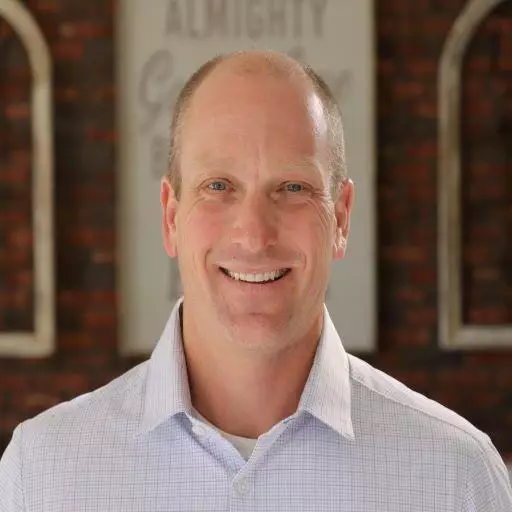
21 Days In The Word: Grow From Doing What You Learn


Jason King: When Christina and I first got married, we did what a lot of married couples do: we got a dog. I didn't want to get just any dog; I wanted to get a lab. Any amens in here on that? The rest of you, maybe one day you'll come around. We got a yellow lab and named her Maddie. When I thought about this dog, I wanted a dog that was going to be a good pet but would also be a duck dog. I wanted a dog to pick up ducks when we hunted and to be able to train the dog to do that.
I thought, "How hard can this be to teach a dog to do something that it's been bred to do?" So I bought a couple of books and read them about a hundred times. I got this little puppy and put her in our one-bedroom apartment in Dallas in a little kennel. I started to try to teach her how to sit and how to come here, but she was terrible. She was absolutely terrible. I couldn't get her to sit or listen to me. She did exactly what she wanted to do.
The book said it was just as easy as doing this, and I was getting frustrated. So we decided to use a professional trainer, a guy named Andy that we met. We took her to him when she got to a certain age, and he trained her for a few months. What I didn't realize at the time was that not only did he train her, but he trained me. He was just a little bit more successful at getting dogs to do what he wanted them to do than I was.
We would go out there every weekend, and he'd show me how to run a dog or handle a dog that had been trained like he was training ours. He showed me how to keep a standard of obedience, how to give commands, and really just how to navigate this whole world of a trained dog that I had never been exposed to. Andy taught me a whole lot more in those moments over that period of time than I realized was taking place.
Fast forward several years later, and we got the dog we have now, a black lab named Bell. I decided, "You know what? How hard can this be? I want to do this. I'm going to learn how to train this dog." This time when I went to train her, I had something I didn't have before: my knowledge and all the stuff in those books had now been shaped by experience. I had practiced what I had been learning. I had some understanding of what I was trying to do.
This time when I looked at the information, watched the videos, and read the books, they made a little bit more sense, and I was actually able to accomplish the goals I had for this dog. When I would get stuck, I had some friends who were professional trainers that I would call and get some help from. But do you know what the difference was in training those two dogs? It was me. I didn't know what in the world I was doing the first time around. I read it in a book and could tell you what I was supposed to do and how it was supposed to work, but it didn't take place. It wasn't until I practiced some of that and learned how to do some of those things that I was being taught that I began to see a difference.
With "21 Days in the Word," that is my prayer for you and for us: that we would grow from doing what we learn. We shouldn't just read a book and say, "I don't understand that. What is this trying to say or mean? How do I read the Bible and understand how God wants to speak into my life?" It just seems like the first time around with that dog; it's a bunch of information that's supposed to be this way, but I don't see it coming to place in my life.
Our goal over these days is to equip you, help you, and show you how to see the power and the presence of God at work in your life. That's what we did when we started "21 Days in the Word" last week. It's a focused time in the life of our faith family and our church where the emphasis and focus is on learning how to hear from God and walk with God. The basis of that is walking in the Word.
If you didn't get a "Life Journal" last week, or if this is your first week and you haven't heard about "21 Days in the Word," I encourage you to jump in. Grab a Life Journal; they're free outside both of our exits in the lobbies. Grab one, because it's a tool. It's not the end game, but it is a tool for you to learn to hear God speak to you through the Word. That's what I'm challenging you to do.
If you've been walking with the Lord or been in church for a long time, or if this is all brand new to you or you're somewhere in between, I challenge you to pray during "21 Days in the Word" and say, "God, would You help me to understand what You're saying to me? Would You speak to me through Your Word?" As you use the Life Journal, it'll be more than just a thing to do. My prayer is that you would be shaped by what God deposits in your life.
The goal of your faith and your journey isn't just to come to church. The goal of all of this is for you to experience life change, for the power and presence of God to be at work in your life and through your life. That's what God is inviting you into during these 21 days. It's not to do something else or check a checklist or accomplish a challenge. It's to see God work in your life, maybe like you never have before.
Last week we started in Ezra 7. If you have your Bible, I want to invite you to open up to Ezra 7. We'll be in the last part of verse 9 and verse 10. That's really where we're going to be over the entire series. We're learning from the life of Ezra what it looks like to see God's power and presence come to bear. Is there something that you and I can do that we can practice and make a part of our lives where we can see God's hand of favor on us as a way of life?
If you look in the text of Ezra 7, the last part of verse 9 has this phrase: "For the gracious hand of his God," speaking of Ezra, "was on him." Why was it that way? Ezra answers that: "This was because Ezra had determined to study and obey the law of the Lord and to teach the decrees and regulations to the people of Israel." That phrase, "for the gracious hand of his God was upon him," means there was more going on in Ezra's life than what appeared to be. It was not just his own strength or power. He wasn't just a good dude or a gifted teacher or leader. He had the favor, power, and blessing of God at work in his life. God supernaturally multiplied his work.
There were things taking place in Ezra's life that if you were to see him, you would think, "Man, what's going on in his life?" Supernaturally, there were things taking place. God was pouring out His favor on his life. God is inviting you and me to experience the same power and the same significance of His presence in our lives today. These verses give us the key. Before anything else, I want you to hear this: you and I grow in our faith in one way, and it's by doing what you've learned. You grow in your faith by doing what you've learned.
I want to give you three principles from this reality in the text that you can apply if you want to grow in your faith. You have to have this foundation if you want to see the supernatural power of God in your life and you want to grow in your faith. You grow by doing what you've learned.
The first principle is this: your inputs lead to your actions. Your inputs lead to your actions. Did anyone grow up in a house where your parents said "garbage in is garbage out"? Why did they say that? Because they knew it's significant what you allow to speak into your life. In Ezra 7, Ezra was determined to study. He set his heart firmly on the Word of God as what he would take into his life. The result of that study was that obedience and doing God's Word was the result. He heard from God through His Word and obeyed it. He learned from God, and it led to how he lived.
When you and I learn truths from scripture or things about our spiritual life and walking with the Lord, you're not learning those things to store them away like a class in school. Instead, when you learn during these 21 days as you're in the Life Journal or you're listening to God speak to you through the Word, you're not just receiving that and thinking, "Oh, that's really cool. That's awesome. I like that." You're learning so that it would bring action in your life. What you listen to becomes who you are. What you're taking in leads to what you do. Your inputs lead to action in your life.
For example, this week I was reading in the Life Journal the story of Jacob. If you've been following along, you know that we are in Jacob's story and this idea of the inputs that we allow into our lives is so significant. It's woven even through Jacob's story. In Genesis 31:1-2, it says, "But Jacob soon learned that Laban's sons were grumbling about him." If you've read that story, you know that Laban has done Jacob wrong time and time again. He lied to him and deceived him. He gave Jacob a dose of his own medicine.
If there's anyone that has done anyone wrong in this case, it's Laban having done Jacob wrong. Yet Laban's sons got the ear of their dad: "Jacob's robbed our father of everything. He's gained all his wealth at our father's expense. He's taken advantage of our dad." Look what happened as this input was going into Laban's heart and mind from his sons. Verse 2 says, "But Jacob began to notice a change in Laban's attitude toward him." Laban's boys were constantly criticizing Jacob and talking about how terrible he was and how he was stealing from them. In reality, the opposite was true. Yet because of jealousy, Laban's sons began to spout these things off, and Laban heard it enough that it began to shape how he responded to Jacob. It ultimately led to Jacob getting his family together and leaving when Laban was unaware.
It got me thinking as I was reading that this week: what I allow in my life ultimately shapes my future. There's power in what you listen to and what you allow to linger in your heart. When I read this passage, I have a choice now. Even Laban in this moment is listening to his sons, and it changes his heart toward Jacob and changes his actions. Jacob notices, and it ultimately blows this family up. I have a choice. What am I going to do with that reality? Am I going to think, "Yeah, that's what I ought to preach on one day. Everybody else needs to hear that," or am I going to look in the mirror and take a look at my own life and guard my heart? Will I evaluate the voices that I'm allowing to speak into my life, recognizing that whatever I'm allowing to be as an input in my life ultimately leads to action?
Carey Nieuwhof, in an article that he wrote, talked about a book we read a couple of years ago as a church called "Faith for Exiles." It's talking about how to see a genuine faith rise up in the next generation. One of the things that they said in this book is that most people today gathering in the church are discipled by algorithms more than they're discipled by their pastor or their church. He said that while that was true 10 years ago, the effects of that practice being a part of who we all are is deeply painful and unmistakable to most church leaders.
He was talking to one pastor and this guy said, "Talk to any pastor and they'll tell you that no matter what they do, it's increasingly impossible to say anything on key cultural or theological issues that doesn't generate a slew of negative responses, be it online or in person." And that's just with folks in the church. He says as the culture wars rage on, almost any move you make as a church will be labeled "too something." You're too liberal, you're too conservative, you're too partisan. You never can get it right.
He says the reason why that's the case, why everybody has such strong opinions and they're just dogmatic about their opinions, is because everyone in a typical congregation is being discipled all week long by different algorithms. An algorithm is the program that feeds you more of what you're clicking on, what you're watching, what you're reading, and what you're sharing on social media. In addition to that, it's your flavor of news media. It's all the stuff that you're taking in. It's all designed in this moment to give you more of what you already have.
When we gather together for church, if you were to look into each of our feeds across this room and see the stuff that we're being exposed to, here's what you would see: one person's Instagram feed is serving up ultra-right-wing partisan commentary, another person's TikTok is feeding them progressive politics, another person's YouTube is taking them into conspiracy theories. Other people are looking into interior design, "crypto bro" get-rich prosperity, true crime, wellness, alternative medicine, or Christian deconstruction.
Here's why that matters: because by the time that you walk in this room in this moment, already this week you have been discipled by 49 hours of screen time from the algorithm, except we don't even realize that it's happening to us. If you were to be honest, are you being discipled by the feed of your social media flavor? Are you being discipled by YouTube or the news media or Snapchat or that friend even who is not heading toward Christ?
That's why you've heard it said before, "If you show me your friends, I'll show you your future." Show me what you're listening to right now, what voices you're allowing to speak into your life, and I'll show you where you're headed spiritually. So who is speaking into your life right now? Don't miss this.
I hope that during 21 days this will be a reset in our hearts and our minds, and not just our feelings and our thoughts but in our practice. We would recognize that the volume of input that I am receiving in my heart and my mind is overshadowing the most important voice that I can hear. God is inviting us to recognize that the inputs that we take in shape our heart, which ultimately shapes our action. I'm praying that God speaks into your life through His Word, that you would get it firsthand. You would be a self-feeder on God's Word and that this would be the primary filter that you watch whatever you're watching and listen to whatever you're listening to, and that you would not be discipled by some algorithm that's telling you more of what you want to hear. Your inputs lead to your actions.
The second principle that this passage teaches us is this: obedience, not knowledge, is the path to blessing. "For the gracious hand of his good God was on him." God was blessing Ezra's life. That doesn't mean that his life was spit-shined and perfect and he never had any issues. He's living in a time of exile and spiritual dryness and darkness for the people of God. But it became evident in his life that God's hand was upon Ezra because he set to study and obey the law of the Lord. The Hebrew word for obey means "do it." It means follow through. It means to carry out, perform, act on it, behave in a certain way, and make the choice to do something and follow through.
During "21 Days in the Word" and when we talk about walking with God, the point is not to read. It's not simply to hear. It's not to discover some new principle or retain some piece of information. The goal is to do it, to make that truth a part of your life through action. It's not a new principle throughout the scriptures. God has said very clearly throughout the Old and New Testament, "Here's what your life is to be about. Here's what I will do if you will exercise faith by choosing to obey the Word."
Look at Deuteronomy 11:26-28. He says, "Look, today I'm giving you the choice between a blessing and a curse." The same thing today; it's your choice. It's my choice. "You will be blessed today if you learn the information, take the class, study it, have the book, and took notes in the book." That's what it says, right? No, it says you will be blessed if you obey the commands of the Lord your God that I'm giving you today. But if you have it your way, you'll be cursed if you reject the commands of the Lord your God and turn away from Him and worship gods that you have not known before.
It's not just the Old Testament. Jesus said in Luke 11:28, "But even more blessed are all who hear the Word of God and put it into practice, who do it." James 1:25 says, "But if you look carefully into the perfect law that sets you free," in other words, if you're listening to the Word, God's speaking to you through the Word, He's revealing Himself and guiding your steps, showing you what it looks like to live a life of faith. "You look carefully into the perfect law that sets you free, and if you do what it says and don't forget what you've heard, then God's going to bless you for doing it."
If you want God right now to touch your life and bless your life, the model is you study the Word, you learn from God, and you do it. Hear the Word of God and put it into practice. Your level of obedience to what God has revealed is your level of spiritual maturity. That's the game. That's the score. It's so simple and clearly laid out in scripture. "If you follow My Word, I will bless your life in multiple ways and so profound." But yet, aren't we often looking for some other way to receive God's blessing? Can't we become convinced that spiritual maturity and going deeper in our faith is attained by accumulating more information? "Yeah, I knew that. I learned that a while back. We studied that in school. My mama told me that growing up. I read that the other day. I went to that class we had at school. I studied that book. I listened to that podcast." We wouldn't say it, but we would think, "I'm spiritually mature because I've gone deeper."
Technical Greek word for that: baloney sandwich. I've gone deeper; trust me. I've written hundreds of pages in seminary on Christian topics, on scriptural topics, on church stuff. I've taken way too many hours of Greek and Hebrew and theology—140 credit hours of graduate school. I've studied all the "isms" and "ologies" and theories, and going deeper is not learning more stuff when it ends with information. James talks about that: faith without works is dead. Information without action is not what God is after.
It may surprise you about seminary. It surprised me, but seminary was one of the most spiritually lifeless places. You wouldn't think so as people are gathering together to prepare to train for ministry. But what happens is people are going deeper and what they're doing is they're becoming focused on retaining information. In seminary, a class learning about scripture and about the Lord becomes a grade to get, a paper to write, and a degree to finish instead of a life to live.
I'm so thankful for my pastor that before I went to seminary and at least a hundred times during seminary, he said, "Jason, this is a parenthesis in your life. Make the most of the time that you have there, but realize that the goal of all of this is not to complete the degree. It's to fulfill the calling that God has on your life." I do think seminary is important if you're going to teach God's Word and lead God's people, but please don't be fooled into thinking that growing in your faith comes from studying minutiae like you're studying for a semester exam. You may want to learn more information, and I do encourage you to dig in, find out what the truths of theology and all these things are, but please know that that's not going to make you go deeper in your faith. You're just learning more information. If information on its own stays there, you're missing what God wants for you. Spiritual maturity is not learning six-dollar words and concepts that nobody else knows what you're talking about. Maturity is truth applied to your life with action.
I love what Warren Wiersbe says. He hits it on the head. "If our knowledge of the truth doesn't result in obedience, then we end up with a big head instead of a burning heart. And truth becomes a toy to play with, not a tool to build with." God is not interested in giving you toys to play with as far as information. He wants to build your life and your faith for the goal of you looking more like Jesus and leading other people to experience His power.
There was this guy in the New Testament named Paul. He had this verse and said the same exact thing in 1 Corinthians 8:1: "Now regarding your question about food that has been offered to idols." It was a point of discussion and contention, and people were debating about it and had information. He says, "Yes, we know that we all have knowledge about this issue. But while knowledge makes us feel important, it's love that strengthens the church." That was Paul's whole point throughout this book. It's wonderful if you learn other things, if you dig in a little bit more, but it's always to lead to life change. Knowledge by itself can make you feel important, but unless it leads to love and to life change, it's simply just information. Eighty-five times in the Bible the word knowledge is used. It's important to grow in your knowledge of the Lord, but don't equate information with spiritual growth. What you want to do to grow deeper is to listen to God speak into your life and then do what He says. That's the path to experiencing God's blessing in your life.
The third principle is you have to follow through on what you learn. Ezra chose to follow what he learned by adjusting his life to obeying the unchanging truth of God's Word. His learning led to action; his action led to life change. What you learn is always to lead to action in your life. It's the choice when you come face to face with the truth of scripture to say, "You know what, God? I see a problem. There's a distance between what Your Word says and my life." The action and the response to that is repentance. It's for us to say, "God, my life is messed up. I'm not trying to make You change to what I want or do what I'm thinking or I feel. God, I'm going to come under Your Word as I follow through with what You've spoken."
Repentance is making a choice to turn from where you are in that moment and to go with God by faith. I know it's tempting to try to reframe God's Word to fit what we want because, after all, all you need to do is go find a quick search to validate what you're doing. If you can't find it at first, you just keep looking. It's hard to see that we have a need for repentance. We don't like to talk about repentance today when all we have to do is hop on whatever our flavor of media is and find somebody telling us that whatever we feel is whatever we should feel and it's okay because God loves you and it's all great.
But the Word speaks into our lives that God does love you, and He loves you enough to speak what's true into your life. He invites you to follow through to see blessing poured out in your life. So if you find yourself stepping over inconvenient truths to try to find validation for what you want or feel or are doing, or have done, or want to do, you're headed down a dangerous path. God is inviting you to see that life and blessing is not found any other place than taking the truth of God's Word and applying it to our lives, doing what He said.
Could we practice this with a couple of areas that maybe scripture would speak to some of us? Maybe some things you're walking through or wrestling with, or maybe that you will face. I want to take an issue that somebody might be struggling with to see what the scriptures teach and then what it looks like to follow through based on what we're learning.
I want to start with your finances. Maybe right now generosity is not even on your radar. You're just trying to make it. There's a lot of pressure. You're trying to make it so you can do the things you want to or buy things you want, or just get the things you need. And yet you read this passage when you think about your money, and generosity is the last thing that would characterize your life right now. Yet Hebrews 13:5 says, "Don't love money; be satisfied with what you have." You read that and think, "Man, I wish I could get a new job because I could make more money. I wish I could do this so I could make more money. I wish I could work more so I could make more money." And He's saying, "Don't love money. Be satisfied with what you have." Why? Because God has said, "I will never fail you and I will never abandon you."
Or maybe right now you're praying, "God, would You provide financially? We need a miracle." God, would You help? Would You move? Because things are tough. But yet you read those passages in Psalm 24 that talk about everything belonging to the Lord and how He's given you everything you have and you're just a manager. Or Malachi 3 that says the starting place for walking in God's plan for your finances is you give back to Him a tithe from what He's given to you. So you come face to face with the truths of scripture and it might be inconvenient to face that. Will you step around it and say, "Well, that's not for me, not right now"? Or will you read that and say, "God, I'm going to choose to trust You by faith"? Faith is doing what Your Word says, even when I don't feel it or it doesn't make sense.
What about forgiveness or bitterness? It may be hard for you to get past how your ex treated you or what happened at that church, or what you experienced as a child, or how that former boss treated you. Now you didn't intend it, but bitterness just fills your heart, and it doesn't take much for it to bubble over. There's no doubt you were done wrong, but you also maybe realize that this hurt right now defines your life. Then one day you're reading Ephesians 4:31-32, and Paul says, "Get rid of all bitterness and rage and anger and harsh words and slander." Because you know when that bitterness and that unforgiveness and that anger is rolling up, you say some things you didn't mean to say. You do some things you didn't mean to do. Stuff starts coming out of you.
He says, "Instead, be kind to each other, tenderhearted, forgiving one another, just as God through Christ has forgiven you." What will you do when you read that? What would the response be in your heart? Would it be, "Yeah, the other person needs to do that. It's the principle of the thing. When they do, that's when I will"? Or will you forgive that person and say, "God, You have forgiven me way more than this person has done to me. I'm going to get rid of it. I'm going to choose, Lord, by Your Spirit. Will You help me when that bitterness starts to creep up? Would You help me to let it go?"
What about sex? I know we're not supposed to talk about that in church, but we're going to do that for a minute. Whether you're consumed with lust or maybe you're having premarital or extramarital sex, or maybe you've chosen to live together with somebody before you're married or you're not married. Maybe you're watching or looking at pornography, or you're getting lost in the sexual confusion of our day, believing you can change or choose your gender or you believe we should support people who do. Then you come across a passage like 1 Thessalonians 4:3-5: "God's will for you is to be holy." You're like, "Oh man, holiness was not me the other night. Holiness is not me in this relationship. Holiness is not me with what I'm looking at on my screen." But He says, "God's will for you is to be holy." So He says, "Stay away from all sexual sin," not just the ones that aren't socially acceptable today. He says "all sexual sin." That's literally any *porneia*; that's any diversion away from one man and one woman in the covenant of marriage. Stay away from it. He says, "Then each of you will control his own body and live in holiness and honor, not in lustful passions like the pagans who do not know God and His ways."
It's easy for you to read that and think, "Yeah, but our deal's different. Our deal's different. It's okay." What are you going to do? Are you going to put up some boundaries to help you if you keep falling into this moment with your date or you keep finding yourself in this situation? Are you going to move out? Are you going to get married? Are you going to say, "You know what? Our finances are tough. It's okay that we live together"? Will you get some help to help you overcome porn? Will you trust that God does know best and that the way He created you is who you are? Or will you turn your back on whatever God has spoken and find someone somewhere to soothe your angst? It gets real when we begin to read the scripture, but the Word of God throws you a lifeline. God's like, "Hey, I've got something better for you. I've got something better for you than chasing passionate lust like the pagans. There's a way of holiness, a way of life that God calls you to."
What about discipline for your kids? I know you've got kids and everybody's got opinions and what you read on a blog or on social media versus maybe what you see in scripture. You want your kids to like you, and so you're hesitant to discipline them. You may believe in gentle parenting, and we can all tell, by the way. It doesn't work. I appreciate what some psychologist or some influencer or some mommy channel says, but it doesn't work. Those aren't my words; they're God's words. So what are you going to do when you read in the Proverbs—Proverbs 13:24—"Those who spare the rod of discipline hate their children. Those who love their children care enough to discipline them"? Proverbs 23:13-14: "Don't fail to discipline your children. The rod of punishment won't kill them. Negative consequences for their actions are not going to kill them. It's actually physical discipline that may well save them from death."
I get it; you may think, "I don't know. There's so many voices filling my head." But that's the point. It gets complicated if you've walked through abuse, but it does not change the reality of what God's Word says. Through the filter of the Spirit at work in your life, when you come face to face with that, you realize, "I really need to be a parent for my kids. I'm not here to be their best friend. I'm here to help them learn how to follow Christ." You have a choice.
Even though it's legal now, gambling may be destroying your life. Maybe you're concealing it from your parents or your spouse or your family, but the reality of it is it's consuming your life. You're constantly checking the spreads and checking what you've put money on, and it's stealing and consuming your resources. But yet you read 1 Timothy 6. Paul says, "For the love of money," we all know gambling is not just because you're competitive; you're trying to win money. "The love of money is the root of all kinds of evil." It will pull you in. He says, "And some people, craving money, have wandered from the true faith and pierced themselves with many sorrows." When you conceal something like that, it feels like it pushes you further and further away from God. Proverbs 13:11 says, "Wealth from get-rich-quick schemes quickly disappears, but wealth from hard work grows over time."
When you come up against something where it's like, "Oh my goodness, my life is not there," it's tempting to think that somehow, some way your circumstances are an exception to what God has said. But I want you to hear me: we want to help you if you're in the midst of any of that stuff. That's what we're here for. But to believe that you're the exception is the surefire way to miss God's blessing in your life. You grow in your faith by doing what you learn.
In 21 days, what I'm praying is that you would choose, no matter how difficult it may be, how hard or inconvenient it may be, that we as a faith family would all choose to grow by doing what we've learned. You may or may not know James Ward Jr. He's a junior in high school and a part of our student ministry. James has an incredible story. He's a part of our faith family. He started to attend our student ministry when he was a freshman. If you knew him then, you could tell that James didn't really want to be at church. He didn't really want to be here when he came, but he got into some issues as a sophomore. He began to use and abuse drugs and he drifted away from church. It got so bad for him that his mom said, "You've got to move out." He ended up in rehab.
He said he was placed in this room in the facility where there was a Bible on the nightstand. He said he ignored it. He didn't want to touch it or open it up. He didn't want to have anything to do with it, but he couldn't get it off his mind. He said one day he picked it up. He had learned the SOAP method (Scripture, Observation, Application, Prayer) in student ministry even as a freshman. He began to open up the Word, and he began to realize that God was reaching into his life. God began to speak to him clearly. Through a process, he sobered up, and he began applying scripture to his life, not just learning information, not just hearing stuff, but doing what the scripture teaches. He's found life.
Now James is back home and regularly involved in the student ministry at Bayside. I saw him at the place where he works just a few weeks ago, and you can see that there is a joy and a light in his life. Why? Because he chose to do what the Word said. He chose to say, "God, I'm right here, right now, but by faith, I'm going to trust You with what's ahead." He listened to what God was speaking into his life, and he acted on it. It's changed his life, and I believe it will change yours, too. Let's pray together.
Featured Offer
For the next 21 Days, we are going to pray together that God will move in power in the next generation…from birth through college and beyond. You can use this tool to pray for your kids, grandkids, family members and others in our church and community in the next generation.
Past Episodes
- 'Tis The Season
- 21 Days In The Word
- 21 Days In The Word // 2026
- 21 Days of Prayer // 2022
- 21 Days Of Prayer // 2024
- 21 Days of Prayer // 2025
- 21 Days Of Prayer // 2026
- 28 Days of Prayer // 2023
- Faithfully Different
- Fear Not
- Finding Healing When Life Hurts
- Folk Theology - Answering Spiritual Urban Legends
- Fundamentals
- Samson - How to Waste Your Life
- Say What?
- Seven - Words To The Church
- Spiritual Warfare
- Standalone Series
- Stronger Together: How To Build A Marriage That Lasts

Featured Offer
For the next 21 Days, we are going to pray together that God will move in power in the next generation…from birth through college and beyond. You can use this tool to pray for your kids, grandkids, family members and others in our church and community in the next generation.
About Bayside Baptist Church
Bayside is a growing church located in the Chattanooga, Tennessee area. Our vision is to become a movement of God seeing lives changed in Chattanooga and beyond. Our mission is to help people discover a life changing walk with Jesus. We are called to make disciples - helping people find the hope that’s within us, and guiding people to learn how to live the Christ life. You’ll find practical, life-application teaching from the scriptures to help you become all that God has created you to be and impact the world around you.
About Jason King
Contact Bayside Baptist Church with Jason King
contact@baysidebaptist.org
6100 Hwy 58
Harrison, TN 37341