
Who Is Your One? Part 4


The Importance of One
Pastor Ray P. Smith: Good morning. If you'll take your Bible and stand, we'll turn to the Gospel of John, chapter one, beginning at verse 35 through 45 for our scripture reading. That’s John, chapter one, verse 35.
Guest (Male): Again, the next day, John stood with two of his disciples. And looking at Jesus as he walked, he said, "Behold the Lamb of God!" The two disciples heard him speak, and they followed Jesus. Then Jesus turned and, seeing them following, said to them, "What do you seek?" They said to him, "Rabbi," which is to say, when translated, "Teacher," "where are you staying?" He said to them, "Come and see." They came and saw where he was staying, and remained with him that day. Now it was about the tenth hour.
One of the two who heard John speak and followed him was Andrew, Simon Peter’s brother. He first found his own brother, Simon, and said to him, "We have found the Messiah," which is translated, "the Christ." And he brought him to Jesus. Now when Jesus looked at him, he said, "You are Simon, the son of Jonah. You shall be called Cephas," which is translated, "a stone."
The following day, Jesus wanted to go to Galilee, and he found Philip and said to him, "Follow me." Now Philip was from Bethsaida, the city of Andrew and Peter. Philip found Nathanael and said to him, "We have found him of whom Moses in the law, and also the prophets, wrote—Jesus of Nazareth, the son of Joseph." May the Lord add a blessing to the reading of His word. You may be seated.
Pastor Ray P. Smith: If you have your copy of the scriptures, I’m going to very briefly go over this last little passage before we have our Friend Day. We’ve been going through this series, "Who is Your One?" and I want us to think about the importance of the one, having the one, and of course, the importance of finding that one.
I remember that Edward Kimball, who is known only because he was the man that led D.L. Moody to Christ, recalled that when D.L. Moody was 18 years old, he was a boot salesman in his uncle's store in Boston. Mr. Kimball was his Sunday school teacher, and he had his heart set on leading the young man to Christ. After praying about the matter, he arranged to visit D.L. Moody at the boot store.
He said this: "I was determined to speak to him about Christ and about his soul, and I started down to Holton's bookstore. But when I was nearly there, I began to wonder whether I ought to go in. It was during business hours, and I thought my call might embarrass the boy and that when I went away, the other clerks would make fun of him, and I didn’t want to do that to him. In the meantime, I had passed the store, and discovering this, I determined to make a dash for it and have it over at once. Let me just go on and do it and be done with it."
He says, "I put my hand on his shoulders, and what I made afterward was a very weak plea for Christ. I don’t know just what words I used, nor could Mr. Moody tell. I simply told him of Christ’s love for him and the love Christ wanted in return, and that was all there was. It seemed the young man was just ready for the light that then broke upon him, and there in the back of that store in Boston, D.L. Moody gave himself and his life to Christ."
Kimball almost talked himself out of doing the very thing that he needed to do, that is, just ask him if he’d like to receive Christ. And of course, I think you and I, maybe we’ve been there a time or two or three or twenty where we were about ready to talk to someone, and then we moved out of the way. "Maybe it’s not a good time. Maybe I shouldn’t. I don’t want to come across as preachy. I don’t want to cause any type of drama, trauma, or any other '-ama.' I just—" And sometimes we let that stop us.
But what I’ve found in my brief life is that most of the time, the people who know that I’m a follower of Christ really kind of expect me to talk to them about Christ. And they’re geared up to hear much more than I am geared up to say. Satan hops on my shoulder, whispers in my ear, and I often listen to him when I should just be settled on doing what the Holy Spirit has told me to do.
Who is your one? Who’s the person that God has been nudging you to talk to that you’ve been making excuses about not talking to? Let’s look at this particular passage in John chapter one, the passage that was read, and let’s talk about the importance of having that one. Father, thank You again for this day. Thank You for Your love for us. Again, thank You for what we’ve heard. Father, we just praise You for Your goodness. We marvel that You love us because there’s nothing redeemable about us. There’s nothing that is added to You as a result of saving us. There’s no benefit to You. All the benefit accrues to us. We’re just so unworthy.
But Father, Your incredible compassion and Your deep, deep love just came through on our behalf, and we just want to thank You for that. We know that You love those whom You’ve called us to serve. You want to save some. You want to call them out of darkness into Your marvelous light. You just want a voice—our voice. You just want some hands that will pick up scripture. You just want some feet that will go, beautiful feet to carry the gospel. You just want a willing heart. Father, make us willing for the sake of those that You love and desire to save as a result of our witness. Help us to see. Open our eyes. Help us to care like You do. Bind the evil one so that only You will be seen and heard from for the next few minutes. As always, Father, we’ll be careful to give You the praise, the honor, and the thanksgiving. We ask all of these things in Jesus’ name and for His sake. Amen.
Last week, we talked about these friends who intercede. We talked about the healing of the paralytic in Luke chapter five and how these four guys felt that the best thing they could do for their friend was to take him to Jesus. We teased that out for a little bit. This morning, I want us to talk about the one, the importance of the one.
As we look at John chapter one, I trust that by now you’ve already turned back there. We’re going to back up from the passage that was read all the way up to verse 23 because I want to talk about a witness and how this one witness led to these others coming to Jesus. The witness, of course, is John. If you go to verse 19 of John chapter one, I want to talk to you first of all about finding your one, with three highlights of an effective witness.
Let’s look at these three things about John. Of course, there are three things, right? Verse 19: "Now this is the testimony of John, when the Jews sent priests and Levites from Jerusalem to ask him, 'Who are you?' He confessed and did not deny, but confessed, 'I am not the Christ.'" "I’m not him." They asked him, "What then? Are you Elijah?" because Elijah was supposed to come. Malachi chapter three says, "I’m not." "Are you the Prophet?" Isaiah 53 says, "No." And then they said, "Well, who are you?"
I like the way it’s put here. He confessed. He says, "I’m not him." They answered, "Who are you? What do you say about yourself?" And he said, "I’m a voice. I’m just a voice crying in the wilderness. 'Make straight the way of the Lord,' as Isaiah the prophet says." I put down—and maybe you didn't get a chance to take note of it—the first thing of an effective witness is that he’s honest. He’s not trying to pass himself off. She’s not trying to pass herself off as being someone that he’s not.
The Old Testament word for prophet is "Nabi." The word Nabi simply means "mouthpiece." The prophet is just—he’s not a celebrity. He’s just the person through whom the sender gets out the message. The important one is the sender, not the mouthpiece that he uses. John says, "I’m just the mouthpiece. I’m just a voice. I’m nothing special." An honest heart realizes that. It’s not about me. I’m not a big shot. In fact, I’m not even a shot. I’m just a voice.
The second thing of an effective witness is that he’s humble. If you go into verses 24 and 28, they had been sent from the Pharisees. They asked him and they said, "Well then, why are you baptizing? If you’re not the Christ, you’re not Elijah, you’re not the prophet, what are you doing this for?" John answered them. He says, "Well, I baptize in water, but among you stands one whom you do not know. It is he who comes after me, the thong of whose sandal I am not worthy to untie." He is everything; I am nothing. He’s the one that you should idolize. He’s the one you’ve been waiting for. He’s the one you should be looking for, not me.
That’s a humble heart. I’m not all of that. I don’t even have a bag of chips. There’s nothing of substance to me. Who was it that said humility isn’t thinking little of yourself? The humble person simply does not think of themselves at all.
The third thing about an effective witness is that he’s a guide. He points people to the Lord, the all-lovely one. In chapter one, verses 29 and 30 and following, it says the next day John saw Jesus coming and he said, "Behold the Lamb of God, who takes away the sin of the world!" He said that and he was talking with his disciples, and he pointed Him out. Every time he saw Jesus, he pointed Him out.
And it says then the next day John was standing with two of his disciples. He looked, he saw Jesus walking by, and he said it again: "Behold the Lamb of God!" Now, these men have been following John, but John is pointing to Jesus. And so what do they do? It says the two disciples heard him speak, and they stopped following John. They started following Jesus. That’s what you want. It’s not about you. You’re just the one who points to the all-lovely one. Like the guy at the post office was giving me a hard time. When somebody asked me a hard question and I was stumped for a minute, the wise guy said, "Oh, hey, you know, he doesn’t know the answer. He just knows the one who does." I’m like, "Yeah, I like that! I don’t know all the answers, but I know the one who does." Praise the Lord. He didn’t know the Holy Spirit put that in his mouth.
I’m just pointing to the one who knows all the answers. They follow Jesus. The effective witness is honest about who he is. He’s humble. She’s humble and not thinking of herself, not trying to make anything out of her own person, but pointing—being a guide, pointing to Jesus. And that’s all that I have to do. I’m a witness, and the witness just gets on the stand. She sits on the stand, and all she does is tell what she’s seen and heard. That’s all. They’re not marshaling any kind of arguments; they’re just telling the story. And that’s all we want to be doing.
So what I want us to do as we look at these two men that listened to John and then they began to follow Jesus, let's commit today that we're going to be intentional witnesses. We're going to be intentional about sharing our faith, about pointing to Jesus. We're not going to point to ourselves. We're not going to make any kind of hoop-de-doo about us because we know it's all about Him.
And let’s talk about these two men. These two men are two contrasts in personalities. You know, they say there are a bunch of personality types, but basically there are introverts and extroverts. Either you’re one or the other. You may be more of one or the other, but basically, either you’re one of those people that draws energy from a crowd or you’re one of those people that just wants to be by yourself. And you see these two men. But regardless of which one you are, both of them did the same thing, and that’s what we want to talk about.
First of all, let’s look at Andrew. Let’s look at Andrew, the extrovert. It just so happens that in the Gospel of John, we see a portrait of Andrew. It’s not an extensive profile, but we see enough to understand that he’s an extrovert and what it looks like. He’s outgoing and he’s friendly, and he easily relates to people. Now, I’m not one to call names, so I’m not going to mention Buddy Shields. There are people that everyone just—he’s the kind of guy that just never met a stranger. He talks to anybody and everybody. He makes everybody laugh.
Just to be fair, I mention my wife all the time; I might as well here. She never met a stranger. She talks to anybody, everybody. Yvonne is like that, Yvonne Scott, so you won’t feel like you’re the only one lady getting picked on today. There are people like that. They’re just really kind people. They’re friendly, and they’re not shy about going up to somebody they never met before and talking to them. And I like that. They’re extroverts.
Paul and Barnabas were like that. Paul was that person. In fact, one of the commentaries I read, they gave a contemporary description of Paul. They described him, they said Paul had a face like an angel. In fact, he could smile and his whole face would just light up, and he was just so kind and friendly and jovial. Imagine the Apostle Paul like that as hard as Paul was when he preached. But Paul was a people person, and he loved being around people. And then there’s Barnabas. Barnabas, he wasn’t gregarious like Paul, but Barnabas could get next to you and he could encourage you until you’re ready to jump over the moon. You’ve got people like that. And God uses people like that.
Andrew was that extrovert. Well, look at what the extrovert did. Verse 40 says one of the two who heard John speak and followed him was Andrew, Simon Peter’s brother. He found first his own brother, Simon. He said to him, "We’ve found the Messiah," we’ve been looking for him, "which translated means Christ." And what? He brought him to Jesus. He started right there with his own family, the person that he knew, and he won his brother. He brought his brother to Jesus. That’s where you start. You start with the people that you know.
And Jesus, when he saw Peter—well, his name is Simon, son of John, Jonah—He said, "I’m going to call you Cephas, a stone." Simon means sand, but He says, "I’ll make you solid, a stone."
On the other hand, you’ve got Philip. Philip is not like Andrew. Philip is the introvert. He’s calculating. He’s statistical in his thinking. He’s plodding. He thinks slowly; he thinks things through. And as a result, then he doesn’t do a lot of things real fast. And he’s not necessarily a people person like Andrew is. And you see in verses 43 to 46, it says the next day Jesus went looking for Andrew—excuse me, looking for Philip. He went into Galilee and he found Philip, just like He found you and me. And Jesus said to him, "Follow me."
Philip was from Bethsaida. Bethsaida was on the coast in Galilee, and of course, when it was on the coast, that lets you know that there was a multi-ethnic environment. So Philip would be used to being around people from different cultures. But it says that verse 45, Philip found Nathanael, his friend, and he said to him—now notice the difference between Andrew and Philip. Andrew’s like, "Hey, we’ve found the Messiah! Come on, let’s go meet him."
But you look at Philip. He says, "We found him of whom Moses in the law and the prophets wrote, Jesus of Nazareth, the son of—" Look at all these details. Philip’s that kind of guy. He’s a detail guy. Philip’s that guy that gives you all the details about that new child that was born.
If you’ve been married a few years, then you know that you have to be like that. Because if you’re not, then you get stuck. You come home and you say, "Hey, Justice had a baby!" "Justice had a baby?" "Well, you know what I mean! Justice and Jessica had a baby." "Okay, well, how much did the baby weigh?" "I don’t know." "Well, what did she have?" "She had a baby." "Facts, facts, facts!" And you don’t have any facts, so you have to write them down.
But Philip's that guy; he gets the facts. You don’t get the facts until your wife embarrasses you, or after you’ve had a conversation a couple of times that you couldn’t answer. But Philip, he’s just naturally that kind of guy. And it comes out. He gets all this statistical information. And the thing that makes it important to me is that they both do the same thing. Whether you’re outgoing and an extrovert or whether you’re introvert and a slow thinker, you can still reach that one for Christ because God uses all kinds of people. And that includes you. No matter which extreme you are or whatever in between, God can use you to reach that one.
A couple of principles to embrace. Number one, the results will vary. Not everybody comes to Christ right away. You understand that. There are some people who are reapable right away. You can talk to your brother and your brother will come to Christ, or sometimes you can talk to your brother and he’s not ready to come to Christ. My oldest brother, we invited him to a Bible study. He came to Bible study, and Henry Irby talked to him. Next thing you know, he came in smiling and he says, "Yeah, I received Christ." I talked to my brother closest to me and asked him about receiving Christ, and he said, "No, I’m not ready for that. No, no." I said, "What do you have that’s worth going to hell for?" "Nothing." "Well, why won't you give your life to Him?" "I’m just not ready." Eventually, he did give his life to Christ, but not everybody is at the same point at the same time.
And sometimes you’re going to come across people, and they’ll be easy to lead to Christ. In fact, it’s like they’ll be like, "What took you so long?" But then there’ll be other people that you’ve been talking to and sharing with, and they still aren’t. You say, "Well, what is it?" And there’s nothing wrong. "I mean, I understand what you’re saying. I’m just not ready." Some people, they’re reachable; they’re just not reapable at that moment. So what do you do? You don’t give up. You keep praying. You keep praying and you keep sharing and then you eventually, God will do what God desires to do. You don't need to be cute or clever or be a pest. You just need to invite them to come to Jesus. And sometimes they will.
I had a coworker when I was living in—where was I living? I’m trying to remember. Was I here or was I in Pennsylvania? I was here. So this was back in the 80s, and I was working at Kroger on Moreland. And this lady, she kept inviting me, "Come to my church. Come to my church." I’m like, "I’m already in a church." She said, "Well, we’re having a revival." I said, "You’re a Pentecostal church. You have service eight days a week! That’s too much." She said, "Well, this revival, just come, just come." And she just kept asking me. So I said, "All right," and I went.
They were having a service where they were having the people come up and they were saying that they received the baptism of the Holy Spirit, and they were quoting the verse where John says that he will baptize you with the Holy Spirit and with fire. And they were saying, "I’m baptized with the Holy Spirit and with fire! And when I say fire, I mean fire!" Then they strike up the drums and everybody start dancing. "Yeah, yeah!" And I’m like, "That’s not what that verse means." But that’s neither here nor there.
After they finally got tired or realized that it was getting late, they let us out. I mean, they ended and I went home. But I went, not because I felt like I needed to go; I went because she just wouldn’t stop asking me to come. And sometimes you can invite people, you can invite people, you can invite people, say, "Are you coming? Are you going to come?" and they say, "All right, fine!" I mean, if you really want them to come Friend Day, go and cut that grass. Well, I guess that grass ain't growing right now, but do something! Help them do something in the yard, and then they’ll feel like they owe you. Say, "Hey, why don’t you come to our Friend Day? We’re giving away free food—I mean, we’re having a nice time with friends and we’re giving gift bags and food, and it’ll be a fun time." Then they feel like they owe you, so they’ll come. Anyway, people need to hear the Lord, or they need to be brought into hearing the Lord.
Well, move on from there. Find your one. I put a note down about seeing with harvest eyes. Harvest eyes means learning how to look. Learning how to look. Different people see different things. And I want you to look at John chapter six, verses five through nine. I want you to notice a couple of things with me. Number one, it says Jesus, lifting up his eyes—this is the passage where he says, "I’m the bread of life"—lifting up his eyes and seeing a large crowd coming to him, he said to Philip, Mr. Plodding-Thinking-Statistical-Philip, "Where are we going to buy bread so that these people can eat?"
Philip surveys the crowd, and he thinks and he’s adding it up in his mind. And he says to Jesus, "Two hundred denarii worth of bread is not sufficient for them for everybody just to get a taste! We can’t—it’s too big for us." One of his disciples, though, Mr. Extrovert-Andrew, Simon Peter’s brother, just kind of jumped into the conversation, and he said, "You know, there’s a lad here who’s got five barley loaves and two fish. I mean, what is that among so many?"
And I’m fascinated by that because Philip, he sees the crowd. He sees the size of the crowd. But Andrew, he sees people. He sees individuals in the crowd. Philip is overwhelmed by the size of the mob, but Andrew is saying, "You know, I see this little guy, and I mean, it’s a big task, but there’s a start." Some people, the glass is half empty. It’s not even close to being full. Half of it is gone. But some people are like, "Well, you know, we’ve got half already, and we don’t have as far to go."
It depends. Some people are pessimistic; they only see what can’t be done. They only see the problem. But some people, they say, "Well, this is a possible solution. Maybe, maybe we can do this. It looks hard, it looks tall, it’s big, it’s going to take a supernatural act of God, but this is a start." And Andrew, he sees one person. He sees the one that has the five loaves and the two fish. And Jesus says, "Okay, then that’s what we’ll do." And you know what happens? It says Andrew brought the little boy and his lunch to Jesus.
Andrew is a people person, and he said, "Listen, can you come and can you bring your lunch and give it to Jesus?" And Jesus takes what he has, and He does something great with it. I don’t have to be greatly endowed with a lot of stuff; I just need to have the courage to see the one and approach the one and let God do the rest.
I was thinking about our church in Michigan again, the one that I keep mentioning, and maybe I should mention all the time. But I remember when we started our church, and we started a little small church, and we had people who would visit for a while and we’d do a little newcomer thing with them. At the end of the newcomer’s, I would say, "Listen, do you have the names of any people that you know might be interested in our church?"
This lady, Angeline Smith, she says, "Well, yeah," and she wrote down some names. And I put them down in my notes. Angeline Smith gave me the names of her husband, Ed, her daughters, and then she gave me Herman and Kathy Hughes. Herman was the guy whose marriage was in trouble, actually. When we got together and had Bible study, he received witness, and they reconciled. They came into the church and brought their two kids.
Then Herman’s sister came, Sherry. She came to pick up her son, Nigel, and we met Sherry. I visited Sherry. And then next thing you know, Sherry was coming to our home and talking with Dee and me. We got on our knees, and Sherry prayed to receive Christ. It was interesting because after Sherry visited our church the first time, she went and she told her brother, "That man told me off." You know, I mean, I’m just preaching on sin; I’m not pointing at her. But she said, "He told me off!" But in telling her off, she recognized that she needed to get her life right with the Lord. And she did, and she prayed to receive Christ.
And then Herman worked in the shop at GM, and there was a lady there—I think her name was Juanita. She made the collard greens. My wife would tell me if I got the name wrong, but she came and then she had a friend named Deborah, Deborah Williams, and she invited her. Deborah came, she and her two kids, and next thing you know, in fact, I baptized Deborah. She prayed to receive Christ, and I baptized her.
And then Angeline gave me the name of Ray and Ida Green, and we visited them. In fact, I’ll tell you this in a minute—well, I can tell you now. Every name that I’m mentioning today, every single name without exception, my wife and I went to visit in their home. And there’s something about visiting people in their home that just opens up doors.
And you know, we had a friend, Dave Lenhart, who helped us start our church. Dave, he had guys on the shop, in the shop, second shift—basketball guys. And so we played basketball a couple of days a week, and I met Gene Moore. And then at the end of the year, beginning of the first year, Gene and Pat and their two daughters, they came to our church and joined. Then Gene had a friend that he invited. In fact, his wife, Pat, she was a schoolteacher, and she knew another schoolteacher, Charma Smith and her husband Richard, and they came to the church.
And on and on it goes. You reach one, and then the one expands. It’s just like the apple from an apple tree. The apple isn’t just fruit. If you put it down in the ground, the apple actually has the seeds of another apple tree. And so you think in terms of the one person multiplying, and that’s how we did it. We just kind of expanded one at a time. It just starts with the one. You don’t have to know 511 people—I don’t know how many that is—but you don’t have to know a lot. But if you could just reach the one, the one has relationships. And through the relationships, as my wife and I went to visit, we were able to see God do some things.
Gene and Pat had a friend who was a dentist, Anita McCardy. She and her daughters came to the church. She had a dentist friend, Denise Polk, and she came to visit the church. And on and on it goes. Anyway, you get my point. Churches grow stronger through worship, which is why we made it a priority to hire a worship leader, but then they grow larger through outreach, which is why the next person we hired was an outreach pastor. Because churches grow larger through outreach, but outreach needs to flow through relationships.
Harvest eyes have to learn how to look and see individuals. But harvest eyes have to learn to see beyond the limitations and say, "Well, I can’t, I can’t, I can’t." Well, what do you see? Do you see what God can do through you? Sometimes you have to see what’s not there. When I come on Tuesdays to my office here, I walk down this aisle. If Toby hadn’t arrived yet, I come down by myself and walk and I see these empty pews and I’m like, "Lord, you know, there’s enough for about 150, 200 people here." Show us how to fill up this place. We need to go to two services; that’s my goal. We need to go to two services because we run out of room. And as we save up money for a new building, amen.
But it just depends on how you look. You say, "Well, I don’t know if we can do that." Well, God can. He can do exceedingly abundantly above. It just depends on seeing what’s not seen. I told you about the two shoe salesmen that were sent to this island, and they put one on one side and one on the other side. And then the guy on this side, he looked around—everybody was barefoot. And so he wires back, he says, "Man, send me a plane ticket home. Nobody here wears shoes. It’s a waste of my time." And the other guy, he lands and he looks around. Nobody’s wearing shoes. He calls back, he says, "Hey, send me two to three dozen of our best sizes and best styles, because they don’t have shoes here! Everybody needs a pair."
Same island, but different results. Why? It depends on how you look. Some people see limitations and they say, "We can’t, we can’t, we can’t." But some people say, "Oh man, what a privilege, what an opportunity! Let’s go." And that can-do spirit can make a big difference. It just starts with one.
The second point is working as a team. Working as a team. Don’t feel like you have to do it by yourself because you don’t. You say, "Well, I’m not even sure how to share the gospel." That’s all right. You’ve got people here that do. I told you last week, just introduce them to Dwight Stroger. Dwight, he’ll take them from the table of contents all the way to the maps in the back. The whole thing! You don’t have to worry about it. There are people here who can help you do what needs to be done.
In John chapter 20, there are these three verses that say there were some Greeks among those who were going to worship at the feast. And they came to Philip because Philip, from Bethsaida, is used to being in a multi-ethnic environment. He’s comfortable being around Greeks. And so they came to Philip and they said, "Sir, we wish to see Jesus." And Philip, he’s not big on introductions. He’s not gregarious. He’s not outgoing. How do you make the introduction? Some people just aren’t good at that kind of stuff. It’s awkward.
So what do you do? Verse 22 says Philip came and he told Andrew, Mr. Outgoing. And Andrew and Philip together came and brought them to Jesus. You don’t have to do it by yourself. God has placed right around you others who will be glad to help you do the thing that God has laid on your heart to do. You just have to be willing to work as a team.
And you need to see the value of teamwork. Harvest eyes must see the value of teamwork. A team is just a way for an individual to get more work done. You can do so much by yourself, but if you have a team, you can get a lot more done. And God has given us a team, and we need to work together as a team.
I tell you what I know. There are times when Sunday afternoon gets here and I’m like, "Man, I’m ready for a nap." But I know there’s going to be seven other guys meeting at the church to go out there and hang—what we were hanging—things on doors. Now we’re doing community surveys. And I don’t want them to say, "Well, where’s Pastor? He was here at first, but now—" I’m like, "Let me get up!" Teamwork, there’s accountability. There’s that peer pressure, and that’s a good thing.
And together, Albert and I went out together. Albert’s my man. We went out together and we talked and laughed a lot and all this kind of stuff, but work together as a team. You need to see the value of teamwork. Someone said, I think it was John Maxwell, "The people around me determine the level of my success." So I surround myself with can-do people, not pessimistic, "this ain’t going to work" people. You have to walk, turn away from them. And just find the can-do people. Together, we can change the world.
I was reading—I don’t know why, but I was reading—I saw this picture of this giant sequoia tree. They only grow in California, and they’re way up there in the Sierra Nevada mountains. You’ve got to go up 4,000 feet before you even see any. But those things are huge! Some of those sequoia trees, they grow to 300 feet high. That’s the length of a football field. Talk about getting nosebleed! I would never want to climb one of those. In fact, they had a picture of this one tree. It says it’s the largest tree in the world, this giant sequoia tree.
And I looked at that, and it says the roots on the sequoia trees are like four or five feet deep. And they say when the sequoia tree digs its roots down, what happens is, even though it’s massive and expansive, the roots on this sequoia tree stretch out and they interconnect with the roots on that sequoia tree. And the trees are all interconnected, and because they’re all interconnected, they’re all strong. And so they don’t buckle, they don’t bend, they don’t break because they’re strong together. That’s the church.
There are no limits to what God can do through us if we’re willing to work together to accomplish His glory. Well, my time’s gone. Let me end with a song. I am not going to sing. I will read you the words. All right. But you know the song. It’s called "Face to Face." It's the theme song for the Promise Keepers. And the Promise Keepers are no longer around, but I love the song, and I would hear the men sing it to each other. And it goes like this:
"Face to face, brother to brother,
Face to face, one friend to another,
Growing together, we’re building the kingdom of God.
Back to back, shoulder to shoulder,
Back to back, serving each other,
Working together, we’re building the kingdom of God.
Brother to brother will strengthen each other
And stand for the truth side by side.
Brother to brother will honor each other
And stand for the kingdom on high.
Back to back, warrior to warrior,
Back to back, defending each other,
Standing together, we’re building the kingdom of God.
Face to face, shoulder to shoulder,
Back to back, younger and older,
Growing together, we’re building the kingdom of God.
Back to back, warrior to warrior,
Back to back, defending each other,
Growing together, we’re building the kingdom,
Working together, we’re building the kingdom,
Standing together, we’re building the kingdom of God."
There’s no limit to what we can do if we work together. Just say, "Lord, who is my one?" and let’s bring the one here, and let’s let the community love on the one, reach the one, win the one, reach into the networks of the one, build the kingdom of God.
Father, thank You again for this day. Thank You for Your love for us. Thank You for Your word. In Your word, we see smallness become bigness. We see the church being built one disciple at a time. We see brothers reaching brothers. We see Andrew reaching his brother Philip—excuse me, reaching his brother Peter, Simon. We see Philip reaching his friend Nathanael and giving him the data, reaching into their networks.
Father, You’ve allowed us to build relationships. You’ve allowed us to reach those around us. As we raise the flag and let people know that we belong to You, we need Your strength, we need Your wisdom, we need Your love. We need You to move and direct in us. May Your spirit have the freedom to produce His fruit in us. Do with us that which pleases You to build Your kingdom.
We commit to You next week and fill up this place, Father, with those who will hear the gospel. Save those that You desire to reach and allow us to follow them up and proclaim the message in more detail and with clarity. We just want to be faithful to that which You’ve called us to do as a church. We ask these things in Jesus’ name.
And Father, it may be that right here today, there may be one who has not yet yielded their life to Christ. Maybe he has decided that one day—well, that’s a fool’s game because the longer you go, the longer she puts it off, the harder it becomes to make the decision. The enemy of our soul knows that; he traffics in procrastination. May today be the day that they surrender their hearts to Jesus. And we’ll thank You for all that You’re doing and all You’re going to do. We ask these things in Jesus’ name and for His sake. Amen.
Past Episodes

About Atlanta Bible Baptist Church
The Bible is the most important book in the world because it contains the best news for the world – the gospel of Jesus Christ! For over 50 years, our passion at the Atlanta Bible Baptist Church has been to tell people about God and help them understand His Word.
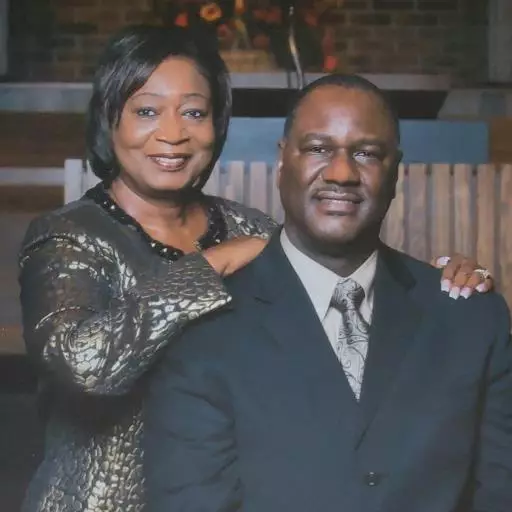
About Pastor Ray P. Smith
Rev. Ray P. Smith is the senior pastor of the Atlanta Bible Baptist Church. He follows Dr. John McNeal, Jr., the church’s founder and now Pastor Emeritus. Pastor Smith received his Bachelor of Science degree in Pharmacy from Mercer University Southern School of Pharmacy in Atlanta. He received his Master of Divinity degree from Baptist Bible Seminary in Clarks Summit, Pennsylvania.
Pastor Ray delights in teaching the Word of God, explaining its truths with practical illustrations and applications. His passion, to teach the whole counsel of God to minister to the whole person, flows out of his life verse, which says “And Jesus kept increasing in wisdom and stature, and in favor with God and men” (Luke 2:52). As Jesus grew mentally, physically, spiritually, and socially, so should His followers.
Pastor Ray and his wife, Linda, are the parents of four children, one son-in-law, and two grandchildren.
Contact Atlanta Bible Baptist Church with Pastor Ray P. Smith
abbcinfo@comcast.net
Atlanta Bible Baptist Church
1419 Peachcrest Road
Decatur, GA 30032
(404) 241-1176