
Who Is Your One? Part 1


The Importance of Discipleship
Pastor Ray P. Smith: Discipleship. I know you're going to say when I say the word discipleship, the thing that comes to your mind, you're going to say, "I know, Pastor Ray, discipleship isn't something the church does, discipleship is what the church does." And I would say "amen" to that. You know why? Because discipleship isn't something the church does; it is what the church does.
And we're going to talk about discipleship for the next several weeks. Actually, we're going to go back and talk about the subject "Who's Your One?" We did this just a couple of years ago, and we're going to revisit that. If you have your copy of the Scriptures or a device that contains them, I invite you to turn with me to Matthew 28, that very familiar passage.
Verses 16 through 20 of Matthew 28 is probably a passage that you could quote by heart because you've read it so many times, I'm sure. I am so sure. But the Word of the Lord says, "Then the eleven disciples went away into Galilee to the mountain which Jesus had appointed for them. When they saw Him, they worshiped Him; but some doubted.
And Jesus came and spoke to them, saying, 'All authority has been given to Me in heaven and on earth. Go therefore and make disciples of all the nations, baptizing them in the name of the Father and of the Son and of the Holy Spirit, teaching them to observe all things that I have commanded you; and lo, I am with you always, even to the end of the age.'"
Father, we thank You so much again for this day. Thank You for Your extraordinary love for us, as always. And thank You for allowing us to gather, to assemble together, and thank You for Your Spirit, who takes Your Word, explains it to us, and then drives Your truths into our hearts, shaping us into the very character of our lovely Lord.
As we sit at Your feet, we welcome that process. Teach us, as Your students, how to make disciples. Teach us the value of it. Encourage our hearts with the mandate, the urgency, as well as the potential outcomes. Bind the evil one that Your Word may have free course. As always, we'll be careful to give You the praise, the honor, and the thanksgiving. For indeed we ask all of these things in Jesus' name and for His sake. Amen. Thank you, gentlemen.
What comes to your mind when you think about certain words? For instance, if I say politician, your mind thinks of a few that you know. And what if I say personal trainer? Then you get an image of someone rather buff and muscular and ready to help you get to be like them. If I say millennial, of course, I raised four millennials. They weren't millennials when I raised them, but they are now, and I have my own way—I know what comes to my mind when I think about the word millennial.
But what about when I think of the word Christian? What comes to your mind? What image is conjured up in your mind when you hear that word? When society at large hears the word Christian, they get an image, too. Sometimes the image is very positive, depending on whether or not the people that they know who say they are Christians have positive lives. Sometimes the image is very negative because the person who says they are a Christian may not live the kind of life that is consistent with the image that they have in their mind.
I want to talk to you this morning ever so briefly about this issue of discipleship and why it is so very important. As always, it wouldn't be me if I didn't start with a story. On a dangerous seacoast where shipwrecks were frequent, a crude lifesaving station was built. The building was just a hut, and there was only one boat. But the few devoted crewmen kept a constant watch over the sea. With no thought for themselves, they went out day and night, tirelessly searching for anyone who might need help. Many lives were saved by their devoted efforts.
After a while, the station became famous. Some of those who were saved, as well as others in the surrounding area, wanted to become a part of the work. They gave time and money for its support. New boats were bought, additional crews were trained, and the station grew. Some of the members became unhappy that the building was so crude. They felt a larger, nicer place would be more appropriate as the first refuge of those saved from the sea. So they replaced the emergency cots with hospital beds and put better furniture in the enlarged building.
Soon the station became a popular gathering place for its members to discuss the work and to visit with each other. They continued to remodel and decorate until the station more and more took on the look and character of a club. Fewer members were interested in going out on lifesaving missions, so they hired professional crews to do the work on their behalf. The lifesaving motif still prevailed on the club members' and on its emblems and stationery, and there was a liturgical boat in the room where the club held its initiations.
One day a large ship was wrecked off the coast, and the hired crews brought in many boatloads of cold, wet, half-drowned people. They were dirty and bruised and smelly and sick. Some of them had brown or yellow skin. The beautiful club was terribly messed up, and so the property committee immediately had a shower house built outside so that the shipwreck victims could be cleaned up before coming inside. At the next meeting, there was a split in the club membership. Most of the members wanted to stop the club's lifesaving activities altogether as being unpleasant and a hindrance to the normal social life of the club.
Some members insisted on keeping lifesaving as their primary purpose and pointed out that, after all, they were still called a lifesaving station. But those members were voted down and told that if they wanted to save lives, they could begin their own station down the coast somewhere else. As the years went by, that's what they did. But then the new station gradually faced the same problems. It too became a club, and its lifesaving work became less and less of a priority.
The few members who remained dedicated to the lifesaving began another station, and history continued to repeat itself. If you visit that coast today, you will find a number of exclusive clubs along the shore. Now shipwrecks are still frequent in those waters, but most of the people drown. When you think about the church and its mission and what God has called the church to do, that story has a ring of truth to it. Discipleship is so, so very important.
I want to take just a little bit of time and talk about that. First of all, we'll start with a definition, a familiar definition. The definition of disciple: the American Heritage Dictionary says a disciple is "one who subscribes to the teaching of a master and assists in spreading them." It's not just that they come and they say, "Yeah, I believe this is true," but that they actually pass it on because they not only believe the words, but they believe in the mission that the words describe.
It says, "Assisting in spreading them and active adherent," not an occasional one, "as a movement of philosophy." Often disciple one of the companions of Christ. Christopher Adset says this: "A disciple is a person in process who is eager to learn and apply the truths that Jesus teaches him, which will result in ever-deepening commitments to a Christ-like lifestyle." When you think of definitions of discipleship: disciple-making is the whole process, a full spectrum of reaching the lost with the Gospel, discipling people in their intimacy and walk with Christ, and then equipping spiritual laborers and leaders.
It's the whole process. It's not just a one-off. It's a movement. It's life to life, the dynamic of sharing the reality of Christ and the truths of Scripture through a personal relationship. I'm reminded of a statement I read once that says, "You can impress people from a distance, but you can only impact them up close." It's the building of a personal relationship that is at the heart of disciple-making. Hence, discipleship is so important.
Let's talk about the significance of discipleship. I say it is the most important work in the church. Let me give you—guess how many reasons? I shouldn't even look at Albert. I should just not even look that way. Guess how many, because as soon as I say Albert, you're going to say "three." Amen. Let me give you three reasons why I believe that discipleship is the most important work in the church.
Number one is the means that God has chosen. That's why we read this passage, and I put it up on the screen so I can highlight a couple of words. Matthew 28:18-20, where Jesus says—Jesus came up and spoke to them, He says, "All authority"—and I like that word. That's a very important word. I highlighted the word because I want to make the point. Now, if you have a King James, it says "all power."
And the word for power is the word *dunamis*, and *dunamis* speaks of inherent power, like in John 3 where He says, "unless a man is born again, he cannot see." He doesn't have the power, he doesn't have the ability to make happen the recognition of the kingdom of God. He doesn't have the right stuff inside. *Dunamis* describes the inner ability to make things happen. But that's not the word here. That's not the word that is normally associated with power. The word *exousia* speaks of authority, and that's a very, very strategic word. It's a much broader word because authority, the power of authority, is greater than inherent power.
Why do I say that? Let me give you an example. Suppose you're going down the road, you might be in a hurry because you left right about the time—if it takes you 15 minutes to get to where you want to go, you don't leave at 25 till, you leave at 15 till. And for whatever reason, then you stop at the red light and you're mad. But you're going down the road, you've got a time line, and then there's a policeman standing there, and he does this.
Now, I'm going to tell you, it doesn't matter how you feel about that guy or that gal. It doesn't matter how strong you think they can—they are, because you know even if you drive a little Volkswagen, you can flatten them, right? You stop. Why? Not because you're afraid that they will come beat you. It's not because you think that you might smash your car into their buff, muscular body. You stop because they have a power. It's not their power; it's they have authority. Because behind them is all the power of the police force, the government. They have authority, which is stronger than their personal power.
Jesus, even though in Himself He can do anything He wants because He's God, nevertheless when He took on flesh, He laid aside the independent use of His attributes and His own inherent power, and He operated by the authority that He received from His Father. And He did that for your sake and for my sake so that you can understand, "Listen, I've got the authority of Christ behind me." It is not that I'm strong enough to do the things that God says; I have Him behind me.
It's just like when Nehemiah wanted to go rebuild the wall in Jerusalem, and he says to the king, "Send me to Jerusalem that I may rebuild the wall." And the king says, "How long are you going to be gone?" I gave him a definite time. He says, "King," since he said yes, he said, "Listen, I'm going to need a little something-something. I need letters to go to all of the provinces between here and Jerusalem so that they aren't going to hem me up.
I need letters to go to the king's foresters so that they can cut me down some timber to build." He needed all these resources. And so he could take the king's letters, and he could go to each of those individuals and say, "I need this. The king has given me permission." And they didn't say, "Man, get out of my face, I'm not giving you that." They said, "Oh, the king said this." See, that's authority. Authority is better. Jesus says, "All authority has been given to Me."
And since I'm the one in charge, then I'm the one who is authorizing you to go. I love the way Peterson, in his treatment of *The Message*, he treats Ephesians chapter one, and he says Jesus Christ is in charge of everything from governments to galaxies. He rules over it all, see? He's in control. And He says that He sits as head over all of these things to the church. Then He says this: he says, "You see, the church is not peripheral to the world."
It's not some little side piece. "The world is peripheral to the church." The church is what's happening now in terms of God's agenda. Christ minimizes His rule through the church. We are it. What happens in Gaza, what happens in the government, is nothing compared to what happens with the Gospel. Christ the head of the church minimizes His rule in His world, and because we have His authority, then we go and we do His business, His b-i-z.
He said, "Because I have the authority, I'm telling you, because I'm the one who has the say-so, I'm saying so: go." And He says as you're going—the participle there, present active participle—you can interpret it however you want: as you're going, while you're going, when you're going, as long as you're going, because you're going, as you go. All of those would be appropriate, but you're going. And while you're going, He says, "Make disciples."
And I love that because the thing that I want you to understand about that, and I believe God wants us to understand, is that the assumption is that we are going. He's not saying, "Go out here and make a disciple. Go knock on doors and make a disciple." That's not what He's saying. He said, "Listen, as you're living your life, as you're going about whatever it is that you are, whatever it is that you're doing, as you're doing it, make disciples."
You see, when you're teaching on your job or when you're nursing at the hospital or wherever you are, as you're constructing on the construction site, wherever you are, as you're living your life, make disciples. In other words, live the life that speaks authentically of Christ. And the people around you, they'll see the life. They will see in you the Spirit of God producing His fruit in you, and they'll look and they'll say, "How in the world can she consistently manifest love and joy and peace and patience and kindness and goodness and faithfulness and gentleness and self-control?"
They marvel at that. As you're going and doing these things, they'll be drawn to that. And as they're drawn to that, you'll be able to lead them to Christ, and then you'll be able to turn them into a disciple because you can walk with them and share with them how. And that's why He says make disciples of all the ethnic, all nations, everybody. It's not a cultural thing. Every culture needs the Gospel.
Baptizing them in the name of the Father so that they identify with Christ and the church, in the name of the Father, Son, and the Holy Spirit. Then He says in verse 20: teaching them. He didn't say teach them everything. He says, "Teach them to obey everything that I say." So that the thing that they learn to do, you know how we all say, "God said it, I believe it, that settles it." For a disciple, "God said it, that settles it." It's not about I believe, it's what did He say? Teach them to obey everything I say. Lordship means if this is what Christ says, there's no debate any longer. And that's the mission. Discipleship is the means whereby we accomplish His purposes.
Secondly, it is the method that is most effective. Now, you've seen this before, this principle of spiritual multiplication. If you were to witness for six months and reach one person—that's why we say "Who's Your One?"—you reach one person and then disciple them for the next six months, at the end of the first year there will be two of you. But if both of you reach one person and each disciple them—six months to reach one, six months to ground one—at the end of the year two there will be four.
If the four of you reach people and continue this lifestyle of witnessing and follow-up, you could impact the world for Christ in one lifetime. You see, first year two, second year four, then 16, 64, 256, 1,024, 4,000, 8,000, a million in 20 years, a million in 30 years, 32 years four billion, 33 years eight billion people. How many people are in the world? About eight billion people. You would think that Christ knew what He was talking about when He said go and make disciples.
It's the most effective method. And it doesn't start by saying, "Now I need to reach my whole neighborhood." I mean, that would be great, but you just start with one. We're having our Friend Day, and we're saying let's bring at least one. You say, "I haven't got any friends." Make one. You've got a whole month, five weeks, to make a friend. Bring them with you. Give me a million prayers. Say, "Lord, who is the one?"
You'd be surprised how many names the Spirit of God would bring to your mind. You say, "Oh, him? Her? Oh, not him." You'd be going through, but the Lord would impress upon your heart, "You won't trust Me with whoever or not." "Okay Lord, I'll trust You to do it." And then next thing you know, you show up and say, "Well, I had five people I invited, all five of them came," you know. And we know they'll have a gift bag for all five of them. Each one will get a big gift bag, that's what I'm saying.
But it's the most important thing. Let me share this with you right quick. When we were in Michigan, we started our church, and I told you before we used to have monthly fellowship meals. And the people that we invited into our church on the fourth Sunday, we would have a meal, we would eat together so we could talk and get to know each other. But one of the things that we've done is we want to do follow-up.
My wife and I would go and visit people on Tuesdays. And then eventually we started using *Evangelism Explosion* because I taught that when I was in seminary. And I would take people out and I would train them. You take people out and you take them to visit the people that visit the church. That way everybody that visits the church gets a visit, unless they say "don't come to my house," in which case you just say, "Well, you know, God don't want to save them."
Well, you don't say that, but you just don't go visit them. But we made appointments. Maybe Michigan is different from Georgia. Maybe it's because that was 30 years ago. But we never called them, we just kind of showed up. But here's the thing: nobody ever said to us, "Why are you at my house?" They said, "Oh, you're from the church? Okay, come on in." And we would go in and sit and talk with them.
But the thing is, what we did is we taught each of the trainees *Evangelism Explosion*. We taught them to use the five words: grace, man, God, Christ, faith. In fact, we would walk them through this little booklet. This booklet had all five of those words: grace, man, God, Christ, faith. And what we would do is we would have them learn the five words, learn two things about each of the five words, learn verses that back up each of the five things, learn illustrations to emphasize the point of those five things. We did all of that and then we trained them.
People say that's a canned presentation. Well, yeah, but that's okay if it's canned. The thing is, when you train the person, that person can share the Gospel with anybody. A lot of people don't share their faith because they don't know what to say. But we've trained them in what to say. So then we'd take them out, and then as we would go and talk to the people, then I would share, walk through the presentation.
I've done it a billion times so you know you say it without thinking about it, it just kind of rolls off your tongue. It's easy to do, it's very casual. And the trainee is like, "Wow, you know, it's just so easy when he does it." And you learn again and again and again over the course of 13 weeks. We would go out every week, every Tuesday. And then after a while, they get comfortable with what they've learned and say, "Okay, I'm going to do grace, man, and God. Why don't you do Christ?" and you bring them into it.
And you work them in, you work them in until finally at the end of 13 weeks or so, you can say, "Hey, why don't you talk to them?" and then they can walk through grace, man, God, Christ, faith. They can walk through that and know how to share their faith. And so then they have that confidence because you've empowered them. You empower people by letting them see how it's done, letting them do it with you, and then they do it and you're with them, and then they do it on their own.
And so you've empowered people to share the Gospel. And then a requirement of that is every person who is trained—each person that's signed up to be a trainee—they had to go and find two other people. And they had to say, "Listen, I'm going to be going out on Tuesday nights for the next 13 weeks. Would you pray for me?" And so each trainee enlisted two people to do nothing but pray for them, okay, between the hours of 7:00 and 8:00 o'clock we're going to be out.
Would you pray with me? Or pray for me. And so then every person going out had people praying for them. Our prayer was bound in prayer. And then we would say, okay, between Tuesday evening and the next Tuesday evening, call them up and say, "Hey, listen, let me tell you how it went." And you could share the results of their prayers with them. And then the thought was that at the end of that, when you're ready to train another group, that they would say, "Hey, you know, it's kind of exciting praying and seeing what God did. Maybe I could be a part of that," so you could keep it going.
But here's one of these things: people need to learn how to share the faith. And once you teach someone how to share their faith and they learn that, you know what, it's not just something to do, it's what I do. Everywhere I go, I'm sharing my faith. I'm not beating people up, I'm not shooting them with the Gospel gun. I'm living the life, and when they see the life, they're drawn to the life that they see, and then they ask me why or how, and I can share the Gospel.
I know what to say. And so that's what we did. Spiritual multiplication, that was the whole point. And that was enjoyable. That's a great thing about evangelism. I love that. Now, we're going out today at 5:00 o'clock. We're going to go out and we're going to do community surveys. We're just going to ask people eight questions, nine questions, and just get feedback from them.
And in the course of the conversation, it may be that we'll be able to have an opportunity to share the Gospel with them, maybe not. But what we've done is we've introduced them to the church, and we put material in their hands about the church, and we'll be able to let the Spirit of God work on them so that they may be drawn here that we might be able to service their spiritual needs. That's what we do. Evangelism is a lifestyle.
The third thing: discipleship is the most important work because it's the model that best displays—well, what does it display? Well, I'm glad you asked that question. Well, two things. Number one, it displays the power of the Gospel. Notice what Paul says in Colossians 1: the same good news that came to you is going out all over the world, it's changing lives everywhere, just as it changed your life.
The most powerful agent for change in the world is the Gospel of Jesus Christ. Paul says in Romans 1:16, "I'm not ashamed of the Gospel because it's the *dunamis*, it's the power of God for the salvation of everyone that believes." The Gospel is the only thing that can take a dead person spiritually and bring them to life. They can take a wretched person and turn them into a holy saint of God.
The Gospel is powerful, and it changed your life. So you become a testimony about the power of the Gospel. When I talk about 2:7 and I put those videos up and people say, "Oh, that Pastor Smith go talking about 2:7 again, trying to get people to sign up and take them classes again." You know I'm like, fine. The best advertisement for 2:7 isn't a video; it's the people that have been through the course.
The people who have taken those three courses, when you say, "I think I want to take 2:7," they'll probably say, "Hey, that's a good idea, you would enjoy that." The people who have been through it, who have benefited from it, are the best advertisement. You are the best advertisement for the Gospel of Christ because people look at your life and say, "Wow, if God can change him," or "If God can do that in his life, certainly He can do something in my life."
And so you become just the best display of the power of the Gospel as well as the person of God's Son. Colossians 2:6-7—the 2:7 class is based on Colossians 2:7—He says just as you accepted Christ as your Lord, you must continue to live in obedience to Him. It's not just "I got fire insurance, I do what I want to do." No, Christ is—He's my Lord, He's the boss, He calls the shots.
It says let your roots grow down into Him and draw up nourishment from Him so you will grow strong, you will grow in faith strong and vigorous. You've got to spend time. I understand this about the Christian life, as I've lived it now since 1973—52 years, 53 years it'll be in June. I've come to recognize that in order to have a vibrant, growing, joyous faith, it takes three things.
Number one: spending time with God every day. Every day. And just in fact, first thing in the morning. I learned when I was in school: no Bible, no breakfast. I love breakfast, but if I don't have time for my Bible, I don't have time to eat. I don't want to be missing no meals, so let me get in the Word. So put God first while you're in the Word and God is speaking to your heart.
The second thing is to spend time in prayer, talk back to Him about the thing that He talked to you about. So I'm reading God's Word, and the Spirit of God is impressing thoughts on my heart. See, in 2:7 we make you write it down. Well, like some of you write down, it's supposed to be at least seven days, and you do exactly seven days. It's 11 weeks long, but you do seven days. But that's okay, I am with you.
But the next two courses, it's 14 days. Some of you do like 15 days, you're like, "Man, I'm spiritual." Anyway, it's one of those things you're spending time with Him, He speaks to your heart, you're thinking about, "What did He just say to me? What's the point?" You write it down and you pray about it, you talk to Him about the thing He talked to you about. It's a dialogue every day.
You get to spend time talking to the Master every single day. You listen to Him as He talks, you speak to Him about the thing that He talked to you about, and then you pray for other people and you lift up their needs. The third thing—and this is in fact why one of the ladies in our church, she asked me, she said, "Pastor, how do you keep your faith fresh? How do you keep growing?"
And I said the thing that drives me to grow, the thing that makes the Word of God come alive, the thing that has me joyous in prayer and consistent: sharing my faith. See, when you tell other people about what Christ has done for you and is doing for you, if you raise the flag as we say it, then once people know you follow Christ, then they're going to watch you.
And because they're going to watch you, then you've got to live right. You've got to talk right. You've got to act right. You've got to be right. And you say, "Well, that's a lot of pressure." Of course it is, you need the pressure. And it keeps you—there's something about sharing your faith that makes the Word of God become more alive and richer, et cetera, et cetera, et cetera. Growing strong in your faith and vigorous happens when you share the Gospel.
Colossians 1:15-18 says this: "He is"—Christ is, that is—"the image of the invisible God, the firstborn, the *prototokos*, of all creation." The Jehovah's Witnesses say that means that He was the first one created, the first one born. But obviously, that's not what it means. *Prototokos* means that He is first in rank. And you can tell that it doesn't mean the first one born just read the next verse.
It says, "For by Him all things were created." All things. Everything that was created, He created. So obviously He wasn't created because it would have had to be all other things. "All things were created both in the heavens and on earth, visible and invisible, no matter what dimension it is in, He put it there. Whether thrones or dominions or rulers or authorities, all things have been created through Him and for Him.
And He has been before all things"—He's highest place—"and in Him all things hold together. He's the head of the body, the church. He's the beginning, the firstborn from the dead." Nobody got up from the dead like Christ never to die again with an eternal body. He's the first one that ever happened to, so that He can have first place in everything, both in life and in resurrection from death.
Christ is so that He Himself will come to have first place in everything. And I love that because there's a statement made in one of the discipleship books that says Christ should have the same place in your heart that He holds over the universe. He has first place. So Christ needs to have first place in your heart, first place in your life, not second place in anything. And I like that.
Next week we're going to talk about—we're going to look at Matthew 4:18, "on earth as it is in heaven," and we're going to cover that and look at those things from the life of Jesus Christ. Let me just go down to the "What does God want me to know, feel, do" thing, and then we'll wrap it up. These four thoughts and then we're done, and we'll circle back around to Matthew 4:18 next week. What's God want me to do?
Number one: decide to be a true disciple. Don't sit in the back. Why do I say sit in the back? You know how it was when you were in school. Well, okay, how it was when I was in school. You know, you sit in the back—not saying y'all in the back of the church, I ain't talking about y'all, y'all the exceptions—but you know what happens when you sit in the back: you get distracted.
You see all the people agreeing with the pastor, you see all that, you get distracted. You see all the ladies rummaging in their purse because they're hungry, getting candy, and trying to make it quiet so they don't make too much noise. You see all of that. You get distracted by the people that get up and go to the bathroom six times. But you know when you're down front, you don't see that stuff.
You're focused. In fact, that's why we have this 11-foot screen up here so that your focus could be on what God wants to say to you and not on other things that are around you. So leave the back, come on down front. I mean not physically, but I mean spiritually. Decide I'm not going to hang back and be lukewarm and ordinary; I'm going to be extraordinary in my faith.
Someone says the difference between ordinary and extraordinary is that little word "extra." It's going to take extra time to spend with the Lord and in prayer and in His Word. Number two: embrace the mannequin mindset. I'm going to circle back around to that one, and we'll talk about that next week again. Basically, a mannequin mindset means you have to think like the mannequins that you see in the store. We'll talk about that next week.
Number three: pray for the wisdom to find your one. Now, when you pray and ask, "Lord, who do You want me to reach out to?" there are several options that'll cross your mind. And sometimes, you know, there are people that cross your mind and you wonder if God put them there or the devil put them there. But you need wisdom. You have to decide, "Okay Lord, who is the one that You want me to prioritize?"
And maybe, you know, he'll wish that You'd try to reach out to this one and this one and this one and this one too. But if you pray, "Lord, who is the one?" and the Lord points out this one, then you put that name on the list. You make it a deliberate thing that you're going to pray for them often, well, at least seven days a week, something like that. At least seven. The first seven days, anyway.
And you pray for them and then as you're praying for them, you know, at least once a week, every couple of weeks, make it a point to talk with them. You know, you pray for people for 30 years and you never talk to them, well, that's okay, but anyway, you talk to them and share some snippet of the Gospel, something about what God's doing or whatever. If it's a neighbor, you know, spring's coming up, see his grass is growing, go out there and do something in the yard when they're out there.
Or maybe they're bagging up their leaves, go and help them bag their leaves up. You know, just something, then they'll feel like they owe you. But "You know what? We're having a Friend Day on the 22nd of March. Why don't you come? Would you be willing to come and be my friend so people will know that I think that I have one?" And so just pray for wisdom to find your one. You can do it. It just takes a little effort.
And then follow it up with prayer. Don't just pray for the person; follow it up. And when I say don't just pray for the person, follow it up, I have Matthew 9:37 to 10:1 because you know in Matthew 9:37, Jesus says the harvest is plenteous but the laborers are few. He says, "Beg the Lord of the harvest that He'll send forth laborers, workers, into His harvest field."
You know what verse one of chapter 10 says? It says then He rounded them up and He sent them out. So He said pray and go. Wow, imagine that. Pray and go. So you pray that God will allow you to zoom in, to tune in on the one, but then you've got to go and talk to them. And trust the Lord to stir something in their hearts that they'll be willing to come. And so that's all I was saying.
Who's your one? Who's that person that the Lord is going to use you to reach for His glory? Father, thank You so much again. Thank You for Your goodness to us. Thank You for Your Word, and thank You, Father, for the way in which You clearly point out Your calling on our lives. You called us to salvation, but You also called us to disciple-making.
You said we're to go and to make disciples. And even in the next four weeks as we talk about what that looks like, we just come to You. I pray, Father, that in each heart—each heart—that there might not be a spirit of resistance that says I'm not doing that, but rather there would be acquiescence, that there'll be a desire to say, "Let me participate in doing the thing that God has called me to do.
Let me do my part. Show me, Lord, the one that You would empower me to be able to reach for You." Even if they don't come on the 22nd of next month, it might be that two weeks after that or two months after that, maybe they'll come to faith in Christ. But this year, allow me to be used by You to reach the one. And maybe it's just a matter of getting one of these green tracts and going through it and getting comfortable with sharing my faith.
Or maybe it's going back through, if I've been through the 2:7 courses, and look at course three and go back and relearn the Bridge illustration. Regardless, Father, allow me to be a soldier that's going out and winning my one to Christ. I ask these things. I pray for anyone who may be here who cannot say that they know anything about what it means to be a soldier for Christ because they've never received Him as Savior and Lord.
May they not stay that way, but strengthen their hearts to come to You today. Thank You, Father, for the calling to salvation and discipleship. We ask these things in Jesus' name and for His sake. Amen.
Past Episodes

About Atlanta Bible Baptist Church
The Bible is the most important book in the world because it contains the best news for the world – the gospel of Jesus Christ! For over 50 years, our passion at the Atlanta Bible Baptist Church has been to tell people about God and help them understand His Word.
About Pastor Ray P. Smith
Rev. Ray P. Smith is the senior pastor of the Atlanta Bible Baptist Church. He follows Dr. John McNeal, Jr., the church’s founder and now Pastor Emeritus. Pastor Smith received his Bachelor of Science degree in Pharmacy from Mercer University Southern School of Pharmacy in Atlanta. He received his Master of Divinity degree from Baptist Bible Seminary in Clarks Summit, Pennsylvania.
Pastor Ray delights in teaching the Word of God, explaining its truths with practical illustrations and applications. His passion, to teach the whole counsel of God to minister to the whole person, flows out of his life verse, which says “And Jesus kept increasing in wisdom and stature, and in favor with God and men” (Luke 2:52). As Jesus grew mentally, physically, spiritually, and socially, so should His followers.
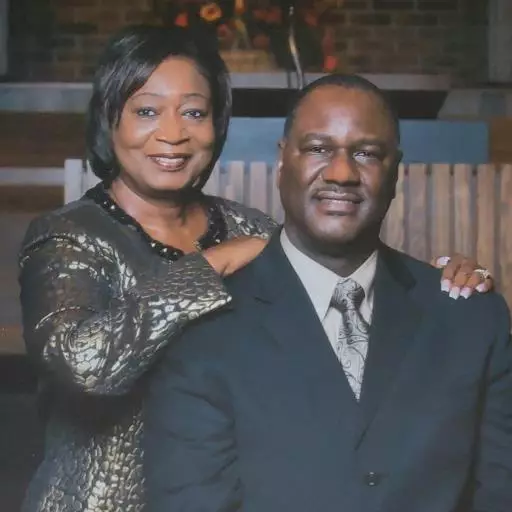
Pastor Ray and his wife, Linda, are the parents of four children, one son-in-law, and two grandchildren.
Contact Atlanta Bible Baptist Church with Pastor Ray P. Smith
abbcinfo@comcast.net
Atlanta Bible Baptist Church
1419 Peachcrest Road
Decatur, GA 30032
(404) 241-1176