
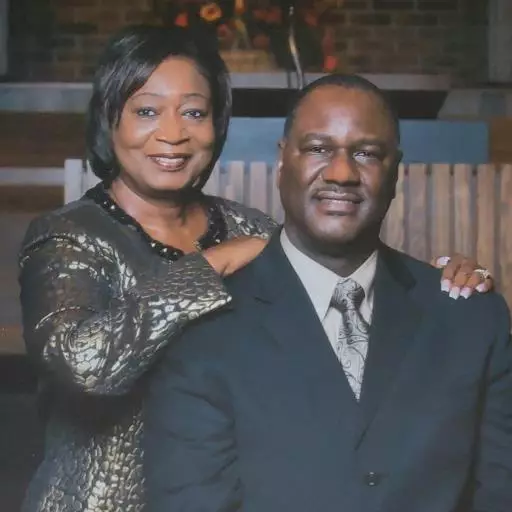
James: The Truth About Trust - Guest Speaker Rev. Joel Edison


You better ask Somebody.
Guest (Male): Please stand with me as the scripture will be read from James, the Book of James, Chapter 1, Verses 5 through 8. James, Chapter 1, Verses 5 through 8.
And it reads, "If any of you lack wisdom, let him ask of God, who gives to all liberally and without reproach, and it will be given to him. But let him ask in faith, with no doubting, for he who doubts is like a wave of the sea driven and tossed by the wind. For let not that man suppose that he will receive anything from the Lord. Verse 8: He is a double-minded man, unstable in all his ways." May the Lord add a blessing to the reading of His word.
Pastor Ray P. Smith: I must practice the three virtues of public speaking: to be brief, to be bright, and to be gone. If you would, let's stand, please, while we reread a couple of passages of scripture and give the ushers a chance to have a seat. James, Chapter 1, Verses 5 through 8.
"If any of you lack wisdom, let him ask of God, who gives to all liberally and without reproach, and it will be given to him. Let him ask in faith, with no doubting, for he who doubts is like a wave of the sea driven and tossed by the wind. For let not that man suppose that he will receive anything from the Lord. He is a double-minded man, unstable in all his ways." Let's pray.
Rev. Joel Edison: Father, we thank you for this day and thank you for the events that we've witnessed thus far. We do pray that your blessings would continue to be upon Jessica and Justice as they raise Baby Amira. Lord, as we come to this point in the service, I ask for the filling of your Holy Spirit. Lord, that those things that have been studied, those things that have been placed upon my heart, that you indeed would be lifted up high and mighty, and that all men would be drawn to you. Bless now as only you can, for it is in Jesus' name we pray. Amen.
There is a subtitle that I have along with the title, the theme that our pastor has set forth with the preachers: The Truth About Trust. But the subtitle: You Better Ask Somebody. Let's look at that again. That subtitle: You Better Ask Somebody. In Verse 5, it says, "If any of you lack wisdom, let him ask of God."
I have a close relative, and he likes to play pranks on tall people, especially ones that look like they can play basketball. Not all tall people can play basketball. Not all tall people can. So my brother likes to walk up to them. He'll walk up to a guy about 6’8” and look him straight in the eye—of course, from his viewpoint—and say to that person, "I will dunk on you."
Sometimes he gets two responses. If the fellow has confidence, he'll say, "I don't think so." But if he doesn't have any confidence, he'll stand there with a look of aloofness, thinking that this guy about this tall can dunk on me. It's just a little game that he likes to play. Now, my brother probably can dunk, as long as the goal is about this high. He probably could do that.
But the scripture says, "If any of you lack wisdom, let him ask of God." So I say again, you better ask somebody, and that somebody is God. Now, the Book of James—James, as Pastor stated a couple of weeks ago, was written by the brother of the Lord Jesus Christ. Anytime I think about that, I just find it amazing that our Lord and Savior had siblings. But they didn't come to a saving knowledge of Christ until after the resurrection. That's amazing, but it's also unique.
James is writing to believers that are facing trials, as was stated before in Verses 2 through 4 of James. The believers that he wrote to were facing persecution, hardship, and social and economic pressure, as at the same time they were being scattered throughout the land of Judea, Palestine, or Israel. Take your pick.
These trials included hostility. It was more than just saying you people get up and get out of here, but there was hostility. There was loss of homes, loss of livelihoods, and various afflictions that tested their faith. If you could imagine someone invading America and telling the Christians, or any group that they chose, "You get up and get out." That has happened time and time again with conflicts around the world.
The hostility wasn't necessarily because of the people, but the hostility was because of Jesus. They didn't like Jesus. They didn't like that new way that came about. So it was a society that was resistant to the Lord Jesus Christ, and the Jewish Christians at that time were scattered because of persecution. James is writing to these folks.
The things that they endured—we hope and pray that in this country we don't go through anything similar. They lost homes, they lost jobs, they lost social standing, and they lost community support. As of recently, if you would like to see or study how that happened, go back and look at the history of what took place in Bosnia as far as people being marginalized. That's just a big word for saying all their stuff was taken.
Now, what are trials? He told them not if you face trials, but when you face trials. It's a given. Jesus said you will go through trials and tribulations, but be of good cheer, for I have overcome the world. Notice what he says: not if, but when you do. Peirasmos—and this word, Pastor, I'm sure you can appreciate this, is in the dative plural, meaning it has a dual meaning.
It could mean trials, or it could also mean temptations. What are trials? External pressures that we go through, hardships, afflictions. Somebody knows what I'm talking about there. Anything that tests the strength or genuineness of faith. This is the meaning of that word in James Chapter 1, Verses 2 through 4.
Further down in the chapter, the same word is used again, but it's used in what we would call temptation. Singular, not plural. Temptations—some probably started to want to—okay, but anyway, temptation is an enticement to sin. It's not sin in and of itself, but it is an enticement to sin. It's an internal moral test, and that's what it means in James 1:13 and 14.
Trials—whenever we say the word "trials" in the biblical sense, we want to just shrivel up because that means trouble. Trouble. Trouble comes my way. But we want to talk about the word "trust" in the times of trouble. Although it's not written in our passage, it's going to be heavily implied today. Trust is proven when life is pressured. Trust is proven when life is pressured.
Sometimes because of what we see right here, we fail to make a motion similar to what I'm doing now, and then lifting our heads up. We fail to do that because it's in front of us. Sometimes it can wear on the mind, it can wear on the body. Back in the 1500s, back when Dwight Stroscher was a young lad, back in the 1500s, there was a story concerning Martin Luther, the great reformer, the one that led the Protestant Reformation.
It is said that he suffered from bouts of depression. Many of us are familiar with depression. Things don't go the way we think they should go, or we are suffering through things that we think we don't deserve. We allow it to affect us both mentally, and folks, it can affect you physically. 80% of all physical ailments can be attributed to the state of the mind.
So we got to get it right up here. But before we get it right up here, we got to get it right right here. So here was the great reformer sitting in his study, depressed. His wife comes in dressed all in black. He asks why she was dressed that way. She answered that she was in mourning. Of course, we wear black when we go to funerals. We wear black as a symbol of mourning.
He asked her who died, and she said to him, "God had died." His response was, "Don't be silly, God didn't die." She said, "Well, I thought I could get your attention because you are living as if God is dead." You are living as if God had died, and I thought I could get your attention by showing you that He isn't dead, that He has risen from the dead, and you need to start living like He's alive.
All too often, we live as if God is dead. We go about our way responding to trials and tribulations as if God had died and left us in charge of our well-being. To be honest, it is not up to you to take care of you. For those that name the name of Christ, it is not up to you to take care of you. That's His job.
He gladly takes up the mantle. He gladly accepts the responsibility, and He is more than able to take care of you, to take care of me. And I dare say that we like each other. Sometimes we forget. That old freight train of trouble comes rolling down the tracks in front of us and we just, "Oh, what am I going to do?" And if we're honest, we don't trust God in all things. In all things.
Our passage says, "If any of you lack wisdom," and that's where the issue is: lacking wisdom. If any of you lack wisdom, let him ask of God, who gives to all liberally and without reproach, and it will be given to him. There's a few things that we need to know about wisdom. In Verse 5: if any of you lack. Remember, the subtitle of the message was: You Better Ask Somebody.
Here's where the asking comes. Let him ask of God. Wisdom is the God-given ability to see life from His perspective. His perspective, and respond accordingly. It is not just intelligence. Sometimes we think that when we get this wisdom, it just falls out the sky and hits us upside the head, and we can go around blowing our horns out and just blessing everybody. It's not intelligence.
Intelligence amounts to smarts. Are you familiar with that word? "Oh, he's got the smarts. She's got the smarts." We go to school, we get education, we get degrees, but it's not a slam against education. It is how we use wisdom.
Some years ago, there was a team of engineers that designed this bridge across a huge expanse, a canyon. In their calculations, they calculated every load, every stress point, every wind factor. Their math was flawless. After the construction began, this local shepherd approached the engineers and told them, "This ground won't hold your foundation. In the rainy season, the soil shifts."
The engineers, of course, with all their intelligence, with all of their smarts, they dismissed him. They had degrees. They had models. They had simulations, and all he had was sheep. Months later, after the heavy rains, the soil shifted exactly as the shepherd had warned. The foundation cracked, the project halted, and millions of dollars were lost.
This shepherd didn't have their intelligence, but he had something that they didn't: he had wisdom. He had wisdom that was rooted in reality and not theory. Human intelligence is sometimes theoretical. Sometimes it's limited. Sometimes it's based on incomplete data. Sometimes it's confident but blind to unseen variables. And this is where wisdom comes in.
You see, God's wisdom is perfect. God's wisdom is all-knowing. God's wisdom is rooted in eternal truth, and God is aware of every hidden factor. He sees what we can't see. Intelligence sees data; God sees the whole story. And that's why the scriptures say over in 1 Corinthians 1:25, "The foolishness of God is wiser than men."
Not that God has any foolish ways, but the ways of God seem to be foolishness to the world. How is it that you can get forgiven of your sins by believing in someone that died? "That's crazy, that's asinine." That's the foolishness of God. Paul is using sarcasm here. What looks foolish to men is actually the wisdom of God.
James says He gives this liberally because, guess what? We may not realize it, but we are desperate to hear from the word of God. God's wisdom is superior over cleverness. Cleverness can make you impressive, but wisdom makes you aligned with God. Cleverness can solve problems; wisdom can prevent problems. I think I'd rather be on that side.
Cleverness builds structures, but wisdom builds lives. Cleverness can win arguments, but wisdom can win souls. Wisdom is superior over experience. You know the story about this fisherman. His name is Peter. You remember the story of how they had been fishing all night long, and Peter was a professional. There's no need to doubt his credentials, but he was a professional.
He knew the Sea of Galilee better than anyone. He knew the currents. He knew the depths. He knew the winds. He knew that the best fishing hours were at night. He had years of experience, years of accumulated instincts, years of accumulated skills. I am not diminishing that. But when you stack these things against the wisdom of God, this is what takes place.
One morning, they had been fishing all night long and caught nothing. You fishermen out there, you've experienced that before, right? All day, all night, not a bite. Then here comes Jesus, a carpenter, not a fisherman, and tells him, "Launch out into the deep and let down your nets." To Peter, that made absolutely no sense. He, after all, was a professional.
He had the experience, he had the knowledge, he knew the Sea of Galilee. He knew the currents. And here comes this carpenter: "Launch out. Go that way." Again, this made absolutely no sense. But you see, experience has its limitations. Experience is based on past patterns, logic, natural laws, personal memory.
What Peter had to experience was the wisdom of God. Sometimes God tells us to do things that make absolutely no sense. Can you hear me on that? He tells us to do things that make absolutely no sense because His wisdom is based on divine knowledge. His wisdom sees things that we can't see.
You've probably heard of this evangelist. His name was George Mueller, and he ran several orphanages over in Europe, over in Germany to be exact. They came in and said, "There's no food for the children." He instructed his attendants, "Set the tables. Set the tables." And he disappeared and started praying.
Long story short, one by one, men started bringing food to the orphanage so those children could eat. I'm sure to the attendant, when he said "Set the tables," it made absolutely no sense to him. "How are we going to set the table? There's no food, there's no milk, there's no orange juice. There's nothing like that."
But he said, "Set the table." It makes absolutely no sense. But you see, this man had tapped into a God that saw the unseen realities. As we go through life, sometimes God says go this way, go that way, and we think, "God, that doesn't make sense." But He's already been there. God's timing is perfect timing.
Lastly, on that point, He has something that we will never attain except for when we are transformed: He has supernatural power. That's the God we serve. Not the God that we make with our hands and put down in front of a little altar and bring a little rice and some teriyaki chicken. That's not the God we serve. That's the God we serve that sits high and looks low, but is aware of everything that we will see, will go through.
Wisdom. Wisdom. I recall riding a bus. Some of you remember the old Trailways bus lines. Riding a bus from Dallas, Texas, to Jackson, Mississippi. No need to shout for Jackson, okay. We get to the outskirts of Jackson and the bus starts jerking. It's as if the driver is riding a wild bronco, and it stops in the middle of the interstate. A bus, a commercial bus with passengers on it, stops in the middle of the expressway.
All of a sudden, all this wisdom starts pouring out. The mechanics on the bus: "Well, I think that it's the transformatory discombobulator that went bad. It could be the influe-discombobulator went bad." All of a sudden, this one little young lady with her southern-as-southern accent as you can have: "I think they ran out of gas." That's it, folks. We ran out of gas.
Wisdom. It is a spiritual and moral capacity that aligns your heart, your decisions, and your direction with God's truth. Can you think of anything more important than God's truth? But now, where does it begin? I remember a song called "One Step." I'm not going to sing it, don't get excited. "All I have to do is take one step and He will do the rest." That's the framework.
But in many cases, we sit back, we hear the truth, we hear the wisdom, but we don't take that one step. Taking that one step and He does it—it’s as simple as that. The joy that I have when I realize that simple act, instead of standing there being frustrated about a matter, even praying about it.
But I have to take that step, and that step was, "Lord, I believe that you're going to do this." Trust begins with admitting the need. Unfortunately, we may have bought into this thing that "I am somebody." I'm nothing. I'm a wretch that was saved by the King of Glory. I have nothing to brag about, nothing to boast about.
But I have to come to the realization that I need help. We need help. We need Jesus. We often lack wisdom when the trials come. But He says, "If you need it, ask me." Proverbs 3:5 and 6: "Trust in the Lord with all your heart, and lean not unto your own understanding." We think we're so smart. "Lean not on your own understanding, and in all your ways acknowledge Him, and He shall direct your paths." Not just make suggestions, but direct your paths.
I like that directing part. A father and his teenage son were driving up a winding mountain road one night. Halfway up, a thick fog rolled in, the kind where you could barely see past the hood of the car. Happens a lot in California. The son, who had just gotten his license, gripped the steering wheel nervously. He says, "Dad, I can't see anything. Should I pull over?"
The father said, "No, just keep your eyes on the headlights' reach. You don't need to see the whole road, only the part that the light shows you." So the son kept driving carefully, trusting that little small circle of light that he saw in front of him. Curve after curve, the headlights just revealed just enough so that he could see where the next turn was.
Eventually, they reached the top of the mountain. The son exhaled in relief and said, "Dad, I never saw more than 20 feet ahead." Father smiled and said, "You didn't need to, as long as you trusted the light, the light that you had. It brought you all the way here."
So it is with our lives. It sometimes gets to where we can't see no further than five feet in front of us. But guess what? That's all we need to see because the light, the Lord Jesus Christ, has already gone before us. He knows the path. He knows the dangers that lie ahead. He knows everything, and all we have to do is concentrate on that little light that is illuminated just in front of us.
God's wisdom is perspective. His perspective, not human reasoning. For the Lord gives wisdom—true wisdom, that is. True wisdom. The Lord gives it liberally, freely, and I like this part, not reluctantly.
Perhaps some have given money to other folks, and I'm not saying this is wrong. If you're giving money to somebody, sometimes you expect it back. But if you've been jilted maybe once before and that person comes back and they're in a bit of a bind, "Let me borrow $20." You know he needs it, but you realize you still owe me $20 from the last time.
You might have a 20 and a 5 in your pocket. Which one you think you're going to give him? The five, because you’re not feeling liberal that day. But you see, God gives liberally. He gives you all that you need and sometimes all that you want. He gives freely, not reluctantly, as indicated in our text in Verse 5.
That word "liberally," the word *haplōs*, means a cluster of things. Not just saying one thing, He gives exceedingly abundantly above all that we may ask or think. Have you ever been in a situation where you prayed for one thing and God just dumps a dump truckload of stuff on you? You just go, "I can't believe it. Imagine that."
He gives liberally. He gives generously. He gives freely and open-handedly without holding back. Our brother, he's probably going to hold back that 20. He gives sincerely. There's no mixed motives with God. Some people give you things and they've got a motive: "Well, if I give him or her this, then down the road..." God doesn't operate that way. He gives wholeheartedly with fullness, and He gives without hesitation or calculation.
Giving to all men liberally. Ephesians 3:20: "Now to Him who is able to do exceedingly abundantly above all that we ask or think, according to the power that works in us." He delights in guiding His children. Psalm 32:8: "I will instruct you and teach you in the way you should go." Nothing like a firm way to go. Not wandering, not guessing.
The Lord doesn't hold back and keep us guessing. He tells us exactly what we should do, the path that we should go along. And that's why I say again, if you don't remember anything out of this message, remember you better ask somebody. God gives it without shaming us.
It says He "upbraideth not." He doesn't scold us for needing help. How many times, perhaps, you have repeat offenders as far as just being in trouble. They come again for help: "Oh Lord, here comes so-and-so again." We think that. But He does not scold us. He doesn't say to us, "Now, this is the last time. This is the last time I'm going to give you what you..."
No, He doesn't do that. His throne is a place of mercy. His throne is a place of non-condemnation. Speaking of the throne, Hebrews 4:16 says, "Let us therefore come boldly to the throne of grace, that we may obtain mercy and find grace to help in time of need."
Second big point: the requirement. Ask in faith, not doubt. Let him ask in faith, not wavering. Asking the Lord for something and then pondering, "Can He do it? Will He do it?" No wavering. Faith is confidence in God's character. Faith: believe God is who He says He is.
But without faith, it is impossible to please Him, for he who comes to God must believe that He is and that He is a rewarder of those who diligently seek Him. Not just haphazardly seeking Him. Trust rests in God's nature, not my emotions, not how I feel. That's where we get in trouble a lot. "Well, I think" or "I feel." No. It's in God's nature, and it behooves us to tap into that nature.
Doubt means we have divided loyalty. That word "wavering," tossed like a wave. I like going to the ocean, to the beach. Notice I said "go," not "get in." I have a reason for that. I was about to get in the water one day, and this was the last time I had that notion, and this big stingray just jumped up out of the water. I sat right back down.
But we should no longer be children tossed to and fro and carried about with every wind of doctrine. Doctrine is important. And I know when Pastor gets to preaching about the doctrine and folks go, "Oh, here we go again." There are some folks that wish they had good doctrine because they believe whatever direction the wind blows and they get caught up with the trickery of men and the cunning craftiness of deceitful plotting.
False teachers are not just false teachers because they just like to teach. They have ulterior motives. Trust requires a steady heart. God honors a heart that is fixed on Him. Psalm 112:7: "He will not be afraid of evil tidings; his heart is steadfast, trusting in the Lord." And I must hurry.
Thirdly, there's a warning. A double-minded man blocks God's best. A double-minded man—that comes from the word *dipsychos*, from which we get the word "psycho." *Dipsychos*. *Di*: double, dual, two. Meaning two-souled, two-spirited. A double-minded man is unstable in all his ways. Double-minded: trying to trust God and trying to trust himself at the same time.
No one can serve two masters. Either he will hate the one and love the other, or else he will be loyal to the one and despise the other. You cannot serve God and Mammon. Matthew 6:24. You cannot walk two directions at once. It's impossible. Reminded of the story of the man that got upset and jumped on his horse and rode off in all directions. Doesn't make sense.
He's unstable in all his ways. Divided trust leads to unstable decisions. Proverbs Chapter 14, Verse 12: "There is a way that seems right to a man, but its end is the way of death." A wavering heart produces a wavering life.
Now, here's the warning. God cannot honor divided trust. And here's the surprising thing: not because He is unwilling, but it's because we are unanchored. What is our anchor anchored to? If we can't believe Him, then what foundation do we have? It's not because of Him, not because He holds back; it's because of us.
God responds to faith, not fluctuation. Hebrews 10:23: "Let us hold fast the confession of our hope without wavering, for He who promised is faithful." Fourthly, trust His wisdom. Simply stated, He knows what you don't know.
Isaiah 55:8 and 9: "For my thoughts are not your thoughts, nor are your ways my ways, says the Lord. For as the heavens are higher than the earth, so are my ways higher than your ways, and my thoughts than your thoughts." That's kind of humbling, but that's the way it is. Trust His timing because He sees what you can't see.
How often do you get out on the expressway and you think, "I've got exactly 30 minutes to get to church." All of a sudden, the brake lights come in front of you. How in the world can you avoid that? This is not a paid announcement, what I'm about to say, but I like using that little app on the phone that tells me ahead of time there's an accident, there's traffic up ahead, take this direction over here, go this way.
And so it is with God. He sees what you can't see. Ecclesiastes 3:11: "He has made everything beautiful in its time. Also, He has put eternity in our hearts, except that no one can find out the work that God does from beginning to end." And how about trusting His heart, not my heart?
My heart, again, is like the horse that rides off in all directions. His heart. Romans 8:28, all familiar: "We know that all things work together for good to those who love God"—that's the qualifier right there—"to those that love God, to those who are the called according to His purpose." 1 Peter 5:7: "Casting all your care upon Him." Why? "For He cares for you."
Trust is not a leap into darkness. I made the mistake of getting caught up in a moment one time. I was getting promoted over in the Middle East, and people were jumping off the back of ships in the Persian Gulf where they're fighting right now. I got caught up in the moment. I said, "I want to do that." And I took that leap. And I haven't leaped again into a body of water since then. Oh my goodness.
And then I had to trust. I had to trust the man that weighed about 60 pounds less than what I weighed to pull me out of that water. You see, there was some doubt. Don't let trusting God be a leaping into darkness, but rather step into the light where God is.
In conclusion—and I know in the old churches, old-fashioned churches, that's when everybody puts their shoes back on, when you say "In conclusion"—the truth about trusting: God is generous, God is faithful, God is wise, God is near.
One story. It's a story of how the Cherokees brought their sons to what we would call "of age." They turned 12 years old, and they would take him out into the wilderness and tell the boy, "You're going to stay out here all night long. And if you don't come running home, if you stay here, then you will pass the test."
Now, imagine being out in the middle of nowhere. It's not just dark; it's black dark. Okay? Black dark. This boy is out there, and he hears everything. It sounds like a grizzly bear coming towards him, right? Every creak, wondering what's going on. Day begins to break, and he's looking around at familiar objects. And then he gets fixed on something that he didn't see during the night.
It was his father standing over a little distance away with a bow and arrow, with a hatchet, and a sling, so that just in case something was to attack the boy, he was there to intervene. So it is with us. We don't know what tomorrow might bring, but God is already there. Okay?
And if you've never trusted this God that I'm speaking of now, let today be that day. He comes and knocking on the heart. It's with the heart that man believes unto righteousness, and with the mouth confession is made. If you've never done that, or if you are not 100% sure—99.9% won't get it. We look at those ingredients sometimes; it says 99.9% inert ingredients. When it comes to salvation, 99.9% will not cut it. It has to be 100%. 100% you've been dipped and washed in the blood of Jesus Christ.
Let today be that day. Let us pray. Father, we ask in the name of Jesus Christ that your word not return unto you void—and of course, it's guaranteed that it won't. But Lord, for any soul going through trials today, and let them do as the message implied: to ask somebody, and that somebody being you. If they lack wisdom, ask of Him. Ask, and it shall be given unto you. Lord, for some that haven't trusted you, I pray that you indeed would pierce that heart, present yourself to that person, that they might indeed trust you, come to a saving knowledge of our dear Savior. Do as only you can. In Jesus' name we pray. Amen.
Past Episodes

About Atlanta Bible Baptist Church
The Bible is the most important book in the world because it contains the best news for the world – the gospel of Jesus Christ! For over 50 years, our passion at the Atlanta Bible Baptist Church has been to tell people about God and help them understand His Word.
About Pastor Ray P. Smith
Rev. Ray P. Smith is the senior pastor of the Atlanta Bible Baptist Church. He follows Dr. John McNeal, Jr., the church’s founder and now Pastor Emeritus. Pastor Smith received his Bachelor of Science degree in Pharmacy from Mercer University Southern School of Pharmacy in Atlanta. He received his Master of Divinity degree from Baptist Bible Seminary in Clarks Summit, Pennsylvania.
Pastor Ray delights in teaching the Word of God, explaining its truths with practical illustrations and applications. His passion, to teach the whole counsel of God to minister to the whole person, flows out of his life verse, which says “And Jesus kept increasing in wisdom and stature, and in favor with God and men” (Luke 2:52). As Jesus grew mentally, physically, spiritually, and socially, so should His followers.
Pastor Ray and his wife, Linda, are the parents of four children, one son-in-law, and two grandchildren.
Contact Atlanta Bible Baptist Church with Pastor Ray P. Smith
abbcinfo@comcast.net
Atlanta Bible Baptist Church
1419 Peachcrest Road
Decatur, GA 30032
(404) 241-1176