
The Test of True Religion


We often measure religion today by its rituals and roles. But James maintains that pure religion has nothing to do with ceremonies, temples, or special days.
Guest (Male) 1: But those who are able, would you just please stand for the reading of the scriptures this morning. Our reading this morning will come from James, the first chapter, and we'll start reading at verse 22.
James, first chapter, starting at verse 22, and we'll read down to verse 27 at the end of the chapter. But be ye doers of the word and not hearers only, deceiving your own self.
For if any be a hearer of the word and not a doer, he is like unto a man beholding his natural face in a glass. For he beholdeth himself and giveth his and goeth his way, and straightway forgetteth what manner of man he was.
But whoso looketh into the perfect law of liberty and continueth therein, he being not a forgetful hearer, but a doer of the work. This man shall be blessed in his deed.
If any man among you seem to be religious and bridle not his tongue but deceiveth his own heart, this man's religion is vain.
Pure religion and undefiled before God and the Father is this: to visit the fatherless and widows in their affliction, and to keep himself unspotted from the world. May the Lord bless the doers and hearers of his word. You may have a seat.
Pastor Ray P. Smith: Oh, good morning again to each one of you. And of course, if you have your copy of the scriptures or a device containing them, I invite you to turn with me back to the book of James, the Epistle of James, rather.
And we are going to finish up chapter one. And chapter one, we will cover the last two verses. It simply says, "If anyone among you thinks he is religious and does not bridle his tongue but deceives his own heart, this one's religion is useless."
"Pure and undefiled religion before God and the Father is this: to visit orphans and widows in their trouble and to keep oneself unspotted from the world."
Father, thank you once again for this day. Thank you as always, and as has been mentioned for your incredible love. And you are the same God. We thank you that you never change. Your standards don't change. Your ways don't change. Father, your holiness never changes.
We are the ones who need to change. We need to say yes to the spirit as he seeks to transform us so that we look more and more like our lovely Lord Jesus and less and less like those who walk still in the flesh.
Strengthen us today as we listen attentively to you. We always ask that you bind the evil one because we want to hear only from you. And so Father, we say with Samuel, "Speak, Lord, because your servants are listening."
And of course, we'll be careful to give you again the praise and the honor and the Thanksgiving. We ask all of these things in Jesus's name and for his sake. Amen.
I related to you once before about two cars that were waiting at a stoplight. The light turned green, but the man in the front did not notice it. The woman in the car behind him is watching traffic pass around them. The woman begins pounding on her steering wheel, yelling at the man to move. The man does not move.
The woman is going ballistic inside her car, ranting and raving at the man, pounding on her steering wheel and dash. The light turns yellow. The woman begins to blow the car horn, flips him off and screams curses at the man.
The man, hearing the commotion, looks up, sees the yellow light, and then he accelerates through the intersection just as the light turns red. The woman is beside herself, screaming in frustration as she misses her chance to get through the intersection.
As she is still in mid-rant, she hears a tap on her window and looks up into the barrel of a gun held by a very serious-looking police officer. The police officer tells her to shut off her car while keeping both hands in sight. She complies, speechless at what is happening.
After she shuts off the engine, the police officer orders her to exit her car with her hands up. She gets out of the car. He orders her to turn around and place her hands on the car. She turns, places her hands on the car roof, and quickly is cuffed and hustled into the patrol car.
She's too bewildered by the chain of events to ask why questions and is driven to the police station where she is fingerprinted, photographed, searched, booked, and placed in a cell. After a couple of hours, the police officer approaches the cell and opens the door for her.
She's escorted back to the booking desk where the original officer is waiting for her with her personal effects. He hands her the bag containing her things and says, "I'm really sorry for the mistake."
"But you see, I pulled up behind your car while you were blowing your horn, flipping that guy off, cussing a blue streak at the car in front of you. And then I noticed the 'Choose Life' license plate holder.
"I saw the 'What would Jesus do?' and 'Follow me to Sunday school' bumper stickers on the car and on the chrome. And I saw the chrome-plated Christian fish emblem on the trunk. So naturally, I assumed you had stolen the car."
There is this disconnect between the message and the activity. And you know, sometimes that can be the case with us. We we see things, we do things, we say things. But then we have this profession of faith and that profession of faith might be very different from the activities that people see in us every day.
We want to be authentic followers of Jesus Christ. Last time, Minister Charles Porter says, "How you be?" And he covered James 1:22-25, and he says these four things: "Be a doer of the word. Be an observer of the word. Don't be forgetting the word. Be a looker at the word." And then, a doer of the work.
And this morning, I want us to continue looking at the next two verses, verses 26 and 27. And it talks about the test of true religion. And I'm going to tell you right up front, the three things, Albert, that I'm going to say about this section: genuine faith is demonstrated by controlled speech, compassionate service, and character that is spotless.
It doesn't matter what I really want to think I am, what I believe is what I do. What I believe is what I do. Now, one of the problems today is a lot of people define religion by their activity. They say, "Well, you know, I go to church. I've been baptized. I have some Bible knowledge."
In fact, you know, I was intrigued to learn in the book *Urban Apologetic*, the author says that the Black Hebrew Israelites. You know that they love to recruit from people who are in churches because the people in churches have some knowledge and they're able to take the little knowledge that they have and spin it to get them to believe that they are the original lost tribes.
And so, you can have Bible knowledge but Bible knowledge isn't the same as having genuine faith. You can practice giving. You can have your religious traditions. You can do all the things that mark the Christians as we come in and do our deal. But that's not the test of authentic faith, and that's what I want to talk about.
Let's go past that. Let's cover these three things, because, you know, when I was at the conference, one of the things that was said to me as a pastor is that, you know, pastors need to shorten their sermons. So, pray for me that I will get that done. The guy that said that preached an hour, by the way. But, you know, "Do as I say, not as I do."
Nevertheless, genuine faith, let's look at this matter of controlled speech. Verse 26 says, "If anyone thinks himself to be religious, and yet does not bridle his tongue but deceives his own heart, this man's religion is worthless." Let's talk about that.
You know, there are two instances, if you look back with me in the text, two instances where James challenges us not to fool ourselves. You look at verse 22, he says, "Be doers of the word and not hearers only, deceiving yourselves." And the word there for 'deceiving', it's a word, it's an interesting word. I won't put it up there. Paralogizomai is the word.
But it means to reason beside. It has the idea of a person, let's say, for instance, you're you're going going north and you're on 75, 85, going through the connector. You know how that is. And it's like 25 lanes there. And as you're going, going, going, you can you can be in the far-right lane, because you don't want to be flying in the way of those people going 90 miles an hour.
So, you're over here. And everybody's going in that direction. So you say, "Well, I'm going the way I should be going." And you're assuming you're okay. What you don't realize is that 75 and 85, though they run together, they're not the same. And they're not going to take you to the same spot.
You assume that you're okay because you're in a parallel lane to the other people. Sometimes people think that because they practice the same kinds of behavior as people who legitimately have faith that they also have faith. And they deceive themselves. They're thinking that alongside the train, "I'm doing what they do. Therefore, I'm okay."
James says, "You're deceiving yourselves. If you're just a hearer of the word and not a doer." Here in verse 26, he talks again about deceiving. It says, "If anyone thinks he is religious and doesn't bridle his tongue, but he deceives his own heart." He actually has fooled himself into thinking that he's okay.
She's fooled herself, and she's been gamed up in her own thinking. Well, James reminds us that God measures faith differently. He measures faith differently. Religious activity can actually hide an unchaste heart. You can attend worship like everybody else does.
You can well attend prayer meeting. I put a question mark there because a lot of people that don't know the Lord who practice religious activity, they don't show up for prayer meeting because people have an aversion to prayer. Satan hates it when we pray. And so, he'll fight against believers who try to pray. And the non-believer who is just practicing the rituals, they don't feel like praying anyway.
You can have some scriptural knowledge, and you can participate in these religious events, but that doesn't mean that you know the Lord. Matthew 7:15, Jesus is talking to the Pharisees who have played this game where, you know, the scripture says, "Honor your father and your mother."
And yet, they have said, "Well, you know, if you if you say to your parents, 'Oh, everything that I would have given to you has been given to God.' If you say that to them, then the Pharisees and the Sadducees, they said, 'Well, then you don't have to you don't have to honor them. You can say, 'Well, I can't help you, I'm sorry, but this is it belongs to God now.''"
And he says, "Now you play that game, and that game keeps you from doing the very thing that God said to do. He said to honor your father and your mother. And you come up with this system that allows you to do the opposite of what the scriptures say."
And then he makes this statement, he says, "You hypocrites, rightly did Isaiah prophesy of you, 'This people honors me with their lips. They're talking, but their heart is far from me. But in vain do they worship me, teaching as doctrines the precepts of men.'"
And then, of course, after Jesus called the crowd to him, he said to them, "Hear and understand. It's not what enters into the mouth that defiles the man, but what proceeds out of the mouth. This defiles the man." Why does he say that? He says that because what comes out of the mouth comes out of the heart.
It's it's not the external thing that you practice, but what you say, you only say that which fills your heart. And so, Jesus says, "Defilement doesn't come from what you put in your mouth." See, if you you eat something that that your body doesn't care for, you know, your body, it'll bottom out, literally, right? And it'll be gone. It'll come out in the drain.
But what comes out of the mouth comes from the heart. You know, your activities can can belie the fact, religious activity can make it seem like you have genuine faith. Oh, but the tongue, the tongue is going to expose you. It's going to expose whether or not your heart is really surrendered to God.
You see, it's possible for people to practice the religious rituals, to come to church, to read the Bible, to know some Bible. It's possible for them to do all the things that characterize people who are legitimately belonging to Christ. But then you look at you look at what comes out of their mouth: gossip, anger, complaining.
We don't complain much, do we? You know, we live in America. We have more than most of the world. We never have any reason to complain. But we are some of the most complaining people in the world. Slander, right? We share information about other people that don't paint them in the best light. Why do we do that anyway?
Harsh criticism. Now some of us have the gift of discernment, and the gift of discernment allows us to spot error. But it's one thing to spot error, it's another thing to make it a habit to point it out all over the place. And some of us have the spiritual gift of telling people what they did wrong all the time. That's not a spiritual gift. But we make it one.
There's boasting, there's lying. The tongue does all of these things. And next time we meet, we're going to look in chapter three and begin to excuse me, chapter two, and begin to talk about some of that. First we'll deal with hypocrisy, then we'll circle back around to talk about the tongue.
A person who cannot control their speech has not allowed Christ to control their heart. The issue is not the rituals that I perform. The issue is whether or not Christ controls my heart. You can tell if he controls my heart because the spirit produces some things. The spirit produces love, and joy, and peace, and patience, and kindness, and goodness, and faithfulness, and meekness, and self-control. The spirit produces that. And that none of those are on this list. None of those are produced by the Spirit of God. And if the spirit hasn't controlled my heart, none of those things will come out.
Jesus says this, "You brood of vipers." Now, he's not talking about the people in here, obviously, because you guys are so kind and wonderful and thoughtful and spirit-filled. You you look holy. He's talking to the other folks, "You brood of vipers, how can you being evil, speak what is good? If your heart is evil, you can't speak what's good. You can flatter people, which is deceitful, but legitimate goodness isn't going to come out of your heart, your mouth."
"For the mouth speaks out of that which fills the heart. The good man brings out of his good treasure what is good. The evil man brings out of his evil treasure what is evil." Then he he he says this. This is a sobering thought. He says, "I tell you that every careless word that people speak, they'll give an accounting for it in the day of judgment."
God God sees the words and he ceases on the words. And you're going to answer for the words. He says, "By your words you'll be justified. And by your words you'll be condemned." Because it's your words that will reveal what's really going on in your heart.
That's why God says that the tongue is a daily reminder to purify my heart. When I say some things I ought not to say, I'm like, "Oh, Lord, I need to confess that right away and get right." And I will if I have a relationship with him. So then, I ask myself a couple of questions.
What do my words reveal about about where I am, about who I am? How do I speak at home? You know, there is this now maybe maybe this isn't true. It is, but okay. I'm being kind. Maybe it isn't true that sometimes people are a lot more cordial to folks outside the house than they are to folk in the house.
Yeah, now maybe that's not true of you, right? It's it's, you know, sometimes you, I remember my mom and dad, pick on them because they're not here. They were he was driving her somewhere. She says, "See, can you take me here and there?" He didn't want to take her, but he took her. And then, after they got there, he said she says I mean, he says to her, "So, you going to give me some gas money?"
And she looked at him and she said, "Now you would pick up people at the church and take them all over town. And you wouldn't ask them for a penny. I ask you just to take me over here to do something, and you want some gas money?" And then, of course, they had a discussion.
Sometimes we have to ask ourselves, "How do I speak at home? Am I as kind to the people in the house as I am to the people outside the house?" You know, I want to impress them. But we don't have to impress the people at home, right? I'll leave that alone.
What about the people online? You know, because you can be anonymous and nobody knows who you are. And you can have one of those online names like, "You don't know who I am," or something, you know. And you can say anything you want. And there are some really vicious, cruel people who say some really vicious, cruel things online.
But, you know, as a follower of Christ, it's just not in me to do that. It's not in me to speak in vitriolic, harsh terms to people I don't know or people I do know.
Or how about the people who are not present? Now, I told you before, this friend of mine and I, Michael Bennett, Michael Benton, I'm sorry, we we used to have this thing called the good report club. And we used to say, "If you give a bad report," that is if you say something negative about a person and they're not here, right?
That's a bad report. And if you give a bad report, then you have to, no matter where we are, what we're doing, you have to stop, bow your head, and ask for forgiveness. And so, we used to do it. We did it for fun, right?
One day, while we were working at Rich's, that's how long ago it was, Rich's Department Store. We were on the elevator with some folks. We were talking and I said something about somebody, and Michael said, "Oh, wait, that's a bad report." He said, "Well," I'm like, "Okay."
Said, "Bow my head, 'Father, I ask your forgiveness.'" That's the most humbling thing in the world. And people looking around, "What is wrong with those weirdos?" You know. But, you know, it's one of those things.
A mature believer learns to submit even their speech. Even their speech. The second thing, genuine faith is demonstrated by compassionate service, compassionate service. Notice he says at the beginning of verse 27, "Pure and undefiled religion." Notice those two words, "pure and undefiled religion."
You know what the word 'pure', I like the term I won't tell you what it is, well, it's the word from which we get cathartic. Cathartic is what a laxative is. You know, it it cleanses out things that shouldn't be there. So pure religion is religion that has been cleansed of the things that are wrong before God.
And undefiled, the idea of that word is things that you pick up along the way. So, the person who is pure has gotten rid of those things that are defiling in the sight of God. The person who is undefiled avoids picking up those things that are wrong in the sight of God. See, the issue is not what people see. The issue is what does God see?
What are the the habits that I do, that I practice, when nobody else sees me? What are the things that I'm saying that nobody hears? But God hears them. And so, pure religion is to to get rid of those things that God finds offensive and avoid those things that he finds distasteful.
James says, "Well, what does that look like?" It's to perform acts of compassion. Pure and undefiled religion in the sight of God moves toward people in need, just like God does. Ephesians 5, I've said it I don't know how many times, almost weekly, right? Ephesians 5:1 and 2 said, "Be imitators of God, as dear children, and walk in love."
See, God, first John 4:7 and 8 says, "Beloved, let's love one another because love is of God. And everyone who loves is born of God and knows God. He who does not love does not know God because God is love." The word that defines God, the motion, his character is the word love. And so, Paul says, "Imitate God and walk in love," just just like Christ does. Just like he he loves us. But see, love love is a verb. It's an action word.
And so, there are loving acts that characterize people who know God. And I want to be one of them. Notice, notice this statement of Jesus in Matthew 25. Jesus is talking about the end times here. This is the period right before he sets up his millennial kingdom.
The King will say to those on his right hand, "Come, you blessed of my Father, inherit the kingdom prepared for you from the foundation of the world. For I was hungry and you gave me food. I was thirsty and you gave me drink. I was a stranger and you took me in. I was naked and you clothed me. I was sick. You visited me. I was in prison, and and and you came to me."
The righteous are going to ask him, "So, what? What? What are you talking about? What when did we see you hungry and feed you, or thirsty and give you drink? When did we see you a stranger and take you in, or naked and clothe you, or when did we see you sick or in prison and come to you?"
And the King will answer and say to them, "Assuredly, I say to you, inasmuch as you did it to one of the least of these my brethren, you did it to me." Acts of compassion. Pure religion, if you have genuine faith, you can't help but love other people. And that love will move you to act in ways of compassion and care and concern for them. You you can't help it. It's it's just in your in your DNA.
Well, you know, God God says he will be a father to the fatherless. God cares about the widows and orphans. And in the Old Testament, especially in the Levitical laws, he made sure that they would love their neighbor. They would not despise their neighbor. And in fact, as I was telling the the people during my my workshop, I said, "Listen, if if someone was to come into your presence, an outsider, a stranger, the fact that they came into your presence, they were a neighbor. And if they're a neighbor, you have an obligation to meet their needs." That's the Eastern mindset.
It's not that you look at them and say, "Oh, well, maybe, hey, you know, maybe I'll invite them over." No, if they come in, you say, "Oh, hey, come on in. Sit down. Let me treat you with hospitality. You owe that to them." That's the way Easterners think. And the scripture is written from an Eastern perspective. God says, "I expect you to care for people." Not to have a cold shoulder.
Well, the vulnerable today, you have well, single parents, foster children. You have some who, you know, God has not allowed them to have biological children. But there are hundreds of thousands of children who will give anything to be adopted. In fact, I I know we have some people in our church, perhaps even in our church today, who adopt foster children.
Sometimes people do it because there's a check that goes along with the with the children. And they want to get the check too. But regardless, they're still meeting a need. And that's a good thing. There are families in crisis right around us. And the question is, do I have enough compassion to reach out and meet the need?
What about the elderly who are shut in? We have some. They're on Zoom right now. And, you know, I know that the deacons call on them because that's their responsibility. But the deacons ought not to be the only ones that call on them. What about the disabled? What about the poor? What about the grieving? People who've suffered the loss of a loved one?
What about those who've been divorced? And people can be in all kinds of emotionally compromised situations, and they need, they need help. They need a hug. They need encouragement. They need affirmation. Well, I can be very comfortable in my own skin by myself. Or I can get out of my comfort in my skin and go and and look at them.
The last group I put up are refugees. And, I didn't realize that we had as many refugees here in Georgia as we do. But we do. Maybe Atlanta Bible Baptist Church ought to be thinking about an outreach to refugees.
The third thing, the final thing, genuine faith is demonstrated by character that is spotless. I thought I'd put the verses up, but you you know, he says, "visiting the widows and orphans and their affliction, and to keep oneself unspotted by the world."
And so I put these three thoughts. Number one, James balances compassion with holiness. I can do all kinds of nice things for other people. But that's not all God expects. God desires holiness in my life in addition to actions. Some Christians emphasize separation, that is, well, I I don't want to I I want to get away from the dirty dozen or the terrible three or whatever. Terrible ten.
Others emphasize service. There are there are whole churches that spend all of their time going out and they go on the streets and if they see cars parked where the meter is gone out, they put change in the meter. They do all kinds of things. Acts of compassion, they called it. And they they have people ask, "Hey, why are you being so kind to us?" They do that kind of thing.
But James James says we we need both. We need to be concerned about people, but we need to separate ourselves from that which defiles in the sight of God. As Christians, we are in the world, but we're not of the world. We've been we've been transformed into a different creature, creation. And we've been translated out of this world into the kingdom of God.
So, we're citizens of heaven. And as citizens of heaven, we represent the interests of our King, our heavenly King, even while we are here in this world. We are ambassadors for Christ. We're living on foreign soil. And so, we don't we don't we don't let the culture influence how we act. We influence the culture without allowing the culture to to shape us.
I don't want to I don't want to think like a pagan. I understand how pagans think. See, Pastor, that's not kind calling them pagans. Well, they are pagans. They don't know they worship a false God or no God. And we worship the true and living God. And I can be with them, and I can love them, I can care about them, and I can tell them about the difference that Jesus makes in their life without being like them in practice.
Because if I'm like them in practice, then they don't want to hear anything I have to say. Because you're just like me. Why should I be like you? There's nothing to change. Romans 12:2, "Not be conformed to this world." But be transformed, metamorphosized, right? That's just like the just like the moth, you know.
Caterpillar goes in, goes itself off in the cocoon, comes out, right? A moth. Different. Be transformed by the renewing of your mind that you might prove what is the good and acceptable and perfect will of God. I like the way the message puts that. "Don't become so well-adjusted to your culture that you fit into it without even thinking."
"Instead, fix your attention on God. Focus focus on him. You'll be changed from the inside out. Readily recognize what he wants from you and quickly respond to it. Unlike the culture around you, always dragging you down to its level of immaturity, God brings the best out of you, develops well-formed maturity in you."
So, be like God. Let let him let him shape you. Don't let the world force you into its way of thinking. Be be different. Well, in conclusion, what does God want me to think? What does he want me to know? What does he want me to do, right?
James gives three simple tests of genuine, authentic faith. Three. Controlled tongues, because our words reveal our our hearts. Compassionate hearts, because genuine faith, it should be an S on 'cares', I'm sorry, cares for people in need. And then character that is holy, pursuing purity in an impure world.
Five questions, very quickly, five questions. Number one, "Have I been deceiving myself with outward religion and neglecting inward transformation?" Am I practicing what I know people who are religious do, but there's no heart change? I've been deceiving myself.
Do my words consistently honor Christ or do they honor whatever the moment requires in terms of impressing people? Number three, "Who's God calling me to serve with compassion this week?" Did some did a name pop up in in your head when we were talking about acts of compassion? And maybe that's the person God wants you to go and get next to and talk with and help.
What other areas where the values of this world have stained my witness? Am I am I acting just like the people around me? Is my speech just like theirs? Are the things that I'm doing and acting and behaving with respect to just like them?
And then finally, "Have I trusted in Jesus Christ alone for salvation?" That's the issue. If I know Christ, if I've invited him in as Savior and Lord, then he changes my heart. And when he changes my heart, it affects my speech, it affects my service, and it causes me to separate. All those things come as a result. I'm not trying to live differently. No, I'm surrendering to Jesus. And he makes a change in me, and that change causes me to live differently.
God wants me to walk with him and talk with him. He wants me to live openly before others for his name sake. Let's close in prayer. Father, thank you so much again for this evening, for this day. Thank you for your love for us. Thank you for caring so much.
Father, you changed us. And because we are different, we we live differently, we we walk differently, we we talk differently. Our values are different from that of the world around us. Satan has designed an entire system around satisfying our selfish urges and tendencies. But when Jesus came in, he brought new desires.
Instead of my heart being filled with selfishness, he he taught me to love. He gave me his love. And that love in me causes me to be other-focused and to not be preoccupied with myself. And I thank you for that. And of course, it has affected my speech. It has made me more willing to serve others and care about them. And it has caused me to separate away from those things that bring spiritual defilement, moral defilement.
You've changed everything about my walk, and I thank you for that. You not just done that for me. Every person who names the name of Christ has experienced a similar change. We are at varying degrees of separation from sin's incursions. But Father, we're going in the same direction. Our direction is toward Christ to be like him, to be with him, to behold him.
We thank you for that. Strengthen us as we continue on this journey. May we practice true faith, true religion, because we have true hearts that are surrendered to the Savior. And I pray if there's anyone here today, Father, who cannot say in all honesty that they have fully surrendered their heart to Jesus. Maybe they've been practicing religion, maybe they know how to do it. They know how to impress others. They know what to do. And maybe they're just performing.
But it's not a performance that saves. It's a personal relationship with the Savior, the only thing that saves. And I pray for those that one, the several, who may be in that situation where they're just practicing rituals. Help them to see the Savior and surrender to him. Help us, Father, to genuinely express the faith that we have, those of us who know you, in these three ways. We ask in Jesus's name and for his sake.
Past Episodes

About Atlanta Bible Baptist Church
The Bible is the most important book in the world because it contains the best news for the world – the gospel of Jesus Christ! For over 50 years, our passion at the Atlanta Bible Baptist Church has been to tell people about God and help them understand His Word.
About Pastor Ray P. Smith
Rev. Ray P. Smith is the senior pastor of the Atlanta Bible Baptist Church. He follows Dr. John McNeal, Jr., the church’s founder and now Pastor Emeritus. Pastor Smith received his Bachelor of Science degree in Pharmacy from Mercer University Southern School of Pharmacy in Atlanta. He received his Master of Divinity degree from Baptist Bible Seminary in Clarks Summit, Pennsylvania.
Pastor Ray delights in teaching the Word of God, explaining its truths with practical illustrations and applications. His passion, to teach the whole counsel of God to minister to the whole person, flows out of his life verse, which says “And Jesus kept increasing in wisdom and stature, and in favor with God and men” (Luke 2:52). As Jesus grew mentally, physically, spiritually, and socially, so should His followers.
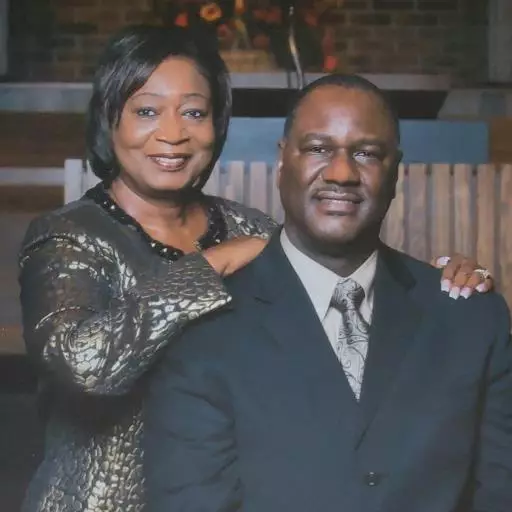
Pastor Ray and his wife, Linda, are the parents of four children, one son-in-law, and two grandchildren.
Contact Atlanta Bible Baptist Church with Pastor Ray P. Smith
abbcinfo@comcast.net
Atlanta Bible Baptist Church
1419 Peachcrest Road
Decatur, GA 30032
(404) 241-1176