
The Test of True Faith


Faith is proved by works.
Pastor Ray P. Smith: Good morning. Would you please stand for the reading of scripture? It is a blessing to be able to look into and read God's word one more time. The scripture reading will be found in the book of James, James chapter 2, verses 14 through 20.
And the word of God reads: "What does it profit, my brethren, if someone says he has faith but does not have works? Can faith save him? If a brother or sister is naked and destitute of daily food, and one of you says to them, 'Depart in peace, be warmed and filled,' but you do not give them the things which are needed for the body, what does that profit? Thus also faith by itself, if it does not have works, is dead.
But someone will say, 'You have faith, and I have works.' Show me your faith without your works, and I will show you my faith by my works. You believe that there is one God. You do well. Even the demons believe—and tremble! But do you want to know, O foolish man, that faith without works is dead?" May the Lord add a blessing to the reading and the hearing and the doing of His word in Jesus' name. Amen.
If you have your copies of the scriptures or the device that contains them, as you are turning to it in your device, be sure to put the mute button on or vibrate so it doesn't ring and disturb your neighbor. James chapter 2, and we want to look at this section here that talks about true faith. I really only want to read one verse. Verse 14 says, "What does it profit, my brethren, if someone says he has faith but does not have works? Can faith save him?"
Father, thank You again for this day. Thank You as always for Your goodness and Your mercies. I think of Albert, and every time he prays, he thanks You like that: for Your goodness, Your mercy, Your grace, Your kindness. He's very good at pointing out just how wonderful of a God You are, and I'm grateful for that. I've learned a lot from listening to him pray. I just thank You for the truth of those things.
Father, even as we come before You now and sit at Your feet, we ask that You would still our hearts and minds so they don't wander, that You might grant us attentiveness by the grace You supply, and that You might still the tongue and the activity of the evil one so that only heaven's voice is heard.
As always, Father, we'll be careful to give You the praise and the honors and thanksgiving. Drive Your truth into our hearts, our spirits. Allow us to work them down to our hands and feet and walk them out in obedience to You. We'll thank You for the privilege of that as well. We ask these things in Jesus's name and for His sake, Amen.
Back in 1955, actually, there was a Peanuts cartoon. There's Charlie Brown and Linus, and they're walking, all snuggled up, warm and comfortable. Charlie Brown says, "Snoopy looks kind of cold, doesn't he?" Linus says, "Yeah, he's shivering. I'll say he does. Maybe we better go over and comfort him." So they go over and they say, "Be of good cheer, Snoopy! Yes, be of good cheer!" And then they go on about their business. They've done their job; they've encouraged him, right?
I thought what a fitting way to introduce this passage that James has before us. I want to talk about faith that works this morning. Now, the past two weeks, actually, we talked about the problem of partiality. We began it two weeks ago, and then last week, as I shared with you the outline, we covered the first three principles. Then we stopped because we only do three things at a time. We're designed to receive three points. Triads are a very strategic part of everything in life.
In fact, when they have something they want you to read, they'll say, "The three points to this: the first one is, the second one is," and then they'll give you five pages after that. But they know that your mind won't rest until you get the third thing. Somehow, we're wired for three things. If you say five things, you'll read three and then you'll say, "I'll come back later." So of course, we stopped at three, and then we covered the last two of this past week, talking about God's goodness and how we ought to be loving and walking in love.
I want this morning to talk to you about faith again—faith that works, faith that puts the gloves on and goes after it. In this passage, verses 14 through 26 of chapter 2, James describes three different kinds of faith. He describes dead faith in verses 14 through 17, demonic faith in 18 through 20, and then he talks about dynamic faith in 21 through 26. I want to talk about those things ever so briefly before my time runs out.
First, let's talk about dead faith. I thought that dark theme where you could barely see that barren tree was a nice picture. It portrays what James is saying here in verses 14 through 17. He says, "What use is it, my brethren?" I highlighted that because you notice that he starts out saying, "What use is it?" and then he ends up saying, "What use is that?" The repetitious phrase forms what we call an inclusio. It's a device that writers use like brackets, and the goal is to cause you to focus on what's in between the brackets.
The thing that's in between is this illustration that makes the point that he's trying to make. "What use is it, my brethren, if someone says he has faith but he doesn't have any works? Can that faith, that kind of faith, save him?" Then he gives this illustration: "If a brother or sister is without clothing or in need of daily food..." the word literally means someone who does not have a sufficient amount of clothing.
In this obvious need, then you say to the person, "Go in peace, be warmed and be filled," but that's it. You don't give them what they need. He's saying, "What use is that?" Even so, faith, if it has no works, is dead being by itself. Faith that does nothing is dead faith. Real faith has to be more than a profession. It can't be just something that we say. It's easy to talk the talk, but as James Brown said back in the '70s, "You're talking loud, but you ain't saying nothing."
For the guys in the back, they're like, "What? '70s? I wasn't even a thought in the '70s." You would have to go and look that up on Google, but that's what he says. It's easy to talk the talk, but real faith has to be more than just talk. Notice what he says here. He says if a brother or sister is without and you say but you don't do, what good is it? Real faith affects how we treat other people.
Remember we said last week that loving God, the first four commandments, and loving people, the next six commandments, that's the whole law. God's design is that we worship Him correctly and then that we treat others correctly. You can't say I love God and mistreat those made in the image of God. That's inconsistent and it's wrong in the sight of God. So it affects how we treat others if it's real faith. If it's not affecting how I treat other people, it's not real; it's dead faith.
Compassion without action is empty. I thought there are passages in scripture that make that point in the New Testament. I pulled out at least three passages. First of all, Matthew chapter 3, as John the Baptist is—it says then Jerusalem was going out to him and all Judea and all the district around the Jordan. They were being baptized by him in the Jordan River as they confessed their sins. That's good.
But then this group showed up: the Pharisees and the Sadducees. They came too. They were headquartered in Jerusalem, and they came out to see what the hoopla was all about. But when John saw them, his attitude changed, and he said, "You brood of vipers! Who warned you?" That reminds me of something that happened to me in pharmacy school that I won't talk about.
"You brood of vipers, who warned you to flee from the wrath to come? Therefore bear fruit in keeping with repentance." Don't say, "Yeah, I'm repenting too." Prove it by what you're doing. Then he says, "Don't suppose that you can say to yourselves, 'We have Abraham for our father,' for I say to you that from these stones God is able to raise up children to Abraham." Your words mean nothing; you've got to prove it with repentance.
Matthew chapter 7, Jesus says this: "A good tree cannot produce bad fruit, nor can a bad tree produce good fruit. Every tree that does not bear good fruit is cut down and thrown into the fire." So then He gives this interesting application. He says, "So then you will know them by their fruit." Sometimes people say, "Well, you can't judge." I'm not judging; I'm just being a fruit inspector. I'm just looking at what I see, and what I see doesn't line up with what I'm hearing. You're talking loud, but you're not saying anything.
Then he goes on and he says this: "Not everyone who says to Me 'Lord, Lord,' will enter the kingdom of heaven." No, but he who does the will of My Father. See, it's easy to say. Talk is cheap, but the proof is still in the pudding. The one who does the will of My Father will enter heaven. "Many," He says in verse 22, "will say to Me on that day, 'Lord, Lord, did we not prophesy in Your name and in Your name cast out demons and in Your name perform many miracles?'"
"We did all this stuff." And He says, "I will declare to them, 'I never knew you.'" How was that? See, they're acting, but there's no relationship. I find that people who were raised in the church know all the songs and they know all the Bible stories. They can get up here and they could tell you the Bible stories and they could pull some things out of the Bible. But unless they have a relationship with Christ that's transformed their hearts, they're lost. Their faith is dead.
One more; we don't want to belabor the point, but I do want to give you First John 3, because it's an interesting thing there. First John 3 says, "Little children, make sure no one deceives you. The one who practices righteousness is righteous, just as He is righteous. The one who practices sin is of the devil, for the devil has sinned from the beginning." I highlighted "practices righteousness" and "practices sin" because the word there is a participle, and the participle speaks more so of character.
The word *poieō* is a verb that means to do something, but he puts it in a participle form here because it's not what you are doing; it's what you do. It's how you are. It's how you act. It's a characteristic of your nature. He says if you are characterized by righteousness, it's because you're righteous. But if you're characterized by sinfulness, it's because you're a sinner. And if you're a sinner, you don't have the life of God in you.
I put this verse up because I know some people. I could tell you names of people who said, "Yeah, I prayed and I invited Jesus into my heart as my personal savior." They said the words, but then there's been a consistent life of rebellion, open rebellion against God and His word, His ways, His will. Jesus is saying the person who says it but does not do it doesn't know Me. And that's a strong statement.
Then John goes on. He says, "The Son of God appeared for this purpose: to destroy the works of the devil." That word *lyō* is a word that literally means to loose, to untie. The idea is that Satan has used sin to bind up the person. They're enslaved, bound up, tied up, tangled up. But then Christ came to unbind, to loose, to set free from sin. And because Christ came to set me free from sin, then if I'm free from sin, I can walk apart from sin.
Not that I'll never fall into sin, but I won't wallow in sin. I won't be characterized by sin. He set me free from that. On the other hand, the person who says I've been set free but they're still walking bound up by sin, they don't know God. And that's the point that he's making. Christ came to set you free from sin, so if your life is characterized by sin, it's because you've never been set free.
So then he makes this statement in verse 9: "No one who is born of God practices sin." You're not walking in a lifestyle of habitual sin. Why? Because His seed remains in him and he can't do it. He can't walk in sin because he's got this internal restraint. It's like how you're driving down the road and then you see those speed bumps. The speed bumps cause you to slow down unless you're not thinking.
Nobody wants to do this, so you slow down. See, what God does by His word is He conforms us to the image of Christ, and His word causes us to slow down, evaluate, and then we just don't run headlong into sin anymore. When my wife and I were single, we went to a marriage seminar. I think we went with the Leonards, and I may be wrong about that. She'll let me know if I got it wrong; that's her gift.
But we were standing there talking with this couple and the lady says to us, "Do you have any kids?" We said, "No, we don't have kids. We're not married." And then the lady said, "Oh, well, that's good. You're not married and you don't have kids." And then it kind of dawned on me. Well, yeah, I guess it is possible to not be married and have children. It was like a "duh" moment, right? But we didn't think like that.
It's unthinkable that a person who's not married would be involved physically because that's a prohibition against scripture. God has established the barrier, and so it never dawned on us to do that because that's not what God says. For the person who knows Christ, there are things. It's like the boss would say, "Listen, just kind of shave the truth there and lie." And you say, "Well, I can't do that."
"What do you mean you can't do that? Everybody does that." But you've got in you a restraint that says that's not right to do. God put that there, and God puts that into the life of every follower of Christ. You just don't have the freedom to just walk in sin because His seed's there. But the converse is if there is no restraint, if there's no problem, if it doesn't bother you to do the thing that violates the word, the will, the ways of God, then it's because you don't know God.
You might say, "Yeah, I'm a Christian," but your life is not saying the same thing that your mouth is saying. Anyway, that's James's point. He's talking about the fact that faith has to have some work to go with it. And if it doesn't, it's dead, it's being alone. James is asking if a man says he has faith, but the emphasis is on what a person claims rather than what his life demonstrates.
It's like a man who goes down to a hundred-million-dollar lottery. Guy says, "I won! I won! I've got all five numbers!" And he rattles off the numbers. The news media says this guy's won a hundred million, and they all crowd around and they put the camera in his face. "Yeah, I've got all five numbers. I'm going to buy a home for my mom, I'm going to maybe give some money to the church. I'm going to do this and this and this."
And they follow him down to the lotto place and the people say, "Okay, where's the ticket?" He says, "Well, I don't have it with me." "Excuse me?" "It's at home. I'll bring it back. You just go and put the money in my account, and I'll go get it and bring it back." Only a moron would do something like that, right? Nobody would claim the prize if they can't validate that they have it. Faith without works is meaningless is the point that James is making here.
Well, let's move on. Let's talk about this second kind of faith, demonic faith, faith that only believes. In verses 18 through 20, James says someone may say, "You have faith and I have works," and then he says, "Show me your faith without the works." Can you do that? Faith is invisible. Show me your faith! Works makes the invisible faith become visible so that it can be seen.
So he says, "I will show you my faith by my works." I won't just say it; I'm going to demonstrate it. He says in verse 19, "You believe that God is one." That's from the Shema in Deuteronomy 6:4: "Hear, O Israel, the Lord our God is one God." I believe the idea is Yahweh is our God, Yahweh alone. But they translate Yahweh *echad* as one, the number one.
But anyway, regardless, he says you believe that, you believe the creed. He said, "Yippee-doo. You do well. Congratulations. You get the good boy biscuit." But he says the demons believe that. That's no big stuff. And the demons, they go one better: they know and they tremble; they shudder at the thought. They don't just say it; it affects them emotionally. The demons know.
I put down in my notes: demons believe certain truths about God. They know God exists. They know God is powerful. They know Jesus is the Son of God, and they know judgment is coming. They know all of that, but they're still not saved. They don't allow the thing that they know to affect what they do. And there are people like that. They know all the facts. They've dug into the Bible.
We were knocking on doors one year, not at this church but in Michigan, and we knocked on a door. This lady visited church; we went to visit her and follow up, and her husband was there. Her husband said, "Oh, yeah, listen, I've been studying the Bible." And of course, he had read some liberal commentaries and he said, "Yeah, I know all about it. It's two Isaiahs." Some say three Isaiahs.
He's giving all of these arguments against the scriptures and he was spending all his time telling us how much he knew, as if to impress us with that. Finally, I said, "You know what? Let's go." We came to encourage her and find out if she had a real faith in the Lord. If not, then we could share the gospel with her. That's what we were doing. But this guy was standing in our way.
Typically, if someone is standing in your way like that and you're out making calls, you can mark it down: the next person is someone that's open to the gospel. And so what we realized is that many times Satan will put a stumbling block in front of you. This guy was talking all that smack stuff and tying up our time, and I said, "Thank you very much. Hey, we're gone."
He just had that look on his face. Amen. Hey, we're out, and then we go somewhere else and lead someone to faith. You know, it's just some people, they know the facts, but the facts don't affect what they do. That's demonic faith. Notice the three things I put down: faith and works can't be separated. You can't say I have faith, I don't need works. And you can't say I have works, I don't need faith, because you can't work your way into God's favor.
We aren't saved by what we do; we're saved by faith in Christ and what He's done. It's both-and. Intellectual belief alone is not sufficient. You can know all that stuff and still perish. Biblical faith involves commitment. Knowing about Christ is not the same as trusting Christ. Knowing the facts about Christ is not the same as following Christ. And God's called me to follow Him.
Believing that Jesus is Lord is not the same as submitting to His lordship. One talks the talk, but the other acts. James is saying demonic faith believes the facts, but it doesn't affect what they do. Genuine faith believes, receives, and submits. Saving faith is not merely believing something about Jesus; it's trusting Jesus as the only way to heaven. And of course, when you do that, your life will begin to reflect it.
Well, let's talk about this third kind of faith, and that is dynamic faith. Dynamic faith is faith that works. Verses 21 to 24: "Was not Abraham our father justified by works?" Now, the works didn't save Abraham. It just proved that Abraham had that faith and that relationship with God. "Was not Abraham our father justified by works when he offered up Isaac his son on the altar?"
God says, "Take now your son, your only son whom you love, take him up to Mount Moriah, offer him up there as a burnt offering to Me." It doesn't say that Abraham cried or pitched a fit. It says he got up early in the morning, he got his son, he got some servants, and they took off going to the mountain. He said, "I'm going to show it to you," and there it is.
He said, "Y'all stay here. Me and the lad, we're going up there. We're going up there, and we're coming back." God says sacrifice your son, and Abraham says this is the son God has made a promise to me. God is the God who keeps His promises. So if He says sacrifice him, that's His concern. I ain't got to worry about that because He's got to figure out how I'm going to sacrifice this son and then He's going to raise him up. He trusts God.
So he says to the men, "We're coming back," because the writer of Hebrews says he's already considered God's got to keep His promise because God can't lie. If He says kill the son, He's going to have to raise him from the dead. No problem for God! No doubt in his mind. So let's go! And Isaac, same kind of faith, walking along. "Dad, hey, we're going up here. I see we've got the wood, we've got the fire, you've got the knife. Where's the lamb?"
And Abraham says, "God will provide for Himself a lamb. God's got it all worked out." See, the person who really believes that God's got it all worked out, he doesn't question God. He doesn't worry about what God might do, will do. He says God said it, that settles it, and that's the end of the story. And so he says let's go, and God's going to provide for the lamb.
But then they get there. Abraham builds the altar, and he takes his son and he lays his son on the altar. It doesn't say that Isaac says, "Hold up here." Isaac doesn't say anything. He submits to the will of the father, and he let his dad lay him there and tie him up. And he's ready to be toast, literally. And then God says, "Abraham, stop! Now I know that you fear Me."
He looks up, and there's the ram right there. "Go get him, and you can put him there." God's got it worked out. Faith says God promised it; I believe the promise of God. Demonic faith says, "Yeah, yeah, yeah, but I'm out." And dead faith says, "I ain't going up there. Are you crazy? God gave me common sense. I'm not going." And you reject what God says, and then you don't see God do what He wants to do because you don't trust Him.
That's the difference. Abraham was justified by works, and as a result of the works, faith was completed; it was perfected; it was concluded. Faith was working with his works, and as a result of the works, faith was perfected. The scripture was fulfilled that says Abraham believed God, and it was credited, it was reckoned to him as righteousness. He was called the friend of God.
Why? Because he was willing to take God at His word and act on it. It's one thing to say, "Well, God, yeah, okay, I believe." Wait, what? Because you can't see past your own responses and you reject what God says for you to do. Unlike the person who says, "Well, as a Christian, you ain't supposed to do these kinds of things." What does that mean? That means I'm going to do these kinds of things.
Verse 24 says, "You see that a man is justified by works and not by faith alone." He's not saying that you have to work to be saved. He's saying if you have real faith, if you believe God, if you trust God, if you rely on what He says, if you cling to Him and His promises, then it'll bear out in what you do. You won't worry about those things that God says He'll take care of. You don't doubt Him. God said it; that settles it.
Faith that obeys is the only genuine faith. Abraham believed the promise of God, and then Abraham acted on what he believed. See, that's what true faith does. It doesn't just talk the talk; it walks out the talk. Abraham's obedience proved his trust. He could say all day, "Yeah, I trust God, I believe God," but "I ain't going up that mountain." That means I don't believe God.
Obedience is the thing that proved that you trust God. The person who does not obey does not trust. The person who does not trust does not have saving faith. And that's the point that he's making. Then verses 25 and 26: "In the same way was not Rahab the harlot also justified by works when she received the messengers and sent them out by another way?"
You say, well, Rahab, she lied. Yes, she did. She lied because she took God seriously. God's going to wipe all of us out. In fact, she told the spies, "Everybody in this whole city is scared of y'all. That's why the place is locked up. Your God is the real God. The god we serve is a fake god, but yours is real, and He's been proving He's real, and I don't want to die like these folks."
"So now I'm going to do you a solid so you can do me a solid." And they said, "All right, that's a deal." Now, that doesn't mean that God says it's okay to lie in certain circumstances; that's not the point. The point is she believed the message that she heard. She believed that this God is the true God, and she says, "I will protect you if you spare my life and my family."
If she didn't believe God, she would have turned them in. But it was because she believed God. It's because she believed that He was the true God. In fact, verse 26 sums it up: "For just as the body without the spirit is dead, so also faith without works is dead." It takes both. Faith that acts courageously is genuine faith.
Rahab believed the promise of God just like Abraham did, but she risked everything because of it. And her actions revealed that she had real faith. If she did not have real faith, she would not have done what she did. The only point is that real faith is demonstrated by what we do, not by what we say. It's easy to talk. If we were summarizing verse 26, it would look like this: faith without works is dead.
A dead body—now, I've done a couple of funerals, more than a couple, and I've discovered you look at that body. The body has hands, feet, eyes, ears, and it has a heart. The heart's not beating, but it's there. But there is no life. Looks alive sometimes; they do a good job. There's no life there. Similarly, dead faith may look religious.
Dead faith can attend church, can carry a Bible, can sing hymns or praise songs, can pray, can talk about God. It can say, "I believe in Christ." But if there is no spiritual fruit, if the Spirit of God isn't in the heart and changing, transforming the heart and producing love, joy, peace, patience, kindness, gentleness, goodness, faithfulness, self-control—if there isn't any tangible evidence that there is real life in the person, then it's probably because there's no real life in the person.
So then ask yourself these questions: Number one, is my faith merely something I say? Do I profess Christ without allowing Him to change my life? If I'm saying no to Him in the changing of my life, no to His Spirit in the transforming of my life, if I'm saying no, not You but me, then there's no life there. Is my faith producing spiritual fruit? I just mentioned the nine fruit of the Spirit.
What is my faith causing me to do? You know, as people come out of the church building, they're talking to each other and they're being kind to each other and they're laughing and they're going to eat together and they're having a good time of fellowship, but it doesn't translate into acts of kindness, deeds of service, opportunities to show the love of Christ. Faith is not real.
In conclusion, what does God want me to do? What does He want me to feel? What does He want me to know? I just put these three things: a living faith is a working faith. Secondly, a working faith is an obedient faith. Not like Peter that said, "Not so, Lord." He would tell God no and then call Him Lord. A working faith is an obedient faith, and an obedient faith is evidence of a genuine relationship with Jesus Christ. James does not pull any punches; I like that about him.
This last point: good works do not make faith come to life, but a living faith will produce good works. It has to. A young boy was sitting on the front row watching a ventriloquist perform with the dummy on his lap. And the dummy was interacting with the boy, and he proceeded to ask the boy questions and to talk with him. And the boy was excited because he said, "Now I've met a friend."
So after the show, the boy went up to the dummy and he was trying to talk to the dummy and the dummy wasn't saying anything to him. The boy was getting frustrated. So the ventriloquist said this: "Well, he doesn't do anything. He just talks." Faith without works doesn't do anything. It just talks. Faith without works is dead.
Father, thank You again for this day. Thank You for Your word. And Father, Your word convicts us. It's easy to say that You are the Lord of our lives, Lord Jesus. But the proof is in the pudding. Am I surrendering my life, my heart, my ways, my will to You? Am I bowing the knee and allowing You to manifest Your lordship over every area of my life?
Or am I just using You as a genie to come out when I need it and grant me three wishes: bless my life and make me successful and give me good things and get me out of trouble, and then You can just go on back and tend to Your business till I need You again? That may be the kind of bargain that we wish for, but that's not biblical faith. It's not saving faith.
Saving faith says yes to You and all that You desire. If You say build yourself up on your most holy faith, then I'll get into Your word. If You say pray and intercede for others, then I'll get on my knees and I'll pray for others. If You say walk in love and demonstrate acts of kindness as I raise up the opportunities, then I'll walk in love and I'll demonstrate acts of kindness as You give me the opportunity.
It will always be about You and what You want and never about me and what I want. Lord, give us the boldness, the strength, the courage, the conviction to walk in Your truth. And may our faith be real, as evidenced by the walk that takes place and the work that we do. And I pray for anyone who may be here today and maybe they have thought through what they've heard and said, "Well, I don't know, I'm confused. Do I have to do something to be saved? Do I have to prove something so that You'll accept me?"
The answer is no. The truth of the matter is I need to recognize that on my own I can't and I won't. But Lord Jesus, You did and You will. And if I'll invite You in to take up Your rightful place as savior and Lord of my life, the king and head of my life, then You'll come in and You'll change me forever. You'll give me Your life. You'll give me Your Spirit. You'll give me insight into Your word. You will fill my heart with Your love. And that's what I want, that's what I need, that's what our world needs.
And I pray if there's anyone here who has yet to make that decision, that today would be the day that they say yes to You, saying no to their own selfish ways. And for those of us that know You, the proof is always in the pudding. May we submit and walk in Your truth. We ask these things in Jesus's name, Father, and for His sake. Amen.
Past Episodes

About Atlanta Bible Baptist Church
The Bible is the most important book in the world because it contains the best news for the world – the gospel of Jesus Christ! For over 50 years, our passion at the Atlanta Bible Baptist Church has been to tell people about God and help them understand His Word.
About Pastor Ray P. Smith
Rev. Ray P. Smith is the senior pastor of the Atlanta Bible Baptist Church. He follows Dr. John McNeal, Jr., the church’s founder and now Pastor Emeritus. Pastor Smith received his Bachelor of Science degree in Pharmacy from Mercer University Southern School of Pharmacy in Atlanta. He received his Master of Divinity degree from Baptist Bible Seminary in Clarks Summit, Pennsylvania.
Pastor Ray delights in teaching the Word of God, explaining its truths with practical illustrations and applications. His passion, to teach the whole counsel of God to minister to the whole person, flows out of his life verse, which says “And Jesus kept increasing in wisdom and stature, and in favor with God and men” (Luke 2:52). As Jesus grew mentally, physically, spiritually, and socially, so should His followers.
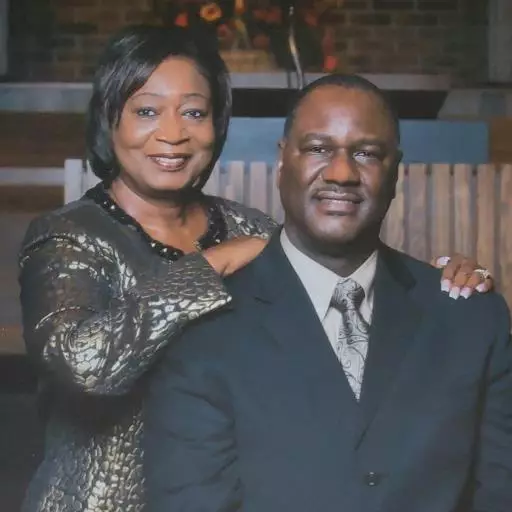
Pastor Ray and his wife, Linda, are the parents of four children, one son-in-law, and two grandchildren.
Contact Atlanta Bible Baptist Church with Pastor Ray P. Smith
abbcinfo@comcast.net
Atlanta Bible Baptist Church
1419 Peachcrest Road
Decatur, GA 30032
(404) 241-1176