
Taking The Stew Out Of Stewardship - Part 4


God's Purpose - My Passion
Pastor Ray P. Smith: We've been talking about stewardship. We said last week we would end it, but then this week I thought I would say at least one more thing about stewardship. We're going to look at Romans 8:28 and 29 and 1 Peter 1:2 for the next few minutes and just try to glean a couple of things in terms of challenge, thinking about the subject of stewardship.
Last week, we looked at the topic of the steward and his time out of 1 Samuel 17, the life of David. We want to talk a little bit more about using our time in a wise way to accomplish the will of God, finding my passion, and that is through looking at God's purpose. We're going to talk about making life count, that is, using the time that God has given us to accomplish the purposes that God's assigned to us.
Understanding God's purpose for my life, let me just give you a few thoughts out of Romans 8:28. Verse 28 says, "And we know that God causes all things to work together for good to those who love God, to those who are called according to His purpose, for to those whom He foreknew, He also predestined to be conformed to the image of His Son."
The point to be made is God causes all things. That's one word in the Greek, *synergeo*, from *ergon* to work, but *syn* to work with. God works with all of the things that He has prescribed for us to do. All of the circumstances, it's kind of like if you were a painter. A painter has all of these oils and he takes from this and that, and he puts it on the canvas in different locations and different colors.
He works it all together to accomplish the portrait, the picture that he's trying to make. He brings all of the things together for good. That's what God does. He causes all things to work together for good to those who love Him and are called according to His purpose. Let's talk about a couple of things God is in order to understand His purpose. Number one, God is always working. There's never a time where God is not doing something, and that's a very good thing.
Jesus says in John 5:17, because Jesus was doing these things on the Sabbath, the Jews persecuted Him. He healed, and Jesus said to them, "My Father is always at His work to this very day." God's never stopped working, and I too am working. God works, I'm working. I do what He does. For this reason, the Jews were trying all the harder to kill Him because not only was He breaking the Sabbath, but He was even calling God His own Father, making Himself equal with God. They understood the point.
The fact of the matter is God is always working. He's always doing something, and God is always at work in your life and in my life. He's always doing something. God never wastes a single moment. No matter what the circumstance is, no matter even what the outcome is, God is able to take it and shape it and work it so that good comes out of it. I understand and recognize that.
Secondly, God's causes have a goal. God is working all things together for good to those who love God. He has a goal in mind, and I like the fact that He's not only working all the time, but He's taking all the parts of your life and my life, and He's weaving something really good out of it. He wastes nothing.
Handley Moule says this, and I like this statement: "There is no situation so chaotic that God cannot from that situation cause something that is surprisingly, surpassingly good." He did it at the creation. Remember Genesis 1:1. It says, "In the beginning God created the heavens and the earth." The earth was *tohu wa-bohu*. It was formless and void.
But then the God who is great, He took the formless and void and He shaped it. "Let there be light," and light was. He then began to work over the course of the next six days to bring a beautiful creation together, such that in the end He said it is very good. That's what He does. He takes chaos and disorder and He's able to fashion it into something beautiful.
That's what He's doing in your life and in my life. That's what He desires to do. He did it in creation. He did it at the cross when people thought, "Man, this is the worst thing ever. They crucified the Son of God." But it was through His crucifixion that God brought about the redemption of all of those who are being saved. He's doing it today. God is taking the things, the elements of your life, and He's fashioning them together for the good.
He causes all things to work together for good to those who are called according to His purpose. God has a reason for all of the things that He does, all of the things that He does. Of course, that reason, God's goal, is to use me for His glory. I remember there was a story that I saw that I thought really captured this.
Marshall Shelley, who suffered the death of two of his children, writing this in *Leadership Journal*, he says, "As a child, I loved to read, and I quickly learned that I would most likely be confused during the opening chapters of a novel. New characters were introduced, disparate, seemingly random events took place, subplots were complicated and didn't seem to make any sense in relation to the main plot."
But I learned to keep reading. Why? Because you know that the author, if he or she is good, will weave them all together by the end of the book. Eventually, each element will be meaningful. At times, he says, such faith has to be a conscious choice. Even when I can't explain why a chromosomal abnormality develops in my son, which prevents him from living on earth more than two minutes.
Or when I can't fathom why a daughter has to endure two years of severe and profound retardation and continuous seizures. I can't explain all of that, he says, but in that moment I choose to trust that before the book closes, the author will make things clear. He says God is working all these things together for good.
I may not understand why He does everything at the moment, but eventually, I will recognize and understand why He does what He does. God has a goal, and His goal is to use me for His purpose. In order to make the most of my life, I have to understand and accept the purposes that God's assigned to my life. Then, as a steward, I can manage any and all the circumstances that come my way. That's what we want to recognize, that's what we want to see, and that's what we want to do.
Let's talk about applying God's purpose to our lives. Let's talk about how He makes these things happen. 1 Peter says this, "Peter, an apostle of Jesus Christ, to those who reside as aliens scattered throughout Pontus, Galatia, Cappadocia, Asia, Bithynia, who are chosen." I like that. The word there is *eklektos*. There is *kaleo* and *eklektos*.
Jesus says in Matthew, "Many are called, few are chosen." Many are called, *kaleo*, just like the men who were recruited to go into the vineyard and contracted to work. But then He says later on, "Few are chosen." They are grabbed and brought in. That word chosen is *eklektos*. It's the pick of the litter, so to speak. God has chosen us. He has handpicked you and He's handpicked me to accomplish His purpose, and He wants to display me for His glory.
The word there for purpose, when it says God has called us according to purpose, that word *prothesis* means a setting forth, a presentation, an exposition. It's a placing in view or openly displaying something. God has hand-selected us so that He could put us on display so that through us He could declare His glory. That's our part, to cooperate with the Spirit of God in understanding how to walk in concert with the Word of God so that we display the glory of God. That's a great, great purpose.
Let's talk about how we apply that purpose. He says we were chosen, but notice it says we were chosen to obey Christ. I have to highlight that because the word *akouo* means to hear, but *hupakouo* means to not only hear, but to listen so that you obey. It's a very, very descriptive word. You listen to something so that you can understand it, so that you can do it.
When I worked as a pharmacist when I was in seminary, I remember one time I was doing relief work at this one store as my home store and working with this lady, Margie. Margie's one of those very, very determined, detailed people, kind of like Grace Dyson, very, very detailed and very, very organized. She was going off at 3:00 and there's another young kid coming in at 3:00. She says to me before she leaves, because I'm there all day, 12 hours, she says, "Ray, when this guy comes in," I'll call him Jason, I don't remember what his name was.
She says, "Make sure that you have him put this merchandise on the shelf." She says, "It needs to go like this, and it needs to be this high," and she's explaining to me all of this stuff. She's telling me words that I'm hearing "wah, wah, wah." Jason comes in as she's getting ready to walk out the door. She pauses and she looks at me, and I say, "Okay, Jason, do you know how to put those things on the shelf?" He says, "Yeah." I said, "Okay, then you do that."
She says, "Wait, you get back out there." She said, "No, no, no, you got to do it this way, and this way, and this way." When she was explaining to him how to do it, it dawned on me that I didn't hear half of what she said. I heard her basically say have him put the stuff on the shelf. That was pretty much the end of it. The rest of it was just noise. But I didn't listen attentively for the purpose of being able to follow in obedience and carefully prescribe what I was told to do.
Well, we've been chosen to obey Jesus, not just to do what He said, but we have to listen attentively to what He says, pay close attention so that we can then obey exactly what it is He wants us to do. That's an important thing. God arranges the circumstances so that I can accomplish His purposes. Let me mention four things that God arranges.
First of all, God arranges what I call the "little foxes" that deter me. Song of Solomon says, "Catch the foxes for us, the little foxes that are ruining the vineyards while our vineyards are in blossom." Little foxes are not like the big foxes. The big foxes can reach up and they can just pull grapes off the grapevine because they can reach it.
But the little foxes can't reach the grapes, so what they do is they'll try to pull down the vine. They can ruin the vine by pulling down on it because they break the limbs and stuff, and they ruin the vineyard because they're trying to get the grapes. The little foxes are way worse than the big foxes. There are some little foxes that come into life that cause us to not be as fruitful. God allows those things to come because we need to deal with them.
Let me just mention three of them. Number one, I put down moral choices that compromise my spiritual vitality. There are moral choices that have to be made. I say the statement all the time: you make the choice, and then the choice makes you. You have to choose responsibly. James says, "Let no man say when he is tempted, I am tempted by God." God doesn't tempt anybody.
But it says every man is tempted when he's led astray, he's drawn astray by his own lust, or her own lust, and enticed. Then lust gives birth to sin, and sin brings forth death. God allows these temptations to come. He doesn't bring them, but He allows them. Why? Because I need to recognize the inherent weakness that I have. I'm not that strong. I think I'm strong, but I'm not that strong.
So there are temptations that will come along that expose the fact that I'm not that strong. But then the second thing is it puts me at a point where I recognize how much I need to draw on His strength. In Him, I am strong, but in me, I'm weak. So God allows these temptations to come. God allows these moral choices to be raised up. I have to choose because if I make the poor choice, it's going to take me down into bondage.
If I make the right choice, I get stronger. Like we say again with the exercise equipment, when you're working out, you push against the thing that doesn't want to move. You resist the thing that wants to pull you back. It's in the pushing and resisting that we get stronger, and God knows that.
Second little fox that I have to deal with many times is procrastination because Satan loves to use that. Satan loves to get me not to say no. He wants me to say, "Oh yeah, but not right now." He knows that if you put it off, then you're probably not going to really get around to it. It's going to be a minute.
I told you about the fact that I put a hole in the drywall in my living room back in Michigan because there was a pipe back there and it was leaking. Because it was leaking, water was running down and it began to seep through the wall. I was able to push my finger through the drywall because it was so wet. So I took all of that loose, and then I kind of put the pipe back in place, and then I spackled over the drywall, and I didn't quite do it right.
But I said, "Well, I'm going to sand this down and make it smooth and paint it." When I reached the point, I said, "Okay, I'll finish it later." One day, I said to my wife, "You know, I need to fix that drywall. I need just to sand it on down and spackle it because it's been there, I don't know, a few months." She says, "Two years." "What, two years?" I could not believe that I put that off for two years. But once Satan gets you to put off doing the thing that you know to do, it's amazing how quickly time slips away from you. Procrastination is one of his greatest tools.
The third thing, of course, is a lack of discipline. Because as I said before, for every accomplishment that you want to accomplish, there's a price you have to pay. Once you say, "I'm not willing to pay the price," you can't have the thing. Satan knows that, and you need to recognize that. You need to walk in diligence.
So not only are there the little foxes that deter me, God allows them to come so that I can recognize my weakness and to draw on His strength so I need those to get better, stronger, deeper in life. The second thing are the relationships that define me. There are basically two types of relationships. Your life is a REC. When I say REC, I spell it R-E-C because the acrostic REC means that there are three different types of relationships.
The R is for relationships because relationships give me joy in the present. Then the E is for experiences. Experiences allow me to make good judgments based on the wisdom found in events in my past. I look back on the past, I get smarter about things because of the things I experienced in the past. So relationships give me joy in the present, experiences give me wisdom from the past, and then choices, that's the C, choices allow me to shape the future.
So my present, my past, my future, all of those are important for me to consider all the time. That's why you want to set goals all the time. You want to be able to think strategically about adding value to the relationships. You want to look back as we do at the end of the year or as we do at the beginning of the year when we set goals. You look back over the past year, how's God led me, what did God teach me?
That's why when you do your "2-7 courses" and you have your "half-day of prayer," three and a half hours by yourself, you and the Lord, you take the time and you look back through all of the things that you've written in your quiet time diary in your "2-7 book" as you have been writing out the things that God has taught you. That's why it's so important to write them out.
Sometimes you say, "Well, I just have to do two weeks' work." You're in the course for three months. You can do two weeks' worth of writing if you want, but if you write out daily for three months what God has been teaching you, showing you, you can look back on that and see how He has led me, what has He taught me, what have I learned about me and my relationship with Him, about life. You can see a lot. That's why you want to write it out. Anyway, those of you that haven't taken the discipleship courses, right over the head, right? But that's okay.
Anyway, there are two types of relationships that define me. Number one, there are the positive ones that encourage me, like Barnabas. Barnabas, that was not his name. His name was Joseph, but his nickname was Barnabas. They gave him that name because Barnabas means "son of encouragement." Barnabas was such an encouraging guy, and I really appreciate that.
There's some people that are like that. They come in and all the joy comes in with them because they're so positive and uplifting and they're just fun to be around. They're great, great people. They're a gift to the body of Christ. Philippians says, "Do nothing from selfishness or empty conceit, but with humility of mind regard one another as more important than yourself. Do not merely look out for your own personal interests, but also for the interests of others."
That's what encouragers do. They're not thinking about themselves, they're not using you as a sounding board for their own empty-headed thoughts. But no, they're listening to you, they're seizing on your words and they're hearing your heart. My wife and I were talking yesterday about using the words that people say to hear their heart. If you react to the words, you and I talked about this on Tuesday, right?
When people speak, you can react to the words, which is what Job's three friends did. Job was pouring out his heart, he was complaining because he's in pain, but they reacted to his words and they dumped on him. They said, "You know, the truth of the matter is you've got to be hiding sin." Then they doubled down on it as he defended himself because they were reacting to the words.
They didn't use the words that he spoke to help them hear his heart. In his heart, he was saying, "I'm hurting and I don't know why God is allowing this." That's all he was saying. Sometimes we can be guilty of that. But encouragers, they look past the words, they hear the heart and they speak to the heart. They give strength to the heart because of their encouraging words and they make you smile, they make you laugh, they make you think about things differently and even about yourself.
Sometimes people are down on themselves and encouragers come along and say, "Well, no, no, no, you feel that way, but have you considered?" and they'll give you a spin that shows you that God is at work in your life, He's doing things through your life and it builds you up. We ought all to work at being encouragers like Barnabas.
Not only has God given me encouraging people around me, but God has allowed negative relationships too. Why? To encumber me? There are some people that you really don't want to be around. Like Mark Lowry says, you'll cry at the funeral, but you don't want to go on vacation with them. Some people, I just can't be with this person, I can't stand it. But then God allows circumstances to come along.
He does things in life that we don't always expect. Sometimes He allows people like Saul with David. I'm sure that David asked himself, "What did I do that this man is trying to kill me?" Why did God allow him to be brought into the courtyard of Saul only to be hounded and having to run for his life because of Saul? Well, it seemed like a negative thing. In fact, it had a lot of negative elements to it.
But you know, the fact that Saul had a tortuous spirit that brought on fits of depression was the only reason David actually came into the limelight anyway. He actually became the one who would soothe Saul, so he was familiar with the court scene and he could get familiar with being in the king's palace. Then after he killed Goliath, Saul made him one of the leaders in his army, and eventually captain of his army, and sent him out. David marched from that into a mighty warrior.
All these things are going great, great, great, but then when Saul turned on him and hounded him, eventually, David had to run for his life. All of the people who were dissidents, they were drawn to David. When David was out there running, he came across Nabal, and he was going to kill Nabal, but then Nabal's wife, Abigail, she entreated and brought him food and sustenance and turned his heart. David didn't forget that.
When he was running from Saul into the Philistine country, he would actually go out and pillage villages of the Philistines and the Amalekites. When he got the plunder, he began to send little gifts to the people in Judah. Where'd he get that idea from? That's what Abigail did for him, and he saw the effect that it had.
Then even as Saul hounded him and he wound up going to all these different places, David became very familiar with the countryside so that when he became king, he could look at the hill that Jerusalem sat on and say that is a strategic place. That's where I need to set up my kingdom. Even though they said you can't come in here, the blind and lame will keep you out, he persisted because that's the place he needed.
He took the place and that's where he set up his kingdom. It was all a result of him having to run from Saul that he got all of that information together. God uses negatives in your life. God allows people that get on your nerves and get under your skin. People become the sand in your oyster.
You know that pearls are formed because the oysters that sit on the ocean floor, when they open up to eat, sometimes sand gets in there and gets underneath the flesh and it irritates. The oyster has to coat that over, and a bigger piece of sand means more coating. It coats and coats and coats until the irritation's gone.
Then when you pull the oysters up out and you open it up to get the meat out, the oyster meat, you see that there's a nice round pearl. Pearls are very expensive because in order for them to get them, they have to go all the way to the ocean floor. There are some people who are like that. They're the sand in your oyster, and God allows them to come your way because they allow something really wonderful to be shaped in you. God always uses negatives as well as positives, and that's a very wonderful thing.
Remember the story of Corrie ten Boom. She says in her book, *The Hiding Place*, she was talking about how she and her sister were transferred to Ravensbruck, which was one of the worst little camps, the Nazi camp. They put them in this one area and it was a filthy area, overcrowded, and there were a lot of fleas in there. I remember her sister was telling her, "We need to be thankful to God for everything." She's like, "Well, I can't be thankful for this."
But you know, when they were there, they would sneak in little pieces of the Bible and they began to share and teach the other women Bible studies. They noticed that for months, the soldiers didn't come in and bother them. The reason the soldiers didn't come in is because of those fleas. They didn't want to be around those fleas, so they left them alone.
So God used the fleas to keep the soldiers at bay so they could teach the Word of God to those women. God allows even the negatives to accomplish something good. He's great like that. When you think about your life and the things that have happened in your life and the things that are happening in your life, sometimes you can get down.
But if you stop and think, "Well, what has God accomplished in my life as a result of this thing, as a result of this person? Did I pray more because of this person? Did I persist?" I was talking to a lady that I worked with years ago at Rich's department store. That's how long ago it was, back in the 70s. This lady, she was so cheerful, and when we were working together, I would ask her about her life.
She said, "Well, growing up, my mom died, my dad was abusive, he would beat me," and all this stuff. She had a very, very difficult upbringing. I said, "It's interesting. I notice how you really, every day you're upbeat and you seem to really enjoy the relationships. You enjoy laughing, and it's like you have this freedom."
I said, "You ever thought about the fact that maybe you really enjoy everything now because of the difficulties that you had in your past and now you're able to enjoy the freedom?" She said, "You know, I never thought about that." But she recognized that it was because of what she experienced in the past that she was able to appreciate the presence all the more.
Maybe God allowed something negative in your past. Maybe God's allowing somebody negative right now. Maybe God is molding you in a way that you never really thought about through the people that you don't want to have about you. But God knows that they're good for you because He's going to use them in your life.
A third thing God uses, not only does He arrange the little foxes that deter me, not only does He arrange the relationships that define me because I have to make choices, third He arranges the challenges that dictate my success. There are challenges that dictate my success. I have obstacles that I overcome and I have objectives that I need to accomplish.
Those are important because the obstacles that I need to overcome are the things that allow me to grow in strength. It was only because a lion would come along and take sheep from the flock that David would go after the lion. It was only because the lion didn't want to give up the sheep and would rise up against him that he had to grab that thing and strike it.
It was only because bears came and tried to take sheep that he had to go and fight off the bear and kill it. David had obstacles that he had to overcome in his life. But you know, those obstacles set the stage for his victory over Goliath and over the Philistine armies. David got stronger and stronger and wiser and wiser. It was because those challenges that came in him, they became the soil that grew his strength and his determination and his confidence.
God allows obstacles to come your way, not because He hates you, but because He's trying to make you strong. You get stronger, like I said, when you push against the obstacle that doesn't want to move. You get stronger when you resist the temptation that wants to pull you out of alignment. You need the obstacles in order to gain strength.
Then, of course, you have objectives that you need to accomplish. You've got to be able to grow, you've got to be able to plan. We already talked about that the past couple of weeks. Planning is everything. Planning is gospel when it comes to living your life on purpose. What's it you plan to do? What is it that you want to do? You have to set goals and you have to work hard to accomplish them. You plan to accomplish things. Either you plan to succeed or you fail. Anyway, that's not how the saying goes, but I don't remember what it goes. I'm getting old. But you need objectives, you need to plan out your life, plan out your steps.
A fourth thing is the impact my life will have. I'll end with this. I really love the way Philippians 2 puts it. It says, "So then, my beloved, just as you have always obeyed, not in my presence only, but much more in my absence, work out your salvation with fear and trembling." It's not just that you have things to do like go to work and come home and eat and watch TV and go to sleep.
But God has appointed more than that for you. God is at work in you, both to will, to want to, and to accomplish His good pleasure. God wants you to accomplish the things that He brought you into the world to accomplish. Of course, those things are just wonderful, wonderful things. Let me just bring this to a close.
Kim Huffman tells this story. She says World War II was over. My father, along with thousands of others, had been discharged from the service. On every highway, you could see soldiers in uniform hitchhiking home to their families. But for my father, the thrill of reunion was overshadowed by his mother's illness.
There was a problem with her kidneys. The doctors told my father that she needed a blood transfusion immediately or she would not live through the night. Grandmother's blood type was AB negative, a very rare type. In those days, there were no blood banks like there are today. No one in the family had that type of blood, and the hospital had not been able to find anyone with that rare type.
So realizing that my grandmother had only a few hours to live, the father decided to rush home, take a shower, change home, and then return for the final goodbyes. As he was driving home, he passed a soldier hitchhiking. At first, my father was not going to stop, but then something compelled him to pull over.
The soldier climbed in and the trip continued in silence. Her father was in deep grief, not saying a word. The soldier realized something was wrong as he saw a tear roll down my father's cheek. He asked what was the matter. My father told him that his mom was about to die because the hospital couldn't find anyone with AB negative blood. He explained that he was headed home to change home and then he was going back to the hospital for her final hours.
The hitchhiker pulled out of his pocket the dog tags and it read blood type: AB negative. The soldier told my father to turn the car around and head back to the hospital, which he did. Kim goes on to say that his blood saved my grandmother's life and she lived another 47 years. But she says somehow in the excitement of the moment, the soldier slipped out of the hospital without any further word.
To this day, my family doesn't know who he was. My father has often wondered if that stranger really was a soldier or if he was an angel in disguise. All I know is that God was surely there, and in one way or another, He provided the blood that saved my grandmother that day. Of course, there are two thoughts that I'd like to end with here.
The one is that you never know how God will use your life. You never know what God will do. Your goal is to just be available. Your goal is to walk with Him. As He places you in the way, like the servant in Genesis 24, "I being in the way, the Lord led me." As you walk with the Lord, He places you in the path of good works.
He's lined them up for you to do, and He places you there so that you could accomplish the good work. That's His good pleasure for you. You are His *poiema*, verse 10 says, appointed by God for the purpose of good works, which God has before ordained that you should walk in them. He gives you the desire, He gives you the want to, the ability to, and then He places you where you can. That's a wonderful, wonderful thing. My passion is to accomplish, to pursue God's purpose in life.
And then, of course, the second thing, I gravitate—in fact, I put this in here because I really love that statement: God was the one who provided the blood that saved my grandmother that day. God appointed one man whose blood covered and cleared away all of our sin. Jesus Christ, He died for me. Jesus Christ, it's His blood that has loosed me, Paul says in Ephesians 1, loosed me from my sins.
It's because of Him, Ephesians 1:7 says, that I have the absolute forgiveness of sin. One man's blood made all the difference. Praise God for that. Praise God, He sent His Son to rescue you and to rescue me, to set us free from the shackles of sin so that now we can walk in paths of purpose, paths of peace. We can be peacemakers, we can be ambassadors for Christ who share His goodness with others and who are able to add value to the lives of those around us.
What a great reason to get up in the morning. What a great reason to wake up smiling and to be able to rejoice in God's goodness and then to roll your sleeves up, get into the book, spend time in fellowship with him, hearing His voice, learning His will as found in His word, and then going out and taking on the day in His name for His glory. That's just the most wonderful, wonderful thing.
Let me just add one last thought. The eternal relationship God arranges that. 1 John 3 says, "See how great a love the Father has bestowed on us that we would be called children of God, and such we are. For this reason the world does not know us because it did not know Him. Beloved, now we are children of God. It is not appeared as yet what we will be, but we know that when He appears, you know what, we'll be like Him because we'll see Him as He is."
God's purpose was to make you like His Son. He's allowed the Spirit, His Spirit, to live in us, to work in us, to take the word to craft in us the very character of His Son so that we can display His Son to the world. Everyone who has this hope fixed on Him purifies himself even as He is pure. God has graciously allowed us to know Him, and He arranges the circumstances in our lives so that we can show Him.
May God strengthen you today, may He bless you today, and even as you are home today and enjoying the safety of being in safe mode, may the Lord allow this day to be a great day of joy and peace and a blessing. Thank Him for the wonderful, wonderful gift of salvation, and not only that, for the wonderful purposes that He has assigned to your life.
Father, thank You so much again for this day. Thank You for Your love for us. Thank You for Your mercies and for Your abundant grace. Thank You for the calling. You called us to salvation, You called us to holiness, You called us to walk in love and to walk in Your wisdom, to walk in the ways of Your Son.
You strengthened us, You provided us all things that pertain to life and godliness, as Peter tells us, through the knowledge of the one who's called us to glory and virtue. Thank You for Your calling on our lives and the purposes assigned. Thank You for the way in which You use everything that You allow to come into our lives to shape us so that we are more like Your Son.
May we not grow in bitterness and anger and anxiety, but may in fact we lean into Your onto Your strong arms, and may we find in You comfort, peace, direction, strength, a joy to be able to accept the things that You allow and to use them to accomplish Your purposes. We commit this day to You and thank You again. Thank You for each one here today and we ask Your favor upon them. We ask in Jesus' name and for His sake. Amen. Amen. Amen.
Past Episodes

About Atlanta Bible Baptist Church
The Bible is the most important book in the world because it contains the best news for the world – the gospel of Jesus Christ! For over 50 years, our passion at the Atlanta Bible Baptist Church has been to tell people about God and help them understand His Word.
About Pastor Ray P. Smith
Rev. Ray P. Smith is the senior pastor of the Atlanta Bible Baptist Church. He follows Dr. John McNeal, Jr., the church’s founder and now Pastor Emeritus. Pastor Smith received his Bachelor of Science degree in Pharmacy from Mercer University Southern School of Pharmacy in Atlanta. He received his Master of Divinity degree from Baptist Bible Seminary in Clarks Summit, Pennsylvania.
Pastor Ray delights in teaching the Word of God, explaining its truths with practical illustrations and applications. His passion, to teach the whole counsel of God to minister to the whole person, flows out of his life verse, which says “And Jesus kept increasing in wisdom and stature, and in favor with God and men” (Luke 2:52). As Jesus grew mentally, physically, spiritually, and socially, so should His followers.
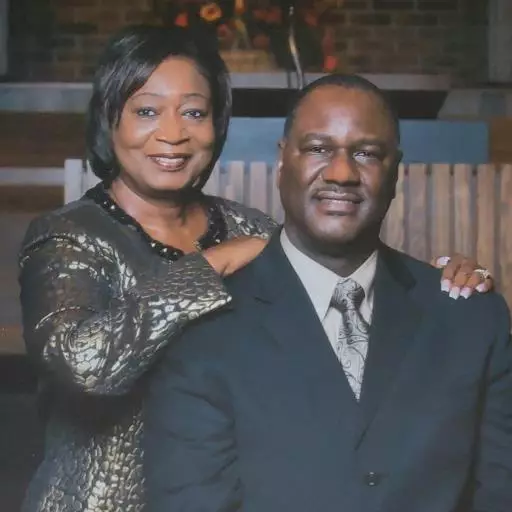
Pastor Ray and his wife, Linda, are the parents of four children, one son-in-law, and two grandchildren.
Contact Atlanta Bible Baptist Church with Pastor Ray P. Smith
abbcinfo@comcast.net
Atlanta Bible Baptist Church
1419 Peachcrest Road
Decatur, GA 30032
(404) 241-1176