
Taking The Stew Out Of Stewardship - Part 2


10 principles for managing my treasures.
In this transcript from Atlanta Bible Baptist Church, Pastor Ray P. Smith delivers a sermon titled "Taking The Stew Out Of Stewardship - Part 2." The service begins with a scripture reading of Matthew 21:33-41, after which Pastor Smith outlines ten principles for managing treasures, emphasizing that stewardship is the management of God's resources rather than our own. He discusses the historical context of Israel's resistance to God's word and the importance of lordship in all areas of life, from relationships to vocation. The sermon concludes with a call to total submission to Christ, illustrated by the molting process of a lobster, and a prayer for those facing critical life decisions.
Guest (Male): Good morning. Would you please stand for the reading of the scripture for this morning? And the scripture reading will be found in Matthew chapter 21. Matthew chapter 21, we will begin reading at verse 33 through 41.
And the word of God reads, "Hear another parable: There was a certain landowner who planted a vineyard and set a hedge around it, dug a wine press in it and built a tower. And he leased it to vinedressers and went into a far country. Now when vintage time drew near, he sent his servants to the vinedressers that they might receive its fruit. And the vinedressers took his servants, beat one, killed one, and stoned another.
Again, he sent other servants, more than the first, and they did likewise to them. Then last of all, he sent his son to them, saying, 'They will respect my son.' But when the vinedressers saw the son, they said among themselves, 'This is the heir. Come, let us kill him and seize his inheritance.' So they took him and cast him out of the vineyard and killed him.
Therefore, when the owner of the vineyard comes, what will he do to those vinedressers?" They said to him, "He will destroy those wicked men miserably and lease his vineyard to another vinedresser who will render to him the fruit of their seasons." May the Lord add a blessing to the reading of his word. You may be seated.
Pastor Ray P. Smith: If you have your Bibles, I would ask you to take them and turn back to Matthew chapter 21. Matthew chapter 21, as we continue where we left off abruptly last week. Last week, we began talking about the topic, "How to Take the Stew Out of Stewardship," taking the stew out of stewardship.
I said at the time that there are three reasons that people don't like stewardship typically. One is because they see it as fundraising and they hate the fact that people are trying to hit them up for money. The second is that there are people who do it, people who are regularly asking for money and they abuse the term. They talk about stewardship, but what they're really saying is, "Give me your money." People don't really appreciate that.
Thirdly, and the most important thing that I find, is that they mistakenly see possessions as their own as opposed to that which has been temporarily assigned to them by God. They see it as permanently their own. I put a quote up that you won't see again. It says, "If we are confused and frustrated in our stewardship of financial resources, it may be because we see them primarily as permanent, personal assets that someone is trying to take away from us."
However, when we view stewardship as the management of God's resources instead, then the stew is removed from stewardship. I proceeded to talk about ten principles for managing our treasures out of this particular passage, beginning at verse 33 and going down. I think we finished about verse 36 and 37.
The first five principles, I won't review for the sake of time. One is to realize that I am blessed with many benefits. We see that from verse 33 where the owner who has everything entrusts that which belongs to him to others. He leased his vineyard out to others. Then I am to remember who the owner is because the owner went away and left the management of the resources to the tenants.
Sometimes we forget that God is the owner because He's not standing there for us to see Him. So we don't think about the fact that God is the owner. We forget, and so we think that the stuff belongs to us. The third thing is we find in verse 34 where it says, "When vintage time drew near, he sent his servants that they might receive its fruit." He's expecting a return.
One of the things that I pointed out last week is that God, in fact, expects a return on the investment that He has given us. He has showered us with exceedingly abundant, more than we could ever ask or think. We are greatly enriched by Him and highly favored by Him. But God expects a return for His investment in us.
Then, of course, we looked at verse 35 where it says the vinedressers took his servants, they beat one, they killed one, they stoned another. I put some verses down that you won't be able to see to talk about the fact that in the past, they did, in fact, stone and kill those whom the owner had sent their way. Then, of course, I mentioned that my heart is revealed by the harvest.
When I look at what God has entrusted to me, when I look at what God has given me, then, of course, I have the opportunity or I have the extraordinary privilege of thinking through that a return is expected. In fact, let me just get you to turn to Second Chronicles chapter 24. Keep your finger at Matthew 21 for just a second and turn back to Second Chronicles chapter 24.
We want to look at the fact that the children of Israel throughout their history did these things. In fact, when Jesus was talking to them and he mentioned these three things—killing some, beating some, stoning some—there were instances recorded in scripture in the Old Testament where God's people did exactly that.
I find it interesting in Jeremiah 37, for instance, it says the officials were angry with Jeremiah and they beat him because he told them that they were doomed to go into captivity. In Jeremiah 26, as they were wanting to kill Jeremiah, they huddled together and someone said there was a man who in past times prophesied much like Jeremiah did and the king sent to Egypt to fetch him because he had run to Egypt to get away. They brought him back and, in fact, the king killed him.
But in Second Chronicles 24, I want us to just take a look at this, beginning at verse 15 because this is a striking thing that talks about the heart of people who are not determined to do that which is right. In verse 15, it says when Jehoiada grew old and full of days, he died. He was 130 years old when he died.
Understand that when Jehoiada was a young man, Jehoiada was the priest who saved Joash from certain death, kept him in the temple, raised him, and then brought him out and installed him as king. In all the days of Jehoiada's life, Joash did that which was right before the Lord. But then it says in verse 15, Jehoiada grew old and full of days and he died.
He was 130 years old when he died. They buried him in the city of David among the kings because he had done good in Israel, both toward God and His house. It says now after the death of Jehoiada, the leaders of Judah came and bowed down to the king, and the king listened to them. Therefore, they left the house of the Lord God of their fathers and served wooden images and idols, and wrath came upon Judah and Jerusalem because of their trespass.
Yet He sent—that is, God sent—prophets to them to bring them back to the Lord, and they testified against them but they would not listen. Then the Spirit of God came upon Zechariah, the son of Jehoiada the priest, who stood above the people and said to them, "Thus says God: Why do you transgress the commandments of the Lord so that you cannot prosper? Because you have forsaken the Lord, He has forsaken you."
So they conspired against him, and at the command of the king, they stoned him with stones in the court of the house of the Lord. Thus Joash the king did not remember the kindness which Jehoiada his father had done to him, but killed his son. And as he died, he said, "The Lord look on it and repay." Israel had this history of hearing the things that God said and turning their backs on what God said and doing exactly the opposite of what God said.
Jesus references Zechariah's death in chapter 23 of Matthew when He says, "Listen, from righteous Abel all the way to Zechariah, you've had a history of killing the people who come to you and tell you what God says. You've always resisted the things of God." He's talking to these hard-headed people, and in fact, in the parable that He's saying here, He's talking to these religious leaders about their very wrong attitudes toward God. It's something we forget—that this is God's kingdom, this is God's way, this is God's will, and this is God's word, and it is binding on us.
Let me just go on to the next principle because my time is going to get away from me, and I don't want Brother Charles to be angry with me for going over and getting into his Sunday school time. Principle number six simply says: the stew in stewardship is over ownership. Whenever I say to myself—look at verses 38 and 39 going back to Matthew chapter 21—when the vinedressers saw the son, they said among themselves, "This is the heir. Come, let us kill him and seize his inheritance."
So they took him and they cast him out of the vineyard and they killed him. They wanted to keep that which the owner had entrusted to them for themselves. Sometimes when we think about stewardship, the issue is, who owns the stuff that you have in your possession? I remember reading a story about a preacher talking to a farmer, and he was telling the farmer, "You know, if I had two eggs, I would give you one."
The guy says, "Okay, great." He says, "If I had two chickens, I would give you one." "So this is wonderful." He says, "Listen, if I had two parcels of land, I would give you one." "Great." And he says, "You know, if I had two cows, I would give you one." The farmer said, "Hey, wait a minute. You know I got two cows." It's all well and good until it gets personal, until you touch the thing that I have in my possession, and then, of course, I don't want to hear it.
Sometimes we say, "Well, God understands." Buddy, you remember we had a conversation many years ago? Buddy was working at United Parking and he was telling me about this young lady that he worked with. I think she was maybe Jamaican or something, some Caribbean. He was talking to her and in the midst of the conversation, she was talking about her being a Christian, and yet as they were talking, they got to talking about the relationship that she had with her boyfriend and how their relationship was more intimate than it needed to be before you get a ring.
So Buddy was saying to her, "Well, you know, the Bible says that it's wrong. You're not supposed to be engaging in premarital sex." And then she said, "Well, now that's a really hard one to do." She had to back up. "I know what God says, but that part is hard." Sometimes that's what we do. We think about—those of you who've been to 207, you know about "My Heart-Christ's Home."
How those of you that haven't taken 207, it may not mean much, but it kind of goes like this: Christ owns the house now. You've given your life to Him. So He goes room by room because it's His house. You used to own the house, but you've given ownership to Him and He goes in this room and looks and He says, "Well, you know, this has got to go." Now He owns the house, right? And He goes into this room and says, "Well, you know, take this down," because He owns the house.
Then He's going and He says, "Wait, you don't need to go in that room," because those are the untouchable things that you don't want Him to bother. But He says, "No, I need to go in this room." When He opens the door, then all of the putrid stuff falls out and He says, "We got to clean this up." The question becomes: if He's the owner, is there anything then that He doesn't own? The answer is no, He owns it all. And if He owns it all, doesn't He have the right to make any changes He wants to make? That's the issue.
Of course, from that, there was this chart that I wanted to put up that actually comes from the 207 course. It pictures Christ at the center. In fact, maybe I'll put it up for you next week even though we'll be past this because it's a very important chart. It's in a circle and it has eight different areas: church, relationships, leisure time, dating, education, vocation, money and possessions, marriage and family.
All of them, Christ is the center, which means all of those areas need to reflect His lordship. In fact, I put up: this requires an LSD lifestyle. When I say LSD, I don't mean drugs. I don't mean you get high. What I mean by LSD is that all of these areas need to reflect His lordship (He's the boss), your submission (whatever He says is what goes), and then your decision or determination to do that which is pleasing in His sight in every single one of these areas.
For instance, when you think about church life, you think about the fact that we're not to forsake the assembling of ourselves together. You come because God said you come. We'll gather together. The church is an ekklesia, a called-out assembly. So we assemble. If you're not assembling, then you're not being in obedience to God.
That's why Hebrews 10:24 and 25 says that we are to consider one another to stir one another up to love and good deeds, not forsaking the assembling of ourselves together. That's what God says and He's the boss, so then He gets to call the shots. When you think about the relationships, all the relationships ought to reflect Christ and not just use people to please yourself, but you're to use the opportunities that you have to be a blessing to people.
The 21 different "one anothers" that we have in the scriptures—we're to pray for one another, encourage one another, love one another, submit to one another. It all goes so that our coming together is good. It's beneficial. It's for the better. So it's actually good for us to be together.
In fact, God has endowed us with spiritual gifts. He's put something really good inside me so that when I come, I have something really good to give to you. And you, God's invested something really wonderful in you so that you have something to give to me. I need what God has entrusted to you. You need what God has entrusted to me. We need each other. We need to be together.
It's not optional. It's mandatory because that's what God wants. When we think about leisure time, we're to redeem the time. Why? Because the days are evil, Ephesians 5 says. We think about dating, and of course, that doesn't reflect on what 90 percent of us—only a few of us are dating. But when you are dating, if you're dating, your dating life needs to be committed to the Lord.
First Thessalonians chapter 4 says that we are to honor God in our bodies. That's First Corinthians 6:19 and 20: my body's the temple of the Holy Spirit who's in me, whom I have from God, and I am not my own. I've been bought with a price, so I glorify God in my body. But First Thessalonians chapter 4 talks about the fact that I'm not to defraud anyone.
God hasn't given me my body so that I put my hands where they don't belong with respect to members of the opposite sex, especially with respect to same sex. I'm not to put my hands where they don't belong so that I stir up passions that I can't righteously satisfy. That's a sin before God and a sin against the person. God is the one in control. He calls the shots.
So then I say no to those urges or those opportunities to express urges that go against the will of God. In terms of education, I'm to build myself up on my most holy faith. I am to train my mind. Romans 12 says that I am to take in the word of God and let it flesh out all of the wrong habit patterns of thinking, ways of thinking that cause me to make choices that go against God's word.
Even in terms of my vocation, I'm to realize that where I am, I'm to bloom where I'm planted. The most important thing isn't what job I have. The most important thing is why I am on the job that I have. I'm there to represent the interests of the King of Glory and I am there to share. I'm to show Christ so I can share Christ with others so they can come to know Christ. That's why God has me where He has me.
Then in terms of money and possessions, you know the money belongs to God, all of it. He entrusted all of it to me and He says, "Okay, return the first part to Me as an acknowledgment that I own it all." Then the other 90 percent, you manage for My glory. So you return the first part to Him because that's an acknowledgment that He owns it all and then you give a tithe to the church so that we can pay our bills. Then you send 10 percent into the future and then you live on 70 percent. Amen.
If you live that way, if you live below your means and take the difference and invest it, and you do it for a long time, then when you're ready to retire, you have plenty of duckets. You have a lot to be able to give and bless other people with. It's more blessed to give than to receive.
The last one: marriage and family. You know your marriage belongs to the Lord. You know your kids belong to the Lord. You know that God has entrusted your mate to you that you might add value to your mate. You know that your body is not your body; your body belongs to your mate. You know that as a father, in fact, when we had our men's prayer breakfast, we've been going through this—men, you're to protect your wife and family, you provide for your wife and family.
It's all on you because God made you the head and you're going to answer to God for how things turn out with your wife and your children. Of course, your calling from God is to bring them to Him, to bring the wife to splendor in Christ. You rise up and you make your marriage work because all the forces that Satan has in the world are designed to destroy your marriage. You have to be as tenacious, as determined, as tough-minded to fight for your marriage as Satan is to destroy your marriage and make you a statistic.
All of these things are because, in fact, my wife and I were having a conversation—I've got to speed up—we were having this conversation about this pastor who was on Facebook. Those of you that look on Facebook, you probably seen this. She was telling me that this guy's a pastor and he said his oldest son went off to college and he came back and he said, "I'm an atheist."
He says he raised his son in church and he taught his son, and his son went to all the Bible studies and quoted all the verses in AWANA and all this stuff. But then he went off to college and some atheistic philosophy teacher turned his head by asking him questions that he couldn't answer and then the son turned away from the faith.
So he has a 12-year-old son and he's asking his son, "Why do we accept Jesus?" "So that we'll go to heaven." "Okay, well what did Jesus do?" "He died for us on the cross." "Why did Jesus die on the cross?" "Well, because the Bible says so." His 12-year-old son really couldn't answer the questions. He couldn't answer the "why" questions. And it dawned on him: he's forever giving his sons truth, but he's not explaining the "whys" and "wherefores" of it.
So then he wrote a book about theology for children and then they put the book up on Amazon. It's one of those things—I have to teach my children, I have to catechize my children in the faith because all of society is aimed against that by the evil one. Scripture says the whole world lies in the hands of the evil one. So we're swimming upstream our whole lives and we have to train our kids. We have to give them the "whys" or else they won't know.
Anyway, all of that to say, sanctification is learning to express and display the lordship of Christ in every area of life, every area of life. The scripture gives instructions on how to live in every area of life. That's why I have to build myself up on my most holy faith. That's why I need to come and stay for Sunday school. See, I got that in there. That's why we did the forum so you'd have a wonderful opportunity to build yourself up on your most holy faith.
That's why that 207 sheet, that discipleship course sheet, is still out there on the table and it will be there until we get some names on it. Amen. So we can build ourselves up on our most holy faith. Amen. Let me move on. The seventh principle is my accountability to God is inevitable. You look at verse 40. It says, "Therefore, when the owner of the vineyard comes, what will he do to those vinedressers?"
It's not a question of whether or not the owner will come. He's coming. The question is, when is he going to come? And of course, Christ is returning, isn't He? Christ is—when He comes, He's going to rapture out the church and there's going to be the Bema seat, the judgment seat of Christ. All of the things that I've done my entire Christian life will be assayed, tested, put to the fire.
The motives and the works themselves—everything's going to be assayed. If they don't meet the test of being done for Christ's glory, up in smoke. No reward. We'll be rewarded for that which we did to glorify Christ, but all of the other things we did for ourselves, burned up, gone, as Paul points out in Corinthians.
The eighth principle is found in verse 41. In verse 41, when He asked what would the owner do, the religious leaders said to Him, "He will destroy those wicked men miserably." In fact, it's a play on words. It kind of was "He will miserably destroy those miserable men" or "He will harshly destroy those harsh men." Anyway, the words are very similar; it's a play on words.
He's going to deal with them according to what they have done to Him. Judgment is based solely on stewardship. God isn't going to ask me when I stand before Him, "Well listen, how much did you build up in your bank account?" He's not going to ask me what size house did I live in. He's not going to ask me about my assets that I left behind.
He's not going to ask me about that stuff. He's not going to ask me how popular I was or how many trophies I had. He's not going to ask me anything except: what did you do for My kingdom and for My glory? The judgment is based solely on stewardship. So I have to think about it. I put down in my notes that we are saved to serve and then we're saved to share.
In fact, Second Corinthians 5—just turn there just for a second. I know my time is crunching here. Second Corinthians 5, I want you to see this so that it's indelibly ingrained in your mind. Look at verses 16 through 20. He says, "Therefore, from now on, we regard no one according to the flesh. Even though we have known Christ according to the flesh, yet now we know Him thus no longer.
Therefore, if anyone is in Christ, he is a new creation; old things have passed away; behold, all things have become new. Now all things are of God, who has reconciled us to Himself"—He's brought us back into loving favor with Himself—"through Jesus Christ, and has given us the ministry of reconciliation. That is, that God was in Christ reconciling the world to Himself, not imputing their trespasses to them, and has committed to us the word of reconciliation."
God has given us the opportunity to be reconcilers. He's reconciling the world to Himself through Christ and He's displayed that ministry in us so that we could do that. We can talk to people, we can tell people that they can be made right with God by giving their lives to Jesus Christ.
So he says in the next verse, "Therefore, we are ambassadors for Christ, as though God were pleading through us: we implore you on Christ's behalf, be reconciled to God. For He made Him who knew no sin to be sin for us, that we might become the righteousness of God in Him." People are made right with God through the Lord Jesus Christ.
So we go and we plead with them, we talk with them, we let them know, "Listen, you don't have to struggle with the guilt of your sin, the weight of your sin. You can be free, unshackled. You can have peace, peace with God." Not afraid to walk in the doors of a sanctuary, not afraid to open a Bible, not afraid to engage in a conversation about the God of the universe—no longer afraid because now you have a relationship with God.
God has given us this wonderful opportunity. People don't like—well okay, maybe people need some money, maybe they need some encouragement, maybe they need different resources, maybe they need some help making critical decisions. But the most important need, the greatest need, the deepest need, the strongest need is to be at peace with the God who created them.
They need the gospel. If you give a brother $300, you may help him for a day or two, maybe even a week depending on the situation. But if you give him the gospel, he receives Christ, you've helped him for all eternity. There's no comparison between the two. God help us if all we ever do is give people stuff and we never give them Jesus.
We've not given them the most important thing in life. When we stand before Christ, the judgment's going to be based on whether or not we were faithful in discharging our calling as ambassadors. Do not look at that clock and say to yourselves, "Pastor Smith has about seven minutes."
Number nine: I lose what I keep selfishly. Look at verse 43—go back to Matthew 21. When you look at verse 43, it says, "Therefore I say to you"—He's talking to the religious leaders—"the kingdom of God will be taken from you and given to a nation bearing the fruits of it."
God says, "You guys, you've been mismanaging the things that were entrusted to you. I'm taking it away and I'm going to give it to someone, to people who are going to actually do the things that they should do with it. People who are going to use it responsibly, people who are going to do that which is right before me."
So the ninth point that I put down is: I lose what I keep selfishly. I lose the thing that I keep selfishly. If I make it all about me, then I'm going to miss out. I'm not going to hold on. Jesus said it this way: He says, "What would it profit a man," you know the verses, "if he gained the whole world and lost his soul? What can a man give in exchange for his soul?"
What about millions? What about billions? What is all of that worth more than your soul? Nothing is worth more than your soul. If that's the case, then God has made me an ambassador to share the life-saving message of the gospel for the saving of souls. What could be more important than that?
Listen, I want to tell you, there are a number of things you can give your life to, there are a number of things you can give your time to, there are a number of things you can give your money to. There's a lot of stuff out there, but I want to say to you that there is nothing that will be more important, more satisfying, more fulfilling, more rewarding than giving the gospel to people. Nothing at all.
And of course, the thing that I want you to take away from all of this is to give all of yourself to God. Once you give Him your heart—we mentioned that last week, "My son, give me your heart and let your eyes observe my ways"—once you give Him your heart, then He has everything He needs to accomplish all that He wants to accomplish.
Until you give Him your heart, nothing else you have matters because you're messing up with it. He wants your heart. If you say, "I want to hold on for a little bit longer," listen, you're not going to be able to keep it anyway. You'll lose it. You know yourself how it is. We used to tell people, probably still tell people, "Listen, you can say I'm not going to tithe if you want to.
You can find some preachers on the internet that tell you the Bible doesn't say that Christians have to tithe. Tithing is Old Testament." Alright, so the principle is found in the Old Testament, yeah. But how much of the Old Testament is the word of God? All of it, right? So what does the word of God say about tithing?
They say, "Well, it was under the law," even though Abraham gave a tithe to Melchizedek before there was even a law. Jacob, just in devotions yesterday, Jacob says, "I'm going to give a tenth to God" and all that stuff. Where'd he get the idea of a tenth from? Somebody came up with it.
Of course, if you decide how much you're going to give to God, where do you start? Well, how about starting with what He taught His people to give to begin with? Start with a tenth and then build up from there, right? So there's no reason just to say, "It's mine, I'm going to hold on to it," because you won't keep it anyway.
If you hold off on it, you won't keep it. The auto mechanic going to get it, right? Homeowners association going to get it, somebody—they're going to raise something, something's going to go up, something's going to break down. You are not going to keep that money, right? So you just as well give it where God's going to bless you for it. Obedience, right? I'm just saying.
The last thing, the closer I get to God, the more I give of myself. Notice the subtle statement in verse 44: "Whoever falls on this stone will be broken." You see, when you come across Christ, you'll trip up because He's going to say either serve Me or no. You got to decide: am I going to serve Him?
If you say yes, you'll be broken. Your heart will be broken, your will will be broken, your life will be broken, it'll all be given to Christ, and then God will reshape your life and He will begin to pour out Himself through your life. Let me end with a story because my time's gone. I come back to this, I shared this before, probably once, twice, three times, I don't know.
But when I think about stewardship, I always think about this story: the molting process that the lobster goes through once a year after they're adults. I'll just read this. It says, "In order to grow, lobsters have to rid themselves of their old, hard, protective shell and grow a new, larger one. This process of shedding an old shell is called molting. They do this about 25 times in the first five years of life and then once a year after they become adults," kind of like doing stewardship once a year.
It's an ugly, messy process. Under the pressure, the old, hard, protective shell cracks. Then the lobster lies on its side, flexes its muscles, and pulls itself from the cracked shell. For a short time between the leaving of the old shell and the hardening of the new, bigger shell, the lobster is naked, feeling very vulnerable to the elements, fearful perhaps.
But then the author who gave the illustration says, "In a sense, we're all lobsters. Our growth into Christ-likeness requires us to get rid of our old, hard, protective shells and allow God to take us to a new place of growth in Him." This is a good time to follow the example of the adult lobster—to molt, to leave our old, hard, protective self behind and allow ourselves to be vulnerable to the point where we trust God to make us all that He desires us to be.
You can't become what you are supposed to be by staying where you are. You have to give it up, let God have control, break out of the old mold and step into greater dependence on Him. Father, thank You again for this day and thank You for Your love for us. Thank You for Your tender mercies.
Thank You, Father, for Your word and the way in which Your word shapes our thoughts and our desires, our hearts. Strengthen us today. I pray, Father, as You look into each heart, perhaps there are some today who have critical decisions to make with respect to their future, some with decisions to make with respect to their relationships, maybe with their children, maybe with their mates, maybe with their jobs, maybe with their career paths, maybe with siblings with whom for some time they have had nothing but friction.
Father, regardless of what it is, may this be the year where they decide to say yes to You, no to the flesh and the old, hard, interminable ways. Help them, Father, to trust You, to believe You, to follow You, to submit to You and the lordship of our lovely Lord Jesus. We pray if there's anyone here today who's never received Christ in the pardoning of their sins, may it be that they will not believe the devil's lie that it is better to be your own boss. It's not; it's a fool's game. Help them to abandon the lies of the evil one and submit to the one who gave His life for them, our lovely Lord Jesus. We commit these things to You and ask them in Jesus's name and for His sake. Amen.
Past Episodes

About Atlanta Bible Baptist Church
The Bible is the most important book in the world because it contains the best news for the world – the gospel of Jesus Christ! For over 50 years, our passion at the Atlanta Bible Baptist Church has been to tell people about God and help them understand His Word.
About Pastor Ray P. Smith
Rev. Ray P. Smith is the senior pastor of the Atlanta Bible Baptist Church. He follows Dr. John McNeal, Jr., the church’s founder and now Pastor Emeritus. Pastor Smith received his Bachelor of Science degree in Pharmacy from Mercer University Southern School of Pharmacy in Atlanta. He received his Master of Divinity degree from Baptist Bible Seminary in Clarks Summit, Pennsylvania.
Pastor Ray delights in teaching the Word of God, explaining its truths with practical illustrations and applications. His passion, to teach the whole counsel of God to minister to the whole person, flows out of his life verse, which says “And Jesus kept increasing in wisdom and stature, and in favor with God and men” (Luke 2:52). As Jesus grew mentally, physically, spiritually, and socially, so should His followers.
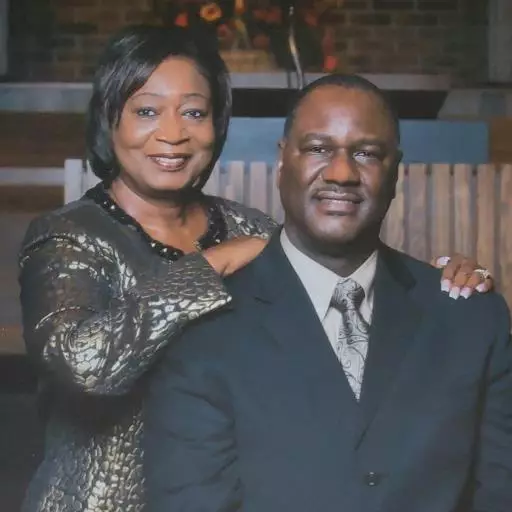
Pastor Ray and his wife, Linda, are the parents of four children, one son-in-law, and two grandchildren.
Contact Atlanta Bible Baptist Church with Pastor Ray P. Smith
abbcinfo@comcast.net
Atlanta Bible Baptist Church
1419 Peachcrest Road
Decatur, GA 30032
(404) 241-1176