
Taking The Stew Out Of Stewardship


Each year we take the time to remind ourselves of our calling as stewards.
Pastor Ray P. Smith: If you have your copy of the scriptures, I invite you to take them and turn with me to Matthew chapter 21. Matthew 21. I want to take us back to something that we have looked at before. One of the things that I do every January is talk about stewardship. In one year, I'll talk about the purposes of the church with respect to stewardship, and then the next year I will talk about individuals and our response as stewards. This year, I want to just take a few minutes and repeat something. This is not new, you've heard it before, but I'm going to say it again because stewardship is something that we never want to forget lest we mismanage that which God has allotted to us.
Matthew chapter 21, beginning at verse 33, Jesus is talking with the Pharisees, and He tells them this story. He says, "Hear another parable: There was a certain landowner who planted a vineyard and set a hedge around it, and dug a winepress in it and built a tower. And he leased it to vinedressers and went into a far country. Now when vintage time drew near, he sent his servants to the vinedressers, that they might receive its fruit. The vinedressers took his servants, beat one, killed one, and stoned another. Again he sent other servants, more than the first, and they did likewise to them.
Then last of all he sent his son to them, saying, 'They will respect my son.' But when the vinedressers saw the son, they said among themselves, 'This is the heir. Come, let us kill him and seize his inheritance.' So they took him and cast him out of the vineyard and killed him. Therefore, when the owner of the vineyard comes, what will he do to those vinedressers?" And they said to Him, "He will destroy those wicked men miserably, and lease his vineyard to other vinedressers who will render to him the fruits in their seasons."
Jesus said to them, "Have you never read in the Scriptures: 'The stone which the builders rejected has become the chief cornerstone. This was the Lord’s doing, and it is marvelous in our eyes'? Therefore I say to you, the kingdom of God will be taken from you and given to a nation bearing the fruits of it. And whoever falls on this stone will be broken; but on whomever it falls, it will grind him to powder." And when the chief priests and Pharisees heard His parables, they perceived that He was speaking of them. But when they sought to lay hands on Him, they feared the multitudes because they took Him for a prophet.
Father, thank you again for this day. Thank you as always for your marvelous, extraordinary love. Thank you for your word and thank you for your people. Thank you, Father, for the privilege of sitting at your feet and thank you that even as we have flipped that we might begin our day in worship and end our day in learning, we thank you for the opportunities to do both. Father, now as we sit at your feet, we ask you might be pleased to speak to our hearts and bind up the evil one lest he play a part in derailing that which we would hear from you. As always, we'll be careful to give you the praise and the honor and the thanksgiving. We ask all of these things in Jesus's name and for His sake, amen.
I want to talk to you this morning about a familiar subject. In fact, I talked about it just a couple of years ago. How about taking the "stew" out of stewardship? Stewardship is one of those things that people don't always feel good about. In fact, sometimes people are really angry and they say, "I'm not coming or I'm not going to church because all they ever talk about is money." Sometimes pastors shy away from stewardship, but I'm not going to do that today.
I'm going to reference the Roman god Janus, the god of beginnings. Those of you that know anything about Roman mythology know, of course, that Janus is the Roman deity from which we get our month of January. Janus has the two faces: one looking backwards and the other looking forward. January was named after Janus because this is the time where we look back over the previous times that we've lived and of course last year, looking back on what God has done and what He's allowed us to accomplish. Then on the basis of the things that we evaluate in our past, we then begin to plan for our future.
January is the month of planning, and I really like that idea. So, what I want to do is also look back at what we've talked about in terms of stewardship so we can all then enter into this year, 2026, thinking about planning. In fact, when we talked about this before, I gave you some words of wisdom out of the mouths of children, out of the mouths of babes. As children, they make mistakes as adults do and then they learn from their mistakes.
For instance, Patrick, who is age 10 years old, says, "You never trust a dog to watch your food." That's not a smart idea. Michael, who is age 14, says, "When your dad is mad at you and asks you, 'Do I look stupid?' don't answer him." If you tell the truth, you're in trouble. Michael also famously said to his mother, "Never tell your mom her diet is not working." You can always spot Michael in junior high because he's that kid that never has allowance money because the parents are angry with him.
Randy, age nine, says, "Stay away from prunes." There's nothing quite like being in the classroom or having to take a test and the prunes do their work. What do you do? Talk about a dilemma. Kiyoyo, age nine, says, "Never hold a DustBuster and a cat at the same time." They just don't go together. Naomi, who is age 15, she's smart. She says, "If you want a kitten, start off by asking for a horse." You work your way down.
Lauren, wanting to be a grown-up, found out that felt markers are not good to use as lipstick. Joel, age 10, says, "Don't pick on your sister when she's holding a baseball bat." That's taking your life in your own hands. And of course, Eileen, age eight, says, "Never try to baptize a cat." That's just not going to work. Experience taught these kids some things about life.
In a similar way, we look back on the things that we have learned about life so that we can make better decisions. Sometimes people have a really bad idea about stewardship, a bad feeling about stewardship precisely because of the things that they've learned in the past. Some wrong views of stewardship come from at least three things. Number one, some people see it as just fundraising.
I remember when we started our church in Michigan and I read this material on having a stewardship campaign. I thought, "Yeah, we're going to do that. We're going to raise money." I was talking to our folk about a stewardship campaign and talking to them about the parameters of it. We're going to get pledges and we're going to see how much money is pledged to come in and then we're going to plan how we're going to spend the money. I was very excited.
Then I talked to one of the couples who were pillar people in our church, and the wife said to me, "I really hate the idea of stewardship campaigns and I especially hate the idea of pledging." I asked why. She said, "I tithe my money, so I don't need anybody to have me sign a piece of paper telling them how much I'm going to give." I thought, "That makes sense." So, we abandoned the pledge campaign.
Instead, I said, "We're just going to talk about stewardship because if you understand biblically what stewardship is about, you never have to worry about people giving because stewardship understood properly results in the same." It's not just fundraising. A second reason that people stew over stewardship is because the term is so abused. Many times you have these health and wealth or other money-grabbing preachers, and they talk about stewardship from the standpoint of how much money you're going to put in the plate.
If you put money in, God will bless you. You put in and they take it out. These days, she's taking it out because it becomes a big money racket. A lot of people don't really like the idea of coming to church even. In fact, there was a young lady the Lord allowed us to lead to faith in Christ as she worked with me when I was working third shift at Rite Aid. She came to faith and she came with her son Alex to join our church, but her husband Michael never came.
When I said to Samantha, "Why doesn't your husband come?" she said, "Michael doesn't want to come to church because preachers only ever talk about money." I said, "Well, we don't make a big deal of money. We do teach stewardship." Then the first January that rolled around after she had joined our church, I did a stewardship series. I was talking about the fact that 100% of all that has been entrusted to you really belongs to God, and you return the first part to Him.
That first part was a tithe. After the service, she came up to me and she said, "I am so glad Michael didn't come today. He was tempted to come but he didn't, and you were talking about money. That would have really turned him off." He'd been abused by previous experiences with church. Some people don't like the idea of stewardship because they think it's all about money that goes to the preacher.
The third thing, and I think the most important thing and the thing that causes me to really talk about stewardship every single year, is because people have the mistaken view that the possessions that they have are permanently their own. They just think, "I worked hard, I earned this money, it's mine, and I don't want to have to give it to you just because you want a guilt trip me into giving it to you. This is mine."
When we were kids, you would have maybe some cookies or candy or a honey bun, and you would see one of your friends or a sibling, another little kid, staring. They're not staring at you, they're staring at what you have in your hand. You would say something like, "Your eyes may flash, your teeth may grit, but none of this candy shall you get." We say, "I'm not going to give you any of this," and some people feel like that when it comes to stewardship. "This is mine and you're not going to get it."
If it's permanently mine, then I don't want to surrender it. I read a quote that was really good. It says, "If we are confused and frustrated in our stewardship of financial resources, it may be because we see them primarily as permanent personal assets that someone is always trying to take away from us. But when we view stewardship as the management of God's resources, then 'stew' is removed from stewardship."
I understand that it's not mine to hold on to, to hoard. It's His. He poured it into my lap. He provides me with enough to live on and an abundance that I might be a blessing to those around me. So, I have to receive it as from His hand, acknowledge that it's His, and return the first part to Him. If it comes from Him, why would I quibble with Him about returning the first part? But then I understand that the other 90% that He's entrusted to me, I manage for Him. I don't mismanage it thinking that it's mine. I guard it and take care of it because I know it's His, and I am especially careful in how I use it.
Paul says in Ephesians 5, and in fact, next week we may go back and pull this apart: "Be careful how you live, not as fools, but as those who are wise. Make the most of every opportunity for doing good." God has given me an allotment to manage responsibly for Him. So, I want to be wise. He has placed out in front of me and in me good works to be performed. He's graced me to be able to see them and pursue them and has allotted to me sufficient resources to accomplish them.
I want to be careful that I see what He wants and I'm able to use what I have entrusted by Him to accomplish what He wants. That's wisdom. That's being a good steward. So, I don't want to misuse it. He said, "Don't act thoughtlessly, but try to understand what the Lord wants you to do." I heard a story about a man who was doing a delivery, and he turned down this street and there was a sign there. It said, "Stop, don't proceed. Road closed. You won't be able to turn around or it will be difficult for you to back up."
He thought, "Yeah, right," and he drove down that little street. Come to find out, there was a tree that had fallen and blocked the road. Of course, he had to work really hard to turn around to get back out. As he was leaving, he saw another sign that said, "I told you so." God is trying to tell us, "This is the way to do it. This is the way to live," but we're stubborn. We don't listen. Then when we bang our heads against the wall or when the bottom drops out or when things fall apart, He doesn't say, "I told you so," but we feel that way because we didn't listen.
Let's talk about 10 principles for managing my treasures. If we look at verse 33, it says, "Jesus said, 'Hear this parable: There was a landowner who planted a vineyard and he set a hedge around it, and he dug a winepress in it and he built a tower and he leased it to vinedressers and then he went away.'" The first thing that will help me manage my treasures correctly is to realize that I've been blessed by God with many benefits.
It's not that I happened to come upon this, it's that God has allowed me to have this. Riches come from the Lord. In fact, in Chronicles it says, "Lord, Yours is the kingdom and the glory and the power, and riches only come from You. It is at Your discretion that men are rich and made great." God is the one who favors us, who blesses us. He's blessed us with many, many benefits.
You think about what you have. If you are tempted by the devil to compare what you have to what other people have, then maybe your joy is diminished. But if you recognize that God has provided me everything that I need for my present happiness, which is God's definition of contentment, God has provided me everything I need. If I realize that, I say, "It comes from God. He's been good to me." And I can praise Him, and I can thank him.
The tower owner provided everything that the vinedressers needed to succeed. And so has God. God's given you a bright, alert mind. God's given you two hands, a nose, a mouth, two eyes, two ears, two hands, two feet. He's given you all you need. There are people, I dare say, who have eyes but they can't see. They have ears, but they can't hear. There are people who have tongues, but they can't speak.
You remember the old saying where the guy says, "I cried because I had no shoes, and then I saw a man who had no feet." God has been more than gracious to us. He's been especially good to us. So, I want to be able to praise Him. I read another quote: "When we consider all that God has blessed us with, it is embarrassing to see how little we do with it."
We see so much. In December, which is the time when everybody in the whole world has found out that you gave $10 over here and they say, "Well, you've been efficient before, I mean you've been good before, can you throw a couple of nickels our way?" Everybody wants your money. Everybody needs your money.
Inevitably, the Red Cross says, "Hey, disaster relief, can you spare something?" "Alright, here's 100 bucks." Then you get an email every month from the Red Cross, and you get one from this group and from that group. Some anonymous person or missionary, they all ask you. But then the question is, God has given us so much, why wouldn't I share the excess because of people who have great needs?
We support children in Haiti, we support children in West Africa, we support charity organizations that help people in our nation. We just do because God's been especially good to us. But at the same time, we do not neglect to give our tithe to the local church. In fact, we go beyond the tithe. Perhaps the greatest waste in the world is to have the potential God has given us and not do a thing with it. That's a shame.
Anyway, it says here in verse 33 that the owner went away into a far country. The second point in managing my treasures is to recognize that I forget whom I don't see. I forget whom I don't see. I know I've told you before that Charles Spurgeon, when he was preaching, he would walk and the guys would come to take up the offering. He'd get behind them and they would pass the plate, and he'd stand there and look down.
He kept doing that, and people were uncomfortable with him watching to see what they were putting on the plate. Then when he got all the way to the back and he walked back, he said, "Some of you are uncomfortable with me watching, but you forget the fact that God sees everything that you're giving. He not only sees what you put in the plate, He sees what you're keeping in your heart." But you don't see God, so you don't think about Him. We forget the fact that God is the one to whom we give an account. He's the one that has the final say as to whether or not we were what we claimed to be or what we should be.
A third thing, in verse 34, it says, "When the vintage time drew near, he sent his servants to the vinedressers that they might receive his fruit." It was his land, and he leased it out to them, and now they're supposed to return a portion to him. So, he sends to get his portion. The third principle is that God expects a return on His investment. God has given you all that you have, and He expects a return on His investment in you.
God has endowed you with a good mind. Are you developing that mind? What kind of return is He getting for His investment in you? His investment of health in you, His investment of finances in you. What kind of return is God getting? In fact, the reason that we did "the flip," I remember one of you said, "Pastor, you did all that flipping just to force some of us to come to Sunday school."
I said no, I did all that flipping to afford you the opportunity to come to Sunday school. That's what I did. I recognized some of you aren't able to get here for that. Some of you are busy preparing for service and all of that, but you know what? If we flip it, everybody gets to benefit from Sunday school. I like that, so that's why we did what we did. I'm not going to stand at the door to see which one of you walk out after service and don't come to Sunday school. I have other people appointed. No, that's not true.
But God expects a return on His investment. There were typically three types of lease arrangements. The landowner, he leased out the land, and he expected them to return a portion. Sometimes they were able to sharecrop where they could pay him some and they owned the rest of whatever. Sometimes they would just pay him by the crops or whatever. But in either event, the landowner expected a return, and so does God. One of the questions of stewardship that I did a series on was, "If God owns it all, then what on earth am I doing with it?" It's a good question to ask myself.
Moving on to verse 35. It says, "The vinedressers took his servants, they beat one, they killed one, they stoned another one. He sent more servants, and they likewise did the same." From that, I put this fourth thought: my heart is revealed by the harvest. When I look at what comes in, when you don't have anything, then there's nothing to fight over. It's like kids. They cry at the parents' funeral and then they fight over the money that the parent left behind.
But if there's no money, there's no fighting. There's nothing left. Y'all not getting anything. So, there's nothing to fight over. But sometimes when there is something to fight over, we have our eye on the stuff. It reveals our heart. Remember the man saying to Jesus, "Lord, tell my brother to share the inheritance with me." He said, "Who made me a judge and arbiter over you?" Then He said to the crowd, "Be on guard against all forms of greed."
Even when you have an abundance, your life isn't the sum total of the things that you possess. Your life is not based or centered around or quantified by how much stuff you have. Job said, "I came into the world with nothing, and I'm going to leave the same way: nothing. I'm not taking any of that stuff. No U-Haul attached to the hearse." If I have my eye on the stuff, it's going to come out if I have to give up the stuff.
I was at a place getting something, and then this guy came in and he was deaf. He had these little pieces of paper and he was selling something for a dollar, two dollars, whatever. This was his fundraiser so he could support himself. I was like, "Okay, no." He left, I paid my money for my stuff, and as I walked out, I'm like, "Lord, that wasn't right because the guy's deaf and he's not trying to rob anybody, he's just trying to raise money. So, I should have done that, but I didn't."
I thought, "Lord, if I go out here and I see him, then I'm going to walk him down and say, 'Hey, let me give you this.'" I walked out and I saw him. I thought, "Well, he's a long way away and I don't know, he might be scamming." I didn't reach into my pocket. I got in my car and I drove right by him when I got to the expressway. My conscience just smote me. I'm like, "Lord, I am so selfish."
It didn't diminish me to give this up because this is excess. But it's something about the fact that it lies in my pocket, and I'm just giving it away. You know how it is, there are people who are stationed at every exit of the expressway, and they faithfully come and panhandle. Every Sunday, there's one lady that I said, "Oh, maybe she's off today." Oh no, here she comes. And she comes right by the car. "Dollar, dollar." And faithfully I say, "No."
You say, "Pastor, that's not nice." Well, I can honestly say it's not because I don't want to give it up. It's because I don't want to mismanage and in our society, you don't know who's legit and who's not legit. I'll end with these two thoughts. Tithing is not a function of how much you have but it's a function of how much of you God has. If God has your heart, He doesn't have to fight with your wallet. If He has your heart, He doesn't have to fight with your habits. He doesn't have to fight period because He says in Proverbs, "My son, give me your heart, and let your eyes observe my ways." If He has my heart, then I'll say yes to Him every time.
The last point: God's patience is revealed by my response. My time's gone. Father, thank you again for this day. Thank you for your love for us. Thank you for your word. Father, the truth be known, stewardship involves a bit of stew for some of us. There are areas in which we say yes gladly to you, but then there are some other areas that we don't want to talk about stewardship. We don't want to see ourselves as stewards.
Sometimes we don't want to see ourselves as stewards of our bodies and that they're yours to manage, they're entrusted to us to take care of, and we mismanage our stewardship physically. Sometimes we mismanage our stewardship financially. Sometimes we mismanage our stewardship in our speech, or in our action, or even in the way in which we perform on our jobs. We're not always faithful to recognize that these things are yours and they are opportunities for us to declare our loyalty to you by the way in which we manage them.
Father, as we talk about stewardship, especially as we look at the next couple of stewardship items, these 10 principles, I ask that the spirit of God might equip and strengthen and shape and guide our hearts. May we be pliable, submitting ourselves to you. I ask if there's anyone here today who has never trusted Christ in the pardoning of their sins. They're not stewards, they're still slaves to sin.
May they desire extrication, may they want to be set free, may they want to walk in the freedom that Christ provides such that they bow the knee of their hearts and say, "Lord Jesus, I give my life to you. I surrender to you. You are Savior and Lord. I say yes to you and no to me and no to this world." Strengthen them in that regard. And those of us who have received Christ, may we make the same commitment: yes to you regardless of what it looks like, and no to self, this world, and the evil one. I ask these things in Jesus's name and for His sake, amen.
Past Episodes

About Atlanta Bible Baptist Church
The Bible is the most important book in the world because it contains the best news for the world – the gospel of Jesus Christ! For over 50 years, our passion at the Atlanta Bible Baptist Church has been to tell people about God and help them understand His Word.
About Pastor Ray P. Smith
Rev. Ray P. Smith is the senior pastor of the Atlanta Bible Baptist Church. He follows Dr. John McNeal, Jr., the church’s founder and now Pastor Emeritus. Pastor Smith received his Bachelor of Science degree in Pharmacy from Mercer University Southern School of Pharmacy in Atlanta. He received his Master of Divinity degree from Baptist Bible Seminary in Clarks Summit, Pennsylvania.
Pastor Ray delights in teaching the Word of God, explaining its truths with practical illustrations and applications. His passion, to teach the whole counsel of God to minister to the whole person, flows out of his life verse, which says “And Jesus kept increasing in wisdom and stature, and in favor with God and men” (Luke 2:52). As Jesus grew mentally, physically, spiritually, and socially, so should His followers.
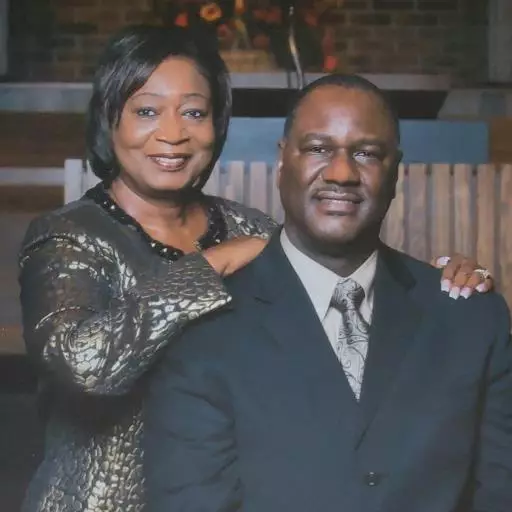
Pastor Ray and his wife, Linda, are the parents of four children, one son-in-law, and two grandchildren.
Contact Atlanta Bible Baptist Church with Pastor Ray P. Smith
abbcinfo@comcast.net
Atlanta Bible Baptist Church
1419 Peachcrest Road
Decatur, GA 30032
(404) 241-1176