
State Of The Church


Looking back at the Activities and Challenges of 2025
Pastor Ray P. Smith: If you have your copy of the scriptures, I invite you to take it and turn to one of the most familiar passages that we have in our church. And that's in Matthew chapter 9. Matthew chapter 9.
And this morning, I want to do something that I've talked to you about before. When we were in Michigan in January, the President of the United States would do a State of the Union address. And shortly after that, the Governor of the state of Michigan would give a State of the State address. And believe it or not, the Mayor of the city of Flint would give a State of the City address. And so, not wanting to be outdone, I will give a State of the Church address.
And what I'd like to do this morning is I would like for us to do that. I want us to just think through for a minute where we are and why we are where we are and what we are and what we intend to do as a result of what we are. And it's a very familiar passage because I don't even know how many times I've mentioned it to you.
But it begins in Matthew 9:35. "Then Jesus went about all the cities and villages, teaching in their synagogues, preaching the gospel of the kingdom, and healing every sickness and every disease among the people. But when he saw the multitudes, he was moved with compassion for them, because they were weary and scattered, like sheep having no shepherd. Then he said to his disciples, 'The harvest truly is plentiful, but the laborers are few. Therefore pray the Lord of the harvest to send out laborers into his harvest.'"
Father, we thank you again for this day. Thank you for your love for us. And thank you for allowing us to come together in the things that we have done. This first hour, we have praised your name. We've greeted one another in your name. Some of us have given an acknowledgment of your ownership and we as managers. And now, Father, as we sit at your feet, we ask that you will strengthen and thrill our hearts with your word.
And of course, what you are doing, even as we look back for a few minutes, may it be with joy and delight in what you have done. And may we celebrate your goodness. And as we think through the purposes of our ministry, open our minds and hearts. Bind the evil one that he have no place in what takes place. And as always, Father, we'll be careful to give you the praise and the honor and the thanksgiving. We ask all of these things in Jesus's name and for his sake. Amen.
I shared with you before, and I really love the story of Albert Einstein. He was on the train going to New York, and the ticket taker was coming by, and he was looking for his ticket because he had misplaced it. The ticket taker stopped and as he was going through and looking, he says, "Dr. Einstein, that's okay. We all know who you are, and we know you bought a ticket," and he walked on.
About 20 minutes later, he came back and Dr. Einstein was on the floor. He was still looking for that ticket. And of course, the man stopped again and he said, "Dr. Einstein, I told you don't worry about it. We know that you bought a ticket." To which Dr. Einstein told the young man, "Young man, this isn't a matter of trust, but of direction. I need to find the ticket because I forgot where I was going."
And of course, from time to time, we get that way. I remember being in a seminar where the teacher said people in the church lose vision in less than a month. So you have to keep reminding them. I told you about Vince Lombardi when he was coaching the Green Bay Packers. First session every single year, he would hold up a football and say, "Gentlemen, this is a football." In other words, start off with the basics and go with what you know.
What I want to do is I want us to consider a number of things. First, let's talk about some of the things that we did last year. Every year, I do a recap for my own sake because I set goals every year for what I am asking the Lord to do. Last year, we were preaching on issues. We started the year with what matters most to Jesus, what matters most to me as a follower of Jesus, what matters most to the church, and what matters most to the world.
As we teased those things out in the month of January, then we went back into the book of Ephesians and we actually finished the book after about three years. We started off the first part of the book talking about the wealth, what God's done for the church and to the church. And then we ended the last three chapters looking at the walk of the church, how we should live in light of it.
Last year, we finished up talking about the spirit-filled life. What does it mean to be filled with the spirit, and what does that look like? We talked about the spirit-filled marriage when we got to chapter five and the roles of the wife and the role of the husband. We spent two sessions on the husband; they need twice as much admonition.
We talked about the spirit-filled family and the responsibility of fathers to lean into the lives of their children and to tend them, to feed them. We talked about the spirit-filled workplace and the employee's responsibility to their employers and the employer's responsibility to the employees. We looked at all of this because the scriptures have something specific and definite and definitive to say about how we live in every area of our lives.
And then we went into the matter of spiritual warfare and talking about what it means to be strong in the Lord and how to get there. We talked about the armor of God and we looked at the pieces and how we are prepared and equipped by God to do the things that God has called us to do and how we need to put that on all the time.
Actually, right before Easter, we walked through the Passover Seder and I took a Haggadah, the manual, the little teaching tool that the Jews use when they walk through the Passover, and explaining the parts and how we can see Christ in all of that. So that when we have our communion service, when we talk about the Last Supper, we can have an understanding of what and why God did what he did.
And then, of course, we ended the last part of the year talking about how to build intimacy with God. And we looked at the life of Moses, and we spent a couple of months on that. I really, really enjoyed that time. And so in terms of teaching last year, there were a number of things. And I mention these things to you to say if you missed some of that, any of that, and it is of interest to you, then of course go to the website. And on the website under past sermons, it will take you to one place and all of the sermons for the year and before that are listed there for your salubrious edification, whatever that means.
We had some activities that we did last year. I want to recap because I want us to get what was wanted for the things of this year. We had two discipleship classes going last year. And that was my goal that we laid out before the Lord, to have at least three groups. And we had three groups going. One of them finished last year, Course 3, and two of them are actually going to finish Course 3 this year. And so it's exciting. And I'm mentioning that because there's a sign-up sheet out there for those of you that have yet to start Course 1.
But if we can do three discipleship groups a year, we'll be doing well. We had a career assessment seminar. And of course, Grace did a wonderful job of pulling together all these people and all their skills and that was a really wonderful thing. Last year, we went to the Ark for the BFA conference and the Ark Encounter in Kentucky. And man, what an eye-opener thing that was and such an exciting time. And many of you came back just thrilled with what you had learned and are still picking up on things from that.
And I'm simply mentioning that because the BFA conference, which comes every July, is going to be in Detroit, Motown, this year. And we'd love for you to go. All you have to do is save money for your hotel. We'll get you there. We'll pay for your registration for the conference and some of the food. And we just want you to be able to go. And so see Minister Edwards or Deacon Johnson about a layaway plan. Nobody says that anymore, do they? About putting aside money for the hotel between now and July.
We had a women's conference where the women went somewhere. They went to Tennessee to listen to some ladies sing and talk. And they had a wonderful time, and eventful time, and interesting time. And the men had a retreat as we do every year. The retreat is always in October for the men, and it is whenever the ladies decide it will be for them. But our ladies and men, a time of fellowship and growth together, happens every year.
Last year, we put together our PAL groups, Partners About Learning. All of the men in our church, if you are a regular attender or a member, your name is on a list. We have six groups and all the men in our church are assigned to a group. Now, the reason that we have the PAL groups is for accountability. We have Deacon care groups because everyone needs to be cared for, but we have PAL groups because everyone needs to be accountable so they can grow. No one needs to be left out in the cold. Everyone needs to be a part of a group. And then, of course, we even had a Monday marriage on a Saturday and that was an eventful thing as well.
We had some challenges that we had last year. Of course, we had funerals. Mary Cells passed away, Helen Jackson passed away. And we mourn the loss of those that God has taken from our midst and taken into his presence. Pastor started his treatments and people praying for him and asking him how he's doing. And Pastor, I don't plan on dying anytime soon. If I do, I'll let you know. But the Lord knows. But praise the Lord, he has strengthened me and despite some of the challenges that I have physically, the Lord's allowed me to keep going.
We formed a security team because, let me just say, people in our world are crazy. And sometimes crazy people don't stay outside. Sometimes crazy people want to make their way in our door. So we have the security team in place and we have these people strategically placed. They are trained and they know exactly what to do if someone comes in here acting crazy.
And shortly, in the next month or so, we're going to have a drill for our church because if someone comes in acting crazy, there's a specific way that we want you to react. Because our security team knows what they want and need to do, and we don't want you to do anything and get in the way. We just want you to know what we need you to do and where we need you to go and how. So we're going to have a drill, just a little quick time just so we'll know about that. You say, "Pastor, that's crazy." No, it's not crazy. That's just being safe. And we hope we never need to do it, but all it takes is one time. And so we want to be able to have that in place.
All right, so praise the Lord for the things that we've done. Let's just remind ourselves of why we do what we do. Let's talk about the Master's methods and our mission statement and then we're done. In the passage, it says Jesus traveled through all the cities and villages of the area. I underlined the three things: teaching, the word there, didaskō, normally means to instruct orally. Jesus taught the people, and that means a lot to me because I'll tell you what I feel.
I get really exercised about people on YouTube and other places who spend a lot of time talking about people who aren't doing it right. If I hear one more thing about Jamal Bryant, I'm going to run out of here kicking and screaming. I'm not interested in him or what his wife wears or anything like that. The thing that I want to do, I want to talk about people who are getting it right. I want to talk about what God says about how to live it right.
If you know the truth, you can spot error because it's not true. So I want to spend my time teaching you the word of God. I don't want to spend my time talking about people. And so, I mean, I'll call a name every now and then if they're teaching something that might kind of confuse you. But other than that, we don't want to talk about all the issues. We'll talk about what God says about how to live.
This is what Jesus did. He taught them. And then announcement, the word there was preaching. But I like the way the New Living Translation says it because he's giving them the good news of the gospel. The gospel creates hope in the heart. Teaching educates the mind so that you think correctly. But the gospel, it builds up the heart and gives you hope. And that's what people need; people need hope. And then he went about healing. So having said all of that, there are three things that Jesus cared about. He cared about teaching and he cared about evangelism, sharing the message of hope and the hope found in the gospel. And he cared about people.
I'm amazed at how deeply God cared about people and how little it seems sometimes that those who know God care about people. The gospel is the greatest thing ever in the history of the world and it needs to be unleashed. Now, I was on the website. Bill Hull has a project called the Bonhoeffer Project. And he was talking about how the way the gospel is presented dictates how people see it and how they respond. And he says there are five defective presentations of the gospel.
First of all, there is this "forgiveness only" gospel. Sometimes people they just say, "Well, you need Jesus, you need Jesus, you need Jesus and he paid the price, accept Jesus, okay you're good." And if the issue was only forgiveness, then see, I got the forgiveness, I got my fire insurance, and so I don't need to do anything else. And so then people, they say, "I got my get-out-of-jail-free card with Jesus and I can live any way I want to live." That's a defective gospel. But if we major on forgiveness only and that's all we talk about, then following Christ is optional.
There is what we call the left, which you know, progressive left-leaning people as opposed to those who lean to the right, conservative. Left is progressive or liberal, right is conservative. So people who are on the left, both the old school and those on new school, they're always talking about helping the needy. That's their big thing and they accommodate their message to the culture. These are the people who spend all of their time, they spend a lot of time, they want to feed people, they want to clothe people, they want to do a lot of things to help people. And that's very, very important, helping people.
But if that's all we do, if the church is just a social service agency for the state, that's not our mission. That's not what God called us to do. But there are people like liberation theologians who say God is the God of the oppressed and the poor. And they are the ones that are really the children of the kingdom, but the rich people, like you Americans, then see you're not right with God. And as liberation theology has worked its way through our country, now what you have is a whole bunch of people that hate America. They live in America, they don't want to leave America, but they never have anything good to say about America. And they are pulling our nation toward Marxism, which is in and of itself a foolish proposition.
Then, of course, there is prosperity gospel. And there are a lot of teachers that, "You claim your rights, you're a king's kid. And you know, God wants you healthy and healed and he wants you to have all this money in your pocket. And you know, if you're going to get the money in your pocket, you got to give the preacher his first." And you know how it goes. But it gives them an entitlement mindset that I am related to the King and God is the genie in the bottle and I rub him and he comes out and gives me what I want. And see, that panders to Americans because we're used to having a lot of stuff. And we want God just to take care of us.
Then there's the consumer gospel that says meet my needs. You know, if you're in trouble and you're about to get arrested, then you get religious. I told you about this pastor, his son was a cocaine addict. And the police pulled his son over in his car. He was stoned out of his mind, high on coke. And when they took him down, they called the pastor. And the next thing you know, his son got called to the ministry. In fact, he left the church and started another church called Second Chance Baptist Church. And a number of people from that church went with the younger version of that ministry. And he, I mean, it's one of those things.
But God gets me out of trouble, he meets my needs. If I'm starving, if I'm poor, if I'm destitute, then Jesus is the answer. So I'll come to Jesus and I'll say yes to him because in the back of my mind, I'm saying, "Well, if he can get me out of this, then yeah." But what happens when you get out of it? Well, you're done. I mean, you don't need him much anymore. And so you have people who come to Jesus when they're in a pickle and the next thing you know, when the pickle is un-pickled, they're gone. And see, all of these are defective versions of the gospel that people present today.
And then there's this "right" gospel. And to me, this is one of the most insidious ones because you've got people who they know what the Bible says. They have their spiritual education and they're good at defining. They can cross the T's and dot the I's theologically. But those people, what they do is they tend to look down their nose at like traditional churches. And they'll say, "Well, see they don't teach any Bible there, they just hoop and there's just a lot of mess there." And see, nothing good comes out of the traditional church. And it's because they think, "Well, you know, we are it. We're the intelligent ones, we're the godly ones, we're the ones who have the doctrine and the truth." We're like the Ephesians church in Revelation.
Well, you know, the Ephesians church has doctrine straight, but Jesus said, "I have something against you because you've left your first love. You don't love me, you're performing, you're doing the things, but you know, you disdain other people because you think you're better theologically." You see, the gospel humbles the heart because you realize you can't save yourself, you can't do anything, you're not better than anybody else. So you can't hold your nose and keep people at a distance because they're not where you are. But you see, theological smugness happens. That's a defective view of the gospel.
Now, I'm not saying that we should not hold to the truth. But the question isn't whether or not we hold to the truth, the question is whether or not the truth is holding us. Because if I'm not walking in the truth, if I'm not walking like Christ, then I'm not where I should be. I'm not right before God. And then finally, there is the authentic gospel, the gospel of the kingdom, where Jesus says, "Follow me." You know, he said, "Follow me and I'll do something. Follow me and I'll make you fishers of people. I'll teach you, Peter and James and John, I'll teach you how to catch people, not bass and perch and flounder. I'll teach you how to catch people because people matter to God."
You know, it's interesting. Jesus says when a disciple, a student, a learner has been fully trained, he'll be like the one who trained him. So if I'm a follower, a student of Christ, at the end of the process, what would I be like? I'd be like Jesus. And that's the goal. That's that's where we want to be. We want to be like him. So Jesus, he cared about teaching, he cared about preaching or proclaiming, announcing the good news. He cared about people.
But then verse 36 says he felt great pity for the crowds that came because their problems were so great. And they didn't know where to go for help. They were like sheep without a shepherd. You know, people have all kinds of problems. You know, the two things that moved Jesus? One is that the problems people faced; it mattered to him what mattered to them. And then the perplexity in their hearts because they didn't know where to go. They didn't know how to find the help that they needed.
As I began to tease that out, I'm like, well, why do people have problems? Well, people have problems one because of bad priorities. You know, sometimes they're chasing things like... you go to a house and you marvel at the fact that they're poor as all get out and they can't, they've got too much month left at the end of the money. And you walk in and they have a 65-inch flat-screen TV and they have all of the, they've signed up for the subscriptions to all these online streaming services. And you're like, "How much money you spending on that?"
I was talking to a lady back when I worked in pharmacy and I said, "You need to to take this Chantix." You know, Chantix is not cheap; it's like 100 bucks for a box. She's like, "I can't afford that!" I said, "Okay, how much do you smoke? How many cigarettes a day? Three, four? So you know, how many packs you buy in a month's time?" And we got the figure up to the numbers and I said, "You know, for one month's pay, you could completely eliminate your addiction. Is it worth it? Think of all the money that you would save if you stopped smoking." She said, "Oh, I hadn't thought about that." People don't always think. People have poor priorities.
Sometimes people are ignorant. I don't want to say ignorant, but people don't know what they don't know. And because they don't know what they don't know, then they always do the wrong thing. They make poor choices. Some people their lives are filled with strife. You know, I told you about the little boy, the 11-year-old boy, his father took his Switch away and locked it up in the gun cabinet. And the boy got angry and the boy knew where the key was. He went and got the key out of the gun cabinet, went and got the father's gun and shot him in the head because he took his Switch away.
Strife. You know, I told you about the girl that had the t-shirt that says, "I miss my boyfriend." On the back it says, "But my aim is getting better. I'm going to get him one of these days." People, they don't know how to build good relationships. And then sometimes people have poor health. They have a temple that they've been given by God, but they don't take care of the temple. And then their temple just kind of gives in.
You know, I was looking at TV at all of the commercials with the GLP-1s that they're trying to get people to take so they can lose weight. So why would you ever exercise and eat right if you could just inject yourself once a month and lose weight? People are buying that stuff like crazy. The people who need it for their blood sugar can't hardly get it because all the other people are buying it all up despite the fact that it costs what, 150 bucks or more. We just have poor habits.
God wants us to be balanced in our lives. And my favorite verse, which if it comes up in October, you will know is Luke 2:52, my favorite verse. Jesus, he grew in wisdom and in stature and in favor with God and man. Jesus grew intellectually. He grew physically. He grew spiritually. He grew socially. All four areas need to be developed. All four areas. And if we want to be like Jesus, you can stop after the first two words in that verse: "Jesus grew." If you're going to be like Jesus, you gotta grow. That's why Peter says grow in the grace and knowledge of our Lord and Savior Jesus Christ. We want to grow.
And if we grow, then we can be the people that God wants. But if I'm going to solve the problems that I have in my life, then you know what I need? I need these four things. I need worship. Why is worship important for people who have problems? It's important because when you look down at your problems, when you look out and around at your problems, they just get bigger and bigger. But when you look up, you see a great God who is all power and all wisdom and who is able to do exceedingly abundantly above all that you are able to ask or think. And when you see a great God, then your problems don't look so great.
And see, worship is important because worship restores my vision so I see life properly. I need worship and I need to be taught. I need instruction. And I need fellowship because in order to build great relationships, you have to be with people. Nobody can have a strained relationship by themselves. It's when you're with other people that somebody gets on your nerves, that something is said or done that hurts.
And so we need to be around people. People that God has planted gifts into who can add value to us. People who can encourage us, who can instruct us, who can help us, who can provide resources for... we need people to be the difference-makers in our lives. You know, Arthur's definition of humility, I still like it. He says, "Humility comes from recognizing that God and other people are responsible for the accomplishments in my life." I don't have anything to brag about. If it wasn't for God endowing me, if it wasn't for people supplying me, the teachers who taught me, if it wasn't for others, I would be nothing. I have nothing to brag about or boast about.
We're doing some of this well. Now see, this is not fair to do, but I'm going to do it anyway. I always do things that are not fair. Okay, Amira, stand up for a second. Stand up for a second because Amira made the Dean's List. She has a 4.0 average in school! Thank you for that. And Amira's not the only one, she's just the one that I thought about.
But you know, this is praise to the Lord for what he's doing and what he's done in our life. God is already doing something. And it always needs to be celebrated. And then the last thing that people need, they need to do something. It's great to know. If you know that God is great and he can do, if you know what the scriptures have taught you, if you are around people who can encourage you, but you sit on your bench, what good does it do? We're not called Christian doings, we're not called human doings, we're called human beings. We are to be the people that God has called us to be. So I'm to do something with that which God has called me to, what God has endowed me with.
So the solution that Jesus offered, he saw people have all these problems and the harvest is great. Think about the people around you. Think about the people in your neighborhood. Think about the people on your job. They all have people with all these problems. And God brings them across your lap or across your presence constantly. Why? Why did God place you among them? So that they can see Christ in you. That's why.
The harvest is great. The problem is not that there's not a lot of work to do, the problem is there ain't no workers doing the work. So he says, "Pray the Lord who is in charge of the harvest and ask him, beg him literally, to send out more workers into his fields." And then after he said that, you know what he did? He sent his disciples out. So he said to them, "Pray and go." Imagine that. Kind of sound like a program, doesn't it? Pray and go, which is what happens on Thursdays in our ministry here. And as soon as the temperature warms up, you'll see the Lord's going to speak to your heart and say, "Hey, you know what? You ought to be a part of the pray and go on Thursdays at 10 o'clock." Amen.
The answer for us then is found in discipleship. When a person comes to faith in Christ, that's the guy in the red in the middle of the gap, they're seeking Christ, and then they're converted at the top. And then conversion is not the end. Forgiveness only is not the answer. They need to grow. They need to join, align themselves with a church. They need to be discipled where they grow in the six key areas of the Christian life. They need to work. They need to get involved in doing the work of the ministry. And then they need to become leaders so we produce the life of Christ in others. God hasn't called you to just come and sit and soak and sour. He's called you to come build yourself up on your most holy faith so you can be a difference-maker in the lives of those around you.
And then, of course, discipleship has phases. You come and see, that's what Jesus told his disciples. He says, "Follow me. Imitate his life. Watch what God does." Ephesians 5:1 says, "And then do it. Imitate him, mimic him. Be with me. Learn what the spirit-filled life looks like. And then remain in me so you can have my power to do what he wants, what I want you to do." Bill Hull says this, I've stated the last part a number of times: discipleship isn't a program or an event. It is a way of life.
I am a disciple. I'm a student, I'm a learner, I'm a follower of Jesus Christ. And the church is a church full of followers of Christ. Not for a limited time, but for a whole life. Discipleship isn't for beginners alone, it's for all believers for every day of their life. And then discipleship isn't just one of the things the church does. It is what the church does. Our mission is to make disciples and that's why we're here. And everything that we do is designed for us to make disciples.
Our mission statement. I always ask our leaders. I say, "Okay, what's the mission statement?" And then they stumble. The purpose of our church is to make Christ known. It's not about me, it's not about you, it's not about the music. I mean, all that's important stuff. But we're here to be like Christ so that we can make Christ known to other people. Making Christ known comes through a testimony of the members.
The greatest evangelism tool is not knocking on doors, leaving a tract at somebody's spot at the table when you eat your food. It's not slipping it somewhere where people can discover it. The greatest impact for Christ comes when you touch a life. Right? You impress people from a distance, but you only impact people up close. And so you have to get next to someone and they've got to see Christ with you and be touched by Christ in you and then want to come to Christ because of you.
And so, what do members, what should they look like? Well, fully devoted to Christ, that's from their heart. A biblical orientation to relationships and you know where I'm going with that. We love one another. We love God, devoted to him, but we love others. We love our neighbors as ourself. We love people. We have a biblical orientation to relationships so that I can't just say, "Well, you know, me and this girl, we're going to get it on in the name of Jesus." No, it's not like that. If you are going to follow Christ, you're going to honor Christ in the way you use the temple that God's given you. Biblical orientation.
You can't raise up passions in a person that you can't righteously satisfy. That's defrauding. And 1 Thessalonians 4:3 says that you're not to defraud in the matter because God is the avenger of those who do that. And then, of course, a manager of the things that God has entrusted to me: my time, my talent, my treasures, and my temple. All four. Boom. All four areas.
This is our motto: making disciples who make Christ known. That's what we live for. We want to make disciples who make Christ known. In the two minutes I have left, some of the goals for 2026. Number one, I said "Band of the Brothers" because I pray for us, we want to start a praise band this year. Just like we wanted to do last year, like we want to do the next year. Praise band. If you have some proficiency with an instrument, now if you're in beginners' class, no, don't show up. But if you have some proficiency, then invest in the kingdom by coming out and being a part of the praise band.
And then, of course, I said "Brothers" because I said to the men at our men's breakfast, I said, "Listen, I've prayed we need five guys." You know, like the hamburger thing, Five Guys. I said we need five guys to join the choir. Because you know, I'm mean, there are two guys up there, and sometimes you can hear them. But we need five guys at least. So you know, the Lord is nudging three men right now and saying, "You know you can hold a tune and you don't need a bucket, and maybe you should be a part of that worship." So our goal is at least five guys in the choir and then form a praise band.
Of course, in terms of instruction, we would like to start a newcomers' class and I'll meet with the newcomers in the conference room. And we will go through all of the things, our mission and stuff, and then we'll go through basic doctrine and spiritual gifts, etc. We'll do all of that. And in addition, we want to start a couple of discipleship groups. All right, the sign-up sheets are out there.
Then for fellowship, the PAL groups are formed. Guys, if you've not been involved in a PAL group, then your leader will contact you and ask you why you haven't been involved in a PAL group. And you need to say, "I'm sorry, I repent in sackcloth and ashes, and then I'm going to be in part." And ladies, the PAL groups for men are great, and I know that the ladies have a number of activities that you do. But can you honestly say that every woman in our church is attached to a team of loving ladies? So that nobody's alone, no one's detached, and there's a group of ladies to whom I am accountable. That's the goal. That's where we want to go with the men and that's where we need to go with the ladies. And how you all work that out, I leave it to you. I'm not trying to micromanage the ladies' ministry.
In terms of evangelism, Pray and Go. And "He's Your One," we're asking each of you to prayerfully consider asking the Lord to allow you to point to the life of one person this year. One person you model Christ to, you share Christ, and you trust God to lead them to Christ. And then as you bring them into the fellowship of the church, we can help them grow. And then, of course, community service will start up in the spring where we go out into the community to reach this community for Christ. And then, of course, FRUM Day, Friends and Family Day, which is coming up March 22nd. March 22nd, a day for you to bring a friend to the church and we will have a message designed to help them come to know Christ and then we'll give them something to eat. FRUM Day. Friends and Family Day. I won't say Friends and Family because a lot of you your friends, well your family is all saved. Not that we don't love your family, it's just that we're trying to reach people for Christ.
Anyway, that's where we want to go this year. Pray with us. Every year, I read Bruce Carroll's song. I really love this song. Obviously, because I share it every year. And I want to end with this. This is what he says.
He says, "I see him go to church almost every Sunday. He'd invited me to go a time or two. He made no bones about the fact that he was a Christian, and he seemed to know I was looking for some truth. He never looked at me with eyes of condemnation, though he knew I was uneasy when he'd pray. He was always there to lend a hand, and when he did he'd always say that the good Lord and his blessings are what made him act that way. He said, 'I'd rather see a sermon than to hear one any day. I'd rather one would walk with me than merely show the way. Actions speak much louder than all the words can say. That's why I'd rather see a sermon than hear one any day.'
There were times that I would see him from a distance, and he wouldn't know that I was watching him. He always took the time to love his children, and he treated his wife like his best friend. I got the call two weeks this Monday that the job I had ten years was at an end. He was the first to call and show up on my doorstep, and he said he would be there 'til we got on our feet again. I'd rather see a sermon than hear one any day. I'd rather one would walk with me than merely show the way. Actions speak much louder than all the words can say. That's why I'd rather see a sermon than hear one any day.
I never was much for religion; too many double-standard people let me down. But the message this man lived was very simple. He showed me what I needed, and he was there when I let Jesus turn my life around. I'd rather see a sermon than hear one any day. I'd rather one would walk with me than merely show the way. Actions speak much louder than all the words can say. That's why I'd rather see a sermon than hear one any day."
Father, thank you so much again. Thank you for your word. Thank you for your love for us. And Lord, thank you for the calling that you have placed on our lives. You called us individually to salvation; you called us collectively to service. Father, you have gifted each of us individually, and you have gathered all of us collectively that you might use us to be difference-makers in those around us.
Father, we ask that the love of Christ might be clearly seen in us. Forgive us for those times that we lacked perspective or participation in prayer and sharing. Father, strengthen us as we make your name known. Use us for your glory and for your honor. And we thank you. Thank you for what you do in us, and to us, and for us, and through us in 2026. We'll praise you. All the praise belongs to you.
I pray for anyone who might be here today, Father, who cannot honestly say that they know our Lord Jesus in the pardoning of their sins. We ask that they won't leave this place today without getting that squared away and that they'll know that they need you. May they recognize that you brought them here today that they might surrender their hearts to you. We commit that to you. Strengthen us. We ask these things in Jesus's name and for his sake. Amen.
Past Episodes

About Atlanta Bible Baptist Church
The Bible is the most important book in the world because it contains the best news for the world – the gospel of Jesus Christ! For over 50 years, our passion at the Atlanta Bible Baptist Church has been to tell people about God and help them understand His Word.
About Pastor Ray P. Smith
Rev. Ray P. Smith is the senior pastor of the Atlanta Bible Baptist Church. He follows Dr. John McNeal, Jr., the church’s founder and now Pastor Emeritus. Pastor Smith received his Bachelor of Science degree in Pharmacy from Mercer University Southern School of Pharmacy in Atlanta. He received his Master of Divinity degree from Baptist Bible Seminary in Clarks Summit, Pennsylvania.
Pastor Ray delights in teaching the Word of God, explaining its truths with practical illustrations and applications. His passion, to teach the whole counsel of God to minister to the whole person, flows out of his life verse, which says “And Jesus kept increasing in wisdom and stature, and in favor with God and men” (Luke 2:52). As Jesus grew mentally, physically, spiritually, and socially, so should His followers.
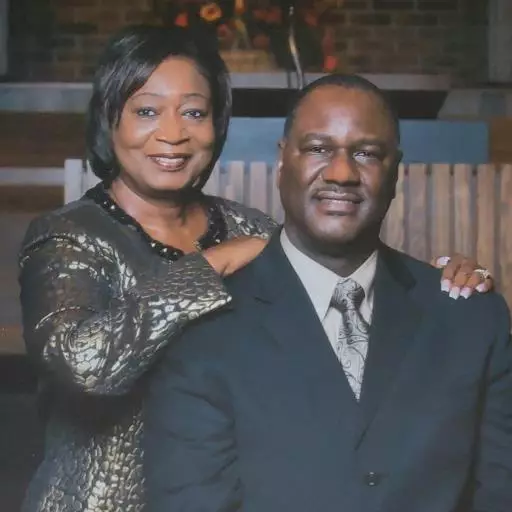
Pastor Ray and his wife, Linda, are the parents of four children, one son-in-law, and two grandchildren.
Contact Atlanta Bible Baptist Church with Pastor Ray P. Smith
abbcinfo@comcast.net
Atlanta Bible Baptist Church
1419 Peachcrest Road
Decatur, GA 30032
(404) 241-1176