
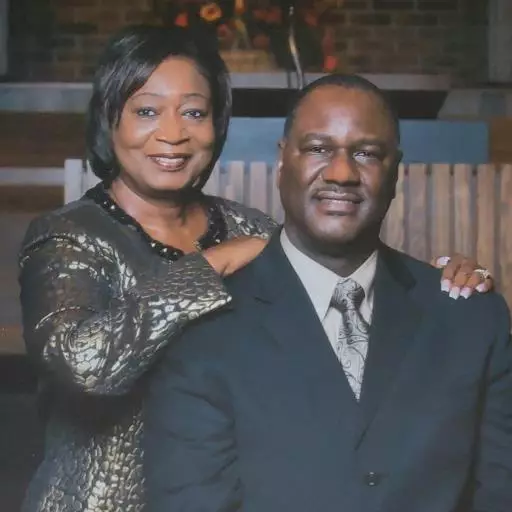
How You Be? Guest Speaker: Bro. Charles Porter


If you are not doing the word, you have not heard the word.
Guest (Male): Morning. Good morning. Would you stand with me as we read the scripture to be found in the book of James, chapter one, verses 22 through 25? That is the book of James, chapter one, verses 22 through 25.
And it reads: "But be doers of the word and not hearers only, deceiving yourselves. For if anyone is a hearer of the word and not a doer, he is like a man observing his natural face in a mirror. For he observes himself, goes away, and immediately forgets what kind of man he was. But he who looks into the perfect law of liberty and continues in it and is not a forgetful hearer but a doer of the word, this one will be blessed in what he does." May the Lord add a blessing to the reading of His word.
Bro. Charles Porter: Good morning, ABBC. Thanks be to God who always, and God is one, and thankful for Him that He always gives us a victory in our Lord and Savior, Jesus Christ. I am privileged this morning to stand before you, our normal routine here on fourth Sundays that one of us get an opportunity to stand before you and share our faith, and today is my turn and I am excited about it. I am also humbled by it.
I want to start by introducing you to your favorite folks. That is us. You see January '96 there. I purposely took that picture because I wanted to remember it, because that is two weeks after Trisha left. Two weeks. Those are my heroes there. And they grew, and what you see is April of '06, that is two months ago. That is them there as they grew.
And to add to it, that is us, January '96. And I want to say to each of you, but especially and I'm going to take a chance here, because as I was going through and looking up these pictures, the Lord brought back some memories of those of you who reached out to me in very special ways. Sister Gloria, Sister Mary, Sister Tony, they helped me with birthday parties and stuff like that. Yeah, I remember that. Got pictures of it.
And then there was all of you. And I want to say to my dear sister and my brother who are walking this journey right now, you won't find a better group of supporters of church folks to support you, to pray for you, to be with you in everything than right here at Atlanta Bible Baptist Church. Pastor McNeal and Mrs. McNeal, they came to everything. They were there. I even have pictures of Brother Albert. He showed up at some kindergarten graduations. Yeah.
So thank you all. I am deeply indebted to each of you and the results of it. You see a lot of trauma there in '96. We didn't know what was going on. People ask me, they say, "Charles, how do you do it?" My simple answer is: I prayed and I picked up my feet. I prayed and I put down my feet, and I just kept moving. I didn't have time to look around or to complain or anything. I had three souls that were dependent upon me.
Now, you have family here. It was only me. My mom, my mother-in-law, aunties, they all said, "Charles, we'll take them babies." Well, no. When they gave me a million reasons why they should be with them, I only had one reason that they should be with me, and that is: they were mine. They were mine. And I felt like the Lord wanted me to walk that path, and might have been stubbornness on my part, might have been ignorance on my part, but they were mine.
Let's look to the Lord in prayer. Father, we love You and we do thank You for this hour. We have no strength in ourselves. Our total dependence is upon You. And we ask You now, Lord, to preach, to teach, to show unto us the things of Christ. And Lord, whatever You say, we will do. Christ in me, the hope of glory. All of me I give to Thee, for all of Christ who is my life. Amen.
Two weeks ago, Pastor has been in the book of James, but these passages here is all one section actually. And he began it with hearing aids, the fine art of listening, looking at James chapter one, verses 18 through 21. And then he said that to be a good hearer of the word, and he gave three things that we must do. And I guess when some of you opened up that outline and you looked at my outline and you saw it wasn't three things, you said, "Well, we know this ain't Pastor."
He said to appreciate the power of the word of God and to adjust my pattern to hear it. We have set patterns that needed to be adjusted so that we can hear God's word. And then we needed to abandon, to put off certain things, to put off certain behaviors and attitudes and put on others that would increase our hearing but adjust ourselves to be able to hear God's word. And we learned, he taught us, he shared with us how to hear God's word.
And these verses this morning, it is just a continuation of that because there is a biblical principle, which is that hearing is doing. If you haven't heard, you can't do. But what proves that you've heard is that you do. So if you're not doing the word, you have not heard the word. It is just a biblical principle. So in James 1:22, we come to the passage that says, "But be doers of the word and not hearers only, deceiving yourselves."
"If anyone is a hearer of the word and not a doer, he is like a man who looks in a mirror and sees his natural face, and observing, he goes away and he quickly forgets the kind of man that he was. But he who observes, the perfect law, or rather he who looks into the perfect law and continues in it and is not a forgetful hearer but a doer of the work, that one will be blessed in what he does." That's our passage, and I'm coming from the subject of my favorite greeting to each of you: "How you be?"
I had a young lady I was dating and she invited me to this big program, and I went around asking everybody, "How you be?" She said I was country. She didn't want to talk to me no more. Well, that's my greeting and I'm sticking to it. In James this morning, he tells us how to be. I'm using that supporting passage in Matthew chapter seven, Luke chapter six, and Mark chapter four.
And hopefully we'll go through these topics here, these points here: be a doer of the word, verse 22; be an observer of the word, verse 23; don't be forgetting the word, verse 24; and then verse 25, be a looker into the word; be an ongoing doer of the word; and then be rejoicing in God's blessing.
Be a doer of the word. In my studies, I ran across Dr. MacArthur. He really said something that really brought home to me why, because I've asked the question, "Why didn't he just say what just do the word? Be doing the word." Well, Dr. MacArthur says that there's a difference in somebody who's doing something and someone who is what they are doing. And he used the builder. That got me right away because there's one thing to be building, to build a house, but there's another thing to be a builder of houses because that's what you do.
My dad, the house I grew up in there in Shreveport, my dad built our house. He built, but he was not a builder. My dad was a mechanic, but he built our house. But now the house that I live in now over on Union Road, that house was built by a builder. And I didn't even know that until one day this young lady pulled up in the yard and we kind of went out to meet her.
And she said, "I grew up in that house because my granddaddy built that house." And my neighbor that I didn't know, he said, "And he built all the other houses on this street here." I didn't know that. She said, "But this is the first house that he built." And she went on to talk about the aesthetics of the house and everything, but without going inside, I knew she knew the house. But he was a builder. He built houses because that's what he did. That was who he was. He wasn't just building a house. He built houses.
But one thing about this verse here is that James actually says what Jesus says. That stood out to me even more because I remember back when I was first asked to preach. These three guys here, we were from Carver, and we were to go down to Louisiana. At first, I wasn't a part of that group. There was another brother. If I called his name, you'd know, but I don't want to call his name.
But what you see there, you see Richard Fleming in the middle and he was a reverend. He was called to pastor. And then you had the cartoonist there, Tony Van Dyke. Most of you probably know both of those guys. Some of you know, and then Tony has gone on, he's now a Christian cartoonist. And then you got the guy on the left there, and I'm still trying to figure out why I got on that big old coat when they do not have on coats.
But I was a musician and that's what we were going to do. We were going down to Louisiana to visit the Bakers on spring break. They were missionaries from Moody Bible Institute, and we were going to visit them. I can't remember neither one of their names, so just the Bakers. They were in Elton, Louisiana. But once she found out, we had to send our information down there, and once she found out that I was from Shreveport, she asked that if she could call my mom and dad and ask them to come down while we were there.
And so she called my mom and dad and Muddy and Daddy and my grandmother, they did agree to come down. They came down once Mr. Baker found out that Muddy and Daddy was coming down. Well, he rearranged everything. He wanted me to preach because my mom and daddy was coming down. I'm not here to preach. I'm here to do the music. That's what I was there for. But because my mama and daddy were coming down, I got an opportunity to preach.
But the thing is, leading up to that, I am saying, "Lord, I'm not a preacher. What am I supposed to say? What am I supposed to..." and I am just crying out to the Lord. And eventually the Lord simply whispered, "Say what I say." And as I mulled over that, I finally came to say, "Lord, I can do that. I can say what You say." And so that Sunday morning there at Tarsus Baptist Church, Tarsus Bible Baptist Church with Dr. Leroy Griffin, most of you know them, he and his wife, Miss Gladys, I preached. Can't tell you what I preached. They may not even call it preaching. But I stood up and I said what God says. And that has been my mantra to this very day: say what I say.
That's what James does. In Matthew chapter seven, verse 24, James says, "Therefore, whoever hears these sayings of Mine and does them, I will liken him to a wise man who built his house on a rock." This is at the end of the Beatitudes sermon. And Jesus is at the end where He moves on from this sermon around all of those people and He goes on, but at the end of that sermon He says, "Whoever hears these words of Mine," all the things that He said, "and now He says, and does them, I liken him to a man who built his house on a rock." He goes on to say, "The rain descended and the floods came and the winds blew and beat on the house, and it did not fall, for it was founded on a rock."
But not hearers only. Hearers are listeners who only engage their ears. They only engage their ears. Doers, their whole self is involved in it. Но hearers engaging their ears, then life happens. Mark gives us a little bit of insight into that. If we go to Mark chapter four and beginning at verse 14, I don't have that up there, so you're going to have to turn. Mark chapter four, listen at the insight of Mark as he shares here.
He's talking about the sower here, the sower who sows. Mark says in verse 14, "The sower sows the word. And these are the ones by the wayside where the word is sown." And then he says, "When they hear, Satan comes and immediately takes away the word that was sown in their hearts." Immediately Satan comes. They hear, but then Satan comes and takes away the word. I call those just the casual hearers of the word.
But then there is another group he goes on to say, but first let me say this: it is Satan who comes. So as shared, there's one opposition against you and I hearing the word of God, and that's Satan. He is the opposition. Remember Satan has a desire. He says, "I will be like the Most High." So as many of us as he can keep from that word of God, we're helping him to be like the Most High.
See, there is this ongoing war, this ongoing battle between God and Satan, this ongoing spiritual war. Now, in my opinion, and in most, it's an unfair battle because God has already won. As Dr. Evans said, "Satan, he's the devil, but he's God's devil." He's under control. But he can't get at God, so who he gets after? His images. And as many of his images as he can keep away from God, confused and baffled and singing and dancing, he wins.
Verse 16 says, "These likewise are the ones sown on stony ground." Stony ground are those who just we get an emotional charge when we hear the word of God. We feel good for a minute. All excited just for the time being. He says, "Who, when they hear, immediately they receive it with gladness." Oh, we're just so excited. We heard it and we got an emotional charge from it.
He says, "And they have no root in themselves, and so they endure only for a time." They got no root. Life happen. And what is that life? Afterwards, when tribulation and persecution arises for the word's sake, immediately they stumble. They got that emotional charge, but that emotion wears off. Feelings wear off. There is no root.
Then he says, "Now these are the ones sown among thorns." Now, these folks here among thorns, you definitely don't want to be this. I don't want to be this. We sit here, we hear, but we're not thinking about what's being said. Our mind's on the next dollar we can make, or how do I rise up and be Mr. CEO, or how do I ascend through the ranks and be Mrs. Executive?
They are the ones who hear the word and the cares of this world, the deceitfulness of riches, the desire for other things entering in to choke off the word. So you sit here and just not hearing. Really don't care because the mind is on this world. Now, hopefully, this is what James is pointing to is this group that comes up next.
He says, "But these are the ones on good ground, those who hear the word and accept it is equivalent to doing it." And what happens? Well, you bear fruit. That's an automatic result of hearing and doing: you bear fruit. Some thirty-fold, some sixty-fold, some a hundred-fold. We are all different. So some are not going to do what others do or as much as others.
Pastor McNeal, when I first met him, he said his desire was to win a million souls to the Lord. Then he increased that to two million. Doing the word will result in fruit, not just hearing. Those who only hear the word of God are only deceiving themselves. Oh, you're not fooling me. You're not fooling wife, you're not fooling the next brother or next sister. You're only fooling yourself. "I was in church this morning." You check that off.
The truth is they don't love God. They don't love God. Now, it's not me saying that. Scripture saying that. Listen to Paul here, 1 Corinthians chapter eight. He's speaking to those who were dealing with this thing of meat that had been taken over by idols. And their question was, "Should I eat? Should I not eat?" But Paul is saying, "Well, that's not the question. The question is: do you love God?"
Because if you love God, whatever you do, if you love God, God knows you. And He's got you. So he says, "But if anyone loves God, this one is known by God." But again, Matthew in as he wrote what Jesus was saying there in chapter seven of Matthew, he speaks on this. Но the term that James is using here when he says "deceiving yourselves", he uses a mathematical term which means to miscount or to miscalculate.
I don't know if this ever happened to you. You got so much dollars and you get in the store and you got it all figured out, but then when you get there and you have miscounted. You deceived yourself. You ain't got enough money. You say, "Well, put that back. I don't need that right now." But Jesus gives us again an example.
Let's go to Matthew chapter seven, verse 21. Listen at this: "Not everyone who says to me, Lord, Lord, shall enter the kingdom of heaven, but he who does the will of My Father in heaven." But they're saying, "Lord, Lord." But they're not doing His will. They're doing things, and He gives us the thing that they are doing.
"Many will say to Me in that day, Lord, Lord, have we not prophesied, have we not preached and taught in Your name? and cast out demons in Your name and done many wonders in Your name?" I don't know if you've heard, but our Secretary of Defense, he's running around saying we're policing the world in Jesus' name. Huh? Doing it in Jesus' name.
But listen what Jesus goes on to say. "Then I will declare to them, those who are saying, Lord, Lord, casting out demons, teaching, and all these other things in His name, depart from Me. Why? I don't know you." There was no love for God. They were doing things, but their motives were wrong. And the motives are wrong because the motives is factored through the hearing and I am doing this because I love God.
Not because it makes me look good or not because I want to do it. I'm doing it because of a love for God. Always we must check our motives. And then James is really going to get into that because he goes on to says this: "If anyone is a hearer of the word and not a doer, he is like a man observing his natural face in a mirror."
A hearer only of the word, says James, he's like a man. And it is the word "man". That's the word "anar". We learned "anthropos" last week. Но this word here is the word "anar" which is male. You got male parts. He says he's like a man observing his natural face in a mirror. Now, males and females, we have different relationships with the mirror.
Males, we are rather casual with the mirror. Females have an ongoing relationship with the mirror. You say, "Charles, that's sexist." Well, I don't mean to be sexist, but I do mean to tell the truth as I understand it. And let's hear what James says about it. Because he said, "Be a doer of the word" and he says, "be an observer of the word."
So what is he talking about? The word here he uses for "observe" is the word "katanoeo". That word in itself is a verb, and listen at what it means. It means to perceive clearly, to be fully aware. Now, you will hear most translations say that he glances at the word. That's not what that word is saying. To perceive fully, to clearly be aware. In other words, observers take a deeper look.
Observers take a deeper look into the word of God. Luke chapter six, verse 47 and 48. Listen at what Luke said. And he's talking about the same event of Jesus finishing His Beatitude sermon and He's at the end of that sermon. Но Luke adds something that Matthew does not. "Anyone who comes to Me and hears My word and acts on them will be like a man building a house."
But listen at what Luke adds: "who dug deep and laid his foundation on a rock." You see, you have to dig to get to the rock. You have to dig down to get to the rock. The house I tell you, when I walked in that house the first time, there was a little slit in the living room and it was yay big, but it was a long slit. It was observable.
But then I was told by a brother, even homeboy told me, he said, "That just means the house has settled." You see, there is the layer and then there's sand, there's mud, there is all of that, but it goes through all of that and it settles on a rock. I've been in that house since 1992. I measure that slit ever so often. It has not moved. You know why? Because it's settled. Has not moved. Settled on a rock.
He's talking about a foundation here. But see, to get to the rock you got to dig. You got to go deep into the word of God and get to the rock and get to a foundation that's going to give you something to stand on. So that when you do, when you act, you're acting according to the words of your commander, the Lord Jesus Christ, and you're standing on His word, knowing that His word will not return to you or to me void.
Observers digging deep into the word of God will come away with two truths. I am not talking about just a casual Bible reader now. I'm talking about digging deep into the word. You are going to come away with two truths. The first truth you are going to come away with is the truth of God. And the second truth we're going to come away with is the truth of man, the truth of humanity, the truth of myself. Those two truths are running through the Bible: the truth of God and the truth of man.
See, we'll find God saying, "I am God and there is no other." You'll find Him saying that. You'll find Him say, "I am God. I am God and there's none like Me." In Exodus 34, verse 6, here the Lord says, "The Lord, the Lord God, compassionate and gracious, slow to anger, abounding in loving-kindness and truth. I am God, I am holy, but I am compassionate. I am loving, I am gentle. I am God."
And there is none beside Me. And what did this God do, this holy God in His compassion and holiness? See, this is digging deep now. This is what you're going to find if you dig deep. You are going to find that He sent His only Son, Jesus, into the earth through the womb of His chosen female, Mary. And Mary, Him coming through Mary, He has no relationship to Adam.
Jesus came to pay the death penalty for each and every one of us because of what Adam did. Но remember He came into the world with no relations to Adam. How Jesus got into that womb was Holy Spirit. He had an earthly mother but no relationship to Adam. Holy Spirit put Him in that womb. And in that womb, we find also that He grew and He grew into a man.
And Jesus is able, the Lord Jesus Christ, He's able to save to the uttermost any of us, anybody that would come to Him. He's able to save. Now the second truth is that of humanity, which is he's not like a man observing his natural face in a mirror. See, you're going to see yourself. You're going to see yourself if you just simply dig now. Oh my Lord.
Psalm 23. "The Lord is my shepherd." A lot of us know that. Но now if you dig deep into that, what's that going to say? When you dig deep now, but you just hear that, beholding his natural face, the mirror. The mirror is not like what we see today, these mirrors that we look at today and we get an external look of what I look like externally.
James, this is me saying this now, James uses that mirror to point us to the word of God because the mirror the way James is using it is the word of God. And an observer will see his natural face. He will see his natural self in Adam. See, that's the big reason that Jesus Christ came into the world, born of a woman but with no relationship to Adam, because every last one of you and me, we are tied to Adam.
God is also sufficient. He's sovereign, He's holy. Но man, the image of God, we are insufficient. We are needy. We are wicked sinners in our natural state when we see ourselves in Adam. And here's the pronounced difference that God Himself says between Himself and me. He says, "I am not a man that I should lie." How many lies do we hear every day? How many lies do we tell every day?
God says, "I will never do that." That's the difference. He's God and there's none like Him. And see, He sent His Son, Jesus Christ, because in Adam we all die. Но in Christ shall all be made alive. Но if you don't dig into the word of God, you are not going to ever see that. Matter of fact, you are going to question it and you are going to argue with people who tell you that. What's your response? "Don't be judging me."
Sin came into the world through one man. That one man was Adam. "Therefore, just as through one man sin entered the world and death through sin, and so death spread to all men because all sinned." And by one man's sin, Adam's disobedience, when he disobeyed God, sin came unto all. We are descendants of Adam. We are of the seed of Adam. Но Jesus Christ stands alone.
So either we go to Adam and we continue in Adam's way, or we surrender ourselves to the living Lord Jesus Christ. That's what the Bible is going to show you. That's what this mirror is going to hold up to you. The mirror is not going to show me Wayne Johnson. The mirror is going to show me me. It is going to show me God and me.
And the same thing with each one of us, it is going to show you you and God and your relationship and our relationship to Him. So he's like a man who beholds his face in a mirror, and again that word there is "genesis" face, his first face. He is going to see the truth of who he is in Adam. 1 Corinthians 15:22 we've already said, "For in Adam all die, but in Christ shall all be made alive."
In verse 24, "For he observes himself." And this is the part where I really was struggling with this for a moment, but I don't struggle with it no more after going through this. He observes himself. See, he sees himself. He knows what's going on. He sees who he is. Но yet what does James say he does? He perceives clearly who he really is, and he continues in his observation. Но when he goes away, he immediately forgets.
Now, in looking at that word, I'm going to say don't be forgetting. "Forget", the word that's used there is "epilanthanomai". That word really would be best rendered to neglect or to ignore or to disregard. And see I argued with that every time I casually read that until I actually studied it starting the first part of this month when I learned that these were my verses.
Because see, by nature, I'm a forgetful person. Just by nature. You just saw it just a few moments ago. I can be in the middle of a sentence and totally forget what I want to say. My mama used to say to me, "Charles Porter, if your head wasn't hooked to your neck, you would forget your head," because I just naturally forget.
My son says of me, he says, "Daddy, we ain't going to never know when you get Alzheimer's because you already forget everything." I just naturally forget. Но see, this forgetfulness for me, it is not an effort that I make to forget. That's just God how He made me. I finally, it took me years to come to a point that that's how God made me. That's how God made me. I just forget stuff.
When I was over the City of Atlanta in safety, those drivers used to bring me incidents and stuff out on the route, and they'd bring it to me. And another driver who's had an encounter with me, he would say to him, "You better write it down 'cause he ain't going to remember." And then he'd say, "Well, you better go up there and see where he put it at in his office 'cause he ain't going to remember that either."
I just naturally forget stuff. Но see, to neglect, to neglect is an effort. It is an effort that I make to neglect. It's an effort that I make to disregard. I see myself in the mirror. I see that I'm a sinner, but I say "No" and I go on my way. That's totally different than what we are being taught that this passage says. Because James is saying that you neglect the word of God.
You push aside the truth of God's word. You quickly do it, pushing aside His truth. And he tells us that in the next phrase. He says he forgets what kind of man or he neglects to really realize or to understand or accept the kind of man that he was. What is he saying here? He means that he remembers who he is in Adam. He's seen who he is in Adam.
And he's talking to Christians here. He's talking to brothers in Christ. It's the twelve tribes from the northern part of Israel that have been exiled into Assyria, those twelve tribes. And then you got ten tribes in the north, two in the south, they have been exiled. And James said in verse two, he says, "My brethren, count it all joy."
In verse 16, he says, "My brethren, do not be deceived." Because they are Christians. They have been changed. They are new in Christ now. Но they go on like they don't remember who they were and they're acting like that and not taking on the new nature and walking in their newness in Christ.
Verse 25: "But he who looks into the perfect law of liberty and continues in it and is not a forgetful hearer but a doer of the work, this one will be blessed in what he does." So verse 25 gives us three points, that is, be a looker into the word; be an ongoing doer, be an ongoing doer; and then be rejoicing in God's blessing.
The perfect law of liberty. He looks into the perfect law of liberty. Now, get this right now. This word here is different from the word "observe". It's the word "parakupto". And this word means to stoop down and inspect. Get in that word, stoop down and inspect what the word of God is saying. Now I get the picture here of somebody who's looking for gold.
They are out there in the water and they stoop down in that water and they just going back and forth, running through their hands and looking for little nuggets and little kernels of gold. And if you get into the word of God that deep, that's what you are going to come away with. Some nuggets. Two personal thoughts. These are personal thoughts of mine that as I read the scripture, in John 15:5, "Without Me you can do nothing."
Now, just hearing that on its own, "Without Me you can do nothing," well I'm saying, "Well, that don't mean nothing to me." Но look at what He says in the full context of the verse, get the full context. He says, "I am the vine, you are the branches. And he who abides in Me and I in him bears much fruit." What's the fruit? Thirty-fold, sixty-fold, a hundred-fold. "For without Me," He says, "you can do..." Now you hear that in its whole context, it makes perfect sense.
Paul says it like this, he says, "I can do all things through Christ who strengthens me." That's the freedom right there. I can do all things through Christ. I don't have to bear this no more. I don't have to worry about that. I just lean myself onto Christ and I trust Him and He takes over my life. As a looker into the word of God, I become a deep-digging inspector finding nuggets of pure gold delivered to me from the very breath and heart of the living sovereign God, Jehovah.
And that is what's happening when we read the word and we go deep into that word. What does He say? We come away with nuggets of gold. We come away with breath for life. We come away with heartbeat to make a next step. He is the vine and I am His needy, insufficient branch. I need Him. And through Him, I can do all things. So be a looker, be a doer of the word. And this word here is the word "work".
So what is James saying? Be an ongoing doer of the business of God. Never neglecting, never ignoring, never pushing aside what He says. Be an ongoing doer of all that He says with all my heart, with all my soul, all my mind, all my spirit, all my body. And then I can rejoice in His promise because "the one who does this, he will be blessed in what he does."
Psalm 119:11, at the end of that it says this, the psalmist gives a long list that the word of God is the perfect law of God, it is the testimony of God, it is the witness of God, it is the word of God. And at the end he said the word of God, "whoever by them your servant is warned." You don't have to go through life blind. God warns us in His word.
And in keeping them, he says, "there is great reward." Listen to what Joshua says. Now, check this out. James, he said what Jesus said. Jesus, who is the personified word of God, He says what God says. And God told this to Joshua. He said, "Joshua, this book of the law shall not depart from your mouth, but you shall meditate in it day and night."
Now if you think back to what James said earlier about that mirror having an ongoing relationship, be looking in the mirror. Never stop looking in the word of God. Never stop viewing yourself in the word of God. Never stop. Stay in the word of God. You know that's what those 2:7 programs are all about? It is to put us in the word of God, to keep us there in the word of God.
"That you may observe to do according to all that is written therein, for then," He says, "you will make your way prosperous, and then you will have good success." James is only saying what Jesus says. Jesus says what God says to Joshua. There are some 40 men that wrote the Bible over a total of 1,500 years. All 40 of those men tell who God is and who I am and my response to who He is.
How you be, ABBC? Be careful to hear what God says. Then with all diligence, let us be ongoing doers of what He says. Let's pray.
Dear Father, we thank You for Your word. We thank You, Lord, for Pastor McNeal. We thank You for Reverend Ray Smith, two men who has continued to hear Your word and to do Your word and then to teach us Your word. We thank You for Holy Spirit who enables us to hear what You say and who lives through us, dear Lord, the person of Jesus Christ who enables us to be the doers that You would have us to be.
And I thank You, Lord, for these brothers and sisters here at ABBC who have a love for Your word and who we challenge one another to hear and to do Your word. Because Lord, if we have heard, we will do. And if we haven't heard, we prove that by not doing. So we give our hearts to You and say, "Lord have Your way. Christ in me, the hope of glory." Amen.
Past Episodes

About Atlanta Bible Baptist Church
The Bible is the most important book in the world because it contains the best news for the world – the gospel of Jesus Christ! For over 50 years, our passion at the Atlanta Bible Baptist Church has been to tell people about God and help them understand His Word.
About Pastor Ray P. Smith
Rev. Ray P. Smith is the senior pastor of the Atlanta Bible Baptist Church. He follows Dr. John McNeal, Jr., the church’s founder and now Pastor Emeritus. Pastor Smith received his Bachelor of Science degree in Pharmacy from Mercer University Southern School of Pharmacy in Atlanta. He received his Master of Divinity degree from Baptist Bible Seminary in Clarks Summit, Pennsylvania.
Pastor Ray delights in teaching the Word of God, explaining its truths with practical illustrations and applications. His passion, to teach the whole counsel of God to minister to the whole person, flows out of his life verse, which says “And Jesus kept increasing in wisdom and stature, and in favor with God and men” (Luke 2:52). As Jesus grew mentally, physically, spiritually, and socially, so should His followers.
Pastor Ray and his wife, Linda, are the parents of four children, one son-in-law, and two grandchildren.
Contact Atlanta Bible Baptist Church with Pastor Ray P. Smith
abbcinfo@comcast.net
Atlanta Bible Baptist Church
1419 Peachcrest Road
Decatur, GA 30032
(404) 241-1176