
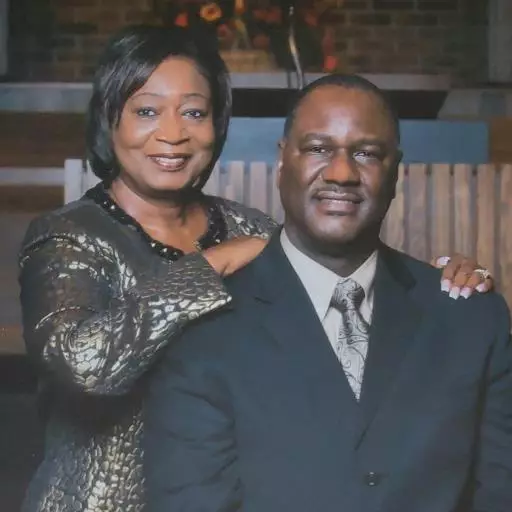
3 Blind Mice - Guest Speaker: Bro. Cos Edwards


When we join with things that are unholy, consequences go along with it.
Bro. Cos Edwards: A word of caution: Satan does not mind recognizing Christmas even as a religious holiday. You might say, "Well, why would that be the case?" Because Satan would do any and everything to shield us from the cross.
Again, this is a horrible picture, but at the very top, there's a representation of the manger scene. Below that, there's the cross. Behind the cross—I should say in front of the cross—is a whole host of things that stem from the benefits that we derive from the crucifixion: love, joy, peace, longsuffering, His forgiveness, and His mercy. A whole host of things that are only possible through the cross.
My caution is to keep Christmas in perspective and to not allow the cradle or the manger to hide the cross. Paul said in 1st Corinthians 2:2 that he was determined to know only one thing, and that was Christ, Him crucified. He also expressed the sentiment that, as the scripture records it, he longed to know Christ and His sufferings.
I like the way Brother Toby puts it in terms of perspective: no manger, no cross. The power is in the cross. For the preaching of the cross is to them that perish foolishness, but unto us which are saved, the cross is the power of God. That was constructed by Brother Hunter, and I was moved by it.
New Year's resolution time is here, and I've already crafted mine. I make one every year, but I can't remember what it was for last year. That doesn't stop me from making them. In fact, you'll be impressed with this: I've already started working on my resolution for next year. I've never done this before, but they say if you make a resolution, you need to have an accountability partner, someone to remind you, help you, and pray for you as you try to keep it.
Every year after Christmas, after we've had the joy of Christmas, the fight breaks out with my wife. In terms of wanting to do things, for her, it's always "yesterday." Do it yesterday. But my clock says the best time is always the day after tomorrow. Guess what I did yesterday? I took the tree down. I know you're not impressed with that, but my wife was. I took it down without her having to tell me. I just got up and said, "Cos, you made a resolution. Now's a good time to start."
My resolution is to do things before she starts nagging me to do them. I'm proud of myself; at least I got a good start. Now, there's nothing that I have to say today that is as important as this next thing. Let's pray. Heavenly Father, Lord, we thank You for tolerating us because what we deserve is not what we have received: Your great blessing and Your great mercy.
We thank You for bringing us through the year. It was not of our own strength or our own doing; it's of Your mercy. Each one of us knows someone who did not cross over. We still have a few days, so we don't know if we will. Lord, we just pray now for Your preached word. Pray, oh God, that all that is said will be pleasing to You.
Pray that You place a sieve over the ears of those who listen so they only hear those things that are consistent with Your will and Your word. Let me be limited, oh God, by Your Holy Spirit to those things that are consistent with Your will and Your word. In the name of our Lord and Savior, Amen.
I don't want to get all wrapped up in this text. If by chance there's someone here today who, in your heart of hearts, knows that you are not saved, knows that you've not invited Christ into your life, or knows that His blood is foreign to you, you're outside the ark of safety. You've not said yes to the urging of the Holy Spirit.
I want to suggest to you that beyond the foolishness of the resolutions that we make that will be extinguished in this life, there's a greater resolution I would invite you to consider if you don't know Him: that's to accept Christ as your Savior. You know who you are. It's so important that you do it today. I don't mean when you get home or in a little bit. I mean now. He gave His life for you to have this privilege.
Let's take a look. Don't anybody be mad at me if I don't preach long today. Is anybody upset, other than Pastor Smith there? Let's see how this goes. I am thrilled to be standing and entering the back door. Sister McNeal, I'm just overjoyed in where she is now with her recovery. Let's take a look at the principals today. I hope you can see; I hope I made it large enough.
You'll recall from the reading of the text: Jehoshaphat, Ahab, Zedekiah, Micaiah, and superintending over all is God. Because of the limited amount of time, I'm going to ask that we focus our attention on these three. When I started developing the message today, my intent was to speak at length on each one of them, but when I got to Jehoshaphat, I knew that wouldn't work.
It may be the next time I have an opportunity to speak that we'll venture beyond Jehoshaphat. But the three figures in our text today are Jehoshaphat, Ahab, and Micaiah. I started to use the Three Stooges. While they're some of my favorite characters, my wife can't stand them, so I settled on the Three Blind Mice: Zedekiah, Jehoshaphat, and Ahab.
We'll deal with Zedekiah and Ahab on the periphery. Our focus primarily this morning will be centered around Jehoshaphat. Because we are in the Old Testament, let's make sure that we have biblical permission to extract from it very briefly. For that, we'll consult the New Testament, 1st Corinthians, the 10th chapter, verse 11. Now, all these things happened unto them for examples.
In this particular instance, the context here is that Paul is talking about the liberation story from the time of imprisonment in Egypt. The context is that we can apply this throughout the Old Testament. All those things happened unto them for examples, and they are written for our admonition, upon whom the ends of the world are come. Look a little deeper. Written for our example means a pattern or a warning.
He knew that on the last Sunday in 2025, we would need to hear from Him, and He gives us permission to peek into the rearview mirror because there's a warning for us. Their experience served as a means of warning to say, "Heads up!" Background: because of her insatiable appetite for sin, the nation had divided into the Northern Kingdom and the Southern Kingdom. The Northern Kingdom was Israel, the big boys, 10 tribes. The Southern Kingdom was Judah.
It's from that we get a sense as to the setting that Brother Addison read for our hearing. It was a divided kingdom after Solomon, and as a response to sin, the kingdom was split. The same thing plays out in our lives today as it was with Israel. When we divorce ourselves from God's perfect will, we find that what it breeds is confusion, division, and hostility, not only amongst ourselves but within ourselves.
That's why the world is so crazy. All we need to do is look back at what happened with Israel when Israel played that game. What did it breed? Confusion and hostilities. These are kinsfolk, by the way. If we fast forward from the division four kings down—or up, whichever you prefer—we come across Jehoshaphat and Ahab, our Three Blind Mice. We're going to block out the other two and focus largely on Jehoshaphat.
Jehoshaphat was the mouse that was blinded by blood. He valued the blood relationship with Ahab more so than with God. He's kind of like us, a mixture of things. He's all over the place. Our text starts with this verse: "Now Jehoshaphat had riches and honor in abundance and joined affinity with Ahab." What that means is that God's plan was not good enough for him.
As was mentioned in our Sunday School, Brother Sturgis made the observation that God's plan for His people was that they would maintain blood purity. Marrying outside was a no-no. Before we start looking deeper, keep in mind that Jehoshaphat was a good man. He did great things. In fact, if you look at the lineage of the Southern Kingdom, you'll quickly see that while it was populated with one bad king after the other, Jehoshaphat was one of only twice where there were two successful kings back-to-back, his father being Asa.
If he was such a good man, why are we throwing shade on him? Because he's kind of like us. Some days we're good, holy, and righteous. Other days, we're not sure what we are. There he is. In his plan to secure the kingdom, he came up with a plan that said, "If I form an allegiance with Ahab, I'll be safe. We'll marshal our forces together and be able to defend off those who are stronger than we."
Unconsciously, he was saying God's plan was not good enough. So his oldest son married one of Ahab's daughters. If I tell you one thing about Ahab, it's all you really need to know: his wife's name was Jezebel. Jehoshaphat thought it was a good idea that he would connect with Ahab by marriage. Although at that time it was not uncommon for different powers to enter into these kinds of marriages of convenience, God said, "Don't do it."
Jehoshaphat said, "Yeah, I'm going to do it. I got a plan because, after all, I'm just helping out God." This notion of helping out God didn't work too well when Eve did it, did it? The offer comes and says, "Look, you can be like God." That's a good thing, don't you think? Who among us wouldn't say, "Look, I want to cast off the veil of ignorance and I will know all that God knows"?
She thought it was a good thing. How about old Moses? God said, "Moses, speak to the rock because the people are thirsty and they need water." Moses said, "I got a plan. I'm just doing good." So he struck the rock. He was all over the place. I like this one. How many of y'all are ready to go to heaven? I hope everybody's ready to go.
The good folks down at the Tower of Babel said, "Go get the bricks and mortar. We're going to build a tower for ourselves so we can get closer to God." That sounds like a plan to me. Who wouldn't want to be closer to God? They were doing good by doing evil. God mercifully delivered Lot. They had a record—not what somebody told them or what they felt, but they knew for certain that God was good for His word.
They looked around and Mama wasn't there anymore. God said, "Don't look back," and she looked back. They knew. They didn't have to read it in the newspaper or hear it on the news. They knew that God was good for His word, but they said, "We look around and there's no man, and surely God wants us to continue our lineage." Just like Jehoshaphat, they said, "We're going to help God out."
They went in unto their father. Just like old Peter. That's my boy. Peter sees his Lord is in danger. He's got a sword. He thinks, "You're not going to take it out on Me. I'm going to save the Savior." Or Saul. Come on, not Saul. Yeah, Saul. You think Saul was sticking up convenience stores and doing drive-bys? No. As Saul, he was doing the will of God. He was helping God out. Just a little evil, but he had a plan to accomplish good, so says Jehoshaphat.
Let me tell you a little bit more about Jehoshaphat. You know what that boy did? He was so connected to God that when he became king, he dispatched missionaries throughout Judah to spread the word. He followed in the steps of his daddy, and he pulled down those high towers that they were using for worship. This man was a good man, but he decided God needed some help.
Saul had this mistaken plan: "I'm going to round up all those dirty, nasty Christians. I'll show them." He was doing good but doing evil. I suspect that, like me, you don't know who this next person is. She's gotten a bad rap upfront, this grandmotherly lady who wouldn't hurt a fly. Back in the late '20s and early '30s, the Great Depression happened in this nation and around the world.
While no one was spared, it was especially troublesome for Black people, or as people called them then, Negroes. This lady had a heart and recognized that while it was bad for white folks, it was really bad for us. She was moved to form the Negro Project. It was going to relieve the pressures that were born out of poverty on the Negro. She formed several health clinics in the state of New York.
Margaret Sanger is—to test your memory a couple of elections back—the one Hillary Clinton named when asked about her heroes. That didn't bother any of us Black folks. We liked Margaret. Margaret Sanger is the person who was responsible for the murder of Black babies. Her thought was, "I want to help these poor Black babies born into a situation of destituteness and extreme poverty. How do we help the Black people? Just kill their babies."
She gave us Planned Parenthood, whose focus was purely on the eradication of Black babies. I know it might sound strange to say anything good about such a person, but in her heart, she couldn't bear the idea of poor Black babies under those circumstances, so it was better that they die in the womb. Here's the part that ought to cause all of us a measure of cringe: she had a strategy.
She knew that there was one place she could go to speak to Black folks, and that was the church. So she recruited Black preachers. To this day, there's no ethnic group that murders their unborn at the rate that we do. But she was doing good, helping out the Negro. I've never met a couple contemplating divorce that had bad intentions. It's always the same: "I'm in pain. You don't know how I suffer from him. You don't know how she is. All I want to do is stop the pain."
Jehoshaphat had a strategy of "let's do evil." Like in the case of divorce, my heart goes out to anyone who's ever experienced it. I did not know how traumatizing divorce was until I got into the ministry. It's the pain that keeps on giving. You never fully wash yourself of it. That's why God says He hates it. But it always comes about as an effort to do good, to accomplish good for a good outcome.
Are you aware that statistically, those who experience divorce have a high percentage of a second divorce? That doesn't seem like it makes any sense. You'd think that having gone through it, you're not going to do it again. That ain't the way it works. If you have experienced divorce, I don't know how unsaved people deal with it. It's tough enough for saved people.
Thank God for His mercy. Even when we do something stupid, He's still the great Healer. I know how you think about the LGBT thing, but I'm here to tell you, all they want is to be able to love who they love. You love who you love, and they love who they love. What's your problem? Didn't God want me to be happy and to experience love? Well, not that way.
Jehoshaphat, now you've gone too far. You just stepped over the line. I was with you for miles. You almost had me. Now you stick this up there. Every woman preacher I've ever heard speak to this always starts at the same place: "But." I know what the Word says, but. I wouldn't be shocked if Jehoshaphat somewhere along the line came up with a "but."
God has defined who He would be responsible for and who He would put in charge of that office. Like a deacon friend of mine said, "God, man, I can find 10 women that will preach you under the table." Okay, I have no debate. What am I supposed to say? "No, you can't." You're right. By the way, that's not such a high bar after all. Their intentions—giving them the benefit of the doubt—are always good.
They want to preach God's word and see people saved. I don't know another person's heart; I'm going to give them the benefit of the doubt. They want to help God, but like Jehoshaphat, they want to do it their way. Here's another person. We're not going to spend too much time on this one. Here's a boy who knows a few things about doing it his way. I can relate to Jehoshaphat. I've got the scars to prove it.
Sin is seductive, as we saw with Mama Eve and all who have followed her. One of our sons was sent this big box of cotton candy by my wife. She talked to one of his kids and asked, "Did your dad share that cotton candy?" "Uh-uh." We all know what cotton candy is like. Nobody can just eat a little. There's just something about it. Even though you know it's bad for you, it's seductive.
It's kind of like sin. If you see them making cotton candy, it starts as this little thing, and next thing you know, it's this big old thing. That's the way sin works. You just twirl it around a little bit and it just keeps getting bigger. You didn't start that way. Sin is seductive. I don't know about y'all, but I love my sin. It feels good. Like Jehoshaphat, you ain't all that bad. You're not like real bad people.
Sin is so seductive. Let's take a look. After certain years, he went down to Ahab to Samaria. He didn't know it at the time, but he was already in trouble. The game was up already. Sin says, "Let's just talk. Let's just talk. Come over here. Let's talk." He went down to Samaria, but he had no business being there. That's where Ahab was. Ahab was full of guile. He said, "Jehoshaphat, come on down here."
Notice that God had supplied Jehoshaphat with all of his needs beyond his wants. The man had it going on. He was rich. What are you doing? Anyway, after a certain year, he went down to Ahab to Samaria, and Ahab killed sheep and oxen for him in abundance. "Jehoshaphat, you deserve the best. The party's on! Jehoshaphat is here. Bring out the best of the best for my buddy."
Such is the promise of sin. He persuaded him to go up with him to Ramoth-gilead. The text is void of the details as to the specifics of that enticement; it just tells us about the results. I could imagine it goes something like this: "Now, you know Ramoth-gilead was promised to us by God, right? Right. And we're obligated to possess the land, right, Jehoshaphat? Yeah, right. We ought to go down there and take it, don't you think? I suppose."
Like father, like son. 2nd Chronicles 16:7: "And at that time Hanani the seer came to Asa king of Judah," this is his father, "Because thou hast relied on the king of Syria, and not relied on the Lord thy God, therefore is the host of the king of Syria escaped out of thine hand." He's talking about Jehoshaphat's daddy. His daddy had done what he had been doing.
Look at verse nine: "For the eyes of the Lord run to and fro throughout the whole earth, to show himself strong in the behalf of them whose heart is perfect toward him. Herein thou hast done foolishly." God looks at the actions of the daddy and says, "That boy's a fool. He's done foolishly." I blessed him, I promised to sustain and to keep him, and what does he do? He goes and joins himself to those who are God-haters.
His pronouncement to Jehoshaphat's daddy was that it was foolish. Jehoshaphat does the same thing. Righteousness is never inherited. You come across people who want to say, "Yeah, my daddy was a preacher. My mama was a preacher. My cousin was a preacher." What about you? "Well, I'm not quite ready yet." What does the condition of your mama, daddy, or cousin have to do with you? You have to make the decision.
Nebuchadnezzar, that bad boy. Throughout the scripture, we find that great men found themselves repeating the ills of those who have gone before them. Foolish. The expectation that good can come from evil is foolish. Every abortion is accompanied by good intentions: "I don't have a job, I can't afford it, I've got too many kids already, it's not a good time."
The expectation that good will come from evil is what the Word says. Jehoshaphat says, "I am as thou art, and my people as thy people; and we will be with thee in the war." He's persuaded now. He's joined himself to Ahab. Look at Romans 3:8: "And not rather, (as we are slanderously reported, and as some affirm that we say,) Let us do evil, that good may come?"
Who can bring a clean thing out of an unclean? Not me, not you, not anyone. It ain't going to happen. Be ye not unequally yoked together with unbelievers. This is over in the New Testament. Nothing has changed. Be ye not unequally yoked together with unbelievers. For what fellowship hath righteousness with unrighteousness? And what communion hath light with darkness?
That word "communion," the Greek word is *koinonia*. *Koinonia* is the word that's used for intercourse. God is saying that ought not to be with unbelievers. We are not to be intimate with unbelievers. Stay away. We like to think that our actions are free of consequences. Keep in mind, this is a good man we're talking about.
Jehu, the son of Hanani the seer, went out to meet him and said to king Jehoshaphat, "Shouldest thou help the ungodly, and love them that hate the Lord? Therefore is wrath upon thee from before the Lord." You know why God allows us to experience the negative part of sin? He does that as a blessing because He loves us. Why do you chastise and discipline your kids? Righteous discipline is an extension of love.
He's saying, "Jehoshaphat, because I love you, I'm going to bring wrath upon you." Adulterers and adulteresses, know ye not that the friendship of the world is enmity with God? You can't have it both ways. We're either walking in righteousness or we're not. Friendship, *koinonia*, intercourse with the unrighteous world is an enemy of God. Whosoever therefore will be a friend of the world is the enemy of God.
Jehoshaphat's goodness was not sufficient to guide him. When we denounce the things of God, when we join ourselves to things that are unholy, there are consequences that go with it. The other side is true, too. When we join ourselves to that which is righteous, we enjoy the blessings of God. Each one of us has to make that decision: will we be overcome by a desire to do good even if it means violating God's word?
As was with Jehoshaphat, there are consequences. If the Lord so desires and if Pastor Smith sees fit to give me another opportunity, we'll bring in the other two at that time. Let's pray. Heavenly Father, Lord, we see ourselves in Your word. We see the good and the bad. Lord, we thank You that You left Your word for us, that it would serve as a warning and get our attention.
Lord, let us renounce the hidden things that bring us to that low point. Let us vow, Heavenly Father, that if You give us breath, we will obsess over the things that are pleasing to You and repel the things that bring dishonor to You. When we've walked in ways that resemble that of Jehoshaphat, Lord, we thank You that You forgive us and that we can enjoy fully Your forgiveness. In the name of our Lord and Savior we make this petition, Amen.
Past Episodes

About Atlanta Bible Baptist Church
The Bible is the most important book in the world because it contains the best news for the world – the gospel of Jesus Christ! For over 50 years, our passion at the Atlanta Bible Baptist Church has been to tell people about God and help them understand His Word.
About Pastor Ray P. Smith
Rev. Ray P. Smith is the senior pastor of the Atlanta Bible Baptist Church. He follows Dr. John McNeal, Jr., the church’s founder and now Pastor Emeritus. Pastor Smith received his Bachelor of Science degree in Pharmacy from Mercer University Southern School of Pharmacy in Atlanta. He received his Master of Divinity degree from Baptist Bible Seminary in Clarks Summit, Pennsylvania.
Pastor Ray delights in teaching the Word of God, explaining its truths with practical illustrations and applications. His passion, to teach the whole counsel of God to minister to the whole person, flows out of his life verse, which says “And Jesus kept increasing in wisdom and stature, and in favor with God and men” (Luke 2:52). As Jesus grew mentally, physically, spiritually, and socially, so should His followers.
Pastor Ray and his wife, Linda, are the parents of four children, one son-in-law, and two grandchildren.
Contact Atlanta Bible Baptist Church with Pastor Ray P. Smith
abbcinfo@comcast.net
Atlanta Bible Baptist Church
1419 Peachcrest Road
Decatur, GA 30032
(404) 241-1176