
Resurrection Sunday: The Re-Creation Story


The story of the empty tomb in John's gospel is one of Re-Creation.
Pastor Ray P. Smith: Let me say again to you not just good morning, but Happy Resurrection Day. I like being able to say that because I really don't like the word Easter. Easter is a pagan word and filled with pagan practices. I don't want to talk about Easter this morning, but I do want to talk about the resurrection and the fact that the resurrection really is a kind of a re-creation story.
There was a young man named Jeremy, but since there's a Jeremy here, we'll call him Bernard. I don't think there's a Bernard here. If you're here and your name is Bernard, I'm not talking about you. It's the other Bernard that I'm talking about. Bernard was a special needs kid. When Bernard was four or five years old, it became very evident to his parents that he had some limitations. However, they did not want to cause him to feel ill and out of sorts, so they put him in school. Even though he was twelve years old by the time he reached second grade, while he was there, Resurrection Day came. The second-grade teacher decided she would do something wonderful. She had a whole bunch of large plastic eggs and she gave one to each of the kids. She said, "I want you to take it home and bring it back tomorrow and put in it something that represents life."
The teacher had them take the eggs home. The next day, they came back and the teacher collected the eggs in a basket. She began to pull them out. She pulled out one, opened it, and there was a flower inside. She said, "Yes, flowers in the spring represent life. Good job." A little girl said, "I brought that." Then she opened the next egg and there was a plastic butterfly. She said, "Yes, the caterpillar morphs into a beautiful butterfly. It symbolizes life. Good job." A little boy said, "I brought that one." Then she reached in and took out another one. She opened it and it had a rock in it, but the rock had moss on it. She said, "Good job, because moss on the rock is a symbol of life." A little boy in the back said, "My dad helped me with that." Of course, Dad would come up with a rock.
Then she picked up the next one and opened it. There was nothing in it. She thought to herself, "This must be Bernard's. I'm going to have to call his parents and explain the assignment to them so that they would get him to do what the assignment called for him to do, because obviously he didn't understand." She didn't want to embarrass him, so she closed it and put it to the side. She went to reach for another one and Bernard's hand went up. He said, "Miss Miller, aren't you going to talk about my egg?" She said, "Bernard, honey, there's nothing in it. It's empty inside." He said, "Isn't that what Jesus' tomb was like?" Bernard wasn't as dumb as people thought he was.
We celebrate the resurrection because there's nothing inside. The grave could not hold Him. I love that song the choir sang, by the way. The grave could not hold Him. If you have a copy of the scriptures or a device that contains them, I invite you to turn with me to John chapter 20. John chapter 20, verse one. We want to talk about the re-creation story.
It reads like this: "Now on the first day of the week, Mary Magdalene went to the tomb early while it was still dark and saw that the stone had been taken away from the tomb. Then she ran and came to Simon Peter and to the other disciple whom Jesus loved and said to them, 'They have taken away the Lord out of the tomb and we do not know where they have laid Him.' Peter therefore went out and the other disciple and were going to the tomb. So they both ran together and the other disciple outran Peter—he was younger—and came to the tomb first. And he, stooping down and looking in, saw the linen cloths lying there, yet he did not go in.
Then Simon Peter came following him and went into the tomb and he saw the linen cloths lying there, and the handkerchief which had been around His head, not lying with the linen cloths, but folded together in a place by itself. Then the other disciple who came to the tomb first went in also and he saw and believed. For as yet, they did not know the scriptures that He must rise again from the dead. Then the disciples went away again to their own homes."
I'd like to talk about three views of the tomb this morning, found in these ten verses. We're going to go down through eighteen verses, but we're going to start with these three views. The first view I call the darkened view. I call it that because it talks about Mary Magdalene going to the tomb and John points out that when she went there, it was still dark. In the dark, you can't see very well. All she saw was that the stone had been rolled away. In that day, one of the things that happened frequently is when people put the dead in tombs, you had tomb raiders. Tomb raiders would go in and steal the linen cloths. Of course, this body was anointed by two guys of means, so you know they didn't put linen cloth there from Walmart. They had really good stuff.
She saw that the stone was rolled away. There were no guards there anymore and she thought, "Oh no, they've gone in. Maybe the Roman guards took the body." She didn't see everything because it was dark. When it's dark, you don't see things correctly. I was lying in my bed one time years ago. I remember waking up and I turned to my left. I had my window shades up and the moonlight barely lit some of the room and I saw my sister's dog, Shaun, sitting there on the floor right next to my bed. I thought, "Why is that dog in my room and why is he just sitting there looking at me?" Now, I had done some things to Shaun over the years. I wondered if he had come in there to wait for me to go to sleep to pay me back. My heart rate began to speed up. I thought maybe if I reach over and pet him, he won't bite my hand. I just didn't know, but I had to find out. I couldn't sleep with the dog sitting there.
So I reached over and it was wood. Then I remembered that sometimes because I had asthma, when I couldn't lie on my back and sleep, I would sit up in that chair. The chair was next to the bed and the moonlight made it look like the dog, but it wasn't the dog, it was a chair. Then my blood pressure went back down. It was because it was dark and I couldn't see. That's the thing. I put the word there, blepo. You may say, "What is that?" That's a Greek term that describes merely seeing.
I say three views because the word "saw" is used three times. The first time "saw" is used is the word blepo and it's because she's merely seeing that the stone is rolled away. Then she runs back and tells Peter and John, "They've taken the Lord and I don't know what they did with Him. He's gone." So they get up and they run. The old man didn't get there before the young man. The young man got there first. Then it says that John, when he got there, he stooped and he stuck his head in and he saw, blepo. He saw the grave cloths. Obviously they didn't take Jesus because His grave cloths were in there. But he didn't go in.
Then Peter comes up and he doesn't even stop to talk to John. He goes into the tomb. When he goes into the tomb, it says he saw, theoreo. The word there literally means that he took notice of what was around him. Mary and John looked and observed, but Peter is taking notice of the things that are around him. He's noticing that the cloths are right there. He's noticing that the napkin that had been on the face has been removed, rolled up, and neatly laid to the side. He's noticing all of these things.
After Peter comes in and he's noticing, John comes in. When John comes in, the scripture says he saw, but the word "saw" there is the word eido. It means to see with perception. John comes in and looks at the same thing that Peter looked at, but when he looks at it, noticing that the cloths that had wrapped Him, apparently the body just came up because they lie in place. He noticed the napkin neatly rolled up. No grave robber would have done that. He saw that and then the scripture says he believed. What did he believe? He believed that Jesus had risen from the dead.
That stays in my thinking. First of all, I notice that John uses three words where we use one English word, the word "saw." But when the Greek wants to make specific points, they use specific words. There are three different activities going on here. It's kind of like my oldest daughter's son. She saw when he was a young kid that he didn't like loud noises. She noticed some things about him. She noticed that he would be stimming and he would get ribbons and he would just happily play around and it would calm him down. She said, "My son is on the spectrum." As a schoolteacher, she had studied these things. Then there came a day when she put all of the things that she saw, observed, and noticed about him together and said, "I know that he's high-functioning autism."
That's what's going on here. There are some people that know about the resurrection event and they come one of three times a year. They'll come at Christmas, Mother's Day, and Resurrection Day. They'll come and say, "Christ arose, Hallelujah, Christ arose, Amen," and then they'll see you next year. There are some people who see what goes on, but that's as much as they see. Then there are some people who take notice of the things around them. They notice the season, they notice the bunny and the basket, they notice all of the stuff, they notice that people dress up to come to church. They notice, they notice, they notice. But what they notice doesn't move them to perception like John. John put the thoughts together in his mind and came to the conclusion that indeed Christ had risen from the dead.
Maybe you're here today and maybe you came while it was still kind of dark about the resurrection event. Maybe you're coming here and you're noticing things. Maybe you've noticed some things about what goes on in Christmas and Resurrection Day. You know these are things that Christians do and you've sensed that you need to do these things, too, so you do the things. But the perception that Jesus died for you maybe is lacking in your life.
Anyway, moving back to the story here. Look at verses 11 through 15 and let's talk about the despondent heart. Mary Magdalene here, it says, stood outside by the tomb weeping. I read that verse and then I want to go back up to verse 10. It says, "Then the disciples went away again to their own homes." John and Peter, they came, they saw, and as my daughter says all the time, "Welp, He's gone, not here. It's early. I'm going back home." There's Mary. She's bawling her eyes out. What do they do? They just walk right by and go home. I won't say it's a guy thing. I'll just say it's one of those things that happened in this particular instance.
But Mary, she's crying, she's despondent, she's bawling her eyes out. I want to say something about that, something about a despondent heart, a heart that's broken because of what happened to Jesus, something that happens in the heart. The despondent heart is a prelude to something beautiful emerging. Why do I say that? Look at what happens because Mary didn't say like the guys, "Well, He's gone. It's too bad. There's nothing we can do about that. We don't know who took Him. Maybe it was the Roman soldiers, but you can't fight Rome. Maybe it was the Sanhedrin. We don't know, but we're going back home."
But Mary can't go on. She's heartbroken. Because she's there, because she's weeping, because she's sorrowing, something really wonderful happens with her that doesn't happen with them. Notice it says Mary stood outside by the tomb weeping, and as she wept, she stooped down and she looked into the tomb. The wording there is the exact same wording that talks about John. John stooped and looked into the tomb and he saw linen cloths. But when she stooped and looked into this tomb, she didn't just see linen cloths. It says here in verse 12, "She saw two angels in white sitting, one at the head and one at the feet, where the body of Jesus had lain."
The fact that one was at the head and one was at the foot proves the fact that Jesus' body just came right up through the cloths. If they had moved the cloths, if Jesus had moved the cloths, then how would the angels have known which was the head and which was the foot? But obviously it was arranged in such a way that this is the head and this is the foot, so they stay in place. Jesus came out right through the cloths. She saw the two angels and they said to her—I love it, this is how God operates—"Woman, why are you weeping? What's the problem?" We say, "Well, isn't it obvious what the problem is?" But when God says, "Why are you weeping?" it's because He already knows there's a solution to the problem. Therefore, no problem.
Remember Hagar out in the wilderness in Genesis 16? Abraham pushed her out and she's there and she's crying. She said, "Let me put the boy over here because I don't want to see him die." She's over here weeping. Then the angel of the Lord says, "What's wrong with you, Hagar?" God has heard the boy crying where he is. Go get him. Then as she's going, she's told, "There's a spring of water here." She's able to give him a drink and she's able to get him back to health and they go on back to Egypt and Ishmael becomes twelve tribes of princes. God already knows. So the angels asked Mary, "Woman, why are you weeping?" She says to them, "Because they have taken away my Lord. I don't know where they have laid Him."
This is why I say something wonderful emerges. When she had said this, verse 14, she turned around and she saw Jesus standing there. Now, she didn't know it was Jesus, but she happened to notice that someone was standing there. Let me interrupt this. If you follow me in the notes, I talk about parallels. Let me just mention four parallels and this is why I talk about a creation story. As I began to read this account, I was struck by a couple of things. John, in his gospel, starts out just like Moses did in Genesis 1. The first part of Genesis 1:1: "In the beginning, God created the heavens and the earth." John, when he starts off his gospel, he starts out, "In the beginning." It's almost like John is patterning himself after Moses and Genesis.
I notice that there's darkness in verse 2 of Genesis 1:2. It says that the earth was formless and void and darkness covered the deep. Then John happens to mention here in this chapter, Mary comes before day while it was dark. Why is he mentioning that? Because there's darkness right there and that's kind of like the scene in Genesis. Then in Genesis chapter 3, all of the things that went wrong happened in the garden, the Garden of Eden. In this passage, you'll notice in the next verse, Mary looks and when she sees the man there, she supposes He's the gardener. Why? Because she's in a garden.
The parallels there between what Moses said and what John said are striking. Then I see that Adam and Eve, when they were in the garden and they disobeyed God, they went from life to death. But here in this garden, we've moved the tomb in the garden from death to life. It's almost like John is saying, "What happened to us in Genesis 3, Christ coming out of the tomb solved all of that stuff." He put it all together in this incredible way.
Thinking about re-creation, the despondent heart is actually the path to re-creation. Notice why I say that. Verse 14: Jesus is standing there. She didn't know it was Jesus. Verse 15: Jesus says to her, "Woman, why are you weeping?" Same thing as the angels. "Whom are you seeking?" She, supposing Him to be the gardener, says to Him, "Sir, if You've carried Him away—maybe You came in the tomb and the stone was rolled away and You went in and You saw the body and You said You can't leave it like that with the door open—and maybe You put Him somewhere. If You've taken Him away, tell me where You've laid Him and I will take Him away."
Jesus interrupts her. He says, "Mary," in a way that only He could say to her. Then she turned and said to Him, "Rabboni," which means Teacher. She recognized the Lord. She recognized who it was that was speaking to her. There are a couple of things about that I have to call out. Number one, do you notice the fact that Jesus calls her by name? Can I chase a side trail? It's not a rabbit trail, but can I stop to the side and talk about salvation for a moment? You know in salvation, God calls you by name. God knows who you are. God knows everything about you. God knows about all the things you did. In fact, God knows about them before you even did them. He knows about all the things you're going to do. He knows everything about you: all the dirt, the grime, and the grease. He loved you anyway and He came for you. He came to rescue you and He calls you by name.
There was a time in my life when I was just in darkness. I knew some things. I had gone to church at Easter. I mean my parents sent me. They didn't go, but they sent me and my little sisters. To get us to go, they bought us Easter outfits. Of course, we would go because we had our Easter outfits. You've got to show your Easter outfit. They gave us money to put in the offering plate. It's just that in the hood, everybody knows that right next to the church, you've got the store. So you can't put all of the money in the offering plate. You've got to save some to get stuff at the store. Anyway, I did go to church as a kid at Easter time.
When I got older, as a teenager about sixteen, my cousin invited me to go to church and I went with them and it was Christmastime. I sat there and I looked at the Christmas play about the birth of Christ and everybody celebrating He's the King of Glory. I noticed all of these things. But it wasn't until 1973, June, talking to my friend, Vernon Mathis. He says, "Ray, why aren't you saved?" I said, "I don't know how to be saved. Nobody's ever told me how to be saved." He took the time to walk me through the gospel on the Romans Road, as we call it. The fact that all have sinned and come short of the glory of God. The fact that God demonstrates His love toward us, in that while we were still sinners, Christ died for us. If we confess with our mouth the Lord Jesus and believe in our heart that God raised Him from the dead, we'll be saved. Romans 10:13: "Whoever calls on the name of the Lord shall be saved." He says, "You want to call on the name of the Lord right now?" I said, "Yes." Then there was perception. The light came on. I understood.
When Mary recognizes who Jesus is, that's what happened to me. There came a time when I knew about Jesus, but then I met Him and I received Him in my heart as Savior and Lord and He's been with me ever since. That's what happens when He calls your name—assuming you respond to Him.
But then after He calls her name and she proclaims who He is, notice what He says to her. This is something all women do when they see the Lord. "Stop clinging to Me. Let Me go. I have not ascended to My Father yet. You've got to wait for Me to get away from here." I'm putting words in the scriptures. "Please stop clinging to Me. I have not yet ascended to My Father, but go," and that is why I put the word commission there. That's what He says. He says, "Go to My brethren and say to them, 'I am ascending to My Father and your Father, and My God and your God.'"
You know, at one time Jesus says to them, "The slave is not greater than the master." Then a little later, He says, "I no longer call you slaves because a slave doesn't know what his master is doing, but I call you friends." But now, He's not calling them slaves. He's not even calling them friends. He says, "Go tell My brethren." Now, the One who is everything has come down, He's lifted us up, and He's calling us brethren. He's given us this privilege. John says in John 1:12, "As many as received Him, to them He gave the right to be called children of God, even to those who believe on His name." He says, "Go to My brethren and say to them, 'I am ascending to My Father and your Father, My God and your God.'" He's lifted us up to a position that we didn't deserve and never could have attained on our own. But Jesus has done that for us and He says, "Go and tell them." He sends her to them.
Verse 18 says Mary came and told the disciples that she had seen the Lord and that He had spoken these things to her. The thing that you have to understand is that in the first century, women had no status at all. In fact, in a court of law, women could not even testify. Their testimony wasn't even considered credible. Women, they had no rights. No one in their right mind would have put important messages in the mouths of a woman. But that's what Jesus did. He made Mary the very first evangelist. He said, "Go tell My brethren."
Christ just broke all of the rules, didn't He? In the first garden, the one in Eden, it ended in expulsion. They were kicked out because of disobedience. But this second garden, the ending here, Mary, she's not kicked out, she's sent out to share the good news. Mary is the first one to share the good news that Jesus had risen from the dead.
The resurrection is the beginning of a re-creation. You may be weeping now. There's a lot of weeping and crying and tears now, but you know in Revelations, John says, "I heard a loud voice saying, 'Behold, the tabernacle of God is among men. He will dwell among them and they shall be His people.' God Himself will be among them and He will wipe away every tear from their eyes." Weeping may endure for a night, the psalmist says, but you know what comes in the morning? Joy. God solves it in the end and there's coming a day when there will be no more tears, there will be no more death, no more mourning, or crying or pain. When I bend my knee, I rejoice in that verse. One day, no more pain. I will no longer be a breakfast cereal: snap, crackle, pop. I'm just going to be all brand-new and I praise the Lord for that.
Sometimes as guys, we always joke each other and talk about how we live that disco lifestyle. You get up in the morning and you say, "This leg goes here, this foot goes there." Disco. But one day, no more disco, because God is going to make everything new. Everything new. That's the promise He makes in the next verse: "I am making everything new." God says, "I am re-creating." That's what He does. That's what He's done in my life. There was a day that I was in darkness and the scripture says that I was shackled to sin. I do love that song. He took the shackles off my feet. My leg won't let me dance, but He still took the shackles off my feet. I can move. Christ made a new me. I had the same body, oh, but it was a brand-new me. A new heart, a new life, a new path, a new access to the wisdom of God, the power of God, the preservation of God, the purposes of God. All new because Jesus came to me. I didn't come to Him. He drew Himself to me.
Because Jesus got up from the dead, this is the best part. The resurrection means death has been defeated. If you were to interview Death, Death would have said, "Listen, I tried to hold Him. I wrapped my arms, I just, I tried to keep Him in." But he couldn't hold Him. Jesus saw the rock and said, "It doesn't matter, I've got the keys." He opened the door and He said to those in Paradise, "Y'all want to come? Let's go." He led captivity captive and He emptied out Paradise. That's why it says after Jesus rose from the dead, He was around in the world for forty days. There were the dead who appeared to family and friends. They were there and then He took them all to heaven. One day, He's going to take me there. Death has been defeated.
In case you didn't believe me when I said that, Paul says it. "Christ has been raised from the dead, the firstfruits of those who fall asleep. Since death came through a man, the resurrection of the dead comes also through a man. For in Adam we all die, but in Christ so in Christ all will be made alive." If you live once, you'll die twice. If you die twice, you'll live once. He broke the power of him who holds the power of death, that is the devil, and free those who all their lives were held in slavery by their fear of death. Death has no terror for me whatsoever. Death is just a doorway out of this realm into the eternal realm. And my Father is just a light moment, and then I am with Him forever. 1 Corinthians 15 says death has been swallowed up in victory. "O death, where is your victory? O death, where is your sting?" There is no fear of death.
Let me give you three final thoughts. Number one, it depends on how you look. Just like those three different words, you can see simple observation, you can notice and analyze, or you can put all the facts together and come to a right conclusion as to who Jesus is and what He desires from you and what He'll do in your body.
Number two, you've got sorrow, you've got weeping, you've got heartache. Do like Mary. Turn around. Turn around. Understand that many times all of the difficulties in your life, they are allowed by God for no other reason than to get you to turn around. Because when you turn, He's there waiting with the solution for you. Sometimes you don't get a solution because you won't turn around. You're still stiff-shouldered and stiff-necked. Turn around and see the source of true joy.
Then third, if death makes you kick and scream, it's because you don't know Jesus. If you know Him in the pardon of your sins, then there is no fear because Jesus is alive and so will you be when you receive Him.
There was a Muslim in Africa who came to faith in Christ. One day, they asked him, "Why did you become a Christian?" He said, "Well, it was simple. It's like you're going down a road and you reach a fork in the road and there are two people there. One's dead and one's alive. Which one would you ask for directions?" It's not rocket science. The dead guy can't tell you anything. He can't help you. Only the one who is alive. Jesus is alive. Praise the Lord, Jesus is alive.
Father, thank You again for this day. Thank You for Your love for us. Thank You for Your extraordinary mercies and Your kindnesses. Thank You for the fact that when we were helpless and hopeless, You cared for us. Lord Jesus, You came to rescue us. You laid down Your life for our sins, but You didn't stay dead. You got up, proof positive that one day we'll follow in Your steps. Thank You, Lord Jesus, for caring so much about us. This resurrection is a wonderful truth and we can walk in joy and peace, excitement, and patience. We can allow the Spirit to produce His fruit in us, all because You live and we live because of You.
I pray if there's anyone here today and perhaps they're still in the dark and have been putting off the decision to surrender their life to Jesus, why would they continue to walk in darkness, groping around, trying to create sense of that which makes no sense to them? May they come to You today. Perhaps there are those here who know all the facts about Jesus, they know why He came, but the truth that He came for them has not settled in their hearts. They've not bowed the knee of decision-making and invited Him in to take His rightful place as Savior and Lord. May this be the last day that that's true. May this Resurrection Sunday celebration day be the day that they're raised out of death into life by the Lord Jesus Himself.
And those of us who know Christ in the pardon of our sins, may our joy overwhelm others. May we talk about Him like Mary. May we go and tell what Jesus has done for us and how we met Him. May we tell the story. Use us, strengthen us. We'll ask these things in Jesus' name and for His sake. Amen.
Past Episodes

About Atlanta Bible Baptist Church
The Bible is the most important book in the world because it contains the best news for the world – the gospel of Jesus Christ! For over 50 years, our passion at the Atlanta Bible Baptist Church has been to tell people about God and help them understand His Word.
About Pastor Ray P. Smith
Rev. Ray P. Smith is the senior pastor of the Atlanta Bible Baptist Church. He follows Dr. John McNeal, Jr., the church’s founder and now Pastor Emeritus. Pastor Smith received his Bachelor of Science degree in Pharmacy from Mercer University Southern School of Pharmacy in Atlanta. He received his Master of Divinity degree from Baptist Bible Seminary in Clarks Summit, Pennsylvania.
Pastor Ray delights in teaching the Word of God, explaining its truths with practical illustrations and applications. His passion, to teach the whole counsel of God to minister to the whole person, flows out of his life verse, which says “And Jesus kept increasing in wisdom and stature, and in favor with God and men” (Luke 2:52). As Jesus grew mentally, physically, spiritually, and socially, so should His followers.
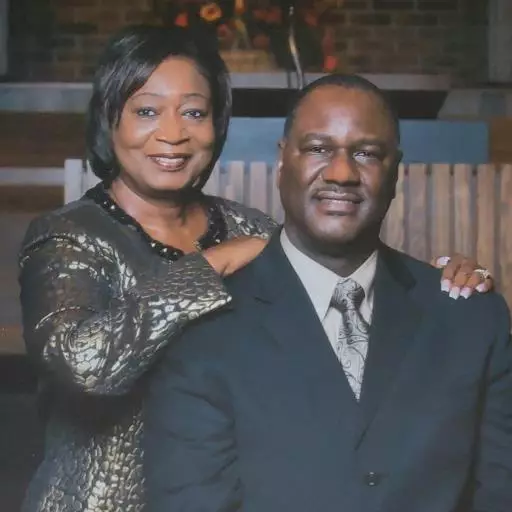
Pastor Ray and his wife, Linda, are the parents of four children, one son-in-law, and two grandchildren.
Contact Atlanta Bible Baptist Church with Pastor Ray P. Smith
abbcinfo@comcast.net
Atlanta Bible Baptist Church
1419 Peachcrest Road
Decatur, GA 30032
(404) 241-1176