
The Authentic Jesus Part 2


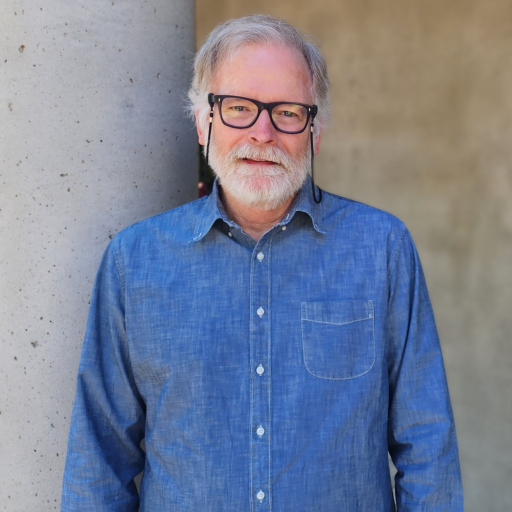
Today pastor Damian Kyle continues our new series in First John, Authentic Fellowship with God. This five chapter letter reveals the truth about how we can have a relationship with God, and what can hinder that too. Did you know God desires to have fellowship with you? No matter your past, He’s able to forgive you and lead you into the joy of the Lord.
Guest (Male): Pastor Damian says authentic fellowship with God begins with an authentic Savior.
Damian Kyle: Apostle John begins his letter to us exactly where he needed to by telling us that we cannot have authentic fellowship with God without an authentic Jesus. The Jesus who is presented to us in the Scriptures. Salvation is only as good as its Savior, and Jesus doesn't need any improvement or redefining. He is perfect just as he is.
Guest (Male): Well, it's time once again for According to the Scriptures. Hi there, welcome to the program. Today, Pastor Damian Kyle is going to continue our new series in 1 John, Authentic Fellowship with God. This five-chapter letter reveals the truth about how we can have a relationship with God and what can hinder that as well.
Did you know God's desire is to have fellowship with you? No matter your past, you see, He's able to forgive you and lead you into the joy of the Lord. Let's turn to 1 John chapter one, shall we? And learn how to experience the joy of Jesus and fellowship with God.
Damian Kyle: Now, that brings us to the main subject of this book and that's what we're going to make the focus of our series through it. There's a unifying theme throughout the entire letter of 1 John. Now, among Bible scholars, among Bible students, among Christians as a whole, anybody that teaches the Bible, 1 John is notorious for being impossible to outline in any kind of a coherent fashion.
If you don't think it's impossible almost to outline it for teaching, then go home this afternoon and try and outline it. There's a lot of repetition in it, not vain repetition, and John jumps all over the place in the course of this letter. So it doesn't have this easy, rational, linear kind of thinking that so much marked the Apostle Paul as the Holy Spirit inspired his writings.
Through the years, I have read the outlines of 1 John fashioned by many, many, many Bible teachers and scholars. Every one of them is so different from the other. As I look at them, trying to learn myself, I'm left at the end of my examination of them as confused as ever related to what is the single thread that goes through the entire letter that unites the entire thing.
I'm convinced that the key that unlocks the intent and the fullness of 1 John is very simple. It's given to us at the outset of the letter in verse three where John writes, "That which we have seen and heard we declare to you, that you may have fellowship with us; and truly our fellowship is with the Father and with His Son Jesus Christ."
So John writes verses one and two of chapter one, and then he writes verse four of chapter one all the way through the rest of the book to the end of the letter that, and that's the first word of verse three, and that is a reason word. In order that we the reader, we as Christians, would enjoy the same blessed relationship with God that he and all of the apostles enjoyed.
So a relationship with God the Father and with Jesus, built upon the same truths and realities about both the Father and the Son that the apostles knew firsthand, as opposed to what these false teachers were saying both then and now. I think Phillips' translation captures it perfectly as does Wuest, but we'll look at Phillips'. I'll read it to you.
He translates it, "We repeat: we really saw and heard what we are now writing to you. We want you to be with us in this—in this fellowship with the Father, and Jesus Christ His Son." Now, because an authentic fellowship with God, an authentic relationship with God, has to begin with an authentic Savior, an authentic Jesus by the Holy Spirit, the Apostle John gives us his unique qualifications as an apostle to write authoritatively concerning Jesus in verses one and two.
He declares his voice to be authoritative concerning Jesus and that he had been called by Jesus himself to be present with him for the three and a half years of his public ministry. Thus, with only 11 other people in human history, John was with Jesus for that entire period. He witnessed all of the miracles.
All of the miracles that you and I read, he saw with his own eyes. He heard all of the teaching. All of the teaching that we read in the Bible, he heard with his own ears, and he saw and he heard more than we can even read about. He closed his gospel with the words, "And there are also many other things that Jesus did, which if they were written one by one, I suppose that even the world itself could not contain the books that would be written. Amen."
John's purpose was to communicate to us that Jesus' teaching and his works during his three and a half years of his public ministry exceeded even what is detailed in John's Gospel and in all of the Gospels. He witnessed Jesus in every conceivable circumstance in life. He witnessed him in public settings. He witnessed him 24 hours a day in private settings, in hostile settings, in loving settings.
Uniquely even among the apostles, he was a part of an inner circle among the 12 made up of James and Peter. With those two, he uniquely witnessed Jesus' transfiguration, Jesus' agony in the deepest part of the Garden of Gethsemane on the night before his crucifixion, the healing of Peter's mother-in-law, Jesus' healing of the daughter of the ruler of the synagogue.
But you notice in verse one, he uses the word "we." He uses the word "we" in speaking for all of the apostles and he says, "I represent all of them." He's the only one that had survived at this point, but he says, "I represent all of them as one who had touched Jesus with their own hands" in verse one. So much for the phantom: he was only a spirit theory of the Gnostics.
He said, "We had looked upon Jesus" there in verse one. The idea is not merely to see him, but to look intently upon him. "We studied his life. We then, as a result of it, we recognized the implications of his life. We recognized the implications of his teaching," which John then described in his Gospel in terms of what he saw and heard in Jesus' life.
In John chapter one verse 14, he wrote, "And we beheld His glory, the glory as of the only begotten of the Father, full of grace and truth." Then further beyond, Jesus calling John to accompany him for the three and a half years of his public ministry and right on through to his ascension into heaven, Jesus also then chose him to be an apostle in order that he would then take what he saw and what he heard and make it known to the world around him.
He did so to those of us who didn't have that privilege and so that he did so face-to-face with people in the first century and then making Jesus known in this way by letters and by Gospels now that make up a part of the Bible. Now notice further, the Apostle John's description of Jesus for us. He declares to us in verse two, "The life was manifested."
He is speaking here of Jesus' incarnation, of his introduction into human history, into time and space by means of a physical birth. Taking on human flesh, he was not a phantom, wasn't merely a spiritual being as some false teachers were declaring. He describes in verse one Jesus as the Word of Life. That is the uniquely authoritative voice concerning how to receive everlasting life and how to live life presently.
Jesus was not and he is not part of a long series of religious leaders that have come into human history and that said what he said and then expected Gnostics or somebody else to follow him and then somehow read into the silence and add their imaginations to the life that he lived and to the doctrine that he taught in an attempt to somehow clarify it or improve it.
No, Jesus in his teaching is perfect as it is and if you try and improve perfection, you're only going to mar it. You notice in verse two that John proclaims that Jesus is eternal, the eternality of Jesus. The Jesus was eternally existent with God the Father. He was eternally existent and preexistent before his incarnation, which means he is uncreated, he is divine, he is God in human flesh, he is eternal.
This of course is a rebuke to any false teacher who denies the deity of Jesus, denies that he is the Son of God, denies that he is God the Son. Now what the Apostle John is doing here is so powerful and it's so helpful because he very tacitly invites us to put the credentials of these false teachers up against his own and to have us ask ourselves which is the more authoritative voice to believe concerning Jesus and his teaching.
Are we going to trust in the witness and the testimony of those who were not only eye and ear witnesses of Jesus, but personally called by him, commissioned by Jesus to be eyewitnesses in order that they might then instruct us and encourage us in our Christian life, or are we going to trust in those who possess none of those qualifications, but who by some combination of pride and a fertile imagination and a tremendous capacity to get lost in their heads?
John isn't afraid of the conclusion that any thinking Christian is going to come to, or thinking anyone in relationship to who is to believe, be believed related to Jesus' life and his teaching, including us. Then we have to stop and really not stop with the Gnostic heresies of 2,000 years ago, which again are very much alive and kicking today, but then to apply all of this.
You say, "Why did you tell us all of what you just told us? I mean, I can see you as well as you can see me. I see it when people's eyes glaze. Not saying the whole room did, but..." So you say, "Why in the world invest this kind of time in all of this?" It's because we need to apply all of this to others in our day who claim to be Christian and claim to speak for God concerning Jesus, but have completely redefined him away from the Bible's description.
So what about the teaching of Joseph Smith, the founder of the Mormon Church in 1830 here in the United States, a temple being built right behind us just acres away on Bangs? What about Joseph Smith, who taught and teaches as Mormonism does that Jesus is a spirit child, the product of Heavenly Father and Heavenly Mother, that he's the product of divine procreation?
Thus, while he always will be, he has not always been. And then they teach that Jesus and Lucifer vied with one another to become redeemer in human history and the Father then chose Jesus because he liked Jesus' proposal better than Lucifer's. Or what do we do with the teaching of the Jehovah's Witnesses, which came into being in the 1870s under the teaching of Charles Taze Russell right here in the United States?
So here you have a man that comes in and begins teaching. He is separated from being an eyewitness not only by 1,800 years, but by two full continents, and then teach that Jesus is a created being and not divine, and that Jesus was none other than Michael the Archangel before and then after his life on the earth. And what about Christian Science, founded in the 1800s by Mary Baker Eddy?
She teaches that Jesus is an example but not divine. It holds to the Gnostic teaching that Jesus was merely human and through whom the divine Christ, God's eternal nature, was expressed. But then even more alarming and more concerning and constituting perhaps even a greater number of people under this kind of deception and false doctrine, what about the many liberal Protestant denominations who view Jesus entirely as merely a good man, as a good example?
But they deny his deity, they deny his virgin birth, they deny his resurrection, they deny the necessity of being born again as Jesus himself taught in order to come into a personal relationship with God. And what is true concerning groups of people like the Gnostics and the Mormons and the Jehovah's Witnesses and so forth is also true of each of us individually.
If we identify ourselves with Jesus and Christianity, to realize that we are not free to come in on an individual basis and hijack Christianity in my own mind and redefine it away from what Jesus taught it should be, or to redefine Jesus away from how he is clearly taught and represented in the Scriptures with an endless, "Well, you know, I think this or I think that."
And yet people feel very free to do exactly that, to fashion Christianity into what I want it to be as opposed to what it actually is, and then to no longer be engaged in an authentic Christianity or relationship with God, but in an inauthentic one. What if somebody came on the scene today in human history here in the United States and with a straight face, I mean just uttermost seriousness, claimed that George Washington was actually Chinese in his racial descent, or that he came from the land of Mordor?
Well, they would be laughed into disrepute, but people do this kind of thing all of the time related to Jesus and they're taken seriously by people. In fact, to deny his deity or his humanity, to deny his being fully God and fully man in his incarnation, to deny his eternality, to deny faith in him as the sole means to have a relationship with God is from the vantage point of heaven a lie that is more laughable than to believe that George Washington was Chinese and that he came from the land of Mordor.
Guest (Male): Well, the big takeaway from 1 John chapter one is God desires to have fellowship with us, and this book so beautifully points out how that can become a reality. Today on According to the Scriptures with Damian Kyle, we heard the first message in our series from 1 John. It's called The Authentic Jesus.
If you're interested in a CD copy of today's message or the Authentic Fellowship with God series, give us a call at 209-545-5530. That's 209-545-5530. You can also access our programs online at accordingtothescriptures.com or oneplace.com and look for us wherever you get your podcasts as well.
To financially support According to the Scriptures, simply log on to accordingtothescriptures.com and then click on the Support According to the Scriptures there on our home page. Thank you very much for your partnership with us. Well, it never grows old hearing from you, our listeners, and it's an opportunity to thank the Lord for what He's doing on the radio.
You can email us at atts@ccmodesto.com. Include your prayer requests as well. That's atts@ccmodesto.com. Is your life marked by fullness of joy? You know it can be. Here's how.
Damian Kyle: The Apostle John closes in verse four with an expression of concern for our joy. He says, "What I'm going to write to you, have written to you in these first three verses, and what I'm going to write to you in the remainder of this letter is a concern that our lives as Christians would be marked by fullness of joy."
In other words, John is saying, "I want you to enjoy your relationship with Jesus as fully as every one of us did as the apostles." And that can only occur as you are engaged in a relationship with the Jesus of the Bible, the real Jesus, and that Jesus and Christianity as they're described in the Scriptures, not something else, which is always not only far less but infinitely less, is the only place that you can find the fullness of joy.
There are other paths, and they can look appealing, the Gnostic teaching and false doctrine, but among one of the many casualties of false doctrine is you will never know joy in a personal relationship with God. And so he says, "I write this so you can enjoy your relationship with God every bit as much as we did as the apostles."
Guest (Male): Well next time here on According to the Scriptures, we'll expose three dangerous self-deceptions as our study of 1 John will resume with Pastor Damian Kyle. This program is brought to you by Calvary Chapel Modesto.
Featured Offer

“Be anxious for nothing, but in everything by prayer and supplication, with thanksgiving, let your requests be made known to God;” Philippians 4:6
Past Episodes

Featured Offer
“Be anxious for nothing, but in everything by prayer and supplication, with thanksgiving, let your requests be made known to God;” Philippians 4:6
About According to the Scriptures
According to the Scriptures is the radio ministry of Calvary Chapel Modesto with Pastor Damian Kyle. 1 Corinthians 15:3-4 says, “For I delivered to you first of all that which I also received: that Christ died for our sins according to the Scriptures, and that He was buried, and that He rose again the third day according to the Scriptures.”
About Damian Kyle
Contact According to the Scriptures with Damian Kyle
atts@ccmodesto.com
Calvary Chapel Modesto
4300 American Ave
Modesto, CA 95356
Phone Number
(209) 545-5530