
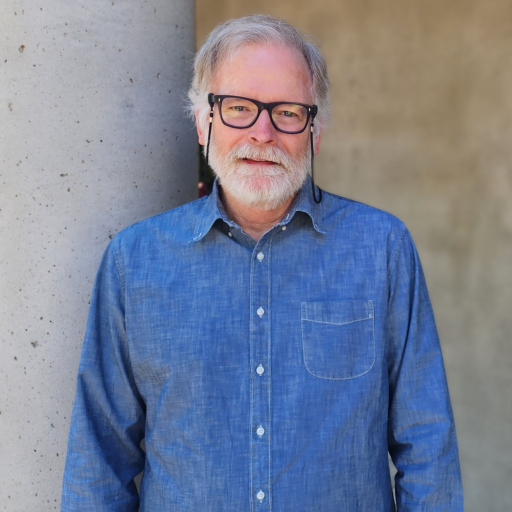
Easter Special Part 1


You picked a good day to join us, as we’re about to share a special Easter message from pastor Damian Kyle. Maybe like King Solomon you’ve been searching for meaning and purpose in life? But you’re empty and frustrated, wondering, “There’s gotta be something more to life than what I’ve experienced!” As we open our Bibles to Ecclesiastes we’ll focus on something Solomon gave great attention to, and that’s death! And pastor Damian will show us how the sting of death has been removed by Christ.
Damian Kyle: Here you have Solomon. Solomon observes that if man is determined to live life under the sun solely, if you remove God from people's thoughts and certainly any thought that I will one day give an account to God for the life that I have lived, then not only will people come to live like animals, but you will end up with a world that nobody wants to live in, until ultimately the world becomes such that death will become preferable to life. And maybe that's your view of life this morning.
Guest (Male): We praise the Lord that you're with us today, and we welcome you again to According to the Scriptures. You've picked a great day to join us. We're about to share a special Easter message from Pastor Damian Kyle.
Maybe like King Solomon, you've been searching for meaning and purpose in life, but you're empty and frustrated, wondering if there's got to be something more to life than what I've experienced. As we open our Bibles to Ecclesiastes, we'll focus on something Solomon gave great attention to, and that is death. Pastor Damian will show us how the sting of death has been removed by Christ.
Damian Kyle: The Old Testament book of Ecclesiastes records King Solomon's attempt to find meaning and purpose, ultimate meaning and purpose in life under the sun. Not under the SON, that is Jesus, but under the SUN in the context of the creation as opposed to the context of the Creator. And so, to discover the meaning and the purpose of life independent of God, he endeavored to find that meaning and purpose solely in the context of the creation, the physical universe independent of the Creator.
The phrase "under the sun" is used some 29 times in this book, and Solomon was certainly uniquely qualified in human history and certainly in his day to conduct such a search, and to not only conduct such a search to find meaning and purpose in life independent of God solely in the context of the creation, but to even be successful in that search. He was one in the time in which he lived, he had the resources in terms of time, in terms of wealth that were virtually unlimited to him.
He had no limitations in terms of wealth, no limitations in terms of power, he had no limitations in terms of food, no limitations in terms of drink or drunkenness, no limitations in terms of free time or access to education, no limitations in terms of access to relationships, and certainly no limitations in terms of trying to find the meaning and the purpose of life in the realm of the sexual relationship. He amassed a thousand wives and concubines for that very purpose in his life.
One of the reasons God chose to record Solomon's attempt in this regard in the Bible is in order that we would make Solomon's fruitless search for the meaning and the purpose of life under the sun our own. It's invaluable that God did record it for us, or else we would find ourselves living our lives as so many people do, convinced that we are just one material thing away in life from experiencing satisfaction and fulfillment and meaning in life.
One degree away from it, one relationship away from that experience of satisfaction and fulfillment in life. If only I had a little more money, if only I had a certain job, if only I had one more university degree or read one more book, or I read the right book, or if I had power or if I had fame like I don't have it, if only I had another or a different husband or wife or a thousand of them, or to be single again.
A person will go from one thing to another in life, making their way through one disappointment after another in life, convinced that this sense there must be something more to life than what I have experienced thus far will be quieted finally with some possession or some experience. Solomon teaches us that it is a self-deception and it's a sure way to waste our lives. Thus, God supplied Solomon with virtually unlimited wealth and time so that he could try and find the meaning and the purpose in life in the context of the creation on behalf of all of us.
His search would become our search, so that we would look at it and say I have no hope of exhausting this search or this subject in the way that Solomon did and I accept his search as my own. And that's what God intends. His conclusion after a lifelong search of trying to find meaning and purpose in life in the context of the creation independent of God, independent of the Creator, is as he declares throughout the book: all is vanity.
He came to the conclusion after this massive investment of time and resources into that search, he came to the conclusion that the attempt to find meaning and purpose in life independent of God, number one, it ends in vanity, emptiness, and it ends in frustration, an attempt to grasp at the wind. Anybody that tries to grasp the wind and hold on to it realizes that's an exercise in frustration. That's why vanity is a word that occurs in the book some 37 times. Frustration or some version of it is used at least nine times in the book.
The main lesson of the book of Ecclesiastes is found at the very end of the book. In chapter 12, verse 13, he gives us the conclusion of this search for meaning and purpose, and he said, "Let us hear the conclusion of the whole matter." Let me tell you all about the conclusion of my unsuccessful search to find meaning and purpose in the context of the creation. He said, "Let us hear the conclusion of the whole matter, here it is: fear God and keep his commandments, for this is man's all. For God will bring every work into judgment, including every secret thing, whether good or evil."
Solomon declares to us that fulfillment and a true sense of meaning in life can only be found in a relationship with God, and a relationship with God that is marked by obedience to his word, that is found in a real relationship with God. Now for our purposes this morning, this Resurrection Sunday morning, I want us to narrow our focus to a subject that Solomon gave an awful lot of attention to in the book of Ecclesiastes, and that is the subject of death.
In his attempt to find a satisfying explanation for death in the human condition independent of God, to explain it solely in the context of the physical level, let's notice Solomon's observations concerning death under the sun and the conclusions that he came to from his observations. You might turn to it, I think it'd be helpful, in Ecclesiastes chapter 1, verse 4, and I'll just kind of head right through the fullness of what he brings out through the book in an order to make it easy to follow.
He began by declaring in Ecclesiastes chapter 1, verse 4, he said, "One generation passes away and another generation comes, but the earth abides forever." He declares that under the sun, ignoring the divine revelation that man has been created as the apex of God's creation, that we have been created in the image of God, we've been created for relationship with God, that given the longevity of the physical heavens and the earth compared to the lifespan of man, he was forced to conclude that man's life is comparatively insignificant and meaningless in the grand scheme of creation and the cycles of nature.
Maybe you have planted a shrub in your yard and realized that that shrub is going to outlive you. He looks at how short our lives are in comparison to creation and the cycles of nature. Maybe you've come to that conclusion in life as well. Then in Ecclesiastes chapter 2, verse 12, he said, "Then I turned myself to consider wisdom and madness and folly, for what can the man do who succeeds the king? For only what he has already done. Then I saw that wisdom excels folly as light excels darkness. The wise man's eyes are in his head, but the fool walks in darkness. Yet I myself perceived that the same event happens to them all," speaking of death.
So I said in my heart, "As happens to the fool, so happens to me, and why was I then more wise?" And then I said in my heart, "This also is vanity." For there is no more remembrance of the wise than of the fool forever, since all that now is will be forgotten in the days to come. And how does a wise man die? The same as the fool. Under the sun, Solomon concluded that there is no answer to the problem of death, no escape from the inevitability of death.
He said the same event, death, happens to everyone, and no amount of wealth, no amount of human wisdom or life experience can alter that, none of those things can provide a deliverance from it. Solomon declares further in this passage on behalf of all of us the fact that this cold, hard thing called death was awaiting him kept him from enjoying life as fully as he wanted to. Maybe that's you as you consider death and you realize that death keeps you from enjoying and experiencing the fullness of life in the way that you desire it to.
In Ecclesiastes chapter 2, verse 18, he said, "Then I hated all my labor in which I had toiled under the sun, because I've got to leave it to the man who's going to come after me. And who knows whether he'll be wise or a fool? Yet he will rule over my labor in which I've toiled, and in which I have shown myself wise under the sun. This also is vanity. Therefore I turned my heart and despaired of all the labor in which I had toiled under the sun. For there is a man whose labor is with wisdom, knowledge, and skill, yet he must leave his heritage to a man who has not labored for it. This also is vanity and a great evil. For what has man for all his labor and for the striving of his heart with which he has toiled under the sun? For all his days are sorrowful and his work burdensome, even in the night his heart takes no rest. This also is vanity."
Under the sun, Solomon found himself deeply troubled over what would happen to all of his wealth and all of his achievements that he had had and worked so hard to gain and to achieve in life. He was troubled by the fact that at death he would lose all control over it and all that he had worked so hard to gain and to achieve. Clearly in the passage he was deeply troubled by the fact that he had worked so hard, and what he had worked so hard for was just as likely to fall into the hands of a fool who would not understand the hard work that went into what it is that he built as it would be to fall into the hands of a wise person who would be wise in the management of it.
He experienced what so many people do: they spend the first half of their lives frantically working to gain some kind of financial security, and then they spend the second half of their lives worrying about what will happen to it when they die. Solomon says under the sun, impending death made wealth as great a torment in his life ultimately as it was a blessing. Maybe you share Solomon's concern in this regard yourself this morning concerning your own life.
Then in Ecclesiastes chapter 3, verse 2, Solomon wrote, "A time to be born and a time to die, and a time to plant and a time to pluck what is planted." Anyone in my generation knows that in 1965 the Byrds endeavored to put a happy spin on verses 1 through 8 of Ecclesiastes chapter 3. The song was originally written by Pete Seeger three years before the Byrds recorded it. Pete Seeger lifted it entirely from the book of Ecclesiastes chapter 3, except that he added six words at the end of it.
In light of the fact that he had borrowed so heavily from the book of Ecclesiastes, he ended up giving half of his royalties to a charity, but he kept the other half because he said he had earned it through those six words. I don't begrudge him that at all. What I do begrudge him of is that those final six words of that song, the six words that he added to what God had put here, put a spin on the eight verses that Solomon never intended.
The final words of verse 8 and his addition, it goes like something like this: "a time of war and a time of peace," and his addition, "I swear it's not too late." In trying to put this positive spin on what Solomon had written, he made the passage say the very opposite of what Solomon was intending to communicate. Again in these verses, Solomon also is describing the monotony and the meaninglessness of life under the sun.
There is a birth at one end of a person's life, a death at the other end of a person's life, verse 2. There's a bunch of stuff in between that really doesn't amount to anything except it's monotonous repetition in one generation after another if death brings an ultimate end to a person's life. That might be your conclusion about death this morning. Then in verse 18 of chapter 3, he said, "I said in my heart concerning the condition of the sons of men, God tests them that they may see that they themselves are like animals. For what happens to the sons of men also happens to animals. One thing befalls them: as one dies, so dies the other. Surely they all have one breath, man has no advantage over animals for all is vanity. All go to the same place, all are from the dust, all return to the dust. And who knows the spirit of the sons of men which goes upward and the spirit of the animal which goes downward?"
Here Solomon laments the fact that so much of mankind lives and dies like animals under the sun. What would you expect if you remove God from people's consciousness, you remove the fact that one day we will give an account to God for our lives? Then man will have a tendency to live like an animal and then die like an animal. In chapter 4, verse 1, he continues, he said, "Then I returned and considered all the oppression that was done under the sun, and look, the tears of the oppressed, but they have no comforter. On the side of their oppressors there is power, but they have no comforter. Therefore I praised the dead who were already dead more than the living who are still alive. Yet better than both of those is he who has never existed, he who has not seen the evil work that is done under the sun."
Here you have Solomon. Solomon observes that if man is determined to live life under the sun solely, if you remove God from people's thoughts and certainly any thought that I will one day give an account to God for the life that I have lived, then not only will people come to live like animals, but you will end up with a world that nobody wants to live in, until ultimately the world becomes such that death will become preferable to life. Maybe that's your view of life this morning.
Then in chapter 6, verse 3, he said, "If a man begets a hundred children and lives many years so that the days of his years are many, but his soul is not satisfied with goodness or indeed he has no burial, I say that a stillborn child is better than he. For it comes in vanity, departs in darkness, and its name is covered with darkness. Though it had not seen the sun or known anything, this has more rest than that man, even if he lives a thousand years twice, but has not seen goodness. Do not all go to one place?"
Solomon concluded that life under the sun lived without God, lived without an eternal perspective, because of all the hardships in life, all of the sufferings in life, all of the worries in life, all of the anxieties that are experienced in life, he says that life will ultimately come to be viewed by most people as just one big cruel joke, and one in which a person could then live long enough to wish he had never been born. Perhaps that's exactly how you see life and death this morning.
Guest (Male): Pastor Damian Kyle on According to the Scriptures, and he'll be right back with more. Today's Easter message from Ecclesiastes can be heard again at accordingtothescriptures.com. Look for us wherever you get your podcasts as well. To financially support According to the Scriptures, simply log on to accordingtothescriptures.com and then click on support According to the Scriptures there on our homepage. Thank you very much for standing with us.
It never grows old hearing from you, our listeners, and it's an opportunity to thank the Lord for what he's doing on the radio. You can email us at atts@ccmodesto.com and include your prayer requests as well. That's atts@ccmodesto.com. Well, let's return once again to Ecclesiastes with Pastor Damian.
Damian Kyle: In chapter 6, verse 12, he writes further, "For who knows what is good for man in life? All the days of his vain life which he passes like a shadow. Who can tell a man what will happen after him under the sun?" Man's life is vain under the sun because all he has in life about the most important questions in life are questions without answers because all of the answers to the most important questions in life can only come from God. To ignore God is to live, he declares, in a state of profound ignorance.
The two questions that Solomon gives as an example in this regard are first, why is life so short? That is why does death exist at all? Why does death cut man's life short? Then second, what happens after death? Then in chapter 7, verse 16, he says, "Do not be overly righteous, nor be overly wise. Why should you destroy yourself? Do not be overly wicked, nor be foolish. Why should you die before your time?"
Solomon declares of life under the sun, if there's no ultimate reward for living a righteous and a wise life, then don't kill yourself trying to do it. Don't kill yourself to be good and to do good. It's just sufficient to live your life not being as wicked as you could be, not being as foolish as you're capable of, for that might shorten your life. He declares as a result of his assessment of life independent of God that the ultimate goal in life is not to live a good life, not to live a righteous life, but to live a long life.
Self-preservation is the great goal in life. There's one glaring problem with that. If one lives their life believing that there's nothing to live or to die for, then you can hardly call that life. You can call it existence, but nothing that could be described as life. And that's the point he's making.
Guest (Male): We trust and pray that you and your family have a blessed resurrection celebration. Remember, Jesus is alive and the sting of death has been removed by Christ. We'll catch you back here next time when we'll again open and study the Word, seeking to live our lives according to the Scriptures. This program is presented by Calvary Chapel Modesto.
Featured Offer

“Be anxious for nothing, but in everything by prayer and supplication, with thanksgiving, let your requests be made known to God;” Philippians 4:6
Past Episodes

Featured Offer
“Be anxious for nothing, but in everything by prayer and supplication, with thanksgiving, let your requests be made known to God;” Philippians 4:6
About According to the Scriptures
According to the Scriptures is the radio ministry of Calvary Chapel Modesto with Pastor Damian Kyle. 1 Corinthians 15:3-4 says, “For I delivered to you first of all that which I also received: that Christ died for our sins according to the Scriptures, and that He was buried, and that He rose again the third day according to the Scriptures.”
About Damian Kyle
Contact According to the Scriptures with Damian Kyle
atts@ccmodesto.com
Calvary Chapel Modesto
4300 American Ave
Modesto, CA 95356
Phone Number
(209) 545-5530