

He Really Is Alive


This special Easter message offers undeniable truths about the resurrection of Jesus Christ. He really is alive!
David Michael Jeremiah: The death of Christ on the cross is central to the gospel message, but his resurrection is even more significant, as we'll discuss today on Turning Point with Dr. David Jeremiah. From the predictions surrounding the resurrection to the proofs that it actually happened, there's plenty of support for the claim expressed in today's Easter message, he really is alive. Here's David with a word of introduction.
Dr. David Jeremiah: Not only did he come back from the grave and in his living body show himself to people over a period of many days, he is alive today. He is seated at the right hand of the Father in heaven, making intercession for those who have put their trust in him.
I hope you know the truth of Easter. It's not just a fun day for bunnies and eggs. It's the story of the resurrection of Jesus Christ from the dead, and it is a true story, a historic event, and it has every implication for us today. Because he lives, the Bible says we too shall live. Because Jesus did what he said he would do, I can go to heaven to be with him because I put my trust in him, and you can do that too.
We'll talk about all these things in these next 30 minutes. I hope you will stay with us as we discuss, he really is alive. Before we get to the message, just another reminder that our resource for the month of April is the book, The World of the End: How Jesus' Prophecy Shapes Our Priorities. We always expected life to be filled with ups and downs, but lately doesn't it feel like the downs are winning?
The Bible will help you measure that and keep your head on straight and be confident when you study what Jesus said. It will help you to do what you know to do today. Be sure to ask for the book when you send your gift, and we'll send it to you right away. Here is our Good Friday message, he really is alive.
I think one of the most unknown things about Easter are all the little miracles that were a part of the big miracle. Here's the first one I remember: that the miracle of the resurrection is, first of all, the miracle of the predictions of the resurrection by Jesus Christ himself.
In Matthew chapter 16 and verse 21, Jesus is speaking and this is what it says: From that time Jesus began to show to his disciples that he must go to Jerusalem and suffer many things from the elders and chief priests and scribes and be killed and be raised the third day. In John chapter 10 and verse 18, Jesus explains all of this. He says, no man takes my life from me, but I lay it down of myself. I have the power to lay it down, and I have the power to take it again.
One of the first things I learned about the resurrection that I did not know was that the Lord Jesus himself had predicted that it would happen. Not only in these scriptures but in many others, and that what happened was exactly as Jesus said it would be. According to the Apostle Paul, after Jesus was raised from the dead, he was seen by over 500 brethren at one time, of whom the greater part remain to the present, said Paul, and some have fallen asleep.
When Paul gave this message, he told the people that over 500 people had seen Jesus Christ alive after his death. Paul said at the time that he wrote it that many of those people were still alive who could have come up and discounted what Paul said, but none of them did because it was true. One of the proofs of Christ's resurrection is the number of sightings, from individuals to large groups, over a period of 40 days at all times, at all sorts of places.
He appeared in Jerusalem, in Emmaus, in Galilee, and on a mountain. His appearances were documented by people who saw him, and heard him, and touched him, and watched him eat in their midst. Jesus wanted to make dead certain that his resurrection was proven beyond doubt to his disciples. In fact, when Luke wrote the introduction to the book of Acts, he introduced it in these words: to whom he also presented himself alive after his suffering by many infallible proofs.
Jesus proved himself alive after his death by many, Luke says, infallible proofs, undeniable proofs. Think for just a moment about the disciples. The Bible says they were hiding out. We find out later they were hiding out in the upper room. And they were cowardly, they were afraid. They knew that what happened to Jesus would surely happen to them if they didn't get out of circulation, so they ran away and they left Jesus to suffer by himself.
Don't tell me the apostles were just naturally courageous people who took the gospel to the world. They were cowards until that night when they were in the upper room. The death of Jesus was well-documented. They were sorrowing over the death of Jesus, probably feeling very guilty that they had betrayed him.
The scripture says that all of once the Lord Jesus appeared in their midst. The scripture is very clear, he didn't come through the door or the window, he just was in their midst. It's a portrait of what's going to happen to us someday in the future because we're going to have bodies like Jesus, and the resurrection body of Jesus wasn't hindered by any of the walls or doors, he just was there.
The apostles saw him and they knew that this was the Jesus they had walked with all those years. They recognized him. This was the same one, and they saw the scars in his hands and felt the print in his side and his feet. They knew without any doubt this was the Lord Jesus Christ that they had known and loved who had died on the cross and now was absolutely certainly alive.
What happened was these cowards went out of that room, no longer cowards but flaming evangelists for the gospel. The Bible says that those same disciples after seeing the risen Christ turned their world upside down. They went everywhere preaching the gospel. They threw them in jail, and as soon as they were in jail, the Lord would get them out and they'd go right back to the same corner and preach it again.
Nothing stopped them. They didn't care what anybody thought. They knew one thing for sure: this same Jesus who was crucified is now alive and we are his witnesses to the resurrection. Read the book of Acts. Every sermon in the book of Acts is about the resurrection. The disciples who were cowardly now became courageous, and the only explanation of it was the resurrection of their Savior. They now knew beyond any doubt that Jesus was the Messiah, he was the one he claimed to be, and the fulfillment of all the prophecies of the Old Testament.
Just the change in the lives of the apostles is a testimony to the power of the resurrection. The bottom line is this: the body of Moses lies in a grave somewhere. The body of Mohammad lies in a tomb. The remains of Lenin lie in a glass-covered casket in Moscow. On his casket are these words: He was the greatest leader of all peoples, of all countries, of all times. He was the Lord of the new humanity, he was the savior of the world.
When Lenin went to bed on January 20th, 1924, he never woke up. No one has ever heard from him since that night. He's dead, like every other human being who's ever lived and one day stopped living. If Lenin is the savior of the world, we are in a lot of trouble. But on the authority of the Word of God, I am here to tell you that Jesus Christ, who said he would die and rise again, is the savior of the world, the King of kings, the Lord of lords. He alone conquered death, and because of that he can offer us eternal life.
You have the predictions of our Lord's resurrection in his own words. You have all of these proofs, these evidences of the people who saw him and whose lives were transformed. Someone will say, "Yes, but that's back then in history. What about today?" Well, let me just suggest to you that today there are several lines of evidence of the reality of the resurrection. Not all of the evidence of Christ's resurrection is in the past.
I think of at least five things that are currently true that scream out at us about the reality of the resurrection. First of all, let's talk about the Christian faith. I don't know if you've noticed it, but this is a big Sunday for churches. More people go to church on Easter Sunday than any other Sunday in the year. More than Christmas. There's no other Sunday even close. More than Mother's Day. Everybody goes to church on Easter.
Now I don't know what that means, and I'm sure not one of those pastors who wants to fuss at you if you haven't been here since Christmas. I'm glad you're here. Thank God you're here. But why do we do that? What keeps all of this alive? It's what we call the Christian faith. The Christian faith is resurrection. The Christian faith is welded to the resurrection.
Paul said if Christ is not risen, our preaching is empty, your faith is empty, and we are found as false witnesses. Paul said if there isn't any resurrection, there isn't any Christianity. I know that Christianity is hurting in some places and waning in others, but I want to tell you Christianity is alive and well and in many places in this world it is flourishing and multiplying, and hundreds of thousand, yes millions of people are being touched by the message of Christianity.
The resurrection of Jesus Christ is the very citadel of the Christian faith. Someone has said that if the resurrection of Christ is not an historic fact, then it is our duty to dig a new grave, bury in that grave not a man but a religion, and that religion is Christianity, the only hope of the world. You want to know why I believe in the resurrection? Just look around. Everybody is going to church. Everybody is talking about their faith. Everybody is singing worship songs. Everybody is looking into the important message of the Bible. The Christian faith, the largest religion in the world, is the result of the resurrection of Jesus Christ.
Let me talk with you about the Christian church. If the crucifixion ended the disciples' experience of Jesus, if that's all there was, it's really hard to understand how the church could continue at all. The sole reason the church survives and flourishes today and why it flourished back then and can celebrate Easter Sunday is simply because Jesus broke out of the tomb, declaring that there's life after death.
Do you think that for a moment the early church could have survived even for one week in an hostile surrounding if Jesus Christ had not been raised from the dead? Listen carefully. The resurrection of the one on whom the church was founded was preached within a few minutes of the tomb where Jesus was buried. As a result of the first sermon that was preached, Peter preaching that sermon, 3,000 people were converted.
A few days later, within a week, he preached again and 5,000 people were saved. Listen to me. Any one of those people could have walked right down there to the tomb, and if the body of Jesus was in that tomb, it would have been the laughingstock of the community. But it wasn't there then, and it's not there now. Jesus Christ is not in the tomb.
One of the most astounding current evidences of the resurrection is the Christian Sunday. Let me tell you this story. The very fact that you and I attend church on Sunday is evidence of the resurrection. You say, "How does that work?" The original day of worship for all of those in the early days was Saturday. You see, the most reverent thing that a Jewish person could ever do was to observe the Sabbath and to keep it holy. It was the highest expression of their devotion.
But Christians began meeting on Sunday, the first day of the week, after it was acknowledged that Jesus came back victoriously from the grave on Sunday. Remember, the early church was made up predominantly of Jewish Christians. To make the change for Sabbath worship to Sunday worship signified that something earth-shattering had occurred. What was that something? It was the resurrection of Jesus Christ from the grave.
As Jesus rose from the grave on Sunday, followers of Jesus worship on Sunday, and Sunday services now are a testimony to the resurrection of Jesus Christ. The practice goes all the way back to the first century when those who actually beheld the risen Lord with their own eyes began to change their day of worship from Saturday to Sunday. The Sunday observance of worship for us is attributed specifically to one thing and one thing only: that Jesus Christ came back from the grave on Sunday.
Can you think of any other historic event that is celebrated 52 times every year? The most rational explanation for this phenomenon is that Jesus appeared personally to people after his resurrection and convinced them that it was true. The Christian faith, the Christian church, the Christian Sunday, let me talk with you briefly about the Christian ordinances. For those of you who don't know what that is, and I don't mean to be confusing, the ordinances are the two things we practice as a part of our church besides worship and teaching.
According to the New Testament, those two things are baptism and the Lord's supper. Let's talk about baptism. Every week almost without fail we have someone who is baptized by immersion in our baptistry. They give their testimony and then the officiating pastor says, "I baptize you in the name of the Father and the Son and the Holy Spirit." They are placed under the water and they are brought up out of the water, and the scripture teaches us that every time we do that, we are giving an example of what happened to Jesus. He went into the tomb, and he was raised victoriously out of the tomb.
When a believer is baptized, he is identifying with the resurrection of Jesus Christ. He is saying, "I once was this way, but old things are passed away and behold all things have become new." Baptism is a testimony to the resurrection of Jesus Christ. And the Lord's supper is also a testimony. As you know, the cup is a representation of the blood of Christ and the bread of the body of Christ. It is a remembrance of his death, but when you read Acts 2, you discover that you're supposed to participate in communion with joy, looking forward to the fact that Jesus is risen from the dead.
One of the great apologists of our day is a man by the name of J.P. Moreland. He explains the significance of communion like this. He said, "What's odd is that these early followers of Jesus didn't ever get together to celebrate his teachings or how wonderful he was. They came together to have a celebration meal for one reason: to remember that Jesus had been publicly slaughtered in a grotesque and humiliating way."
Now think about this in modern terms. If a group of people loved John F. Kennedy, they might meet regularly to remember his confrontation with Russia or his promotion of civil rights or his charismatic personality. But they're never going to celebrate the fact that Lee Harvey Oswald murdered him, because you see for him that was the end. That was death, that was it.
But when Jesus was crucified and came back from the grave, it wasn't the end, it was the beginning. It was the beginning of hope for all who feared death because now their leader had come through the process of death, walked out of the tomb, put his foot on Satan's neck and said, "I have gained victory over death. And because I have done it, you, if you put your trust in me, can do it also." We celebrate the death, burial, and resurrection of Jesus Christ because it's the only hope that we have as followers of Christ.
Last but not least, here is to me the most visceral of all of the evidence, and that is the changed lives of people today. As you know, Turning Point reaches out across the country on radio and television and now in many places around the world, which means we get a lot of mail from people, and we get tremendous amount of mail at Turning Point. Every Friday, one of the ladies who goes through the mail and sorts it and helps us gives me a folder, and that folder is filled with the stories of people who have written in to say that through the gospel of Jesus Christ they have been saved.
Their lives have been changed. It happens every week, it happens every day, it happens all over the world. The gospel of Jesus Christ, the risen Savior, is changing the lives of people. We know the resurrection is true because we see what the risen Christ does in our lives. It's like many of us have our own resurrections, isn't it? We are dead, we are lost, and then Jesus Christ comes and he gives us new life. I know that the Savior lives today because he lives within my own heart, and I witness what happens to people when they give their hearts to Christ. He makes them into new people from the inside out.
That's why I love to preach on Easter because the story of the Christ who came back from the dead is the greatest story ever told. Now before we end this message, I want to leave you with two thoughts. One thought is for those of you who are already Christians, you already know the Lord, you believe in the resurrected Christ, you've accepted him. One is for those of you who may be searching and you're not sure about all of this.
Both of them happen to be involved with resurrection. One of them with the resurrection of Christ and one with the resurrection of Lazarus. On Jesus' resurrection morning, two women went to the tomb as you know to visit the tomb. Instead of finding Jesus' body when they got there, they found two angels in the tomb, and the angels said to the two women, "Why do you seek the living among the dead? He is not here. He is risen."
Today, like the women at the tomb, if we are not careful, we often seek for the living among the dead. We try to find peace and hope and forgiveness even as followers of Christ in the wrong world. It's not in that world because he's not in that world. We often look among the dead for our hope and peace and forgiveness, but he is not there. He is risen. We focus on all that is wrong in our world, and we need to look among the living for our risen Savior.
Number two: One day Jesus stood at the tomb of Lazarus and he was comforting Lazarus' sister because Lazarus had died. He was in the tomb. The Bible says he was so dead he had begun to stink. He was stinking dead. Jesus was trying to comfort Lazarus' sister. I want you to listen to what he said to her. He said, "I am the resurrection and the life. He who believes in me, though he may die, he shall live, and whoever lives and believes in me shall never die. Do you believe this?"
What did Jesus say? He said, "I, Jesus, am the resurrection and the life. If you believe in me, though you may die, you shall live." That sounds like double-speak. What does he mean? The word "die" has two meanings. The word "death" has two meanings. The word "death" itself means separation. Death is, first of all, physically the separation of your soul from your body.
When you die, your soul leaves your body. Your body stays here, but you aren't there because the real you has left. The New Testament says for a Christian when you die it's "absent from the body, present with the Lord." So death is, first of all, physical. When we die physically, our soul is separated from the body.
But the Bible says there's a second kind of death and that's the death you don't ever want to mess with. The second death is the separation of your soul from God forever. Now go back and read the verse with me again. Jesus said, "I am the resurrection and the life. He who believes in me, though he may die physically, will never die spiritually, but he will live. And whoever lives and believes in me will never die, never be separated from God."
Then Jesus said to her, "Do you believe this?" That's what I want to ask you today. Do you believe this? You say, "Well, I understand it." I'm not asking you if you understand it. I'm asking you do you believe it? How do you believe it? You decide to believe it. You decide to believe what the scripture says concerning Jesus Christ. I'm more convinced than ever that that's what it is. It's a matter of us saying, "I have determined to believe this. I have determined to bet my life on Jesus Christ and what he said."
If he can say that he's going to die and be buried and come back the third day and he can pull that off, I'm pretty sure he can take care of me. I'm going to bet my life on him. I choose to believe that he is the resurrection and the life and that if I put my trust in him, I will never die. I want to ask you, will you make that decision?
It's not about a feeling, it's not about an emotion, it's about determining my life is going to be committed to Jesus Christ. I'm going to believe in him. When you make that decision, he will come and live within your heart. He will start a project on you, you won't believe. He will make you all over again from the inside out. He will turn you into the person you really want to be if you put your trust in him.
But you have to decide. Nobody can decide for you. Jesus didn't say to the group, "Do you believe?" He said to her, "Do you believe?" And I'm asking you today, do you believe this? I hope you can say yes, and if you can't, that you will make that decision. Easter 2026 could be your spiritual birthday. I hope you'll let that happen if you've never trusted him before.
On Monday, we are going to take you through an interview that will set the stage for the whole series that is before us: The World of the End. Interview on Monday right here on this station. I hope you'll get to church this weekend. If you never go, on this weekend you probably never go at all. It's Easter, and celebrate with your loved ones the resurrection of Jesus Christ.
We'll be on television in your area with a message on the risen Christ, but most of all get to church. That's the most important thing you can do. Don't let it just be an Easter experience. Let it be the beginning of your return to the church where you belong. We'll see you right here on Monday. So once again, thank you so much for listening. We're here because of so many faithful partners, and you may be one of them. If so, thank you for what you do to make Turning Point possible.
David Michael Jeremiah: Our message today originated from Shadow Mountain Community Church and senior pastor, Dr. David Jeremiah. Turning Point is also on radio and TV this weekend. To learn where you can find it, visit our website, davidjeremiah.org/radio. That's davidjeremiah.org/radio or call 800-947-1993. Ask for your copy of David's informative book, The World of the End, with a special BD answer bookmark, yours for a gift of any amount.
You can also purchase the Jeremiah Study Bible in the English Standard, New International, and New King James versions, complete with notes and articles from Dr. Jeremiah's decades of study. If you're encouraged by this ministry, let us know by writing to Turning Point, PO Box 3838, San Diego, California, 92163. This is David Michael Jeremiah. Join us Monday as Sheila Walsh interviews Dr. Jeremiah about The World of the End, here on Turning Point.
Featured Offer

The World of the End unpacks Matthew 24:1-14 at a time when Bible prophecy is intersecting with our culture, technology, unhinged morality, and worldwide strife as never before.
Discover how the prophecies of Jesus can shape the way we live today and challenge us to prioritize our lives in light of His return.
Recommended for anyone who desires to make the voice of Jesus a priority when viewing the prophetic events happening around us.
Past Episodes


Video from Dr. David Jeremiah
Featured Offer
The World of the End unpacks Matthew 24:1-14 at a time when Bible prophecy is intersecting with our culture, technology, unhinged morality, and worldwide strife as never before.
Discover how the prophecies of Jesus can shape the way we live today and challenge us to prioritize our lives in light of His return.
Recommended for anyone who desires to make the voice of Jesus a priority when viewing the prophetic events happening around us.
About Turning Point
Turning Point's Mission: Delivering the Unchanging Word of God to an Ever-Changing World
About Dr. David Jeremiah
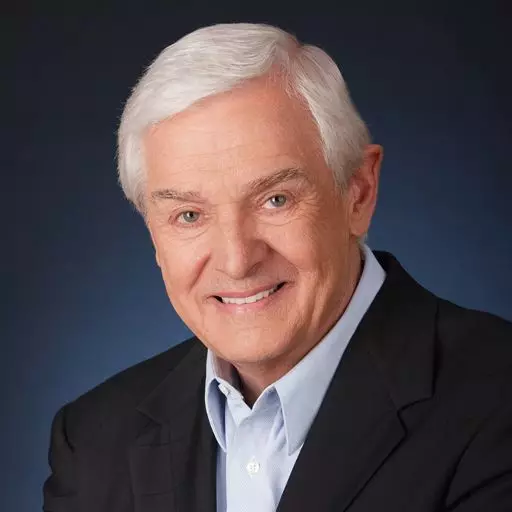
Dr. David Jeremiah is the founder of Turning Point for God, an international broadcast ministry committed to providing Christians with sound Bible teaching through radio and television, the Internet, live events, and resource materials and books. He is the author of more than fifty books including The Book of Signs, Forward, and Where Do We Go From Here? David serves as senior pastor of Shadow Mountain Community Church in San Diego, California, where he resides with his wife, Donna. They have four grown children and twelve grandchildren.
Contact Turning Point with Dr. David Jeremiah
USA
Turning Point
PO Box 3838
San Diego, CA 92163
CANADA
PO Box 70509 RPO Oak St
Vancouver, BC V6M 0A3
UNITED KINGDOM
PO Box 1532
Hemel Hempstead
HP1 9QX
USA
1-877-998-0222
CANADA
800-946-4300
UNITED KINGDOM
0800-058-2856