

A Political Prophecy: Cancel Culture, Part 1
The influence of social media has made it difficult to stand against popular opinion. Doing so can result in harassment or even removal from public life. Dr. David Jeremiah takes a closer look at this so-called “cancel culture.” Is it just a passing fad or a signal that the End Times have begun?
Guest (Male): The influence of social media has made it difficult to stand against popular opinion. Doing so can result in harassment or even removal from public life. Today on Turning Point, Dr. David Jeremiah takes a closer look at the trend of cancel culture. Is it just a passing fad or a signal that end times have begun? To introduce his timely message, "Cancel Culture: A Political Prophecy," here is David.
Dr. David Jeremiah: Today we open our Bibles together to the 24th chapter of Matthew, and we're going to talk about something that's been a blight on our culture over these past few years. That is what we call cancel culture. If you don't like them, just shut them down, or cut them off, or fire them, or dismiss them, or whatever you do to make sure you don't have to deal with somebody else's opinion. What does the Bible tell us to do in a situation like that? You might be surprised what you can learn from these verses in Matthew. We're going to spend a couple of days talking about this, beginning today in just a few minutes.
Turning Point is a ministry on the radio, on television, and on social media, but it is also a ministry in print. We publish a lot of publications: our magazine, our books. I'm very excited about what happens when people get our magazine because the magazine is written in such a way that it goes along with what's being taught on the radio. For instance, this month's magazine is called "When the World is a Blur." Turning Point's magazine and devotional, that's the title.
It just helps you understand what we're talking about each day. The magazine has a devotional assignment and a devotional paragraph for every day of the week, Monday through Friday, and one for each weekend. It's full of information about Turning Point, our outreach, and what God is doing through the many things that happen here. We love to send it to you. All you have to do is ask for it. Just say, "Please send me the magazine," and you'll be on the next list and join many thousands of people who read this magazine every day. It's one of the ways we can strengthen you and help you from Sunday to Sunday as you take time to encourage your heart from the Word of God and the paragraphs of commentary you find in the magazine. Ask for it when you write or call today. Right now, it's time for us to begin this discussion of cancel culture. Here is part one.
Except for 1968 and its riots and assassinations, I cannot remember a more challenging year in my lifetime for America than 2020. Between the pandemic, the flaring of racial tensions after the death of George Floyd, a floundering economy, skyrocketing murder rates, and the impeachment of Donald Trump, people had a lot to argue about, and argue they did. Of course, the US presidential elections added fuel to those fires.
In the midst of that tension and animosity, Pastor Chris Hodges of Birmingham, Alabama, logged onto his Instagram account one day and clicked "like" on a small number of posts from a conservative author and speaker. Can you imagine something so innocuous causing trouble? Well, it did. A high school English teacher living in Birmingham saw what Pastor Hodges had done and felt uncomfortable. She created a Facebook post to address that discomfort, including an image of Hodges' name next to the notorious likes.
She later ironically told reporters, "I would be upset if it comes off as me judging him. I'm not saying he's a racist. I'm saying he liked someone who posts things that do not seem culturally sensitive to me." In less than two weeks, the Birmingham Housing Authority voted to cut ties with Pastor Hodges and the Church of the Highlands, no longer allowing the church to rent space for one of its campuses.
The housing authority also cut ties with Christ Health Center, a separate ministry founded by the Church of the Highlands to provide free health services for residents of public housing. Stop and think about that: a local government shuts down a free clinic for the poor in the middle of a public health crisis. In their words, Pastor Hodges' views do not reflect those of the health board and its residents. That wasn't the end.
The Birmingham Board of Education also voted to cut ties with the Church of the Highlands after the so-called scandal. For several years, the church had rented two high school auditoriums to serve as additional campuses on Sunday mornings, paying more than $800,000 for that privilege. No more. The leases were terminated immediately. Ed Stetzer, who often writes for the Southern Baptist Convention, was quick to point out the sad irony of these decisions.
Given all the ways Hodges and his church have contributed to the Birmingham community and beyond, he wrote, "Chris Hodges has led his church to be the largest diverse church in Alabama, to engage the poor and the marginalized, to minister widely and well in his community. He and the church he leads have served the poor, engaged the sick, volunteered in the schools, and more. During the pandemic, Church of the Highlands has served thousands of meals, made masks, hosted blood drives, and helped other churches with online services. He also likes some social media posts. Get the pitchforks."
The long and short of it was that Pastor Hodges had been canceled because he liked a few posts from a popular conservative pundit. The word "cancel" once described what we did to magazine or newspaper subscriptions. We canceled them. Or what happened to a faltering television program. We canceled it. Now, it's what people do to people.
In our society, canceling someone is a punishment for doing something, saying something, even thinking something that violates a set of unwritten rules currently in play throughout much of the liberal world. These punishments are typically carried out in three stages. First of all, there's an attempt to publicly humiliate the person by flagrantly exposing the supposed wrong he or she committed.
Then, once the person has been exposed, he or she is pushed mercilessly to confess and apologize. Whether that person has actually done anything that requires regret is irrelevant. Simply to be accused means a retraction and an apology is expected. Thirdly, regardless of whether the accused apologizes or not, attempts are made to remove that person from public life and from all public conversation once and for all. As a result, people are fired, mocked, threatened, de-platformed, and delegitimized in every way.
Professor Evan Gerstmann says there is no single accepted definition of cancel culture, but at its worst, it's about unaccountable groups successfully applying pressure to punish someone for perceived wrong opinions. The victim ends up losing their job or is significantly harmed in some way, well beyond the discomfort of merely being disagreed with.
So what does it take for a person to be canceled? We'd like to know because most of us would rather not have that experience. But no one knows what it takes to be canceled, at least not specifically. As I said, the boundaries that govern this new way of life, what many are calling cancel culture, are very unclear. The rules are unwritten, and it reminds me of a car driven by an inebriated person swerving from lane to lane. Best stay out of the way if possible.
One of the more frightening aspects of cancel culture is that its tendrils extend to regular members of society, to people like you and me. For example, Marie Purdy is an artist who was accused of plagiarism when a piece she designed went public. The accusations were not true, but that didn't matter to the hundreds of people who posted hateful comments on her Instagram and found other ways to harass her.
She even attempted to apologize for a possible misunderstanding, but in her words, the apology was torn to shreds. Then she wrote this: "I have survived five miscarriages and breast cancer, and this was the worst thing that's ever happened to me." In this culture, if it sounds unreasonable to you, even unbiblical, you're absolutely right.
Jesus was asked to identify the most important commandment in the Bible, and he replied with a two-for-one special. Do you remember that? He said, "You shall love the Lord your God with all your heart, all your soul, all your mind. This is the first and great commandment. But the second is like it: you shall love your neighbor as yourself." I can think of few things less loving than publicly excoriating random people, even trying to get them fired or shamed or silenced, all for the sin of daring to disagree with you.
Yet that's what cancel culture demands. It bears noticing that Jesus spent a lot of time with people in his day who had been canceled, so to speak. Remember the woman at the well? Women were considered second-class citizens in the ancient world, and Samaritans were scorned. Furthermore, this Samaritan woman lived in a state of sexual immorality. Even her own people shunned her, which is why she came alone to draw water from the community well at the heart of the day.
Yet Jesus approached her. He spoke kindly to her. He even offered her the water of life, saying, "Whoever drinks of this water will thirst again, but whoever drinks of the water that I shall give him will never thirst. But the water that I shall give him will become in him a fountain of water springing up into everlasting life."
Jesus touched lepers who were untouchable according to the law. He welcomed sinners who were despised. He blessed children when others were trying to push them away because they were a nuisance. He expressed compassion for a woman taken in adultery. He accepted the worship of a woman who was criticized because she poured perfume all over his feet.
He touched the eyes of the blind and the ears of the deaf. He cast demons out of people who were violent. During his final hours, he comforted a murderer who was nailed to a cross next to him, and after his resurrection, he reassured a doubting disciple and reestablished the disciple who had denied him. Jesus had no place in his heart for the cancel culture. He was wonderful at demonstrating God's love and grace to everyone, and ladies and gentlemen, he still is.
So what does this mean? It would be nice to think cancel culture is a temporary phase our world is going through. I hear people say that, "Oh, we'll get through this." But society is becoming more intolerant and polarized by the day, and I'm not so sure we'll see a reversal of all of these trends. The more insidious elements of cancel culture are a malignant form of spitefulness common to all human nature.
What we're seeing today reminds me of what Jesus described in Matthew 24. Here is the prophecy which is foreshadowing what's happening today. This was our Lord's sermon about the last days and the great tribulation. Leading up to this great tribulation, Jesus predicted a series of signs that would foreshadow the end of the world. In Matthew, he spoke of wars and rumors of wars and famines and earthquakes and pestilences.
This is what usually we read right over, but don't read over it. Here is what he said: "These are the beginning of sorrows, and then many will be offended, will betray one another, and will hate one another. Then many false prophets will rise up and deceive many, and because lawlessness will abound, the love of many will grow cold."
Read that again because there are several terms in these verses that represent the ethos of cancel culture. First of all, it's a culture of disdain. Jesus talked about how easily people would be offended in the days leading up to the tribulation. Is that ever true. NFL star Aaron Rodgers got attention when he appeared in a black T-shirt bearing the words, "I'm offended."
The sports world wondered if it meant something or if it meant nothing. But I know a lot of people that walk around with that on their soul. How easy it is for people to get offended. You don't have to do much to offend some people. Lots of people seem to be going around with an "I'm offended" attitude, if they don't have it on their shirt. How many groups or products have had to change their names, their symbols, their mascots out of fear they might cause offense?
None of us want to be offensive, but doesn't it seem like people everywhere are too easily offended? How long before someone sees you reading a Bible on an airplane and feels uncomfortable? When will someone take offense when you wear a T-shirt with the slogan John 3:16 on it? What about the cross around your neck? They might come for that.
Jesus linked being easily offended with hating one another and betraying one another. The Greek word that is translated "betray" is important. It doesn't mean betrayal like saying negative things about coworkers so that you can get promoted. It doesn't mean betrayal in terms of deceiving others or turning on someone who used to be your friend and stabbing them in the back.
Instead, the text is talking about betrayal in the sense of intentionally revealing or exposing something that is hidden. It's the same idea as betraying a secret or people betraying the Jewish identities of their neighbors to the secret police in the run-up to the Second World War. In other words, Jesus said society leading up to the end times would be marked by people who actively root up, expose, and betray those around them.
Wouldn't you say that kind of betrayal is commonplace in our world today? It is. Wouldn't you say that kind of betrayal makes up an essential part of cancel culture? It does. In many ways, cancel culture is dependent on betrayal. We all have mistakes from our past we'd like to forget. All of us have made choices we regret and decisions we would correct if we could get a redo.
But in a world fueled by cancel culture, those mistakes are not allowed to remain in the past. People intentionally dig through the histories and biographies and social media posts of others, even those they consider to be friends, in order to drag those mistakes into the present.
Back in 2010, Diana Gerba's daughter attended Journey School in California. Students and staff there were attempting to confront a major cyberbullying incident, which was the first in that school. Everyone did their best to understand the situation and figure out a way to respond, but there was much uncertainty. This was totally new ground.
Diana had just finished her master's degree in a new field called Media Psychology and Social Change. She had academic experience helping people adjust to the new world of the internet and social media, and she was eager to put that experience into practice. Together with Journey School, Diana created a new course called Cyber Civics, and the goal was to teach middle schoolers what she calls digital citizenship.
It was a way to help them make sense of the challenges posed by a digital world, to gain a better understanding of ethics and morality, to think critically instead of superficially, and to build their digital privacy, rejecting all forms of cyberbullying, shaming, and intimidation. You see, today, cancel culture is defined by disdain, a culture of disdain. In his great sermon on the end times, Jesus warned of the rise of many false prophets who would deceive multitudes.
That's never been easier than today. Today, we are living in a culture not only of disdain but of deception. Most of the people who are at risk in this day of deception are senior citizens, senior people. I was shocked to find out that in 2020, senior citizens lost over a billion dollars in cyber scams. A total of 105,301 people over the age of 65 were taken to the cleaners.
The average person lost more than $9,000. Almost 2,000 senior citizens lost more than $100,000. Fake news, fake people, fake products, fake friends, all of this has come to us via the world of Big Tech, and all of this is contributing to a growing culture of deception. Then, finally, it's a culture of disconnection.
The next logical step in cancel culture is disconnection. In a culture marked by disdain and deception, people want to withdraw from society. They don't always get pushed out of society, but when you find out people are after you and they're trying to hurt you, what do you do? You go into the castle, and you shut it down and don't let anybody near you. You don't talk to anybody. You don't send any messages to anybody.
Listen to what Jesus said in Matthew 24:12: "And because lawlessness will abound, the love of many will grow cold." In other words, relationships will go south. Apologist Abdu Murray had this to say about the relationally frightening nature of today's society: "In cancel culture, a single mistake is perpetually unforgivable because it's not simply a guilty act. Rather, the mistake is led to define the individual's identity, turning them into a shameful person, someone who can be canceled."
The culture that leads up to the tribulation and the end of history will be characterized by coldness in our feelings for one another and in our dealings with one another. Shockingly, a recent study revealed that nearly half of Americans have not made a new friend in the last five years. As hatred and deception have increased, love in our world has decreased, and our relationships have grown cold.
Once again, a little parenthesis. During this day and this time when I have been studying all these issues, one of the things I have been overwhelmingly impressed with is the absolute necessity of small groups. In almost all the literature that I have read, people are saying, even non-religious people, that small groups are going to be the way in which cultures like ours survive the onslaught of all of this socialism and stuff that's coming at us.
Small groups are not just for you to have affinity with others, to be friendly with others, to have fellowship with others, even to study the Bible. But small groups will be the whole defense against what is happening. I mean, there could be a time when they say we can't meet in our church anymore, but they can't keep us from meeting in our homes. There's too many of us and there's too many homes.
And there's a way in which what is happening now with this friendless society is Christians need to run right into the face of that and say, "Not us. We're in a small group with eight other couples and we know a bunch of people and we pray for one another and we serve one another and we rejoice with one another and we mourn with one another. We have friends. We're a part of the body of Christ. We come to church, but we have small groups." And if you're not in a small group, I guess you probably get the idea I think you should be. What we need is to be in a really strong small group.
Well, coming to the end of this talk, let me ask this important question: where do we go from here? Now that we understand more about cancel culture and the dangers that it poses, where do we go from here? What does it take to live in a world like the world we live in? Well, I'll tell you, it takes a lot. What does it take to create a different kind of culture in your home, at work, at church?
The short answer is it's not easy to live as members of God's kingdom in a world that is increasingly hostile to the values of that kingdom. This is the shared experience of every generation of Christians since the very first one, so we've had 2,000 years to prepare for these days. One thing we know for sure: following Jesus is worth it. So let's explore four uncancellable concepts as we close.
Number one, to live in a world like we live in today, it takes wisdom. Jesus told us, "Behold, I send you out as sheep in the midst of wolves. Therefore be wise as serpents and harmless as doves." Wisdom is a word that confuses people today. Many think wisdom is the cute things that you say in a retort to someone, or maybe it's kind of the stuff you see in a fortune cookie. Others believe wisdom means speaking and acting in accordance with larger groups, like the wisdom of the crowd.
On a practical and biblical level, wisdom looks much different than either one of these things. True wisdom is the ability to discern what is right, what is good, what is just, and what is proper. I've written down in my notebook a little definition of wisdom that's the best one I've ever seen. It's not mine. I found it somewhere. Here's what it is: wisdom is doing the right thing without a precedent.
In other words, doing the right thing when you can't look back over your shoulder and see, "Oh, this happened to so-and-so and it's written about in this book and they did this and this, so I will do that." No. Wisdom today is so imperative because we live in an unprecedented time. Most of the stuff that's happening to us now, men and women, has never happened to us before.
So what do we do? We ask God for wisdom, and he's promised to give it to us. He will give us wisdom to do the right thing even though there are no precedents for that in anything that we know about or have experienced. We need to ask God for wisdom because in this day and age, we need wisdom.
And as you have heard me say, wisdom is doing the right thing without a precedent. The reason it's so important today is because we live in such unprecedented times. There's never been a time like this. I hear people say that all the time, "I've never seen this happen before. What do we do with this?" The only way you can figure that out is to ask God for his wisdom, and he's promised to give it to us without scolding us and without diminishing it because we've asked him so many times. We need his wisdom today.
We'll have some more about cancel culture tomorrow when we meet for the Thursday edition of Turning Point. I hope you'll join us then. In the meantime, let me encourage you to take advantage of this series on the air and get the material that goes with it. This series is accompanied by a study guide, a full-length book, and a set of CDs to help you go through the material again. Maybe you want to teach it in your small group or just review it. Go to davidjeremiah.org. You'll find all the information you need right there. And be sure to join us tomorrow right here. We'll see you next time.
Guest (Male): For more information about Dr. Jeremiah's series, "Where Do We Go From Here?" please visit our website, where we also offer two free ways to help you stay connected: our monthly Turning Points magazine and our daily email devotional. Sign up today at davidjeremiah.org/radio. That's davidjeremiah.org/radio. Or call us at 800-947-1993. Ask for your copy of David's new book, "Understanding Biblical Prophecy: A 30-Day Bible Study." It's a powerful resource, and it's yours for a gift of any amount. You can also purchase the Jeremiah Study Bible in the English Standard, New International, and New King James versions, available in a variety of handsome cover options. Get all the details when you visit our website, davidjeremiah.org/radio. This is David Michael Jeremiah. Join us tomorrow as we continue "Where Do We Go From Here?" on Turning Point with Dr. David Jeremiah.
Featured Offer
Don't Just Wonder About Your Future. Understand It.
Understanding Biblical Prophecy
In a world filled with uncertainty, the timeless truths of biblical prophecy offer profound comfort and divine perspective. Yet, for many, these sacred texts can seem complex and intimidating. How can we decipher God's plan for the future and apply its wisdom to our lives today?
Past Episodes
Video from Dr. David Jeremiah
Featured Offer
Don't Just Wonder About Your Future. Understand It.
Understanding Biblical Prophecy
In a world filled with uncertainty, the timeless truths of biblical prophecy offer profound comfort and divine perspective. Yet, for many, these sacred texts can seem complex and intimidating. How can we decipher God's plan for the future and apply its wisdom to our lives today?
About Turning Point
Turning Point's Mission: Delivering the Unchanging Word of God to an Ever-Changing World
About Dr. David Jeremiah
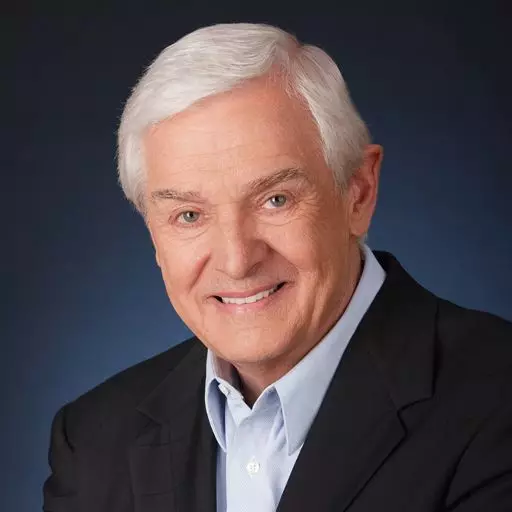
Dr. David Jeremiah is the founder of Turning Point for God, an international broadcast ministry committed to providing Christians with sound Bible teaching through radio and television, the Internet, live events, and resource materials and books. He is the author of more than fifty books including The Book of Signs, Forward, and Where Do We Go From Here? David serves as senior pastor of Shadow Mountain Community Church in San Diego, California, where he resides with his wife, Donna. They have four grown children and twelve grandchildren.
Contact Turning Point with Dr. David Jeremiah
USA
Turning Point
PO Box 3838
San Diego, CA 92163
CANADA
PO Box 70509 RPO Oak St
Vancouver, BC V6M 0A3
UNITED KINGDOM
PO Box 1532
Hemel Hempstead
HP1 9QX
USA
1-877-998-0222
CANADA
800-946-4300
UNITED KINGDOM
0800-058-2856
