

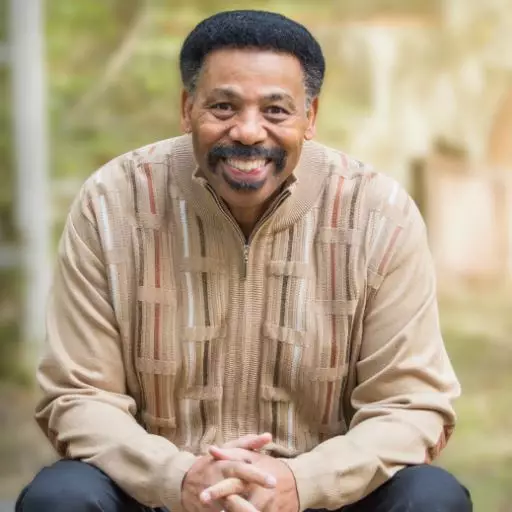
The Covenant of the Kingdom Agenda


A promise becomes more serious when it is formalized into a covenant. Dr. Tony Evans examines the key elements of God’s covenant relationship with His people and explains the power and responsibility that come with living under His Kingdom promises.
Dr. Tony Evans: Satan wants to regress you. God wants to progress you. Covenants are designed to produce progress in your life.
Guest (Male): Dr. Tony Evans talks about the agreement God made with his people and the benefits we get in the bargain.
Dr. Tony Evans: Only as you operate in the covenant do you get the flow of God's power, position, provision, and authority.
Guest (Male): This is the alternative broadcast featuring the timeless biblical teachings from the archives of Dr. Tony Evans. A covenant is a promise and then some. Today, Dr. Evans explains how the way we understand and respond to God's covenant with mankind determines how much kingdom power, provision, and privilege we get to experience. Let's join him as he begins.
Dr. Tony Evans: There was a professional forester who was chopping down a tree and as the owner of the company passed by his workers, he heard him saying every time he slung the axe, Oh Adam. Oh Adam. He said John, every time you hit the tree you go on, Oh Adam, what's all that about? John said cuz if it wasn't for Adam, I wouldn't have to toil like this all day long every day. Oh Oh Adam. The supervisor of the owner said come with me John. He took John to his palatial house. He had this magnificent mansion that he lived in, the owner.
Swimming pool, tennis court, servants. He said John, all this is yours. I'm going to let you have the run of the house. Swim when you want to, play tennis when you want to, watch TV when you want to, call on my servants anytime and do anything you need. The whole house is available to you. Uh that is except one thing. In the dining room there's a little canister. Don't move it. But everything else in the house is yours whenever you want to use it. John went out everyday and played tennis, went swimming, watched TV, called the servants whenever he needed it.
But he was wondering why he couldn't touch this canister in the dining room. So he went over to the canister. No one was watching. Picked it up and out went a little white mouse. He tried to grab it but the mouse was too quick. He tried to chase it but he couldn't catch it cuz it could run under small crevices. The owner, discovering that the mouse was gone, said John, I gave you the run of the whole house. I I I just ask you not to do this one little old thing. You can now go back to chopping down trees.
The next time this owner came by, he saw John. Oh John. Oh John. Adam may have gotten it started but we keep it going. Because Adam's sin became our sin. Adam's choices have become our choices and as a result Adam lost his place in the garden. History is the process of which God is returning us to the garden. History will end at the same place it began. The garden then will simply be called the New Jerusalem. It is that place that is being prepared. At the heart of the kingdom is rulership and authority. God told the first Adam, have dominion and rule.
God made man to rule. Man gave up his rule when he was duped by the devil. God has extended history in the reclaiming of the rule of man and as we said last time, you can understand all of history by understanding one word, Adam. The first Adam, the last Adam. The Adam that failed, the Adam that exceeded, Jesus Christ. And every man and woman, boy and girl is tied to one of those two Adams. In Adam all die, in Christ all are made alive. Today, I want you to understand a word. It is a keyword if you're going to have authority.
Because the kingdom is all about ruling, exercising legitimate authority underneath God because it's God's kingdom word for how he flows his kingdom rule to Earth through people. The word is covenant. When we use the word covenant, most of the time we use it, we use it in marriage, the marriage covenant. There is a contract that is an official legal agreement drawn up between a man and a woman to enter into a legal relationship. So while it's formal and legal, it's also relational. You usually get married cuz you're in love because there's a relationship although it is a legal tie.
That's a covenant. Now why do you need to know this word if you're going to understand your kingdom authority? Here it is. Because God's provisions, God's promises, and God's will flows through his covenant. If you don't know the agreement or not operating under the agreement, you cannot exercise the authority that you legally possess. It's all about the covenant. Okay, let me tell you a secret about the covenant. Stick with me here. The covenants are designed to benefit you. He says that you may prosper or progress. Covenants are designed to produce progress in your life. Satan wants to regress you.
God wants to progress you. Progress versus regression is tied to covenant keeping. Because only as you operate in the covenant do you get the flow of God's power, position, provision, and authority. He says keep the words of this covenant that you might progress. The covenant is designed to progress you in life that you might rule in life, he says. So here we go. I want to give you the five ingredients of a covenant. These are the five things that must be recognized for you to be in covenantal alignment. The first thing you need to understand clearly is God's transcendence.
Now transcendence is a big theological word that simply means he's in charge. Chapter 29 verse 1 of Deuteronomy says these are the words of the covenant which the Lord commanded Moses to make with the sons of Israel in the land of Moab besides the covenant which he had made with them at Horeb. In other words, it's God's covenant, not yours. Second aspect of a covenant. Covenants are representative in nature. The word the the the big word we use is hierarchal. That is they operate by a chain of command. Stick with me on this. If you're going to be operating under a kingdom covenant, you have to be submitted properly to your legitimate authority.
He told them in chapter 29 of Deuteronomy he says I am commanding Moses to talk to the sons of Israel. He spoke through his representative. If you are out of alignment, the provision stops flowing. Let's go all the way back to the Garden of Eden. When Satan used the snake, he challenged God. He said half God said it. He said you can be just like God. You don't have to make God transcendent and above you. You smart as he is. The reason why he told him not to eat of the tree is God wanted them to know you don't know what I know.
So don't try to discover it on your own. You just going to mess up. Okay? So don't mess with that tree. So Satan challenged him but but look at what else Satan did. He flipped the order. He didn't go to Adam. He went to Eve. Adam was the one responsible. Adam was the one who was supposed to make that call, not Eve. But the devil skipped Adam, went to Eve. Eve got Adam. Eve became the leader. Adam became the passive responder because Satan flipped the roles in the relationship and all hell broke loose. So the covenant is is a critical issue.
You must be operating under the chain of command under the legitimate recognized authority as God has designed it. God must be the final authority like Judge Judy. She don't care what you think. Thirdly, there are rules that must be abided by in the covenant. We call it ethics. In other words, God gives certain rules. So that means you find out depending on what the issue is, what the rule is. That is what the word of God says about it. And once you follow the rule in submission to the authority, you have the presence of transcendence.
Transcendence operating hierarchically should be based on the rules. That is the specific guidelines that God has about a subject. That's why the Bible says seek ye first the kingdom of God. The first thing you want to know is what's God's rule about this situation. Because when God's rule operating under his hierarchy gets his transcendence, gets his decision making. And if you want authority, you want to see prayers answered, you want to see God change situations, reverse scenarios, flip, twist, and tweak situations that you thought were never going to change. I challenge you to get transcendence and hierarchy and obey the rules and you'll see God, the king show up in his kingdom.
Guest (Male): Dr. Evans will tell us about the fourth ingredient of the covenant when he continues our message in just a moment. Before that though, what you're hearing today is part of Tony's foundational series called The Kingdom Agenda. As we've been learning, God hasn't simply saved us and left us to figure out what to do with our lives. He has a plan for his kingdom and he created each of us to play a unique part in moving that plan forward. To help you explore these important truths more deeply, we're offering all six full-length messages in the Kingdom Agenda as our thank you gift.
When you make a contribution to support this ministry, the series is available on CD, USB flash drive, or instantly downloadable MP3s. And as an added bonus, we'll also include Dr. Evans One Kingdom Under God paperback which perfectly complements this teaching and can help you develop a whole new way of seeing the world and your place in it. Request this special package today at tonyevans.org or call our resource center at 1-800-800-3222 where our team members are standing by day and night to help you. Again, that's 1-800-800-3222. Right now, here's Dr. Evans with more of today's message exploring the ingredients of God's covenant.
Dr. Tony Evans: Fourthly, other judgments. The Bible calls them blessings and cursings. He says if you will operate under my covering, my covenant, then you will be blessed. The Bible calls even your communion cup the cup of blessing. Calls it the cup of blessing. Yet he says if you take it unworthily, it's the cup of judgment. Many are weak, sick, and some even die early. Not because God's being mean, it's just you're not operating undercover. And if you're not operating undercover, hell can do what it wants with you. So they're judgments. And finally, there is an inheritance. Inheritance means multi-generational implications.
In the Bible, a man lived for the third and fourth generation, not just for his children. It's not just about your kids. It's about your kids' kids. In fact, the Bible says a righteous man leaves an inheritance for his children's children. All right? Now let's look at the New Testament chapter 8 of the Book of Hebrews verse 6. But now he has obtained a more excellent ministry, Jesus, by as much as he is also the mediator of a better covenant which has been enacted on better promises. Chapter 9 verse 15. For this reason, he is the mediator of a new covenant so that since a death has taken place for the redemption of the transgressions that were committed under the first covenant, those who have been called may receive the promise of an eternal inheritance.
Chapter 12 verse 24. He says, and to Jesus, the mediator of a new covenant and to the sprinkled blood which speaks better than the blood of Abel. All right? Well, let me tell you why you need a mediator. You need a mediator cuz you got a sinless God and you got sinful man and the two can agree. You see God will not lower his standard for a sinful man and sinful men can't meet the standard that a holy God demands. So since a holy God's not going to change and we can't meet it, I need somebody who will hear my story and understand.
I need somebody who will hear God's story and understand and somehow hook these two stories up so we can come to an agreement. Now let me tell you how it worked. Verse 14 of Hebrews 4. Therefore, since we have a great high priest who has passed through the heavens, he died, rose, went to heaven, Jesus, the son of God, let us hold fast our confession, our connection with him. For we do not have a high priest who cannot sympathize with the weaknesses, but one who has been tempted in all things as we are yet without sin.
Therefore, let us draw near with confidence to the throne of grace so we will find mercy and find grace to help in time of need. Okay? So let's stick with me on this one passage. He says we have a high priest, a mediator who can sympathize. Now you know when somebody sympathize they emote with you. They can feel they can I feel you cuz they sympathize. Let me explain this. God the Father can't sympathize cuz he never been through what you're going through. See the God God the Father can't sympathize in the sense of going through it.
It says of Jesus he was tested in every manner that we are. The Father has never been tested like that. The Father knows what you said but he doesn't know what you feel having felt it himself cuz he ain't been there, hadn't done that. The Father is totally separate, totally transcendent, totally unique. So in order to be able to sympathize, God the son became a man, dressed up in human flesh so that he could feel what folk feel when folk feel it. While the Father can't sympathize, the son can. Because the son put on flesh.
He knows what it is to be rejected. He knows what it is to be alone. He knows what it is to be hungry. He knows what it is to be thirsty. He knows what it is to be persecuted. He even knows what it is to be killed. In fact, he knows what it is to have sin all over him. It wasn't his sin but our sin which nailed him to the cross. So he even knows what the sin feels like, not because he committed it but because he bore it. Okay, let let let me explain this way.
If a woman is pregnant and having a baby, the doctor who's helping with the delivery can explain what's going on. He can say this is what's happening and this contraction and and this is what's going on and and this is the time and and I know it hurts and he can talk noise but he can't tell you how it feels. He he know you're hurting but he can't emote with your pain cuz Mr. Doctor ain't never been there. But if you got a female doctor who has also had a baby, she can tell you what's going on but she can sympathize with how it feels cuz she's been where that woman is who's having a baby cuz she's been through labor herself.
God the Father knows what you're going through but he ain't never been in labor. Jesus Christ knows what you're going through cuz he put on flesh and blood and he went through it too. So he can go to the Father and say God Father, let me tell you how they feeling right now. Let me tell you why they feeling it because uh I felt that too when I was down there going through this and and he can explain it to God in a way that the Father has never had to experience it. So he says we have a high priest, a mediator who not only knows what you're going through but how it feels.
So he can sympathize, been there, and done that. Now let me show you one other passage. Chapter 7, Chapter 7. Chapter 7 will close with verse 22 to 25. So much the more also Jesus has become the guarantee of a better covenant. The former priest on the one hand existed in great numbers because they were prevented by death from continuing. But Jesus on the other hand because he continues forever holds his priesthood permanently. Therefore, he is able also to save forever those who draw near to God through him since he always lives to make intercession for them.
He just gave you Jesus's job description today. When Jesus was on Earth, his job description was to fulfill the law and pay for your sins on the cross. He did that, then he rose from the dead and is now seated on the right hand of the Father. Right now, what Jesus is doing, he says at the end of verse 25 is making intercession for you. That is mediating for you. Okay? Now watch this. Here's the good news. He says in verse 25 that he is able to save forever those who draw near to God. Now let me explain what the word save means.
He's already talking to Christians. He's not talking to non-Christians. So when he talks to Christians about being saved, he's not talking about going to heaven cuz Christians are already going to heaven in the sense of dying and going to glory when you die. He's talking about rescuing and delivering. So guess what he says what Jesus's full-time job is. His full-time job under the covenant is rescuing the saints. His full-time job under the covenant is coming to your aid. His full-time job under the covenant is finding where you are, sympathizing how you are, forgiving you for what puts you there and now changing things around so you're delivered or rescued from the situation you're locked into.
You are not on your own. If you come underneath the covenant, the one who's over the covenant, Jesus Christ is your intercessor and he's looking down saying Father, let's go help Evans right now cuz he is under the covenant and this thing is messing with him and I want you to turn this thing around because whatever the son says the Father is going to do because the son's job is to intercede for you. So if you're not under the covenant, you better get under that umbrella cuz that's the only way you going to get out the rain.
If you stay outside of the covenant, you're on your own and you won't see the power, the provision, and the authority of the king because you're not operating under the covenant of the kingdom. When you eat that bread and you drink that cup, you're pleading the blood and when all this stuff passes by, it passes over you because there's power in the blood as long as it's the blood underneath the covenant. That gives you authority in history and anticipation for eternity.
Guest (Male): Dr. Evans will return in a moment to wrap up our program. But first, I want to remind you that today's message, The Covenant of the Kingdom Agenda, is part of that powerful series I told you about earlier called The Kingdom Agenda. Don't miss your opportunity to receive all six full-length lessons in this collection including material we won't have time to present on the air. We're offering the series on CD, USB flash drive, or digital download as our thank you gift when you make a contribution to support the ministry. And for a limited time, we'll also include Tony's One Kingdom Under God paperback.
Together, these resources will help you understand how God's kingdom can shape your life as you discover the difference you can make when you live according to his agenda. Visit tonyevans.org today to request The Kingdom Agenda and One Kingdom Under God or let one of our team members help you at 1-800-800-3222. That's online at tonyevans.org or by phone anytime of the day or night at 1-800-800-3222. God's agenda for his people finds expression in every area of our lives. On Monday, Dr. Evans takes a look at four of those areas and talks about what they look like when we see them from the perspective of God's kingdom agenda.
Right now, he's back to wrap up our week together with a word of prayer.
Dr. Tony Evans: Let's pray. Father, I thank you for the word of God that goes forth through this ministry and for every ear that hears it. I pray that you will use the word in the life of each person individually so that they know that they are hearing from you and are transformed by what they hear. I pray that that transformation touches them at their place of need. Wherever they're hurting, struggling, wherever they're in pain, or wherever they're celebrating, may you be the center of that and may they be able to say because of the word that they've heard and because of the true God that they're interacting with right now that you have showed up and shown off on their behalf doing good by them no matter what their circumstances happen to be.
Thank you for how you're going to touch every listener today in your own special way in Jesus's name. Amen.
Featured Offer

When life feels uncertain, it’s easy to wonder where God is and whether He’s still at work. But even in the midst of struggle, His Word offers hope, direction and a foundation you can trust.
In The Kingdom Agenda sermon series and One Kingdom Under God booklet, Dr. Tony Evans helps you discover what it means to live under God’s authority, reclaim spiritual ground and experience His rule in everyday life.
Perhaps biblical truth has helped you find your way through a difficult season. Your generosity today can help someone else experience that same encouragement. As you partner with The Urban Alternative, we’d love to place these resources in your hands to strengthen your walk with God.
Past Episodes

Video from Dr. Tony Evans
Featured Offer
When life feels uncertain, it’s easy to wonder where God is and whether He’s still at work. But even in the midst of struggle, His Word offers hope, direction and a foundation you can trust.
In The Kingdom Agenda sermon series and One Kingdom Under God booklet, Dr. Tony Evans helps you discover what it means to live under God’s authority, reclaim spiritual ground and experience His rule in everyday life.
Perhaps biblical truth has helped you find your way through a difficult season. Your generosity today can help someone else experience that same encouragement. As you partner with The Urban Alternative, we’d love to place these resources in your hands to strengthen your walk with God.
About The Alternative
The Urban Alternative is the national ministry of Dr. Tony Evans and is dedicated to restoring hope and transforming lives through the proclamation and application of the Word of God.
About Dr. Tony Evans
Dr. Tony Evans is the founding pastor of Oak Cliff Bible Fellowship in Dallas, founder and president of The Urban Alternative and the author of over 150 books, booklets and Bible studies. Dr. Evans holds the honor of writing and publishing the first full-Bible commentary and study Bible by an African American. His radio broadcast, The Alternative with Dr. Tony Evans, can be heard on more than 1,200 US outlets daily and in more than 130 countries.
Contact The Alternative with Dr. Tony Evans
info@tonyevans.org
http://tonyevans.org/
Mailing Address
The Urban Alternative
P.O. Box 4000
Dallas, TX 75208
Telephone
1-800-800-3222