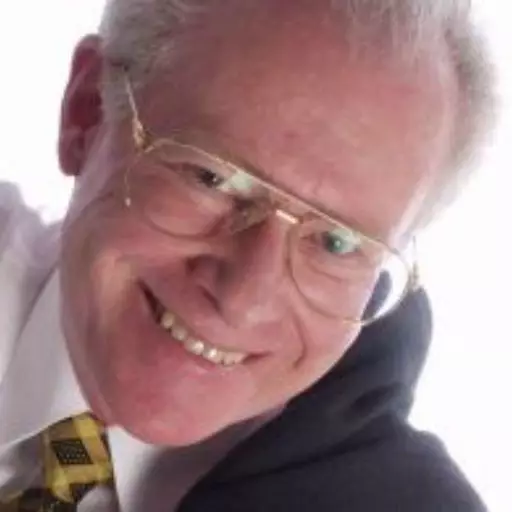
RABBI KOOK vs RABBI KADURI
Will you...or they identify Messiah?
Guest (Male): This is Viewpoint with attorney and author Chuck Crismier. Viewpoint is a one-hour talk show confronting the issues of America's heart and home. And now, with today's edition of Viewpoint, here is Chuck Crismier.
Chuck Crismier: In 2005, the Russian Chief Rabbi Berel Lazar said the world today is in a state described by sages as labor that precedes the coming of a Messiah. Labor that precedes the coming of a Messiah. Tikvat Israel means the hope of Israel, and that hope is reduced to its simplest and most fundamental expression: the hope of a redeemer, the Messiah, who would restore Israel and the Jewish people to the fullness of their biblically prophesied purpose and thereby also restore the world for God's glory.
That Messianic moment in history would then bring shalom, that is world justice, security, and prosperity through tikkun olam, or the redemption or restoration of the world. Today on Viewpoint, we're going to be taking a look at that, particularly through the eyes of two Kabbalistic rabbis of great renown in Israel historically and more recently. We're going to see how they viewed this matter of redemption and how they viewed the matter of a Messiah.
It's fascinating, and you may wonder why you would be talking about two Kabbalistic rabbis when, in fact, we should be talking about Yeshua, Jesus Christ, as the ultimate Rabbi, the Redeemer of the world. Well, let me tell you why. In the law, we have something called hearsay. Hearsay is protected from being received in a trial as evidence, but there are many, many exceptions to the hearsay rule.
Hearsay means the words of others without actually having them testify in court. So you would be referring to the words of others in your own testimony as if somehow that was evidence in fact. That is rejected except with certain exceptions. One of those exceptions is to prove the truth of the matter represented, except in the state of mind. If you offer hearsay for proof, not of the truth of the actual matters being said in the hearsay, but for the proof of the state of mind of the person, then it is accepted.
That's why we're talking about it here today: the state of mind of two rabbis, Yitzhak Kaduri and Rabbi Kook. Now you may say he's a real kook, but he's also a very famous Kook, Rabbi Abraham Isaac Kook, the first Ashkenazi Chief Rabbi in Palestine. He did not declare Jesus the Messiah, but he viewed Christianity as a continuous attempt to reverse the correct course of history and regarded its founder as having a psychic outpouring that led to the idolatrous deficiency called Christianity.
He was also a mystic who viewed the secular Zionist movement as the footsteps of the Messiah and the beginning of the Messiah from the house of Joseph. You say, "What in the world is all of that about?" Well, you're going to find out here on Viewpoint today, and I'm glad that you've joined us. It's conversation, as always, with ever-increasing conviction, talk that transforms.
One of those rabbis, Yitzhak Kaduri, shortly before his death in 2006, penned a note which was to be held in private and in secret, disclosed only one year after his death. What did that note say? That's what we want to look at here today on Viewpoint. What did that note say, and is it important? Is it just hearsay, or does it actually prove the state of mind at least of Yitzhak Kaduri concerning who the Messiah was? Did he have a conviction, and why does it matter?
The Messiah factor is embedded. It's just an embedded article of Jewish faith; it just is. Over the years since the 1970s, Messianic expectation has just exploded to almost fever pitch over there in Israel. Not here in the United States and not around the world, except in Israel. The anticipation particularly there in Israel is of such intensity as to be almost palpable. That is almost touchable; you can feel it.
There's a deep-seated certainty that the world is now in the Messianic Age, however you might define that. And that's what's also interesting: how do you define it?
Guest (Male): The campaign began in the late 1970s with the slogan, "We want Moshiach now." That is the Messiah. Of further interest is that the call for Messiah among the more fundamentalist Jewish groups corresponded in time, believe it or not, with the publication of *The Late Great Planet Earth* by Hal Lindsey, that phenomenal bestseller which enjoyed distribution primarily within the greater Gentile Christian world.
At the same time, if you're old enough, you'll remember the soul-gripping, heart-stirring film called *A Thief in the Night* that made its striking debut within the Gentile Christian world. It was so gripping that when Chuck and his wife saw it and took their first daughter there, she was terrified by what she saw in that film. *A Thief in the Night* was taken from the words of scripture itself.
Chuck Crismier: By 1992, the year the Lord spoke to my heart to leave the practice of law and to plead his cause in the land as a voice to the church declaring vision for the nation—America's greatest crisis hour here on the inner edge of the Second Coming—by 1992, as both the Western world began to unravel at the seams and Israel and Islam began emerging with increasing prominence, the Messianic movement, the Messiah movement among Jews, also picked up steam, declaring, "Prepare for the coming of the Messiah."
Those were the words: "Prepare for the coming of the Messiah." At the same time, a series of dramatic full-size billboards appeared along a busy Southern California freeway. I saw them and was greatly taken by them. The first one was, "Sword of the Lord coming soon." A month later came, "Prepare to meet thy God." Those were placed not by a church or religious group but by a young guy in his 30s named Tom Bickers, who had invested his life savings to shout out a message that said the Lord burned this in my heart: "You must make this declaration. Sword of the Lord coming soon. Prepare to meet thy God."
So what is this Messiah factor? What's happening since that time? That's what we want to find out here on Viewpoint today.
Guest (Male): Once upon a time, children could pray and read their Bibles in school. Divorces were practically unknown, as was child abuse. In our once-great America, virginity and chastity were popular virtues, and homosexuality was an abomination. So what happened in just one generation? Hi, I'm Chuck Crismier, and I urge you to join me daily on Viewpoint, where we discuss the most challenging issues touching our hearts and homes. Could America's moral slide really relate to the Fourth Commandment? Listen to Viewpoint on this radio station or anytime at saveus.org.
Chuck Crismier: The world today is in the state described by our sages as labor that precedes the coming of Messiah. We're living on the verge of history, said Russian Chief Rabbi Berel Lazar, and he said it can be felt everywhere. Living on the verge of history, it can be felt everywhere. What was the verge of history? The coming of Messiah.
Many purported Messiahs, as you probably know, have appeared and disappeared over the course of history. Several have died within the generation last past. In fact, one of those was the late Rabbi Schneerson of the Chabad-Lubavitch movement. Even though he's dead, they believe he will be resurrected as the Messiah and that his resurrection as the coming Messiah is imminent. That's what they believe.
Many others believe, perhaps surprisingly, that there are going to be actually two Messiahs. They call one a suffering Messiah and the other a ruling Messiah. Many rabbis have formed the viewpoint that the Messiah would come—one Messiah would die for the people—and also someone who would rule victoriously over a Messianic kingdom.
The suffering Messiah is called Mashiach ben Yosef, that is Messiah son of Joseph, based upon rabbinical interpretation of Isaiah chapter 53, depicting who would suffer. The victorious or kingly Messiah is seen as Mashiach ben David, that is Messiah son of David, who would rule as King of Kings, referenced in Isaiah 9:6 and Daniel chapter 7.
So they cannot accept that Isaiah 53 is referring to Yeshua, Jesus, as Messiah. Therefore, it has to be Israel as the suffering servant, so they call him Mashiach ben Yosef or son of Joseph or Israel. Today on Viewpoint, as we continue to look at this picture, Tikvat Israel, the hope of Israel and the Messiah, we're also going to take a look now at two particularly kind of unusual figures that are linked with the term Kabbalah.
Guest (Male): It's an ancient Jewish belief system rooted in a mystical interpretation of the Bible. It's been transmitted orally using what you might call esoteric methods and became prominent in the Middle Ages. But it remains of particular significance today among the Hasidic Jews; in fact, it defines their Messianic expectations. As of 2016, there were over 130,000 Hasidic households worldwide, about 5% of the global Jewish population.
The term Hasid actually means pietist. Hasidic Jews, therefore, perceive themselves as the most pious of all Jews, though a kind of fundamentalist Orthodox Jew. So we would think of Orthodox Jews as a fundamentalist Christian, but no, not really. The Orthodox Jew is more like the evangelical Christian of yesteryear, and so the Hasidic Jews are more like the original fundamentalist Christians that were rejected by Billy Graham in his sorts.
According to the Kabbalists, they envision their sect as one who wishes to tap the hidden wisdom and must conduct himself in the manner of the most pious. The fundamental theme underlying all of this Hasidic theory is the immanence of God in the universe, believing that no site is devoid of Him. It's kind of a pantheistic view, really, that all is God and God is in all.
A true Hasidic Jew believes that all things of this world must be transcended as but illusory. In other words, they're just kind of like a figment of reality, and there's really nothing but God. That's very much resembling what you might understand to be the New Age religion or spiritual thinking today.
Chuck Crismier: As we move into this discussion a little more deeply with these two rabbis, revered rabbis, it will help us to understand what I was referring to as the hearsay that we might want to pay attention to because this hearsay, or what they said, these rabbis, you don't want to necessarily receive it as the truth, but you might want to understand it as revealing their state of mind with regard to the Messiah and with regard to redemption and with regard to Christianity.
So that being the case, we now move into that world of Kabbalah. I'm not recommending the world of Kabbalah; we're just talking about it.
Guest (Male): It's a mystical tradition focused on understanding the nature of God, the origin of the universe, and the soul's relationship with the divine. Actually, the word Kabbalah means "received tradition" or the word "receive" in Hebrew. It supposedly offers esoteric insights into the Torah and uses things like the ten divine attributes and gematria numerology for meditation and spiritual growth.
Its theology is mysticism; it seeks to explain how an infinite God interacts with a finite world. Its purpose is to help people understand their own inner spiritual and intellectual worlds to achieve a connection with the divine. While rooted in ancient Jewish traditions, it grew into a distinct system in 13th-century Spain and France.
Traditionally, Kabbalah is studied after mastering the Talmud and the Torah. First is the Torah, that's the first five books of the Bible, then the Talmud, which are all the writings of the rabbis concerning what the Torah supposedly means. And then all of this has to be guided by a Kabbalistic master who has spent years and years delving into Kabbalah and understanding what it means. They use what is called the Tree of Life to understand divine emanations and align one's character, using mystical concepts to refine character, heal, and mend the world, which brings in the Hebrew word tikkun olam, the mending or redemption of the world primarily through good works.
Chuck Crismier: That gives us a little bit of understanding there. It might still be a bit confusing because it sounds an awful lot like New Age theology. And indeed it is. In fact, New Age philosophy or theology actually embraces much of the spirit of Kabbalistic theology going back into the history of Kabbalistic Judaism.
So we're going to take a look at two persons that I've already introduced you to at the beginning of the program. One is Rabbi Kook, Abraham Isaac Kook, and the other is Rabbi Yitzhak Kaduri. Both of these were Kabbalistic rabbis or are Kabbalistic rabbis. First of all, we want to take a look at Rabbi Abraham Isaac Kook because this last Tuesday, he was celebrated—the 80th anniversary of his passing.
Judaism has clear traditions of mourning, but when a tzadik, that is a righteous man, dies, the anniversary of their passing becomes a day of celebration. The Zohar, which is another esoteric book of writings, teaches that a tzadik or a righteous man who passes is present in all worlds even more than during his lifetime. There's a transcendence in his afterlife that gives the righteous even greater energy to affect this world, and so their passing is celebrated.
That is Rabbi Abraham Isaac Kook, the first Ashkenazi Chief Rabbi of British Mandatory Palestine. He passed away on the third day of Elul, September 1st, 1935. He was also considered to be one of the fathers of religious Zionism, a revolutionary movement in the Orthodox Jewish world. Like most great men, his real greatness is revealed in the true-life stories of his righteous character, his great love for every Jew, and his passion for the land of Israel, referred to in Jewish terms as Eretz Yisrael.
Rabbi Kook not only saw all of Israel as a congregation; he constantly envisioned the imminent Messianic era as well as his acceptance of all Jews. The word "imminent" means immediately right in front of you. Imminent. In other words, virtually nothing to be looked for in advance; it's here. Among pre-trib rapturists, they also teach what is called this doctrine of the imminent return of Christ. It's a very similar kind of thinking: the imminent return of Christ. In other words, he could come tomorrow; he could come in the next hour. It's imminent.
The Messianic era according to Rabbi Kook was imminent. That was 80 years ago. How imminent is imminent? Since a lawyer by the name of Charles Scofield came up with his Scofield Reference Bible in the early 1900s and taught in the margins a pre-tribulation rapture that had never been taught before—not really—it took over by storm. In his margin writings, his editorial comments, he introduced what is now called the pre-trib rapture.
As part of that, in order to support the concept of a pre-trib rapture, he had to introduce also the subject of the imminent return of Christ, that it could happen anytime, which actually, if you think about it, couldn't possibly be true because there were so many things of biblical prophecy that really had to happen before the return of Christ. But in order to believe in the immediate return of Christ, you had to believe that there was nothing yet to happen.
I'm just trying to simplify this as much as possible. So there's a similar belief within pre-trib rapturism and the thinking of this Kabbalist rabbi, Rabbi Kook.
Guest (Male): There is so much more about Chuck Crismier and Save America Ministries on our website, saveus.org. For example, under the marriage section, God has marriage on His mind. Chuck has some great resources to strengthen your marriage: first off, a fact sheet on the state of the marital union, a fact sheet on the state of ministry marriage and morals. saveus.org. Marriage, divorce, and remarriage—what does the Bible really teach about this? Find all of this at saveus.org. Also, a letter to pastors, the Hosea Project. saveus.org, and many more resources to strengthen your marriage. It's all on Chuck's website, saveus.org. Again, you can listen to Chuck's Viewpoint broadcasts live and archived on Save America Ministries' website at saveus.org.
Chuck Crismier: Welcome back to Viewpoint, I'm Chuck Crismier. Today, we're taking a look at the matter of Messiah, the coming of Yeshua HaMashiach, that is Jesus, the Son of David, the long-awaited Messiah as prophesied in Israel's history. But they have a very different view because they cannot and do not receive the idea that Jesus, Yeshua, was indeed the Messiah. They believe he was a counterfeit. In fact, so much a counterfeit, let me see if I can find the description here.
A very fascinating description concerning the view of Rabbi Kook concerning Jesus. Well, it's skipping my gaze at the moment, so we'll continue on here. By the way, I want to make available to you my book *Messiah: Unveiling the Mystery of the Ages*, in which you will find a large portion of this discussion. But you're going to find far, far more than this because that's just discussing it in Israel's hope.
It's almost like Israel's hope is very much like the New Age view of this: this is the dawning of the Age of Aquarius. So there's a lot of confusion concerning the coming of Messiah and even what a Messianic era looks like. Because of this confusion, people all over the world are going to be deceived. They are being deceived and will be increasingly deceived.
The book *Messiah: Unveiling the Mystery of the Ages* helps us to understand how mysterious this Messianic history is in the world. And there are so many alternative Messianic moves, Messianic movements, and they're gripping the minds and hearts of untold billions of people. Yes, billions of people. It has to do, a lot of it has to do with salvation by syncretism, in other words, blending together all the different beliefs.
This is like what the former Prime Minister of the UK, Britain, Tony Blair did immediately after leaving the Prime Ministership of England. He went directly to the Pope, abandoned his Church of England Protestantism, and embraced Catholicism for the purpose of uniting the world under Catholicism through blending together the various religions of the world. That's what he wanted to do. He said, "I dedicate my life to do that." He said, "Religion is now the new politics."
Salvation by syncretism. It's very, very deceptive and seductive. And then there's what I call the cafeteria Christ, blending together all kinds of different ideas from the Bible, all kinds of different ideas about Jesus and expectations and so on. It's the pick-and-choose kind of theology that has become so popular today in America in the name of Christ.
Then you've got the United Nations as the potential savior. Unfortunately, or however you want to look at it, it's been said the United Nations is ultimately going to be the one to unite and save the world. Then you've got scientific salvation, the entire desire to become God, whether it's in the medical field, whether it's in the digital field. It doesn't matter; they're all moving in exactly the same direction. So as one engineer told me to my face, the time is coming when we will soon become God.
Then there's the goddess revival and the deification of the environment, the worshipping of the environment, of trees, so that Mother Earth replaces Father God. The Marxist Messiah, the Masonic Messiah. Oh yeah, many, many, many Christian leaders have been sucked into Masonic beliefs. They did not realize when they went into it the depths of what they were actually getting into, the worship of Lucifer.
Then the mystification of belief, the confusion, the imposter, the little horn, the "God is dead" movement. And we're in a very, very difficult moment, friends, and that's why I wrote the book *Messiah: Unveiling the Mystery of the Ages*. It's a $22 book, yours for $15 on our website, saveus.org. Give us a call at 1-800-SAVE-USA or write to us at Save America Ministries, PO Box 70879, Richmond, Virginia 23255. Write a check at $6 for postage and handling. You want to really find out what's happening in our world, then you'll get a copy of this book.
You really will. Don't think you know what it says; I guarantee you don't. It will help you to understand the bigger picture of why Jesus said the deception is going to be so great in our world that even if it were possible, even the very small remnant elect would be deceived. Get a copy of the book *Messiah* on the website, saveus.org.
All right, now we want to go back to this famous Rabbi Kook that died 80 years ago. He is revered tremendously in our world today. He viewed secular Zionists, despite their irreligion, as the manifestation of Messiah from the house of Joseph. So their role, he said, is the physical rebuilding of the land, not the temple itself but the land.
He believed in a two-stage redemption: first, the material restored by the secular forces, followed by the spiritual miraculous Mashiach ben David, that is the son of David. Remember the scripture says that Jesus would rise upon the throne of David. So in his diaries, Rabbi Kook envisioned a revolutionary, refined, post-Messianic Judaism where the future Sanhedrin, that's the 71 elders of Israel, might alter traditional practices such as bringing only vegetarian offerings to the third temple. In other words, not sacrificing animals but vegetarian offerings. Where did he come up with that? Not sure.
Some of his private censored writings suggest that in the Messianic era, other monotheistic religions like Christianity and Islam would serve a role in humanity's perfection and then would ultimately be united with Israel. He wrote in his private papers a strong belief that the end of days would involve the lifting of all humanity, not just Jewish national salvation, in a symbiotic effort toward truth.
So one could say, okay, he believed in syncretism, uniting all the religions of the world. His views were so revolutionary that some were initially censored or kept private by his followers to protect his image from traditionalist attacks. Now, lest you should think that what we're sharing here is just way off in the wild blue yonder somewhere, when the scripture says in the Old Testament that my house shall be a house of prayer for all people, the Jewish leaders today believe that means that the temple will be for all religions, that all people, meaning all religions then, would be welcomed into that temple.
How is it possible that's what they believe? If you believe that, then what you believe in is ultimate syncretism of the religions of the world, the blending together of all the religions of the world, which exactly is what Tony Blair set out to do with his new enterprise to unite the religions of the world because he said it's the foundation for globalism.
Are you beginning to get the interconnections now as we talk about this? You cannot be blinded in your mind and just be simplistic in your thinking and understand the depths of what we're talking about here. Israel's first chief rabbi, that was Rabbi Abraham Isaac Kook, passed away exactly 80 years ago, a powerful force in the beginning of modern Israel with an almost prophetic understanding of history that still guides his followers today. He saw Jews and Christians and Muslims as partners in moving Israel forward into the Messianic era.
And so his death was commemorated yesterday. The Torah giant served as the first Ashkenazic Rabbi of Israel, a renowned scholar and Kabbalist. Now, moving beyond that, we now take a look at the second rabbi, not Rabbi Kook but Rabbi Kaduri. This is fascinating, very fascinating. Yitzhak Kaduri, before his death in 2006, this prominent Israeli Kabbalist rabbi left a note to be opened a year later which some claim identified the Messiah as Yehoshua, Jesus.
Guest (Male): Have you ever considered what the early church was like? Many people are developing a heart longing for a greater fulfillment in our practices as Christians. A recent study showed 53,000 people a week are leaving the backdoor of America's churches in frustration. What is going on? Why has there not been even a 1% gain among followers of Christ in the last 25 years? Could it be that God is seeking to restore first-century Christianity for the 21st century? Jesus said, "I'll build my church." Is Christ by His spirit stirring to prepare the church for the 21st century? The early church prayed together and broke bread from house to house. They were family, and it was said by all who observed, "Behold how they love one another." Incredible. But the same can be found right now. Go to saveus.org and click Cell Church. We can revive first-century Christianity for the 21st century. It's about people, not programs. It's about a body, not a building. That's saveus.org. Click Cell Church.
Chuck Crismier: Today on Viewpoint, we're taking a look at the matter of the return of Christ, the Messiah, and the Messianic era from the viewpoint of Jewish tradition, Kabbalistic tradition, and their chief rabbis. The most famous of them, the first Ashkenazi Rabbi Abraham Isaac Kook, and the other Yitzhak Kaduri. So in order to set the stage for this, Rabbi Kook made this observation concerning Christianity as a continuous attempt to reverse the correct course of history and regarded its founder, Jesus, as having a psychic outpouring that led to idolatrous deficiency.
But he was a mystic who viewed the secular Zionist movement as the footsteps of the Messiah. You see, viewpoints do determine destiny, and there are these viewpoints that we need to understand in order to come to grips with the massive deception that comes across the world, and particularly within the mind and heart of Jewish people. If you want to win the mind and heart of Jewish people, you need to understand where they're coming from.
The belief that Jesus, Yeshua, is God, the Son of God, or a person of the Trinity is just totally incompatible with traditional Jewish theology, whether it be Kabbalistic or otherwise. Jews, other than a small minority to date who have embraced Yeshua as Messiah, do not believe that Jesus of Nazareth fulfilled Messianic prophecies. Judaism rejects Jesus as God or as a divine being or an intermediary between God and humanity or even holy.
Judaism rejects many of the tenets of Christianity. More specifically, regardless of all the multiplied Jewish arguments against Jesus as Messiah, there are two that stand out as foundational to all other contentions, and we need to understand these. First of all, Moses was the revered prophet of the Exodus. He said, "The Lord your God will raise up unto you a prophet from the midst of thee of your brethren like unto me; unto him you shall harken." Now, you want to know where that is? It's in Deuteronomy chapter 18, verse 15.
So while Jesus was a Jew in the midst of his brethren, he was perceived by many to be a prophet, but he was not a prophet like Moses. Oh, he had to be a mere man, and yet if he was conceived to be God, it was impossible because Moses was not God, you see. So the Jewish people say the Messiah has to be a mere man like Moses, a charismatic man, one who has great respect among the people, but has to be a mere man.
They're very adamant about this. Next, because Jesus claimed that God was his father and that he was not only Son of Man but also Son of God, he was by Jewish definition a blasphemer worthy of death rather than of divine reverence as Messiah. Why is that? Well, again, quoting Moses, "The Lord our God is one Lord. You shall have no other gods before me." So from the Jewish perspective, Jesus would have to be a second God, the Holy Spirit would have to be a third God, therefore the whole concept of the Trinity is blasphemous. The idea that Jesus is the Son of God is blasphemous, worthy of death.
And that's why they killed him. Well, that's the religious reason they killed him, but the motivation they killed him was fleshly, and that is: "He is going to take away our place among the Romans, our power, perks, and position." And they could not and would not put up with that because of their envy.
So with those two things, you have to understand that if somebody in the Jewish realm like Rabbi Yitzhak Kaduri could come out and say that he believed Jesus was the Messiah, this would be earth-shaking in Israel. So he wrote a note regarding the acronym of Messiah. He said, "The masses will themselves arise and verify that his words and his teachings can stand." Whose teachings? Yehoshua's, Jesus', Yeshua's.
The note was written in 2005 during the month of Elul and was to be kept sealed until one year after his passing in 2006. The note was famously posted on Kaduri's own website, kaduri.net, before being removed because it was fueling such controversy in Israel. And the incident remains still very deeply debated in Israel, with many in the Jewish community viewing the claims with skepticism, in fact outright denial.
Others hold it as a significant revelation of the Messiah. So which was it? Some are saying, "Oh, this was just a forgery. This was just a fabrication." Well, apparently he considered it so significant that he asked that it not be disclosed until a year after his death. The true expectation of believing hope for both Jew and Gentile Christian is in the soon-coming of the Messiah to rectify the earth's wrongs and to redeem the remnant of those who put their trust in him and to judge the world in righteousness. All of that in the Psalms and also the book of John.
But that hope was shockingly catapulted down the prophetic track of time by one of Israel's most prominent rabbis shortly before his death. Rabbi Yitzhak Kaduri, when the note was opened, it revealed what many had known for centuries, yet many others, particularly Jews, had categorically rejected: this, the name Rabbi Kaduri wrote, Yehoshua or Yeshua, Jesus, is the Messiah. He said he will lift the people and prove that his word and law are valid.
So Jewish leaders and readers responded with amazement. You can understand the ultra-orthodox—they were just scorning. They said, "So this means Rabbi Kaduri was a Christian?" Yet two of Kaduri's followers in Jerusalem admitted that the note was authentic but confusing for his followers. A few months before his death at the age of 108, the rabbi surprised his followers as he gave a message in the synagogue on Yom Kippur, the Day of Atonement.
What was that about? Teaching how to recognize the Messiah. Kaduri's grandson, Rabbi Yosef Kaduri, said the grandfather spoke many times during his last days about the coming Messiah and redemption through Yeshua ben Yosef, Yeshua ben David, the promised anointed one. So you say, "Okay, well why should I care?" For one thing, Rabbi Kaduri, when he died, 200,000 people showed up in Israel at his funeral. 200,000.
Pretty amazing, isn't it? He had some sort of an import there. But to what degree was his revelation that Yeshua was the Messiah? That the nation will be raised up and it will be known that his word, that is Yeshua's word and Torah, will stand. Even Rabbi Tovia Singer, who is not a believer in Jesus as Messiah, translated the Hebrew words in the note as we have shared here on this program today. Amazing.
So who is the Messiah? The question lingers: how would you recognize the Messiah? Upon what authority will his authenticity be established? Will many be confused, deceived, or even destroyed by a false hope in a counterfeit? Years ago, I was interviewed by a Jewish talk show host, and I asked him, "If the Jewish leaders failed to recognize Yeshua, Jesus, as Messiah, what makes you think they will recognize a purported Messiah when he soon shows up on the scene?" Would you be interested in his response? There was a pregnant silence. And then he said, "That's a very good question."
So my question to you is: what makes you think you will have better discernment than the most modern Jewish Sanhedrin of revered spiritual leaders when the imposter makes his debut? That is, a false Messiah. Where there is the real and the true, there is inevitably an imposter. And since the vision for the Messiah is now being increasingly voiced in Israel, like "Zion needs the Messiah" declared Israel National News headline, there's disillusionment.
Various military political leaders who have failed to bring us redemption, they say. And that disillusionment will increase our yearning for the spiritual leadership and vision of the Messiah. Who? They say we're therefore awaiting the arrival of the true Messiah. Even though he may tarry, they say we are not to lose hope. True. But the desire will be so great when Israel is facing their ultimate existential moment that the Bible says they will embrace a counterfeit.
Will you? Don't answer too quickly because human nature based upon our fleshly thinking and the lordship of feelings will be very quick to rationalize the reception of a counterfeit known as the Antichrist. He'll not be coming in known as the Antichrist. He'll be coming in—the world will believe he's the greatest thing since sliced bread, bringing peace on earth, goodwill toward men.
Will we be ready? That's why I wrote the book *Antichrist*. *Antichrist: How to Understand and Identify the Coming Imposter*. If you don't have the book, you should get it. Get that together with the book *Messiah*, and I think you'll have plenty of reading material for quite some time to come, challenging as a matter of fact. *Antichrist*, a $24 book, yours for $18 on our website, saveus.org. Whatever it is, it is. Get a copy. $6 for postage and handling. If you get both of these books, it will be $6 for one book, two additional dollars for the second book for postage and handling, and make sure you—if you don't have them, you're going to be very, very fascinated when you get them.
Thanks for joining us here on Viewpoint today. I hope this has been somewhat helpful, hope it's not confusing, but it's not for the purpose of believing the statements that were made but understanding, remember, the state of mind of these people. That's why we offered this hearsay testimony from Israel today. Thanks for joining us. Become a partner; send your gift by faith to Save America Ministries, friends. Do it today. Do it today. The time is short and the need is great.
Guest (Male): You've been listening to Viewpoint with Chuck Crismier. Viewpoint is supported by the faithful gifts of our listeners. Let me urge you to become a partner with Chuck as a voice to the church, declaring vision for the nation. Join us again next time on Viewpoint as we confront the issues of America's heart and home.
Featured Offer
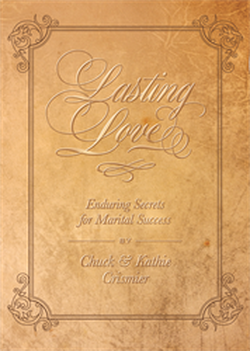
LASTING LOVE can be a dream come true. Yet love requires more than a dream or those loving feelings we so much desire.Lasting Love, Chuck and Kathie Crismier, celebrating their Golden Anniversary, unveil seven enduring secrets that will inspire and strengthen your marriage as it has theirs. COPY and PASTE this link to WATCH the TRAILER: https://www.facebook.com/Save-America-Ministries-204687919570536/videos
Past Episodes
Featured Offer
LASTING LOVE can be a dream come true. Yet love requires more than a dream or those loving feelings we so much desire.Lasting Love, Chuck and Kathie Crismier, celebrating their Golden Anniversary, unveil seven enduring secrets that will inspire and strengthen your marriage as it has theirs. COPY and PASTE this link to WATCH the TRAILER: https://www.facebook.com/Save-America-Ministries-204687919570536/videos
About Save America Ministries
About Chuck Crismier
Contact Save America Ministries with Chuck Crismier
crismier@saveus.org
http://www.saveus.org/
Save America Ministries
P.O. Box 70879