Oneplace.com

TRUTH vs TRUCE

June 16, 2026
00:00

Chuck Crismier: Is an agreement to agree enforceable? Is there such a thing as an agreement to agree that truly is an agreement that is enforceable? That's what we want to look at here today on Viewpoint. Again, and I'm glad that you've joined us. This conversation is always with ever-increasing conviction, talk that transforms.

What is an agreement to agree? Well, people come into a position where they think it's time to resolve something, whether it be a resolve a problem in the family, maybe a problem in a marriage, maybe a problem in a business, maybe a problem in the church, maybe a problem in the world, and among nations, maybe a problem in the Middle East.

And so the parties have a viewpoint. And there's no way to ultimately solve those viewpoints other than an actual truth statement. So the agreement to agree is a way to try to avert truth by using what we commonly refer to as a truce. A truce is a way to cease a battle or a disagreement without actually resolving it.

And people say, well, we have peace at last. No, you don't have peace, you just put off the resolution of the peace because the problem of the truce still lies is still there and the conflict, the basis for the conflict still exists and you haven't resolved anything. You've only put off resolution of the problem.

Well, we have that same thing going on in the Middle East, as we see with the so-called Memorandum of Understanding. A Memorandum of Understanding, we haven't seen the Memorandum yet. We hear all kinds of versions of a Memorandum. We haven't seen the Memorandum, and we're told that the Memorandum consists of 14 points. Then we're told it consists of 12 points. Then we're told that it has this position and that position and another position. And it seems like the positions seem to continue to evolve in some way, either in total or in approximation.

So it's an agreement to agree by acknowledgment. Our President, who said, no, we've got to completely deal with this issue with Iran. We cannot allow nuclear weapons. We cannot allow any of this to continue. Now it's going to continue. It's just going to continue under terms that have been devised to call for a truce.

It's not based on truth. It's not based on the things that actually began the war of epic fury a number of months ago or a year ago. It's it's not based upon that at all. It's based upon, okay, what can we do now to resolve or attempt to resolve all the wars and the feverishness and the expense of wars in order to, shall we say, get along.

Well, as Rodney King, back there in the days of Los Angeles, said in the Watts riots, "Can't we all get along?" The famous statement, question right there on the cover story of what was it? Newsweek or Time magazine. "Can't we all get along?" The answer is no. We can't all get along unless we get along based upon truth.

Truce is just a ruse, a pretense of getting along. It's a way to try to say, you know, I'll put up with you as long as I can put up with you, and then we're going to go back to the same battle, the same war because we haven't really resolved anything. That's my problem with regard to what's happening in the Middle East. With regard to the so-called resolution or peace agreement that isn't a peace agreement at all, but is rather an agreement to agree because even after the Memorandum is signed, it's not resolved because they still have things to be worked out.

And they will never be ultimately worked out ever because it's a continuing process. It's a process to an end that will never end because the truth that underlies it, that underlay the problem in the first place, will not be resolved. There's only one way you can defeat evil, and that's to defeat evil. It's just as simple as that.

The only way to defeat evil is to defeat evil. You can't negotiate with it. You can't reason with it. And so you either have to compromise with it and just agree to get along as long as you can get along or not. Now we have this same kind of problem going on in the church for a very long time.

Going all the way back, one could trace it back a very long time, but certainly into the early 1900s, where we had the battle of the fundamentalists versus the liberals in the church. The fundamentalists versus the liberals. And so how is that resolved? A group put together the series of books called The Fundamentals. I have those in my library. The Fundamentals. The Fundamentals of what? The Fundamentals of the faith. What are the fundamentals of the faith?

Well, have we agreed on those? Obviously not. Because if we had agreed on them, we would agree on everything that Jesus has said in the scriptures, that God said in the scriptures. We would agree on everything was there, but we don't. And so we agree to disagree. There's an interesting phrase that has been coined to agree to disagree. And you have probably heard of it. It's it's an amazing thing how we're capable of reasoning and thinking. Here's the phrase:

It's called the Doctrine of Minimalism. In all things essential, unity. In doubtful, liberty. In all things, charity. In all things essential, unity. In those things doubtful, liberty. In all things, charity. Well, it's a truism for many Christians. The real author of that sentiment was a 17th century Lutheran named Peter Merlín, who was also disturbed by the doctoral debates taking place. Who thought their insistence on doctoral purity was satanic.

Merlín counseled a minimalist approach to doctrine. Liberal Christians have taken minimalism's maxim to heart. But so have many Bible-believing Christians. When it comes to doctrine, they don't sweat the details, like liberals. When Bible-believing Christians talk about unity and essentials, it isn't altogether clear what those essentials are. Can't even agree on what the essentials are.

Chuck Crismier: Downplayed the supposed theological conflicts between Christians. He saw them as a product of our limited knowledge of God. So he dismissed them. Such differences by appealing to how awesome God is. Yes, God is awesome, but He also gave us His Word. Do we agree with it? Do we disagree, or have we called a truce? Just wondering.

Chuck Crismier: Once upon a time, children could pray and read their Bibles in school. Divorces were practically unknown, as was child abuse. In our once great America, virginity and chastity were popular virtues, and homosexuality was an abomination. So what happened in just one generation? Hi, I'm Chuck Crismier, and I urge you to join me daily on Viewpoint, where we discuss the most challenging issues touching our hearts and homes. The America's moral slide relates to the fourth commandment. Listen to Viewpoint on this radio station or anytime at saveus.org.

Chuck Crismier: Welcome back to Viewpoint. Today, we're dealing with a question: Is it possible to enforce an agreement to agree? Is there is is there is such a thing, an agreement to agree? Or is it just a euphoric sense of making people feel good without actually doing anything about it? Willie Rice spoke with fellow pastors ahead of the denominational annual meeting of the Southern Baptist Convention a week ago. He urged them to prior prioritize being faithful over being successful.

Here he is, the Senior Pastor of Calvary Church in Clearwater, Florida. He preached a sermon centered on the downfall of ancient Israeli King Saul, as recounted in the Old Testament. Rice stressed that it is not enough to affirm right doctrine. He said, "If we seek the favor of the world more than the approval of Heaven, we fear the rejection of men more than we fear the judgment of God, and we're already on a dangerous slide."

"It's not enough for us to engage in religious ritual," he said. King Saul had lost sight of what mattered most: to obey is better than sacrifice. To pay attention is better than the fat of rams. So, Pastor Willie Rice said, "If we believe our missional fervency justifies an erosion or any erosion of doctrine or spiritual faithfulness, we are mistaken." Now he got a standing ovation.

Applause from the conference attendees. He said, "I want a Southern Baptist Convention that's successful, but I want that it's faithful even more." That prompted more applause. He said, "Faithfulness today will bring fruitfulness tomorrow, but success today, if rooted in compromise, will foreshadow a greater defeat to come." Well, last November, the 62-year-old Rice, who has served as a pastor for more than 40 years, announced his intention to seek the nomination for the Southern Baptist Convention President at the 2026 SBC annual meeting.

He said the church is always reforming. We receive correction, adjust course, and embrace renewal. And it's that, and today, that I want to share with you. He says, "We cannot afford to compromise." We can't afford to compromise. He warns that pastors who are primarily interested in success and building great congregations are rooting their trust in compromise, and it will foreshadow a great defeat.

In other words, these pastors have an agreement to agree with God's purposes but not with his principles. In other words, they'll agree only in so far as it is seen to be, shall we say, facilitating a building a great congregation or a great church or a large church or a large what whatever term you want to use. And so today we talk in essence about the church growth movement, about the seeker sensitive movement, and where it has led, where it is today, and what the roots of it really are.

So much I would like to be able to share with you here today on Viewpoint. We just don't have time to get into it to the depths that I would like to get into it. But we'll do our best. According to one article, The Berean Research Group, the mega church seeker seeker-sensitive movement has turned the visible church into an unrecognizable counterfeit. An unrecognizable counterfeit. Just like what Donald Trump is seeking to do, even though all the bravado of we're going to defeat and bring Iran to its knees, and we're going to solve these problems, and Israel's going to be totally protected.

But the latest is not so much. Not if it offends my getting together a final peace agreement so that we can settle the midterm issues. Oh, in other words, the end is justifying the means. The original end that was declared is no longer relevant. What is relevant more is other things that have come into the mix that are causing massive compromise.

A massive compromise in the intentions. And it's very hard to work around those things. And we're seeing the resistance is coming up. But we didn't see that resistance so much within the broader evangelical community as the seeker sensitive, the first the church growth movement, back in the late 1950s, early 1960s, began and took huge way in the early 1970s, followed by the seeker sensitive movement in the 1990s.

In the mid-1950s, Robert Schuller began preaching in a drive-in movie theater in Southern California. He melded traditions like vestments, you know, the official robes and garments and so on with pastors, with a theology of post-war optimism and self-esteem. As his ministry grew, guest preaching in his pulpit became a mark of celebrity achievement. You have to understand how big churches developed in the Boomer and Gen Z years.

How the franchising of churches led to a homogenized congregational culture and how pastors became spokesmen and CEOs. In other words, the big church movement. Schuller planted, Hybels watered, and Rick Warren, through Peter Drucker, gave the increase. You might take it from the Apostle Paul's words. Paul said, "I planted, Apollos watered, and God gave the increase." It's an attempt, though, to show the linkage linkage and progression of the church growth and seeker-sensitive model of ministry in America.

The evangelical, some liberal Protestants, some Roman Catholic churches, and even the few Jewish synagogues had come to rely on these method-driven paradigms to attain numerical success. They weren't interested in discipleship. They were interested in numbers. The numbers were the only thing that counted. That is, the numbers of people that came in the door. As one pastor told me to my face, "I don't care how many people go out the back door, as long as more come in the front door."

It was like the church in Laodicea, Rice won. Organized evangelicalism says, "I am rich. I prospered, but actually are really poor, blind, and naked." How did we get here? Well, it's a long trail that the Schuller, Hybels, and Nexus Warren Nexus is what is currently driving things in that direction, even today as all three of those people are out of ministry. For the most part. Church growth is obviously a wordy goal.

But it has to be pursued with absolute reliance on Jesus, the head of the church. On the other hand, direct borrowing from current marketing gurus like Peter Drucker, which Rick Warren followed after, decided, well, reliance upon Jesus isn't necessarily all that's cracked up to be. We've got to get got to get things going, and we've got to grow the church, and we've got to develop the means to do it. So we've got to borrow from current marketing gurus, and that's what we decided to do.

Reliance on Jesus, the faithful announcing of his word, working of his spirit in prayer just didn't work anymore in the postmodern competitive environment. So they developed a perceived need to shift dependence to methods and techniques that have their source in the culture, borrowed from sources that have no Christian worldview at all. So it all depends on reliance. I would call it trust. What do we think will give the increase?

Where does the increase come from, and what does it look like? Jesus said, "I'll build my church. You make disciples." We decided to build churches and it failed to make disciples in large measure. Over the past year, since the late 1960s, and now moving into this generation here, at the conclusion of the first quarter of the 21st millennium. The problem isn't the physical tools of the culture.

It's the reliance on ideologies and marketing schemes. Well-intentioned people depended on well-oiled chariots of Egypt rather than to wait upon the Lord to confirm the truth of his word. So our trust shifted to imported marketing and psychological therapies found in the society. And with those models became what we relied upon, the focus gradually and sometimes imperceptibly shift to those imported methods rather than to the word of the Lord.

In other words, we agreed to agree. We agreed to agree with the word of God, but not so much. We only agreed with it in theory, and even then, not quite so much. Only those things that seemed to accommodate the new goals that were established to grow big churches. In other words, to seize the control of growth from Jesus to modern ministry moguls and, shall we say, cultural methods.

Schuller pioneered the adaptation of church growth principles from the foreign mission context of David McGavran and C. Peter Wagner. All taught at Fuller School of World Mission right there in Pasadena, California, where I practice law. All of this happened right there where I was present, right there in the center of it all. That's why I know so much about it. I saw, felt the influence of it everywhere. Everywhere.

My law practice was directly across the street from the large Layman Congregational Church, of which I believe Peter Wagner was a member. Certainly talked and what taught you, what it was a adult Sunday school class. Their church growth movement was persistent everywhere. They adopted these growth principles, their own theology of self-esteem and fashioned a gospel presentation to lure Southern Californians into the church. That's what Schuller did.

And then he taught this model yearly at the Crystal Cathedral pastors conferences. Among the most famous students were first Bill Hybels, and then Rick Warren. Schuller's creation of the church growth model for America was clearly a theological departure from historic evangelical doctrine. He offloaded that doctrine of sin in order to make room for self-esteem, a new gospel. He said, actually, boldly, it is abuse to tell people that they're sinners.

They don't need to be told they're sinners. What they really need is more self-esteem. So he wrote the book called Self-Esteem, and this was the doctrine, the church growth movement, the foundation for it. It was all about meet their felt needs. All about feelings. All about feelings. And so today, Rick Warren said, "If a church can't change, it will eventually die." In other words, if we're going to achieve church growth, we're going to have to change to accommodate church growth.

What he didn't realize was that Jesus said, "The path to church growth was actually very, very narrow. It was not broad." He said, "Straight is the gate, and narrow is the way, and precious few there be that find it." And very few that will go in there. But broad is the way that leads to destruction for church growth, and many there will be that go in there at. It was a radical shift in ignoring some of the fundamentals that Jesus taught in order to seize the reins of church growth from Jesus himself and to do it through the world's viewpoint.

Unbelievable. It really is quite unbe and that same method was seized among the liberals. And it's just amazing. So the liberal church adopted a pattern that was very similar to the evangelical church that it had adopted liberal patterns out of the culture in order to supposedly achieve conservative political and Christian viewpoints. Now, if that isn't a strange agreement to agree, I don't know what is.

And it fooled untold millions and millions of people, not only in America, but all over the world. Unbelievable. So today on Viewpoint, as we move forward, what we're going to see, we're going to actually hear the trajectory from another voice. We're going to hear the trajectory of what has happened, and then we'll go back to this agreement to agree. Have we reached a truce with the truth? Have we decided that the truth doesn't really matter? Only those portions we desire to embrace. We'll be right back.

Chuck Crismier: There is so much more of the Chuck Crismier and Save America Ministries on our website, saveus.org. For example, under the Marriage section, God has marriage on his mind. Chuck has some great resources to strengthen your marriage. First off, a fact sheet on the state of the marital union, a fact sheet on the state of ministry, marriage, and morals. saveus.org. Marriage, divorce, and remarriage. What does the Bible really teach about this? Find all of this at saveus.org. Also, a letter to pastors, The Hosea Project. saveus.org. And many more resources to strengthen your marriage. It's all on Chuck's website, saveus.org. Again, you can listen to Chuck's Viewpoint broadcast live and archived. Save America Ministries website at saveus.org.

Chuck Crismier: They say that fools rush in where angels fear to tread. And to a sense, that's what we're doing here today in a sense because we're daring to look underneath the covers of the superficial nature of church growth. Is it really the growth of the church, or have we deceived so many people in the name of Christ and introduced a kind of almost false gospel?

In my hands is a book that sold 50 million copies. And I read it from cover to cover and the cover too. In fact, I read it so well that I've highlighted many, many portions of it, and a lot of good things in this book. A lot of good things in this book. Good statements, which I highlighted. It's called The Purpose Driven Life, and it was written by Rick Warren.

It took the nation and the nation's by storm. Here's an analysis that was given by Gutenberg College on the Purpose Driven Life by Rick Warren. It faces heavy criticism primarily for theological oversimplification. Alleged misuse of scripture and a corporate seeker-sensitive approach that critics argue watered down core Christian doctrines in favor of self-help and mass appeal. In other words, the gospel itself fall short in the book.

Theologians and conservative Christian critics argue that the book's theology is man-centered rather than God-centered. I agree because many of the things that I actually underlined were good things, but the actual foundation for them and the reality for the changed, transformed life in the gospel is missing. So it's like moralism. The book reduces the profound Christian message of salvation into basic moralisms.

Focusing more on living a personal purposeful life than on Christ's saving work on the cross. Some say that the book's presentation of the gospel is very vague, leading readers to an assurance of salvation prematurely before a genuine spiritual conversion. That's a major problem with the church growth movement, friends. Millions of people sitting in our congregations across the country, massive congregations that do not know Jesus as Lord.

They believe in God, and they believe in Jesus, but so does the devil. So let's take a look at what happened in the lives of these people. Would you be interested in knowing what happened in and through the lives of these people? Let's listen.

Guest (Male): Robert Schuller invented the megachurch playbook. Positive message, television broadcast, massive glass building, no guilt, mass appeal. And it worked. For decades it worked. Then he went bankrupt. His Crystal Cathedral was sold to the Catholic Church. His family fell apart on national television, and he died with almost nothing left. But here's what nobody talks about. Every single pastor who copied that playbook ended up in the same place. Joel Osteen copied it. His church lost roughly half its attendance. Bill Hybels copied it. Multiple women accused him of misconduct, and an independent review found those accusations credible. Rick Warren copied it. His own denomination expelled him by an 88% vote. Robert Morris copied it. He pleaded guilty to child sexual abuse and is now a registered sex offender. The formula that built every major megachurch in America has 100% failure rate, and almost nobody is connecting the dots. We put together a free checklist with the 12 warning signs that a church is running the Schuller playbook. It's in the description if you want it. So where did this all start? Garden Grove, California, 1955. Robert Schuller was a young pastor from Iowa, with $500 and a rented drive-in movie theater. He preached to people sitting in their cars. That was the first innovation. Don't make people come inside a church building. Go to where they already are, comfortable in their cars, no dress code, no pressure. It worked so well that within a few years, he built an actual church, and he kept the drive-in window, so people could still listen from the parking lot. Then came the second innovation, television. Schuller launched the Hour of Power in 1970, and at its peak, an estimated 20 million people watched it every single week. That made him one of the most recognized pastors on the planet. Then came the third innovation, the building itself. In 1980, Schuller opened the Crystal Cathedral. Over 10,000 glass panels designed by Philip Johnson, one of the most famous architects in the world. The building wasn't just a church. It was a statement. It said, "This ministry is successful. This ministry is growing, and God is blessing it." Then came the most important innovation of all, the message. Schuller called it Possibility Thinking. The idea was simple. Don't talk about sin, don't talk about guilt, don't talk about hell. Talk about self-esteem, talk about potential, talk about success. Make people feel good when they leave on Sunday morning, and then he packaged the whole thing up and taught it to other pastors. Schuller ran something called The Institute for Successful Church Leadership. Over its 45-year history, that program trained over 150,000 pastors. Think about that number. 150,000 church leaders flew to Southern California, sat in that glass cathedral, and learned exactly how Schuller did it. Among the most famous students, Bill Hybels and Rick Warren. Hybels took the playbook back to Chicago and built Willow Creek Community Church around it. The whole concept was called seeker-sensitive. The idea was identical to what Schuller taught. Remove barriers. Make the unchurched person comfortable. Don't lead with doctrine. Lead with relevance. Willow Creek grew to around 25,000 members. Hybels became one of the most influential pastors in America. He started the Global Leadership Summit, which brought in business leaders and CEOs alongside pastors. Hundreds of thousands of people attended it worldwide. But in March 2018, the Chicago Tribune published an investigation detailing allegations of sexual misconduct against Hybels, spanning decades. Multiple women came forward. By April, Hybels resigned. By August, the entire board of elders resigned and apologized for failing to hold him accountable. An independent review later found the accusations credible. Willow Creek's attendance dropped. The Global Leadership Summit lost over 100 host sites. The empire Hybels built on Schuller's blueprint cracked the moment the man at the center was removed. Rick Warren took the same playbook and refined it. He attended programs affiliated with Fuller Theological Seminary's Church Growth Institute, which carried Schuller's principles forward. Warren launched Saddleback Church in 1980 with a Bible study of seven people. He surveyed the neighborhood to find out what people didn't like about church, then built a church that eliminated those things. Sound familiar? That's the exact method Schuller used in Garden Grove 30 years earlier. Warren just gave it a new name. Purpose-driven. Saddleback grew to around 30,000 weekly attendees. Warren wrote The Purpose Driven Life, which sold tens of millions of copies. He spoke at the United Nations, Davos, Harvard. But when Warren retired after 42 years, the cracks appeared almost immediately. He had ordained three women as pastors in 2021. The Southern Baptist Convention, the largest Protestant denomination in the country, expelled Saddleback in 2023. The vote wasn't even close. 88% voted to remove them. Warren pleaded with the delegates. He asked them to agree to disagree. They refused. That free checklist with the 12 warning signs is in the description if you haven't grabbed it yet. Now look at the pattern. Schuller, bankrupt. Hybels, misconduct. Warren, expelled. And it gets worse. Robert Morris took the same model to Southlake, Texas, and built Gateway Church into one of the largest congregations in the country. Television ministry, positive message, celebrity pastor, spectacular building. In June 2024, a woman named Cindy Clamenshire came forward and said Morris had sexually abused her, starting when she was 12 years old. Morris resigned. In October 2025, he pleaded guilty to five felony counts of child sexual abuse. He was sentenced to six months in jail with 10 years of probation and lifetime sex offender registration. Gateway's entire leadership structure was scanned. Elders resigned. Morris's son left. And Morris himself later sued Gateway, claiming the church owed him over a million dollars in retirement benefits. That is the Schuller playbook in its most extreme form. Build everything around one man. Give him total authority. Surround him with people who won't ask questions. And then act surprised when it all collapses. So why does this keep happening? It's the same reason every single time. The formula was never designed to last. It was designed to grow. Growth was the entire point. Growth in attendance, growth in revenue, growth in influence, growth in media reach. Schuller's model treats the congregation like an audience, not a community. The pastor is the product. The building is the brand. The television broadcast is the marketing. When you strip away all the spiritual language, what you're left with is a business model built around a single personality. And personalities fail every single time. There's no accountability structure that can survive when one person holds all the influence, all the trust, and all the fundraising power. Schuller couldn't hand the Crystal Cathedral to his son. His son lasted two years before being removed. His daughter lasted even less. Hybels had no succession plan that survived his departure. Warren's successor inherited a church that immediately lost its denominational home. Morris's chosen successor was his own son, who resigned alongside him. And this brings us to the ones who are still running the playbook right now. Stephen Furtick and Elevation Church in Charlotte. When questions were raised about his $1.7 million house, the church refused to release a financial report. Nobody outside the inner circle knows where money goes. T. D. Jakes at The Potter's House in Dallas. Attendance numbers have reportedly declined significantly from their peak. The man who once filled stadiums is now presiding over a church that looks very different from the one he built in the 90s. These churches look different on the surface. The music is louder. The graphics are sharper. The social media is better. But the underlying structure is identical. One pastor at the center. Total financial control. No meaningful external accountability. A congregation that functions as an audience. It is the same blueprint Robert Schuller drew up in a California drive-in theater 70 years ago. Subscribe and become a member if you want more of these stories. We cover what other channels won't. Robert Schuller built the formula. He taught it to 150,000 pastors. The ones who followed it most faithfully built the biggest churches in America, and every single one of them discovered that.

Chuck Crismier: People are developing a hard longing for a greater fulfillment in our practices as Christians. A recent study showed 53,000 people a week are leaving the back door of America's churches in frustration. What is going on? Why has there not been even 1% gain among followers of Christ in the last 25 years? Could it be that God is seeking to restore first-century Christianity for the 21st century? Jesus said, "I'll build my church." Is Christ by his Spirit stirring to prepare the church for the 21st century? The early church prayed together and broke bread from house to house. They were family, and it was said by all who observed, "Behold, how they love one another." Incredible, but the same can be found right now. Go to saveus.org and click Cell Church. We can revive first-century Christianity for the 21st century. It's about people, not programs. It's about a body, not a building. That's saveus.org. Click Cell Church.

Chuck Crismier: The problem is not accountability to man. The problem is accountability to God. That's the problem. And that doesn't come across in what you just heard. The big problem is not accountability to man. It's accountability to God. The fear of the Lord departed from the seeker-sensitive and church growth movement. It was all about building big churches. Somehow that was going to please God. When Jesus said, "I'll build my church, and you make disciples," we decided to build churches and not make disciples. That was the problem.

And that didn't come across in that analysis that you just heard. As true as that analysis was, it wasn't the full truth. The full truth went even deeper. That is a false trust. Let's go back to ancient Israel. In ancient Israel, when God took the children of Israel out of Egypt, where they had been in bondage for 400 years, he knew that they were going to need some very, very clear instructions. And God decided to marry them. He decided to form a marriage, which he did at Mount Sinai.

He said, "Here are the terms of the marriage. I'm God. You're the people that I've chosen to marry. And here are the terms on which I'm going to marry you. If you will do these things, then you are going to receive the blessings of this marriage. If you will not, you will not receive them." It was very simple. So God set forth the terms. Let's let's distill them say as the Ten Commandments. Forget about the 613 statutes, judgments, and ordinances and so on.

Let's talk about the Ten Commandments. God gave them the Ten Commandments. They came down from Mount Sinai by the finger of God. And God said, "If you, then I." God entered into a covenant with Israel. And they responded saying, "I do," or, "I will." They agreed. They did not enter into an agreement to disagree, or an agreement to future agree. They entered into an agreement to agree right there on the spot.

"This is what God said, and this is what we agreed to be, to do, and to conduct ourselves." But in their minds, eventually, they concluded that it wasn't so much an agreement to be absolutely certain to follow what God had said, but rather to do it their own way. To substitute their own thinking, to substitute their own wills, to substitute their own rationals, and the rationals of the culture that they would engage with as they went into the Promised Land. And indeed, that's exactly what they did.

From their viewpoint, ultimately, while they purported to enter into an absolute covenant with God to do his will, in the backs of their minds, it was just an agreement to agree. And they never did agree. Ever. The entire Old Testament shows us the pattern of what happens when a people agree but disagree in their hearts. God called it dissembling in their hearts.

He said, "With your lips, you're serving me, but your heart is far from me." Now, we're seeing that kind that the spirit of that being played out in the Middle East now. In the so-called diplomacy, that is being entered into, and you got to wait for the Iranians or Qataris or who knows who else has to put their input in to resolve an issue that from the beginning was a matter of principle.

"We're not going to allow uranium. We're not going to allow nuclear development. We're not going to allow any of this to continue. We're not going to allow you to control the Straits of Hormuz." In other words, it was the points were laid out with specificity. "This is why we're here. This is why we started epic fury, and this is what we're going to do." Is that what's happening today? No. That's not what's happening today.

The spirit of the whole thing has changed, turning it into an agreement to agree, not a purposeful statement of this is what we're going to do, and if you will abide by that, then we have an agreement. No, it's not that way anymore. And it never will be, friends, as men cry peace, peace, but there will be no peace, as the ancient prophet said. That's where we are today.

Trying to help us to understand the bigger picture here. It's not just what the diplomacy over there in the Middle East. It's with the so-called diplomacy with regard to the word of God in God's own house. We have an agreement to agree to an agreement to agree and continue to disagree. Why do we have 22,000, excuse me, 2200 denominations in this country? Why?

Because we had an agreement to disagree, basically, an agreement to agree, and never have agreed. Why do we have 22,000 denominations worldwide? Because we had an agreement to agree, but we didn't agree and still don't. So the scriptures asked the question. God says, "Can two walk together unless they be agreed?" The the the answer to that question is no. You cannot walk together unless you be agreed.

You need to come into oneness of agreement. It is that oneness of agreement that Jesus talked about in his high priestly prayer. John chapter 17. People like to quote that the world, that we all may be one, that the world may see that thou has sent him. True, but that's not that was not the foundation for what Jesus said. The oneness that he talked about was in the verses previous, where he said, "Sanctify or set them, that is, the disciples apart, according to thy truth. Thy word is truth."

He didn't say their word is truth. He didn't say they have a right to disagree or dissemble with that word. He said, "Your word is truth, Father. Now help them to come into absolute agreement with your truth that the world may know that you have sent." And we've never come to that point. The whole church growth movement was predicated on not coming into agreement with what God had said, but coming into agreement with a spin-off of what God had said.

The seeker sensitive movement diluted it even further. It was all about feelings. It wasn't about faith. It was about feelings. Whatever has to happen to make people feel good, to seduce them into our congregations for church growth, so that we can brag to our congregations, or brag to our denominations, or brag to the world, or brag to the news media out there, what a big congregation we have, aren't you happy, and give some acclaim.

Just the opposite of Jesus' viewpoint. Jesus never tried to build a big congregation. Did you notice that? In fact, just the opposite. He wanted to make sure that those who truly followed him were true followers. He didn't want any pretenders. He wanted true followers, true disciples. And that's what God is trying to do today, to purify his church.

Now we're in deep trouble on the national stage and the international stage because now we have actually put supposedly our greatest and only democratic ally, Israel, on the outside. And in Israel, they're looking at our President as a mockery. That he has betrayed Israel because he put a secondary agenda ahead of the primary purpose for which he brought them into the camp and worked with them.

Now they say, "No." He's abandoned all of that for another agenda. What is that other agenda? Well, it's a combination of things. How to win the midterm elections, how to reduce the price of gas, and so on. Now, there's nothing wrong with trying to reduce the price of gas or so on. But do you do that at the expense of the premise that you started out with? In other words, he's lost the integrity of his leadership.

And that's what happened to all those leaders that you heard the story of those leaders. And it wasn't just about the sex problems that some of them had. Those were incidental. They were important, but they're incidental to the real reason why those things collapsed. The real reason they collapsed was because they had entered into an agreement to agree with God, but didn't agree. They continued to equivocate with what God said about his church.

We thought we had to seduce people into our churches under false pretenses. You see, the purpose of the church was not the salvation of souls from the culture. It was the disciplining and discipling of the saints. Then the saints were supposed to go out into the culture, into the world, and be the disseminators of the truth of the gospel. Then when people would come to the Lord, they would be brought into the congregation, into the church, so to speak, the church gathered for discipleship, encouragement, prayer, and so on.

That was the purpose of the church. We completely distorted it. Turned it up upside down. That's what the church growth movement was in the seeker-sensitive movement. And now we're seeing at every point these massive institutions starting to collapse. They're collapsing because we never agreed with what we said we agreed to. We didn't agree with God. Just like Israel never agreed. And we'll receive double judgment for all their sins.

That's what the scripture says. Israel, the chosen, will receive double judgment for all their sins. How about the Gentile church? To whom much is given, much more is required. We're a very serious moment. This is not just some sort of muckraking, so to speak, of the church. I don't have a jaundiced view of God's church. What I do have is a perception, and having seen it take place from coast to coast, starting where it first happened, watched it take hold, watched those seeds grow, and saw the implications and applications of it.

That have actually steered us away from the very foundations of the faith once given to the saints. And our whole nation is now at risk. Our whole nation is at risk. On the 250th anniversary of the country. It might be well for us to go back and read John Winthrop, that godly attorney's, model of Christian charity, that he gave which set forth the the real purpose for our country. You can get it in our book, Renewing the Soul of America.

Renewing the Soul of America. It's seven pages in the appendix of the book. It's worth the price of the book just for that model of Christian charity. Read it. Let it stir in your mind and your heart, to recapture the vision that had nothing to do with church growth as we see it, and it had to do with the saints becoming true disciples. The book $15 on our website, Renewing the Soul of America. One person at a time beginning with you. I think you'll find it helpful, encouraging, and directional. $15 on the website, saveus.org, calls 1-800-SAVE-USA. Write to us at Save America Ministries, P.O. Box 70879, Richmond, Virginia 23225. And send $5 for postage and handling. You've been listening to Viewpoint with Chuck Crismier. Viewpoint is supported by the faithful gifts of our listeners. Let me urge you to become a partner with Chuck as a voice to the church, declaring vision for the nation. Join us again next time on Viewpoint as we confront the issues of America's heart and homes.

This transcript is provided as a written companion to the original message and may contain inaccuracies or transcription errors. For complete context and clarity, please refer to the original audio recording. Time-sensitive references or promotional details may be outdated. This material is intended for personal use and informational purposes only.

Featured Offer

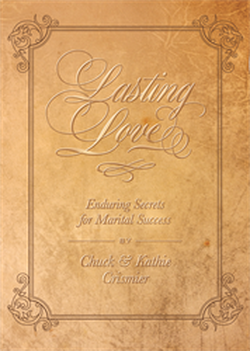
Lasting Love

LASTING LOVE can be a dream come true. Yet love requires more than a dream or those loving feelings we so much desire.Lasting Love, Chuck and Kathie Crismier, celebrating their Golden Anniversary, unveil seven enduring secrets that will inspire and strengthen your marriage as it has theirs. COPY and PASTE this link to WATCH the TRAILER: https://www.facebook.com/Save-America-Ministries-204687919570536/videos

About Save America Ministries

A New Breed of Christian Talk Show moving "from information to transformation," Chuck Crismier, veteran attorney, author, and pastor, has an amazing ability to probe below the surface and deal with issues that few dare to touch. It's dialogue that demands decision. It's 'Viewpoint' from Save America Ministries!

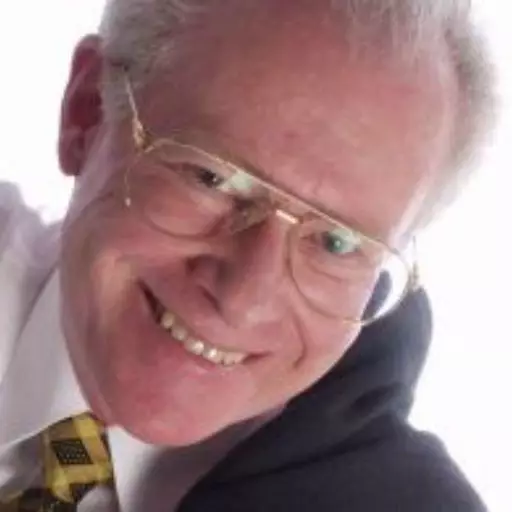
About Chuck Crismier

Pastor Chuck Crismier began his career as a public school teacher from 1967 to 1975. He then served as a Civil Private Practice attorney from 1975 to 1994 while at the same time pastoring a church from 1987 to the present. Chuck has authored several books most recently including “Out of Egypt” (2006), “The Power of Hospitality” (2005) and “Renewing the Soul of America” (2002). He founded Save American Ministries in 1993 earning him the Valley Forge Freedom Foundation Award for significant contribution to the cause of Faith and Freedom.

Contact Save America Ministries with Chuck Crismier

Mailing Address
Save America Ministries
P.O. Box 70879
Richmond, VA 23255
Telephone Number
804-754-1822