
THE DEVIL'S WORKSHOP


Students in the Lion's Den
w/ Dr. Gary Lovejoy
Chuck Crismier: This is Viewpoint with attorney and author Chuck Crismier. Viewpoint is a one-hour talk show confronting the issues of America's heart and home. And now with today's edition of Viewpoint, here is Chuck Crismier. It is said that 70 to 88% of youth born in evangelical homes leave the faith after one year in a secular college.
There's been such a focus in American churches on entertaining young people so they want to come to church, but very little emphasis on doctrine, teaching, apologetics, the gospel, anything else really relevant to the Christian faith. So many young people grow up with a shallow faith and a world foundation that says man determines truth, the same foundation our culture has.
So, here's the question. Why do Christian parents send their kids to secular colleges and universities? Do you? Are you sending your kid to the devil's workshop? I'm just asking, rhetorical question here, are you sending your kid to the devil's workshop and what do you expect to come after four years of the devil's workshop?
We understand a lot of what happens because today the stories that I hear coming from Christian parents and grandparents is very troubling. I hear a lot of wars going on, internal strife, as kids come back from one year, two years, three years in college, and they're at war with their parents over all kinds of things related to the authority of the Bible. Whether or not you were really ordained by God. Whether you came out of the slymorial dust of the earth by self-creation. All kinds of things, including whether or not you're a girl, a boy, or anything in between, maybe all of the above.
How could such a thing be? And such transformation take place in just a matter of a year or two years or three years when your children, supposedly, were raised in the nurture and admonition of the Lord. All of that here today on Viewpoint, I'm Chuck Crismier. This conversation is always with ever increasing conviction, talk that transforms, friends, and I trust that today will be no exception.
You know, I was just thinking in preparation for today's program. Some of the experiences that I've had, having not only grown up in the church, but having been involved in so many different layers of the church and its application and presence in our lives.
For instance, in the educational field, I was on the board of a Christian day school. I was on the board, in fact, the chairman of the board for a while, of one of the foremost Christian elementary schools in California. That's true.
Then also I was on the board of directors, in fact, the executive committee of the board and so on, of one of the premier Christian universities in America. I think I have a bit of an understanding and a bit of viewpoint on what's going on and those experiences were 40 to 50 years ago.
So if those experiences that I had 40 to 50 years ago help to validate what we're talking about here today, just think what has happened in those institutions since then. Just trying to set out some authenticity here. You know, when you bring on expert witnesses as a trial lawyer, which I was for 20 years in California, you've got to evaluate those witnesses to see whether or not they truly have experience, whether or not they truly are expert witnesses.
And yours truly is, shall we say, an expert witness with regard to this issue of education and Christian education. Well, today on Viewpoint, we have another expert witness joining us. His name is Gary Lovejoy, and I like that name because we need more joy in the world. We need more joy in the church, and this is a man who loves joy. He says so in his name.
He's a PhD, philosophy of something. His name is Gary Lovejoy, and he's written a wonderful book, Students in the Lion's Den. Sounds like the devil's workshop. Gary, it's good to have you on the program.
Gary Lovejoy: Thanks for inviting me. It's good to be here.
Chuck Crismier: Well, you have expertise. I've got to evaluate your expertise here. My understanding is that you have expertise in Christian counseling. Tell us a little bit about that.
Gary Lovejoy: Yes, I had actually two careers simultaneously. I taught college for over 30 years and, and then I also had a counseling practice. I've had a counseling practice for four decades. And, and I've worked with all sorts of troubled people, but particularly depression and anxiety, and and some of the spin-offs of that, and as well as marriage counseling. I've done a lot of marriage counseling over the years. In fact, I've written books on both those topics. And and and have enjoyed those careers. And in my teaching career, I experienced what was going on on the college campus. And I was one of the I taught on a secular campus. So, I was one of the few Christian profs there. And, and I experienced students coming to my office, some of whom I didn't have as personally as students, but they knew of me as a Christian prof on campus. So, they came to me after they had left their philosophy class. We had a particularly in one particular professor of philosophy who was, who was an evangelical Christian, who was raised in an evangelical Christian home and rejected rejected his faith in college. He's a many became a strident atheist and took perverse delight in slicing and dicing every Christian student who came into his classes. And they would, they would come to my office, some of them sobbing, some of them just livid with angry because they've been humiliated before the class or peers by a professor who was just destroying them, and they had no answers. And they couldn't answer his questions. They couldn't answer, couldn't parley their their understanding in any meaningful way, and they weren't able to give an answer to what they believed. And they began, they, so they were angry at first because they felt so humiliated, but then they started questioning their faith like, well, maybe what I do, he's got his PhD and he knows everything. So, maybe what I couldn't answer his questions, so I maybe maybe my faith is nonsense. And, and so they began questioning. And I was, I had the privilege of being able to to to correct them and to be able to pull them back into the fold and help them understand the fallacies that were being told in the college campus classroom.
Chuck Crismier: Well, the problem, the problem is that the majority of them are not coming back. They're not being reclaimed, and the statistics are showing that somewhere between 75 and 85% of young people, supposedly, allegedly Christian young people, are leaving the fold, notwithstanding all of the talk. Post TPUSA experiences that there's a massive revival among young people. We're not seeing that quite the way it's being talked about. And so we need to it's so important that we talk about this. I have a question for you. Are you on speakerphone?
Gary Lovejoy: I'm on speakerphone. Yes.
Chuck Crismier: Okay. Is it possible that you can get off of speakerphone because it's somewhat muddled.
Gary Lovejoy: Oh, it is? Well, maybe if I hold it closer to my mouth. Um, because I, because I don't have any way of putting it on any other.
Chuck Crismier: All right. Just keep it closer. Just keep it closer to your mouth. We'll be right back after this, friends. Stay tuned. You're listening to Viewpoint. Once upon a time, children could pray and read their Bibles in school. Divorces were practically unknown as was child abuse. In our once great America, virginity and chastity were popular virtues and homosexuality was an abomination. So what happened in just one generation? Hi, I'm Chuck Crismier, and I urge you to join me daily on Viewpoint, where we discuss the most challenging issues touching our hearts and homes. Could America's moral slide relate to the Fourth Commandment? Listen to Viewpoint on this radio station or anytime at saveus.org. Again, I welcome you back to Viewpoint, friends. We're talking about this matter of our young people going to colleges, particularly secular colleges and universities. But I have to tell you that it's not just secular colleges and universities. It's also happening in our so-called Christian institutions, many of them, where they're so interested in conforming to the culture in ways that they think they can get by with in order to seduce more people into the colleges to pay the tuition. I'm sorry, but I've been there from the inside out and I know how it works. I know what the motivations are, even though they're given spiritual, shall we say, a framework, but underlying it all is the desire to bring in more students, to have more programs, to bring in more money. So, that being the case, you have the veneer of Christian teaching, but you also have underlying it insinuating into the curriculum, into the lifestyle within the university and college. You also have very worldly and secular ideas. Gary, I don't know if you've been in a Christian university or not. Are you able to respond to what I just shared?
Gary Lovejoy: I, yes, I am. Actually, from from experience of my own daughter. My daughter went off to a Christian college, and, and and at the time she was there, it was just kind of in transition. So, it was still a quasi-Christian college, but now you wouldn't recognize it. You wouldn't recognize the teaching at all. And where the particular philosophies that have invaded Christian higher education has been social justice theory, critical race theory, wokeism. These kinds of things are really making their headway not only into Christian colleges and universities, but also in the churches. And, and so, yes, that that is a major problem. And so, if we send our kids off to a Christian college, that's fine, but that is not an excuse not to prepare them for what's ahead, because they need to understand what's, what these things mean. Most of them don't. I, I, in reference to what you were saying earlier, I was I had spoken at a church retreat and just not that long ago. And and they asked me if I would address a separate group of parents that had their kids had walked away from the faith during their college years. And they're just hurting, and they need to have, you know, some, some counsel about that. And I said, sure, I'd be happy to talk to them. So, at the retreat was over, I, we had a special meeting, a seminar type of thing. And I thought it would be just a round table discussion of, you know, maybe a half a dozen or a dozen parents. It was it was a huge room, held probably 60, 70 people. And it was packed, standing room only. And every one of them were parents who had either lost a daughter or a son, and some of them both, to, in the faith. And they could say they had lost their faith on their and they'd walked away from the faith. And some of them even walked away from the family because of their faith. And, and so they were all hurting and all in grief over over that. And at that point, I realized just how pervasive this problem really is. And it's not a small problem. It's a growing problem. And it's getting worse. And, partly because, because the Marxist professors, Marxist and socialist professors who are on campus now, are much bolder in teaching their ideologies. Much more so than than in the past. In the past, they were, especially in the '50s, '60s, they were pretty quiet because of because of the Cold War and and communism and socialism were not viewed favorably. But after the after the major upheavals in the 1960s with the anti-Vietnam War, and with the those protests as well as the free speech movement and all the rest, there was a great deal of unrest on the campus, and new ideologies, foreign ideologies began invading the college campus. At that point, these professors became bolder and became more out of the woodwork, so to speak, and began speaking their ideologies in the classroom and indoctrinating their students. And so, since, especially since the '80s on, and and increasingly so as we've gone along, they have taught things that that were would be considered true heresy today, I mean, years ago. And, and and that it is drawing in students who don't know those topics. They're unprepared. They're like sheep being led to the slaughter. They don't know their own faith well enough to defend their faith when they need to. And when they hear these things, they're usually dressed up in in a kind of false humanitarianism. And and we're seeing this also in the whole idea of anti-Semitic protests. These also come from the Marxist professors. And the reason for that is the strategy of socialists and communists are that that you divide people. They've done done this racially between blacks and whites and through critical race theory, for example. And they also and they're pitting them against each other, and they're pitting Gentiles and Jews against each other as well by fomenting anti-Semitic protest.
Chuck Crismier: Okay. Well, that those are the those are the shall we say, the frameworks out there, philosophical frameworks and so on. But down deep, there is a lure within our students to, shall we say, embrace or become or open ourselves, open themselves to this kind of thinking. And one of those you speak to in your book, you call it idealism. Idealism is both a blessing and a curse. Young people want to believe that they have a place. They have a purpose, and they have a meaning. So, they're very easily seduced into, what should we say, the pursuit of a kind of utopianism. They're going to save the world. They're going to embrace the latest and the greatest. And if you can get enough people on board, they think they really belong to the the the happening, and it makes them feel better.
Gary Lovejoy: Yeah, you're absolutely right. The, uh, they they purposely focus on that. That's why they have the patina of humanitarianism. For example, in the anti-Semitic protests, it's all about the downtrodden Palestinians. Never mind the atrocities by Hamas. It doesn't matter. What's really matters is that they're they're humanitarian concerns. Uh, they, they talk about, they often talk about an I this is spoken often times in the classrooms as well, that religion in general and Christianity in particular, is responsible for more killing than any other factor in history. And they cite things like the Crusades, the many religious wars, and they may even point to the Book of Joshua and claim genocide and ethnic cleansing in the land of Canaan. And, and then they another tack they may take is that Christ was a rabble-rousing revolutionary who sought to overthrow the Jewish leaders of his day, so they executed him to restore peace. Thus Christians should be open, not closed, to revolutionary ideas. Instead, they fight change tooth and nail. They're stuck in tradition. That's how they're they're taught. And or Christians are supposedly argue for peace and value of diversity, but what what they're really arguing for is crushing dissent and enforcing uniformity. Everybody must think alike. And that's actually what they do.
Chuck Crismier: Well, isn't it interesting that the originally, the concept of a university was exactly the opposite, not to inculcate and force people into a conformity, but actually to force them to think, to really think and to have a reason, shall we say, for the hope that lies within you. Just the opposite is taking place now.
Gary Lovejoy: You're, you're absolutely right. Actually, the word university means unity out of diversity. Uni is the first part, unity from diversity, cultivation of diversity. And, and how do you get unity out of diversity? You get it by critical thinking. You allow you you allow dissent. You allow different ideas out on the table. And you discuss them and their merits. And you use critical thinking skills to ferret out the the truth from uh from the non-truth. And that's what was what it's all about. That's the whole idea of the university. They abandoned that whole principle. That principle is gone. Now it's indoctrination. It's not it's not teaching critical thinking. Critical thinking, for the most part, in the socio-cultural context is dead in the university. And so is so is free speech. It died in the university as well. They,
Chuck Crismier: In fact, free speech is become a virtual anachronism in the university concept because conformity is the goal. You will conform or else. And so you have professors who will write up front, challenge students, perhaps even on the the first day of class and say and ask, are you a Christian, for instance? And of course, the the the kids are wondering, well, should I admit that I'm a Christian or not? What's going what's going on here? So if you do, you set yourself up with a target on your back for not only the professor, but the students now, because they have been urged to conform, and here's one person or three people who say, no, we're not willing to conform. And then all hell breaks loose, and you become the subject of attack. Is that how it works?
Gary Lovejoy: Well, yeah, I think uh osticism is a very powerful tool in the hands of people who are malevolent. And, and if you're trying to to drive home your point of view and to inculcate your ideology in the minds of of the young students in front of you, then what you want to do is uh to press those issues. And that's why they that's why they dress them up into more palatable ideologies like, for example, emphasizing humanitarianism. Or you know, you're for the poor, you're for the downtrodden. And they include in that downtrodden and the and the poor and all the rest, uh people like uh the transgender community or the homosexual, LGBTQ community. These are all downtrodden groups, minority groups that are downtrodden. And so they take up their cause and they say it as a humanitarian. And that Christians are too exclusive. And consequently, they and they start talking about people are sinful and, and that they need to repent of their sin and, and claim Christ as their savior. And they say, that's hate speech. It's hate speech because we focus, you don't you don't see man's inherent goodness. And uh and so therefore, you're always talking about sin. And we look at the side of his goodness, and that's where the utopianism comes from. Is the whole idea that man is essentially good and that the the objective of society is to release that good into society. Well, that assumes that man is essentially good, which of course is directly contrary to what the Bible is talking about.
Chuck Crismier: Well, even our founders in this country knew that wasn't true. And that's why they gave us a republic with checks and balances, because they saw the effects of sinful nature. And that's why they despised democracy itself, pure democracy, because they felt it was a tyrannical and most dangerous form of government because of human nature.
Gary Lovejoy: Yes, yeah. The the the republic system that they concocted was entirely with all of its checks and balances and everything, was designed specifically to check man's tendencies to sin. And that is the tendency to to commit crimes or the tendency to uh to uh uh become dominant or dominate uh one group over another and uh and to destroy the equality of man, which is the cornerstone of of uh of freedom. And, and this all comes from biblical principles. And and you're right. Almost all the universities, the the Ivy League universities were established during the colonial years, and uh and they were all established by by Christians. And they were they were established as Christian colleges. That is long since been lost, but uh,
Chuck Crismier: And it's amazing. It's amazing. And they will still hold on to their engraved mottos, but they don't live by them.
Gary Lovejoy: Exactly. That's true.
Chuck Crismier: Yeah. It's it's just astounding. They were there to train pastors, uh to train the colonists, uh to follow the word, will, and ways of the Lord. And then they did just the opposite. It's it's just astounding what has taken place. Now you've written a book called Students in the Lion's Den. Uh, I think we can get the sense of that. What what are you intending to to communicate uh with regard to your book, other than what you've said here? What what advice do you have for for parents and grandparents or uh pastors, parachurch leaders, uh youth leaders, and so on?
Gary Lovejoy: Yes, that's a good question. Um, yeah, I think one of the things is um that I I feel very strongly about is is uh really preparing students for what's to come. Most of them are not prepared. As a professor, I saw these students, these Christian students, like I said, they're like sheep to the slaughter because they are not prepared. They're not prepared for the arguments they're going to be confronted with. They're not compared prepared to deal with being able to give a reason for what they believe. Even though that was advocated both by the writer of Hebrews and by Peter, but um, but they're they're woefully lacking. And I think that that uh both for parents and teachers as well as for churches, need to take heed of that. And if we're coming to a close of this segment, uh I can do it on the other side, talk about what the what the church can do that makes a difference, and what parents can do.
Chuck Crismier: That's where we're going. That's where we're going, Gary. Friends, we're going to make the book available. Students in the Lion's Den. 20 bucks right on our website, saveus.org. There is so much more about Chuck Crismier and Save America Ministries on our website, saveus.org. For example, under the marriage section, God has marriage on his mind. Chuck has some great resources to strengthen your marriage. First off, a fact sheet on the state of the marital union, a fact sheet on the state of ministry, marriage, and morals. saveus.org. Marriage, divorce, and remarriage. What does the Bible really teach about this? Find all of this at saveus.org. Also, a letter to pastors, the Hosea project, saveus.org. And many more resources to strengthen your marriage. It's all on Chuck's website, saveus.org. Again, you can listen to Chuck's viewpoint broadcasts live and archive. Save America Ministries website at saveus.org. Again, friends, we're talking about the the devil's workshop. We're talking about sending our kids, our so-called Christian young people to universities and colleges, particularly secular ones. But even we have to be very careful about purported Christian ones these days. And I say that strongly, friends, strongly. I've been there on the inside and know exactly what's going on. To the point where, when I was on the board of one of our Christian universities, that the president wanted to change to a public benefit college in order to gain more money and more respect, to turn it into a USC under the name of Christ. And I resisted it on the board. I said, no, we have the very best situation that we could possibly have. We are not going to go that direction. They said, prepare points and authorities to present to the board, which I did, and they overwhelmed the president in his his efforts to do so, for which he didn't like very much what I had done there on the board in that university. But at the same time, they asked me to head up a student up a task force, a spiritual life task force to investigate and go over the entire university in every aspect of its work. I spent an entire year doing that, even as a practicing lawyer there in Pasadena, California. And I tell you, uh, they weren't necessarily happy with what I uncovered. And that was 40 some years ago. Just think the drift that is happening everywhere, friends. These are not neutral things for us. We have a responsibility as parents and grandparents to protect and direct our young people in ways that they are not subjected openly to the devil's workshop. We need to prepare them. And I think that's one of the things that our special guest, Gary Lovejoy, here is talking about in his book, Students in the Lion's Den. $20 will put the book in your hands. It's on our website, saveus.org. You can give us a call at 1-800-SAVE-USA. That's 1-800-SAVE-USA, or call us at uh or write to us at Save America Ministries, PO Box 70879, Richmond, Virginia, 23255. Add $6 for postage and handling. Students in the Lion's Den. Another way of saying, the devil's workshop. So, Gary, we're talking about something that is insidious. It is seductive, and we're seeing the ramifications of it. All the statistics are proving it. Both secular and religious writers and investigators are confirming the falling away of our young people from the faith once delivered to the saints. This is a serious matter, isn't it?
Gary Lovejoy: It is. And, and even if there's just a few, that's still a serious matter, because anyone who who leaves the faith is leaving the truth, and their lives will be destroyed accordingly, unfortunately. Uh, one of the things that, uh, that we were talking about just before the break, which I think is really important, uh, is the church does have a role to play. And I I parents have a role to play. They can actually be a team with one another. Uh, but, um, uh, but often times the protocol in typical churches is, um, that when a student reaches say the time they're juniors and seniors in high school, they're they're got a couple more years to finish high school and then they go off to college. This is when the the the paradigm should shift in teaching kids, because usually they they go to a class to Sunday school classrooms or whatever they do do together. They have one of pastors or or layperson or whatever, teaches the class and, uh, kind of like a mini-sermon type of thing. And then they file out and they go into the church and and, uh, and uh experience the sermon there. But what I think needs to happen in the churches is that once they get to the upper class, I actually, could be starting all high school, sophomores, juniors, seniors, uh, to change the the the, um, uh, the conversation so that that they have a seminar approach where they have a round table discussion and talk about all the things they're going to run into in society. And in especially on the college campus.
Chuck Crismier: Well, you know what? I think that should start in junior high school or middle school.
Gary Lovejoy: Oh, I agree.
Chuck Crismier: I taught I taught junior high school for for nine years before I began the practice of law. And, uh, they say that, or it is said, that what a child comes to believe by age 13 is the thing that's going to anchor them. It's not what they get in high school. It's what they got before high school that is going to determine the trajectory of their life. That's where we need to get them.
Gary Lovejoy: Well, I I I agree that the earlier you start, the better. But I'm just saying that in many churches, churches are had have difficult time making changes from their normal, uh, procedures.
Chuck Crismier: You think?
Gary Lovejoy: And so, you start yeah. So, you've got to start where they're willing to to bend. But yes, I can earlier the start the better. But what I'm saying is, they need to have the round table discussion and talk about what is communism? What is socialism? What is, um, uh, what is, uh, wokeism? What is critical race theory? What is critical justice theory? And on and on. And, and talk about these things because they're going to run into them in the college campus. And, and talk about them. And then what is the Christian answer to these things? What does the Bible say about these things? So that they have a, they they are taught and they can inculcate the ideas of what it means to have their faith challenged by these ideologies and to be able to give an answer in response. And if they are prepared, then they're not going to be hit in a classroom. I I I had students, um, uh, come to me and they're they're they they feel like they've been destroyed in their faith because they didn't have any answers. They didn't they weren't able they weren't they didn't study their Bible enough and they didn't understand their faith fully enough. And they and they think just going to to church and going through all the ritual and and being and living in a Christian family is good enough. That prepares them an answer is, no, it doesn't.
Chuck Crismier: Well, they don't even necessarily know what it means to live in a Christian family. What is a Christian family anyway? You you write in your book for the most part the spiritual discipline of discipleship is missing from the agenda of the church. In other words, discipleship is missing. Discipleship from Jesus' viewpoint is to teach people to observe or obey everything that he's commanded. That the word obey has fallen on very hard times such that many pastors appearing on this program over the past eight years have said the word obey is the most hated word in the church today. Therefore, how can we say we're preparing our young people to stand in the evil day when we're telling them they don't have to obey nothing for nobody, just follow your heart or your feelings?
Gary Lovejoy: Yeah. Well, I I I think the problem is in that regard and and that's where uh that's part of what the solution can be is um I in my experience that when students really know what they believe, I actually know what they believe, they can cite scripture to to back up what they believe, but they also know and understand the whole point of Christianity. Really understand it, and that's both from the Old and the New Testament, um, that if they do, they are very resistant to, uh, uh, to the ideas that are indoctrinated on the college campus, because they already know the answers. They already have gone through this. If you ask if you were to to a protest march, whether it was protesting something at a college or whether it's an anti-Semitic protest or whatever it was, and you ask them, what is socialism? Because two-thirds of young people today view socialism positively. So, you ask them, okay, well, tell me, what is socialism? They can't answer you. They don't know the answer to that. They will look at you as if you're speaking in Swahili. You they they say, you know, what what I I don't know. Or they'll cite some social program, some uh like social security or something like that. That's socialism. I said, no, that's not social.
Chuck Crismier: Well, Gary, that's the reason why I wrote a book called Seduction of the Saints, How to Stay Pure in a World of Deception. And we go through all of those things. And what a tool this would be in the hands of parents and grandparents just for sitting down with their kids, having a conversation about a vast array of things. Uh, not just the things you're talking about, but vast, more than that, digging into our hearts, the faith, and how it's applied. And I tell you, you're you're absolutely right. There is no understanding, very little understanding, nor do I sense that very many parents care.
Gary Lovejoy: Uh, well, I think I think they most in my experience, most of my the parents may care. If you ask them about it, they care about it, but they don't know, they fall into two groups. One, they don't know the first thing what to do about it. So they get they just throw their hands up and say, well, I just pray for it. I just pray that the best will happen. And the other group is the group that says, uh, they don't want to go there because they don't want to show their own ignorance. And and, uh, and so,
Chuck Crismier: Or they don't want to get involved in a fist verbal fist fight with the student that's coming back from college that's arguing in their face and say, you don't know what you're talking about.
Gary Lovejoy: Right. They do. But, but see, that's partly because they're there the student comes home and he's got different ideas and he confronts his parents about it and so forth. Uh, the wrong response for the parent is to fight back, to argue back and say, no, you're their lunatics there. They're not telling you the truth. This is what it is and so forth. You'll only alienate them if you do that. What you do instead of doing that or trying to placate them, that's even worse. And, uh, instead, what you want to do is, uh, ask them questions. Ask them lots of questions because they really don't know. Even these ideologies that they're embracing, the one problem is that in the on the college campus, the university campus, I know because I've been a professor there for 30 years, they no longer really teach critical thinking. That's dying. And then on the that should be where it's cultivated most. But it's the least cultivated there. It's indoctrination. And I think the problem is that they need to be able to use their own critical thinking. But they're not used to thinking critically because they're not taught to think that way. But a parent can ask questions. And you ask them and say, well, what evidence did they give you for that that particular ideology or that beliefs that you're talking about that you feel strongly about? What evidence did they give for that? And you start asking questions or when they gave that evidence, did did uh were you able to check it out and see what the he's he's a PhD. He knows what he's talking about. No, did you check it out for yourself? No, I didn't. I I I'm sure he's right. And and so, well, maybe there you know, a lot of times research has uh differing opinions about the conclusions of pieces of research. It's not just one person. So, you might want to check that out. And you ask them questions, and what you're doing is you are showing them the respect that they need to think critically about what they're embracing. And when they do, and when you ask them questions, they begin to discover for themselves, gosh, you know, I don't I can't answer their questions.
Chuck Crismier: Very good point. Very good point. Students in the Lion's Den, friends. That's the title of the book. $20 on the website, saveus.org. Have you ever considered what the early church was like? Many people are developing a heart, longing for a greater fulfillment in our practices as Christians. A recent study showed 53,000 people a week are leaving the back door of America's churches in frustration. What is going on? Why has there not been even a 1% gain among followers of Christ in the last 25 years? Could it be that God is seeking to restore First Century Christianity for the 21st Century? Jesus said, I'll build my church. Is Christ by his spirit stirring to prepare the church for the 21st Century? The early church prayed together and broke bread from house to house. They were family, and it was said by all who observed, behold how they love one another. Incredible. But the same can be found right now. Go to saveus.org and click Sell Church. We can revive First Century Christianity for the 21st Century. It's about people, not programs. It's about a body, not a building. That's saveus.org. Click Sell Church. So good to join you here today, friends. Always a privilege to talk about the things that matter most. We're confronting the deepest issues that touch America's heart and home from God's eternal perspective. And we know it's from God's eternal perspective because right there in Deuteronomy chapter 6, it says that parents should be have the primary responsibility for inculcating the faith in the minds and hearts of their kids. We should be talking of it when we rise up, when we lie down, when we eat, whatever we're doing. It should be an essential part, a very integral and essential part so that every aspect of our lives from young youth on up is discipling them in the nurture and admonition of the Lord. It's not about church going in and of itself. It's about truly walking as a follower of Jesus Christ. Now, our special guest, Gary Lovejoy, you you received some education, higher education from an institution called Fuller Seminary, didn't you?
Gary Lovejoy: Yes. Okay.
Chuck Crismier: Fuller Seminary.
Gary Lovejoy: Well, as the time that I went there, uh, Fuller Seminary, um, was, uh, a conservative seminary. In fact, uh, Charles Fuller himself was still alive when I first started there.
Chuck Crismier: Is that right?
Gary Lovejoy: Yeah.
Chuck Crismier: Wow. That that that means you're about you're almost as old as Moses.
Gary Lovejoy: Yeah. I am.
Chuck Crismier: Well, I wanted to go back to this because we're laying the responsibility on Christian colleges, on on secular colleges and so on, but I want to tell you that a lot of the responsibility goes back to our seminaries. Fuller Seminary, one of the preeminent evangelical seminaries in the country. Right there in Pasadena, California, that was just two miles away from my law office. Okay? And, uh, so I knew the provost, one of the provosts of Fuller Seminary, was one of my fellow students in the sixth grade. Wow. I know the people that were involved in Fuller Seminary. And here's the point. Fuller Seminary, starting in the early 1970s, became one of the premier promoters and visionaries of the church growth movement. The church growth movement ended up into the seeker sensitive movement. They go hand in hand. It began with Robert Schuler there in Southern California. That led to the diminishing of discipleship in the body of Christ in order to grow bigger churches. That diminished the actual preparation of our young people and their parents for protecting them from the devil's workshop. It goes way back. And these things are not innocent, they're not neutral. And we need to recognize what has actually happened. Going back to Southern California during that same period of time, in the in the public schools, I don't know if you're aware of this, Gary, but in the late 1960s, early 1970s, the public schools in California changed dramatically and insinuated the new belief system in the whole country. Here's what happened. They began to develop a theory that, uh, we don't, we should not be talking about truth. We should not be talking about facts. What we really need to be talking about is our feelings. So, they mandated that every teacher go to weekend classes to be inculcated with a new idea of teaching. You no longer were permitted to talk about facts or beliefs. You had to talk in terms of feelings. Well, guess what? Not only did that happen in the public schools, but it insinuated itself by the middle of the 1970s in the evangelical churches across America. So feelings became the Lord, and faith was given short shrift. That's the environment in which our young people are being raised. Trust your feelings. No, you cannot trust your feelings because they vacillate. Your feelings cannot be your Lord. And when they are, you're going to be susceptible to deception in the devil's workshop. That's my viewpoint. Give me your take.
Gary Lovejoy: Yeah, I think what you're talking about is the insidious encroachment of postmodernism. And postmodernism really denies there is any objective reality. And likewise, therefore, morality is there's no objective morality either. And, uh, so there's no real truth. The truth is what you make it to be. Uh, so there's no absolute truth. And of course, that's uh anti-thetical to the biblical position, which, of course, obviously there is truth. And, uh, but once you deny the existence of objective truth, and therefore leading to the denial of of objective morality, then, um, then it's uh then everything becomes relative. And and it and everything can be explained in the way contextually so that, um, as a result, uh, you can engage in behaviors that would normally be obviously considered sinful. And yet, if you explain it away contextually, it looks like, uh, well, in this situation relative to the circumstances we're in, it's okay, it's fine. And so, you can you can legitimize almost anything under that system. And that system is entrenches in the '70s, '80s, '90s. And of course, now it's is, uh, common, uh, common application in the in the in the since 2000. But, um, but yeah, once you object, once you, uh, reject, uh, absolute truth or objective truth, once you do that, that's the slippery slope. It goes straight downhill. And, uh, and that's that happened in the late '19 late 20th century or 21st.
Chuck Crismier: Fuller Seminary became noted for being the first to introduce psychology into seminary training. A whole psychology department. I'm sure you're aware of that. And uh uh interestingly, one of the former leaders there actually was one who facilitated bringing out one of the first, uh, what do they call them, dating sites on, uh, in in America. Came right out of Fuller Seminary. So, the question that I have is, did we do ourselves a favor by introducing psychology through Fuller Seminary? Did we not infect the entire body of Christ with the, shall we say, the sense of the Lordship of feelings, rather than absolute submission to the truth of God's Word?
Gary Lovejoy: Uh, it might in the wrong hands. I think, uh, the the concept originally because I saw the concept of that. Um, originally was to integrate our Christian faith into our counseling practice. So that, uh, that that, uh, that when so that we understand when we're sitting in front of a client and they're struggling with their lives, uh, what biblical principles fit in that situation. So, how our faith can, uh, can maximize the effectiveness of our counseling. And, um, and so,
Chuck Crismier: So I I agree with that. That was the intention.
Gary Lovejoy: Yeah. That was they had what they called integration seminars. But I saw what happened in the integration seminars. And, um, and what happened was that integration seminars slowly faded and disappeared. And, um, and that was to me, what made the program effective was to have the integration seminars. But those integration seminars became less and less about integrating your faith and your counseling. And I and I saw that in other campuses. I I also I I was an adjunct professor at, uh, Western Seminary, Western Theological Seminary in Portland. Uh, and, um, uh, and they had a they had a psych program that started there. Um, and they had integration seminars as well. But again, I I I was an adjunct professor because I taught at another college. And so, uh, I was, uh, uh, teaching some courses at the at the PhD level. And I was, uh, and I said, where are the where are the integration seminars? They said, oh, well, we we were trying to integrate them, but we just we're having difficulty finding, uh, finding how we can, uh, fit that into our program. And I said, what are we talking about here? And my students, the students came to me and said, we thought there were going to be integration seminars. And I said, there should be. And so, I just took the took it on myself. And I said, well, I was on my own dime, but I just said, let's meet in the evening and let's get together in the cafeteria. And, and we'll we'll have an integration seminar. And so, I was, uh, so I was running some of those seminars. In order to to really integrate faith and counseling. But it wasn't being really done from a programmatic level, which is unfortunate. And, um, and so, uh, that's what happens. They they may have conceptually, they may have, uh, uh, a have a good beat on it, but they don't follow through. It it it dropped out. I think because people don't aren't really truly committed to the idea.
Chuck Crismier: Yes.
Gary Lovejoy: They say someone has an idea, but it's not committed to the idea. And so that idea is slowly first of all, it becomes diluted, and then eventually becomes disappears altogether.
Chuck Crismier: Well, it it fights against being culturally acceptable. And the goal is to be culturally acceptable, uh, even for Christian universities, even for seminaries. And they want to be able to market their program. They want it to be acceptable to the broader range of people. And so, inevitably, it always deviates from or drifts away from the the foundation of intent for the beginning. And, uh, and and to the credit, and to the credit of Western decided that that program didn't have the credentials it needed to fit what they were trying to do. And so, that school was transferred to a college nearby. Uh, that whole program was transferred to a university that just a few miles away. Uh, because, uh, and so, that that program has not existed any longer at Western. And and, um, I don't even know if they do integration seminars at the university there. But, but I I doubt it seriously. But the idea is really a good one, because if you're going to have counselors out in the field working with people, they better know, be able to effectively integrate their faith and what they do. I mean, I I had a counseling practice for for four decades. And and my faith was critical to my the how I. And I I found even with non-Christian clients, I would introduce biblical ideas. And they weren't averse to it. They said, oh yeah, that sounds good. And so, they, uh, but, uh, but I would, uh, address it in a way that that they understood what it meant, the principles that were involved. Even if they weren't believers themselves. And, uh, but the ones that were Christians, of course, they did understand that part. But, but I think there's a place for that in in the training of good Christian counselors. But, uh, but unfortunately, it no one seems to follow through on that. They they had the idea. And then I I think it I think it was just considered too hard, it's an uphill battle, and we're not engaged in uphill battles anymore. It's about gathering the most to big the buildest, biggest churches, the largest denominations. And, uh, so, that's the trajectory. And, uh, that being the case, you have to fit in, or you're going to fall away from it. You have to make a decision what is important from God's viewpoint. That's the real issue. What is important from God's viewpoint, not the culture's viewpoint, not your denomination's viewpoint. Uh, it's it's God's viewpoint. I received a uh I I have in my hands a Facebook statement that came from a gentleman, it appears to be uh from Africa, but, uh, he probably is from America, just with an African name. And he says this, "Barna Research shows nearly 70% of Christian students drift from their faith in college." But he said, "Honestly, it shouldn't shock anyone. We send our kids into universities that proudly call themselves neutral. Yet everything about the modern college system is aggressively anti-God, anti-Bible, anti-truth, and pro-confusion. Professors mock scripture. Classmates celebrate sin. Campuses push ideologies that contradict basic biology, and spiritual discipline gets drowned out by the academic pressure, social pressure, and moral experimentation." Here's the hardest pill for parents and churches. "Most Christian students didn't lose their faith in college. They entered college with a faith that was never rooted." That's really the bottom line. And uh,
Gary Lovejoy: Well, that's it. And that's that really gets to the point that I'm making. And that's why I want to close with this. Gary, we're right at the end of the program here, and I want to make sure people get your book, Students in the Lion's Den. Uh, I think you're going to find it very valuable, friends. $20 will be helpful to parents and grandparents concerning students, college students, $20 on the website, saveus.org. Call us 1-800-SAVE-USA. Become a partner, friends, send your gifts by faith to Save America Ministries. We're confronting the deepest issues of America's heart and home. Yours. God bless you. God bless you. You're listening to Viewpoint with Chuck Crismier. Viewpoint is supported by the faithful gifts of our listeners. Let me urge you to become a partner with Chuck as a voice to the church, declaring vision for the nation. Join us again next time on Viewpoint as we confront the issues of America's heart and home.
Featured Offer
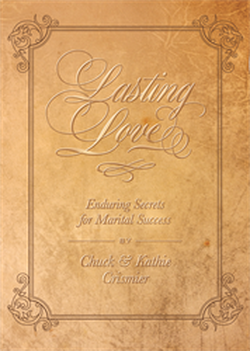
LASTING LOVE can be a dream come true. Yet love requires more than a dream or those loving feelings we so much desire.Lasting Love, Chuck and Kathie Crismier, celebrating their Golden Anniversary, unveil seven enduring secrets that will inspire and strengthen your marriage as it has theirs. COPY and PASTE this link to WATCH the TRAILER: https://www.facebook.com/Save-America-Ministries-204687919570536/videos
Past Episodes
This ministry does not have any series.
Featured Offer
LASTING LOVE can be a dream come true. Yet love requires more than a dream or those loving feelings we so much desire.Lasting Love, Chuck and Kathie Crismier, celebrating their Golden Anniversary, unveil seven enduring secrets that will inspire and strengthen your marriage as it has theirs. COPY and PASTE this link to WATCH the TRAILER: https://www.facebook.com/Save-America-Ministries-204687919570536/videos
About Save America Ministries
About Chuck Crismier
Contact Save America Ministries with Chuck Crismier
crismier@saveus.org
http://www.saveus.org/
Save America Ministries
P.O. Box 70879