Oneplace.com

CHINA RE-WRITING THE BIBLE

May 15, 2026
00:00

Geo-political summit analysis

w/ Christian Briggs

Chuck Crismier: As two of the great world leaders in the world, the two great leaders, China and America, have completed their summit. Xi Jinping and his CCP is rewriting the Bible. Yes, you got that right, friends. I'm not sure what the summit dealt with, but I don't think it had to do with the Bible.

So Xi Jinping has decided to rewrite the Bible. He is in work on that, and the Chinese Communist Party actually is doing the job. As part of Xi Jinping's Sinicization of Christianity campaign, the Chinese Communist Party, CCP, plans to ensure that Christianity in China is instilled with core socialist values.

Well, how do you do that? Well, pursuant to that effort, the CCP is currently working on its own translation of what it calls the Chinese Christian Bible, which is almost a non-sequitur to even say those words at the same time: the Chinese Christian Bible. Well, there are many true Chinese Christians in China, but in China, the Ten Commandments now have become nine, then six, and then zero.

Yes, you got that right. In 2018, mere months after Xi announced the five-year plan to sinicize or Chinese-size Christianity, authorities forced a state-approved church to delete the First Commandment that says, "You shall have no other gods before me." The removal of arguably the single most important commandment, not just for Christianity but for all three Abrahamic faiths, is a strike against the very heart of religion, says the article.

Later that year, the government changed the curriculum of a Sunday school in Hong Kong, removing not just the first four commandments but all references to the Lord in the Bible. The entire book of Genesis was also removed. Can you believe that? The Ten Commandments, wholesale removed. Within a year, "You shall have no other gods before me" became "Use Chinese culture to permeate faith and follow the party."

That's what it was. And so the CCP has also targeted John 8:3-11, among the most famous passages in the New Testament. In the original story, when the Pharisees bring Jesus a woman accused of adultery, Jesus replies, "Let him who is without sin among you be the first to cast a stone at her." Then he forgives the woman, saying, "Go and sin no more."

But a textbook published by Chinese University, it's a government-run school, changes the ending of that story. After the Pharisees leave, Christ tells the woman, "I too am a sinner. But if the law could only be executed by men without blemish, the law would be dead." So Jesus then personally stones her to death. Yeah, you got that right: the new Chinese Christianity.

Wow. Obviously, Xi Jinping seeks to transform the gospel into banal Communist dictates, where mercy is substituted by oppressive lawfare and the party is the only higher power led by him. Well, I welcome you to Viewpoint, friends. There's no question about it, Viewpoint does determine destiny. We're seeing what's happening in our world even as our President has made his debut there in China, and one wonders, what really is coming from that?

Well, one of the things that we can see as of mid-May this month, the US dollar is rising in the short term, hitting two-week highs supported by increased inflation, surging oil prices, and a safe-haven demand due to the conflict in the Gulf. Well, what does that mean? It means there's a significant drop in gold and silver prices. A significant drop in gold and silver prices. Why would that be? We'll answer that later on in the program today.

So while gold and silver prices seem to be crashing or at least diminishing, we're seeing oil prices increasing. What does that mean for you and for me? Well, today I spent $111 to fill my vehicle. That's what it means to me. Oil prices have increased more than 1% after Trump flags China's interest in US supplies. Where is it all going? What really happened in terms of this meeting with Donald J. Trump and Xi Jinping there in China?

We'll talk about that with our special guest and friend, Christian Briggs, joining us again to talk about this matter. Christian, you're heading up this very interesting business called Hard Asset Management. It seems to me at this point that all assets are hard to manage. What say you?

Christian Briggs: Well, thanks for having me, first of all, but you're probably not far from the truth. The divergence of what we're seeing in both soft and hard assets, soft being stocks, equities and bonds, debt both macro-micro, which means government or private, has been incredible.

And then when you look at the separation of precious metals and the reason when you as you put it earlier in the opening monologue here, we basically have a divergence where the debt of the United States is now under tremendous pressure. Interest rates are going up. The dollar is strengthening because of that, because we're paying more for our assets when it comes to the interest on our debt, the assets of the United States government, that is.

In the precious metals are very interest rate sensitive. So when the interest rates go up, and we're having a global phenomenon, I'm not sure if your listeners followed in the last 24 hours what's happening around the world, but especially in England. They're seeing highs for some of their debt, their long bonds or their long-term treasuries are also equally skyrocketing on the rates and they're getting killed. So it's because of oil. At the end of the day, it's because we have $105 oil here today.

Chuck Crismier: Well, it could go higher. Some were saying it could have gone up to $200 a barrel. That would have truly put most out of business. But it seems like there's no end in sight right now. The issue with regard to the Hormuz access for oil still hasn't been resolved. We still have the blockage there that we've set up, but a massive Chinese vessel just came through with what was it, 2 million barrels of oil? So how are we to understand what is really happening there with Iran?

Christian Briggs: Well, let's talk about Iran. What's strategic about Iran? Why would we put so much value in securing Iran's nuclear energy and some of the ways that they are dealing with China? What is it about Iran that solidifies our it's not just the regime change that took 47 years ago, Chuck, with the Shah of Iran overthrown, who by the way loved his people and Iran was the Los Angeles, the New York, almost the Miami of the Middle East, okay?

So what was it that was the regime change where the people were being suppressed and they were being murdered and basically there was an intolerance for anybody who wasn't a hardcore Muslim Brotherhood. But what you've got to remember is Iran has a lot more strategic reasons than just a regime change.

Chuck Crismier: All right, well talk about that after this break. Strategic reasons there with Iran. Obviously, we want to protect ourselves from nuclear destruction, but what else? We'll be right back.

Welcome back to Viewpoint. I'm Chuck Crismier. Today Christian Briggs is joining us again. He is the CEO of Hard Asset Management, dealing with rare coins and investment in hard assets: gold and silver and platinum and palladium and those kinds of things. But this isn't exactly a bull market for those, is it?

Christian Briggs: Oh, it is a bull market. When you look at the overall three years and four years, it's been a tremendous gain. You know what people do and this has been an issue with a lot of the way people think in short term, and this is the reason why China has been so successful in going after some of the trade deals that we were overlooking because we tend to be on the error of microwave fast food drive-through where if you want to put it in a very simple term, China, China's been at this for 5,000 years. They've been at this game as far as trying to take over dominance with military and financial. So they've been at this for a very long time and they're really patient people.

Chuck Crismier: Well, yeah. Well, think about it this way: the last time they were in leadership of the world was in the 11th century. The 11th century. It's been a fair time since then, and now they're seeing this is our grand opportunity to rule the world.

Christian Briggs: And they are, in a lot of areas. When you look at let's let's get back to this Iran thing, because it's going to pull circle your answer that your listeners are going to want to know. There are three primary goals for this administration. One, secure the dollar as the number one transactional currency every day. Number one. Because that strengthens a sovereign nation, it can lose or gain by the very nature of how well their currency is being utilized in everyday commerce, okay?

So that's number one. Okay, now at the end of the day, Trump had to secure that, and I'll tell you exactly how he did it. Number two, he had to lower the deficit spending, which he has remarkably through three key pieces of legislation, which I'll explain those as well. And the third thing which was very important, he basically had to get rid of the world's number one sponsor of terrorism in the world with nuclear weapons agenda. Period.

Chuck Crismier: All right, so there's Iran. That leads us to Iran since 1947 when they took captive about 50 American diplomats and held them for what, a month and a half there as hostages, and ever since then, which triggered an oil embargo in the United States, Iran has played the flute for the world and the world has danced to it.

Christian Briggs: Pretty much. Iran had a really I mean look, Venezuela and Iran, some of the two largest oil reserves in the world, had a pretty good last 25, 30, even 40 years. When you look at Chavez in '99 who came into power in 2000, he ran on a platform very similar to other socialist countries as if you vote me in, you're not going to have to worry about paying for healthcare, housing, employment will be guaranteed, food's going to be much, much lower, inflation will go away because we're going to put in cost controls.

Chuck Crismier: Sounds like Maduro and AOC.

Christian Briggs: Oh, and with a little bit of Bernie Sanders thrown in there for just a little bit of taste. Yeah, it's kind of like Dumb, Dumber and Dumbest. And so at the end of the day, at the end of the day Trump had to come into this because what Biden did was he was so compromised from his him and his son's corruption in China and other parts of the world like, you know, Ukraine and so forth, that China did have a foothold in the White House.

They had an opportunity when Biden stole the election, cheated his way into the White House through election fraud, okay, that China said this is like not that they celebrate Christmas because they're atheists or they're Buddhist, but basically they said that this is our good fortune that has come early. So they were able to then take a foothold into global trade by utilizing the element of I'll call it blackmail, extortion, whatever you want to call it, forcible means of which to get the administration, the Biden administration, to allow this to happen, to allow this takeover if you will.

And so that's the reason why of course Afghanistan was such a disaster. President Xi Jinping basically notified Biden, "You will be out in 30 days." On the 31st day, China was already there negotiating one of the largest trade deals for lithium and other rare resources with the Taliban, which was announced I think on the 32nd day after we started the withdrawal. It was crazy, of course, but that's how that's how it works when you're bought and you're compromised.

Chuck Crismier: All right, so Trump comes in and he says, "No more know-how, we're not going to play that game anymore. We're going to have to step in and play a hard game with Beijing and let them know that their rulership in the world is over and we're going to try to be friendly with you, but not on your terms."

Christian Briggs: Correct. You basically said it exactly right. That here's here's what happened. Here's what happened, okay? Trump comes in and he of course gets national security policy, he gets all of the classified stuff as ex-President. Now Biden did try to cut him off in some ways, but let me put it to you this way. Let me put it to you this way. Trump knew enough to know that we're in big trouble, that the Biden administration compromised the very nature of the United States's national security policy through various ways.

And so he had to do two things. He had to come in and immediately reverse policy on Biden from energy, making us energy independent and now we're the largest producer in the world of energy, whether it's oil or LNG, liquefied natural gas. We are now becoming one of the largest exporters of that energy, and he had to do that in order to be able to solidify and strengthen the dollar, to bring it back to the levels even five or 10 years ago in transactional daily use. In order to do that, he had to reverse policies and he also had to go after China in a way of which that doesn't look like it's complete warfare, even though it's financial warfare, as is China was doing to us for the last 40 years, Chuck.

Chuck Crismier: All right, explain to us now exactly how that works with taking dominion back over the production of energy. How does that actually bring about this transition that you're talking about in terms of the dollar? What's the linkage there?

Christian Briggs: Okay. So China has been I would put it this way very easy. China has been building cooperation, what they call cooperation trade agreements, which means you have dual you have two countries, China and let's say Brazil, China and the Congo, Nigeria, South Africa. And what China was able to do was to invest in pretty much 80, 90% of the world in whether it was for bridges, roads, schools, hospitals. It would allow the country to get a very substantial amount of money per their GDP, sometimes it could be 400 million, sometimes it could be $4 billion, okay?

And that country was thinking, okay, this is great, China's our friend. China loves us, China is probably going to be our new banker, our partner. And reality was, China was never China was never going to be a partner. What China was doing was called predatory lending, okay? Predatory lending.

Chuck Crismier: So what they were going after was developing nations so that they could grab their natural resources and control basically the majority of the natural resources of the world.

Christian Briggs: 100%, Chuck. 100%. It would be no different than you and I setting up a company, a finance company, and then determining that if we make these substandard or subpar loans, the reason why you say subpar is because what you do is you give people the money, okay, you give people the money, knowingly that they can't pay it back, but you're collateralizing that money with something substantial.

Maybe it's a title, you know about those title loans on a car. Maybe the car is worth $10,000 and somebody now needs a quick $2,000 to be able to get by until they get their paycheck, or maybe they have a windfall of money coming in a short period of time. Right? You make this loan where it's almost impossible to pay back in the stated amount of time or a reasonable time because of the interest or something about the loan that makes it nearly impossible. Not impossible, but in some cases it kind of was.

That's what China did, Chuck. They would go to these countries with vast natural resources, I mean take just Afghanistan for example. Nobody does a 20-year military operational way of which the US did and then have to take 20 years of this military operation to the country and then rip it apart in 30 days. That's impossible. And so we know the consequences were we had 13 brave men and women lost their lives to a corrupt president at the time, and the corruption then led to that because he only had a time period in which to get out of there, which he had to do.

And then next thing you know, two within what, 24 to 48 hours later, here comes China announcing one of the largest, most critical trade agreements in history. Why? Well because Afghanistan is sitting on a host of rare earth minerals, resources, lithium was just one of them for batteries for electric vehicles and other things. And that was one way China secured a foothold as they have around the world in things of that same similar nature. And Trump had to reverse that, Chuck. Chuck, what Trump had to do was the impossible in in many ways.

Chuck Crismier: Right, let me let me just comment about that very quickly. It seems to me that no regular politician with general political thinking could envision the magnitude of what Trump was facing. He saw things through completely different glasses, completely different eyes, a completely different mindset, and saw what was happening, and only one who had that ability to see those things would be able to even hope to correct those problems quickly. And it seems to me he had those skills, that insight, whether you want to call it as a dealmaker, whatever you want to call it, that's what he had that nobody else had.

Christian Briggs: Pretty much, yeah, that's exactly right. What he had to do was to secure what he had to do was to secure the dollar to be dominant again. Bottom line was if you you look at any country over the last 50 years, especially in South America, Latin America, we used to joke in Ethiopia that every day they were printing what was it, 200%, 300% daily, weekly, monthly, whatever the inflation rate was. Same thing with countries. Once your currency is deemed to be kind of, let's say worthless, worthless in the sense it is, if the market decides it's worthless, it's worthless.

And next thing you know, you've got to start overprinting this because the value of it continues to drop by the minute, the hour, the day, what have you. That's inflationary pressure. So what what Trump had to do was he had to find a way of which to secure and then to stop the bleeding of the dollar because China was able to convince the world over the past 40 years that they were going to be the dominant country to do business with. They were the new USA. They were trying to become something of which would give them the power to be able to create policy, global policy and global trade deals.

Chuck Crismier: Which they were trying to do through the magnifying the yuan and its value and trying to force the oil deals in the world to be paid off in yuan rather than US dollars.

Christian Briggs: Yeah, and they were succeeding at that in the Middle East. When the petrodollar was first put together in '74 by Henry Kissinger, he was basically tasked with the idea is how do we once they convinced Nixon to take us off the gold standard in August 15th of '71, the dollar was facing a critical critical juncture of value. People were starting to question if it could actually maintain its value as far as the leading currency in the world since World War II.

And once we got off the gold standard, that was quickly determined, uh, we're in trouble because if you look at the at the charts you can certainly go online and see any of this, it's pretty relatively available, the dollar lost significant value in the buying power from when it left the gold standard in August of '71 through the time that the petrodollar was introduced and then contracts for 50 years with the oil OPEC was really with OPEC as well as other leading oil-rich nations that were that were producing significant amount of oil and gas.

So from '74, 50-year contract, they had to shore up the dollar. It it allowed the dollar to be still the number one traded currency because oil and gas is such a vastly large part of the global economy. So it was always going to be in demand.

Chuck Crismier: So the war the war that people don't recognize as war is actually a war over what currency is going to dominate the world.

Christian Briggs: Correct, and that's the big thing about it. It's basically the war of attrition: who's going to be able to outlast the other guy and make their currency the currency the most dominant because whoever has the most dominant currency in the world creates global or domestic policy.

Chuck Crismier: Okay, so we're trying to filter out a lot of the extraneous things here today and at least for everyone's understanding in general, help us to understand the dynamics of what is taking place, why it's taking place, how far are we succeeding with that, and then where does it go from here? Where does it go from here if we've now become the dominant exporter and producer of oil and gas energy in the world, where does that leave us? We'll be right back, friends. Stay tuned. This is Viewpoint.

Again, I welcome you back to Viewpoint, our special guest today Christian Briggs, the CEO of Hard Asset Management. Those assets are hard because they're hard to get in one sense. They're just hard, they're they're not like oil and gas but I mean even oil is somewhat of a hard asset in that sense, but but gold and silver and palladium and platinum and so on are the true hard assets that seem to have durability beyond anything else.

But aside from that, in which he is an expert, he also has to maintain an understanding, a greater understanding of the dynamics in our world. What's really happening because you cannot understand the dynamics of hard assets unless you understand the dynamics of everything else. And that's why he's joining us here periodically to talk about these things. And we know that Trump extended his talks with Xi Jinping for a second day, ended up today at lunchtime there with President Xi Jinping because of China's interest in Taiwan. It's not resolved. It's just not resolved. A warning has been issued by Xi Jinping and our President says, "We're not there. We're just not there. We're we're not going to capitulate to your demands to allow you to assimilate Taiwan into your CCP system."

Well, that's the big kahuna for China. That's what would be the great shall we say the ultimate objective. It would be like heaven on earth for China, for Xi Jinping. It ain't going to happen right now. So where is that going to go? We don't know. Nobody really knows but the pressure is building. What will Mr. Trump do?

The next thing is Mr. Trump has to get dominion and control over the price of oil. Why is that? Well, the initial pressure is because of upcoming midterm elections. People are oil price sensitive. They just are. In other words, people are governed by their feelings more than facts, more than bigger issues out there. It's pocketbook issues. And so Mr. Trump knows that. And he's doing everything he can to get dominion and control over the oil issue, which leads us back to Iran, which leads us back to the Straits of Hormuz, and where do we go from here, Christian?

Christian Briggs: Okay, so here's where we're going to go. Here's what's happening. So Venezuela and Iran was supplying about 25 to 30% of the daily needs of oil to China at subpar prices. In other words, if oil was at 100, they'd be buying it at let's say 60 or 70. There'd be some kind of measure of discount, okay? It was what they call it's not good oil, it's dirty, it's called heavy sour oil, but it's still oil that can be refined at a reasonable price. China needs it for their growing economy.

But the biggest part of that wasn't just the oil that was being utilized that was being put forth by the countries to help China keep their inflation low, keep their productivity high, keep the economy going, which also was the backstop how the yuan was being more and more utilized in everyday transactions. So China said, "Look, we'll buy all the oil you can sell us. We'll pay a little more but not as much because we need a discount because we're partners in the BRICS." They were Iran and Venezuela was part of the BRICS nations through members and partners.

And at the end of the day, all of a sudden the yuan went from very little global transaction to 2%, 5%, 10%, but in the petro-business, okay, the oil and gas business, especially Middle East, it became 40%, 50%. It started to move ahead of the dollar because China has started cutting deals and what what President Trump had to do was reverse that.

Chuck Crismier: So what he was dealing with was a threat, a very obvious threat against world order.

Christian Briggs: Oh, yeah, 150%. So he had to achieve two milestones quickly. One, he had to reverse policies of Biden from making us energy dependent and now we're the largest producer in the world. He had to get the cheap oil out of China's hands because it was hurting our economy, helping theirs, helping their currency, hurting ours. And so that's what he was doing.

And then the second thing he was doing, we could talk about the enriched uranium for weapons, but really let's talk about strategically even beyond that. The Middle East was using more of the Chinese currency, Iran obviously was a big part of it because they were BRICS members, and when the conflict started with Iran, what did that do? It cut about a third to 30 between 30 and 36% of the world's oil availability from the Middle East by one quick little boom: shut down the Strait of Hormuz. Shut it down.

Guess what happened today? China even said today, "We're going to buy oil and gas from the United States." And Trump's probably going, "That's a good move because if you don't buy it from us, you're sure as not getting it over there from the Middle East." And guess what? We're not taking your currency. You want to buy our oil, you need our oil, everybody needs our oil, South Korea, Japan, all these countries around the world are now buying our oil and guess what they're using to pay with? Petro-dollar. Bingo! United States dollars. So it means if you don't have them, you better go find them. And when you find them, call us, you pay us, and I'll put a bow on that oil tanker and we'll ship it to you, no problem.

Chuck Crismier: It's an amazing piece of work, I'll tell you. It almost is a kind of I don't want to call it diplomatic magic, but it's it's a combination of diplomacy and practical power politics and power economics, let's put it that way, all pressed into one and it's it's the ability to make a deal. And there the parties have to feel pressure in order to make a deal.

I learned that as a trial lawyer. Unless the parties feel pressure, the more pressure they feel, the greater the likelihood of avoiding a trial. They're going to settle. The majority of cases are settled out of court because of the pressure that the parties feel that they might lose everything. So that's what happened here.

The next question that I have though is that's the ultimate, that's the short-term look of things maybe in the next year or two. Now what happens after that? Where does this lead after that? For instance, this very day I received an email from Zion Oil and Gas out there in Israel, in the Megiddo Valley, right there in the valley under in the hill of Carmel where the so-called battle of Armageddon is to be fought.

They're drilling there and they have just received further drilling equipment to be able to start this up in June again on a 90-acre leasehold from Israel, and they believe, and this has been a 30-year process, they believe that ultimately they're going to be able to release oil from underneath Israeli ground, which petro-geologists know is there, they just don't know how to get it. It's been too expensive to even think about getting it.

So what if then that becomes material and Israel now becomes not just a major producer of gas as they discovered 10 years ago off the shores of the Mediterranean, but major oil, it would upset the entire shall we say petro-geological world and the finances of the world would shake as if it were a 7.9 earthquake and Russia and Iran and China and the whole Middle East would shake, wouldn't they?

Christian Briggs: Oh, for sure, Chuck. Listen, Israel 10 years ago did find significant natural resources deposits off Israel obviously. And they are in a ability and they are in a place and have the ability to extract that at a reasonable cost. It's viable. In other words, it's commercially viable and they are doing exactly that.

When you look at the balance of power and look at the last 25 years, actually I'm going back, I'm going to say the last 30 years, certainly since about 1995 when we saw Clinton doing some of the craziest like that NAFTA thing was one of the worst trade deals in history. I mean, if you ever want to think of one thing that Bill Clinton did that's really bad for the country, not he obviously had some personal issues, but for the country, that was the single worst negotiated trade deal in the history of the United States.

Chuck Crismier: You mean other than selling the White House to the Chinese?

Christian Briggs: Yeah, he did. He sold the White House to the Chinese for campaign bucks. Sure he did, 100%, proven that over and over. And it was very clear that once he left office and he went to Saudi Arabia and gave a 20-minute speech for $20 million, the relationship by that was a payoff for the relationship that he had with various Middle Eastern and China and all those kind of things he did while he was President. I mean we know Hillary Clinton who ran the Clinton Foundation was one of the most corrupt individuals still to this day as well as Bill, the Foundation was nothing more than the largest money laundering scheme in the history of politics.

But let's go back to the Iran thing. And what you're looking at now is the President has to bring the dollar back to dominate the world financial market. That will if the dollar can continue to to go up in value and to be utilized back in the same manner in which it was prior to '74 in the last 50 years as a petro-dollar, we also will become the largest energy producer in the world, the largest energy exporter in the world.

What you're going to see is a reversal of some of the poorest policy and listen, Richard Nixon was no saint either. This guy, I've said it before, you have to be as dumb as a stump to think that paper currency is going to outvalue gold currency. When we went off the gold standard, whoever was the genius that convinced him, which should be the Chuck, that guy can sell ice to Eskimos, whoever that was, okay, because it the dollar dropped 30% in buying power within months once we left that standard on August 15th.

So Trump has to reapply the principles of national security economic national security to the dollar as a balance to be able to bring trade back to the United States at a meaningful value and not have this $1 trillion trade imbalance we have big chunk of it with China and other partners in the world. We have to bring that balance back, make America first. And Iran and Venezuela was just a piece but it was an important piece and Iran definitely played, and UAE left OPEC. You know why the UAE left OPEC?

Chuck Crismier: Tell us.

Christian Briggs: Because the United States doesn't need OPEC anymore, and guess what else? Here's the best part. The world is not going to look at OPEC ever again in the same way because they were basically the oil mafia. Remember that back in 1980, the oil embargo? Remember that crap? It was a bunch of nonsense. Now Trump's like, "You can't bully us, you can't attempt us with doing something we don't want to do, you can't blackmail us because I'm not Joe Biden. I didn't go out there and take $35 million and sell the White House like Clinton did." No, he didn't do that.

So at the end of the day what we've got now here's the best part. We're going to get 3 to 4 million jobs added over the next 18 to 24 months, and this could last for decades with oil independence, oil we are going to become so strong that people are going to get tired of winning. Remember Trump used to say, "We're going to win so much." Had he had two consecutive terms back-to-back, we'd already be there and Biden wouldn't have been the illegitimate president that screwed all this up so we had to go back and start over.

Chuck Crismier: Of course the big question then comes, sorry to interrupt we're right at the end of the program, the question then is what happens after Trump is no longer here in 2028? That's that's a whole different ball game. The world can shift on its axis very quickly as we've noticed over the last 10, 15, 20 years. And what we do know that all of what we're talking about now occurs in the context of a bigger biblical reality.

And that is the events that are foretold concerning the end of the age, for instance in Ezekiel 38, where Russia and Turkey and Libya and Iran and many other nations with them decide to attack Israel secretly to take a spoil. What would that spoil be? Well, you might just think, maybe facetiously, that the last three letters of that word spell oil.

Thanks for joining us here on Viewpoint, friends. Our special guest Christian Briggs with Hard Asset Management. What's that phone number again people can get you at?

Christian Briggs: Our toll-free number is 844-426-4653.

Chuck Crismier: All right, thank you so much for joining us again, Christian. God bless.

Christian Briggs: Thank you, Chuck. All right, have a good day.

This transcript is provided as a written companion to the original message and may contain inaccuracies or transcription errors. For complete context and clarity, please refer to the original audio recording. Time-sensitive references or promotional details may be outdated. This material is intended for personal use and informational purposes only.

Featured Offer

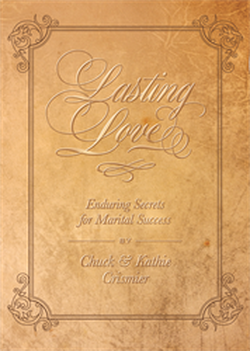
Lasting Love

LASTING LOVE can be a dream come true. Yet love requires more than a dream or those loving feelings we so much desire.Lasting Love, Chuck and Kathie Crismier, celebrating their Golden Anniversary, unveil seven enduring secrets that will inspire and strengthen your marriage as it has theirs. COPY and PASTE this link to WATCH the TRAILER: https://www.facebook.com/Save-America-Ministries-204687919570536/videos

About Save America Ministries

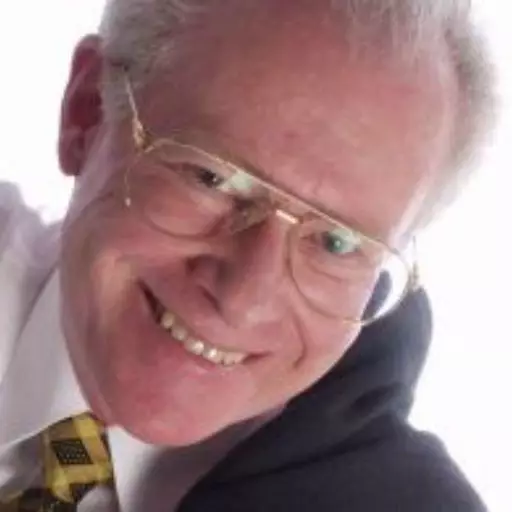
A New Breed of Christian Talk Show moving "from information to transformation," Chuck Crismier, veteran attorney, author, and pastor, has an amazing ability to probe below the surface and deal with issues that few dare to touch. It's dialogue that demands decision. It's 'Viewpoint' from Save America Ministries!

About Chuck Crismier

Pastor Chuck Crismier began his career as a public school teacher from 1967 to 1975. He then served as a Civil Private Practice attorney from 1975 to 1994 while at the same time pastoring a church from 1987 to the present. Chuck has authored several books most recently including “Out of Egypt” (2006), “The Power of Hospitality” (2005) and “Renewing the Soul of America” (2002). He founded Save American Ministries in 1993 earning him the Valley Forge Freedom Foundation Award for significant contribution to the cause of Faith and Freedom.

Contact Save America Ministries with Chuck Crismier

Mailing Address
Save America Ministries
P.O. Box 70879
Richmond, VA 23255
Telephone Number
804-754-1822