
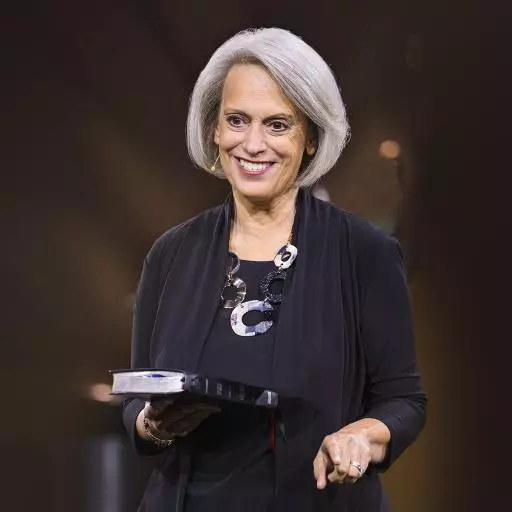
Consider Jesus’ Earthly Example, Ep 1 of 3


What does it look like to lay down your life? To follow the earthly example of Christ, who came and died so that we could live? Join Nancy DeMoss Wolgemuth as she casts a beautiful vision for sacrifice and service as women on Revive Our Hearts.
Dana Gresh: Nancy DeMoss Wolgemuth says you have a calling.
Nancy DeMoss Wolgemuth: It's not a calling to comfort and convenience and self-fulfillment. It's a calling to glorify God with the laying down of your life.
Dana Gresh: This is the Revive Our Hearts podcast with Nancy DeMoss Wolgemuth, author of Surrender the Heart God Controls. For October 19th, 2026, I'm Dana Gresh. So what does it look like to lay down your life? To follow the earthly example of Christ who came and died so that we could live. Nancy's going to help us explore this question starting with part of a message called His Name is Servant of the Lord.
Nancy DeMoss Wolgemuth: I'm going to start in the Old Testament, Isaiah chapter 42, where this ideal, righteous, faithful servant is first introduced. This is one of the servant songs, the first servant song in the book of Isaiah. And in the first four verses of this chapter, God speaks about this servant. Then in verses 5 through 9, he speaks to his servant. But verses 1 through 4, he talks about the servant. He talks about his identity, his mission, and the way in which he will go about fulfilling that mission. Let me read verses 1 through 4. Behold my servant whom I uphold, my chosen in whom my soul delights.
I have put my spirit upon him. He will bring forth justice to the nations. He will not cry aloud or lift up his voice or make it heard in the street. A bruised reed he will not break, and a faintly burning wick he will not quench. He will faithfully bring forth justice. He will not grow faint or be discouraged till he has established justice in the earth, and the coastlands wait for his law. Now you're scratching your head. What is that all about? That's what those Old Testament Jews were doing. But you get to the New Testament, and Matthew chapter 12 tells us explicitly that this passage in Isaiah 42, it quotes this passage, and it says that this is a messianic prophecy that was fulfilled in Jesus.
This passage is talking about Jesus. We don't know that clearly till we get to the New Testament. And so this passage talks about his identity. My servant, God says, whom I uphold, my chosen in whom my soul delights, I have put my spirit upon him. Does that remind you of something you read about in the New Testament? Remember the baptism of Jesus in Matthew chapter 3? Jesus is baptized by John. He comes up out of the water. The heavens are opened. The spirit descends upon him, comes to rest on him like a dove. I have put my spirit upon him.
And a voice from heaven says what? This is my beloved son with whom I am well pleased. God says this is my chosen one in whom my soul delights. I have put my spirit upon him. Now this description of Messiah also describes what Israel, the servant of the Lord, was intended to be. They were intended not to have this cold, formal relationship with God, but to have a warm, honored position and calling as the servant of the Lord. They had been chosen for this purpose out of all the other nations of earth. Not because they were special, but just because God loved them.
And when Israel failed to fulfill her calling to be the servant of the Lord, God sent another servant. He sent Jesus to fulfill what Israel had failed to fulfill, the servant of the Lord. The servant's mission we see in this passage, he will bring forth justice to the nations. Verse 3, he will faithfully bring forth justice. Verse 4, he will establish justice in the earth. Now this justice is not just in a limited legal sense, but it involves proclaiming God's holy standard and bringing the world into alignment with all of God's eternal purposes and truth.
This justice is making everything right. And what is right is the standard of God's holiness. It's bringing the whole world back into alignment with God and his holiness. And how will this servant of the Lord fulfill his mission? Well, Isaiah 42 tells us that it's not as the Jews expected the Messiah would act. They thought when he came, by the time you get to the New Testament Roman era, they thought he would act by forceful words and actions. But this servant doesn't come according to Isaiah 42 with military might or power. Instead, verse 2 tells us the servant of the Lord will not cry aloud or lift up his voice or make it heard in the street.
He won't strong-arm others in order to push his agenda. He won't try to out-yell his opponents. Is that what happens sometimes in your family? You get into a dispute, and you know, the voices just get raised because you want to prove you're right and the other person's wrong and the pitch gets higher and higher. Jesus doesn't do it that way. That's not how he wins. You watch some uh news programs today, and you see just the opposite of what's described here. These talk shows where people are yelling. They're all talking at the same time. They're all arguing and trying to prove their point and debating.
Not so the servant of the Lord. Says he will have a gentle, a meek, a quiet spirit, which 1 Peter tells us in God's sight is very precious. Listen, ladies, when we're called to have a gentle and quiet spirit, we're called to be like this servant of the Lord. To be like Jesus. He will not cry aloud or lift up his voice or make it heard in the street. He's not going to force his way. Verse 3, a bruised reed he will not break. And a faintly burning wick he will not quench. Now a bruised reed, that's a fragile plant that's been hurt.
And this servant of the Lord, Messiah, he won't break. That word is is to crush. It's to smash. He won't break these bruised and damaged lives. He'll deal gently with them. These bruised reeds, these people whose lives have been bruised and damaged, they may seem useless to others. They may seem beyond repair. But this servant of the Lord, this Messiah, he can repair and strengthen those lives, those bruised reeds, and make them useful again. That's what the servant of the Lord will do. A faintly burning wick he will not quench. One translation calls that a smoldering wick.
You know when the the wick is in an oil lamp, there's hardly any oil left and it's about to go out and just starts to smoke. There's no light there. It's a smoldering wick, a faintly burning wick. This wick is almost burned out. When it's burned out, it's not good for anything, is it? It can't shine a light. And so this Messiah, this servant of the Lord will come and he'll find these faintly burning wicks, but he won't put them out. He won't quench them. He doesn't write them off. He doesn't discard them. He sees worth in them.
And he supplies the oil of the spirit that those faintly burning wicks lack. And with that new oil, he fans them into flame and once again makes them to show forth light, makes them useful. This is the redeeming servant of the Lord. And you see this fulfilled in the Gospels as you watch Jesus noticing the least of these and caring for and gently dealing uh with those who were considered useless. Those who were considered beyond repair. I mean, who does Jesus care for? It's the blind, the deaf, the lame, the lepers, the marginalized, the demonized, the sexually promiscuous, those whose lives are broken, they're bruised, they're faintly burning.
And he picks them up and he breathes new life into them, the life of his spirit. And he restores their flame. Hallelujah, what a savior. That's what the servant of the Lord does. We got any bruised reeds here? Some faintly burning wicks. That's what he wants to do with your life. Maybe there's some bruised reeds in your life and some faintly burning wicks in your family or your sphere of influence. We are his servants, the servant of the Lord to have that same kind of ministry in those lives. Verse 4, he will not grow faint or be discouraged till he has established justice in the earth.
Now this is interesting here. You have to look up the original translation, the Hebrew here, but he will not grow faint. That 's the same word used in the previous verse for faintly burning wick. He will not grow faint. That word means to be weak or to be despondent or disheartened. He won't give up. He won't give up on others, and he won't give up until God's purposes have been accomplished. He will not grow faint or be discouraged. That word is the same word that you see in the previous verse as bruised, a bruised reed.
He will not be discouraged. He'll help discourage people. He'll help despondent people, broken people, bruised people, faintly burning people, but he will not give up. He will not grow weary. That flame of the Holy Spirit within him will keep burning, and he will keep going even when it's hard, even when he has to go to the cross and lay down his life as the servant of the Lord. He will not grow faint or be discouraged until all of God's purposes have been established for the servant of the Lord. This servant's mission will be to bring about God's kingdom purposes throughout the world.
And in so doing, he will suffer great injustice. But he will do so quietly and willingly. He will not cry out. He will not raise his voice in his own defense. He will seek justice for others, but he will never demand it for himself. And regardless of what he suffers, he will not allow anything to deter him from doing what the Father has sent him to this earth to do.
Dana Gresh: That's Nancy DeMoss Wolgemuth reminding us that Christ came as not just any king, but as the servant king. You'll find the full message linked in today's transcript at reviveourhearts.com. Our Savior's life was one of sacrifice, and still today he is the friend of bruised and broken people, laboring to make them whole in him. And get this. As women, we get to uniquely display this very feature of Christ's heart. God made us life givers, and he invites us to lay down our lives for the flourishing of others. Now the world will tell you to focus on self-care, to prioritize your well-being first and foremost, but that's not the example Jesus set for us.
Instead, he went against the flow and taught his disciples to do the same. So what does this look like for us? Here's Nancy DeMoss Wolgemuth to make it practical, whatever your age or life circumstance.
Nancy DeMoss Wolgemuth: Mothers, going against the flow means to embrace the calling and the gift of being a giver and a nurturer of life. Don't let the world tell you how many or how few children to have. Let God give you his vision for the impact that your children and your grandchildren could make for his kingdom for generations to come. Means a willingness to do battle for the souls of your children and your grandchildren and saying, Lord, we're not going to let the enemy have this next generation. They we want them to belong to you. Older women, what does it mean for you to go against the flow?
It means you choose not to retire spiritually. Don't settle for a life consumed by golf and bridge and meaningless activity and preoccupation with self. See some gray hairs in this place, and I'm so thankful for them. And I want to say to you women, younger women need you. They need your counsel, your encouragement, your prayers. They need you to take younger women under your wings and help them to learn how to live lives that please the Lord. I'm wearing today a necklace that was given to me by a woman I called Mom Johnson. Lived with her family when I was student at the University of Southern California many years ago, and we stayed in touch over the years.
She was one of my most faithful prayer partners. I've watched her age with grace. I watched her stay in the battle. I watched her stay pursuing Christ and spiritual growth at her funeral at I believe she was, if I recall correctly, 92 years of age, and she gave this to me when she was in her 90s. Found this and sent it to me for a birthday. But at her funeral, I met a young mom in her 30s who said Mom Johnson has been mentoring me for years. Into her late 80s and early 90s, Mom Johnson was taking women under her wing and encouraging them and discipling them.
We need some more Mom Johnsons to take her place. And just another word to those of you who are my age and older. We are a part now of a generation of 77 million baby boomers. There is so much energy and capacity and opportunity that is the largest generation we will ever have because of birth control and not having children. There will never be probably another generation that size of the baby boomers. And so we have this huge force of men and women with an opportunity to invest our lives in his kingdom at that season of life.
And I just believe there is a massive women's movement of true women in those millions of women who were able to capture all kinds of battlefronts for Christ. Some thing or some one is going to get the attention and the affection of those baby boomers as they move into their latter years. And we need to pray that God will raise up an army of true women of God out of those boomers. Many of you are familiar with the story and the writings of Amy Carmichael who in 1895 went to India as a 28-year-old single woman.
She stayed for the next 55 years without a furlough. And when she got there, she discovered that there were children, infants, little girls, young women who had been taken captive and sold into prostitution in the Hindu temples. Her heart was broken by what she saw. And she said someone has got to do something about this. Well, God had brought Amy Carmichael into his kingdom for such a time as this. And so one life at a time, she and her little band of coworkers began to rescue those children from the temples in which they were held.
It was dangerous work. It was difficult work. They had to withstand the centuries of entrenched tradition and religion and cultural issues. They had to go against the flow. And as we talk about this countercultural revolution, I often say to women, we've got to be willing to be salmon swimming upstream. What a salmon do? You've heard the stories, maybe seen the pictures of how they swim upstream. They get bloodied and beat up on the rocks. And why do they do it? To give birth. To give life. And they give life, and then what do they do?
They die. You say that doesn't sound like something I want to be called to. Can you think of a what a picture that is of the heart of Christ, the heart of Calvary who swam upstream, bloodied and beaten to give spiritual life, laying down his life to give us eternal life. Listen. We may die in the process. But if we die fulfilling the kingdom purposes and will of God for our lives, so be it. If I perish, I perish. I'm going for broke. And that's what Amy Carmichael did over all those years, risking her life to rescue one little girl, one young woman at a time, working tirelessly to salvage those lives and to expose the works of darkness that had claimed so many children's lives in India.
Each step of the way she was fighting against, pushing against the powers of darkness, but not in her own strength, in the strength and power of God who would send her there. And she endured and she persevered for all those years through a handful of victories, but also through numerous heartbreaking losses and apparent defeats. Now the issues are a little bit different in our day perhaps. Though we do have the whole issue of the sex trade, which is a serious issue in our world. But the issues around us are no less serious than those of those little girls sold into prostitution in the temples.
Women and girls all around us, all around us, we live in and among them, are in bondage to guilt and fear and bitterness and anxiety and eating disorders and sinful behaviors and addictions and depression. They need to be rescued from the enemy who has taken them captive. And we are called to fight the powers of darkness in the name, in the power, in the spirit of the Lord Jesus, and to join God in his great rescue operation. We're called to shine the light in the darkness, to see captives set free and to see God glorified.
As I was in the process of praying with friends and colleagues about launching the ministry of Revive Our Hearts, I'd asked those on our board of directors and advisory council for our ministry to pray about that decision. We came to a board meeting and I was sitting in on a discussion about whether it was time for the ministry to launch what became Revive Our Hearts radio ministry. And there's an older gentleman, I suppose he was then in his late 70s, maybe 80s, who was on our in that group of men, and he was he's a man of prayer.
Some of you know the name TW Hunt, been a Bible teacher and leader for many years. He was real quiet for the longest time as there was a lot of discussion going on in the room. And then when everybody else had had their say, brother TW spoke up and he said, I've been praying about this. And he said, I want to tell you that for many years I have been deeply burdened and concerned in my heart about the widespread increased corruption among women in our culture. The coarsening of women, the rawness, the vulgarity, the secularism.
And he says I've been burdened praying about this for years. And what could make a difference? What could address it? What could go against that tide? And he says as I've been praying about the potential of launching Revive Our Hearts, I believe that God has raised up this ministry to be a light and to make a difference and to take on the powers of darkness among women, to turn back the tide of corruption among women. As I heard those words, on the one hand I was inspired and grateful for help in clarifying the mission. On the other hand, there was within me a real sense of weakness, overwhelming inadequacy, fearfulness.
And the Lord brought to mind as he has numerous times over the years. And I share this not just to tell you my story, but to say whatever God's calling you to, maybe you have feelings of weakness and inadequacy and fear. I assume I'm not the only one who struggles with those things. And the Lord took me back to that passage in Luke chapter 1 where the angel came to Mary and said, you're going to have a baby. It's going to be God's son. Yeah, I know you're not married. I know you've never been intimate with a man, but you this is what God is going to do.
And Mary asks the obvious question, how can this be? It's not humanly, physically possible. That's what I was feeling when we talked about launching this ministry with this mission. How can this be? I don't have the gifts, the skill set, the ability. No one does. This is a big, big issue. What needs to happen among women today? And the angel said to Mary, and these words have been God's word to my heart many, many times over the years. The Holy Spirit will come upon you, and the power of the most high will overshadow you. Who's going to win the battle?
God is. Who's going to fill you with power? God is. His power. Nothing will be impossible with God, the angel said. And what was Mary's response? If I have a life verse, this is probably it. Luke 1 38. Mary said simply in faith and humility and surrender, I am the Lord's servant. May it be to me as you have said. Mary said, yes, Lord. Esther said, yes, Lord. Amy Carmichael said, yes, Lord. If you were to ask those women today, was it worth it? Would you do it again? Do you have any doubt about what they would say?
Millions of Jews spared. The line through which the Messiah was to come preserved. Hundreds and hundreds of little girls in India rescued from Satan's clutches and given physical and spiritual life. A savior was born. His calling in our lives will be difficult at times. Maybe you're in that hard place right now. His calling will involve hardship and suffering and obstacles. I'm just telling you, it's not a calling to an easy life. It's not a calling to comfort and convenience and self-fulfillment. It's a calling to glorify God with the laying down of your life. It will involve hardship, but we follow in the steps of a savior who was willing to lay down his life so that we could live.
And when you and I see the face of Christ, and it won't be long, if we've been faithful in fulfilling his calling in our lives, we will say, Jesus, it was worth it all for you. In fact, I think most if not all of us will say, I wish I'd given him more. Would we do it again? Absolutely. I'm asking God to raise up a great host of women, women of courage and faith and compassion and humility and wisdom, women filled with Jesus for such a time as this. Would you join me in that mission?
Will you be a part of that countercultural revolution? Will you say, yes, Lord? I am your servant. Take me, use me, spend me. Fulfill all your holy eternal purposes in and through my life, whatever the cost. And oh Father, how I pray that you'd find here a host of women who would say simply, yes, Lord. For Jesus' sake and the sake of your great kingdom. Amen.
Dana Gresh: Amen. Oh, such a powerful encouragement from Nancy DeMoss Wolgemuth. I wonder, what's one practical way you might lay your life down this week, this month, or maybe even this year? It's a beautiful thing to pray about and dream about. Ask the Lord how he's inviting you to be a life giver and a living sacrifice in this season. Ask the people in your world how you might serve them following the earthly example of Jesus. We've been meditating on Jesus all month long to mark the release of Nancy's new Advent devotional Consider Jesus. Now it's only been out a month and a half, but the feedback has been so sweet.
One reader named Joy told us, I loved this Advent devotional so much I couldn't stop reading. I finished it early. It brought me refreshment during a difficult season, and I'm so thankful for it. I know I'll return to it again. Uh praise the Lord. Our hope is that every reader will experience that same refreshment in Christ. And we'd love to send you Consider Jesus when you make a donation of any amount this month. Head on over to reviveourhearts.com or call us at 1-800-569-5959 to give and request yours. Also, don't forget true woman registration is in full swing over here, and super early pricing closes very soon.
This conference is all about what it means to be a true woman, one who swims against the current because she desires the glory of God more than the approval of the world. It's going to be a rich time of refreshment in the word and in fellowship with other women. So don't wait. Take advantage of the lowest pricing today. You can register and find all the information you might need at truewoman27.com. Well, today we talked about Christ's example of service and sacrifice. We answered the question, what does it look like to lay down my life? But here's the thing.
Jesus laid down his life, but then he rose. So tomorrow we're going to explore how we joined him in his resurrection. We want to live as women who are truly alive in Christ. So please be back for Revive Our Hearts. This program is a listener-supported production of Revive Our Hearts in Niles, Michigan, calling women to freedom, fullness, and fruitfulness in Christ.
Featured Offer

This year, consider Jesus—the Architect and Designer of the season. In Consider Jesus, Nancy DeMoss Wolgemuth invites you to spend a month reflecting daily on the person and work of Christ, with one purpose: to keep your eyes fixed on Jesus.
With your donation of any amount.
Past Episodes
- 3 Ingredients of a Revived Heart
- 3 Life-Changing Lessons for Young Women
- 3 Marks of an Unshakable Woman
- 3 Ordinary Ways to Magnify the Lord
- 3 Reasons to Join the 2026 Bible Reading Challenge
- 3 Ways to Love Your Friend When It’s Hard
- 3 Women of the Bible Who Said "Yes, Lord!"
- 3 Women Who Were Grateful for God’s Word
- A Breath of New Life (2 Kings 4)
- A Cry for Revival: Isaiah 63-64
- A Great Awakening, with Kim and Katie Miller
- A Harvest of Joy
- A Heart Grounded in the Word of God, with Chris Brooks
- A Mighty Fortress Is Our God (Psalm 46)
- A Song for Weary Pilgrims (Psalm 137)
- A Woman Adorned and Adorning
- Advent for Exiles, with Caroline Cobb and Erin Davis
- Always Grateful: Ciara's Story
- Always Thankful (Psalm 66)
- An Unhurried Holiday Season
- And the Bride Wore White, with Dannah Gresh
- Anticipating Advent
- Applying the Gospel to Family Life, with Emily Jensen
- Be the Warmth: Cultivating Hospitable Character
- Becoming a Fruitful Woman
- Begin at My Sanctuary
- Behold the Big Story of the Bible, with Kevin DeYoung
- Behold the Daily Mercy of the Word, with Dannah Gresh
- Behold the Living Word, with Jackie Hill Perry
- Behold the Power of the Word to Save, with Kelly Needham
- Behold the Wonder of the Word
- Behold the Word Recovered by God’s People, with Mary Kassian
- Behold, Hearts on Fire with the Word
- Beholding the Wonder: True Woman '25
- Beyond Cliches: Real Encouragement for Single Sisters
- Blessed by a Godly Mother
- Blessing for the Year End & the New Year (2 Cor. 13:11-13)
- Building a Spiritual Legacy for Your Children! by Jani Ortlund
- Celebrating 25 Years of Saying “Yes, Lord!”
- Celebrating Forty Years of God's Goodness
- Celebrating God’s Abundance
- Celebrating God’s Goodness
- Choosing Servanthood Over Celebrity
- Choosing to Stay in a Difficult Marriage
- Come Adore: The Gospel in Carols
- Consider Jesus’ Chosen Humanity
- Consider Jesus’ Earthly Example
- Consider Jesus’ Eternal Deity
- Consider Jesus’ Saving Purpose
- Courage and Compassion: Two Words for Parents
- Crossing the Finish Line: Remembering Robert Wolgemuth
- Dear Single Woman, God Sees You
- Devotions Amid Diapers
- Don't Give Up on That Modeling Career, by Susan Hunt
- Dry Bones Can Live Again (Ezekiel 37)
- Ease Into the Bible, with Jean Wilund
- Embracing Singleness
- Encouragement from a Grieving Widow
- Exploring the True Woman Manifesto
- Faithful, Not Famous with Laura Gonzalez de Chávez
- Finding Soul-Deep Satisfaction in Jesus
- Food Is Not the Enemy: Discover Freedom from Food Fixation, with Asheritah Ciuciu
- Free to Be Real
- Freedom in Christ
- From Death to Life: Hope After Abortion
- From Desperation to Deliverance: The Promise of Psalm 107
- Fruitful in Christ
- Fullness in Christ
- Gentle Parenting: Wisdom or Weakness with Tanner Kay Swanson
- God’s Grace for Weary Moms
- God's Power to Revive a Heart, with Andrea Griffith
- Hallelujah! A Praise Celebration (Psalm 113)
- Holy Week Heart Prep: The Wonderful Names of Jesus
- Hope in the Midst of the Hard
- How God’s Love for Women is Displayed in the Old Testament, with Dr. Katie McCoy
- How Less Scrolling Could Change Your Life, with Lara d’Entremont
- How Long, O Lord? Learning to Pray Through Pain
- How Remembering Eternity Transforms Today (Psalm 90)
- How to Build Your Home
- How to Have a Happy New Year (Psalm 1)
- How to Have a Marriage that Magnifies God
- How to Have a Quiet Heart
- How We Got Our English Bible
- Indispensable Ingredients for Life
- Instruments of Grace
- It’s Possible! Learn to Control Your Mind and Emotions
- Leading Children to Love the Word
- Learning to Love the Old Testament, with Jennifer Smith
- Letting God Be God, with Andrea Griffith
- Living Out the Beauty of the Gospel
- Living Well, Finishing Well, with Mark DeMoss
- Looking to Jesus in the Midst of Change
- Looking to Jesus in the Midst of Shame
- Looking to Jesus in Your Exhaustion
- Made to Tremble, with Blair Linne
- Magnifying Christ in the Midst of Anxiety
- Mary of Nazareth
- Mentoring Matters
- One Thing (Psalm 27:4)
- Open Your Home, Open Your Bible, with Erin Davis
- Ordinary Women, Extraordinary God
- Parenting Teens with Hope, with Melissa Kruger
- Passing a Biblical Worldview on to Your Children, with Jeff Keaton
- Pleading the Cause of the Unborn
- Practicing Thankfulness, with Sam Crabtree
- Putting God's Word First, with Gretchen Saffles and Janine Nelson
- Read Your Bible!
- Rediscovering Intimacy With God
- Relationship Refresh: Helping Your Community Thrive in Christ
- Renewed and Restored (Psalm 23:2-3)
- Renewing Your Mind
- Revival Begins with You
- Revive Us Again (Psalm 85)
- Ruth: The Transforming Power of Redeeming Love
- Safely Home: Honoring Robert Wolgemuth
- Sarah, Meet Mercy
- Science, Scripture, and a Life Transformed, with Dr. James Tour
- See for Yourself: Get to Know Your Bible, with Kelly Needham
- Showing Kindness, with Kathy Branzell
- Spiritual Disciplines We Forget About
- Spiritual Habits for Little Hearts
- Surrendering Your Independence
- Teaching the Gospel to Children, with Barbara Reaoch
- The Beauty of Living Out the Gospel as a Woman
- The Four Emotions of Christmas
- The Glory of Face-to-Face Fellowship
- The Gospel Is Everything: 25 Years of Pointing Women to Christ
- The Humble Savior Who Came
- The Incomparable, Incarnate Christ
- The Joy of Bible Journaling
- The Joy of Embracing Biblical Womanhood, with Laura Perry Smalts
- The Legacies of Two Godly Fathers
- The Truth Your Girl Desperately Needs
- The Well-Watered Woman, with Gretchen Saffles
- The Wonder App: Transforming Screen Time into Scripture
- Three Mercies for Young Moms
- To The Woman Who Doesn’t Feel God’s Love
- Treasuring Christ in Our Traditions with Noel Piper
- True Woman '25 Panel Discussion: Behold the Word in Every Season
- True Womanhood for Today
- Truly Strong: Becoming Women Who Depend on the Lord
- Walking Well in Every Season: For the Empty Nester, the Grandma, and the Widow
- What Freedom, Fullness, and Fruitfulness Really Mean, with Robert Wolgemuth
- What Is a Woman? with Mary Kassian
- What Makes You Beautiful? with Kristen Wetherell
- What Sisterhood Is (and Isn’t)
- What’s the Point of Praise? 3 Reasons Your Worship Matters
- When Busyness Threatens Intimacy with God
- When Prayer Sparks Revival, with Bob Bakke
- Why Study the Bible?
- Wonder of the Word Made Flesh
- Word Before World, with Gretchen Saffles
- Working for the Lord

Featured Offer
This year, consider Jesus—the Architect and Designer of the season. In Consider Jesus, Nancy DeMoss Wolgemuth invites you to spend a month reflecting daily on the person and work of Christ, with one purpose: to keep your eyes fixed on Jesus.
With your donation of any amount.
About Revive Our Hearts
Married, single, young or older, you'll want to join us every day for practical, biblical insights on becoming a fruitful woman of God. Best selling author and national radio host, Nancy DeMoss Wolgemuth makes the Scriptures come alive. You'll be touched by Nancy's messages and by the passion of her heart.
About Nancy DeMoss Wolgemuth
Nancy DeMoss Wolgemuth has touched the lives of millions of women through Revive Our Hearts and the True Woman movement, calling them to heart revival and biblical womanhood. Her love for Christ and His Word is infectious and permeates her online outreaches, conference messages, books, and two daily nationally syndicated radio programs—Revive Our Hearts and Seeking Him. Her books have sold more than four million copies and are reaching the hearts of women around the world. Nancy and her husband, Robert, live in Michigan.
Contact Revive Our Hearts with Nancy DeMoss Wolgemuth
Mailing Address
Revive Our Hearts
P.O. Box 2000
Niles, MI 49120
Telephone Numbers
1-800-569-5959 (toll-free)