
Sabbath and Special Days


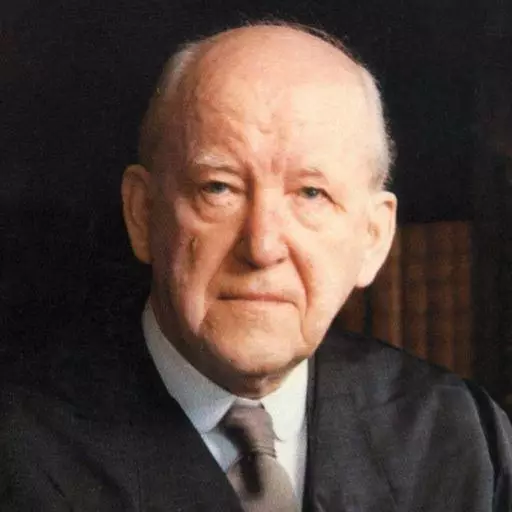
Dr. Martyn Lloyd-Jones: I'm going to read the first six verses in the 14th chapter of Paul's Epistle to the Romans.
Him that is weak in the faith receive ye, but not to doubtful disputations. For one believeth that he may eat all things. Another who is weak eateth herbs. Let not him that eateth despise him that eateth not. And let not him which eateth not judge him that eateth. For God hath received him.
Who art thou that judgest another man's servant? To his own master he standeth or falleth. Yea, he shall be holden up. For God is able to make him stand.
One man esteemeth one day above another. Another esteemeth every day alike. Let every man be fully persuaded in his own mind. He that regardeth the day, regardeth it unto the Lord. And he that regardeth not the day, to the Lord he doth not regard it. He that eateth, eateth to the Lord, for he giveth God thanks. And he that eateth not, to the Lord he eateth not, and giveth God thanks.
Now, in our consideration of this statement, we've come to the fifth and sixth verses. May I remind you that we are dealing with what are called things indifferent. Things about which there is no clear absolute rule or commandment laid down in the scriptures.
And the apostle, having given the general introduction in the first verse, takes up one illustration and example of these things indifferent. And that is the question of eating certain meats, meats that were prohibited under the Jewish ceremonial law or meats that have been offered to idols. He takes that up and we've seen how he deals with it.
There are two possible views about this, and he classifies them according to a weak understanding of faith or a weak application of faith and a strong understanding, and a strong application of faith. And we have seen that what he's most concerned about is this, that they should not quarrel about this, that the strong must not despise the weak and the weak must not judge the strong.
And he has given us reasons for that. We are not the judges. The Lord is the judge. And we have no right to interfere with anybody else's servant or slave. That is the prerogative of the Master and the Owner. And in any case, he tells the weak people that they needn't be nervous and apprehensive and fearful about those who are exercising their Christian liberty.
They needn't worry about they're making shipwreck of the faith, for the Lord will hold them up. He's able to do so, and he will do so. He started this good work and he will go on until it is finally completed. Very well. Now he comes in verse 5 to the second example.
One man esteemeth one day above another. Another esteemeth every day alike. Now, here is our second example, second illustration taken up by the great apostle. It's interesting to inquire as to the connection between the two examples, between the two illustrations. And there is no doubt that one adequate explanation of the connection is this, that the two matters were actually current problems in the church at Rome at that time, as they were also, as we saw from the reading at the beginning, in the Epistle to the Galatians, in the Epistle to the Colossians, in other churches also.
So it may be that he is just taking up what he knew to be a very prominent and serious question and difficulty in the church in Rome. But I think there is also a further connection, and a more intimate connection between these two illustrations. And it is this, that in connection with the observation of days and festivals, there generally were instructions under the Levitical ceremonial law with regard to foods that should be eaten on such occasions.
Now, therefore, there is probably this more intimate connection between these two things. On these special days, they were told not to eat certain meats or certain foods. They were allowed to eat them on other days, but it was one of the ways in which this particular day was to be observed that they should abstain or refrain from the eating of certain meats and certain foods.
So it's quite likely that having mentioned the foods, that leads him on quite naturally to the question of the days, because the matter of food naturally arose in connection with the days. Very well. That's probably the connection. I imagine that both the reasons were operating in the mind of the great apostle.
But now, what is very important for us is this, is to be clear in our minds as to what he is dealing with here. One man esteemeth one day above another. Another man esteemeth every day alike. The first question that arises is this. Is he or is he not dealing here with the question of Sabbath observance?
Now, we've got to be clear about this. Many have assumed and take it for granted that that is what he is dealing with here. Sabbath observance. And that some were not as punctilious and as careful as others in this matter of Sabbath observance. Is this, therefore, a matter of Sabbath observance?
Well, I think we've got to say at once that it is not. And for this reason, the question of observing the Sabbath is not a matter of indifference. That is a matter of law. Sabbath observance is a part of the moral law, in contra-distinction to the ceremonial law. You know the moral law, the Ten Commandments in particular.
Here is something that is laid down for all time. The moral law is not temporary. The moral law is permanent. But the ceremonial law was only for the time being amongst the Jews. It was for them in that state and condition which is described in the Old Testament. And not only was there a special ceremonial law for them, as you know, there were other laws, more general in character, which also as Jews, as a nation, they had to observe.
Now, the ceremonial law and that more general political law, that was abrogated by the coming of our Lord and his completed work. But the moral law has never been abrogated. The moral law is permanent and of perpetual to be perpetually observed.
Now, as I've been reminding you each Friday, we must never discuss the keeping of the moral law. The law is not to be discussed, it's to be kept, it's to be obeyed, it's to be observed. And as the question of the Sabbath is, therefore, a part of the moral law, it cannot be the thing that the apostle is dealing with here.
Not only that, of course, the question of observance of the Sabbath is even anterior to the law. It is something that we read about at the beginning of the second chapter of Genesis, here are the first three verses. Thus the heavens and the earth were finished, and all the host of them. And on the seventh day, God ended his work which he had made.
And he rested on the seventh day from all his work which he had made. And God blessed the seventh day and sanctified it, because that in it he had rested from all his work which God created and made. Now, it's important that we should bear that in mind. And that is something of which we are reminded in several places in the Old Testament.
Indeed, most of these references to the keeping of the Sabbath, always remind us of what I've just read to you from Genesis 2, especially verses 2 and 3. The law, the Ten Commandments, the law as given through Moses, did not originate the keeping of the Sabbath. It only confirmed it. That is something that applies not only to Jews, but to everybody, to the entire human race.
The law simply fixes it, establishes it, reiterates it in particular to the Jews. But as I say, the moral law as a whole is obligatory upon the whole of mankind. You may remember many of you or those of you who are familiar with the Epistle will recall that in the second chapter of this Epistle to the Romans, the apostle makes that very plain and clear.
He says that though the Gentiles had not got the law in the external, objective manner in which the Jews had it, this same law was written in their hearts. What God did in giving the moral law through Moses was to put in an external form what is already written in the heart of the whole of mankind.
That is why we must always realize that the moral law of God has never been abrogated, but is of universal application, has been and always will be. Very well. So we say that the apostle is not dealing here merely with the question of Sabbath observance.
But then there is a second question. And that is whether the apostle is concerned here to deal with the question of which day do we observe as the Sabbath. Now, you are familiar with the discussion about this that is even going on at the present time. Should the Sabbath be observed on the seventh day of the week, or should it be observed on the first day of the week, or what some would call the eighth day?
Now, this is again a matter that we've just got to glance at because many people in their interpretation of this very verse with which we are dealing have got into trouble at that point. And the facts are therefore of some significance and importance for us. It is something which is quite clear from the scriptures that a change took place in the early church, in the first century, with regard to this very matter.
For instance, you remember how we are told in the 20th chapter of the Acts of the Apostles that it was clearly the custom of the people to meet together on the first day of the week. We read in the seventh verse, And upon the first day of the week, when the disciples came together to break bread, Paul preached unto them, ready to depart on the morrow, and continued his speech until midnight.
Now, that is clear indication, isn't it, that it was the custom of the members of the early church to meet together on the first day of the week, not on the seventh day, but on the first day of the week to meet together to eat bread and to have what we would call a communion service and to remind themselves of the death and the resurrection of our Lord.
And then you've got similar evidence in the 16th chapter of the First Epistle to the Corinthians, in the first two verses. Now concerning the collection for the saints, as I have given order to the churches of Galatia, even so do ye. Upon the first day of the week, let every one of you lay by him in store, as God hath prospered him, that there be no gatherings when I come.
It's again, obviously referring to the same practice as we have seen there in the 20th chapter of the book of the Acts of the Apostles. This is evidence of the fact that it was the custom of the Christians to meet together specially on the first day of the week. And you've got evidence, it seems to me, which points in exactly the same direction in the Revelation of the Apostle John, who tells us that he was in the Isle of Patmos.
I John, who also am your brother and companion in tribulation, and in the kingdom and patience of Jesus Christ, was in the isle that is called Patmos for the word of God and for the testimony of Jesus Christ. I was in the spirit on the Lord's Day, and heard behind me a great voice as of a trumpet. In other words, the great revelation that was given to John, the apostle, was given to him on this self-same day, the Lord's Day, which is the first day of the week.
Now there is no question at all that this change did take place in the practice of the early church. Indeed, there is evidence that is contemporary evidence, which is still extent and has come down to us today, to show quite plainly that for the first three centuries, some Christians still went on observing the seventh day. Others observed the first day, and others observed both of them.
You will find that the Seventh Day Adventists, for instance, are very fond of saying that this change was made in the fourth century by a Pope. That, of course, is not true historically. What is true is that it was only made, the first day was made obligatory. It was made something by law, by a Pope in the fourth century, by an Emperor.
But that isn't when it began. That was only the regularizing of the thing. For the first three centuries, there was liberty concerning this. And as I say, some did one thing, and some did the other. But it was made law in the fourth century. Now, how do we come to a decision about this?
Well, it seems to me that this is the only way in which one can argue. Why did the early Christians meet together on the first day of the week? Surely this is something that no godly Christian people, and especially those who had been Jews, and had been brought up in the tradition of the Jews, as we've seen. Surely this is something that they would never have done in an arbitrary manner.
They would never have taken it upon themselves to make this change. They wouldn't dare do so. Their Lord himself had told them that he had not come to destroy the law nor the prophets, and that one jot and one tittle should not be lost from the law until all should be fulfilled. They are the last people in the world to decide upon making a change, and to do so of their own volition.
In other words, it seems perfectly clear that they only did this because they must have received some supernatural illumination, some guidance. Whether our Lord himself instructed them to do this or not, we don't know. But the thing is perfectly natural. What is more natural than that they should decide that the great day for them to celebrate was the Lord's Day, the first day of the week, the day when our Lord had risen from the dead?
There was an obvious parallel. In the first creation, when God had completed it, he rested on the seventh day. And our Lord, in exactly the same way, he has completed the work as it were of the new creation. He's introduced a new start, this new creation. And his resurrection is the sign of his completion of that work.
So the first day of the week, the day that our Lord rose from the dead, the Lord's Day, is the day that corresponds to the seventh in the first creation. And this seems to me to be more than sufficient and abundant reason for saying that the day for Christians to observe is the first day of the week, the Lord's Day.
And I have no doubt whatsoever that that was the reason why this change was made already, immediately, in the life of the early church. So that what the apostle is dealing with here is not that. The only conceivable way in which that can come in is just this, that there were people in the church at Rome who were quarreling over this matter.
And insisting that it must be the seventh day, or that it must be the first day. As I say, the practice of the church was to allow both. And that is certainly what the apostle is teaching at this point. So that all we can be absolutely certain of is this, that this is not a matter on which the church should divide.
Now, churches have done this. There was a sect, I believe it's still there in the United States of America, known as the Seventh Day Baptists. They were people who broke away from the Baptists on this one matter. They formed a new denomination, Seventh Day Baptists. It wasn't after to be a Baptist even.
You had to be Seventh Day Baptist. You had to observe the seventh day rather than the first day of the week, the Lord's Day. And as we are familiar with the Seventh Day Adventists, whatever view you may take of them, this can certainly be stated. To name a group or a division of the church in terms of this is to contravene the apostle's instruction at this point.
If you put it there, this is the first thing that confronts you, seventh day. This is so important that you put it in your heading as it were. You are already elevating something to a supreme position, which the scriptures do not entitle you to do. Indeed, this seems to be the very kind of thing with which the apostle is dealing in this very section that we are considering together.
So, while I say that fundamentally, the apostle was not dealing with the question of Sabbath observance, or which particular day you observed as the Sabbath. But after all, what the commandment tells us is to observe the Sabbath day. And if we have reasons for thinking that our Lord himself instituted the change from the seventh to the first, the important thing for us is to keep the day.
It is not grievous sin to observe the seventh day. It is not grievous sin to observe the first day. What is wrong is to argue that either the one or the other is absolutely essential, and that you're not a true Christian unless you observe the one or the other. Well, we must leave it at that.
But it is important. And I think one other principle comes out here, which is of some value to us. And that is, I think this teaching is something to tell us about what we may call extreme Sabbatarianism. What do I mean by that? Well, I mean this, that there are people who in their observance of the Sabbath, whether it be seventh day or first day, have gone to extremes beyond anything that is taught in the scripture.
You remember our Lord had reprimanded the Pharisees and scribes more than once, and to tell them that the Sabbath was made for man, not man for the Sabbath. Now, many people have forgotten that. Over zealous and strict and rigorous Sabbatarians have often made the Sabbath a burden and a yoke on the shoulders of Christian people, and have gone entirely beyond the scriptures.
Now, let me give you an example or two. I remember hearing very well in my youth of a form of discipline that was exercised in the Presbyterian Church of Wales. If a member of a church walked on the promenade at Aberystwyth on a Sunday, they would be disciplined before the church. They were not allowed to walk on the promenade, on the front, on a Sunday.
And this has often been regarded, of course, as nothing but extreme Puritanism. But I was interested to discover in my reading that there was a 14th-century bishop of a place called Avila, who thought that it was grievous sin to walk more than a few yards only on a Sunday. So I'm telling you this in order that you may reply to people who just try to dismiss these things as Puritanism.
Everything is Puritanism these days, which people don't like. Puritanism is that which is against everything. It's negative, and it's narrow, and it's prohibitive. You've got exactly the same thing in the Middle Ages in the Roman Catholic Church. There was a man who taught regularly that it was sinful to walk more than a few yards on a Sunday.
And there have been many other examples of the same thing. Now, the principle is that the Sabbath was made for man, not man for the Sabbath. The Sabbath is a day that we set apart in order that we may give ourselves to the worship of God. I think it's important we should just glance at this in passing.
There are errors, it seems to me, on both sides with regard to these, with regard to this matter. There are some who make too much, there are some who make too little. There are some, I say, who make it a real yoke and a real burden, and it becomes a problem. It was never meant to be that. It was meant to be something that helps us.
The Sabbath was made for us, to help us, to give us an opportunity of considering the state of our souls and our relationship to God, and to worship him, and to meet together to worship and praise him. If that is your great desire in your observance of the Sabbath, you're in the right position. But if it's a matter of law to you, and of legalism, and you're constantly in trouble about it, well, then, I say, it is not in accordance with our Lord's own teaching, nor with the teaching of the apostle here.
And then, of course, there are people, as I say, who go into error on the other side. I am told sometimes that it is the custom in evangelical circles for people to write their family letters always on Sunday afternoon. That is breaking the Sabbath. You can write your letters some other day. You are to give this day, this is the object of the day, that the law of the land recognizes it and custom recognizes it.
You don't have to go to your office or to your shop or to your farm or whatever it may be. This is recognized. Well, in order that you might give yourself. You don't write family letters even. You're taking up time with your own affairs, which you should be giving to the Lord. The Sabbath is designed and meant and help to help us to give ourselves to the worship of God, and to a knowledge of him.
Life is so full and so busy. People are always complaining of lack of time. Well, now, take advantage of the day that God has ordained for you, to give it to him. Don't spend your time in worrying about details as to whether you should be doing this or that so much. It is your total attitude that matters.
And we can be wrong, I say, on one extreme or the other. The Sabbath was made for man and not man for the Sabbath. Well, you may regard all that as somewhat of a digression. But as so many have interpreted these verses in that way, I had to deal with it. And it is a convenient point at which to say these things which are, I trust, of value to all of us.
Now, then, the apostle, I say, here was not primarily thinking of the Sabbath at all. Well, what was he thinking of? Well, I think those two passages I read to you at the beginning cast considerable light on this whole matter. Galatians 4 and Colossians 2. He says in Galatians 4, You observe days, and months, and times, and years.
In Colossians 2, it is still more specific. Let no man therefore judge you in meat, or in drink, or in respect of an holy day, or of the new moon, or of the Sabbath days. Now, that's important. Some people have failed to notice that it's in the plural, that it is Sabbath days.
And they have taken that statement there and have said, ah, in Romans 14, Paul was dealing with the question of the Sabbath day. He mentions it again in a similar connection in Colossians 2. But notice, he talks about Sabbath days. What does that mean? Well, there can be no question at all about this.
The Jews had made many Sabbaths for themselves, and they have done it in this way. These days and seasons. What are they? Well, they were, of course, primarily Jewish feasts, and Jewish festivals. These have been appointed by the ceremonial law. Certain days were to be observed. Go back and read the book of Leviticus and Numbers, and there you'll find it.
There were certain special days when they were commanded to keep them as holy days, as feasts, as festivals. This was most certainly about the ceremonial law. But then these have been added to during the centuries by the Jews themselves. Let me give you one illustration of this.
The prophet Zechariah, in chapter 8 of his prophecy, and in verse 19, takes up this very thing. He's given a message. And the word of the Lord of hosts came unto me saying, Thus saith the Lord of hosts, The fast of the fourth month, and the fast of the fifth, and the fast of the seventh, and the fast of the tenth, shall be to the house of Judah, joy and gladness, and cheerful feasts.
Therefore, love the truth and peace. Now, I'll give you some homework. Try and find out if you can from the Old Testament when the fast of the fourth month, and the fifth month, and the seventh month, and the tenth month were introduced. They are not a part of the ceremonial law. But for various things that had happened to them in their history, successes, victories in battle, and so on, they themselves had appointed these further days as feast days, and others as fast days.
And what Zechariah is prophesying there is this. When the great gospel is come, these days when you've been fasting will be turned into days of feasting and of rejoicing. In other words, the very thing that the apostle is saying here, that these have been abrogated, these have been set aside. They were temporary in any case.
But now, the Sabbath days came in in this way. That the Jewish religious authorities themselves decided that a certain great festival was coming. They decided that it was good to prepare for that. So they appointed a Sabbath, the day before the festival, as a means of preparation.
So that quite literally from their standpoint, they did have Sabbath days. Not only the Sabbath day of every week. There were these special Sabbath days, holy days, that they themselves had invented and introduced in order that their observance of the fast, of the festival, might be more effective. Now, that's the sort of thing that the apostle is dealing with here.
One man esteemeth one day above another, certain fast days, certain feast days, certain festival days, certain special Sabbaths, which now have become a part of the tradition of the life of the Jews. And at the same time, similar things were being done, of course, by those devotees of the pagan mystery religions.
So that this is the thing with which the apostle is dealing, not the Sabbath as such, but these special days. Well, I can give you an illustration of what is meant. For this is something that the church knows about even today. There are sections of the church in which they observe saint's days.
Take some of the days that we are aware of. All Saints' Day, November the 1st. Luther nailed up those 95 theses of his, because he knew that on that All Saints' Day, the first of November, that there would be a gathering in that town. That's just one example. There are many others.
And there are people who still observe these saint's days. Not only in the Roman Catholic Church, other sections of the church, the Anglican Church and others, they observe these special days. Now, that was the sort of thing with which the apostle is dealing. And he says some people, if you like, believe in observing saint's days. Others don't.
You might put it like that in a contemporary form. Not only that, fast days have often been appointed. There are people who observe Friday in a special way. They don't eat meat, they only eat fish on a Friday. The whole notion of Lent is a part of this whole thing. These are rules and regulations that are not found in the scriptures, but have been introduced by men.
Now, it's not my purpose at the moment to consider whether they were ever right in bringing these things in at all. All I'm saying is that they have done so. And that some think it is important to observe these special days and times and seasons. You can even put in, if you like, the observance of Christmas Day, and Good Friday, and Easter Sunday.
As you know, the Puritans, they didn't observe any one of these days. Their reason for that was that these things were to them a part of Roman Catholicism. Crisp mass, it was a mass, and they wanted to do away with the mass, so they did away with the day in order to make sure. And likewise, they didn't observe Good Friday, and they didn't observe Easter Sunday.
Now, these things are of interest and of importance. All the apostle is saying is this, that some people regard these things as important. Others regard them as quite unimportant, and they don't observe them at all. So this is the thing with which he is dealing. And it is clearly something about which we must have an opinion.
Do you believe in observing Christmas Day? In a religious sense, I mean. It's a public holiday. We're talking about the religious observance. What about Good Friday? What about Easter Sunday? Were the Puritans right? Were they wrong? What should we do about this? Well, I think we shall find that the apostle still goes on dealing with this matter in exactly the same way as he dealt with the question of eating meats, or only eating herbs.
His ruling, as we shall see, is this. That the danger always is to go to extremes on these matters. Some people feel they are essential, and that if you don't observe these days, that you're sinning. Then others go to the other extreme, and regard it almost as sinful to observe these days.
Let me give you a personal illustration. I have been questioned more than once for having a service on Christmas morning in this church. Likewise, a service on Good Friday morning. The argument being, well, there's nothing in this, there's nothing special. You can't be even sure of the exact date of the birth of our Lord.
But in any case, you shouldn't be observing special days, they say, either Christmas Day or Good Friday. You shouldn't make anything special of Easter Sunday or of Whitsunday, or any one of these. All days are equal, and all days are the same. And you should go on preaching in exactly the same way on all days, and not make these distinctions.
Now, I think again, that that is an extreme view in this way. That you can use these occasions to preach the gospel. You don't say they're essential. You don't say they're vital. But you can take advantage of them. You don't make a religious festival out of them. But you do use them as an opportunity and a means of preaching the gospel.
As they're public holidays, why not preach the gospel on them and take advantage of them? It's good that we should remind ourselves specially at times of the birth of our Lord, of his death, his crucifixion, of his rising. Now, in other words, it's again the same principle that the Sabbath was made for man and not man for the Sabbath.
You can use these things. So that I would say that both the extreme views, those who almost worship the days, and regard them as essential, and those who react violently against them, and take merit unto themselves because they don't observe Christmas and Good Friday and Whitsun and so on, as if this were some peculiar merit. Both are wrong.
In other words, both, it seems to me, are adopting a legalistic attitude towards these matters, and are not enjoying freedom and liberty, and using these things to their own edification and to the glory of God. Very well. Let's see now, then, how the apostle actually puts this. What is his ruling with regard to this matter?
Well, now, here it is. The first thing he tells us is this. Let every man be fully persuaded in his own mind. Now, what does this mean? This is something that is really most important. Let's see how he introduces it. He says, one man esteemeth. One day above another. This word "esteemeth" is an interesting one.
It means to judge. It's the same word as we have in the fourth verse, actually. Who are thou that judgest another man's servant? You think about him and you arrive at a conclusion. Here he's not using it in the sense of condemnation, but he is using it in the sense of that you think about it and you arrive at a conclusion.
You make an estimate. You have indeed considered the matter. Now, then, he says, one man, having done this, puts one day above another. He regards certain days as being special and exceptional. He regards certain days as being feast days, festival days, or fast days, as Sabbaths. He's thought about it, and that's the conclusion that he arrives at.
Then another esteemeth every day alike. That means this, that he subjects every day to a moral examination and scrutiny. And he comes to the conclusion, says Paul, that these special days no longer exist. He is the man who corresponds to the man who's got the liberty to eat meats. He has seen clearly, he has worked out his faith, he's got such an understanding of the faith, that he sees now that these special arrangements were all a part of the ceremonial law that has come to an end.
And that there are no such special days any longer. So that he refuses to say that one day is more special than another. Now, exclude the Sabbath. We are thinking about these other types of days. Now, then, what's the apostle got to say about this? Well, it's very interesting, isn't it, again to observe that he really doesn't give us his own opinion on one side or the other, except to say this.
Let every man be fully persuaded in his own mind. This is his ruling up to this point. And we've got to follow him and not try to anticipate him, but give full value to every single statement that he makes. What does he mean by this? Well, he says every man must be fully convinced in his own mind, which means this.
We must think these things through carefully and thoroughly. That's obvious. You are to be fully persuaded in your own mind. In other words, you are not to act mechanically in this matter. Nor are you to act ignorantly. I'll go further. You mustn't really act on the verdict of somebody else.
You must really determine this for yourself. Now, this is once more this whole business of conforming thoughtlessly to a pattern. This is something that happens so often as people come into the Christian life. It isn't their own fault generally, but they're converted, they become Christians, and a whole pattern is imposed upon them, and they just accept it.
And they go on. And perhaps years later, they meet somebody who queries it and questions it and asks them, and they can't give a reason. They can't give an explanation. Now, that's the thing the apostle tells us we must not do. We must know exactly what we're doing. We must understand what we're doing.
We must be able to give a reason for what we're doing. Fully persuaded in his own mind. You don't just say, I don't believe in this, or I do believe in doing this. That's of no value at all. Fully persuaded in his own mind. In other words, you must study the scriptures. You must say, now, it isn't the question of what I think or what people have told me I've got to do.
I'm not a slave. I'm not in a legal position any longer. I've been given an understanding. The Holy Spirit is here, and I've got the scriptures. So you take this problem and you work it out in terms of the scriptures. And then you understand what your position is. You can discuss it with others. You can produce and deduce your reasons.
Fully persuaded in his own mind. If you like, we can put it like this. In all these matters, we must always act according to our consciences. That's just another way of saying this. Let every man act according to his conscience in these matters. Now, that leads me to say this. This is most important.
We must always obey our conscience, always. That is clear teaching of the scripture. A man must never go against his conscience. At the end of this chapter, the apostle takes that up and makes it abundantly plain and clear. It's here already implicit. Being fully persuaded in your own mind means that you always act according to your conscience, and never against it.
Now, it doesn't matter how plausible another person may be. And however great the appeal may be to you. If you don't understand that point of view, and you can't conscientiously do it, don't do it. Don't be persuaded in that wrong way. Be fully persuaded in your own mind. Don't be dragooned, don't be forced. Understand what you're doing.
And never act against your conscience. Now, I've got to add to this. We must always realize that the conscience needs to be educated. The conscience needs to be enlightened. The conscience can actually be wrong. But still, I say, you must never disobey your conscience. The Apostle, Apostle Paul, tells us that before his conversion, he lived in all good conscience.
He thought he was pleasing God by persecuting Christians. At the moment, he was right. He was acting according to his conscience. He was wrong. His conscience was wrong. The conscience needs to be enlightened. The conscience is not infallible. And that is where this fully persuaded is so important. You don't remain perpetually of necessity in the same position.
The weaker brother must be open to teaching. He must be open to enlightenment. He must be open to instruction. If he just stands back on his hind legs, as we say, and says, I say this. I'm going to observe these days. Say what you like, I believe this. This is where I stand. Now, he's contravening the apostle's teaching.
He must be open to instruction. He's, he mustn't act until he's fully persuaded. But he must be open to persuasion. He must be ready to listen. Now, bigotry is always bad. Bigotry generally is a spirit of fear. We must never be bigots. We must never be guilty of the spirit of bigotry.
That is unreasoning. I stand because I've always stood. Or my people have always stood before me, and I'm not prepared to listen. Now, that's the thing the apostle is condemning. That is where division and trouble and quarreling come in. We must be fully persuaded in our own minds. Act on your conscience until it is demonstrated to you clearly from the scriptures that you've been wrong.
Then you've equally conscientiously act in the other way. But you're fully persuaded in your own mind in the two positions. The man who observes these special days still, as long as he's doing it out of a good conscience, is all right. He should continue to do so. Don't condemn him. Again, bear with him as you do with the man who only eats herbs.
The same is true of the other men. So, the first ruling of the apostle, I can put in that way. Be fully persuaded in your own mind. Know exactly why you're doing what you're doing. Have your reasons. Be able to show it from the scriptures. And it is your business to do this. You mustn't be a lazy Christian. You mustn't take it all ready-made. You mustn't be a sort of a automaton, like an engine put on the rails, and it can go no other way.
No, no, you're a man. You're born again. You're given an understanding. You've got the spirit. Very well. Be fully persuaded in your own mind. When we come to the end of the chapter, we'll see the importance of that word "fully." But for tonight, we leave it just at that. Let us pray. Oh, Lord, our God, we come to thee and thank thee once more.
That thou hast brought us into such a life, into such a large and wealthy place. That thou dost regard us as children, and lead us on, and instruct us, and guide us. Oh, forgive us if any of us come under the criticism of the great apostle of so many of those people in Galatia, who are still living as children, and failed to realize that they were heirs and that they've come of age.
And that they mustn't still be living under the beggarly elements. Oh, Lord, open our eyes, we pray thee, to our glorious liberty as the children of God. That we may ever stand fast in the liberty wherewith Christ hath set us free. Oh, give us a great longing to understand what we do. And always to base our conduct upon an understanding of this great and glorious faith into which thou hast brought us.
We again thank thee for all that thou hast provided for us, and our instruction in these matters. Oh, God, receive our praise. And now, may the grace of the Lord Jesus Christ, and the love of God, and the fellowship and the communion of the Holy Spirit, abide and continue with us, now this night, throughout the remainder of this our short and uncertain earthly life and pilgrimage, and evermore. Amen.
Featured Offer

Find peace and comfort this season with your complimentary guide that includes access to 6 free bonus sermons on overcoming spiritual depression from Dr. Martyn Lloyd-Jones, one of the church’s most beloved Bible teachers. Topics include: true Christians can and do struggle with depression, recovering the joy of your salvation, dealing with crippling guilt over past sins, dealing with yesterday’s haunting regrets, encouragement to keep moving forward, and understanding God’s purpose for suffering.
Past Episodes
This ministry does not have any series.
Featured Offer
Find peace and comfort this season with your complimentary guide that includes access to 6 free bonus sermons on overcoming spiritual depression from Dr. Martyn Lloyd-Jones, one of the church’s most beloved Bible teachers. Topics include: true Christians can and do struggle with depression, recovering the joy of your salvation, dealing with crippling guilt over past sins, dealing with yesterday’s haunting regrets, encouragement to keep moving forward, and understanding God’s purpose for suffering.
About From the MLJ Archive
From the MLJ Archive is the Oneplace.com hosted ministry of the MLJ Trust. Our mission is to promulgate the audio ministry of Dr. Martyn Lloyd-Jones.
About Dr. Martyn Lloyd-Jones
Contact From the MLJ Archive with Dr. Martyn Lloyd-Jones
info@mljtrust.org
http://www.mljtrust.org/
PO Box 953
Middleburg, VA 20118