
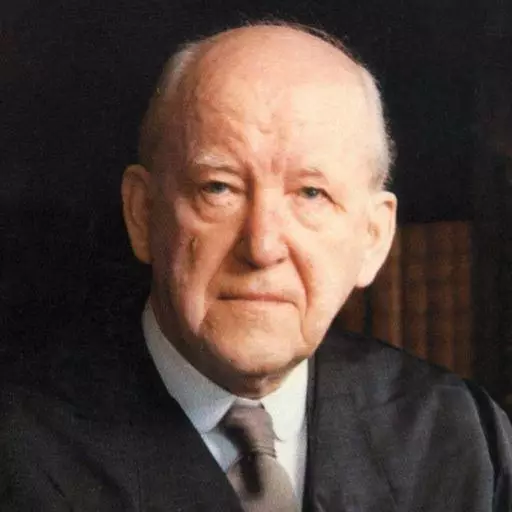
Built Together by the Holy Spirit


Dr. Martyn Lloyd-Jones: I should like to call your attention this morning to the words which are to be found in Paul's Epistle to the Ephesians, the second chapter, verses 20, 21, and 22. Verses 20, 21, and 22 in the second chapter of Paul's Epistle to the Ephesians: "And are built upon the foundation of the apostles and prophets, Jesus Christ himself being the chief corner stone; in whom all the building fitly framed together groweth unto an holy temple in the Lord: in whom ye also are builded together for an habitation of God through the Spirit."
We still are considering this tremendous and most important and vital statement which the Apostle here makes with regard to the nature of the Christian church. We have seen that in order to bring this doctrine home to the minds of these Ephesians, the Apostle implies three pictures. One is that the church is like a state or a kingdom. The second is that it's like a family. And here we are dealing with the third picture, which is that the church is like a great building, a holy temple, which is being built up and is going on in its process of erection in order that it may be an habitation of God, a holy temple in the Lord.
And now we are analyzing this third picture. We have seen certain things. The Apostle gives us a general description of it. Then he has taken us into the detailed description. He's told us about the foundation, and it is absolutely vital in connection with any building. And then he has gone on to tell us something about how the building takes place. And in particular, we have been looking at our several places as stones, living stones in this great edifice that is thus being built up. That, he tells us, is the way in which we should regard ourselves as Christians and as members of the Christian church.
In that connection, we have seen that he clearly teaches certain ideas. There is this element of choice and of rejection, inevitably. Then another thing we emphasized was this: that all the stones are not identical. That's one of the distinguishing features between a stone building and a brick building. The stones are not all the same in size or in shape or in any other respect. They're all in the same wall, but they're not identical. And then we went on last Sunday to deal with the actual way in which we are prepared for our respective places and positions in the walls of this great and glorious temple.
We emphasized there the fact that the work is a secret work. It's a work that is done beforehand. And it is a work that is done without noise. We try to draw from those principles the appropriate doctrines which are of such extreme importance at this present time, with all this talk and pother about unity and union and a great idea of some marvelous world church to counteract and to resist the forces that are opposed to the Christian faith. Now then, we still have to go on because there is no aspect of this matter that we can afford to take for granted.
Indeed we notice that the great Apostle himself is very careful to keep us to the details, so that we shall not go astray at any point. Now he is anxious, particularly that these Ephesians should realize the privilege of their position. There is nothing on earth which is in any way comparable to being a member of the church of God. He goes on to remind them: "You are therefore," he says, "no more strangers and foreigners. You were there, you were like that. You were without God, without hope in the world, but you're no longer there, you've been brought nigh." Indeed, you've been brought into this amazing position that you are now stones in this building that's going to be a habitation for God.
There is nothing so essential to Christian living as to realize our position in Christ, to realize the privilege of our position. And it is Christian people throughout the centuries who have been most conscious of this, who've really taken in the scriptural teaching and have realized that it's true about them, who have always been the greatest saints. Therefore the Apostle impresses this upon them and uses this multiplicity of images in order to bring out the idea. At the same time, he shows them the amazing power of God.
That was the thing with which he originally started in the first chapter. He prays that the eyes of their understanding might be enlightened, that they might know amongst other things the exceeding greatness of his power to us-ward that believed. The power that brought Christ from the dead. That's the power that puts us where we are in the Christian church, nothing less. But in a very special way, he's anxious that they should get hold of this principle of unity. That is the thing the Apostle never ceased to be amazed at: that the Gentiles should be fellow-heirs with the saints, that these people who were beyond the pale, who had no dealings with God, who were aliens from the commonwealth of Israel and strangers from the covenants of promise, that they've actually been made one with the Jews in Christ.
It's not surprising that the great Apostle felt this as he did. He'd been a very narrow Jew, and he had despised the Gentiles. He was a Hebrew of the Hebrews and so on. But to him was in a very special way given this particular task of bringing in the Gentiles, and there he sees them all together, one in Christ. The middle wall of partition has gone, of twain one new man has been made. And the Apostle is filled with a sense of amazement and of wonder. Therefore I say that he elaborates this whole question of unity.
We cannot leave this statement without again looking at this aspect of the matter. For the question is for us to understand the character of this unity. It is of such great importance at the present time, with all the talk concerning this matter. Having dealt with the position in general as we've been looking at the building, we must now concentrate upon ourselves, the practical application and outworking of this in our own daily life and conduct. Therefore, the problem for us can be stated in some such terms as these: How can we have unity without uniformity? Or if you like it in another way: How can I remain an individual and yet not be individualistic?
I think you'll agree that this is one of the major problems confronting the whole civilized world at the present time, not only in the matter of religion or of the Christian faith. It's a great problem everywhere. For instance, in this country, there are people bemoaning the fact that with our so-called welfare state, the individual is being lost. We become numbers, we become units, we've become items. People are very fearful of this. It's rather amusing at times to notice the people who are fearful of this. So often in other respects, they've rather gloried in uniformity. In the matter of education, they've gone in for something which everybody else does, and you've got a common type and product produced. They don't seem to see it there, but in the welfare state this does concern them and they say that the individual is being lost.
It is a very serious and a very important matter. There are always these tensions in life. How do you combine equality or equality of opportunity with individuality? Because we must all agree that we were never meant to be all identical. We were never meant to be like peas in a pod or just a row of postage stamps. Oh no. You've got to combine these two ideas. You've got to remove or to mitigate gross injustices, and yet you've got to realize that your egalitarian ideas do not produce a dull, drab, mechanical sameness. Man's not meant to be a machine.
We're all individuals. We're all given certain peculiar qualities and characteristics, and we were meant to have them and we are meant to retain them. A few Sundays ago in dealing with this question of the stones, I emphasized that from the standpoint merely of our functions in the church, we're not all meant to be the same. The Apostle brought that out in that 12th chapter of First Corinthians that we read at the beginning: some apostles, some prophets, some helps, governments, and so on and so forth. We're not all meant to be doing the same thing, but we must take that idea further this morning.
We see this: that we are all in this same building, and yet we're not all identical. There are differences. Our individualism in a sense remains. Yet we must not be individualistic. Very well then, let us look at this problem which is a problem that is often posed in the New Testament itself. For instance, you'll find the Apostle in the last chapter of the Epistle to the Galatians on the surface contradicting himself. Of course he doesn't contradict himself, but he appears to be doing so. This is what I read. He says, "Bear ye one another's burdens and so fulfill the law of Christ." That's the second verse. In the fifth verse I read this: "Every man shall bear his own burden." That's it.
How do you at one and the same time bear one another's burdens and yet bear your own burden? How can you all be parts of that wall and yet how can you all in a sense still remain distinct? The answer it seems to me is given here quite plainly by the great Apostle himself. We must hold on to this principle. It is so characteristic of God's work in every realm and department. Look at it in creation, in nature. There are no two flowers that are absolutely identical. They belong to the same family. You have your number of flowers, you give them the same name, yet no two of them are identical. Thank God for that. It isn't mass production. This individual element is always preserved. There is some slight difference. It's the same with the animals, isn't it?
That is the glory of creation. You've got this infinite, endless variety and yet there is this wholeness, this perfect blending. That is always the mark of a living action, a creator. Machines don't do things like that. The glory of a machine is that there's no variation. Each one comes out in turn exactly like the previous one, and there shouldn't be a difference; if there is, you reject it. Sameness is the characteristic of mechanics, but it's not the characteristic of the artist. It's not the characteristic touch of the creator.
Here I say you have this marvelous diversity and yet the perfect unity. There are no clashes of color in nature. There are many different colors, and yet they all always blend perfectly. You've got the right shading of one into the other and they're always put together in this perfect manner. That is exactly the kind of unity that obtains in the church. It is vital that we should hold on to that. In every section, in every department of the church, in the whole of the life of the church, we must immediately suspect any proposal or any idea that makes us all the same and does away with this stamp of the mark of God, which is always a great characteristic of his working.
How is this unity, this uniformity, this diversity, how is all this to obtain at the same time? The answer it seems to me is twofold, as it is almost invariably in the scripture. There is what God has done in this respect and there is the appeal and the exhortation to us to work out what God has already brought into being. In other words, it's another of the variants on the theme: work out your own salvation with fear and trembling, for it is God that worketh in us both to will and to do of his good pleasure.
The first thing therefore is what God has done about this. What he has done is this: the great source and guarantee of unity is the fact that this building is the work of the Holy Spirit. Here it is in verse 22, the last verse of the chapter: "In whom you also," he says to the Ephesians, "are builded together for an habitation of God through the Spirit." There has been discussion as to the meaning of that phrase "through the Spirit." There are those who think it means that God dwells in the church through the Spirit. Of course that's perfectly true. It is in the person of the Holy Spirit that the Godhead dwells in the church.
Others have said that it means the habitation is a spiritual habitation. Again, of course, that is perfectly true. But it seems to me that both those ideas rather miss the point here, while they're perfectly true and are stated elsewhere. Surely that isn't the thing that the Apostle is stating at this point. What he's really saying here is that the habitation is being builded by the Spirit. That is the point, that is the idea. It is here, the way in which this fundamental principle of unity is really established and preserved.
We must never forget that this last section beginning at verse 19 and going to the end of the chapter is really an elaboration of verse 18 where we read, "For through him, through Christ, we both have access by one Spirit unto the Father." Then you see he elaborates that idea: we both, there is the distinction; by one Spirit have access, there's the unity. But it is the Spirit that produces and preserves and guarantees the unity. Therefore we must look together this morning at the way in which the Holy Spirit does this.
This is an amazing thing, that men and women of different countries and of climes and of cultures and of traditions, different psychologies and temperaments and all the rest of it, how all of us together are in this one building and are parts and portions of the same edifice. The differences, the similarity, the oneness, the unity. Now, the Holy Spirit is the guarantor of this. The Holy Spirit is always the executive in the work of salvation. This chapter, this second chapter of Ephesians, is of course a great exposition of Christian redemption.
We started with the hopelessness of man, we then see the work of the Lord Jesus Christ. Of course it all centers on him, and he's done the work by his blood, by his cross, by his death, we've been through the great and glorious terms. There it is: he has accomplished a redemption. Yes, but the question is: How does all that come to me? How am I brought into all that? How am I made a living participator of it? The answer is that that is the peculiar work and operation of the Holy Spirit himself.
So the Apostle inevitably has to bring in the work of the Holy Spirit here in verse 18, and then he repeats it here at the end of verse 22. It is Christ by dying on the cross that has broken down the middle wall of partition. Here is the possibility of bringing Jew and Gentile together. Yes, but how did it happen? It's the Holy Spirit that does it. He is the builder of this temple. He is the one who is producing this great edifice as a habitation for God. That is how you and I come into all this and are involved in all this.
We must look at this in detail in order that we may see how wonderful it is. I say again that there is nothing which is more glorious in experience or in life than just this. There is no miracle which is in any way comparable to the miracle of the Christian church. Because we don't grasp this and don't realize it, we fail to function as Christians as we ought. You see, the Apostle was not merely saying something at random when he says that the greatness of the power that is working in us is only to be measured by what God did when he brought the Lord Jesus Christ up again from the dead and conquered hell and Satan and broke asunder the bands of death and raised him up into the heavenly places. That's the power that's working in us.
If the power were not as great as that, the Christian church would have exploded and ceased to be centuries ago. What is it that keeps the church together? What is it that keeps us all together? What is this peculiar something that makes us know when we meet one another, though we've never seen one another before, that we belong to one another as Christian people? This is the great and amazing work of the Holy Spirit. What does he do? Well, let's look at it. Let's spend time in looking at it, let's glory in it, look at it like this.
Featured Offer

Find peace and comfort this season with your complimentary guide that includes access to 6 free bonus sermons on overcoming spiritual depression from Dr. Martyn Lloyd-Jones, one of the church’s most beloved Bible teachers. Topics include: true Christians can and do struggle with depression, recovering the joy of your salvation, dealing with crippling guilt over past sins, dealing with yesterday’s haunting regrets, encouragement to keep moving forward, and understanding God’s purpose for suffering.
Past Episodes
This ministry does not have any series.
Featured Offer
Find peace and comfort this season with your complimentary guide that includes access to 6 free bonus sermons on overcoming spiritual depression from Dr. Martyn Lloyd-Jones, one of the church’s most beloved Bible teachers. Topics include: true Christians can and do struggle with depression, recovering the joy of your salvation, dealing with crippling guilt over past sins, dealing with yesterday’s haunting regrets, encouragement to keep moving forward, and understanding God’s purpose for suffering.
About From the MLJ Archive
From the MLJ Archive is the Oneplace.com hosted ministry of the MLJ Trust. Our mission is to promulgate the audio ministry of Dr. Martyn Lloyd-Jones.
About Dr. Martyn Lloyd-Jones
Contact From the MLJ Archive with Dr. Martyn Lloyd-Jones
info@mljtrust.org
http://www.mljtrust.org/
PO Box 953
Middleburg, VA 20118