
The Church Which is His Body


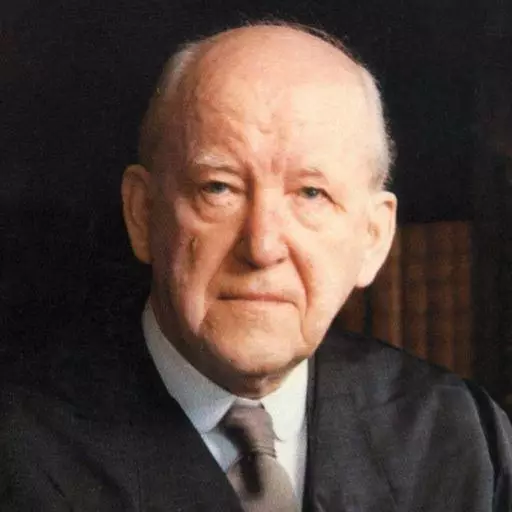
Dr. Martyn Lloyd-Jones: The words to which I should like to call your attention this morning are to be found in Paul's Epistle to the Ephesians in the first chapter and looking particularly this morning at the last two verses, namely verses 22 and 23. "And hath put all things under his feet, and gave him to be the head over all things to the church, which is his body, the fullness of him that filleth all in all." But obviously, we can't just read that much. We must go further back.
The apostle is here, you remember, offering this great prayer for the Ephesians: "That the God of our Lord Jesus Christ, the Father of glory, may give unto you the spirit of wisdom and revelation in the knowledge of him: the eyes of your understanding being enlightened; that ye may know what is the hope of his calling, and what the riches of the glory of his inheritance in the saints, and what is the exceeding greatness of his power to us-ward who believe, according to the working of his mighty power, which he wrought in Christ, when he raised him from the dead, and set him at his own right hand in the heavenly places, far above all principality, and power, and might, and dominion, and every name that is named, not only in this world, but also in that which is to come: and hath put all things under his feet, and gave him to be the head over all things to the church, which is his body, the fullness of him that filleth all in all."
Now we're engaged at the moment and have been for a number of Sunday mornings in considering this third petition that is offered by the apostle in that prayer. This prayer of his, in other words, that these Ephesians and all other Christians may come to know the exceeding greatness of God's power in us who believe. There is nothing, he seems to say, that is more important for us in this world than just to realize that.
We therefore have taken time to consider his own definition of the power, the measurement of the power, the standard by which he does assess the greatness of this power. And then we have gone on to consider why it is that we should realize this and why this power is necessary. And we have seen that we cannot even become Christians at all apart from this power. It takes the power of Almighty God to make a Christian. No man can make himself a Christian. It is this exceedingly great power of God exercised in us that makes us Christians at all.
And in the same way, we have seen that we couldn't stand nor continue for a moment in the Christian life were it not that we were held and sustained and enabled by this selfsame power. Now having looked at it like this in general, we come to this further statement concerning it which is given by the apostle here at the very end of the chapter in these verses that we're now looking at. Now if you read this passage rather hurriedly and thoughtlessly, you might very well come to the conclusion that from verse 20 to the end of the chapter is nothing but a digression.
The apostle is praying that we may know the exceeding greatness of his power to us-ward who believe according to the working of his mighty power. And then he seems to go off at a tangent in describing the power. He says it's the power that he exercised when he brought Christ from the dead. And then he seems to have forgotten what he was writing about, and he goes on after that theme of Christ risen from the dead, and he thinks of his exaltation and of his power and so on, and the relationship of that to the church. And he seems to have left his theme and only to return to it in the first verse of the next chapter.
But actually, of course, the apostle has not forgotten his theme. There is a sense in which these verses are a slight digression. But if we examine them closely, we will find that really he is still dealing with the essential matter that he is considering. Look at it like this: he wants us all to realize the greatness of this power that is working in us. He wants us to know how it works. There is the definition of it. We've seen the reasons why we need it. Well now then, how exactly does this power actually come to us and work in us?
And that I suggest to you is the matter with which he deals in these last two verses. And he does so in terms of this idea of the church as the body of Christ. Now we're here face to face with one of the great New Testament doctrines. There is no more central doctrine in the New Testament than the doctrine of the Christian church. And I suppose there is no figure which is used quite so frequently in order to give us some idea of the doctrine of the church as this picture or this metaphor of the church as the body of Christ.
You will find that he uses it in his Epistle to the Romans and in his Epistle to the Corinthians quite directly, and he has it by suggestion in many places also in other epistles. And we can be quite sure that we're not exaggerating when we say that there is no more exalted idea or notion or picture in the entire range of the New Testament teaching than this. It's not surprising that the apostle should have prayed so earnestly that we might have the spirit of wisdom and revelation.
It's not surprising that he repeats it and says that we need to have the eyes of our understandings enlightened. For this is undoubtedly one of the highest of all the doctrines. You notice that the apostle in the fifth chapter of this Epistle to the Ephesians refers to this doctrine as a great mystery. And a mystery by definition is not something that is easily understood. It isn't something that cannot be understood, but it is something that is not easily understood. And the apostle himself does tell us that this is a matter which is not obvious and that it is only as we are enlightened by the Holy Spirit that we can understand it at all.
Very well then, I assure you at this moment that I shall be taxing your concentration this morning. I trust that that does not come as a disappointment to anybody. These New Testament epistles, my friends, were written to men and women like you and myself. Indeed, they were written to people who had not had your advantages and mine. It seems clear that the majority of the members of the early church were slaves. They had had no sort of education in the sense that we speak of education today.
And when the apostle Paul wrote this letter to them, he meant them to read it. He meant them to understand it. He meant them to grapple with it. He knows they can't do it by their natural powers, but he does know that any man who is enlightened by the Holy Spirit not only wants to understand it but can understand it and that he realizes that it is his duty to do so. I know of nothing that is so discouraging about the modern church. I know of nothing which is such a condemnation of the modern church as her failure to grapple with these great New Testament truths, this constantly repeated talk about simplicity.
Of course, the evangelistic message is to be simple. But here is great and glorious truth which is meant for us, and we've got to make an effort. The church is not a place in which people are to be entertained. It isn't a place in which you just come and sit and listen either to singing or other forms of entertainment and some simple, light, comforting doctrine. If we want to be grown men, if we want to rise to the height of our high calling in Christ Jesus, if we want to be virile Christians in this terrible modern world, well then, the only way is to face these great and glorious doctrines and to exercise our minds, our understandings, and all our senses until we begin to have some dim conception of ourselves in this great setting, in this glorious context.
Very well, now then, let's consider what the apostle has to say here about the church. Obviously, the apostle himself felt that it was a difficult matter to handle. That is why he varies his comparisons and his various metaphors. The commonest of all his pictures I say is the one we're looking at this morning of the church as the body of Christ. But it isn't the only one. We will find in the next chapter that he compares the church to a building. Jesus Christ himself is the chief cornerstone, the apostles and prophets are the foundation, and the building goes up.
But then he also compares it to a household, to a family. We are members, he says, of the household of God. You see another idea. He then compares it to a great empire. As he was a prisoner in Rome, it suddenly seems to have occurred to him that the Christian church is in many respects like the Roman Empire. There is the great central seat of authority, but she has her people scattered throughout the world and her various offices and so on. The church is like a great empire. A wonderful picture.
But then you remember at other times he compares the church to a bride, and the relationship between Christ and the church is that between the bridegroom and his bride. And you remember how our Lord himself in that 15th chapter of the Gospel according to St. John puts his doctrine in terms of the picture of the vine and the branches. Well now, all these pictures are simply designed to enable us to have some understanding of our relationship to the Lord Jesus Christ and especially here that we may see how that power that is in him comes into us and enables us to live the Christian life and is our guarantee and our assurance that we are going to enter into the possession of that purchased possession.
Now that's the context, so that I'm not calling your attention to the doctrine of the church in a kind of theoretical or academic or detached manner. I am interested in it, as we must be in this context, in order that we may see how this exceeding great power of God, how the energy of the strength of God's might really does operate in us. Very well, this is the way to do it, says the apostle. We have to realize our relationship to the Lord Jesus Christ. What does this picture of the body tell us?
Well, let me extract hurriedly this morning certain principles. The first I find is this, and I think you will see that it is a principle that is common to all the illustrations and metaphors that are used in this New Testament attempt to convey the doctrine of the church to us. The first is that we are joined to Christ, that we are united to Christ. And let me hurry to emphasize this: we are united and joined to Christ not in a mechanical manner, not in a loose manner, but in an organic manner, in a vital manner, in a most intimate manner.
Now this is, of course, the very essence of this doctrine. Take it in terms of the body. Now the body, if you like, you can think of as a gathering of a number of parts: fingers, toes, arms, legs, and so on. But the whole point of course about the body is that the body is not a number of loose parts which are somehow or another just attached to one another. The whole secret of the body is that all the parts are really one, that they are an organic, essential, and vital unity.
Now to put it very crudely and bluntly in order to make the thing plain and clear, my fingers are not joined to the palm of my hand by string. They're not just tied on. No, no, it's a living connection. It's a vital connection. There is a sense in which you can't tell me exactly where the palm ends and the finger begins. They're parts of one another. The connection is so intimate and organic and vital and living that there isn't a clear-cut division. And they are not, I say, merely strung together somehow anyhow.
Now that is the essential and the first great principle which we must lay hold of if we are truly to grasp this doctrine of the church. It's a point I say which comes out in the other metaphors and comparisons also, but it is particularly clear here in the case of this analogy of the body. I mustn't press it too far, but it does seem to me that we're entitled to say this: that as the various parts of my body are developed out of the original cell from which we all begin, in that sense, every one of us who is a member truly of the Christian church and is truly born again is an offshoot of Christ if you like, is a development out of Christ.
We have come out of him. We are not merely loosely attached to him. Now this is vital to the whole idea of the church. Indeed, the apostle in his first Epistle to the Corinthians tells us that it's done in this way. He says, "For we are all baptized by one Spirit into one body." It is a spiritual unity. It is a mystic unity. It is something therefore which is indissoluble because it is vital and organic.
Now there are many things we could say about this, but there are certain things which are simple and obvious. It is patently therefore not something that you and I do. It is not something which we can bring into being. We are back again, you see, at this fundamental thought: that it is indeed the action and the power of God. It is the work of the Holy Spirit. And that alone really makes us Christians. Or let me put it like this: this relationship of the believer to Christ is not something organic, is not something spasmodic.
It isn't something which may exist today and not exist tomorrow. It isn't something that depends upon our concentration. As it is the work of the Spirit and as it is something that is done by him in his own way, it is something that is permanent. And therefore, we mustn't conceive of this relationship as one which can be broken tomorrow and then reestablished. You can't go in and out of the body of Christ. There is no such thing as falling from grace in a final sense. You can backslide, you may be excommunicated from the church, but if you are in the body of Christ, you are in the body of Christ, and you will certainly remain in the body of Christ. It is organic, it is vital, it is spiritual.
But now let us move to a second principle which is emphasized here particularly by the apostle. The Lord Jesus Christ is the head of the church. You notice how he puts it here, and he says that God hath put all things under his feet and gave him, Christ, to be the head over all things to the church, which is his body, the fullness of him that filleth all in all. Now this is notoriously a difficult statement to expound, and there are many different views with regard to its exact interpretation. Let me just try to put to you things I think of which we can be absolutely certain.
When he says that the Lord Jesus Christ is the head of the church, the head of the body, he's not thinking so much here of authority or of government. Of course, that is perfectly true. Christ as head of the church is the sole authority, and we recognize no other authority. There is no head of the church but the Lord Jesus Christ. And it is of the essence of the Reformed position to assert that. We recognize no human being as the head of the church. Christ alone is the King and the head of the church and he alone. But here I say that isn't the thing that the apostle is really emphasizing.
He really is concerned to say this: that Christ as the head of the church is the source and the center of the life of the church. Now come back again to this analogy of the body. The body is really the source and the center. Everything in the body really derives its life and its being from the head. I don't want to go into this too much in detail, but it does seem to me to be a proof of the divine inspiration of the scriptures that the apostle and others were led to use this analogy.
They hadn't the knowledge that we now have of anatomy and of physiology, but the analogy is absolutely perfect. You see, there is not a part of my body but that it is controlled by nerves and by the nervous system. The life in every muscle and in every part is really conveyed to it by that nervous energy and power. Yes, but all the nerves ultimately can be traced back to the brain. The brain which is in the head is the center and the source and the control of the nervous energy of the whole of my body and of every part and particle of my system.
Now you notice the apostle says that Christ is the head of the church, and he is the head of the church in that sense. We have no life apart from him. All the energy and the power comes from him. Let me put it negatively: we have no independent life as Christians. He is the vine, we are the branches. There is no such thing as branches without a vine. It all comes from him. John puts it like this: "Of his fullness of all we received and grace for grace."
Very well then, here is a very important thing for us to grasp. The life of the whole of the body and every individual part comes from the head. And that is what is partly meant by saying that he is the head of the church. Another obvious deduction therefore is this: that it is the same life which is in every single part and portion of the body. And it is that, of course, which gives unity to the body. That is why a man's body is a single unity, because of this intimate connection, because of this interrelationship. There is no such thing as an independent existence.
They're all bound together. They're all made sensitive to one another because of this organic principle of unity. And therefore, at a time like this when there is so much talk about the unity of the church and the world church, let us remember that you cannot have unity in terms of mere external organization. To amalgamate a number of denominations doesn't produce unity. There have been many attempts at that, and they never actually succeed. But whether they succeeded or not in terms of organization, they cannot succeed spiritually. It is the Holy Spirit that makes the unity.
It is this common life and energy that makes us one. It is this essential living quality in the nervous system and in the blood if you like that flows round the whole body that really accounts for the unity of a body. And it is exactly the same in a Christian church. That a number of people may meet together in a conference and say, "Well very well, for the sake of unity, I'll no longer emphasize the virgin birth," and another says, "I'll no longer emphasize the substitutionary atonement," the other says, "I'll no longer believe in miracles in order that we can arrive at a common denominator," that's not unity.
The only unity is a unity in the Spirit, a unity which is made by the Spirit and dictated by him and is sustained and maintained by him. The truth as the Spirit reveals it and not as men decide upon some common denominator. Very well, that's a second deduction. But let us go on to something which is still more thrilling, which is this: "The church which is his body, the fullness of him that filleth all in all." What does that mean? Well, it means this: he fills the body with his life.
Now you remember in many places in the scripture, we are told that in the Lord Jesus Christ was all the fullness of the Godhead bodily. In the Son is the fullness of the Father. And here we are told that in the same way and by the same analogy, the fullness of the Son is in the church, which is his body. Now I think the analogy puts it quite plainly. There is a sense in which every part of me is full of the whole of my life. What is my life and being is in every part of my body. Indeed, the moment that ceases to be the case, any individual member will die.
If you sever the nerve, if you sever the blood supply, well, that finger will no longer really be a vital part of my body. The whole of my life is in every part. And that is the astounding thing that we are told about the Christian church and about ourselves as members of the Christian church. The church which is his body, the fullness of him, his fullness is in her. "Of his fullness have all we received and grace for grace." The whole life of the vine is in the branch. It's all there in a sense, and in another sense of course it isn't all there. But in this organic, vital sense, it is all there.
So that we have to realize, beloved Christian people, however much we may be conscious of our weakness and of the strength of sin within us and without and the world and the flesh and the devil, let us remember that all the attributes and the powers and the graces of the Lord Jesus Christ are in us as members of his body. All this life is in us. We are partakers of the divine nature. Or to put that in a slightly different form, let me put it like this: he is the source of all power in us the members. He gives us the energy that is necessary for us to play our individual parts.
You see the picture, don't you? The body? Well, all right, it's one, and yet there are these individual members. As Paul puts it in writing to the Corinthians, "Ye are the body of Christ, and members in particular." And the fingers have one function, and the nose has another, the eyes and the ears and the various parts of the body. They all have their individual parts to play. There are comely parts and less comely parts, but they all are essential. They all work together to the one common end. And so it is with the church.
But the thing we have to remember is that as we are thus made members of the mystical body of Christ and have our parts to play and our functions to perform, the energy and the power that is necessary is there. It's there by very definition. You can't be in him without its being there. You can't be joined to him without its flowing into you. So that all the energy and the strength and the sustenance that we each must have to fulfill our function is provided by him. He said that himself, didn't he? "Without me," he said, "you can do nothing."
We can exercise activities, but that isn't doing his work. We can be very busy and bustling, but it isn't spiritual work. And in the end, it doesn't count at all. You remember there is teaching to this effect that some people are building, putting up a building, and they're putting in wood and hay and stubble. It looks as if it's a good building, but when the testing time comes, it'll be entirely burned and destroyed. The work that is of value, the work that lasts is the work that he and he alone enables us to do. And the point of the picture is that the energy is there. It is always available.
Without him, we can do nothing. With him, all things are possible. So that we say with Paul, "I can do all things through Christ which strengtheneth me." Now all that I say is implicit in the idea that the Lord Jesus Christ is the head of the church. So that as you and I contemplate life and all its difficulties, and as we are tempted of Satan to say, "Oh it's impossible. I just can't go on. The thing is too much for me. I'm so weak and there are those baffling difficulties," the moment you are tempted like that, you remind yourself and say, "I'm a very small member and I'm an unimportant member, but I am a member of the body of Christ. I am in him. And because I am in him and though I'm small and insignificant, the life of the head is in me. I am related to that nerve center. I'm in touch with him. His vitality is in me however small and insignificant I may chance to be."
Now that is the thing that the apostle wants us to understand, you see. He wants us to have the eyes of our understanding enlightened that we may know the exceeding greatness of his power in us-ward that believe. So we mustn't think of it as some kind of great powerhouse to which you can occasionally be connected and sometimes not connected by a switch. No, no, he says, you are always in him. You are members of his body. He is head and you are member, and there is this vital, indissoluble connection. So that in your weakness and your hopelessness, you have your eyes open to this truth, and you take fresh courage and you take up your task again and you go on and you say, "In Christ I cannot fail. I mustn't fail. He will not allow me to fail." You remember that unity of yours with the head and all its power.
But now I want to go on to another principle, which in a sense I almost hesitate to say, and yet I believe one is entitled to say it: "The church which is his body, the fullness of him that filleth all in all." What does it mean by saying the fullness of him that filleth all in all? Well, I've just given you one interpretation of that: that his fullness is in the church, the body. But I believe that they are right who say that it also means this—and it's a staggering thought—that there is a sense in which we as the church are his fullness.
Now let's be clear about this. The Lord Jesus Christ as the eternal Son of God is eternally independent and separate and doesn't need us and in no sense are we his fullness or his completeness or his complement. But if you think of the Lord Jesus Christ as the mediator, as the God-man, as the one who has come to achieve redemption and to present his people to his Father, well then, I say in that sense, he is joined to the body. And a head alone is not complete. A head needs a body. You cannot think of a head without a body.
So the body and the head are one in this mystical sense, and in that sense you and I, beloved Christian people, are a part of the fullness of the Lord Jesus Christ. And this is a marvelous New Testament conception of the church. What is happening during the ages? What has been happening since the Lord Jesus Christ was on earth and has returned to heaven? Well, in one sense, it's this: this body of his is being perfected. Think of a newborn babe. In a sense, the child is perfect at once, but it can grow and develop, and it's going to attain and to a certain maturity. That's equally true of the Christian church.
What is happening until the Second Advent is that the body of Christ is growing and is being made perfect. There is a day coming when it will be absolutely perfect. The fullness of the Gentiles will have come in, all Israel will have been saved, and then the body will be complete and entire. So that in this astounding and amazing manner, I've got to think of myself, humble, unworthy, insignificant Christian as I am, as someone who is essential and vital to the fullness of the mystical body of Christ.
What an idea. And it is only as we grasp that idea that we'll be given strength not to sin. We will see sin in a new light. I am member of this mystical body and sin? Impossible. And yet, you see, that is what we are guilty of. There is no way which leads so directly to holiness and sanctification as to understand this New Testament doctrine of the church as the body of Christ. We are a part of his fullness, of his mystical completeness as the mediator, as the one given to the church by God as the head.
But let me come on to some final conclusions. Here is one of the most glorious of all. In view of the fact that the church is the body of Christ and he is the head, we are entitled to say that what is true of him is true of us. And of course, the New Testament tells us that. The finest exposition of this is to be found in the fifth and sixth chapters of Paul's Epistle to the Romans. As we were all in Adam, so we are all in Christ who believe in him.
Adam sinned, we all sinned with him. That's a vital part of this doctrine of the unity. We were all in Adam. We were in the loins of Adam, if you like. We were all there in Adam, and when he acted, he acted for us all. We are responsible for his sin. That is original sin. Yes, but we're looking at the other side. We are in Christ. Christ is the head of the body of which we are the parts. Whatever the head does, the whole body does. So what is true? Well, this is true: I have been crucified with Christ.
When he was crucified, I was crucified. My old man, my Adamic nature has been crucified. I, the man born in sin, have died with Christ. I am as dead as he is in that sense. I am dead to sin. I am dead to the law. It can't touch me. I have finished with it. Crucified with him, died with him, buried with him. Yes, and the thing that the apostles emphasize here so wonderfully: risen with him. Even as this power of God raised Christ from the dead, he raised me with him.
And therefore, the apostle argues like this: "If ye then be risen with Christ, set your affections on things which are above, not on things which are on the earth. Reckon yourselves to be dead indeed unto sin but alive unto God." You see, it follows inevitably in the light of this wonderful doctrine. And as we shall find when we come to the second chapter, the apostle actually tells us that we are already seated in the heavenly places with the Lord Jesus Christ. Listen to him: "Even when we were dead in sins, he hath quickened us together with Christ (by grace ye are saved) and hath raised us up together and made us sit together in the heavenly places in Christ Jesus."
We are there already because of our mystical union, because he's the head, we're the body, what is true of him is true of us. Do you believe that? Are you living in the daily consciousness of that? Is this to you the most exhilarated thought you've ever met? It's true. This is not mere theory, this is fact. We are already in Christ in all those respects. We have finished with the law that condemns. We have finished with the death that finally leads to perdition, the second death so-called. We have no relationship to it because we are in Christ and risen with him and seated in the heavenly places with him.
And that brings me to my final thought for this morning. There are many who are often perplexed and in difficulties with regard to the exact relationship of the Lord's working in us and our working. I suppose there is no doctrine that has so confused people as the doctrine of abiding in Christ. And for some time, it has generally been represented in a form which is almost entirely passive. People have used illustrations, you remember, about the swimming belt and the life-saving apparatus and so on, and that to abide in Christ is to put on the swimming belt and you're held up by him and you do nothing. Let go, let God.
Now there is this constant confusion between these two matters. But it seems to me that this analogy, this metaphor of the church as the body of Christ should really save us from all confusion and enable us to see the relationship between his working and our working. Now take that statement in the second chapter of Philippians and the 13th verse: "Work out your own salvation with fear and trembling, for it is God that worketh in you both to will and to do."
Now there are some people you see who seem to think it's like this. They say if you want to have victory in your life, you mustn't do anything at all. The mistake you make is you do too much, you're too active. They say you must do nothing but look to Christ, he'll do it for you, he'll do it in you. Now I want to show you that that is surely very erroneous teaching because there is this specific command: "Work out your own salvation with fear and trembling because it is God that worketh in you both to will and to do."
How does it work? Well now, let's come back to this illustration. Think of a muscle, or if you like, think of a group of muscles in a man's arm. Now there in every muscle there is life and there is power. It is supplied as I've already suggested to you by the nerve that comes to it. Originally coming from the center in the brain, that nerve goes to that muscle, and its business is it to give it energy and power and strength and might. Now then, this is what we have seen from our analogy. The muscle is not isolated. It cannot do anything in and of itself.
But there it is. It's alive. It's receiving its life and its energy and its power, but it's flabby and it's weak and it can do practically nothing. Now the problem is how is that muscle to become strong? What can be done to give power and ability to that muscle or that group of muscles so that a man can lift up an enormous weight? Isn't it quite obvious? What you really have to do is this is to exercise the muscle. You don't as it were wait for some great accession of power to come into the muscle.
If you want to develop a muscle, the thing you do is to exercise the muscle. And the more you exercise the muscle, the more will be the energy and the power that will be supplied to it. So that the two things work together at one and the same time. You mustn't say that it's all from the brain or that it's all in the muscle. It is the muscle making use of the power that it's got, and as it uses that, more will come. Now surely this is the whole truth about our Christian life and warfare, about our development, about our growth in holiness and in sanctification.
The two extreme schools are patently quite false and quite wrong. Those who think that they do everything alone in the Christian life are wrong, and those who say that you've got nothing to do but just look to Christ and wait for him to do it are equally wrong. Because the church is the body of Christ and every single part and muscle and portion is vitally connected to him, he is the life of all. Every Christian has got this power in him. And we must exercise the power.
And as we exercise the power, we will inevitably be receiving more power. And as we exercise that, we'll get still more. And as we go on and on, we shall be invincible. So if there is any Christian listening who feels that he or she is defeated, the thing for you, my friend, is not just to pray that you may have strength and power. No. Resist the devil. Mortify your members which are on the earth. Don't expect the Lord Jesus Christ to take your lusts and passions out of you. Don't expect him to do it all for you while you sit back with folded arms and look on with admiration. Not at all.
Exercise the power that is in you as a Christian. The life of Christ is in you. Begin to use it and to exercise it. Make use of that muscle. Mortify sin, mortify your members, mortify these instruments that have been used by sin. Do all you can with all your might. And as you are doing it, increased power and energy will be flowing into you. Now this is pure physiology, but it is absolutely true spiritually. It's as true in the spiritual realm as it is in this natural or material realm.
The way to receive more power is to use and exercise the power you have. You are not lifeless as a Christian. You are connected to the head. The nervous power is there. You say my muscles are flabby. I say well, get at it, exercise them, do it. Don't wait for some great blessing. Go on, do your all, and the blessing will come. You'll be conscious of greater power and the Lord will reveal himself to you in the power and the wonder and the amazement of his authority and his might.
Very well, we leave it at that for this morning. God willing, I hope to complete our consideration of this picture next Sunday morning. But I do trust that we're all carrying away in our minds this central conception: this exceeding great power of God, this energy of the strength of God's might is in me because of my relationship to the Lord Jesus Christ who is the head of the body of which I am a part. It is in me. There is no excuse for my sin. There is no excuse for failure. The energy is there. I must use it. I must exercise it. And I shall find then that there is infinitely more, and I shall go on from strength to strength, from glory to glory, until eventually I with all other Christians shall attain unto a perfect man, unto the measure of the stature of the fullness of Christ himself. May God by the Holy Spirit enlighten the eyes of our understanding that we may know that we are members of his body. Amen.
Featured Offer

Find peace and comfort this season with your complimentary guide that includes access to 6 free bonus sermons on overcoming spiritual depression from Dr. Martyn Lloyd-Jones, one of the church’s most beloved Bible teachers. Topics include: true Christians can and do struggle with depression, recovering the joy of your salvation, dealing with crippling guilt over past sins, dealing with yesterday’s haunting regrets, encouragement to keep moving forward, and understanding God’s purpose for suffering.
Past Episodes
This ministry does not have any series.
Featured Offer
Find peace and comfort this season with your complimentary guide that includes access to 6 free bonus sermons on overcoming spiritual depression from Dr. Martyn Lloyd-Jones, one of the church’s most beloved Bible teachers. Topics include: true Christians can and do struggle with depression, recovering the joy of your salvation, dealing with crippling guilt over past sins, dealing with yesterday’s haunting regrets, encouragement to keep moving forward, and understanding God’s purpose for suffering.
About From the MLJ Archive
From the MLJ Archive is the Oneplace.com hosted ministry of the MLJ Trust. Our mission is to promulgate the audio ministry of Dr. Martyn Lloyd-Jones.
About Dr. Martyn Lloyd-Jones
Contact From the MLJ Archive with Dr. Martyn Lloyd-Jones
info@mljtrust.org
http://www.mljtrust.org/
PO Box 953
Middleburg, VA 20118