
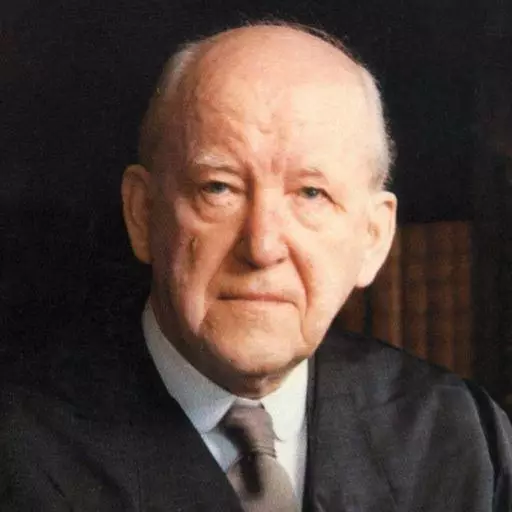
Lessons From Church History


Dr. Martyn Lloyd-Jones: I would like to call your attention once more to the words that are to be found in the Epistle to the Romans in Chapter 12, verses 6, 7, and 8. "Having then gifts differing according to the grace that is given to us, whether prophecy, let us prophesy according to the proportion of faith; or ministry, let us wait on our ministering; or he that teacheth, on teaching; or he that exhorteth, on exhortation; he that giveth, let him do it with simplicity; he that ruleth, with diligence; he that showeth mercy, with cheerfulness."
Now, having considered those injunctions separately and individually, we began last Friday night a consideration of the teaching of all this taken as a whole. What I mean is this: here, in addition to considering the detailed injunctions that the apostle gives to the members of the church at Rome, we incidentally are looking at a picture or a description of the life of the early church. And that is the thing that we are interested in at the present time, because I think everybody will be prepared to agree that the church as we know her in any local manifestation at the present time does not seem to conform, speaking generally, to the picture that we are given here.
Now, that is an important thing in and of itself. If we say that we believe the Scriptures to be the word of God and that they are our sole and infallible guide in all matters of faith and conduct, then we should believe that the church should always conform to the picture and the pattern which we have of her in the New Testament. Therefore, any variation in that or any departure from that is something that should be of concern to us.
But at the present time, as I've indicated, there are very special reasons why we should pay great attention to this. One is the ecumenical movement, as it is called. We are living in an age when you are reminded almost daily that a new thing is coming into being. The teaching is that all the divisions in the Christian church have been sinful, wrong, and harmful, and that the present failure of the church to have any impact upon the lives of the masses of the people in this and in other countries is mainly due to the fact that the church has been divided in that way. So there is this great movement to have unity, to have one great world church.
Well, we are not concerned so much with the details of that, but what we are concerned about is this: that if we are called upon and are exhorted to that—and incidentally, we all must believe in church unity. A man who doesn't believe in the unity of the church is a poor Christian and one who is very ignorant of the New Testament. It is our Lord himself who prayed that we all might be one, and he gives a reason for that. And the reason is that the world may see this and know, therefore, that God had sent him and that we are truly his people. You can't be Christian without believing devoutly and doing everything you can to promote and to foster true union and unity amongst Christian people.
But the question that arises as we're faced with this call and invitation, the question we feel we must ask is this: What is the church? What is the church? That's the great question today. There are eras and epochs in the history of the church when she has been very little concerned about the doctrine of her own nature. And this perhaps has been the besetting sin particularly of those of us who are evangelical. We've gone in for movements and we haven't been very interested in the church. We've been charged with that, and I think we ought to be honest enough to admit that there's a great deal of truth in the charge.
Evangelical people are found divided up amongst all the denominations, and they seem quite happy in that respect as long as they can come together in certain interdenominational activity. Now that, I say, is to ignore the whole doctrine of the nature of the Christian church. But today, we are being compelled to face all this. We ask the question: before we begin to talk about one church, we must be clear as to what the church is meant to be, what she's meant to be like, and what is the real nature of the Christian church.
Now, there is one overwhelming reason why we should be considering this urgently at the present time. Another one is that there is a great deal of new interest in what is called the manifestation of the gifts of the Holy Spirit in the life of the church. Again, something that a paragraph like this obviously compels us to consider. You can't brush all this aside and say, "That's only true of the first century." As I said last Friday night, you start doing that, you'll find you've got very little left in the New Testament.
And as you know, there are some people who, having taken that kind of dispensational attitude to the New Testament, have indeed only a very, very small fraction of the New Testament which they claim is relevant to us today. Now, we surely don't believe that. This all speaks to us, and we must consider it as we have it before us. I've suggested to you that here we have, as we have in other places, a picture of the life of the early church. And the thing that strikes us at once is that the early church was obviously functioning as a body.
This very thing the apostle puts before us here: "As the body is one and has many members, and all the members have not the same office, so we being many are one body in Christ, and everyone members one of another." And then he goes on to say that these different members have different functions, and that we are to pay attention and do all we can to manifest the gift that has been given to us. Now, that was the condition of the early church. You get the same thing taught in 1 Corinthians 12 and 14 in exactly the same way.
Here then is the picture that strikes us at once about the early church. The early church was alive and alive in the sense that the different members were active. It wasn't one man doing something and everybody else just sitting and listening. There was a varied activity. There was a fullness of life. The various members were taking and playing their part in the life of the whole body. The apostles, of course, and prophets and evangelists were clearly in a unique position for the special work of founding churches which they had to do.
But having said that, still that main picture remains of this pneumatic life, this pneumatic body, this living body, thrilling with life, and this life manifesting itself in various ways, sometimes in excesses. Because children tend to run to excesses. But the excesses of children are better than the inactivity of death. And you get all that in the New Testament. This is a great picture of life with these outstanding persons there. But as I went on to show you, it's quite clear also that as time passed, certain offices emerged. And the two offices are that of elders and of deacons.
Now, there is this word elder. There are alternative terms that are used for that: presbyters, bishops, overseers. Now, I believe I made it clear last Friday night that men who are regarded as scholars who give their life to the study of these things are generally agreed at the present time, with certain notorious exceptions of course amongst those who use the term Catholic with respect to themselves, but all others, fair-minded scholars are agreed that in the New Testament, these terms are interchangeable. And that the bishop and the presbyter and the overseer are one and the same person. They're different words which are used to describe different aspects of the work of the one kind of person.
Now then, elders and deacons. Those are the only two offices that are recognized and described plainly and clearly in the New Testament. I pointed out to you how they were chosen by the people—Acts 6 is the basis for that—but then you get the same thing in Acts 14 and in other places and in your pastoral epistles. Chosen by the people, they were ordained and set apart by certain elders and others who functioned in the early church. Now though, I ended by saying that in addition to that, there was obviously also a very definite suggestion in the teaching of the New Testament of the further development of this ordering of the life of the church.
Now, any body must have order. That is inevitable, and the early church began to discover that. We saw it in the case of the deacons. They had to do something about it. There were complaints being made by the Grecians over the distribution of food to their widows. So sheer circumstances compelled them to introduce order. And they always did this with prayer, often with fasting and praying for the guidance of the Holy Spirit. Now, as the life of the church went on, it is clear that there was a further development also in the order.
The thing I'm referring to now in particular is this: that it seems quite clear that gradually among the elders, they began to develop a system whereby one of these men was chosen to preside over the discussions of the church and over the handling of the affairs of the church in various ways. My authority for saying that is that 15th chapter of the Book of the Acts of the Apostles, where it is quite clear that James, the brother of our Lord, was the one who presided at that gathering which took place at Jerusalem, commonly referred to as the council which was held in Jerusalem.
James was presiding. James was in the chair. And he not only spoke, but he uttered the kind of final conclusion to which the gathering came. He gave his verdict. He gave his opinion. He is obviously, therefore, clearly in a position of leadership. He presides over the deliberations. Well, now there is the picture. So that it comes to this: that the church is, and this is the fascinating thing to me about it, this perfect blending of freedom and order, of discipline and liberty, of life and the activity of the Spirit, and yet, everything, as Paul puts it, must be done decently and in order.
Now, there is the picture that you have in the New Testament. And what you have is a picture of a number of such churches in different parts of the world. The Church of God which is in Rome, the Church of God which is in Corinth, and in various other places. Antioch and so on. The churches in Galatia. Reference is made to that in this Book of Acts. And the picture that one is given is of a number of such churches, each one functioning within itself, independent, ruling itself and governing itself.
But not independent in the sense that they were not interested in the others. They were all interested in one another, obviously. They'd had the same experience, they believed the same things, they'd got their eye on the same blessed hope. And naturally, therefore, they were interested in all such people everywhere else. Not only that, they were visited from time to time by the apostles. Paul and others went on missionary journeys, and they would visit the churches that had already come into existence. They would send people like Titus and Timothy to visit the churches.
So they were all kept in touch with one another in that way. And yet, I say, it's perfectly clear that each church was independent. What do I mean by that? Well, and I think this is one of those important things for us to consider at this present time, in view of these things that are taking place round and about us: I am suggesting that there is no evidence here at all that anybody outside the particular church had a right to interfere in its affairs, still less to dominate its affairs. Now, here is the principle which we must look at.
No group of churches could control the life of the individual church. Still less is there any suggestion that certain particular officials had this kind of legislative and controlling power. Still less is there any vestige of a hint that the state had such power over the life of the church. The churches had nothing to do with the state. Indeed, some of them were even misunderstanding that and had to be reminded, as we shall see in the 13th chapter, that after all, though they are members of the church, they are still citizens of the state, and they must submit to the ruling of the state in matters that apply to the state, not the church.
They're entirely separate. And the state has no jurisdiction whatsoever over the local church. Indeed, I am suggesting that nothing has jurisdiction over the local church. No group of churches, no body of ecclesiastics, no one man at the top has such authoritative legislative control over the life of the church. But now, someone may say—and probably some are already saying to themselves because it's the old familiar argument—that surely what we read of in Acts 15 contradicts what I've just been saying.
All who believe in any form of Presbyterianism, for instance, are very fond of quoting Acts 15. It's the only bit of evidence they've got. There is no other; it's the only one. So they're bound to quote it. And they would argue from Acts 15 that here you have a typical Presbyterian picture. That a council meets, a kind of general assembly meets at Jerusalem, comes to a decision, and that this decision is legally binding upon all the churches. They say it's typical Presbyterianism: General Assembly with a moderator, James, and they arrive at a decision having considered the matter, and they issue their edict, which is then to be carried out.
Now, they attach considerable significance to and put great emphasis upon a word that is used in the 16th chapter of the Book of the Acts of the Apostles in verse 4. We're told that Paul and Silas went, and Timothy joined the company. But this is the verse, verse 4: "And as they went through the cities, they delivered them the decrees for to keep, that were ordained of the apostles and elders which were at Jerusalem." And they put great weight upon that word "decrees." They say it savors of legal enactments and so on.
And that is the main argument for what is called Presbyterianism. And Presbyterianism really means this in a sense: that chosen elders from a group of churches, an area of churches, meet together in council, elect their own moderator, and that they then have this authority and power over the life of the local church. Now there, there is something, therefore, that we've surely got to meet and got to face. How do we answer that? Well, it seems to me that this is just a perfect example of the tendency always to argue from a present position backwards.
If you take the statements as you have them in Acts 15, you're not entitled to come to any such conclusion. What happened in Acts 15, we are told, is this: certain of the apostles were down in the church at Antioch. And while they were there, certain men came down from Judea and taught the brethren in the church at Antioch and said, "Except ye be circumcised after the manner of Moses, ye cannot be saved." These men came and said they'd come down from Jerusalem with the authority of the church and the apostles in Jerusalem to preach and to teach that it wasn't enough for a man to say he believed the gospel. It wasn't enough even for him to believe the gospel; he must in addition be circumcised after the manner of Moses.
Indeed, he has got to keep the law. And so an argument and a disputation arose. Paul and Barnabas had no small dissension and disputation with them. But the church in her wisdom decided that it was no use going on like this, just arguing and wrangling. They said, "The thing to do is this: we must send Paul and Barnabas and certain other people up to Jerusalem unto the apostles and elders about this very question. These men say the apostles have told us to preach this." Paul was sure that they couldn't possibly have done so. But it's one saying one thing and one another, and it's sterile and comes to nothing.
One says yes, one says no, and they keep on saying in different ways. They said, "It's no use going on like this. Let's send Paul and Barnabas with others to the apostles and elders and the church at Jerusalem and find out from them themselves whether these men are speaking the truth or whether they are not." Very well, that's what happened. So you see, you haven't got a case here of some great general council of the church. You haven't got a picture here of some central authoritative body which can call all the churches together and decide and enact and determine what is to happen in all the churches.
What you've got here is a consultation really between two churches. And the initiative does not come from the church in Jerusalem or from the apostles. It comes from the church at Antioch. They make a request. They ask to be received. They ask to enter into a consultation with the church in Jerusalem. So you must never speak of this as an ecumenical council. It wasn't. It wasn't a gathering of all the churches with delegates sent up from all the churches. It wasn't that at all.
Just these representatives from the church at Antioch go up to the church at Jerusalem. Why did they go there? Because the men who were teaching the false doctrine said they'd been sent down from Jerusalem. The trouble had originated in Jerusalem, so naturally the members of the church at Antioch want to go to the fountainhead. In any case, the church at Jerusalem was the first church; she was the mother church. Naturally, she was held in great respect. Naturally, everybody else paid great attention to what they did believe in Jerusalem.
And generally, the apostles were there. They went on their journeys, but they always went back there. It was a kind of headquarters. Historically, it was that. So naturally, they were very anxious to know what they really did teach there. Had some new idea come into the teaching of the church at Jerusalem, the mother church? They wanted to be sure. So they send their delegates in that way. Now, you see, there's no suggestion here at all of a central machinery, of a supreme court of the church. It's just not here. And there are other things which make this doubly certain.
You notice that Paul and Barnabas didn't merely go up to consult the apostles. They didn't even go up to consult the apostles and elders only. They went up to consult the whole church at Jerusalem. Now let me give you the verses which point that out. Verse 4: "And when they were come to Jerusalem, they were received of the church and of the apostles and elders, and they declared all things that God had done with them." 12th verse: "Then all the multitude kept silence." It wasn't something like a conference of cardinals or a conference of bishops which takes place from time to time at Lambeth, or even a gathering of church leaders as takes place in free church circles.
The church was present. All the multitude kept silence and gave audience to Barnabas and Paul, declaring what miracles and wonders God had wrought among the Gentiles by them. But it's the 22nd verse that really is crucial. "Then pleased it the apostles and elders with the whole church to send chosen men of their own company to Antioch with Paul and Barnabas." And verse 23 carries it on: "And they wrote letters by them after this manner: The apostles and elders and brethren send greeting unto the brethren which are of the Gentiles in Antioch and Syria and Cilicia."
Now, it's quite clear, in other words, that there is nothing here at all which in any way is comparable to this idea of a General Assembly of elders or presbyters—ministers and men who are not ministers but who nevertheless are presbyters and elders—determining the whole life of all the churches and having enactments. Well, you say, "But what about that word decrees in the 16th chapter and verse 4?" Well, that's simply basing an argument upon the particular translation that's here in the Authorized Version. You turn up that word, you will find that the same word is used for decision. It's a decision which was taken.
There was no doubt a decision was taken, having considered this matter, having discussed it together. And they did so very prayerfully because you notice James is able to make this remarkable statement. Oh, that the Christian church had always remembered this. And may we all be given grace to remember this at the present time. "It seemed good to the Holy Ghost and to us." That's it. It seemed good to the Holy Ghost and to us. They were given a unanimity. They were all in the spirit, and they were praying for the guidance of the spirit.
Personally, I have no doubt at all that James was speaking under the inspiration of the spirit. James wasn't merely speaking as a chairman or as a president. He had no unusual powers as a president. He was simply appointed to take the chair in order that the discussion might be orderly. But he has no executive power. He doesn't speak ex cathedra out of the church and everything he says is infallible. Not at all. He is one amongst the others, and he speaks the voice of the spirit and of the apostles and elders and the members of the church that were present together.
And they arrive, therefore, at this decision. It was a temporary decision; it was a temporary problem. It's a problem that disappeared out of the life of the church. It was only a temporary problem—what exactly was to be done with these Gentile converts? Had they to keep various parts of the law or not? And you notice the wisdom they were given to arrive at a temporary answer until the problem should disappear, which it did. And to elevate this into some great enactment, well, that is what has happened in the subsequent history of the Christian church.
But I've taken you through the chapter and the evidence in order that I may demonstrate my contention: that you really cannot base any such claims for executive authority and power outside the local church upon the local church from the New Testament Scriptures themselves. Very well, then. If that is the picture of the church in the New Testament—every church autonomous, independent, with nobody being able to impose any decisions upon it from the outside, whether churches or state—then the question that obviously arises in our minds is: well, then where has the church as we know her come from?
How have we ever arrived at this present position? Now, I believe it is most important that we should all of us know something about these things at the present time. I remind you again that you'll all have to take decisions in these coming years. Whatever body you belong to, you'll have to take decisions, and it is our duty as Christians to decide in a scriptural manner always, not mere prejudice, not saying, "I was brought up a Roman Catholic and I'm going to defend this," or "I was brought up as a Presbyterian or as a congregationalist or as a Baptist or belonging to the brethren. I don't care what it is."
If you are simply defending the thing you happen to be born into, you're not behaving in a scriptural manner. We must have scriptural reasons for what we say. We've got a new and a marvelous opportunity of doing this, and I urge upon you the importance of considering these matters and of preparing your minds for the great responsibility that devolves upon you at a time like this. Well, what happened? How has the New Testament church led to what we know today? Is there any connection between them?
The process can be traced in the history of the church. The real difficulty arose over the whole question of discipline, and especially in the matter of doctrine. While the apostles were alive, everything was referred to them because they were the apostles, these unique men. The church is built upon the foundation of the apostles and prophets. And they did these rounds of the churches, and everything could be referred to them, and you could do what the church at Antioch did.
But now the apostles had died. And the question arose almost immediately: how do you exercise discipline? Men set themselves up as teachers, and they began to preach things that were wrong, heresies. What do you do about them? What can be done about them? That's how the difficulties arose, and that is how the modern situation really came into being. It was felt that there must be some sort of authority. You must have some way of deciding these things.
The early church had to grapple with this great problem. And remember, they were men and women in the flesh as we are, prone to error, ever ready to insinuate a little bit of human wisdom perhaps instead of adhering to the primitive pattern as they should have done. It's all very natural and understandable, but the question for us is: is it right? Well, what happened actually was this. I've laid stress upon this fact, that it obviously became necessary to appoint one out of the number of elders to preside, elect a chairman if you like.
That became necessary. As time passed, this is what happened: if the man chosen to preside or to be put into the chair happened to be a particularly strong personality or an unusually able and gifted man, quite unconsciously, his authority and power tended to become greater and greater and greater. This happened in a number of cases. In addition to that, the members of the church themselves might well feel—and indeed, did feel—that you must have some sort of a ruling and that everybody must submit to this ruling.
So they would agree where there was a difference of opinion, "Very well, let's allow the president to decide." You can see what's happening. This president is only one of the elders. He's no more; he's one of a number. But he's been put into this position. And in these ways and for these reasons, authority and power are increasingly added to him and to his position. This went on so much that by when you come to the middle of the second century, these men in the position of presidents or chairmen became recognized and regarded as a separate order of officers in the church.
He's nothing at first but a kind of presiding elder. But slowly they changed the very name and they began to call him a bishop. Now in the New Testament, as I've indicated, bishops and elders and overseers are alternative terms for the same person. But now they began to isolate this word "bishop" and to apply it only to these people in this presiding position. And so soon, you've got a separate order of bishops. And this went on more and more, so that instead of having only elders and deacons, you now have bishops, elders, deacons.
You remember that first verse in the Epistle to the Philippians? There's a verse which shows you that the bishops and elders are one and the same person. The apostle writes to the bishops and deacons who are in the church at Philippi. This is how you began to develop this three-tier system: the bishop, the overseer. He's there at the top, then your elders, and then your deacons. But it didn't stop even at that. Once you start along that line, you can't stop.
This is what happened: to start with, there was a bishop in each church. At the beginning, there was one bishop for each church. Obviously, he's the presiding elder and he becomes the bishop. Sometimes there would be more than one bishop in a church, and they took the chair in a kind of rota or in turns. However, the important thing is this: that having started with this new office, as the problems increased, the power of the bishop again became greater and greater.
So the next kind of division was that it was felt that a man who was a bishop in a town church was obviously an abler and a bigger man than a man who was a bishop in a country church. People have always thought that there is some peculiar merit about a town and that people in towns are more intelligent than people in the country. Complete fallacy, of course, but people have always thought that kind of a thing. And so they began to say that the opinion of the bishop in the town was more important than the bishop in the country.
This went on to such an extent that it soon got to this position: that you would have a gathering of bishops, but the one always presiding, of course, was the bishop in the town. And thus you develop what is now called a diocesan bishop. A bishop over a number of others. And he has a great territory under him. Well then, of course, the next step is this: as a town is more important than a village, a county town is more important than an ordinary town, and a capital is more important even than a county town.
From having diocesan bishops, you begin to get what they called metropolitan bishops. Here's a man who's a bishop now over a whole country. And he's more important than the bishops in the towns, who are more important than the bishops in the villages and in the country districts. So now you've got a number—there was one began to develop in Rome, another in Corinth, another in Antioch, and another in Alexandria in Egypt. These were metropolitans. Well, of course, it's illogical to stop there.
You're narrowing it down. Now you've got a number of metropolitans, but who decides as between them? Obviously, you've got to get one on the top of just these. There's your pope. And that is precisely and exactly how it's happened. And what called for all this, in a sense, as I'm reminding you, was the need of discipline, especially in the matter of belief. What is to be believed? And this is how the church felt she could solve the problem: that you must have this authority, and it became greater and greater, so that at the end, what the pope in Rome says is true.
He speaks infallibly ex cathedra. They didn't define it then, but they were using it in practice. There was a great fight over this. This took many centuries. I'm giving you a bird's-eye view of the whole thing. But there is one other big factor that I must mention to you. You remember how about the year 325, the then Roman Emperor whose name was Constantine decided—I think we must agree all of us for purely political reasons—to become a Christian.
Now, I could tell you the political reasons. I'm not going to do so; it would only confuse the thing I'm trying to emphasize. But his reasons were really political. It was the right, obvious thing to do. It paid him to do it. Politicians generally act solely from expediency. If we go into Europe, that'll be the only reason the politicians will have for doing it—expediency. They used to persecute the Christians, but the Christians had become so powerful and there were so many divisions amongst the pagan gods and amongst the followers of the various pagan gods that this astute man, Constantine, suddenly conceived the idea that after all, if he only put these people on top and became one of them himself, it would solve many problems for him. And indeed, it did so.
Well then, the Roman Empire, therefore, came into the Christian church. And another thing happened as the result of that, which one could almost have prophesied. Here now is an opportunity of really controlling all the churches. The Roman Empire was a very highly organized state. The center of government was at Rome, there was the head of all, the emperor. Well then, you've got coming down from him your proconsuls and consuls and all the rest of it, governors like Pontius Pilate and so on. You start with this great head and then you multiply your offices down and down until you're quite at the local level, but it all heads up there and it's all governed from there.
After the coming in of the Roman Empire, you get all sorts of other offices developing. So far it was bishops and elders and deacons, with a development amongst the bishops into local, diocesan, metropolitan, pope. But now all sorts of other offices came in. You may have wanted to ask me all along where have deans come from and archdeacons and rural deans and all these various other offices, prebendaries and all the rest that you know of in connection with the church. Well, they really all came in with the Roman Empire.
There are to be found corresponding offices in the government of the Roman Empire. In other words, the church simply borrowed the governmental procedure of the Roman Empire and put it into practice in the church. And the result of this all was that the local church had lost her power completely and entirely. Everything was determined from above downwards, and there you have your typical Roman Catholic system. No longer does the church have authority to appoint her own officers or anything else. It's taken right out of her hands, and it's always done from above. No one can ordain anybody except a bishop and so on.
So the confirmation is done by the bishop only, and so on and so forth. Now then, there was the thing that gradually developed. And you see how far it's gone from the New Testament picture. Well, what happened? Well then, of course, you come to the Protestant Reformation. What happened there? The great thing that happened there was that God opened the eyes of these men to see the truth about the way of salvation. And they saw that with great clarity: justification by faith only. Now let's be fair to the reformers.
It's very difficult for any man or any body of men in any age to do everything. They saw this big thing: that the people were being held in darkness, and they wanted to have the liberty of the gospel and preach the true way of salvation. And Luther and the rest, they did that. But they did not deal with the whole life and organization of the church in a corresponding manner. Luther took over from Rome much more than Calvin and the other reformers in Switzerland and other places.
He wasn't concerned so much about these other things. He was concerned about this one great thing and had to fight for that. He was troubled by those Anabaptists who arose and appeared to him to be jeopardizing everything because they were going to annoy all the authorities. Don't forget that for 15 centuries, the state had been ruling the church with an iron government, and everything was under the prince and the ruler and the emperor. I'm not criticizing the reformers; I'm simply explaining them and explaining what they failed to do.
And of course, here in England, Anglicanism took over practically the whole government as it was being worked by Rome. All the various offices, they took them all over. They dropped the pope—Henry VIII saw to that. But otherwise, there was only that one difference: that instead of the pope being right at the top, it was Henry VIII. And the territorial and national aspect took the place of the international aspect. But otherwise, there was no change. All the various offices and the government continued.
In the case of Calvin, John Calvin, he is the father of what we call Presbyterianism. But as I've tried to show you, he also didn't go back to the New Testament pattern. Let's be fair: these men again were up against this problem of discipline and of order. They felt you must do that, and the coming up of these various other wild sects, as some of them were, tended to harden the position and the thinking of the reformers, and they felt that you must have some system which could maintain law and order.
But quite soon, the people who became known as independents began to appear. They made their protest. They said, "This isn't New Testament. You're perpetuating much of that which came in wrongly through the centuries. You're not sufficiently radical. You've reformed the doctrine in the matter of teaching the way of salvation. Why don't you reform the doctrine with regard to the nature of the church in an equally radical manner?" And so in towards the end of the 16th century and still more in the 17th, you had the rising of independency in its various forms, whether congregationalists or Baptists. It doesn't matter from this standpoint.
Since then, there have been various other developments. There is a picture of how the church as we know her has tended to come into being. And what I want to suggest to you is that we are arrived at a point now when we really must reconsider all these things. We must admit the position has become chaotic. Men set themselves up, men who may be used as evangelists, they turn themselves into movements, and they impose themselves upon churches quite often.
The thing has become chaotic. You can't see it in the New Testament. There's no such thing in the New Testament at all. The New Testament's always interested in churches. Not interested in movements or organizations. Always churches. But we've got into this terrible chaotic confusion. And I am suggesting that we must avail ourselves of the opportunity that is given to us today to go back to the New Testament and try to see ourselves in a condition and position which is more similar to that which we read of in these three verses in Romans 12.
Let me put it then very bluntly and very simply: I think I've shown you that you can't find a pope in the New Testament nor so many of these other offices. You can't find this hierarchical system that tyrannizes over the local church and rules the local church. You can't find it there. But let's be quite honest: can you find what is sometimes called the one-man ministry in the New Testament? I frankly cannot find it there. It's not there. But this is always taken for granted.
One-man ministry, and it's developed more and more. One man does everything: does the preaching and the teaching and a good deal of the organizing and everything else. Everybody else just sits down. One-man ministry. Not these variety of gifts that we read of in our chapter 12th of Romans: "Having then gifts differing according to the grace that is given unto us, let's all of us exercise them." That seems to have gone. And more and more, one man has been doing everything and the rest have just been sitting and listening and looking on.
I put that in as well. I say we must start afresh. We must be concerned about one thing only, and that is that we really do conform to the New Testament pattern. Why is this so important? Well, I believe it's important for this reason: if we really do pray for and long for the blessing of the Holy Spirit upon us, we must honor his word. We must make ourselves conformable to the pattern that he has so plainly indicated.
I feel that we must reform ourselves if we really are genuine in our seeking for and longing for revival. What have we got to do? You've shown us how we've departed all of us in a sense from the New Testament pattern. What do we do? Many solutions have been tried. You know the Quakers of the 17th century. They tried a solution. George Fox used to revile the churches, the steeple houses as he called them. He ridiculed them.
He was violent, but the idea that he'd got hold of was this: he objected to this division of the Christian people into clergy and laity. And I for one am ready to say he was absolutely right. He went too far; he didn't recognize any offices at all. That's where he was wrong. But he further felt this: that surely any man who's a Christian and who has the spirit in him has gifts in him, and he should have liberty to express them. He was not given that liberty, not only by the Church of England, but not even by the nonconformist bodies who had come to believe in this one-man system.
He protested against this, and in that sense, his protest was right. And then that led them to develop their kind of meeting where you all meet together, nobody's appointed to preach and nobody is prepared to preach, but you sit down and wait until you're moved by the spirit and then you speak. Well, I think that it's got to be admitted by now that that is not proved to be the solution. I think I could prove from the New Testament that it couldn't be a success because it doesn't conform to the pattern which we've been seeing in the New Testament. Others have attempted the same thing.
I've often commended from this pulpit the commentary on the Epistle to the Romans by Robert Haldane. Haldane on Romans. Now, Haldane had a brother, James Alexander Haldane, a greater preacher than Robert and a man who had a remarkable ministry in Edinburgh. But he ruined it completely. Through thinking along these lines and going back to the New Testament and examining it, he felt that he must stop preaching as he'd been doing. He'd been doing almost everything.
And he felt that you must have a more general meeting and anybody could get up. He'd do this on Sunday morning, for instance, the Sunday morning service. He wrecked a great church. It came to nothing. I suggest again that he wasn't being scriptural. He fails to notice that there is a division. Some one gift, some another, but some called to preach and to teach in a special way. Well then, of course, as many of you know, the so-called Brethren movement, Plymouth Brethren, the whole movement that began with J.N. Darby and others, they were facing this exact problem, and all honor to them for doing so.
This was the thing that brought them into being. They said, "What we are familiar with is not the New Testament, and we must go back to the New Testament." Well, again, I suggest that while they were most of the way right, they went too far, and they failed to recognize certain distinctions and divisions of labor. I think it's a matter of great interest to notice that by now many of them—and I believe this is particularly true in the United States of America—have come to believe that certain men should be set apart entirely and full-time as preachers and teachers.
They haven't done away with the expression of the gifts in various other meetings, but they've come to see that, which is in a sense a criticism of what they did at the very beginning. Then the story of Edward Irving and the so-called Apostolic Church, Christian Apostolic Church, which he started here in London, has a great deal to teach us about this. He again stopped doing what he'd always done as a Presbyterian. But alas, you remember it ended in tragedy. Since then, there have been other attempts and efforts. There is a church known at the present time as the Apostolic Church. They claim to have apostles and prophets amongst them.
Again, we could easily show that they're not scriptural. Last of all, at the present time, there is what is called the charismatic movement which is again a reconsideration of all this, and to that extent, of course, it is right. But the question I raise as I close, and I'm sorry to be rushing it, but we must bring it to some kind of conclusion, is this: What then would I suggest? What would I indicate as being the true way?
Well, here it seems to me is what we must do in the light of the scriptural teaching and the history which I have put before you: the history of how things went wrong, the history of the experiments and the endeavors to restore the New Testament pattern. I suggest that the great lesson is this: to beware of the danger of swinging from one extreme right over to the other. There is one extreme ending up with the pope and that absolute authority and so on.
The danger is to go right to the other extreme and say, "No order at all, no church membership, no offices, all are one, all are exactly in the same position," and so on. You don't have preachers and teachers and pastors nor anything else. Now, I say that there is the other extreme. What is the true way? Well, surely what we are called upon to do is to come back to the New Testament pattern. There are men who are given the special gift of preaching and teaching.
There are men who are given the gift of being pastors. There are those who are given the gift of government. There are those who are given various other gifts of expression and of exhortation. There's a very interesting word there, did you notice it at the end of that 15th chapter of the Book of the Acts of the Apostles, which I read out to you and which is very germane to this whole consideration? We are told that Judas and Silas, who'd been sent down with Paul and Barnabas, being prophets also themselves, exhorted the brethren with many words and confirmed them.
Then we are told this: "Paul also and Barnabas continued in Antioch, teaching and preaching the word of the Lord, with many others also." That's it. Now, in the church, there are a number of men who are given the gift of teaching. They're apt to teach, and they can preach. Very well, we must reconsider this: not one man only. If others have the gift, they must be given opportunities of exercising the gifts. But it mustn't be done in a disorderly manner, in a haphazard manner.
There must be an order and there must be a system. You can maintain all your liberty. You can maintain in other meetings of the church opportunities for the exercise of all the gifts that the Holy Spirit has given to us severally and one by one. I believe that the Methodist awakening of 200 years ago in both its branches came very near to what I would regard as the scriptural position. In their class meetings and other meetings, opportunities were given to men and women to give not only their experiences, but to give a word of exhortation, to give an interpretation of a scripture and so on.
I believe we must return to that where there is an opportunity in the life of the church for all to give expression to the gifts that God has given them. But clearly, there will always be public services where men who have been obviously gifted for such purposes should be set apart to preach and to teach. And so it will be edifying to the whole body of the church and also at the same time a word can be addressed to those who are outside.
Many times the experiment has gone wrong because they've failed to remember that you don't have a church meeting in view of the public. You do that in the body of the church, but when you're addressing the public, put forth the men who have obviously been gifted by the spirit to preach and expound the word and to preach the gospel of salvation. Well, my dear friends, all that it seems to me comes out of these three verses—6, 7, and 8—in Romans 12. There is a picture of the church.
Why are we so different? We must get back to the New Testament pattern, and we must pray to the Holy Spirit to enlighten the eyes of our understanding and open the Scriptures to us, above all to deal with our spirits and our prejudices so that we shall not merely be defending some inherited position but shall be always open to the leading of the spirit and follow him as he leads us back to this pattern which he himself has revealed to us in the New Testament Scriptures. May God hear us in that respect and guide us to his own glory. Let us pray.
O Lord our God, we come to thee. Lord, thou art patient with us. We see what has happened throughout the centuries. We see men and women like ourselves, often with the best motives and intentions, being led astray. O God, we are afraid of our own judgments. We dare not lean upon our own understanding. But thou hast promised to lead us and to guide us and to direct us. Give us courage, we pray thee, that we be no victims of a spirit of fear, or be ruled always by nothing but expediency.
Give us honesty, give us courage, O Lord. Above all, we pray thee, give us a single eye to thy glory and to thy praise. And now, may the grace of the Lord Jesus Christ and the love of God and the fellowship and the communion of the Holy Spirit abide and continue with us now this night, throughout the remainder of this our short and uncertain earthly life and pilgrimage, and evermore. Amen.
Featured Offer

Find peace and comfort this season with your complimentary guide that includes access to 6 free bonus sermons on overcoming spiritual depression from Dr. Martyn Lloyd-Jones, one of the church’s most beloved Bible teachers. Topics include: true Christians can and do struggle with depression, recovering the joy of your salvation, dealing with crippling guilt over past sins, dealing with yesterday’s haunting regrets, encouragement to keep moving forward, and understanding God’s purpose for suffering.
Past Episodes
This ministry does not have any series.
Featured Offer
Find peace and comfort this season with your complimentary guide that includes access to 6 free bonus sermons on overcoming spiritual depression from Dr. Martyn Lloyd-Jones, one of the church’s most beloved Bible teachers. Topics include: true Christians can and do struggle with depression, recovering the joy of your salvation, dealing with crippling guilt over past sins, dealing with yesterday’s haunting regrets, encouragement to keep moving forward, and understanding God’s purpose for suffering.
About From the MLJ Archive
From the MLJ Archive is the Oneplace.com hosted ministry of the MLJ Trust. Our mission is to promulgate the audio ministry of Dr. Martyn Lloyd-Jones.
About Dr. Martyn Lloyd-Jones
Contact From the MLJ Archive with Dr. Martyn Lloyd-Jones
info@mljtrust.org
http://www.mljtrust.org/
PO Box 953
Middleburg, VA 20118