
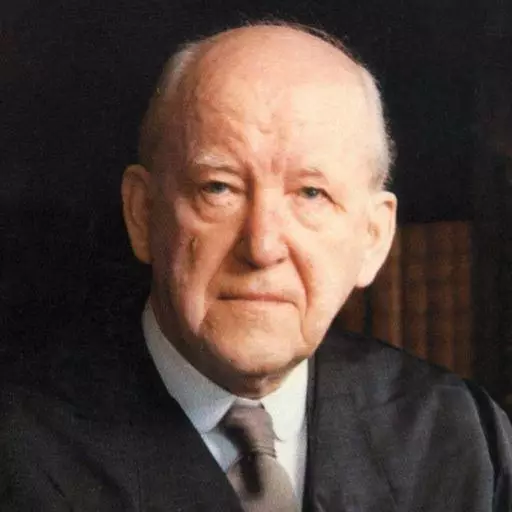
He is Our Peace


In this sermon on Ephesians 2:14–16 titled “He is Our Peace,” Dr. Lloyd-Jones explains that the main purpose of Paul’s letter to the Ephesians is to encourage the church in the peace of Christ. Christians have been saved and are in the body of Christ and as such, they have been redeemed and the war with God is over. They now have the peace of Christ that governs them. Dr. Lloyd-Jones says that the realization that Christ is the peace of believers is one of the most significant and meaningful encouragements to the soul. Only when people understand the true nature of sin do they understand the true nature of salvation. Additionally, Dr. Lloyd-Jones addresses some who would discount the first few chapters of Genesis. Dr. Lloyd-Jones stresses that without the beginning of the Bible, people will not understand why the world is as corrupt as it is, nor will they witness the roots of the gospel. Without understanding the sin that originates in Genesis, people will be confused about the lack of peace in the world. Unbelievers will never have peace with each other unless they have peace with God in salvation. Thankfully Jesus made a way to have peace with God through His death on the cross. Through Christ, all can have lasting peace.
Dr. Martyn Lloyd-Jones: I should like to call your attention this morning to the words which are to be found in Paul's Epistle to the Ephesians in the second chapter, reading verses 14, 15, and 16. Verses 14, 15, and 16 in the second chapter of Paul's Epistle to the Ephesians. "For he is our peace, who hath made both one, and hath broken down the middle wall of partition between us; having abolished in his flesh the enmity, even the law of commandments contained in ordinances; for to make in himself of twain one new man, so making peace; and that he might reconcile both unto God in one body by the cross, having slain the enmity thereby."
Now, here is another of those great statements, majestic and all-inclusive, which we find so regularly and constantly as we work our way through this great epistle. It's a part, of course, of the whole paragraph which begins at verse 11 and which runs on right into the third chapter. And again, it's important as we come to this fresh step which is taken by the apostle, that we should be bearing the general argument in our minds. You can never truly see the parts of this great apostle's argument unless you're carrying the whole in your mind at the same time. There is no meaning, there is no true existence to a part, apart from the whole.
And therefore I say let's refresh our memories. The apostle is demonstrating the exceeding greatness of the power of God to us who believe. That's what he wants these Ephesians and all Christians to know. He prays that the eyes of their understanding may be enlightened in order that they may know this and grasp it. This is not ordinary human knowledge. This isn't something that falls into the same category as history or philosophy or something like that. It's a special type and kind of knowledge.
And it can only be grasped and apprehended as we are enlightened by the Holy Spirit. So the apostle obviously has to start with that prayer. To a man whose mind is not enlightened with the Holy Spirit, all this argument is quite irrelevant. And that's the position of the world this morning. That's the attitude of all who are not Christians. They say they want something practical, something relevant. And that's simply, of course, because of their blindness, for had they eyes to see, they would see that this alone is relevant, as we shall see again this morning.
But the apostle has prayed that. And he wants them to know in particular the exceeding greatness of God's power to usward that believe. And he demonstrates it, you remember, in two main ways. The extraordinary thing is that these Ephesians, who were Gentiles, pagans, were now members of the Christian Church. That's the staggering fact. And Paul says there's only one explanation of it: it is the power of God demonstrated, put into operation. That's what accounts for you, he says, and nothing less.
And he works it out in two ways. One was that they were dead in trespasses and sins. And nothing can raise the dead but the power of the creator. It's God who alone can raise the dead, and he has raised these people out of spiritual death with Christ into newness of life. They are even seated with him in the heavenly places. The first obstacle that had to be overcome, therefore, in order that these might become Christians, was their spiritual death.
But he says there's a second thing. And that is, of course, this division in the ancient world between Jews and Gentiles. And before people like these Ephesians, who were Gentiles, pagans, could ever have become members of the church, somehow or another God had to deal with that radical division. And what the apostle is here dealing with in these verses beginning at verse 11 is how God has done that. Now, we have seen already that he puts it in general in the verses that we've already been considering.
The general statement is that they were in times past Gentiles in the flesh. They were without Christ, being aliens from the commonwealth of Israel and strangers from the covenants of promise, having no hope and without God in the world. But now, in Christ Jesus, ye who sometimes were far off are made nigh by the blood of Christ. That's the statement. That's the proposition. That's the astounding thing. Well, now then, the apostle felt that it wasn't enough just to leave it like that.
It's such a marvelous thing, such a wonderful thing that he must divide it up, split it up into its component parts, analyze it somewhat, in order that they might see more in detail how this truly staggering thing has ever come into being. That in Christ Jesus now, they who were sometimes so far off have been made nigh by the blood of Christ. And here he begins upon the detailed exposition in verse 14, with which we start this morning.
And here it is again in a striking statement: He is our peace. "For he is our peace." The "for" connecting it up with what has gone before. He's working out the argument. He's continuing the theme. He's going to break it up, as I say. For he is our peace. This one by whose blood we have been made nigh, he is our peace. Now, that's one of the most glorious things that is ever said about the Lord Jesus Christ anywhere. I think you'll agree. Of all the terms and the titles applied to him, there is none more wonderful than this: He is our peace.
Now, this conception is one which is used very frequently in the Bible, in the Old Testament and the New, with regard to this whole question of salvation. There is no more beautiful expression of it, I sometimes think, than that which you have in the Epistle to the Hebrews in the 13th chapter and the 20th verse, where the writer puts it like this: "Now the God of peace, that brought again from the dead our Lord Jesus, that great shepherd of the sheep, through the blood of the everlasting covenant, make you perfect in every good work to do his will, working in you that which is well-pleasing in his sight."
Now, there it is: God is a God of peace, the God of peace. And that's a very good way of thinking of salvation always. That we are saved, we are Christians, simply because God is a God of peace. Everything that we derive is really the result of that. But the message of the Bible is that God shows that he is a God of peace and he produces the peace and makes peace in and through his only begotten Son, our Lord and Savior Jesus Christ.
And the result is that you find that the Lord is described in some such terms right away through the Old Testament in prophecy. You find a man like Jacob, for instance, at the end of his long and interesting life, blessing the various sons and the various tribes that were going to develop out of those sons. And when he comes to Judah, he says, "The scepter shall not depart from Judah until Shiloh come."
What's Shiloh? Well, Shiloh is peace, the author of peace, the prince of peace. Jacob was given to see it. He didn't understand it fully, but these men, inspired by the Holy Spirit, they'd been given this understanding of God's great purpose. And Jacob had seen that it was out of Judah that Shiloh should come. Shiloh: He is our peace. And then you remember the references to him as not only the king of righteousness but also the prince of peace.
Those are the terms that are ascribed to him. And for us not to stay too long with this, let me hurry to remind you that when eventually in the fullness of the times the Son of God was born, and you remember the angel visiting the shepherds watching their flocks by night, and you remember what the shepherds heard? They heard this great angelic anthem, and what did they sing? This was their message: "Glory to God in the highest, and on earth peace, goodwill among men." And so it is everywhere. He is our peace.
This, I say, is the very essence of salvation. And the apostle brings it in in order to show us still further what an astounding and amazing thing our salvation is. Oh, I must remind you again that that is the great theme, if you like, a kind of light motif running parallel with the great, grand central motif itself. The apostle wanted these Ephesians to realize what a glorious thing their salvation was, and he's illustrating it in these different ways.
And here, it's taken even a step further. As I've reminded you in verses 1 to 10, we are shown that sin is that which produces death. It's only as we realize truly the nature of sin that we shall realize truly the nature of salvation. That is why there is nothing which is so unscriptural and so foolish as to say, "Oh, we only want the positive. Don't worry about the negative. Don't talk so much about sin. We want to know about the love of God and the positive."
My dear friend, you'll never know that unless you do realize the negative. The apostle constantly emphasizes that in order to measure the love of God, you've got to go down first before you can go up. We don't start on the level and go up. We've got to be brought up from a dungeon, from a horrible pit, from the miry clay. And unless you know that depth, you'll only be measuring half the love of God. Very well, then. He does that, I say.
And in the first 10 verses, he shows us that God has to overcome sin as it leads to spiritual death. Then having done that, he went on, you remember, to show us how sin always leads to separation. The separation between the Jews and the Gentiles, who are called uncircumcision by that which is called the circumcision in the flesh made by hands. Separation. Aliens from the commonwealth of Israel and strangers from the covenants of promise. Sin separates then, between man and man.
But he says here, in this verse we're now looking at, it even goes beyond that. Sin doesn't stop at separating men. It goes further, and it puts them at enmity. And not only at enmity with one another, but at enmity also with God. That is the ultimate of sin. That is the horrible part of sin. That is where you see the real ugliness of sin. Sin not only, I say, separates men from God and from one another. It produces a state of enmity against God and enmity against one another.
Now, that is why, of course, the great problem in the world today is the problem of peace. That is why all the conferences are being held. That is the great concern of everybody. Isn't there some way of vanishing war, of reconciling men to one another, making a durable and a sure and a lasting peace? How can men be reconciled? We're aware of these divisions, these quarrelings, all over the world: in the nations, in the groups in the nations as well as between nations.
The whole world seems to be in a state of strife and of enmity. Why is it? Now, it's here, I say, that you see the relevance of the scriptures. And it is at this point that one sometimes finds it a little bit difficult to be patient as a Christian. And yet we must be patient. We see the world and its men and its great men, so-called, wasting their time, attempting the impossible. It's difficult to be patient at times.
It's even more difficult to be patient when one sees men, even in the Christian Church, completely misunderstanding and misinterpreting the scriptures, and as it were, standing before the world as if to say, "You've only got to do what we tell you and the peace you're looking for and longing for will come to pass at once." It's tragic. It's nothing but a sheer failure to understand a statement such as this we're looking at together this morning.
Sin, I say, is the cause of the trouble. And it puts men at enmity against God, it puts man at enmity against man. Why? Well, the answer is perfectly simple. Sin is essentially pride. Self. Now, we must go back, you see, to the Book of Genesis. And people who think that you can cut out the early chapters of Genesis and still have a Christian Gospel are again just displaying their ignorance. It's there you get the fundamental explanation.
The root cause of all trouble is the pride of man. Man interested in himself. Man setting himself up as an autonomous being even face to face with God. Ready to listen to the question, "Hath God said?" "Who is God to speak to you?" Man, said Satan to man, "You don't realize how big you are, how great you are. God's keeping you like a slave and using you as a servant. Why don't you stand up for yourself? Why don't you assert yourself? Why don't you stand on your dignity and demand your rights? Don't be put down any longer. Stand up."
And he stood up. I don't want to be paradoxical, but it was because man stood up that he fell. He was standing in a way that he was never meant to stand. He was trying to stand in a way that he cannot stand. And it led to the fall and all its appalling consequences. It's all, I say, due to pride. Self-interest, self-concern. Man sets himself up as a god. He's an autonomous being. He has a right. He talks about his rights and his demands.
That's simply a manifestation of self-interest, self-adulation, self-love, self-praise. He's constantly turning in upon himself and revolving round himself. He's the center. Yes, but unfortunately, you see, everybody else is doing the same thing. And that's where the trouble comes in. If I alone existed, there'd be no trouble. But every other "I" is exactly the same as I am. And the result is that the world is peopled by a number of gods, all of them demanding themselves and their rights and the same things. And it's inevitable that there should be clashes.
It's a war of the false gods. They're all in enmity together against God, but that doesn't mean that they're all agreed amongst themselves. Oh no. And don't you see how this is the pattern for all the problems in the world today? You'll get all the workmen, as it were, combining together against the masters, and all the masters against the workmen. But does that mean that they're all very happy and agreed amongst one another and all helping one another and sacrificing for one another?
Of course it doesn't. They divide amongst one another: the workman and his mate, the divisions amongst the masters. The rivalry, the competition, the jealousy and the envy: it's everywhere. Yes, mankind, I say, combines in enmity against God. But alas, it's a terrible enmity in itself. Man against man at enmity quite as much as man against God. Now, that is the whole cause of the trouble. That is the only adequate explanation of the difficulties of the world as it is today.
And as I say, the supreme tragedy is that the world doesn't see that. It hasn't begun to see it. Because, you see, it starts with a supposition that whatever the explanation is, it's got nothing to do with God. We're too clever to believe in God. We've started by putting God out. It can't be that. Whatever it is, it isn't religious. It's got nothing to do with God and Christ. No, no. We are adult now, we're no longer children, so it isn't that.
That isn't even considered. So we are trying to find some other explanation, trying to find some cure. And the appalling failure is evident on all hands. And of course, it will continue because man will not see this. He does not see that it is because he is in a wrong relationship to God that he is in a wrong relationship to his fellow man. Now, the Lord Jesus Christ, you remember, put that very clearly and plainly once and for all.
Somebody came to him one day and said, "Master, which is the first, the chiefest, the greatest of all the commandments?" And this was his reply: "Thou shalt love the Lord thy God with all thy heart, and with all thy soul, and with all thy mind, and with all thy strength. That is the first and the greatest commandment. And the second is like unto it: Thou shalt love thy neighbor as thyself." Now, the thing there, the important thing there is to notice the order: first, second.
First, the relationship to God; second, the relationship to your fellow man and woman. Now, the whole tragedy of the modern world is due to the fact that the first is entirely left out, and men think you can start with the second. But you can't. Because, you see, you are to love your neighbor as yourself. You are to love your neighbor as you love yourself. Well, therefore the problem is: how am I to love myself? And according to the Bible, I will never love myself in the right way until I see myself as I am in my relationship to God.
So I cannot possibly carry out the second commandment unless I am already clear upon the first commandment. It's impossible. And man today, not recognizing God and not starting with God and not submitting himself to God, is trying to reconcile himself to his fellow men. And of course, he isn't succeeding. He never can succeed. It's impossible. He's violating the law of his own nature. He has been made by God, he is made for God.
He doesn't see himself truly, he doesn't see anybody else truly, until he sees himself and all others in the light of God's law, face to face with God himself. That's the statement. And that is the statement which the apostle puts here: He is our peace. And he alone is our peace. There is no peace apart from him. My dear friends, I'm not doing anything at all dangerous when I say this this morning.
The world can go on developing intellectually and in every other respect. It can add to its knowledge of science and of sociology and of psychology and of affairs. It can multiply its institutions, it can train us in this respect and that respect and the other. But it will all lead to nothing whatsoever because the problem can never be solved except in our Lord and Savior Jesus Christ. Now, it's almost incredible that it's still necessary to say that. But it is, you see.
Modern history proves that to the very hilt. This 20th century should have been the best and the greatest century that the world has ever known according to human understanding. But look at it: it's one of the worst, one of the most appalling. "Oh," says someone, "that's awfully depressing. I didn't come to be depressed like that." My dear friend, it isn't a question of depression. It's a question of facing facts.
If you really are concerned about the problem of man and of the world as well as your own problem, you've got to face it radically. And there are the facts. If you try to start with the second commandment, it will lead to disaster. Because man isn't merely an intellect, he isn't merely a social being. According to this message, there is an evil principle at work in him. He is infected by sin. He is in a diseased condition.
And before you begin to train him, you must heal him. He needs new life. Very well, says the apostle. Here it is. He puts it in a great general statement which is, of course, the whole case for Christianity: He, and he alone, is our peace. Now, that means a number of things. First and foremost, it means that he himself is our peace. What I mean by that is this: that the Lord Jesus Christ not only makes peace—he does make peace, as I'm going to show you—but not only does he make peace, he himself is the peace.
He is our peace. Which is just, of course, another way of saying this: that we must be in Christ before we can enjoy the blessings of God as the God of peace. It is only as we are related to Christ, it is only as we are incorporated in Christ, or to use a biblical term, grafted into Christ. It is only as we are members of Christ and parts of Christ and sharing the life of Christ and drawing from the life of Christ—it is only as that is true of us that we shall really enjoy the blessings of peace.
And again, you see, as we realize that, we see the unutterable superficiality of so much that is being talked. I don't want to be misunderstood nor to say anything disrespectful about those who are called pacifists. But the real trouble with such gentlemen is their lack of theological understanding. It's the failure to realize the problem of sin. And it not only applies there, but in all the glib talk of men and women who seem to say that the thing is so simple: you just call people together to a meeting and you talk pleasantly to them, and you'll all end by shaking hands and all will be well.
There were statesmen who believed quite sincerely and genuinely that if only they met Hitler, one each side of the table and talked to him, the whole thing would be settled. "Peace in our time," they said. "We've met him, we've made a gentleman's agreement." But it was not long before they discovered that the man with whom they'd shaken hands was not a gentleman. And that's still the trouble, you see.
How superficial it is, how pathetic it is, that men still think that by catchphrases you can solve the problem of sin in man. No, no. He is our peace. He, the eternal Son of God, who had to be born as a babe in Bethlehem. "Veiled in flesh the Godhead see." It's that, it's Bethlehem—that was essential to solve this problem. And yet they say that just being nice and pleasant and friendly and meeting across the table can put it all right.
No, no, my friends. If it were as simple as that, the incarnation would never have taken place, the death of the cross would never have happened. But all this has had to happen before there can be peace. He himself, the blessed person, is our peace. And it is only as we understand something of this mystical doctrine of the Christian as a member of the body of Christ that we can truly participate in the peace and enjoy it.
But he also makes peace, as the apostle. And this is the thing that we must make clear and we must be perfectly clear about it. How does Christ make peace? Well, we must, I say, interpret it scripturally and not sentimentally. You notice the terms he puts: He is our peace, and then secondly, he has made peace. "So making peace." Now, what does it mean? Well, let me put it like this to you.
This superficial sentimental interpretation of the scripture to which I've made reference, seems to think that it works like this: that the Lord Jesus Christ teaches us how to make peace. They say, "You read your scriptures and then go in the spirit of the scriptures and with what you've understood from the scriptures, go to your enemy, put it into practice, and you'll win him over." Now, I'm not concerned to enter into these great questions which are partly political and international and so on.
But the argument is, you see, that if one nation simply disarmed completely, it would have such a staggering effect upon all the other nations you'd never have another war. That's one way of putting it. Or indeed, I once heard a man in a meeting who spoke, I think, for some 35 minutes. And during that time he went through the entire Epistle to the Ephesians with no difficulty. And told us that its message was this, and it was all so delightfully simple.
He was a well-known pacifist, who suffered a lot for his pacifism: an honest man, a sincere man, and a good man. But this was his understanding of it. It was simply a question of applying the teaching, the Christian spirit. And he gave us a story which was the climax of his address, and which to him proved the entire matter. He said he happened to be the governor of a certain girls' school, a public school, a girls' public school.
And he told us that a number of them as governors had long been unhappy about the fact that there were punishments and rewards in the school. The children who did wrong were punished in various ways. And he and others felt that that wasn't the way of Christ, it wasn't the Christian way. There should be no punishment. There should be no discipline in that sense. But the children should be appealed to, they should be put on their honor.
They should be told that they were to be treated as adults, and that the mistress, the headmistress and the mistresses, would trust them. So he said, after many years they persuaded their colleagues on the board and the staff to agree to this. And in that particular school, he told us, all forms of punishment were abolished. He said that some of our friends, of course, had been prophesying that that would lead to disaster.
But you know, he said, the very first year after we did it, the number of scholarships obtained for Oxford and Cambridge were higher than had ever been obtained before. That, he said, is what happens when you put the love of Christ into practice and into operation. And there it was. It was so simple: you simply apply it, you see. And you do that individually, you do that in communities and in groups and divisions, you do it between countries, and there'll never be any trouble anymore.
What a travesty of the scripture. Was it really necessary for the Son of God to leave the courts of heaven if it's just that? Was the death of the cross ever necessary? If it's just a question of applying teaching? But that isn't what I'm told. I am told that he, Christ, has made peace. It isn't that he tells me to do something. He does that, of course, but I can only do that because he has first done something himself. He has made peace.
He is our peace, he's the prince of peace. It's the God of peace who makes peace. It isn't men applying a certain teaching. No, no. It's something fundamental that's done by God in Christ that creates an entirely new situation. That is why I'm never tired of putting it in this form: that it is not the business of the Christian Church just to give advice to statesmen and to people and to tell them how to solve their problems. You cannot.
You cannot have peace amongst men until men are made Christian. It's impossible. That's why Christianity is necessary. That's why Christ came. You cannot apply Christian teaching to non-Christians. That's rank heresy. And there is no greater heresy. These epistles were not written to the world, they were written to Christians. We must be born again, we must be made anew, before this can possibly apply to us. Christ makes peace.
Now, that's the fundamental proposition. He is our peace, and he has made peace. It is something which he brings into being. How does he do it? Well now, the apostle tells us here in these verses. Two things are essential before there can be true peace. Men must be reconciled to God and men must be reconciled to one another. The apostle takes up both. He starts with men being reconciled to one another.
He does that, I take it, because what was prominent in his mind at the moment was this: he was looking at the Christian Church, and there he could see Jews and Gentiles. So he starts with the concrete fact of the church. There together praising God are men who were bitter enemies. What's brought them together? That's the first question: he starts with that. That's what he deals with in verses 14 and 15.
Then in verse 16, he shows how they both together have been brought to God and how the enmity between them and God has been done away with. Now then, how does Christ reconcile men to one another? How does he bring men to one another in love? How does he destroy the enmity that is between men? Well, first of all, he puts it negatively. The negative is this: he says that he has broken down the middle wall of partition between us.
Now, at this point, let me indicate that the authorized translation here, and indeed the revised, are not quite as good as they might be at this point. The Revised Standard Version is surely better. This is the translation of the authorized and revised: "He is our peace who hath made both one, and hath broken down the middle wall of partition between us; having abolished in his flesh the enmity, even"—is supplied, it isn't there in the original, the word "even" is in italics—"even the law of commandments."
I don't think that's very good. It's better to take it like this: He has broken down the dividing wall of hostility or of enmity by abolishing the law of commandments. That's better. He hath broken down the middle wall of partition of enmity. How? By abolishing the law of commandments in ordinances. That's the better way of looking at it. What does it mean then? Well, this is how the apostle puts it.
There, I see a Jew and a Gentile together in the Christian Church. What's brought them together? Well, the Lord Jesus Christ hath broken down the enmity. There used to be a kind of middle wall of partition between them. He's using, of course, there the figure of what was true of the temple. You remember the Court of the Gentiles furthest out of all? They were not allowed to go into the court of the people.
There was a wall dividing them, middle wall of partition. Indeed, that old temple, as you remember, was full of partitions. There was a holiest of all into which nobody was allowed to enter but the high priest once a year only. Nobody could go in but he. It was a place of partitions. And in Christ, says Paul, the partitions have been flattened. They've been knocked down, broken down, brought to the floor. And the way into the holiest of all is open.
Yes, but first and foremost, that first partition between the Gentiles and the Jews, that enmity has gone. But why does he call this an enmity? Because after all, it was God who had appointed the details concerning the construction of the temple. It was God himself who had given the law to the children of Israel. And yet you see Paul says that it was this law of commandments contained in ordinances that really produced the enmity.
Now, that's a very important and a very subtle point, and it's there you see exactly what sin does to man. God, as we saw a few Sundays ago, did divide the human race into two groups. He created for himself a special people: from Abraham, there are the Jews, the commonwealth of Israel, God's people. And they are really apart from all others, and they're meant to be apart. And God gave them special laws, these laws of commandments in ordinances, as he describes them.
What's he mean by that? Well, there he means the ceremonial law. The law about burnt offerings and sacrifices, the meal offerings and all the others. You remember them? You can read about them in the book of Leviticus and elsewhere. God appointed them. Those were the ways in which the children of Israel were to come to God and to be blessed by God. And unless they did that, God would not meet with them and God would not bless them.
God gave them the law. They were not to eat certain types of animals and so on. They're all God's laws, the ceremonial law, the law of commandments expressed in ordinances, in dictates. Well, you say, if that is so, where does the enmity come in? Ah, that's where sin comes in. God did divide up the world into two groups and he did give these commandments, but he didn't do it in order to create enmity.
He did it in order that the children of Israel might bear witness to him and to his holy laws and to the way of salvation. But the Jews, you see, again because of the principle of sin and of self and of selfishness, they interpreted that like this as to say, "We and we alone are the people, and these others are dogs; they're scarcely human beings at all." They turned the commandment of God into a middle wall of partition.
They turned it into a matter of hatred and of enmity. The Gentile looked on and said, "Who are those Jews? What are they claiming for themselves?" They hated them, and the Jew hated the Gentile. It was never intended. It was a part of God's revelation, a part of God's way of salvation. But man in sin turns the very gifts of God into causes of enmity. That's how the middle walls of partition come in.
That isn't a purely academic point. The world today is full of that. Look at the gifts that God gives to men. They are all of his bounty and of his graciousness. He gives the gift of ability and understanding. He gives the business acumen to certain men and they prosper and they succeed. He showers his gifts in these ways. But do all men together get down on their knees together and thank God for his gracious gifts to men?
Do they all with humility ascribe the glory and the honor to him and thank him who is the giver of every good and every perfect gift? We know perfectly well that they don't. They're still doing what the Jew and Gentile did. What they do is this. A man with ability says, "Of course, I've a brain, I've understanding. Look at that other fellow; knows nothing." Despises him, hates him.
And the other man looks up at him and says, "Who is he? Who does he think he is?" Enmity. And it's all because of the gifts of God. And so on with every other single gift that God gives. They're gifts of God, they're wonderful, and if we all only realized that and were humble, we'd all enjoy them together. And the man without the talent would say, "How marvelous to see that man, how wonderful is God to have endowed a man with such a capacity."
But not at all. It leads to jealousy and rivalry and enmity and hatred and malice and bitterness and scorn and everything that poisons life. It's still going on. And there'll never be peace until all that is broken down. And Christ, says the apostle here, has broken it down in this matter of religion once and for all. How? Well, he has abolished the law of commandments in ordinances. That's how he did it.
Which means this: that the way to God now is no longer the way of the burnt offerings and the sacrifices and the things that were peculiar and special only to the Jew. It is through Christ and through him alone. So the thing that had led to the enmity and the jealousy and the rivalry has been taken away by Christ. The cause of the enmity has been removed.
And as men see that in Christ, the enmity disappears. The Jew who really understands the doctrine of Christ no longer separates himself in terms of the ceremonial law. He says, "That is finished in Christ. I therefore am now in the same position as a Gentile." And the Gentile sees also that there is no longer that peculiar something, that the way is in Christ for him as for the Jew.
So they all come together to God in the same way, in and through our Lord and Savior Jesus Christ. Well, our time has gone, and we must leave it at that for this morning. You see the point we've arrived at. Christ has broken down the middle wall of partition, the enmity. And that's how he's done it. Christ is the end of the law for righteousness to everyone that believeth.
There is no need any longer of the ceremonial and the ritual of the Jew. It's been finished. Christ is the fulfillment of all that they were but types pointing to him. Men should never have stopped at them; they should have been led by them to him. He's finished it. So that in this whole matter of access to God, the old distinction originally made by God himself has been abolished by God himself in Christ.
And the way is now open to Gentile as well as Jew to come into the presence of God. Not through an earthly human priesthood, not with material offerings and sacrifices, but through the one and only mediator between God and man, the man Christ Jesus, and by the sacrifice of his life, his precious blood. The middle wall of partition has been broken down because the thing that raised it into an enmity has been abolished by the blood of Christ.
And it is only as men realize that, that negatively they will thus be delivered from the enmity. God willing, we will go on to look at the positive next Sunday morning.
Featured Offer

Find peace and comfort this season with your complimentary guide that includes access to 6 free bonus sermons on overcoming spiritual depression from Dr. Martyn Lloyd-Jones, one of the church’s most beloved Bible teachers. Topics include: true Christians can and do struggle with depression, recovering the joy of your salvation, dealing with crippling guilt over past sins, dealing with yesterday’s haunting regrets, encouragement to keep moving forward, and understanding God’s purpose for suffering.
Past Episodes
This ministry does not have any series.
Featured Offer
Find peace and comfort this season with your complimentary guide that includes access to 6 free bonus sermons on overcoming spiritual depression from Dr. Martyn Lloyd-Jones, one of the church’s most beloved Bible teachers. Topics include: true Christians can and do struggle with depression, recovering the joy of your salvation, dealing with crippling guilt over past sins, dealing with yesterday’s haunting regrets, encouragement to keep moving forward, and understanding God’s purpose for suffering.
About From the MLJ Archive
From the MLJ Archive is the Oneplace.com hosted ministry of the MLJ Trust. Our mission is to promulgate the audio ministry of Dr. Martyn Lloyd-Jones.
About Dr. Martyn Lloyd-Jones
Contact From the MLJ Archive with Dr. Martyn Lloyd-Jones
info@mljtrust.org
http://www.mljtrust.org/
PO Box 953
Middleburg, VA 20118