
Worship, the Old and the New


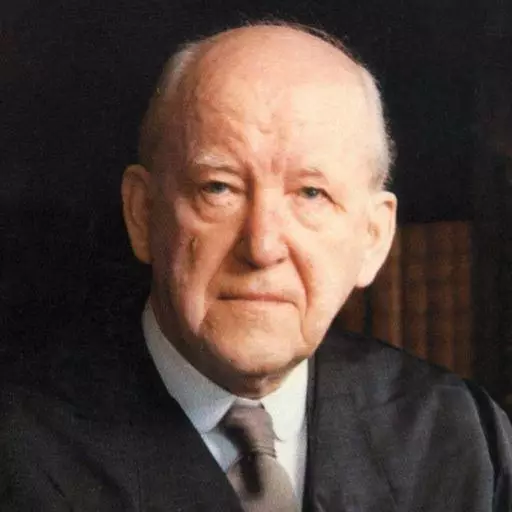
Dr. Martyn Lloyd-Jones: Most of you will recall that we are still dealing with verses six, seven, and eight in the twelfth chapter of Paul's Epistle to the Romans. "Having then gifts differing according to the grace that is given to us, whether prophecy, let us prophesy according to the proportion of faith; or ministry, let us wait on our ministering: or he that teacheth, on teaching; or he that exhorteth, on exhortation: he that giveth, let him do it with simplicity; he that ruleth, with diligence; he that showeth mercy, with cheerfulness."
Having then looked at the exact meaning of those particular words that the Apostle there uses, we have moved on to consider this statement in general because, as we've seen, here we find the Apostle not only giving instructions as to how the members of the church at Rome should conduct and comport themselves and describing the kind of gifts that the Holy Spirit gives, dispenses, deals to the different members of the church, we have seen at the same time that it is therefore incidentally a description and an account and a picture of the life of the early church.
It raises, of course, immediately the whole question of offices in the church or orders, if you like, of ministry in the church, and we've considered that. But having done that, we've moved on to consider another aspect of this matter because here, I say, you have a picture of the kind of way in which the early church lived and conducted her life. And that, I suggest, is important for us and especially at the present point.
There are many reasons why we should consider this. If we had no other reason, this ought to be enough. If we do indeed believe that this is the Word of God and that the church not only in her doctrine but also in her government and in her worship is to be governed by the teaching of the Bible, well then, it behooves us when we read a statement like this to examine ourselves to see whether we conform to that or whether we do not. The church should always be doing that. The church, if you like, should always be under the Word and should be always reforming herself according to the Word.
Now, that for Christian people is always wrong. What I mean is this: if you can't prove and establish that your tradition is scriptural, well then, it is wrong to continue in it. And in any case, we should always be ready to examine ourselves in the whole of our Christian lives according to this Word. But as I've been trying to show you, there are many reasons why this becomes particularly important for us at this present time.
There is this whole movement in the world today to reconsider the nature of the Christian church. It's done in terms of a great plea for the unity of the church. Now, obviously we must know the nature of the church before we can begin to discuss the character of her unity. So that that compels us to do this. Whether we like it or not, we are all involved in these movements and we've all got to take some kind of decision.
Then there is the obvious tendency to turn more and more to liturgical Catholic types of service. And that is something which is happening to all the churches. For instance, here in Westminster a week tonight, Good Friday evening, there is to be a procession of all the churches—well, I say all, this church won't be involved—but all the churches of Westminster are expected to have a procession from Trafalgar Square to the Roman Catholic Cathedral not far away from here where a service will be conducted by Cardinal Heenan and the Bishop of London and the minister of the Westminster Central Hall. Now, that's the kind of thing you see that is happening. And it is because of that, I say, it is our bounden duty as Christian people to have some understanding of these matters.
I came across a statement the other day. There have been conversations going on for some time between the Church of England and the Presbyterian Church of England. And they've recently issued a report and this is what they say. These are the things which they say: "No church as it now exists is adequately prepared and equipped in its theological formulations or in its forms of worship or in its methods of evangelism for the tasks to which the Holy Spirit is summoning it in the future."
You notice what they say: "No church as it now exists is adequately prepared and equipped in its theological formulations or in its forms of worship or in its methods of evangelism." They say that all these things have got to be considered. We are considering at the moment the forms of worship. Here is another: "The signs are too numerous that the denominations are aware of the judgment of history and of the need to find new patterns of church life, witness, and service."
Here are these churches saying that they've got to re-examine everything. Well, if they are saying that, how much more so should we say that? And especially as I say, when we know beforehand that though they talk about examining, what they really mean is that they've already made up their minds. What it really means is that the free churches have got to re-examine themselves and adopt the Catholic type of church service. There is no question about that at all. There are statements made which say that this can be assumed. As the government of the church is going to be episcopal, so the service will be beyond any question Catholic liturgical in its type and in its form.
Nothing is worse than merely to speak out of prejudice, merely to speak out of tradition. It's unintelligent apart from anything else and it's certainly not spiritual. The way in which people so often argue for the thing they've been brought up in simply because they've been brought up in it—they often don't know why this was ever started, nor who started it. But because it's mine, it must be right. That is, I say, utterly unspiritual in its attitude. The kind of thing our Lord was condemning in the woman of Samaria as we saw in the reading just now. We mustn't be governed by prejudices or merely out to defend what we've always done.
Now, let's be quite clear about this. We are not judging anybody else in doing this. That's not my object at all. I'm not concerned even to judge the Catholic type of worship, but I am concerned to examine it and to examine it in the light of scripture. And we ourselves must be ready to admit and to confess that we are in danger also. We all develop traditions. And it may be that we also will find that we are not as fully in conformity with the teaching of the scripture as we sometimes imagine ourselves to be.
We've seen in our historical review of this matter how men and women with the best intentions in the world could and have departed from the scriptural teaching. And we are still in the flesh and we are subject to the same thing. And there is the danger that we will become traditionalists and say that things have got to be done always in the same way. Now, this thing can sometimes be even ridiculous. There's been talk in recent years about having our Sunday services at 11:00 and 6:30. And there are some people who really do give the impression that they think that that is the teaching of the scripture—that they've got to be at 11:00 and 6:30.
Well, that's simply because they've never known anything else, but that is ridiculous. As we had to modify that during the war because of blackout regulations and so on, we must always be ready to modify or to change if necessary if it leads to greater efficiency in the work and the ministry of the Christian church. Very well then, let's try to rid ourselves of prejudices. I'm not concerned to attack anybody else. I'm concerned to examine myself and to help all of you to examine yourselves concerning these matters of worship and forms of worship in the light of the teaching of the scripture.
We've seen that this is something really that came in in the fourth century. I mean by that the liturgical type of service with the service already written and had to be repeated as regards prayers and the conduct of the sacrament of the Lord's Supper and baptism and so on. It came in in the fourth century and developed in the way we've seen. And we saw the varying attitudes of the Reformers. These men of God, these men who wanted to be scriptural, they could disagree. That's why nobody must be over-dogmatic about these matters. I was able to tell you things about John Calvin last Friday night which must have surprised some of you. The English Puritans departed very considerably from the teaching of John Calvin. And indeed John Knox also modified his teaching in his Presbyterian system and so on. Very well then, let us approach it all in a spirit of humility and with a desire to discover what is right that in all things we may live to the glory of God.
We considered the question of the Lord's Prayer and we suggested that there was not so much a command to repeat that as to regard it as the model prayer. Teach us how to pray—probably mainly in private, but there it is. And we also saw that the Apostles had clearly left no specific teaching with regard to these liturgical services and stated prayers and fixed prayers. They didn't give these prayers to people.
What is the general impression you get as you read your New Testament? This is always important. There is a danger sometimes that we miss the wood because of the trees, that we concentrate so much on particular texts that we forget the general tenor of the scripture, the general atmosphere or spirit of the New Testament as a whole. And this is a most important point.
As we have no specific injunction from our Lord or the Apostles to offer particular prayers or to conduct services in a particular way, this general atmosphere or spirit becomes correspondingly very much more important. And I think there can be no doubt about this at all. The kind of worship which you had in the New Testament is the kind of thing indicated in our three verses. The Apostle here without setting out to do so, as I've been showing you, incidentally describes the kind of thing that they did in the church at Rome. And you've got, of course, your corresponding verses which we've already read in 1 Corinthians 14: "One hath a psalm, another hath a prophecy," and so on. And again in Ephesians 5 where he tells us that they sang to one another in psalms and hymns and spiritual songs and so on.
Now, I argue that the impression therefore given is this: of a free and of a spontaneous worship. Indeed, there is very little doubt but that in the church of Corinth this element of freedom and of spontaneity was so evident that it led to a certain amount of disorder. Now, with your liturgical services you can't have disorder. But in the church of Corinth you had disorder in the services. And the Apostle has to tell them, "Let everything be done decently and in order."
But if you are tied in your service to a definite form, you can't have disorder. It's all controlled. So I'm arguing that the New Testament teaching historically about the disorders that were arising in certain churches is in and of itself a proof that the worship of the New Testament church was a free one, was a spontaneous one.
This in turn, and this is my second point, is something that one would expect because it is consistent with and conforms to the teaching in the Bible as to the difference between the New Testament and the Old Testament. Now, this is a subject about which we've got to be careful. We need the two testaments, and yet there is a difference between the new and the old. The new is the new dispensation. The old is the old dispensation. The same God, the same grace, the same salvation, as we've been seeing at great length in working through chapters nine, ten, and eleven. The Christian is after all a child of Abraham. Abraham is our father. He's the father of all the children of faith. So there is this identity between the two and the continuity between the two. And yet there is a difference.
Now this, to me, is an extremely important point because there are two great possible errors at this point, and many have fallen into the one or the other. The one is to divorce the New Testament entirely from the old and to say the old has got nothing to do with us; the new is entirely new. That's wrong. We could easily prove that from quotations in the new and the way in which the new looks upon the old, and it violates this whole principle that it is one grace of God and one way of salvation and one eternal covenant of salvation.
There is the other danger of saying that there is no difference between the old and the new, and the corresponding fallacy that comes out of that of governing the new by the old. And this is a very real danger to certain people. And they are people who belong to the Reformed tradition in particular. They know the value of the old and their danger is to exaggerate and to overestimate the value of the old, and so they tend to control the new by the old.
Now, I'm suggesting that that is wrong, that there is a difference between the new and the old. It is a difference in degree. It is not in kind. Let me illustrate what I mean. There's a verse that has often perplexed people about what our Lord says about John the Baptist. Our Lord says about John the Baptist in Matthew 11:11, "Verily I say unto you, Among them that are born of women there hath not risen a greater than John the Baptist: notwithstanding he that is least in the kingdom of heaven is greater than he."
I suggest that it is a difference not in relationship to God, not in his standing before God, but it is very much a difference in his understanding. You see, John the Baptist, because he belongs to the old, was in uncertainty and unhappy. The Christian is a man who should be rejoicing with a joy unspeakable and full of glory and be filled with a great spirit of assurance. If you take John the Baptist and contrast him with the apostles on and after the Day of Pentecost, you will see exactly what I mean.
But we've got a prophecy also, the prophecy of Joel, that was quoted by Peter in his sermon on the Day of Pentecost, which puts the thing still more clearly. You remember what happened? Here are these apostles and others baptized with the Holy Ghost, and they became a phenomenon. Some of the people in Jerusalem mocking said, "These men are full of new wine." But Peter, standing up with the eleven, lifted up his voice and said unto them, "Ye men of Judea and all ye that dwell at Jerusalem, be this known unto you and hearken unto my words: for these are not drunken as you suppose, seeing it is but the third hour of the day: but this is that which was spoken by the prophet Joel."
Well, what did Joel say? This is what he said: "It shall come to pass in the last days, saith God, I will pour out of my spirit upon all flesh." Not upon certain selected people only, not upon certain special people; it's going to be a profusion upon all flesh. And listen: "And your sons and your daughters shall prophesy." They didn't do that in the Old Testament. Some people did prophesy, but they were exceptional people. But now with this great profusion, your sons and your daughters shall prophesy. "And your young men shall see visions."
The people who saw visions under the old were very few and rare: the seers and the prophets. "Your old men shall dream dreams: and on my servants and on my handmaidens I will pour out in those days of my spirit; and they shall prophesy: and I will show wonders in heaven above and signs in the earth beneath," etc. Now, there surely is this essential difference between the new and the old. And it is something, of course, that we ignore at our peril.
It leads to a different type of worship. Look at your Old Testament worship: the temple, the tabernacle were more or less essential. Why? Well, it was an external type of worship. It was very formal. Details were given as to the furnishings down to the smallest detail. Everything was ordered, everything was prescribed exactly. And God, having given the detailed instructions to Moses, said to him, "See that thou make all things, do all things according to the pattern shown unto thee in the mount."
It was external, it was formal, it was ceremonial. It had a priesthood definitely appointed and set apart and so on. But now the New Testament is entirely different. It is an inner internal type of worship. It is free. It's not formal. Our Lord would sit down in a boat and start preaching, sit down on the side of a mountain. He'd do it in a house, anywhere. You're out of the realm of the formal and the external. It is a living, vital, internal spiritual type of worship.
And no longer are you to recognize only certain people as priests. My friends, we need to remember the Protestant Reformation, the universal priesthood of all believers. That's why we don't walk in these processions. We don't want to go back to a priesthood. We believe we assert the universal priesthood of all believers. We are all made—we are a kingdom of priests as Christians. We are a royal priesthood. Now, you see, that is what I mean by saying that there is this essential difference between the new and the old.
You remember that I indicated last Friday night in my historical review that one of the arguments for the set forms of worship was that they were essential because of the ignorance and the inability of most of the priests who had become Protestant ministers. And I admitted that it was an argument that had a certain amount of cogency, and I still do so. And yet I want to suggest to you that it's an argument that you've got to handle very, very carefully from this standpoint.
Is not our Lord and Savior capable of giving ability to men? Is it not possible for the Lord to raise up men and give them gifts which will enable them to conduct worship, to pray, and to preach, and so on? Well, of course, the answer to my rhetorical question is the three verses that we are examining. God does—our Lord does give these gifts through the Spirit. And he can give them to anyone.
That is one of the glorious things that we find in the New Testament: "Having then gifts differing according to the grace that is given to us." And there is no limit. He can do it, you see, to the servants and the handmaidens, the young men as well as the old. He's not restricted. And this, as I say, is something that you find not only in the New Testament, but you've had fulfilled so many times during the subsequent history of the Christian church. God can give a man a gift and he can raise up a man.
Obviously that must have happened in many of the early churches. Try and put your minds back to the conditions. Here are the apostles and others. They were travelers. They went round. They preached the gospel. People were converted. They formed them into churches. Then on they went. What happened to the churches? Well, there's an obvious answer to that. In a sense we've already considered it. The Spirit gave gifts to different men and they stood out according to their gifts, and so they were elected as elders and they became—some of them became teaching elders. They had the gift of teaching out of the churches themselves.
In the last years, the church has been realizing this truth more and more. Take those books written by that excellent man, Roland Allen, on St. Paul's missionary methods and ours. I think they're now generally accepted. And what Roland Allen pointed out as far back as 1913 was just this: that the Western churches had been adopting a wrong method in their missionary work. You see, they would go and people would be converted, and then they would stay as the ministers. And Roland Allen points out that the apostles didn't do that.
The ministers arose out of the people. How? Well, they didn't raise themselves. The Spirit gave the gift. And so out of the churches themselves, you developed the ministry, the type of ministry that is essential. And I say to say that that cannot happen and that therefore you must get one or two men to write out prayers for everybody else to read is surely a reflection on the power of our Lord to give gifts to men and to provide the necessary gifts for his servants and ministers in the life of the church.
I came across a very good illustration, I feel, in the case of John Owen over this very matter. He used this illustration: he said, you know, that to ask men to go on reading these forms and prayers perpetually is something like this, he said. He uses the illustration of a man being taught to swim. And at first the man can't swim. So what you do is you provide him with what we now call wings. They used to do it then with two bladders that were blown up and tied together.
And you put the man into the water, and of course the two bladders, they float him and they keep him on the surface of the water, and so he can learn how to swim. But as John Owen points out, you don't go on using the bladders as long as you live. You'll never learn to swim if you do. It's alright. You don't throw him straight in and tell him to get out. You help him by these floaters or bladders or whatever you may happen to use. But then you tell him, "Now stop that. Get rid of those. Start alright, but don't go on."
Then I read about another illustration: same kind of thing. If a man breaks his leg or something, well, for a while he'll have to use a crutch. And it's right that he should use a crutch just for a while. But he mustn't go on using the crutch the rest of his life. These are temporary expedients and are justifiable as temporary expedients. But to use them permanently is sure—surely a reflection upon the power of our Lord, I say, to give gifts in this way.
Let me put it like this to you as my fourth point: that surely that is ultimately the wrong way of facing this problem of the absence of gifts. Now, you may say, well, what's all this got to do with us and this ancient history? It isn't. I know churches now in different parts of this country where they can no longer have prayer meetings or any other weeknight meetings.
Why not? Well, they say there's nobody here who can pray now. I've known those churches with big flourishing prayer meetings. They can't hold one at all now. They say we've nobody who can pray, nobody who can give an address, nobody who can guide us, nobody who can conduct a Bible class. Nobody seems to have the ability.
So it is a very modern problem, you see. How do you face this problem? Well, I say the way to face it is not to provide a book out of whom—out of which anybody can read. The way to face a problem like that is this: that you get the church to examine itself and say, why can nobody pray here in public? What's the matter? Is the modern Christian different from the old Christian? Why don't men pray today like men used to pray?
You face it like that and you say to them, "Get down on your knees and ask God to forgive you." And without knowing it, they've started praying. Merely to ask forgiveness in public is a prayer. So the way to face this problem is not to provide a kind of crutch that is to be permanently used; it is to repent and to ask God to have mercy and to shower down his blessing upon us.
Now I think that here again we've got a principle that has a wider application. I see a tendency in the church today to repeat this fallacy in different realms, not now over forms of prayer. Look at it like this: there's a great difference today—between today and what used to be the case in the past—in the way in which a church or churches face a period of dryness and a period of more or less ineffectiveness.
Nowadays, when the church is in such a state, what is done is this: it is decided to call in some evangelistic organization to do something to put things right. But you know, it used not to be done like that. There was a time in the Christian church when if there wasn't much blessing and very few people being converted, they would face it like this: they'd say, what's the matter with us? Why are people not being converted? What's wrong?
They said—they said, "Why has the Spirit of God left us?" They say, "Let us appoint a day of prayer and humiliation and fasting. Let us go before the Lord and confess to him that we are failing him. Let us ask him to show us where we've gone wrong and to come back amongst us." And they'd go on doing that until revival came. Surely that's the scriptural method. Not to call in some expedient from the outside.
Let me give you a still more practical illustration of what I mean. Let me put it in personal terms; forgive me for the personal reference. I've got a very great problem and I want to pass my problem on to you. And I'd be glad if you'll think about this and somehow or another give me your answers. As I speak here, what I'm saying is being recorded on a tape recorder. And that happens Friday night and twice on Sunday.
We get letters here asking us for these tapes, different parts of the country. Here's my problem: should I let them have the tapes or not? There are people who do let them have the tapes. On the whole, I don't. Why not? The argument that I'm given is this. They say, but think of these people in different parts of the country. Nobody to preach to them on Sundays, or perhaps men preaching against the truth instead of preaching the truth. Isn't it your duty to send out the tapes?
Well, now that's one argument, but I've got a reply to that, and it's this same principle that I'm putting before you now. What I'm afraid of is this: that we'll eventually reach a stage in which there'll be perhaps just about half a dozen preachers in this country and everybody else will be listening to the tapes of these preachers. It's not impossible. There is a tendency in that direction and it's obviously increasing.
I say that's wrong. Cannot God the Holy Spirit give gifts to men in these churches? There is this danger of providing it ready-made. Now, that's the argument, you see, behind these liturgical forms of service. It's all ready there and all you do is read it. One man prepares it; hundreds or thousands perhaps read it. It's exactly the same principle.
And it does seem to me to be a principle that tends to violate this teaching which is so plain in the scripture, that the same Lord who could raise up men amongst the slaves and the servants of the first century to do these things in the church can surely still do so. But you see, we seem to have forgotten the Holy Spirit and we say, "Send us tapes," or "Provide us with sermons," or "Provide us with prayers." Surely it is somewhat of a reflection upon the power of the Spirit to provide the necessary men and the necessary gifts. Think about that, work it out.
But let me go to my fifth argument. Is there not something about these prescribed forms of worship which seems to contradict certain very plain statements in the New Testament? I read one to you—one of them to you at the beginning out of that interview between our Lord and the woman of Samaria. Listen: you—the woman says to him, and this is typical of the argument, you see: "Our fathers worshiped in this mountain; you say that in Jerusalem is the place where men ought to worship."
I say that's the old, that's the old. This is our Lord's answer: "Woman, believe me, the hour cometh, when ye shall neither in this mountain, nor yet at Jerusalem, worship the Father. You shouldn't have these set places of necessity. You may or you may not. You mustn't confine it to that. You worship you know not what: we know what we worship: for salvation is of the Jews. But the hour cometh, and now is, when the true worshipers shall worship the Father in spirit and in truth."
Not the old either in this mountain or Jerusalem. In spirit and in truth, for the Father seeketh such to worship him. God is spirit, and they that worship him must worship him in spirit and in truth. And read when you go home the seventh chapter of the Book of the Acts of the Apostles and you'll see that the martyr Stephen had to develop precisely the same argument with those stiff-necked Jews that would confine it to the Old Testament form.
No, no. And then take another one. We've already come across it in our study of this Epistle to the Romans; take Romans 8:26-27: "Likewise the Spirit also helpeth our infirmities: for we know not what we should pray for as we ought." You can't say that if you rely upon written prayers, can you? We know not what we should pray for as we ought. Well, what is the provision for us? Oh, prayers prepared by certain great men. No, no. "The Spirit itself maketh intercession for us with groanings which cannot be uttered. And he that searcheth the hearts knoweth what is the mind of the Spirit, because he maketh intercession for the saints according to the will of God."
The answer to our inability is not prepared prayer; it is the Spirit. It may be a groan, something inarticulate almost, but it's a prayer with groanings which cannot be uttered. And you remember the exhortations—there are several of them in the New Testament about prayer. I think of the one for instance in the last chapter of the Epistle to the Ephesians, verse 18: "Praying always with all prayer and supplication in the Spirit, in the Spirit."
That's how you pray. You don't pray through forms; you pray in the Spirit. The Spirit will give you the prayer, and he will give you the facility and the power and all that you need. So I feel that we've got to consider those three texts without inducing any further ones very seriously before we come to a final decision about this matter.
But then, my sixth argument is that isn't there here a very grave danger of interfering with the freedom of the Spirit and a sudden immediate inspiration? Now, I could illustrate this point, you see, from preaching. It's a great problem which every preacher present must have met at some time or another. We're not all equally gifted in the matter of speech. And there are some men who almost seem to be incapable of preaching unless they write out every word. The great Dr. Thomas Chalmers really couldn't preach without his manuscript.
But this is a very important point, it seems to me. I'm not going so far as to say that a man should never write a sermon; I don't believe that. But I do say this: that the preacher must always be free. Oh, how many times have I personally found this: that what has been used of God is something that I'd never thought of until the moment I uttered it. It was given me at the moment, not in my preparation. The freedom of the Spirit. It happens in prayer, it happens in preaching. And we must be very careful lest we put limits upon this freedom of the Spirit. If you're tied to a particular text, where does the Spirit come in?
These are the things that we've been tending to forget. I remember once asking, some twenty years ago by now, the religious—the then religious director of the BBC. We were having a discussion about these matters and I was trying to explain to him why I didn't preach on their programs. And I put it in the form of a question. I said, "What would happen to your program if the Holy Spirit suddenly came upon the preacher? What would happen to your programs?" And he admitted it was a fair question.
Very well, but look at it like this, my dear friends. Is there not a danger of our doing something which is antagonistic to revival? There is this essential element of freedom in revival. There must be an opportunity for the Spirit to break in. Let's be careful that in our desire to have dignified services—that's the word, dignified services. It's been the tragedy of non-conformity. It began to talk about dignity and learning in the middle of the last century and it's gone down ever since. Dignified services.
The test of a service is not whether it's dignified or not; it's the power of the Spirit in it. And we must be very careful lest we hinder the coming of revival. Why hasn't there been a revival for so long? Isn't this partly the answer? The Spirit is not being given an opportunity. In other words, there is a danger of quenching the Spirit.
Dr. John Owen, for me to quote him again, says quite specifically that in the light of verses six, seven, and eight of Romans 12, liturgical services and read prayers are definitely guilty of quenching the Spirit. I personally think he's going a little bit too far, but that there is the danger is absolutely right because, you see, the Holy Spirit is so powerful that he can even break in through a read service. He's done so many times.
One of the greatest preachers 200 years ago in the Methodist awakening in Wales was a man called Daniel Rowland. And the Spirit really came upon him as he was reading the communion service out of the Book of Common Prayer. Now, you see, there are people who say, "Ah, well, very well, doesn't that justify it?" It doesn't. That's the exception, and the exception doesn't prove the rule. The Holy Spirit can come in in spite of our quenching him and in spite of our forms which put limits upon him. But that doesn't justify our continuing in that procedure.
There is the danger then, I say, of limiting the freedom of the Spirit. Let me put it like this as I've often put it. How often have you heard of a revival breaking out in a cathedral service? That's the test.
And lastly, is not this a simple fact that a condition of low spirituality in the Christian church always leads to the use of forms? When men cannot preach, they begin to read their sermons. When they can't pray, they begin to read their prayers. Low spirituality in the church always leads in the direction of the Catholic type of service with an emphasis upon beauty and what they call worship. They mean by that set forms. Invariably that's what's happening in this present century.
On the contrary, whenever there is a revival, there is always a revival of extempore praying and the freedom in the act of worship. Now, evangelical men in all the denominations have always proved this. You get evangelicals who normally use these set forms and you'll find that in evangelical campaigns and other places they always pray freely and extempore. Well, why shouldn't they do the same in all church services?
You see, there's a contradiction involved there. The more evangelical a man is, the more he desires freedom and the more he will introduce extempore prayers into his official service even though it may mean that he's breaking the law in doing so. It is always the tendency, and it's inevitable in an evangelical man with the Spirit in him to be free and to express himself freely with the whole of his spirit.
Well, my friends, our time has gone and I think we must leave it at that. Shall I just leave you then with a question which seems to me to be the extension of this argument that I've been working out with you? Doesn't the whole question of hymn singing come in here as well? There are people who say you shouldn't sing hymns, that we should only sing psalms. Doesn't all this argument apply to that?
Are the psalms adequate to express the fullness of the New Testament experience? Can men who only saw these things afar off give the full expression of what is felt and experienced and thought by those who have it in the fullness of the Spirit? I suggest we need to examine this again very carefully and very seriously lest we limit the new by the old. You can become legalistic and literalists, and that is always wrong.
So I think that it applies to this also. And so again you will find that in all great times of movements of the Spirit, tides of the Spirit, that there is always a great outbreak of the composition of evangelical hymns and tunes and the singing of them. Singing has always been one of the great characteristics of a true movement of the Spirit of God.
There was once in the very, very early days of the separatists in the reign of Queen Elizabeth. Some of them went so far that they didn't sing at all. They said that even singing hymns was wrong. So they sang nothing, neither hymns nor psalms, no singing at all. But they soon were corrected on that. The Old Testament teaches you to sing and to sing psalms. But over and above that, obviously in the new, they began to sing spiritual songs and hymns which clearly were given by the inspiration of the Spirit.
And this, I say, has therefore been a characteristic of the church in all great periods of revival, quickening, new life coming into the people through the gracious operations of the Holy Spirit. Christian people, let us openly again praying the Spirit to enlighten us and to lead us and to guide us, examine all we are and all we do, our forms of worship as well as our faith and church government and all things in the light of the teaching of the scriptures. Well, may God bless us to that end and bless us individually and collectively until, God willing, we meet together again three weeks tonight on April the 22nd.
Oh Lord our God, we again offer up our praise and our thanksgiving unto thee. We thank thee for this liberty wherewith Christ has set us free in all its manifestations. Oh Lord, have mercy and pity upon us. We see how often times in the spirit of fear, we put our limits upon this glorious liberty.
Oh God, keep us from the dangers of excesses, keep us, we pray thee, equally from the dangers of legalism and a false literalism. Lord, we thank thee for the ministry of the Spirit and not of the letter, for the Spirit ever giveth life, but the letter ever tendeth to bondage and to death. Oh God, keep us free, but we ask at the same time that the Spirit who gives us the freedom may at the same time discipline us and order us.
We remember thy word: God has not given us the spirit of fear, but of power and of love and of a sound mind, discipline. Oh, may we manifest in all we do and say and are this blessed power of thy Holy Spirit upon us that thy name may be magnified and glorified even through us.
And now may the grace of the Lord Jesus Christ and the love of God and the fellowship and the communion of the Holy Spirit abide and continue with us now through out the remainder of this our short and certain earthly life and pilgrimage and evermore. Amen.
Featured Offer

Find peace and comfort this season with your complimentary guide that includes access to 6 free bonus sermons on overcoming spiritual depression from Dr. Martyn Lloyd-Jones, one of the church’s most beloved Bible teachers. Topics include: true Christians can and do struggle with depression, recovering the joy of your salvation, dealing with crippling guilt over past sins, dealing with yesterday’s haunting regrets, encouragement to keep moving forward, and understanding God’s purpose for suffering.
Past Episodes
This ministry does not have any series.
Featured Offer
Find peace and comfort this season with your complimentary guide that includes access to 6 free bonus sermons on overcoming spiritual depression from Dr. Martyn Lloyd-Jones, one of the church’s most beloved Bible teachers. Topics include: true Christians can and do struggle with depression, recovering the joy of your salvation, dealing with crippling guilt over past sins, dealing with yesterday’s haunting regrets, encouragement to keep moving forward, and understanding God’s purpose for suffering.
About From the MLJ Archive
From the MLJ Archive is the Oneplace.com hosted ministry of the MLJ Trust. Our mission is to promulgate the audio ministry of Dr. Martyn Lloyd-Jones.
About Dr. Martyn Lloyd-Jones
Contact From the MLJ Archive with Dr. Martyn Lloyd-Jones
info@mljtrust.org
http://www.mljtrust.org/
PO Box 953
Middleburg, VA 20118