
Live and Die to the Lord


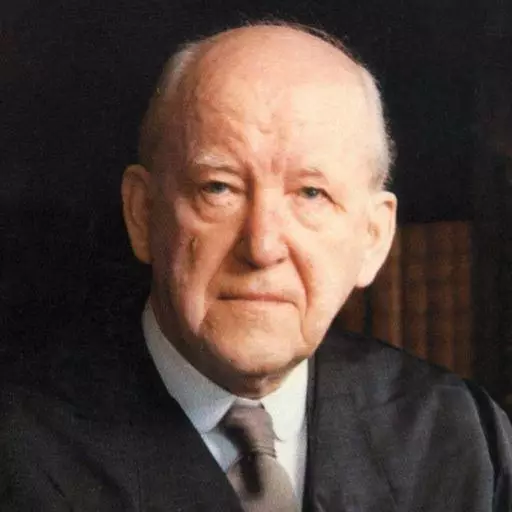
Dr. Martyn Lloyd-Jones: Most of you will remember that we are dealing with the early part of the 14th chapter of Paul's Epistle to the Romans, where the Apostle is dealing with our attitude as Christians to matters that can be described as matters indifferent. Now, let me read to you from verse five to the end of verse nine.
"One man esteemeth one day above another: another esteemeth every day alike. Let every man be fully persuaded in his own mind. He that regardeth the day, regardeth it unto the Lord; and he that regardeth not the day, to the Lord he doth not regard it. He that eateth, eateth to the Lord, for he giveth God thanks; and he that eateth not, to the Lord he eateth not, and giveth God thanks. For none of us liveth to himself, and no man dieth to himself. For whether we live, we live unto the Lord; and whether we die, we die unto the Lord: whether we live therefore, or die, we are the Lord's. For to this end Christ both died, and rose, and revived, that he might be Lord both of the dead and living."
Now, you remember that in opening out this matter, the Apostle has laid down a general principle in the first verse: "Him that is weak in the faith receive ye, but not to doubtful disputations." We are not to confuse him. We are not merely to show our cleverness. We are not simply to put him into difficulties. Then he takes the first case of this question of eating particular meats, and we've dealt with that and seen how the Apostle tells them to conduct themselves in that respect.
Then he takes up this second illustration and example: "One man esteemeth one day above another: another esteemeth every day alike." Now, we were dealing with that last Friday night, and we saw that the Apostle really is dealing there with these special days that the Jews had observed—festive days and fast days and so on, and certain other special days. Having opened out the statement of the case, we began to consider what the Apostle teaches as to what we should do with respect to this. What applies to the day applies also, of course, to the question of meats. The same principles are operating in both cases. He just takes two illustrations, two of the commonest causes of trouble and confusion in the churches as the result of this new position in which they were as Christians.
Well, his first answer, you remember, was this: "Let every man be fully persuaded in his own mind." Don't be mechanical over this matter. Know what you're doing. Have your reasons for what you do. Don't allow people to impose forms upon you, but have an intelligent understanding. Let every man be persuaded in his own mind. Listen to your conscience. Recognize it needs to be enlightened, but always listen to it and never act against it. Now, that's his first answer.
But he's got a second answer, and it's to this we come this evening. This second answer is to be found here in this sixth verse: "He that regardeth the day, regardeth it unto the Lord; and he that regardeth not the day, to the Lord he doth not regard it. He that eateth, eateth unto the Lord, for he giveth God thanks; and he that eateth not, to the Lord he eateth not, and giveth God thanks."
Now, some of you may have versions and translations other than this authorized version which I have here, and you may notice a variation. I've read, "He that regardeth the day regardeth it unto the Lord; and he that regardeth not the day, to the Lord he doth not regard it." Now, that second statement is absent in some of your translations and versions. There's only one reason for that, and that is that some of the best manuscripts don't have in them that negative. It doesn't make any difference, of course, to the meaning and to the sense.
Now, this is purely a question of textual criticism. As Christians, we must recognize textual criticism. That's a very different thing from higher criticism. We don't recognize higher criticism because that is simply the introduction of man's mind and opinion and philosophy—man deciding whether a thing is there or not because he doesn't agree with it. But textual criticism is another matter. We do know that there were many early texts of the New Testament, and I'm just reminding you, should you have one of the versions or translations that doesn't contain this negative, that that is why it's not there. But the meaning, as I say, is exactly the same.
So the important thing is to grasp the Apostle's principle of teaching here, and it is this: we must not only be clear in our own minds and satisfied and know what we're doing. He has a higher motive to put before us for toleration and understanding in this matter, and that is the relationship of both these subjects to the Lord. Now, you see, he's raising it up to the highest level. The spirit in which we decide one way or the other is, in a sense, even more important than the decision itself.
So what he's saying here is this: you mustn't decide this solely in intellectual terms. You start with that, but you don't stop with that. You mustn't do it coldly and objectively. That's something we always need to be reminded of as Christians. The devil always tempts us to become academic or theoretical or coldly objective. It's one of the greatest dangers confronting any Christian, and particularly the more intelligent Christians.
You see, it's the old danger again. One can do it with regard to theology and doctrine. You can be interested in it in a purely theoretical manner and almost forget that you're dealing with God the Father, the Son, and the Holy Spirit, and these great doctrines of salvation. You can be handling them as if you were studying science or any other secular subject. It's a terrible thing. We must never forget the spirit.
Now, that applies equally in a matter like this. Be persuaded in your own mind. Think it out. Reason it out. If you like, discuss it together. But don't do it in a detached, theoretical manner. The spirit is all-important. It mustn't be done coldly. He said above everything else, this must be your controlling consideration: that you are doing it, and doing everything, for the glory of the Lord and with a desire to please Him.
You notice how he keeps on repeating it. "He that regardeth the day, regardeth it unto the Lord." And even leaving out the negative, he goes on: "He that eateth, eateth to the Lord, for he giveth God thanks; and he that eateth not, to the Lord he eateth not, and giveth God thanks." He repeats in order to give it emphasis and to bring it out very, very clearly.
Now, take this word "regard," which is an important one. "He that regardeth the day, regardeth it unto the Lord." It's very similar to the word "esteemeth," which we've already been looking at in verse five. It means, if you like, "minding." That means thinking about. That means understanding. You know that it's the same word exactly as the Apostle had used in the eighth chapter in verses five and six: "They that are after the flesh do mind the things of the flesh; but they that are after the Spirit the things of the Spirit. For to be carnally minded is death; but to be spiritually minded is life and peace."
It's exactly the same word. It means, you see, your way of thinking and the results of your way of thinking. So there are some, he says, who regard certain days as being more important than others—the thing we were dealing with in verse five—and the others do not do that. But he says the point is that in both cases, they are governed by their consideration that they belong to the Lord and they are concerned about pleasing Him and doing what is right in His sight.
Now, I read that tenth chapter, that portion out of the tenth chapter of the first Epistle to the Corinthians at the beginning, because the Apostle there is really saying exactly the same thing. It's the same principle. "Whatsoever ye do," he says, "whatsoever ye eat or drink or whatsoever ye do, do all to the glory of the Lord." That's the principle. This is the same thing exactly that he's saying here in this 14th chapter of the Epistle to the Romans.
In other words, he now is bringing out his ultimate argument in this matter, and the most important one. We mustn't be primarily concerned about our own liberty. We've got liberty. There is a liberty wherewith Christ hath set us free, and this is a most important matter. But as you notice from the beginning of this chapter, he has not been coming down, as it were, on one side or the other. And here he is telling us negatively not to be concerned only about our liberty, or our views, or our arguments, or anything else indeed, but primarily and above all, the glory of the Lord.
He says the man that regardeth the day, he says, recognize that he regardeth it unto the Lord. And if you're satisfied that he does that, well then, you must be very careful as to how you handle him. If you come to the conclusion that he's only opinionated, well then, you handle him in a different way. But if you do see clearly that the man is really concerned about glorifying the Lord and honoring Him and giving a demonstration of what it means to be a Christian for the Lord's sake, well now, says Paul, though you don't agree with it, recognize the rightness of his motive.
Recognize that he's not doing it just to assert himself or his own opinions and ideas. If he is really concerned about the glory of the Lord, well now then, you be very careful what you do with respect to it because as long as this is true on both sides, each one of you is concerned with this rather than with yourselves and your own liberty and ideas. Well then, he says, you must get on together, and you will learn to help one another and to discuss it in a Christian way together in order that ultimately you may arrive at a common opinion.
And then, of course, he elaborates it further by bringing back again this question of meats. It's the same point. "He that eateth, eateth to the Lord, for he giveth God thanks." In other words, here is a man who is eating meats that have been offered to idols. But he has a Christian view. He sees that there's nothing in this, that the idols are not gods, there's nothing there at all, pure figment of men's imagination. So this man, in his liberty, he eats these meats.
But, says Paul, watch him and see what he does. Does he give God thanks for this meat? If he does, you've got very good presumptive evidence that he is eating to the glory of God—that his motive again is to show the liberty wherewith Christ hath set him free. He says he's giving proof of that because he is giving God thanks for this meat which he is eating. And this again is to be something to which you pay very close attention, and it is to influence you in your judgment concerning this man.
Now, he's really addressing here the weaker brother at this point. He says, "Don't you judge him; don't you condemn him. Look at him, he's giving God thanks. So he is clearly eating this meat to the glory of God; otherwise, he wouldn't thank Him for it." Now, in other words, you see the principle that comes in here again is that the way in which we do these things is even more important than the thing itself. That's the thing to look for. We must be concerned with our brother's motive, his idea, what he is doing, and his reason for doing it.
Then he takes up the other man, and he says that "he that eateth not, to the Lord he eateth not, and giveth God thanks." Now, what he means by the man who eateth not is not a man who's on a permanent fast, obviously, or he wouldn't be alive for very long. He means by the man who eateth not, the man who doesn't eat these particular meats. That's the thing he's been talking about from the very beginning. The two types of men: the stronger ones who eat these meats which were prohibited to the Jews and the meats that had been offered to idols amongst the pagans. That's the man who eats.
And the man who doesn't eat is the man who doesn't eat that sort, but he eats herbs in the way that we've already seen. So the "eateth not" is a reference to the man who doesn't eat these meats, the man who eats herbs. And of course, the same applies: "and giveth God thanks." Some people have misunderstood all this, and they think that it means that he gives God thanks for what he doesn't eat, or that he thanks God for the fact that he doesn't eat. Of course, people are capable of doing that sort of thing. They interpret it in other words in this way: that the weaker brother is saying, "I thank God that I'm not like that other fellow who's eating those meats prohibited to Jews," or "I thank God that I'm not like that other man who is eating meats that have been offered to idols."
That's quite wrong. It would be quite foreign to the whole argument of this passage, and in any case, it would be sheer Pharisaism. What he means is this: this man gives God thanks for the herbs which he eats. That's what it means: "He that eateth not the meats, to the Lord and for the Lord's sake he doesn't eat meat, and he gives God thanks for what he does eat, namely, for the herbs." So you see you've got an exact parallel. Here are these two Christians in the same church, disagreeing about these matters.
But you notice the things that are common to them. They both are concerned with showing the glory of the Lord. They both are anxious to behave as Christians. They're both doing it to the Lord, for the Lord's sake, and they both are giving God thanks in exactly the same way—one for meats, one for herbs. Now then, this is the Apostle's argument, you see: that they mustn't divide on this. The stronger brother mustn't despise the weaker; the weaker mustn't judge the stronger because much more important than the question of meats and herbs is that they both are concerned to serve the same Lord, the same Master.
They both are equally conscious of the fact that God is the giver of every good and every perfect gift, and that meat and herbs come ultimately from God. Now, that is, you see, just another way of saying that obviously this question is one that deals with things which are not essential. They both belong to the category of things indifferent. You see, if they were essential, both parties could not possibly be doing it to the glory of the Lord and giving Him thanks. But by showing that they do this, he's bringing in a further argument. He says, "Can't you see this cannot be as important as you're tending to regard it?"
Because the really big and important thing is loyalty to the Lord, concern about keeping His commandments, concern about manifesting His glory and His praise, and a spirit which in humility and thankfulness is offering praise to Him. Now, says Paul, hold on to that and see therefore that you've been exaggerating the importance of these meats and these days. So he sums up by saying that as long as we are animated by these twin motives of ministering to the glory of God and offering Him thanks, we cannot be going wrong in any serious way or manner.
Very well, now that is the argument as you've got it up to the end of the sixth verse. But the Apostle has here said something which he feels is so important that he's got to take it up and elaborate it, and open it out, and emphasize it. Because, he says, what I've just been saying is part of a larger principle. It is a part of a still bigger truth. And in verses seven to nine, he opens out this larger, this bigger truth. You see, here's the connection.
The word "for," of course, reminds us at once that it does follow from what he's just been saying. The big thing he's been saying in the previous verse, verse six, is this: it is to the Lord, it is to God. Very well, then, he says. Now, that is true about eating meat, about eating herbs. But, he says, you know, this is true about the whole of our lives. "None of us liveth to himself, and no man dieth to himself. For whether we live, we live unto the Lord; and whether we die, we die unto the Lord: whether we live therefore, or die, we are the Lord's."
You see what he's doing. He has started with particulars, but he rises from the level of the particular to the general. And now he's going to show that this is true in the general realm as well. And if it is therefore true in the general, well then, how much more so must it of necessity be true in the realm of the particular. So he's not forsaking his argument. He's just underlining it, as it were, and showing why this which he's been teaching in verses five and six must of necessity be the truth.
But you see, at this point and in this way, he is introducing us to one of the most important things we can ever learn as Christian people. What is it? Well, let's take the seventh verse first. Here we've got a negative statement: "None of us liveth to himself, and no man dieth to himself." What does this mean? "None of us" means not one of us. Not one of us, he says, lives to himself. Not one of us dies when he dies to himself. But what is this statement? What does it mean?
Now, here again, people tend to go astray. Some think that this is just a general statement of the truth that anything that any one of us does in this life is bound to affect other people—that man is a gregarious animal or, if you like, that there is the principle of the solidarity of the human race. That no man can act in isolation. What any one of us does of necessity affects other people. Now, there are people who think that he just meant that—that we can't divorce ourselves or detach ourselves from the rest of humanity or from society.
It's no use my going off into a corner and saying, "Well, now, this is what I want to do, and this is what I believe I should do. And after all, it doesn't concern anybody else. This is what I want to do." You can't do that because whatever you do is bound to affect other people. Now, but that is not what the Apostle is saying. That's not the point that he is concerned to say at all. And I can easily prove that to you. I can prove to you that it's not a general statement in this way: that when we come to the positive aspect of this same statement, he says it is all in terms of living unto the Lord.
That we don't live to ourselves because we live to the Lord. Well now then, it is not just, therefore, a general statement. It wouldn't help the Apostle to say that. It isn't the thing he is setting out to prove. He is now working out what he said in verse six, and the thing in verse six is our relationship to the Lord. So this seventh verse is a negative statement which he puts in terms of our relationship to the Lord.
And in any case, what the Apostle is dealing with here doesn't refer to the whole of humanity. He's not writing about an unbeliever at all. The whole discussion from the very beginning of the first verse is only about Christian people. An unbeliever, a non-Christian, he's not concerned about these points. He's not interested. He doesn't know what the Apostle's talking about. He's not dealing with him. So it's not a general, universal step. Of course, it is true, incidentally. That universal statement is true.
But the fact that it is true doesn't mean that that is what Paul was saying. He is saying something which is much more particular. Neither does it mean just to say that all men's lives and deaths are in the hands of the Lord. "No man liveth unto himself, no man dieth unto himself," as if he were saying, "Well, you know, whether you like it or not, we're all in the hands of the Lord." It doesn't mean that again for exactly the same reason. That is true of all people, unbelievers as well as believers, whereas the Apostle is only concerned here to deal with believers amongst whom alone this problem arises.
So what does it mean? Well, you see what it means is this: no Christian, no one of us—none of us, you see, Christians—not one of us should serve his own ends in life. No one of us asserts his own will. That isn't the motive of the Christian. The Christian is always governed by his relationship to the Lord. So we can, if you like, put it like this: no Christian lives or dies for his own benefit or for his own pleasure. That's what he's saying. When he says, "No man liveth unto himself," no Christian should live for his own pleasure or his own benefit.
No Christian should live according to his own will, his own understanding, or his own inclination. No Christian, in exactly the same way, should die for his own benefit or his own pleasure. No Christian should die according to his own will, or his own understanding, or his own inclination. Now, this is, I say, where this principle becomes, of course, such a tremendously important one. This is fundamental to Christian living. The trouble with us so often is that we get so immersed in details that we forget the biggest principle of all.
And the biggest principle of all is that we are to live entirely to His glory and to His praise, not for ourselves. And this governs the whole of our life. And he points out that it is also to govern our dying. And perhaps we are still more likely or liable to forget this second aspect even than the first aspect. People in general are prepared to say, "Well, of course, my life should be in the hands of God." You surrender your life to Him. You don't just live to please yourself. You don't just live to satisfy your own ideas or to carry out your own ideas.
Obviously, one of the basic differences between the Christian and the non-Christian is that the Christian doesn't do that. That's how every other person, every other person—all non-Christians—are all living to please themselves, and they live according to their own ideas and their own theories and so on. But the first thing that is true of the Christian is that he ceases to do that. He now lives to the Lord. He does not—the negative is the one that he emphasizes in verse seven—he does not live to himself, of himself, for himself, and by himself.
And he says exactly the same thing is true of our dying. Now, here is something I'm sure that we find we don't often think about. We as Christians do not decide when we die. We shouldn't want to decide when we die, or how we die, or where we die. That's what he's saying. A Christian doesn't do that, he says. "None of us dieth to himself." He's not in control. He's not in charge. That is why suicide to a Christian should always be unthinkable. And for this reason, not because the thing itself is wrong so much as that it means that the Christian himself is taking the decision.
The suicide is a man who decides to put an end to his life. Paul is saying here, a Christian doesn't do that. A Christian does not die to himself. He doesn't take the decision or determine this matter, whatever his feelings may be. He doesn't decide and he shouldn't even really be concerned about it. It goes as far as that. The Christian should not be concerned in any way to arrive at a decision about this matter. He must always submit.
Now, let me give you another quotation where this great Apostle is saying this same self-same thing, perhaps in a slightly fuller manner. Take what he says in the second Epistle to the Corinthians and in chapter five. He's been describing at the end of chapter four the terrible trials and tribulations through which he was passing. And he says, "Our light affliction, which is but for a moment, worketh for us a far more exceeding and eternal weight of glory; while we look not at the things which are seen, but at the things which are not seen: for the things which are seen are temporal; but the things which are not seen are eternal."
Then he goes on: "For we know—we know as Christians—that if our earthly house of this tabernacle were dissolved, we have a building of God, an house not made with hands, eternal in the heavens." The tabernacle is the body, of course. Then he says, "In this we groan, earnestly desiring to be clothed upon with our house which is from heaven." Now, he says, that is true of the Christian. He groans in this tabernacle for the reasons he's just been giving, and he earnestly desires to be clothed upon with our house which is from heaven.
The Christian knows that he's going to be glorified, that his very body is going to be glorified. And this is to him the blessed hope. A Christian is a man who looks forward to this, this grand regeneration, this great age which is coming when, as he puts it in the end of the third chapter of the Epistle to the Philippians, that when Christ shall come, this great Savior, "who is able to change this our vile body, that it may be fashioned like unto his glorious body, according to that mighty working whereby he is able to subdue even all things unto himself."
Now then, says Paul, "earnestly desiring to be clothed upon with our house which is from heaven: if so be that being clothed we shall not be found naked." Then on he goes: "For we that are in this tabernacle do groan, being burdened: not for that we would be unclothed, but clothed upon, that mortality might be swallowed up of life." Now, he means by that just this: that a Christian is a man who never says, "I wish I were dead," in that tone of voice. Now, people often say that, don't they? Of course, they don't mean it. "I wish I were dead."
People are in trouble, things are going wrong, they say, "I wish I were dead. I wish I could get out of it all." Now, what the Apostle is saying here is a Christian never speaks like that. A Christian should never speak like that. That is something a Christian should never say. Because that, you see, is a sort of defeatism. That is sheer selfishness. You wish you could go out of it all to be free of your troubles and your cares and your problems. "I wish I were dead."
The Christian doesn't say that. But you know, we've got to carry that even further. That is wrong because it's despair and hopelessness and a lack of faith in the Lord. But we must even go beyond that and say this: that even our earnest desiring to be clothed upon with our house which is from heaven, even that must not tempt us or entice us into desiring to be there and to be dead. There is all the difference in the world between looking forward to this as the great hope that is set before us, something that we know is going to happen to us, and desiring to get it at once. That's what we mustn't do.
Now, I hope I'm making this distinction plain and clear. Let me tell you a story, tell you a story which I think will help to make this point clear. There's a story of the meeting of the great George Whitefield with the great family of the Tennents in America. And the story that I have to relate is the story, if I remember rightly, of how Whitefield for the first time met the old William Tennent, the father of those brilliant sons, Gilbert and William Junior and others. And they were there, and they were having a most happy time of Christian fellowship together.
Whitefield, remember, was a very young man at this particular point—somewhere roundabout 25 years of age. But as you know, he was a highly spiritual young man. He was a man who had marvelous manifestations of the love of God, unusual communion with God. A most heavenly-minded man was George Whitefield. And he was preaching hard and working, beyond probably his own strength, but enjoying it and reveling in it. And they were having a meal one day. And Whitefield, in a kind of ecstasy, said to the company how he wished that he could go immediately and be with the Lord—that that was his greatest desire, the desire that he might go and be with the Lord, though he was only 25 years of age.
Now, there is an aspect of that which is good and which is right. It shows that the heavenly realm was very real to him. He knew God. He knew his Lord. He knew what it was to be bathed with the love of God and that frequently. In other words, there was no fear of death or the grave; all that had long since gone. But the point was that the heavenly realm was so real to him that he wanted to go there. And other saints have expressed the same desire.
But the moment Whitefield said that, old William Tennent gave him a very sharp rebuke, and he was undoubtedly right. He said, "Young man," he said, "your business is to preach the gospel and not to be concerned as to when you're going to die. You shouldn't even be interested in it. You should be just going on serving the Lord, preaching this glorious gospel, enjoying this privilege. You should leave this other question entirely to Him. What right have you to say, 'I wish I were there'? How do you know what He wants you to do? What right have you to insinuate your own desires to the Lord and into the mind and the thinking of the Lord?"
And William Tennent was undoubtedly right. That is what Paul is saying here: "None of us, not one of us, liveth to himself. Not one of us dies to himself." We shouldn't be interested in this. This should be a matter which to us is to be left entirely in the hands of the Lord. So I would sum it up by putting it like this: no Christian should ever desire to end life. Now, I'm not only thinking of suicide there. I'm taking it in a more general sense. Not that we should be unclothed. We mustn't be concerned about ending our life.
Of course, we all know what the feeling is, don't we? If we're overtired or things are difficult. Remember the Psalmist puts it in his way: "O that I had the wings of a dove, that I could get out of it all." Now, we must never say that sort of thing either in terms of moving somewhere else in this world or moving out of the world altogether. "O that I were out of it all." Very natural. And of course, as I say, there is an aspect of this which is very glorious and very wonderful. It means that a man knows where he's going and there's no fears and looks forward to being with the Lord and so on.
But the Christian is a man who doesn't desire to end his life. But there is another thing I have to say also: we must at the same time be ready to go whenever it is His will. You see, it's entirely in His hands. We don't decide it. We don't decide it in the matter of desiring to go; we don't decide it in the matter of not desiring to go. Now, Christian people, here is something I think which we tend to neglect. It is to be entirely His will as to when I go, as to how I go, or where I am when I go.
Now, this is Christianity. And it solves so many of our problems, doesn't it? It is His decision. It isn't ours. It may be that He'll call you to a death of martyrdom. You mustn't shrink from it. You mustn't deny the gospel in order to save your life. If that is His will and His decision for you, don't you shrink from it. Don't hold back. See, this is the balance of the other side. Mustn't desire to go, but you mustn't shrink from going. It's His decision altogether. He knows His plan for you. He knows how He's going to glorify Himself through you.
You may have a long, lingering death; you may die suddenly. To the Christian, it shouldn't matter. Now, we often talk lightly and loosely, don't we? We say, "I hope when my time comes I'll die suddenly." You shouldn't say that. Not for you to decide how you go. Don't let the fear of the physical enter into this at all. This is not for you; it is for Him. Now, this is the thing: we do not determine our life or our death. This is the truly Christian position. "My times are in Thy hands, my God, I will them there." Or that hymn which we sang just now, which you see puts it so perfectly and so gloriously that I really must read it for you again because it is one of the most wonderful statements of this.
Lord, it belongs not to my care
Whether I die or live;
To love and serve Thee is my share,
And this Thy grace must give.
If life be long, I will be glad
That I may long obey;
If short, yet why should I be sad
To soar to endless day?
Christ leads me through no darker rooms
Than He went through before;
He that into God's kingdom comes
Must enter by this door.
Come, Lord, when grace hath made me meet
Thy blessed face to see;
For if Thy work on earth be sweet,
What will Thy glory be?
Then I shall end my sad complaints
And weary sinful days,
And join with the triumphant saints
That sing Jehovah's praise.
My knowledge of that life is small,
The eye of faith is dim;
But 'tis enough that Christ knows all,
And I shall be with Him.
You see, he knows about the weary sinful days and the complaints and so on, but still, he doesn't because of that say, "I wish I were dead. O that I could get out of it all." No, no. "It belongs not to my care whether I die or live." And then you get this balance right through. If life's going to be long, well, I still have more opportunity for doing it. If it's short, I've no complaint. Quite the reverse. It means that I should soar to endless day and to be with Him.
Well now, there you see in the seventh verse, he puts it in that negative form. Now the eighth verse is just the same thing put into the positive form. And of course, the Apostle does this—negative and positive—because he wants to drive home his point and his principle. "None of us liveth to himself, no man dieth to himself. For whether we live, we live unto the Lord; and whether we die, we die unto the Lord: whether we live therefore, or die, we are the Lord's."
Now, it's in the positive form for emphasis. And this is why the Christian does not live to himself or for himself. He is one who is entirely in the hands of the Lord in every respect—not only about eating meats or eating herbs, not only about observing days or not observing days—in everything. This is the principle that governs the whole of his life. Now, Paul again, you see, has put this same thing in the first Epistle to the Corinthians once more, but this time in the ninth chapter and in the 21st verse.
He's talking about preaching to Jews and to Gentiles. He says, "Though I be free from all men, yet have I made myself a servant unto all, that I might gain the more. And unto the Jews I became as a Jew, that I might gain the Jews; to them that are under the law, as under the law, that I might gain them that are under the law; to them that are without the law, as without law." Then bracket: "being not without law to God, but under the law to Christ." That's the thing. We are under the law to Christ.
Whether we live, we live unto the Lord; whether we die, we die unto the Lord. Whatever we do, living or dying, we are always the Lord's and under the law. Or another way in which Paul is so fond of putting this. Watch how he starts out his epistles: "Paul, an apostle, the servant—which means the bondslave—of Jesus Christ." He's a bondslave of the Lord. And here he emphasizes that by using this expression "the Lord" three times over. In everything we are the Lord's. Now, this is the most important thing about us as Christians, and it is something that we must never forget.
Are you looking at life? Well, very well, look at life, says Paul, in that way. Now he puts it, you see, at greater length in the first chapter of the Epistle to the Philippians. Here he is, he's in prison. He hears rumors that he may be put to death at any moment. But he says, "According to my earnest expectation and hope, that in nothing I shall be ashamed, but that with all boldness, as always, so now also Christ shall be magnified in my body, whether it be by life, or by death. For to me to live is Christ, and to die is gain. For if I live in the flesh, this is the fruit of my labor. I am in a strait betwixt two," says Paul, "having a desire to depart, and to be with Christ; which is far better."
Yes, the poor man, he was an old and a sick man, and he was in prison. That's his natural desire, to depart and to be with Christ, which is far better. "Nevertheless to abide in the flesh is more needful for you. And having this confidence, I know that I shall abide and continue with you all for your furtherance and joy of faith; that your rejoicing may be more abundant in Jesus Christ for me by my coming unto you."
Now you see, he holds this same balance again: "to live is Christ, to die is again Christ." Everything is Christ. Or as he puts it in Galatians 2: "The life I now live in the flesh I live by the faith of the Son of God, who loved me, and gave himself for me. I live, yet not I, but Christ liveth in me." This is living. "No man liveth unto himself. He that liveth, liveth to the Lord." The Christian is a man who lives in the Lord and for the Lord.
Exactly the same thing applies to death. Death is gain. It means to be with Christ. If I'm in this world, it's Christ. If I die, what is it? To be with Christ, which is far better. So if I'm alive, it's Christ. If I'm dead, I'm with Christ. It's Christ always in life and in death. Christ governs everything. He is the Lord. And what matters above everything else is our relationship to Him.
Now, my dear friends, don't you see that if we only grasped this as we should, it would revolutionize not only our lives but still more our thoughts of death. Alas, many Christian people dishonor their Lord and bring dishonor upon His name in their dying. So many of us tend to, when we're ill or when we come to face death, it's tragic, and it's all due to ignorance. It is our failure to realize this great teaching. As a Christian, you're always with Him, and you're always in His hands, and He governs this.
Don't be frightened. Don't let any of your own thoughts intrude either in life or in death. Submit yourself utterly to Him and to His way, and He transforms everything. "Precious in the sight of the Lord is the death of his saints." Don't forget that He's controlling death as well as life. Precious in the sight of the Lord is the death of His saints. And you know, Christians have always found this a little bit difficult to grasp and to understand.
There's a very interesting commentary on all this in the last chapter of the Gospel according to Saint John. Do you remember it? Our Lord and Peter. Our Lord, having restored Peter, said to him, "Verily, verily, I say unto thee, when thou wast young, thou girdest thyself, and walkedst whither thou wouldest: but when thou shalt be old, thou shalt stretch forth thy hands, and another shall gird thee, and carry thee whither thou wouldest not. This spake he, signifying by what death he should glorify God."
Why did our Lord say that to Peter? Well, here's the context. Peter, you remember, in order to save his life, had denied his Lord three times over. What our Lord is saying to him now when he's restored him is this: "Peter, you wanted to decide the way you were going to die, the mode of death, and the place and the time and other things concerning death. You took charge of it. Peter, you mustn't do that."
He prophesies to Peter here what, according to tradition, literally came to pass—that Peter was crucified and crucified upside down. "This spake he, signifying by what manner of death he should die, signifying by what death he should glorify God." And when he had spoken this, he saith unto him, "Follow me." In other words, he's saying to him, "Peter, don't you worry about this. Leave this to me. You are going to glorify God in your death." Now, Peter, that wasn't Peter's idea. Peter didn't want it. Peter's idea was to escape or to die in some other way. But this is the way.
It's going to be a terrible, horrible way, but he's going to glorify God—the thing he was most afraid of—in his death. But still, Peter doesn't quite understand this. "Then Peter, turning about, seeth the disciple whom Jesus loved following, which also leaned on his breast at supper, and said, 'Lord, which is he that betrayeth thee?' Peter seeing him saith to Jesus, 'Lord, and what shall this man do?'" Referring to John. "Jesus saith unto him, 'If I will that he tarry till I come, what is that to thee? Follow thou me.'"
Peter's not only anxious to control his own death, he's a bit concerned as to how John's going to die. If he, Peter, is going to die this terrible, horrible death of crucifixion upside down to glorify God, what's going to happen to John? "That's not your business," says our Lord. "Leave your own death to me, leave his death to me as well. What is that to thee? Follow thou me. If I will that he tarry till I come. If he's not going to die at all but be still on earth when I come, what's it to do with you? Follow thou me."
Now, this is the kind of teaching, you see. This is the very thing that the Apostle is telling us here. Indeed, our Lord has taught the same thing. We needn't be concerned about this matter of death in any shape or form. Do you remember his parable of Dives and Lazarus? Do you remember what he tells us? The rich man died and was buried. Lazarus was carried on angels' wings into Abraham's bosom. That's how the Christian dies. You've nothing to fear. You mustn't begin to think of how and lay down your postulates and your desires and your demands. Leave it all to Him. He's in charge, and you'll be carried on angels' wings into the very presence of God in heaven.
And thank God, this is something that the saints have proved. Do you remember the famous story of the martyrdom of Stephen? When they heard these things, they were cut to the heart, and they gnashed on him with their teeth. But he, being full of the Holy Ghost, looked up steadfastly into heaven and saw the glory of God and Jesus standing on the right hand of God, and said, "Behold, I see the heavens open, and the Son of man standing on the right hand of God." And they stoned Stephen calling upon God and saying, "Lord Jesus, receive my spirit." And he kneeled down and cried with a loud voice, "Lord, lay not this sin to their charge." And when he had said this, he fell asleep.
That's the death of the saints. It's glorious, it's wonderful. One of the most amazing things about Stephen. You and I would think he was cut down at the beginning of his career as a preacher and so on. My dear friends, we don't know, we don't understand about Stephen nor about ourselves. It is His matter. It is His business. Leave it all to Him. "Blessed are the dead that die in the Lord, for they shall rest from their labors and their works do follow them."
None of us liveth unto himself, no man dieth unto himself. For whether we live, we live unto the Lord; or whether we die, we die unto the Lord. Whether we live or die therefore, we are the Lord's. Now then, says the Apostle, it's not only a question of what meats you eat or whether you eat herbs. Not a question of whether you observe days or don't observe days. What matters is this: the Lord. As long as you can say that you're in His hands, that you've submitted yourself—mind, heart, will, everything—to Him, and that you are not concerned about yourself and put yourself in the center. It's all right, says Paul, all is well.
And as long as that man who doesn't eat the meats and observes the days is animated by this, be careful what you say to him. And it's equally true of the other man. The Christian always is entirely submitted unto the Lord and His will and His way. May God open our eyes to this. It transforms life, it transforms death. As Christians, we are always in His hands, and we are always safe.
O Lord, our God, we thank Thee for Thy word, for its glory and for all that it tells us about ourselves as in Christ Jesus. O Lord, open our eyes, enable us to see these things. Forgive us that so often, though we are clear about our salvation and the grounds of our salvation, we fall from that position when we come to think of these particular matters. O God, forgive us the folly of taking ourselves back to ourselves and being concerned and anxious and worried and burdened about ourselves, whether in life or in death. Oh, help us to see the folly of doing that and enable us by Thy Spirit to realize that always, in life or in death, we are the Lord's. Hear us, O Lord, our God.
And now may the grace of the Lord Jesus Christ, and the love of God, and the fellowship and the communion of the Holy Spirit abide and continue with us now, throughout the remainder of this our short, uncertain earthly life and pilgrimage, and forever. Amen.
Featured Offer

Find peace and comfort this season with your complimentary guide that includes access to 6 free bonus sermons on overcoming spiritual depression from Dr. Martyn Lloyd-Jones, one of the church’s most beloved Bible teachers. Topics include: true Christians can and do struggle with depression, recovering the joy of your salvation, dealing with crippling guilt over past sins, dealing with yesterday’s haunting regrets, encouragement to keep moving forward, and understanding God’s purpose for suffering.
Past Episodes
This ministry does not have any series.
Featured Offer
Find peace and comfort this season with your complimentary guide that includes access to 6 free bonus sermons on overcoming spiritual depression from Dr. Martyn Lloyd-Jones, one of the church’s most beloved Bible teachers. Topics include: true Christians can and do struggle with depression, recovering the joy of your salvation, dealing with crippling guilt over past sins, dealing with yesterday’s haunting regrets, encouragement to keep moving forward, and understanding God’s purpose for suffering.
About From the MLJ Archive
From the MLJ Archive is the Oneplace.com hosted ministry of the MLJ Trust. Our mission is to promulgate the audio ministry of Dr. Martyn Lloyd-Jones.
About Dr. Martyn Lloyd-Jones
Contact From the MLJ Archive with Dr. Martyn Lloyd-Jones
info@mljtrust.org
http://www.mljtrust.org/
PO Box 953
Middleburg, VA 20118