
Clean or Unclean?


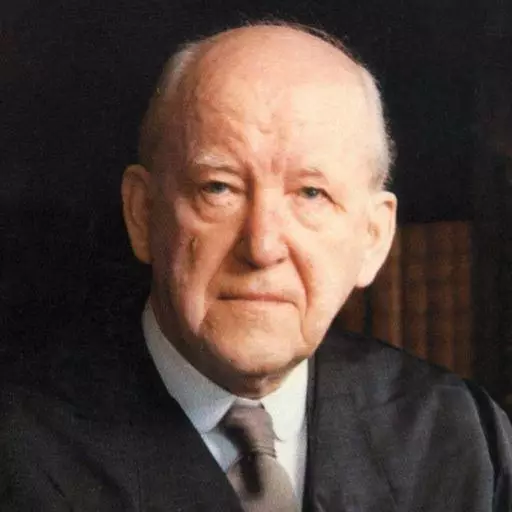
Guest (Male): We apologize for the poor quality during parts of the following recording. This was due to a deterioration of the original master tape, and I'm afraid it is beyond our control. However, we hope it doesn't spoil your enjoyment of this sermon by Dr. Martyn Lloyd-Jones.
Dr. Martyn Lloyd-Jones: I would like to call your attention this evening to the words found in Paul's epistle to the Romans in chapter 14, reading verses 13, 14, and 15. Verses 13, 14, and 15 in the 14th chapter of Paul's epistle to the Romans.
"Let us not therefore judge one another any more, but judge this rather: that no man put a stumbling block or an occasion to fall in his brother's way. I know and am persuaded by the Lord Jesus that there is nothing unclean of itself; but to him that esteemeth anything to be unclean, to him it is unclean. But if thy brother be grieved with thy meat, now walkest thou not charitably. Destroy not him with thy meat, for whom Christ died."
Now here we start a new subsection in the argument that is put before us by the Apostle in this chapter and on, as we saw in our division of the matter at the beginning a few weeks back, into the 15th chapter. So far, as we've been seeing, the Apostle has been mainly concerned in handling the whole problem raised by these indifferent matters, to set the problem in its proper context.
We've taken our time over this because it is such an important matter. As we've been seeing and as I've tried to remind you, so much trouble has arisen in the church from time to time over these matters of indifference because people have not been careful to put them into their context. They've dealt with them in and of themselves. They've dealt with them directly. They've extracted them out of the whole corpus, as it were, of divine truth, and certainly have taken them out of the context of the church and have turned them into some intellectual problems. It is because of that, that trouble has so frequently arisen.
In other words, the trouble has been that people have forgotten the exhortation of the Apostle in the first 12 verses of this chapter. He's done that, and we've seen how he's done it. He's told us that every man must be certain and convinced in his own mind, fully persuaded in his own mind. But then from verse 6 to verse 12, he really has shown us the true context in which we should always discuss these matters together. That is in the context of our relationship to the Lord.
That we do nothing apart from our relationship to Him. No man liveth unto himself and no man dieth unto himself. Everything we do is unto the Lord. He is the Lord of the whole of our lives. He is Lord of us living or dead. He is always our Lord. Then he introduced the further element of the fact that we are all brothers together. We are not one another's judges. We are brothers. It is the head who judges, the father who judges. So it's wrong from every standpoint for us to take the judgment into our own hands.
Then of course, he's ended by reminding us in those three verses—10, 11, and 12—that we shall all have to stand before the judgment seat of Christ or of God. You remember how we saw that God the Father has delegated this work to the Son. So we shall all have to stand before the judgment seat of Christ and give an account of the deeds done in the body, whether good or bad. Every man, he says in verse 12, will have to give an account of himself, not of other people, but himself. Every man shall bear his own burden. The suggestion is that that will be more than enough for all of us and it'll take us all our time. The righteous, if the righteous scarcely be saved and so on.
Now here I say he turns. Having now made certain that we approach the thing in the right spirit and in the right atmosphere, he comes to closer grips with the actual problem, with the actual question itself, and gives us his own ruling. Now again, I would urge upon you to watch the Apostle's method. If we learn nothing else, it's a great thing to learn the method. Half our troubles are due to the fact that when we're confronted by a problem, we don't know how to approach it.
I was never tired of pointing this out when we used to have discussion meetings on Friday nights. It was a thing that I was constantly having to repeat. When I'd put a question to the meeting, the mistake most people made was always to attack it too directly, come straight down onto it instead of putting it into its context. This is to be our invariable rule. You don't consider things in and of themselves in the Christian life, because everything is related to everything else. Therefore, there is nothing more dangerous than to isolate a question.
Well now, let's learn this great lesson of his method. Let's never forget this. You see, most of us wouldn't have taken 12 verses before we come to the actual question, would we? We're in this foolish age that doesn't believe in introductions. That is really the great trouble with life today. People no longer believe in introductions and that's why they go wrong so often. There is an approach in these matters and this is the apostolic approach invariably.
I think I once reminded you of hearing an old minister give an address in a certain assembly on the question of Sabbath observance. I never forget the way he began. He did exactly the thing that the Apostle is doing here, but in his own picturesque way of putting it. He said, "Now when you have a question like this, the most important thing always to remember is that it belongs to a family. Discuss it in terms of its family. Put it into its family."
What he meant by that was that you can't consider a question like Sabbath observance in and of itself alone. It's got to belong to the whole body of doctrine, the very thing the Apostle is doing here, as we've been seeing. Well now, let's always give that due weight in all our approaches to any particular question. Put it into its family. Put it into its context. Then having done that, in he comes and really gives us his own opinion.
There were the two groups, you remember. Those who were weaker in their understanding of the faith and those who were stronger. The Apostle gives us his opinion. But you notice we shall see that he again is very careful even with regard to that and points out that whatever his opinion may be on the merits of the question per se, there are always other and higher considerations that have to control and to govern our thinking.
Now then, let's see how he does it. Look at verse 13. "Let us not therefore judge one another any more." Now that's really a summing up of all he said in the previous verses, especially verses 6 to 12. Again, don't forget this. You see, the essence of teaching, the art of teaching, is repetition. So having made it abundantly clear that we've no grounds whatsoever for judging one another and that we're very foolish if we do so, he can't leave it without summing it up once again. "Let us not therefore judge one another any more." Leave it at that. Don't do that again.
Then he turns and says, "But judge this rather: that no man put a stumbling block or an occasion to fall in his brother's way." Now this is very interesting, what he does here. He really plays on this word "judge". He's already been doing that earlier in the chapter. It's the same word exactly, but he uses it in a different sense. We do that of course, the same thing ourselves. We use the same word in different slightly different senses and meanings, but the context always makes it quite plain and fair as to what we're doing.
In other words, you might very loosely paraphrase what he's saying here like this: "Let us not therefore judge one another any more. If there is anything you would like to judge about and express an opinion and a judgment, well then," says the Apostle, "I'll tell you what it is. If you want to judge, well, judge like this." And what you judge is this: that no man put a stumbling block or an occasion to fall in his brother's way.
Now this word translated here by "judge" is a word I say that's used very commonly in the New Testament. For instance, in 1 Corinthians 2:2, the famous statement, "I determined not to know anything among you save Jesus Christ and Him crucified." It's exactly the same word as we have here. So we might have the translation there: "I judged. I came to the verdict. I came to the conclusion. I determined not to know anything among you save Jesus Christ and Him crucified."
Well now, that's the sort of sense in which he's saying it here. As you seem to be anxious to express your opinions and to be judges, well, he says, come to this verdict. Come to this conclusion. Express this judgment. Here is a judgment that is always valid, he says, so hold on to this. This must be the rule of your lives with respect to all questions. It doesn't matter what the question may be. Therefore, we must arrive at a solemn decision never to judge one another, but to arrive at this judgment and to act on this principle invariably: that we never do anything that is going to be a hindrance to our brother. That's always a right decision. There's no question about that.
Well now then, what is this judgment at which he tells us to arrive? Well, it is as I say negatively, that we don't judge our brother. But that's only the negative aspect. There's the positive side. He says, remember that this other man with whom you're disagreeing on this question of whether you eat particular meats or not, or whether you want to eat herbs, or whether you observe these old Jewish festivals or some other festivals any longer or not, remember that the man who does disagree with you about this is your brother.
Now he's already brought that out, you remember. We emphasized it earlier. How he introduces this word brother in the 10th verse. Well now, he's going on with this because it's the very essence of his argument here. Remember, he says, that he is your brother. He's not a leader of some opposition. He's not a rival. He's not a contender for something that you've got. You're brethren together.
So this is it positively. Then the exhortation is that you never say and you never do anything that is going to be a hindrance to your brother. He uses two words to bring this out. The first is "stumbling block". The picture is quite clear, of course. It's a picture of a rock or a stone or some obstacle in a man's way. Here's a man, if you like, running in a race and he's got his eye fixed upon some winning post and he's running. He doesn't see that there's a stone in the way and he stumbles over it and he falls. Stumbling block.
You remember that Peter uses this same word in his first epistle in the second chapter and the eighth verse. "Unto you therefore which believe," he says, "He is precious. But unto them which be disobedient, the stone which the builders disallowed, the same is made the head of the corner, and a stone of stumbling and a rock of offense, even to them which stumble at the word, being disobedient: whereunto also they were appointed." Now that's the same word and the same idea exactly.
But then he uses in order to enforce this, I believe he uses the two terms in order just to emphasize the thing and to show how we must never be guilty of this. "Stumbling block or an occasion to fall." Now that's an interesting expression. It really means a trap or a snare. This is a picture, you see. They used to trap animals in those days, and if you've ever seen a trap, you'll know exactly the picture that is involved in this particular word. Our word "scandal" comes from it. It was a *skandalon*. It was a bit of material that was placed there in the trap and the trap was mainly concealed, and the animal just putting its foot on this thing, immediately the trap sprang and it was caught.
Now that's the real meaning of this word, an occasion to fall. It is really an occasion to be trapped and to be ensnared. That's the idea that is implicit in that word. So what he's saying is that we must not merely consider ourselves. We mustn't merely consider our opinion. That is what is always so fatal in the church. But we must always bear in mind before we make any statement or before we act upon what we believe, we must bear in mind the effect that this may have upon others. And these others, we must remember, are brethren.
They are as Christian as we are. He's already made that perfectly plain and clear. He has already said that God hath received him, you remember, in the third verse. And here he's going to make it still more strong by saying that Christ has died for these people. Now that's the context all along. So you don't consider yourself only. Now I shall later have to deal with this more fully in the 15th verse. There we shall see the very close parallel, of course, with the teaching in the first epistle to the Corinthians in chapter 8.
But it's all here implicit, and again what he says in chapter 10 of 1 Corinthians, which he sums up with these words: "Conscience, not thine own, but of the other also." That's what he's really saying here. Obviously, it was something that had to be said repeatedly in the early church. This problem was not only in Rome, it was in Corinth; indeed, it was probably in all the churches. We have very good evidence from the Book of Acts that that was the case.
So that the apostles, in dealing with these different churches or localities, have to go on repeating this same point. And that is it very well put: conscience, not thine own, but of the other also. That a thing is right for you is not sufficient for the Christian. He has got to consider his brother. Now this, of course, is again a part of this great New Testament appeal. You remember our Lord's appeal to his disciples at the very end. "That ye may love one another," He says. "That's the way the world will know that you are my people: that ye love one another."
This should always be the overruling and overriding consideration in the church. If we depart from this, we're almost certain to go wrong in our decisions. Whatever you are discussing in the church, we should always start by this consideration: that we are to love one another because we are brethren together. Whatever differences of opinion may arise, more important than the particular decision is this spirit of love for one another. And if we don't have that in the forefront of our minds and hearts and spirits, we are bound to go astray.
Now our Lord himself taught this and the Apostles in their various epistles are constantly doing so. You remember how John in his first epistle makes this in many ways the very heart and center of all his great appeal. "If a man loveth not his brother whom he hath seen, how can he love God whom he hath not seen?" he says. So still you see he's going on with this thing he's been putting to us in the first 12 verses.
We must be governed not only by a consciousness of the lordship of Christ over us in the totality of our life. We must realize our relationship to one another also, and we must love one another. We've already had this, you remember, in the 13th verse in the 13th chapter. "Owe no man anything but to love one another, for he that loveth another hath fulfilled the law." These various commandments, he says, are briefly comprehended in this saying, namely, "Thou shalt love thy neighbor as thyself." Love worketh no ill to his neighbor. Therefore, love is the fulfillment of the law.
Well now, he really is just bringing that back to us once more and he's telling us that this is much more important than our particular opinions. Your opinion may be right, but if you've forgotten that you've got to love your brother, well, that right opinion may be a cause of serious trouble. He's going to put that in these words: "Let not then your good be evil spoken of." It's a terrible thing when a man who's right is right in such a wrong spirit that he does more harm than good by being right.
This is the kind of consideration that the Apostle is enforcing here. Now then, there we are. He's again really just setting the stage once more. Then having done that, he gives us his opinion. He gives us his judgment on this particular matter. Again, I would remind you that it takes him 13 verses to come to it. I hope this comes as a rebuke to those of us who are too ready to give our opinions, and especially the glib opinion that never sees any difficulties at all.
Ready reckoner mentality, I've sometimes called it. Problem? Here it is. No problem, everything settled. You don't do things like that in the Christian church. That's what's so reprehensible. So you take your time and you put the setting. Now then, he comes to the particular opinion. Now this is a most amazing statement. And when you remember the antecedents of the Apostle Paul, it is an astounding statement. When you consider that this man had once upon a time been one of the narrowest Jews conceivable, one of the most nationalistic Jews, and on top of that, a Pharisee and a legalist of the first order.
There is something which is really overwhelming in this amazing statement, this tremendous enunciation of a great gospel principle. "I know and am persuaded by the Lord Jesus that there is nothing unclean of itself." Now that is the difference that the gospel has made and that is particularly the difference the gospel has made to a Jew. You see, there is only one thing that could ever have enabled this man to make that statement, and that is rebirth.
He is really not the same man as he used to be. He could never have said this as he was as Saul of Tarsus, a Pharisee. It is only the Holy Spirit that can change men to this extent, that they completely reverse their judgment and their opinion on matters that they have regarded as of vital importance. It is a most astounding thing. It is one of the great illustrations of what the Holy Spirit can do and what the Holy Spirit alone can do.
So it is a remarkable statement when you consider that it is the Apostle Paul who is making this statement. But in addition to that, of course, it is an enunciation of the great New Testament ruling which should govern our attitude towards all these problems and questions with regard to things indifferent that tend to confront us in our Christian pilgrimage.
Now let's look at how he puts it. It's a great statement, this. "I know and am persuaded by the Lord Jesus that there is nothing unclean of itself." Let us first of all notice his certainty, which he's so anxious to impress us with. "I know." It's a very strong term. It means absolute, positive knowledge. It isn't saying, "I am of the opinion." "I am absolutely certain." It is absolute, positive knowledge.
But he isn't content with leaving it at that. "I know and am persuaded." Now here again is one of his terms, one of his favorite expressions. Strictly speaking, it should be put like this: "I know and have been persuaded." Why do I emphasize that? Well, you see, it's the same thing exactly as he's already told us at the end of the eighth chapter in that mighty asseveration there. "For I am persuaded that neither death nor life nor angels nor principalities, etc."
There again it should be, "I have been persuaded." Why trouble to emphasize that? Well, for this reason: he has been persuaded how? Well, by the considerations which are presented by the gospel. In other words, he is not merely giving expression to a prejudice. It is not even an intuition. He's got solid reasons. The arguments, the reasons provided and produced by the gospel have persuaded him. He's a man who has been persuaded as result of spiritual enlightenment, as I've told you. He needed a lot of persuasion, but he has been absolutely persuaded. The arguments cannot be countered. They can't be turned back. The thing he says is perfectly plain and clear. "I know and have been persuaded." He is absolutely certain. He's not giving a tentative opinion. He is giving it in as absolute a manner as he is capable of.
But wait a minute. We must consider how he has arrived at the certainty. Over and above what I've been saying, it is a reasonable position and he can give his reasons for it. The Apostle Paul, again let me remind you, was never a man who just stood up and said, "I tell you." Never. He had authority to do that as an Apostle, but he never does that. He always gives his reasons. And what he's telling us here is, "I've got reasons. I can demonstrate this to you. I have been persuaded by the logic of the whole position of the gospel."
This is the difference it has made. But how? Well now, here you see is the thing again that is so characteristic of him and should be ever characteristic of all of us as Christians. "I know and am persuaded by the Lord Jesus." Now there are those who say it should be translated, "I know and have been persuaded *in* the Lord Jesus," and I think that's probably right. What does he mean by this? Well, what he's doing is to tell us, "Now it isn't I merely who am saying this. I'm not merely expressing my own opinion arrived at as the result of my own natural reason."
He'd got a great brain and he could reason. But he'd stopped doing that sort of thing because, as he told you remember King Agrippa and Festus on that famous occasion, in his past life he had thought with himself. And that's always the natural man's method of arriving at conclusions. He thinks with himself. "I verily thought with myself that I ought to do many things contrary to the name of Jesus of Nazareth." But he doesn't do that any longer. He's got a new way of thinking.
He thinks in Christ Jesus. He thinks under Christ Jesus. He is dominated by Christ Jesus. He's controlled. He has seen the danger and the error and the fallacies that result from following one's own natural reason and using one's own natural mind. So he is claiming here that he is in this position as the result of spiritual enlightenment, which has resulted from his relationship to the Lord Jesus Christ. He is a man in Christ. He is in Christ. And this now determines what he does. The Spirit is in him and the Spirit leads him and the Spirit guides him.
Now I think this is a most important matter. There are those who have thought, and some of you may have thought the same thing, that all he's saying here is this: "Now in saying what I'm going to say, I'm only repeating what the Lord Jesus Christ himself said." Now it is true to say that he is doing that, but Paul doesn't want to leave it at that. The very expression that he uses compels us to say that that isn't merely what he's saying. He is claiming here to have had a revelation about this matter.
The whole of the gospel had been revealed to him. He never tires of telling us that. It's you see parallel with the expression that he's so fond of using: "I have received of the Lord that which also I delivered you." That's what he's doing here. He is delivering what he's received. He's been persuaded as the result of the enlightenment that has been given to him. We mustn't reduce it from that. He is claiming here that it has been revealed to him and it is not merely a repetition in his own terms and language of something that the Lord Jesus Christ himself had taught.
Now this is an interesting point because it helps us to understand partly at any rate the whole question of the authority of the Scriptures and the inspiration of the Scriptures. This revelation and inspiration. Let me show you a sort of parallel in 1 Corinthians chapter 7. In verses 10 and 12, the Apostle puts it like this: "And unto the married I command," you remember he's taking this whole question of the position of a converted wife with an unconverted husband and vice versa. He says, "And unto the married I command, yet not I, but the Lord, Let not the wife depart from her husband."
Now that again in a sense is just a repetition of what our Lord had taught. But the Apostle wasn't in the company at the time. He may have received it from others. But he generally goes out of his way to say that what he teaches he has not received from men, neither has he been taught it by men. And it is a part of his position as an Apostle to say that his teaching he has received as directly from the Lord as all the other Apostles who'd been with the Lord had received their teaching directly.
So I say that even here in 1 Corinthians 7:10, when he says, "Unto the married men I command, yet not I, but the Lord, let not the wife depart from her husband," he is again claiming this special revelation and direct teaching. But then you notice to bring this out as it were, he puts in verse 12 of that 1 Corinthians 7: "But to the rest speak I, not the Lord," and gives his opinion. Now this, I think I may have adverted to this on some previous occasion. This is to me a very powerful argument also in favor of believing that these Apostles were uniquely and divinely inspired. The Apostle himself draws that kind of distinction.
He says, of course, later on that he has the Spirit. They claim that they've got the Spirit. He has the Spirit also. But he draws a distinction between a revelation that has been given to him and his own spiritual opinion. Now this it seems to me is implicit in what we're dealing with here. His emphasis is that it is something that he has been persuaded of by the Lord. The enlightenment of the Lord given to him through the Holy Spirit.
So it is a very authoritative statement. That's what it seems to me what he means by saying, "I know and am persuaded in the Lord Jesus." Well, what is it? What is his teaching? And the teaching is that there is nothing unclean of itself. Now here is a tremendous statement. He of course has hinted at this already in the 14th verse, in the second verse of this 14th chapter. He says, "One believeth that he may eat all things." That's the man who has come to see that there is nothing unclean in itself. He will say it again in verse 20: "All things indeed are pure."
So this is his judgment on this matter. Now what's the meaning of this term "unclean"? "There is nothing unclean of itself." Well, it's a most interesting word, this. It doesn't mean unclean in the sense that we normally use the term. It doesn't mean something that has got dust or dirt or mud attached to it and is unclean in that sense. It really means primarily something unhallowed. It is the opposite or the antithesis to something which is holy.
Now the Apostle here clearly has got primarily in his mind the Jews. Because you know in the teaching that had been given to them through Moses, the Levitical teaching, the ceremonial teaching, there was a division made, for instance, with regard to animals that they were allowed to eat. Some animals were said to be clean; some were said to be unclean. And they were not to touch the unclean animals.
It not only applied to food. It applied to utensils and vessels. Anything that was used in God's work had to be dedicated and so it became holy. Holy vessels in the temple. The very mountain which the law was given through Moses is referred to as the holy mount because it was there that God gave this law to the children of Israel through Moses. So there was a distinction between that which was holy and that which was unholy. Now that's the real meaning here.
But then another term had come in. The things which were not holy were often referred to as things which were "common". And that is the better translation here. "I know that there is nothing common in and of itself." So you must realize that the word is primarily what you may call a ritualistic word, or a ceremonial word. You get a relic of that even at the present time. There are sections of the Christian church today that regard their buildings as holy, consecrated buildings.
There are people likewise who would regard certain plots of ground as holy. Many regard their cemeteries as consecrated holy ground. Now it is in that sense that this term is to be understood, so that it's no longer "common". It has become special because of its relationship to God. Now this is something that is most important for us to understand, of course, because it would obviously be something that would create a very real problem in the minds of Jews who became Christians. And they did. It was doing so in Rome as it did in other places.
Now I read that section to you at the beginning from the seventh chapter of the Gospel according to Saint Mark because there our Lord himself deals with this selfsame matter. You remember the term that was used there, which is important in the second verse: "Then came together unto him the Pharisees and certain of the scribes which came from Jerusalem. And when they saw some of his disciples eat bread with defiled"—now that's exactly the same word that is used translated here as unclean, and it would be better to use the word "common" in both instances—"then it goes on to explain with unwashen hands."
Now this is therefore a term with which we're familiar in the New Testament. But there's a still more interesting and striking case of this, and that is in connection with the Apostle Peter himself. You remember the incident where the Apostle Peter was used as a means of preaching the gospel to Cornelius and his household. And you remember how we're told in the 10th chapter of the Book of the Acts of the Apostles, that Peter as a typical Jew was very reluctant indeed to do this.
He as a Jew had an innate feeling that the gospel was only to be for Jews. And he was in trouble when he received a request to go and preach the gospel to Gentiles. And it took a vision in order to convince Peter about this matter. Now you remember what we are told. Let me read the story to you, beginning at verse 9:
"On the morrow, as they went on their journey and drew nigh unto the city," these were the people who'd gone to fetch Peter, "Peter went up upon the house top to pray about the sixth hour. And he became very hungry and would have eaten. But while they made ready, he fell into a trance and saw heaven opened and a certain vessel descended unto him, as it had been a great sheet knit at the four corners and let down to the earth, wherein were all manner of four-footed beasts of the earth and wild beasts and creeping things and fowls of the air. And there came a voice to him: 'Rise Peter, kill and eat.' But Peter said, 'Not so Lord, for I have never eaten anything that is common,'" that's it, "'or unclean.' And the voice spake unto him again the second time: 'What God hath cleansed, that call not thou common.'"
And again in verse 28, Peter explaining himself says, he said unto them, "Ye know how that it is an unlawful thing for a man that is a Jew to keep company or to come unto one of another nation. But God hath showed me that I should not call any man common or unclean." There is the same idea. Now Peter, you see, had to have a vision before he could see this very thing, this principle that the Apostle is here enunciating.
But as I say, it was his forgetfulness that made him stumble because our Lord himself had dealt with this very plainly and clearly in that incident which is recorded in the seventh chapter of the Gospel according to Saint Mark. You see, they thought our Lord was breaking the law. He tells them, "You don't really understand." When he had called the people unto him, he said unto them, "Hearken unto me every one of you and understand. There is nothing from without a man that entering into him can defile him," make him unclean or common, "but the things which come out of him, these are they that defile the man."
And on it goes from that 14th verse in Mark 7 to the end of verse 23. Our Lord really dealt with it there. And as I say, he dealt with it in the case of Peter as he was preparing him to go to the house of Cornelius. The voice Peter addresses as Lord, and our Lord speaks back to him and says, "What God hath cleansed, that call not thou common." You mustn't do this. There is a change. Something's happened which has changed all this. You mustn't go on thinking in your old Jewish terms.
But of course, this is still more explicit in the teaching of the various epistles of the Apostle Paul. You've really got it in its essence not only here, but as I said just now in the first epistle to the Corinthians and in chapter 8. It's there quite clearly. We shall come on and deal with that. But you've also got it in 1 Corinthians 10, and especially in verses 26 and 28. "For the earth is the Lord's and the fullness thereof." "If any man say unto you, this is offered in sacrifice unto idols, eat not for his sake that showed it and for conscience sake. For the earth is the Lord's and the fullness thereof." That is just another way of saying that there is nothing therefore which is unclean in and of itself.
But listen to him putting it to Timothy. 1 Timothy 4, beginning at verse 1: "Now the Spirit speaketh expressly that in the latter times some shall depart from the faith, giving heed to seducing spirits and doctrines of devils, speaking lies in hypocrisy, having their conscience seared with a hot iron, forbidding to marry and commanding to abstain from meats, which God hath created to be received with thanksgiving of them which believe and know the truth. For every creature of God is good and nothing to be refused if it be received with thanksgiving, for it is sanctified by the word of God and prayer."
And indeed, you have exactly the same thing in that word which is used by Paul to Titus in the first chapter and in verse 15: "Unto the pure, all things are pure." That's another way of really saying the same thing. Very well then, what is the teaching? Well, the teaching can be summed up like this. First and foremost, we have to realize that the distinction that was drawn in the ceremonial Levitical law was not based on the nature of the things in and of themselves.
But it was a case that God had determined and had chosen to make this distinction in order that he might discipline and govern his people. In other words, the prohibition to eat pork, for instance, was not because there was anything wrong in pork. But God chose to say that that particular meat should not be eaten by the people. Now you see the importance of this. God as the judge and the ruler of the universe has a perfect right to say that we are not to do certain things. He may well—you've got it in the Garden of Eden.
Why were they commanded not to eat the fruit of that one particular tree? It was not because there was anything wrong with that in and of itself. But God, in order to test men in this period of probation, told him, "You can eat of all the fruit of the trees of the garden except this one." He might, if he'd liked, have chosen another. It is his way of testing and of governing and of proving. So we must be clear that the things that were prohibited were not prohibited because they were unclean in and of themselves. Go through the list of foods, the division between clean and unclean. You and I today eat them all. Why? Well, because we are acting on the principle taught here by the great Apostle. And we must always make this clear.
Well, however, let me put it in this form. There's your first principle: that the distinction was not in terms of the things in and of themselves. Secondly, all that has now ended and Christian people are not bound by the ceremonial law that was given by God through Moses to the children of Israel. Third, we must never base our refusal to do certain things on the idea that these things are evil or wrong in and of themselves.
What do I mean? Well, I'll illustrate at the risk of being misunderstood. But take for instance the whole question of sex. Now there have been Christian people and there may be still some who regard sex as evil. There are indeed Christians who seem to have regarded at times the very body as being evil. It is wrong. The body is not evil. It is created by God. Sex is not evil. There is nothing wrong with sex in and of itself. It is God-created. And if we denounce either the body or sex as being inherently, essentially wrong, we are being utterly wrong ourselves. We are guilty of heresy. It is quite wrong.
Now that's the sort of thing I mean. Now but let me go further and here the misunderstanding comes in. As Christians, we must not say that we don't drink, if we don't drink alcoholic beverages, because all alcoholic drinks are bad. That must not be our reason. All drinks are not bad. The Scriptures themselves describe wine as that which maketh glad the heart of man. So we mustn't say that wine is evil in and of itself. Now people have often done this. Christians have often done this. So they expect a Christian preacher to speak on temperance platforms in terms of the evil effects of alcohol upon the body and so on.
Now to me that is quite wrong. It is to me to make alcohol evil in and of itself. You must not say that in the light of the scriptural teaching about these various things. There is a good reason for teaching temperance, but it isn't that. That's not the Christian reason. Or if you like, it's exactly the same with tobacco. Tobacco is a plant that grows in nature. It hasn't been produced by man, it's there. It's a part of the earth which is the Lord's and the fullness thereof. There is nothing unclean in and of itself. Nicotine is not unclean in and of itself. None of these things are.
So we've got to be clear that if we do not indulge in these things and if we exhort others not to, we must give them the right reason for not doing so. It is the abuse of these things that is wrong, not the things themselves. It is the abuse of sex, it is the inordinate use, it is the abuse of alcohol, it is the abuse of tobacco. These are the things which are wrong, not the thing in and of itself. Now that's the principle which we must hold on to. There is nothing which is unclean in and of itself. So let's be clear in what we say and the reasons we give. Now the Apostle himself is going to do this as we shall see probably next Friday.
So my final comment tonight is this, is to show that obviously when you read the decision of the Council at Jerusalem, as it is recorded in Acts 15, you must realize that it was a temporary concession. If you don't do that, you will have to say that the Apostle Paul is here contradicting the decision of the Council at Jerusalem. What was that decision? Let me read it to you. Acts 15, verses 19 and so on. James says, "Wherefore my sentence is, that we trouble not them, which from among the Gentiles are turned to God: but that we write unto them, that they abstain from pollutions of idols, and from fornication, and from things strangled, and from blood."
But here is Paul saying there is nothing unclean in and of itself, even blood isn't unclean. There's nothing wrong in eating blood. So he appears to be contradicting the decision of the Council. You'll have to say that unless you notice what the Council, what James says in verse 21: "For Moses of old time hath in every city them that preach him, being read in the synagogues every sabbath day." This was a kind of temporary legislation to deal with this whole question of the immaturity and the weakness in their understanding of the faith, especially of the Jew.
So there is no real contradiction. Here in Romans 14, the Apostle is enunciating the great general principle, and this is right. This is what the coming of our Lord has done. There is nothing unclean in and of itself. But don't jump to the conclusion therefore that you can always eat anything whenever you like and there's no other consideration, because immediately he goes on to say here, "But to him that esteemeth it to be unclean, to him it is unclean."
However, the general principle is the one that the Apostle has enunciated and we will have to go on now to see why he makes this addition. But as to the principle itself, the Apostle comes down without any hesitation at all. He knows with an absolute certainty and he has been persuaded in the Lord Jesus that there is nothing unclean in and of itself. The stronger brother is actually right. But it doesn't follow from that of necessity that he therefore can put that into practice. And the reason for that is what we will go on to consider, God willing, next Friday night. Let us pray.
Oh Lord, our God, we again would thank thee for the light and the knowledge and the instruction given to us by the Scriptures. We bless thee for it. We thank thee for everything concerning thy word. We thank thee that it draws forth our admiration for its very form as well as for its content. And we humbly pray thee to make us wise unto these things. Oh God, forgive us if we have ever been a stumbling block, a rock of offense, or a snare or a trap to another.
Oh grant that we always should be governed by this love for the brethren, love for one another as thy children and as thy people. Bless this unto us therefore we pray thee, oh Lord, and give us that wisdom that is from above and make us as wise as serpents and as gentle as doves. And now may the grace of the Lord Jesus Christ and the love of God and the fellowship and the communion of the Holy Spirit abide and continue with us now this night and evermore. Amen.
Featured Offer

Find peace and comfort this season with your complimentary guide that includes access to 6 free bonus sermons on overcoming spiritual depression from Dr. Martyn Lloyd-Jones, one of the church’s most beloved Bible teachers. Topics include: true Christians can and do struggle with depression, recovering the joy of your salvation, dealing with crippling guilt over past sins, dealing with yesterday’s haunting regrets, encouragement to keep moving forward, and understanding God’s purpose for suffering.
Past Episodes
This ministry does not have any series.
Featured Offer
Find peace and comfort this season with your complimentary guide that includes access to 6 free bonus sermons on overcoming spiritual depression from Dr. Martyn Lloyd-Jones, one of the church’s most beloved Bible teachers. Topics include: true Christians can and do struggle with depression, recovering the joy of your salvation, dealing with crippling guilt over past sins, dealing with yesterday’s haunting regrets, encouragement to keep moving forward, and understanding God’s purpose for suffering.
About From the MLJ Archive
From the MLJ Archive is the Oneplace.com hosted ministry of the MLJ Trust. Our mission is to promulgate the audio ministry of Dr. Martyn Lloyd-Jones.
About Dr. Martyn Lloyd-Jones
Contact From the MLJ Archive with Dr. Martyn Lloyd-Jones
info@mljtrust.org
http://www.mljtrust.org/
PO Box 953
Middleburg, VA 20118