
Spiritual Gifts, Part 4


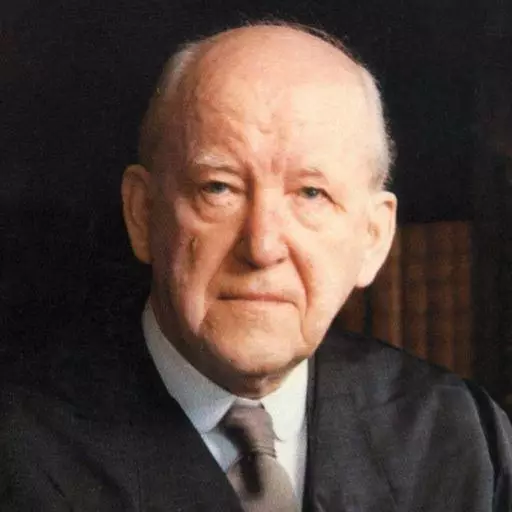
Dr. Martyn Lloyd-Jones: The words to which I should like to call your attention this evening are to be found in Paul's epistle to the Romans in chapter 12, reading verses 7 and 8. Verses 7 and 8, let me read the sixth verse as well to give the setting. "Having then gifts differing according to the grace that is given to us, whether prophecy, let us prophesy according to the proportion of faith; or ministry, let us wait on our ministering: or he that teacheth, on teaching; or he that exhorteth, on exhortation: he that giveth, let him do it with simplicity; he that ruleth, with diligence; he that showeth mercy, with cheerfulness."
Now, we are dealing here, as you will remember most of you, with the apostle's application of the teaching that he has been laying down with regard to the use and the exercise of the gifts given to us as members of the body of Christ by the Holy Spirit. He's laid down the principles as to how they should be used, and now he takes up some practical examples and illustrations in order to make the thing abundantly clear. And we've already dealt with the first illustration that he uses, namely that in the matter of prophecy.
Whether prophecy, if it happens to be the gift of prophecy, he says, "Let us prophesy according to the proportion of faith." And there we've seen how he lays down certain very important principles concerning the use of gifts that apply not only to prophecy, but to the other gifts as well. There's nothing automatic about the exercise of these gifts. There is to be a taking, there is to be a controlling. They're given; we don't initiate them, but we can refrain, we can stop. But above all, we must be careful that we exercise any one of these gifts in the right manner, according to the proportion of faith, which includes, as we've seen, not only the faith that we have ourselves and not add to it and go beyond it, but also the faith that has once and forever been delivered to the saints.
Now, there we have dealt with this whole question of prophecy, at any rate from the point of view which the apostle has prominently in his mind here. And now we go on. Now, we haven't got a complete list here of all the gifts. The apostle doesn't say that this is a complete list. If you compare it with 1 Corinthians 12, you will find that there, there are other gifts mentioned that are not mentioned here.
In other words, the apostle here was not really setting out to deal with the doctrine of the gifts, but rather just this one special aspect, namely how they should be used and especially is he concerned to show us how they must not be abused and so bring trouble in the life of the church. That is why he puts it all again into this great setting of the doctrine of the church as the body of Christ. So, it's not a complete list. He picks out examples and illustrations just to show this great point that he is making.
What is this great point? Well, we must go on reminding ourselves of this, and particularly perhaps at this point, when we come to a series of illustrations which he puts before us in a kind of staccato manner. What is the point? Well, the point is this: the importance of our using the particular gift that has been given to us and concentrating on that and keeping to that. Now, that is the great principle.
It is a little obscured almost by the words that have been added by the authorized translators here. You know that very often the authorized translators added words to the original simply in order to make it easier for us to understand the teaching. And in the vast majority of cases where they do that, it is of extreme help. Now, in most of the Bibles that we use, especially the smaller ones, these additional words, these supplied words, are generally put in italics in order that we may know that they are the additions of the translators and not a translation of the original. This Bible that I have in front of me doesn't do that, and it's a poor Bible in that respect.
These words should always be in italics; at any rate, it should be made clear some way or another that they are supplied and added in order to explicate the meaning. Well, now here I say they really have almost made it more difficult for us. They've added, for instance, in the at the beginning of the seventh word seventh verse, "Let us wait on." They are not in the original at all. Then there are others, "Let him do it with simplicity" about he that giveth.
They've supplied these; it would be better if they hadn't done so because the original, in its staccato manner, helps, I think, to bring out the meaning. Now, at this point, I think the Revised Standard Version is a good translation. They put it like this: "If service, in our serving; he who teaches, in his teaching; he who exhorts, in his exhortation; he who contributes, in liberality," and so on. Even that is adding just a little. The original is still more staccato.
Now, why do I think that this helps us? Well, in this way: that what the apostle is saying is this: If this is your gift, do it. That's what he's saying. If it's prophesy, prophesy according to the proportion of faith. Ministry? Well, on ministry. Teaching? Well, on teaching. Exhortation? On exhortation.
Now, what he's saying is this: that whatever the gift that has been given to you, exercise that gift. Let that be your concern. Let that be your desire. And never desire to go outside it. It is the business of each person with his or her gift to use it and to exercise it to the full and to the glory of God and to the benefit of the church. In other words, if this is your gift, well now, look at that and do it and don't be looking there at somebody else's or here at somebody else's and coveting that and trying to do that and desiring to be doing that or criticizing that. That's what he's saying. That is the whole object of this passage.
So here it is, you see. Whatever it is, do that. Concentrate on that. And don't cast coveting eyes or critical eyes on the other. Let every man function according to the gift he's had, according to the particular member of the body that he happens to be.
Now, he brings that out, you see, in his very form of words. But he also does the same thing by showing us the variety in the gifts, how they're different, and sometimes the shade of difference is rather a fine one. We'll see that in a moment. But there are these shades of difference between gift and gift, and his point is: it doesn't matter how fine the shade is, you keep to the gift you've been given. It may be very similar to another one, but don't imagine that because you've got this that you can do the other also. That's what he's really saying, and that is the emphasis. And, of course, we do know this, many of us, I'm sure, from experience and the history of the church shows it still more clearly. Great trouble has often been caused in the church because people have not been careful to observe this.
Very well then, we are all, I say, to do what we are gifted to do. We are to exercise the gift that has been given to us. We are to concentrate on that, we are to do that with all our might, we are to glory in that, and we are not to be desiring something else or persuading ourselves that we are gifted to do something else. It's the Spirit who dispenses them; it is He who gives them; it is He who deals. It is God that hath dealt to every man the measure of faith, and it is in that way that He gives these gifts to all. Now then, that I say is the big principle, the point that he's anxious to bring out through the medium of his illustrations. He's dealt with prophecy, now then, go on to ministry.
"Or ministry, on ministry." What does ministry mean? Well, it's a very interesting term, this. There are those who feel that he put it here to talk about ministry in general, any form of ministry. But there's no point in saying that because he gives us illustrations. If he were not giving us the illustrations, there would be some point in speaking about ministry in any shape or form, of whatever the gift may be.
He's already done that. Here ministry has a more confined meaning. And of course, it means service. It means, if you like, ordinary management. Now, there is a term used in the list in 1 Corinthians 12 which seems to me to help us at this point. 1 Corinthians 12:28 reads like this: "And God hath set some in the church, first apostles, secondarily prophets, thirdly teachers, after that miracles, then gifts of healings, helps, helps." Now, I think that that word helps really stands for the same thing as the gift of ministry which he is dealing with here in this seventh verse in our chapter.
What does it mean? Well, it means it means business, the general business of the church. It means the outer business of the church, not the peculiar functions of the preacher and the teacher and so on. But there is general business in connection with the house of God. And I think it refers to that. It means taking interest in and taking part in the general administration of the work of the church of God.
Now again, there is a little help given us here in the second epistle to Timothy and in the fourth chapter and the 11th verse, in the words that Paul uses with regard to Mark, John Mark, one of his traveling companions at times. He says, "Only Luke is with me. Take Mark and bring him with thee: for he is profitable to me for the ministry." In other words, what he's saying is that Mark was a very helpful man to him.
There is an inevitable certain amount of business in connection with the life and the functioning of the Christian church. For instance, take an example here: we have this building. We have this building in order that it can accommodate people, and they can come and listen to the gospel. Well now, this is a building that doesn't look after itself; no building does. It has to be looked after in various ways. And there are other essential, inevitable matters of organization and of business which have to be transacted in connection with the functioning of the life of any church.
That arose at once, you see, as you read in the book of the Acts of the Apostles. A problem arose over the certain widows and others who had been converted and became members of the church but who were in financial difficulties and so on. And something had to be done about them. And when they'd pooled all their goods together and so on, well, there was a fund and that had to be handled. Well now, somebody's got to do that. You remember that we're told there that the apostles felt they could not do this. They must give themselves to prayer and the preaching of the word.
So they said, "Somebody else must be appointed to do this." That's the sort of thing to which I'm referring. Obviously, the business of the church should be kept down to a minimum. The less that is done the better. You should never do more than the minimum. Of course, there are people who do the exact opposite and that's been the curse especially of this present century. There are people who like organizations and they're never happy unless they're thinking of a new committee or some new subcommittee or some additional organization. Now, that's remote from the Bible.
I'm simply saying that there is an essential minimum that cannot be avoided. And here he's dealing with people who are given a particular gift by the Spirit which enables them to do such things. And this is a gift that shows itself in many ways, in business tact, in administrative ability, and things like that. Now, this is a very special gift.
And it comes immediately after the gift of prophecy. And here at once, you see, the apostle is making a very big point. People tend to look upon the gift of prophecy and to think this is wonderful, and they tend to despise other gifts. Immediately after prophecy comes this business, ministry, the outward business of the Christian church. It's all important and it's all a gift of God. This is as much a gift as the other is.
How often has that been proved again in the history of the church? A man may be a very good or a great preacher, but he may be a thoroughly bad businessman. And he may be indeed be a man who's got to be looked after even in his own preaching work. There have been many such men. So you see, it is so foolish to compare and to contrast these gifts in a wrong sense. We must realize that they're all gifts which are given by the Spirit to different persons.
The general duties which normally today are carried out by deacons are, it seems to me, what are included under this heading of ministry. Now, here I don't think the apostle was thinking in terms of orders such as deacons, etcetera, at all. I hope to deal with that whole problem, God willing, next Friday night or the following Friday night. Here he's dealing with a gift, the ability. Not the setting of men apart so much as the men who are endowed with these gifts.
And what he's saying here is this: If you have been given a gift like that to handle these practical, external matters in connection with the life of the church, well, exercise that gift for all you're worth. That's why they put in these words in the translation, "Let us wait on our ministering." That's your gift. Well, very well, exercise that gift. Don't think that you're a teacher or a preacher or any one of these other things. Use the gift you've been given, glorify God that you're in it and that you've been given such a gift and realize that it is as essential to the harmonious working of the body of Christ as is any other single gift.
There are these differences. We've already dealt with the text "covet earnestly the best gifts," but don't despise the gift you've got. Really use it with all your might to the glory of God and to the benefit of the whole of the church. Now, I don't want to stay with this, but I have often taken occasion to tell men who act as sidesmen in this particular church how grateful I am to them, and not only sidesmen but all others who help in this matter of ministering. It is a great thing to a preacher and a pastor to feel that he's free to concentrate on the work he's been especially called to do and he is relieved from troubles and worries and anxieties. I've often told the sidesmen, for instance, how important they are. Strangers come; they're the first people whom the strangers meet. And an impression may be made upon them which will make it very difficult for the message of the preacher to get through to them if they don't do their work of ministering as they should do. That's the sort of thing he's talking about. The Holy Spirit enables men to act as sidesmen in a manner that is conducive to the harmonious working of the whole life of the church, the spread of the gospel, and the extension of the kingdom of God. If you've got this gift, exercise it with all your might. Concentrate upon it.
Very well, come to the next. The next he puts after that is teaching. "He that teacheth, on teaching." Now, in the original, it's more or less this: "Teaching, teaching." See, this is it all along. If it's this, do that. Don't try to be doing something else. Now, teaching, now here is an important matter. What does this mean? Well, it means, of course, communicating instruction. You notice that here, as everywhere else in the New Testament, teaching is differentiated from prophecy. And it's also differentiated, as we shall see, from exhortation.
Now, it's important we should notice these things. I'll try and show, as I said later, the significance of all this. But take, you see, let me give you an example or two of how these things are always put separately. Take Acts 13:1: "Now there were in the church that was at Antioch certain prophets and teachers." There's a difference between prophets and teachers. There's a difference between the gift of prophecy and the gift of teaching.
Or go again to 1 Corinthians 12:28: "And God hath set some in the church, first apostles, secondarily prophets, thirdly teachers." See, this distinction between prophets and teachers. And you've got exactly the same thing in Ephesians 4 and 11. You remember that list in Ephesians 4? Well, here it is: "And he gave some, apostles; and some, prophets; and some, evangelists; and some, pastors and teachers."
Don't worry about the other terms at the moment, but just notice that he does differentiate like that always between the gift of prophecy and the gift of teaching. Now what he's saying is this: If you've got the gift of prophecy, concentrate on that. If you've got the gift of teaching, concentrate on that. Don't try to concentrate on prophecy, but on the gift that you have been given. Now, what is the difference?
Well, the difference, I think, comes out in what we said last time about prophecy. Prophecy always has that element in it of direct and immediate inspiration. The verse that we dealt with in 1 Corinthians 14:19, I think it was, brought that out very clearly: "If anything be revealed to another that sitteth by." That's it. Unpremeditated, unprepared, but the revelation is given; it comes to. That is the great characteristic always of this prophecy that is spoken of in the New Testament. It's always this immediacy, this direct inspiration.
But that's not the case with teaching. Teaching is quite different. Teaching is something that results from preparation. Now, let me show you this. There are many examples of this that I can give you. Take, for instance, what the apostle says to Timothy in 2 Timothy 2:2: "And the things that thou hast heard of me among many witnesses, the same commit thou to faithful men, who shall be able to teach others also." Now, this is the characteristic of the teacher, the gift of teaching. He doesn't teach as the result of a direct inspiration. No, he teaches as the result of having been taught.
He has been instructed; he has been given the knowledge and the information. And it is that which he now passes on to others. Indeed, I can elaborate that and take it a step further. The teacher, far from being a man who receives a direct inspiration and message, not only is able to teach because of what he's been told by word of mouth through others, he's a man who is exhorted to study and to read. Now listen to 1 Timothy 4, verses 13 to 16.
"Neglect not the gift that is in thee, which was given thee by prophecy, with the laying on of hands of the presbytery. Meditate upon these things; give thyself wholly to them; that thy profiting may appear to all. Take heed unto thyself, and unto the doctrine; continue in them: for in doing this thou shalt both save thyself, and them that hear thee." Now there you see, he's being exhorted to study and to prepare himself as best he can for this great task of teaching.
And a teacher who doesn't study and read and think and meditate and ponder and arrange is a man who is failing completely to carry out the injunction of this seventh verse of the 12th chapter of the epistle to the Romans. You've got another statement of the same thing in 2 Timothy 2:15: "Study to show thyself approved unto God, a workman that needeth not to be ashamed, rightly dividing the word of truth."
So you see that the teacher, obviously, is in an entirely different category from the one who has the gift of prophecy. This is an aptitude for teaching. This is the ability that is given in this particular gift to a man, to be able not only to read but to understand and to assimilate what he reads, but still more important, he has the gift of imparting what he has thus gained and obtained to others. That's the essence of the gift of the teacher.
Now, you know that this is a very important distinction. We've all probably known men who are great readers and can be described, if you like, as great scholars. But sometimes they are hopeless teachers. They know it all, they've read it all, and they've got a wonderful memory, but they simply cannot impart it. I could illustrate this very freely and very easily to you.
I once had to sit and listen to a lecturer who was an outstanding authority in his field. I might as well name him; I'm referring to the late Sir Bernard Spilsbury, who was the home office expert called in for many years, you remember, in connection with crime. There was no man who knew such medical-legal matters with such great thoroughness as Sir Bernard Spilsbury, but I think all who ever heard him lecture would agree with me when I say that he was probably the world's worst lecturer. In this way: he had this vast knowledge, and not only on medical-legal matters but he used to lecture on pathology in general.
He was a bad teacher for this reason: that he gave out this vast knowledge of his without any light or shade, without any variation in his emphasis. Important things were uttered in exactly the same way as the comparatively unimportant things. Vital matters and mere details, it all came out in a monotone with no emphasis whatsoever. Now, that was thoroughly bad teaching.
The man was not called to be a teacher. He was an expert at his own particular work and his own particular task, but he couldn't help any of us to become similar experts. And so you must have encountered similar teachers. You've had them in the church; you've had them in other places. There are men who can write well but who can't always put it in words. They can teach you through their books, but they can't teach you through lecturing or through speech.
Now the gift we are talking about is this particular gift of being able to impart and to transmit what you know to others. And it's a very real gift. And if a man hasn't got it, he can't do this. The object, of course, is to upbuild the believers. The teacher is not an evangelist. He is to upbuild and to establish believers, those who've become believers in the faith.
And so what the apostle is saying here is this: If you've been given the gift of teaching, well then, act as a teacher. Keep yourself to that. That's the gift you've been given. Use that particular gift. That's his emphasis. Very well, let's go on to the next, which is that of exhortation. If it's exhortation, he says, well, concentrate on exhortation. "He that exhorteth, on exhortation."
Now, what is exhortation? Well, it's obviously different from prophecy and from teaching. What's the difference between teaching and exhortation? Aren't you fascinated by these distinctions? You know, apart from the glory of the truth that we're considering, there's nothing in the world that's comparable to the scripture from the mere standpoint of the exercise of your intellect. Look at these wonderful distinctions of meaning.
What's the difference between teaching and exhortation? Well, I don't think there's much difficulty about this. Teaching appeals primarily to the mind. It's meant to do that, and that is, if it doesn't do that, it is failing. It is the imparting, I say, of knowledge and information and instruction. What's exhortation?
Well, exhortation deals more with the heart and with the will. That is the essential difference between teaching and exhortation. In a sense, the exhortation comes after the teaching. You first of all give the knowledge and you impart the information. You present the truth. What is exhortation? Well, exhortation, if you like, is that which drives it home. I am one of those who believes that every sermon should end in exhortation, that it is a part of a sermon to end in exhortation or application, whichever you may prefer to show.
It's more concerned about the heart and about the will. What does it do? Well, the business of exhortation is to encourage, to rebuke, to rouse, to stimulate, to call for application, to call to prayer, almost anything. It's concerned with the application of the truth that has been taught to the Christian life in its various ways and in its various aspects. Now, this is again, you see, a special gift.
I again emphasize the fineness of the distinction. And you know, men have got into great trouble because they haven't been able to differentiate between teaching and exhortation. A notable example came to my mind when as a teacher, I was preparing this. I believe I'm right, I haven't time to check it. I believe I came across this in the biography of a famous preacher in Scotland known as Fraser of Brea. And what I remember reading about him was this: here was a very learned man and indeed, a very good teacher, a man who built up his people on their most holy faith.
But he'd got a neighbor in a neighboring parish who was not a teacher but who obviously had the gift of exhortation. And this caused great trouble to Fraser in this way: that the man who didn't really compare with Fraser from the standpoint of ability and of understanding appeared on the surface to be a more successful minister than Mr. Fraser himself. What I mean is this: he would get results to his preaching in the fact that people came and talked about their souls. They didn't call people forward in those days, but people under conviction would go to the minister. And this used to happen very frequently in the other man's ministry.
And what was so tantalizing to poor Fraser of Brea was this: that his own people to whom he'd preached for years and who admired him greatly, they would go to this other church for some reason or another, perhaps on a Sunday night, and they would come back having had a true experience of conversion. And the poor good man was troubled by this. Now, it was simply because I think he wasn't careful to draw the distinction between teaching and exhortation.
This is where the thing becomes difficult at times on both sides, and the world, of course, and the church tend to aggravate it. You remember the story of Thomas Shepard, the Puritan in America, in the United States in the 17th century, again, a very similar type to Fraser of Brea. And you remember the occasion when he was ill and couldn't preach, had to spend his time in bed, but his wife went to hear the minister who was taking his place from some neighboring church and how she went back and there was poor Thomas Shepard in the depth of his depression.
And as Alexander Whyte puts it in his lecture on Thomas Shepard, the foolish, the mad woman simply there sang the praises of this voluble preacher who had no depth and no real teaching, but he had an element of entertainment in his ministry. And as she went on glorying in this man and the wonderful time they had, she was driving her poor depressed husband Thomas Shepard into still further depths of depression and a feeling of utter hopelessness as a minister of God. Now, it's all due to the failure to draw this distinction.
You see, if one keeps this thing in one's mind, well then, one realizes that none of the gifts are self-generated. And if a man is given the gift of a teacher, well, well let him exercise that. The other man has this gift of exhortation. It may appear on the surface to him and to others to be more spectacular and more useful, but it doesn't. He has received the gift in exactly the same way.
And very often it is the case, of course, that the exhorter could do nothing at all were it not that he'd been preceded by the teacher. What the exhorters often do is just to skim the cream from the surface. The milk has been placed there by the faithful teachers. These other men come along; they just scream off the surface, and they get great publicity and praise. All right, there should be no comparisons here. Their head shouldn't be turned; the other man shouldn't be depressed. The gifts are given by God.
But there is the essential difference between teaching and exhortation. Now, I sometimes think that perhaps the greatest example that I, at any rate, have ever encountered in my reading of the gift of exhortation was a man called Howell Harris. Some of you may have read that little book giving an account of his early years, his early life as a Christian. If you haven't read it, read it. And there you'll see, I think, the supreme example of an exhorter.
And you will find what I mean by that is this: that it was true of Harris to say that generally speaking, he had not got a prepared sermon. He didn't take a text and analyze it and then present it and its teaching and apply it. He didn't do that. He spoke, and he addressed the conscience, particularly directly. Of course, there was an element of teaching in it, but essentially, he was an exhorter who addressed the conscience and the heart and the will and did so with tremendous effect.
At first, he was almost entirely that, but as the book will tell you, as he went on, he saw the need of more study and more doctrine and so on. But another interesting thing is this: that those early Methodist fathers, especially the Calvinistic Methodist fathers in Wales and those who belonged to them in England, Whitefield and others, and later the Countess of Huntingdon, they appointed men who were called exhorters to function in the societies that came into being as the result of that great revival. Now, they called them exhorters. Why? Well, because they felt that these men had not got the gift of teaching. They couldn't teach, but they could exhort.
And it's a very important thing for us to remember that this is a special gift. Here were men who were not equipped from the standpoint of mind, nor their ability to read and to grasp truth and to impart it to others, but they exercised a very profound ministry in speaking directly to the conscience and to the heart and to the will, and they were greatly used of God.
Now, what the apostle is saying is this: that if your gift is that of exhortation, well then, act as an exhorter. Keep yourself to that. That's the gift you've been given. Use that particular gift. That's his emphasis. Very well, let's go on to the next, which is that of giving. "He that giveth, let him do it with simplicity." The original, "He that giveth with simplicity."
What does this mean? What does this giving mean? Well, I don't think it means official distribution of a benevolent fund belonging to the church. I believe this is something personal, that a man happens to be in a position that he can give to others. He can help others who are in need; he can give of his superabundance. What the apostle says to him is that that is a gift again.
You see, there are men who've got money, but they haven't got the gift of giving. It's a special gift as much as all these other gifts. And the apostle tells them to concentrate on that. And this is a most important thing. Do we always realize that this is a gift given by the Spirit? And the apostle says it must be done with simplicity. What does he mean by that?
Well, the best commentary on this is the words of our Lord himself as you find them in the middle of the sermon on the mount, at the beginning of the sixth chapter of the gospel according to St. Matthew: "Take heed that ye do not your alms before men, to be seen of them; otherwise ye have no reward of your Father which is in heaven. Therefore when thou doest thine alms, do not sound a trumpet before thee, as the hypocrites do in the synagogues and in the streets, that they may have glory of men. Verily I say unto you, they have their reward. But when thou doest alms, let not thy left hand know what thy right hand doeth; that thine alms may be in secret: and thy Father which seeth in secret shall himself reward thee openly."
He that giveth with simplicity. Don't sound a trumpet. Let not thy left hand know what thy right hand doeth. Oh, what a subtle thing this is. Simplicity means singleness of eye, purity of motive. Don't do it for yourself in any shape or form. Do it for the glory of the Lord; do it for the benefit of the church and of your fellow members. This is a most subtle manner, matter this.
Illustrations come to my mind on all these matters. I've known certain men in the ministry who have attracted great publicity to themselves over this matter of giving. I remember very well a small town, and there were two ministers there, one a Presbyterian and one a Baptist. There was also a congregational minister, but I'm thinking in particular of the Presbyterian and the Baptist. The Presbyterian minister was a very gifted man, a spectacular kind of person, almost eccentric, always attracted attention to everything that he did.
And his supporters and others were always praising him, and there was a great story I remember that went round how this man was riding one day on his bicycle and he passed a poor tramp who was in rags, and he got off his bicycle immediately and gave this poor tramp his overcoat. This was the Presbyterian. And I remember the comment of certain wise people I was talking to in that neighborhood on one occasion. They said, "Yes, everything he does always becomes well known. That poor old man," they said, "the Baptist minister, he's not only given his overcoat, he's given his coat and vest and trousers many times over, but nobody knows he's ever done it."
You know the kind of thing I mean. Let it be done with simplicity. Oh, of course, you'd say, but that man, he hadn't made it known himself. Well, the question one often wants to ask with this kind of person is, how has it become known? How does it become known? I remember reading in a paper once a paragraph about a certain well-known minister here in London. The paragraph said that an extraordinary rumor had gone round about him that he'd taken to drink. But actually, he had not taken to drink, but in his large and great heart, he'd heard that the wife of a publican living in a public house not far away from his home was not well and with his great graciousness and charity, he was just turning in every day to ask how the publican's wife was.
But how did it get into the newspaper? Isn't this thing subtle? Why should these things always be known in certain instances but never heard of in others, which may be still more notable? Oh, how subtle the devil is and how subtle we are. What the apostle says is this: if the gift you've been given is the gift of giving, do it with simplicity. Let not thy left hand know what thy right hand doeth. Don't worry about the publicity. Keep your eye on God and on His glory.
And lastly, no, it isn't even lastly. He that ruleth. What does this mean? Well, here I think is again something that is illustrated for us and we receive great help in 1 Corinthians 12, in the list there and in verse 28 once more. Where the apostle says God has set some in the church, first apostles, secondarily prophets, thirdly teachers, after that miracles, then gifts of healings, helps, governments. I think it's that, governments. He that ruleth. This means exercising rule or presiding in any shape or form in the church.
Now, this is the task that by now has been allotted to elders in particular, exercising rule or presidency, taking care of the brethren. Now, the apostle here was not dealing with it in terms of an office. I think that came later. He's concerned only here with the gift. And so you get it when he does deal with offices in 1 Timothy 3:5, he puts it like this: "If a man know not how to rule his own house, how shall he take care of the church of God?" That's it, that's ruling, that's government.
You get it then in a well-known statement in Hebrews chapter 13 and verse 7: "Remember them which have the rule over you, who have spoken unto you the word of God, whose faith follow, considering the end of their conversation." Still, I say, he's dealing with this as a general gift. You've got it again in 1 Timothy 5:17: "Let the elders that rule well be counted worthy of double honor, especially they who labor in the word and doctrine." There were elders, there were governors, there were rulers who ruled but who were not able to labor in the word and doctrine. Now, that's what he means here by ruling and by governing. They were able to exercise rule and government in the church, but they had not been given this particular gift of teaching and of preaching.
You really have the same thing in 1 Thessalonians 5, verses 12 and 13: "We beseech you, brethren, to know them which labor among you, and are over you in the Lord, and admonish you, and to esteem them very highly in love for their work's sake; and be at peace among yourselves." And you've got the same thing in what we're told about the elders of the church at Ephesus in Acts 20:28. They watch over the church; they watch over the interests, spiritual and external, of the members of the church. And what he says to such is, if you've the gift of ruling, do it with diligence, do it with earnestness, do it with zeal.
Now, you must put your back into it, and you must continue at it, and you must realize that this is your gift and you must keep yourself to it. Peter puts this very well in 1 Peter 5, 2 to 4. He's addressing these elders; he says he's an elder himself. "Feed the flock of God which is among you, taking the oversight thereof, not by constraint, but willingly; not for filthy lucre, but of a ready mind; neither as being lords over God's heritage, but being examples to the flock. And when the chief Shepherd shall appear, ye shall receive a crown of glory that fadeth not away."
That's it. He that ruleth with diligence. And lastly, he that showeth mercy. What's this? This is in tending to the suffering and to the distressed. And this is a special gift, the gift of being able to minister to and to help those who are in trouble, who are suffering illness and other forms of suffering and in distress. It seems to me that Phoebe referred to in 1 in the 16th chapter of this epistle in verse 1 is an illustration and an example of this very thing. It's clear that women exercised this particular gift.
You've got it again in 1 Timothy 5:10; he's dealing with the widows. He says they must be "well reported of for good works; if she have brought up children, if she have lodged strangers, if she have washed the saints' feet, if she have relieved the afflicted, if she have diligently followed every good work." Now, there it is. There you've got included this whole idea of showing mercy. And what he says is this: If your gift is that of showing mercy, well then, says the apostle, do it with cheerfulness.
Isn't that interesting again? Doesn't that strike you at first as being rather strange? What does he mean? Well, the commentators all point out that the word is the same word as hilarity. Do it with hilarity. I don't think that's a good translation. What he means is really, as they put it here, cheerfulness. Don't do it in a legalistic manner. Don't do it mechanically. What a terrible thing it is to see people doing a work of charity like this or a work of mercy in a mechanical manner.
That's the way to tell a difference between nurse and nurse and doctor and doctor, isn't it? They may do the thing quite properly, but the way in which it's done, what a difference it makes. A cheerful doctor, a cheerful nurse who has this right manner, who's not sort of priding himself or herself and doing it, not doing it merely mechanically, exactly as a matter of duty. Oh, how hopeless that is. Well, says the apostle, if you've been given this gift, do it with cheerfulness.
It's said about doctors, isn't it? That sometimes the man himself does much more good than his medicine. And it's quite true. We are not machines; we are not animals. And this cheerfulness of disposition, this happy frame of mind, it helps us, it cheers us, it lessens pain, it makes us feel better. That's what the apostle says. If you've been given this gift, well, let yourself go, as it were, as you exercise it.
Do it with your whole heart, do it cheerfully, do it brightly, do it happily. Don't say, "I've only been allotted this task; I'd like to be a teacher." But "I've only been given this gift of showing mercy." You know, if you show mercy in the right way, you may do much more good than many sermons. The history of the church is full of examples and illustrations of that.
Well now, then, there we are. We've gone through the list, and you see the point the apostle is making right through is this: whatever your gift is, do it with all your might. That's your gift. It's wonderful, it's valuable, it's essential. Exercise yourself in that to the full. Don't be looking at others in any shape or form. Look only to the Lord, look to the benefit of all the members together of the one body of which you also are a part.
Let us pray. Oh Lord our God, we again thank thee for the wonder of thy ways and the marvel of thy plan and purpose. Open our eyes, we humbly beseech thee, to these truths that we may apply them. Oh God, forgive us if in any way we have ever been a hindrance to any other through our failure to exercise our gift in the right way, or through our despising it, or through our wasting our time and the gift that has been given to us because we have been coveting some other position or some other gift.
Oh Lord, help us to see ourselves as in Christ and as members severally of His body, content with our lot whatever it should be. Sooner be a doorkeeper in the house of my God than to dwell in the tents of wickedness. Oh, we pray thee to open our eyes to the marvel and the perfection of thy plan and thy way, that we may all glory in the gift that thou hast granted unto us. And now, may the grace of the Lord Jesus Christ and the love of God and the fellowship and the communion of the Holy Spirit abide and continue with us, now this night throughout the remainder of this our short and certain earthly life and pilgrimage and until we shall see Him as He is and hear His word to us, "Lord, grant that it may be: Well done, thou good and faithful servant." Amen.
Featured Offer

Find peace and comfort this season with your complimentary guide that includes access to 6 free bonus sermons on overcoming spiritual depression from Dr. Martyn Lloyd-Jones, one of the church’s most beloved Bible teachers. Topics include: true Christians can and do struggle with depression, recovering the joy of your salvation, dealing with crippling guilt over past sins, dealing with yesterday’s haunting regrets, encouragement to keep moving forward, and understanding God’s purpose for suffering.
Past Episodes
This ministry does not have any series.
Featured Offer
Find peace and comfort this season with your complimentary guide that includes access to 6 free bonus sermons on overcoming spiritual depression from Dr. Martyn Lloyd-Jones, one of the church’s most beloved Bible teachers. Topics include: true Christians can and do struggle with depression, recovering the joy of your salvation, dealing with crippling guilt over past sins, dealing with yesterday’s haunting regrets, encouragement to keep moving forward, and understanding God’s purpose for suffering.
About From the MLJ Archive
From the MLJ Archive is the Oneplace.com hosted ministry of the MLJ Trust. Our mission is to promulgate the audio ministry of Dr. Martyn Lloyd-Jones.
About Dr. Martyn Lloyd-Jones
Contact From the MLJ Archive with Dr. Martyn Lloyd-Jones
info@mljtrust.org
http://www.mljtrust.org/
PO Box 953
Middleburg, VA 20118