Oneplace.com

Sekulow

June 4, 2026
00:00

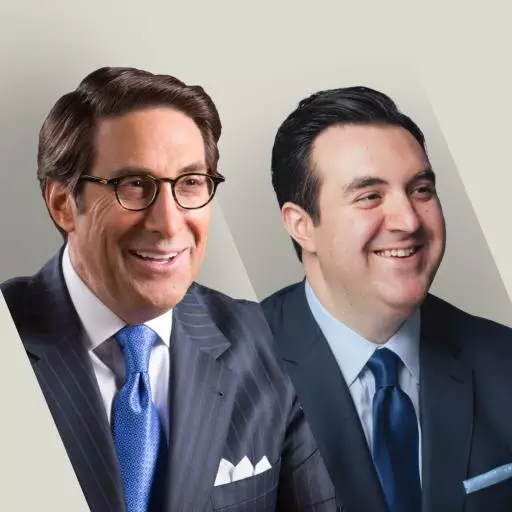
Logan and Jordan Sekulow are joined by Will Haynes and ACLJ Attorney Ben Sisney to discuss the War Powers Resolution vote in the House.

Announcer: On today's show, House Republicans flip on President Trump on the war in Iraq. Keeping you informed and engaged, now more than ever, this is Sekulow. We want to hear from you. Share and post your comments or call 1-800-684-3110. And now your host, Logan Sekulow.

Logan Sekulow: At 1-800-684-3110, covering the news of the day and some really interesting ACLJ work. If you have children, I think this is something you need to stay tuned into what's going on in the world, and this is something that we're getting involved in. It's going to be an interesting one. We're going to cover that coming up in just a little bit. Jordan's in studio. Will, obviously, in studio. We're going to have a good show.

Later on, Ben Sisney from the ACLJ in Washington, D.C., is going to be joining us, one of our attorneys here. But we are covering the news that happened where you may have seen the headline. We're going to break down what it actually means when you had Republicans in a bipartisan effort, if you will, vote to end the war in Iran. You may have seen that. This was sort of, I guess you'd say, a ceremonial vote in some way, Will, because there's not a lot really that can get done.

Will: Well, we'll see what happens when it gets to the Senate and what kind of language goes there. But it's also not overwhelming enough that it would override a presidential veto. It is still something that would have to go to the President's desk. It's not like all of Congress has decided to turn on the President and say, "We're done with this war."

Here's the headlines though, you're seeing, and so we thought it'd be interesting to break it down and tell you what really is going on. Because this is NBC News: House votes to rebuke Trump over war with Iran. And it is technically correct. They did pass a symbolic War Powers Resolution over the objections to the war in Iran. But it's only four Republicans that broke with the party that went over there.

You can kind of expect one of them, Thomas Massie, that broke with Republicans and decided to vote with Democrats to rebuke him. He has been very vocal about his opposition, and he's on his way out, so he has no reason to vote the other other way. The other three members of that four are Tom Barrett from Michigan, Warren Davidson from Ohio, and Brian Fitzpatrick from Pennsylvania, someone who's been antagonistic to the President on many issues as well.

The press is going to run with this and make everyone think the House has turned against the President. It's this rebuke of the President. And yes, on paper, it is that. But I think, Jordan, even where I want to take this conversation even broader is how important the midterms are. Because they are also going to use anything the House does, even if it's a rebuke of the President, as a propaganda piece in the media to try and make the world think that even his own party has turned against him.

Jordan Sekulow: Yeah. When it's Thomas Massie, we know Warren Davidson from Ohio. He's very conservative. Not quite a Massie figure, but he has that view that if you're going to war, you need a resolution. That's just his constitutional view. He's an attorney and I believe he may even be a former judge. So that's kind of his view of the originalist kind of saying, "Why did we get around from that?"

I can respect that. I disagree with that based off of history that we've allowed President after President to do this. But the key is these headlines are ridiculous. NPR saying the House passes War Powers Resolution in this bipartisan vote. It sounds like the entire House of Representatives. And then you read the small print and you do the math, and you're talking about four Republicans, three of whom actually vote against the President regularly.

Some of them, like I just said, like Massie, are upset, angry, and on the way out. Warren Davidson, he would be—this would probably be one of the rare times he's voted outside the party on an important vote. He's pretty much been with the President. But look, there is a lot of conversation around the war in Iran. We understand that. It's how united the Republican Party is in support of President Trump. Even in an election year, 100 percent of Democrats voted, all that were there. We always get these goofy numbers during election years because many of them like to skip votes that are kind of meaningless but could be used against them in media.

Logan Sekulow: We want to hear from you. What do you think about this? Of course, the war in Iran is ongoing. We do know there also was a ceasefire called between Israel and Lebanon, which was an interesting move. We could talk about what that means. President Trump was even asked, "What does a ceasefire look like?" And his ceasefire was like less shooting. It's one of those comedians who said there's a ceasefire war. The war could be called ceasefire at this point because we know in the Middle East, things are always a little bit more heated.

Will: When you look at this vote, one, I think it's also interesting that the Democrats finally got enough Republicans to join them to pass this. They've been trying to do this for a while. But at the end of the day, it is in a ceasefire right now because of the negotiations that are ongoing.

The military is responding to attacks and missiles and things, but they are currently in the stage of negotiation. They would never say that if Iran fires a ballistic missile towards a U.S. vessel, no matter where it is in the world, you can't shoot it down.

Jordan Sekulow: I think we have never addressed this, which there was a lot of controversy around the holidays, whether it was the Jewish holidays, the Christian holidays, or the Muslim holidays about the religious sites being closed during that time. They reopened, by the way. Israel is kind of back in business, if you will.

So that whole narrative of they were controlling Christians from getting in—look, what did that prove? That proved that all of that was actually true. They were trying to protect people. And here, when they hit a ceasefire about a month ago, they reopened all those holy sites which again had not been open. Did you see that in the press? No, you didn't see that covered anywhere. I actually had to go look. I looked it up last night.

Will: Once again, you see for a vast majority of the Middle East, things are kind of back to normal as far as their day-to-day lives, except for places like Kuwait that their main airport terminal got struck by both missiles and drone fire. You can see the video, actually people were in the airport that were killed. There were 60 injured. Once again, I know people that are in Kuwait that are having to deal with the issues of that surrounding the airport travel when it comes to the fact the main terminal at their international airport was struck in the middle of Kuwait.

But when you look at all of this and you look at what the Democrats do, they are clearly trying to do this as a posturing thing. They finally got it across the finish line here in the midterm year. They are trying to make it a midterms issue. They're also trying to show that they can stand up to the President. They're going to run on this regardless of the outcome. At the same time, it is kind of like, okay, we are in the middle of these negotiations and ceasefire.

Do they really want there to be no leverage over the Iranians in these negotiations? That's kind of what pushing this at this time means. It also goes to show you they don't believe that this is actually going to have any effect. It shows that they know it's symbolic. They know that doing this is going to give them the headlines and the attack ads they need for the midterms, but they know it's not really going to put any real limitations on the President at this point.

Jordan Sekulow: Right. This is again, this is a political vote. The truth is we're at the midst of settling this. The President isn't trying to provoke Iran. He's said, "Listen." And I think the Lebanese example is perfect. How great would this be that Hezbollah is out of Southern Lebanon and is no longer a threat not to just the cities and towns like Safed and others that are right on the border there, but also for Haifa, which was in range and their oil and all the shipping.

That was in range for Hezbollah very easily. Now, Iran could hit Haifa with ICBMs, but when you had a paramilitary force that could use much cheaper weapons to do so, the missiles always rained down in the north. It's been like you talked about, it was impossible to keep some places open because of the amount of incoming.

So this is really what I'd like to say. It's up to the Lebanese government to say, "We're going to allow Lebanese military and our forces to get into direct conflict with Hezbollah." So are they willing to risk Lebanese lives to stop Hezbollah from continuing to fire on Israel?

Will: And I think we should read from this statement, because this is a joint statement of the United States of America, the Republic of Lebanon, and the State of Israel on the latest high-level trilateral meeting.

Jordan Sekulow: Which I think that actually shows—remember when we're trying to differentiate the way that Israel responds to different countries or different governments, it's not unilaterally the same where you're dealing with Lebanon is not the same as dealing with Hamas. It's not the same with dealing with Iran. These are different nations, some of them funded and controlled by the same entities, but it is different.

Now, the fact that even Hezbollah within their own government have people within the Parliament of Lebanon makes it more difficult and historically has made it more difficult because Hezbollah had a lot of control over the government. For a while, they de facto controlled the entire country of Lebanon through the political arm as well as the southern portion of the country. But even the fact that we are now, as this joint statement notes, it was the fourth high-level trilateral meeting between the U.S., Lebanon, and Israel.

That in and of itself in modern history is historic because of the tension that Lebanon had internally. So the fact they're even talking with Israel is a historic thing. But you listen to this. It says, "As a result of the U.S.-led negotiations, Israel and Lebanon agreed to the implementation of a ceasefire. The ceasefire is contingent on the complete cessation of Hezbollah fire and the evacuation of all Hezbollah operatives from the South Litani sector."

So right there, the governments are joining together, but they are also putting the pressure on Hezbollah, which is one of Iran's—at this point, Iran's probably strongest remaining proxy. The Houthis have kind of stayed out of things.

Jordan Sekulow: The Houthis are not nearly as organized as Hezbollah, plus they also try into like govern and take over Yemen, which has not completely worked out for them. So the Houthis is one issue. But really, Hezbollah's been a long-term issue.

If we want a ceasefire, that means the Lebanese military has to go in and force that Hezbollah evacuation. I don't know if we've had any statements yet from Hezbollah. I don't know if they've commented. We need to check. I doubt so yet, but it's got to be coming. And so they are going to play a game of chicken, I have a feeling, which is Lebanese military, you know we're better than you. We're better paramilitary force.

You're going to come to the cities we built, that we built for warfare so that when Israel had to do a land invasion, it was basically like walking into a booby trap on every corner. It's an empty city. We've all seen it that have been to northern Israel. The question is, are the Lebanese people going to clear out these evil Lebanese terrorist groups, which would be great for their country? Because there are a lot of people that would love to visit Beirut if they knew that half of the city wasn't controlled by a terrorist organization.

Will: Beirut used to be the Paris of the Mediterranean. It was referred to as such a beautiful place. A lot of Europeans would travel there and it would be wonderful to get back to that. But when you also hear some of this other language, Israel and Lebanon reaffirm they have no hostile intent toward one another and committed to continuing direct negotiations to build confidence, resolve all outstanding issues, and work toward a comprehensive agreement between the two countries. I mean, this is Abraham Accords with Lebanon. This is a very big deal beyond the Iran deal.

Jordan Sekulow: Joint peace with Israel to take out Hezbollah in another Sunni Muslim country? This is huge. But it only works if the Lebanese do their job. I don't want to keep confusing people because it's tough. The reason why—and we weren't talking about this a lot—the IDF was right outside Beirut. They were about to take Beirut in just the last few days.

Beirut, the Paris of the Middle East, was about to be taken over by the Israelis for the second time in their history. They've held for this ceasefire, but now the Lebanese have to risk their lives to do something that they should have done 25 years ago, which is rid their country of this proxy from Iran who can't keep a leader in for more than 24 hours before they meet a certain death.

Logan Sekulow: We know with Iran, even when there's uprising, it's easier said than done in terms of getting these groups out of power. This is Hezbollah versus the Lebanese military. The Lebanese military would be taking significant casualties. So it's whether they decide this is the time.

Phone lines are open for you at 1-800-684-3110. I do want to let you know, in the next segment, you're not going to want to miss this. If you're a parent or a grandparent—my kids are gamers, Jordan's kids, video games have taken over our culture, as they should since we were little kids, but things have changed rapidly.

And we are actually getting involved pretty directly in a very interesting way. So if you or your kids are playing a lot of these games that have chat functions and features, you're not going to want to miss this next segment. It's really interesting how we're getting involved. So stay tuned for that.

With that being said, I do also want you to get involved with the ACLJ today. When you hear about this next thing that we're doing here in the next segment—I'm just teasing—you're going to say, "How can I get involved?" Well, you can become an ACLJ Champion. I want you to do that right now at a donation level of any kind. We designate you as an ACLJ Champion.

If you give on a monthly recurring basis, just opt in when you're making your donation or go directly to aclj.org/champions. You can do that today. Again, become an ACLJ Champion if you can. There's a lot of great free content available. Nothing's behind a paywall, but it's only because people like you support the work of the ACLJ. We can go through even some of the list of things that we are getting to other than this big issue coming up in the next segment. We'll break that down coming up, but we do want to hear from you once again, 1-800-684-3110. If you're on YouTube right now, let me know where you're watching from. Love to see those comments and hit that thumbs up. I'd appreciate it.

Welcome back to Sekulow. We are joined by Ben Sisney, ACLJ attorney out of the Washington, D.C. office. Ben, I'll let you set this up because this is a very interesting one. Again, if you're a parent or a grandparent, you're going to want to listen to this as your kids, likely, are like many of ours, are gamers and love video games and love all the different things that come with it.

But some of the stuff that comes with it is not necessarily positive. We always want to make sure you're paying attention to what your kids are playing and getting involved in. And we know there's always been controversy that has come out of the game Roblox. It has been a huge deal. Obviously, it's become—it's a massively successful game. I think it's always in the top three games for players and largely aimed at children. But there's been some controversy, a lot of different controversies. But this one, the ACLJ is getting involved in directly, Jordan.

Jordan Sekulow: Yeah, that's right. So just about I think it was a month ago—Ben might correct me, but time is flying right now, especially when you hit summer with kids. And listen, folks, I'll say this right now. We're talking about Roblox. A lot of your kids use it. I'm not trying to shame anybody because all three of mine do too.

And we're constantly trying to balance the thing of they have their friends get to join them and play and it's kind of a learning game and a building game, but it's also a little bit of a wild, wild west, which is what any kind of new web program is. And just about just around a month ago, Ben, we had hosted some families, including the family that's signed on publicly here, who have had children that were victims, killed in school shootings.

And when they saw this, they wanted to do something about it. And when we were working with them, we said, "Well, we think you need to go to these companies directly, potentially work with the government as well." But as Will said, as Logan said too, Ben, if we can get the companies to do the right thing, we don't have to worry about government censorship or overreach in what is still a kind of wild, wild west in itself, which is the changing internet all the time and gaming platforms that kids' ability to use it. But Ben, tell people what it was like to have those families there. I know I joined them by conference call and then to now take this on.

Ben Sisney: Yeah, it's weighty, Jordan. It's heavy. And I know that no one over there needs me to tell you that. This is about as serious of the subject matter as it gets. And when you're talking about children's safety and of all places, schools, and again, we're all parents, so we have that extra layer of understanding.

It is a powerful opportunity. Of course, we don't get to do that and be there and have those meetings and work on these things advancing justice and truth and also protection. We can have both. And to advance these things—I mean, we have regular cases and we've filed lawsuits and represent plaintiffs in all kinds of situations, but not every one of those is a case where you file a lawsuit.

And this is a good example of the other kind of work that we do, particularly around here in Washington, D.C. and on the Hill and using the opportunity we have to speak into these things and to stand for truth, to stand for parental rights. Because you've got to understand too, and for our audience, is a lot of the knee-jerk reaction here is, "Well, the First Amendment and you should be able to do what you want and all that kind of stuff."

And that's great, and I have a libertarian streak, I can appreciate that. At the same time, a lot of these platforms had either, whether intentionally or not, I—it's not mine to say, but they went around parents. And we stand strongly and always have here at the ACLJ for parental rights and parental protecting and all of that.

And these platforms were presenting a threat to that. And to have the opportunity to work with and to represent parents of a child who was shot and survived miraculously in that shooting in August in Minnesota and to be able to link arms with them to proclaim this message to demand sunlight and accountability and how do we make sure this doesn't happen again is among the greatest honors.

Logan Sekulow: And Ben, let's not bury the lead here too because I think there is the very specific thing that we're getting involved in because we know, as you said, that these tech companies, as much as they provide good for a lot of people, they make it very difficult for parents to have control. We know that. But we're getting involved in a very specific way with Roblox.

Ben Sisney: That's right. And people can read this also up at aclj.org. There's a new article and it's titled "ACLJ Joins Clients Whose Daughter Was a School Shooting Survivor in Condemning Roblox Simulation Game Depicting Sandy Hook-Style Attack." There was a game within the game that allowed individuals to participate in a first-person shooter-style simulation depicting the Sandy Hook massacre.

It was a school shooter simulator game where you were the school shooter. What we're doing here, and this is once again, this goes into the protection of—sometimes you don't need the government, but you need people to do the right thing. And we can go and represent these families. Roblox did take that game down, but what we want is more information. We want to understand how many people were able to access that. What protections going forward are they going to put in place?

And this helps everyone. It helps the game continue. It helps families understand and feel confident. But Ben, it also helps keep the conservative ideals alive of not needing the government censorship if you call on these companies to do the right thing.

Will: That's absolutely right. And to go back to the principle that our founders articulated, our system and our freedoms and everything about us really only lasts as long as there's a basic morality of the people. And we can look around and see where we are today, but we still do have a basic morality, I believe, and we need to feature that and foster that. Here's an example of that, is that if you don't need the government to do something if people do the right thing on their own.

And for companies to hear from parents, particularly parents of victims of survivors of the kind of violence being depicted in this platform, I think, combined with our voice, I think this is going to make an impact. And that's the plan. That's the whole point. Freedom and liberty, to protect it, you have to do the right thing voluntarily, or else the government just gets bigger and bigger.

Ben Sisney: So let's talk about what we're actually doing here because I think people need to have an understanding of the ask first. Yeah, we're going to Roblox corporate. Roblox is its own independent company, gigantic, by the way. If you're not familiar with it, we're talking about millions and millions of players each and every day. I would be shocked if it's not even well above that, one of the top-rated video games.

And again, a lot of it's user-generated content. You're building this content. So I do want to make sure it's clear, Roblox themselves, the company, did not go in there and say, "Let's build a school shooter." But what they did was allow it still to somehow get into the platform. So what we're asking is, how long did it take for you to remove it? What was the impetus for you to remove it?

Did you just find out you have people, and how in the future are you going to stop these things from being able to exist for so long that it became a story in the news? I mean, so it existed long enough to be a story, then they get copied, so it's a different way to find it. You can find it by, again, codes and things. Is that done? Is it really still off the platform? And then what can you do in the future to do something?

Yeah, and this has 20 years, by the way, this company has existed. Not like Roblox is a brand new company trying to learn what to do here. They've been around for decades at this point. But I do think what's interesting is why—and we've only got a minute left here—why though would someone like Roblox—and I'll kick this to anyone—why though would someone like Roblox want to respond and be involved in this?

Logan Sekulow: Well, because the ACLJ is bringing—is talking to our friends in Congress with witnesses like families whose daughters were shot or killed, and then coming to the Congress and saying, "You know what, you need to hold a hearing on this and subpoena the CEO of Roblox." Would he like that, or she like that, to talk about why they don't stop school shooting content on their platform?

So they have this path, and there is a second path. That's why the ACLJ government affairs team exists as well. It shines a light on them too. It keeps the attention on it. It lets it not be just swept under the rug. It keeps the attention on it and keeps eyeballs on it. Just think of the eyes and ears hearing this right now. Hey Ben, yep, run out of time here. We'll be right back. Second half-hour Sekulow coming right up. Don't go anywhere or join us on aclj.org.

This transcript is provided as a written companion to the original message and may contain inaccuracies or transcription errors. For complete context and clarity, please refer to the original audio recording. Time-sensitive references or promotional details may be outdated. This material is intended for personal use and informational purposes only.

Featured Offer

Join Petitions & Committees
Follow the latest petitions from ACLJ and sign-up or start your own! See link below for the latest and most popular.

Past Episodes

This ministry does not have any series.

About SEKULOW

The American Center for Law and Justice (ACLJ) focuses on constitutional law and is based in Washington, D.C. The ACLJ is specifically dedicated to the ideal that religious freedom and freedom of speech are inalienable, God-given rights. In addition to providing its legal services at no cost to our clients, the ACLJ focuses on the issues that matter most to you — national security, protecting America's families, and protecting human life.


About Jay Sekulow

Dr. Jay Alan Sekulow is Chief Counsel for the American Center for Law and Justice (ACLJ), a legal and educational not-for-profit organization that focuses on constitutional law, the defense of freedoms of speech and religion, and international human rights. He is also Chief Counsel of the European Center for Law and Justice (ECLJ) based in Strasbourg, France, and the Slavic Center for Law and Justice (SCLJ) in Moscow, Russia. The ACLJ also has an affiliate office in Jerusalem, Israel.

An accomplished and respected judicial advocate, Sekulow has presented oral argument before the U.S. Supreme Court in twelve cases in defense of constitutional freedoms. Several landmark cases argued by Sekulow before the U.S. Supreme Court have become part of the legal landscape in the area of religious liberty litigation; these cases include Mergens, Lamb's Chapel, McConnell v. FEC, Operation Rescue v. National Organization for Women, and most recently Pleasant Grove City v. Summum.

In 2009, Townhall Magazine named Sekulow to its "Townhall of Fame" and recognized him as "one of the top lawyers for religious freedom in the United States." In 2007, the Chicago Tribune concluded that the ACLJ has "led the way" in Christian legal advocacy. In 2005, TIME Magazine named Sekulow as one of the "25 Most Influential Evangelicals" in America and called the ACLJ "a powerful counterweight" to the ACLU. Business Week said the ACLJ is "the leading advocacy group for religious freedom." Sekulow's work on the issue of judicial nominees, including possible vacancies at the Supreme Court, has received extensive news coverage, including a front-page story in The Wall Street Journal. In addition, The National Law Journal has twice named Sekulow one of the "100 Most Influential Lawyers" in the United States (1994, 1997). He is also among a distinguished group of attorneys known as "The Public Sector 45" named by The American Lawyer (January/February 1997). The magazine said the designation represents "45 young lawyers outside the private sector whose vision and commitment are changing lives."

Sekulow brings insight and education to listeners daily with his national call-in radio program, Jay Sekulow Live!, which is broadcast throughout the country on nearly 850 radio stations. Sekulow also hosts a weekly television program, ACLJ This Week, which tackles the tough issues of the day. He is also a popular guest on nationally televised news programs on ABC, CBS, NBC, CNN, FOX News, MSNBC, CNBC, and PBS.

Contact SEKULOW with Jay Sekulow

Mailing Address
American Center for Law and Justice
PO Box 90555
Washington, DC 20090-0555c
Legal Helpline
Phone: 757-226-2489
Fax: 757-226-2836
Member Services
757-802-9160
Radio Call-in Number
1-800-684-3110
(from 12-12:30 PM EST/EDT.)
Petition Call-in Number
1-877-989-2255