

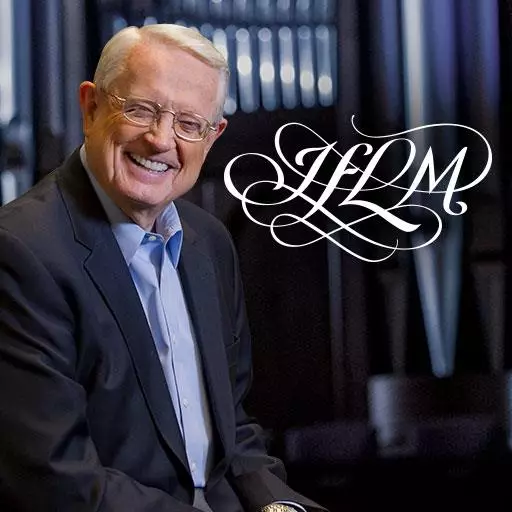
And the Walls Came Tumbling Down, Part 1


Have you ever run into a wall with no way around it? After Haman’s downfall, the decree against the Jews still stood. The situation was desperate . . . until Esther boldly petitioned the king again, and he granted her request.
The king issued a new edict allowing the Jews to defend themselves, saving them from their enemies.
Join Pastor Chuck Swindoll as he reveals from Esther 8 how God breaks down walls, melts hardened hearts, and rewrites what seems unchangeable. Trust God’s power to inspire you and help you overcome your toughest battles.
Bill Meyer: Some walls look like they'll stand forever. A stubborn will that refuses to bend. A damaging document that seems impossible to reverse. A scene so dark you can't imagine light returning.
But eventually, the walls fall, and God proceeds with His sovereign plan. Today on Insight for Living, Chuck Swindoll walks through an amazing sequence of events in Esther Chapter 8, providing proof that no heart is too hard for God to change, no writing so permanent He can't reverse it, and no scene so dark He can't brighten it. Chuck titled his message, "And the Walls Came Tumbling Down."
Chuck Swindoll: There is no wall that will not ultimately fall. Even though it may be imposing and long-standing, it will fall. Even though it may be as intimidating as an angry giant or as silent as thin air and just as invisible, like the stubborn will of a person or the bitter spirit of an individual, it will fall. All walls finally fall.
Anyone who knows a little history knows how true that is. Everywhere you go it seems, especially on the continent and into Europe, you find walls that once were so formidable and strong and intimidating and high. People in their day thought they would never fall.
And yet to this day, right into the Middle East and into Egypt, the archaeologist's spade continues to unearth walls that have fallen. Great empires that looked like they would go on forever have fallen. Egyptian walls, Grecian walls, Roman walls, French walls, German walls.
Speaking of German walls, the cry can be heard all through the streets of Berlin. "Freiheit! Freiheit!" At last, freedom at last. Songs that are usually reserved for soccer matches and birthday parties are now being sung in the streets near the historic Brandenburg Gate and Checkpoint Charlie.
In rough translation, "Such a beautiful day should last forever," they sang day and night. One man shouts, "Remember the ninth of November!" Reminds me of when I was a little boy. "Remember the Alamo!" Not that I was living at the time, but I was in Texas at the time.
"Remember the ninth of November!" while another man is hammering away, beating on the wall and handing out fragments of it to the crowd. And they are saying all over the city, "The wall is gone! The wall is gone!"
One rather hardened, retired Air Force colonel, who flew bombing missions over Berlin in the mid-forties, watched it all and said, "I'm a hard old retired colonel, but I had tears in my eyes to see people standing on a wall where once they would have been shot. I could hardly take it all in."
One radio station in West Berlin said, "This is Christmas, New Year's, and Easter all rolled into one." The remarkable thing is that the wall fell without a shot. Twenty-eight Cold War years it has stood and been a bloodbath. Not only dividing a city, dividing a country, but dividing a world. And the wall has come tumbling down.
I know, some of you skeptics are saying, "Another shoe will fall, you just wait." I know, but first, a wall has fallen. It has fallen. I look into the Scriptures and I see similar situations, and I find myself asking, "Why did we even have a wall in the first place? Why are there walls?"
I love the moving words of the late Robert Frost, who writes in one of his pieces, "Before I built a wall, I'd ask to know what I was walling in or walling out. And so should we."
Egypt should have asked what it was walling in and what it was walling out, and it didn't for 430 years while the people of the Hebrews lived in abject slavery until Moses came. And by the power of the living God, that wall came tumbling down.
A few years later, Moses was gone, Joshua was there. They were invading the Promised Land and they came to Jericho. There they were again. I've been singing all week long, "Joshua fit the battle of Jericho." I've been watching this thing on television. Sort of, kids think I'm a little weird, but that's okay, they've been thinking that for years.
And I think the walls came tumbling down. Jericho wasn't held by walls. The walls were as nothing in the presence of the living God. And Jerusalem's walls looked so formidable, so strong. They flew their own flag under numerous kings, but Nebuchadnezzar the Great dropped those walls so that the text reads not one stone stood on top of another. It fell down flat, à la Joshua 6:20. The wall fell down flat.
All walls finally fall. Nebuchadnezzar said it would never happen to him. His son Belshazzar was watching at a banquet finger-writing on the wall. And it said, "Your days are over, bud," sort of a loose translation. "You're finished." And that night, Darius the Great built another wall. Sixty-two-year-old Darius, the Medo-Persian empire. It will never fall until Alexander the Great came, who finally was overthrown in his kingdom by Julius the Great, the Caesars. What wall would ever stand like Rome walls? And they have all fallen. All walls finally fall.
Even our own. Even those built up against us, they fall. Remember the words of Corrie ten Boom? She said, "There is no pit so deep but that He is not deeper still." I thought this past week of a paraphrase: there is no wall so strong but that He is not stronger still.
All these things bring us to the little slice of history connected to the eighth chapter of the book of Esther, of all things. What would all of this have to do with Esther? Everything, really, everything. This is a chapter where a heart is so hard it seemed as though it would never change, and it changes. The wall of a heart comes tumbling down.
Where an edict that was set in concrete by the law of the Medes and the Persians, and it looked like because it had been imprinted with the signet ring of the king would never fall, that wall is tumbling down. And the scene, the Jews as they lived like people in concentration camps awaiting the final death knell promised by Haman, the scene is so dark, but God brightens it.
I think this passage is saying this: there is no heart so hard He cannot change. There is no writing so permanent He cannot erase. There is no scene so dark He cannot brighten. First, the heart. The heart.
On that day, King Ahasuerus gave the house of Haman, the enemy of the Jews, to Queen Esther. Now wait just a minute, can this really be? Remember Ahasuerus? The story begins with him. Go back to Esther Chapter 1. He is the first main character when the curtain goes up, Act 1, Scene 1. Xerxes, otherwise known as Ahasuerus, front and center.
It took place in the days of Ahasuerus, this was the Ahasuerus who reigned from India to Ethiopia. How vast, over 127 provinces. How powerful. In those days, as King Ahasuerus sat on his royal throne which was in Susa the capital, that tells you a lot right there. This man is powerful.
This is the man who, just the movement of his hands caused people to live or die. This is the man who decided in Chapter 3 to promote Haman, who hated the Jews, to the position of Prime Minister. This is the man who said to him, "Here, here is my ring," another way of saying, "Take my credit card. You sign for me. You pass the edicts."
Haman says to him in a period of time, "I have a plan where we will rid this kingdom of people who despise you and stand against you." And the king gives him his ring and says, "Sign the document." And the document is written, and it is nothing more than an extermination plan on hold. Within one year, the Jews will die. And dread swept over the city and across all 127 provinces because the king said it shall be done.
Chapter 8. This is the king who changes his mind. I mean, this is a man whose stubbornness can be compared to no other. And yet he is the one, of all things, who has listened to Esther's plea, who has seen to it that Haman, the recently appointed Prime Minister, is impaled on the gallows, this pole that is built 75 feet high near the home of Haman, upon which he had hoped to hang Mordecai.
This is the king who touches Esther with the golden scepter and says to her, "I care. I'm listening. I want to know what I can do." It is the one who gave the house of Haman to Queen Esther. There is evidence in extra-biblical literature, and I'm thinking here of Herodotus, that the property of condemned criminals reverted back to the crown. And so in this case, the property of Haman, a condemned criminal, now became Ahasuerus's.
But he doesn't keep it. He even gives Haman's estate to Esther, who in turn gives it to Mordecai. For Esther had disclosed what he meant to her, the verse concludes. The king took off his signet ring, which he had taken away from Haman, and he gave it to Mordecai, of all things. And Esther set Mordecai over the house of Haman. These are revolutionary events. And Esther spoke again to the king, fell at his feet, and wept.
What is my point here? I think it's clear. There is no heart so stubborn but that God cannot penetrate it, break through it. I think what it is saying is that there is no match for the living God. Hold your place and look at Proverbs 21, the first two verses. Will you do that? Living out in the lives of the people of Esther Chapter 8 is the principle of Proverbs 21:1 and 2.
The king's heart is like channels of water in the hand of the Lord. He turns it wherever He wishes. Every man's way is right in his own eyes, but the Lord weighs the hearts. Look at the verses. The king's heart, we would say in everyday language, is like mush. It's like soft clay in the hands of the Lord.
Would it be acceptable for you and your theology to imagine another name there besides "the king"? Be my guest. Someone that's giving you grief. Someone who represents a formidable presence. Someone whose face is on your dartboard. Somebody who haunts you and maybe even hunts you down. That heart of that person that to you is so hard and so granite-like is like mush and soft putty in the hand of the Lord.
The point is clear. There is no heart so stubborn that it becomes unbreakable in the hand of the Lord. Let me tell you a story. In another place and at another time in my life, I went through a dreadful experience with a person who decided to make me his enemy. I'm honest, as I am removed from it two decades, I still do not know why. It is a mystery. Nevertheless, it occurred.
And this individual decided to, whether he knew it or not, at least at beginning days, decided to make my life rather miserable. My every move was watched. Virtually every decision was questioned. My ministry was doubted. This person continued to apply pressure, sometimes to the point where I thought I would scream.
I don't know how much he said to others, I never asked. But I know he said enough to me to know that what was once a close friendship had degenerated. And he was determined that I needed... what? His presence? His bullying? His intimidation?
I became a little more than frightened when I realized he carried a gun. And on an occasion I recall being threatened by it. Usually people like that don't display their weapons. He liked to. I remember going home one Sunday and falling across our bed, not even taking off my overcoat that winter day, and crying till I could not cry another tear. He had a heart like King Ahasuerus. I know whereof I speak.
I'll share with you later how things changed, but the point I am making here is that you may have some such individual who is making it his or her delight to make your life miserable. You may work alongside them or you may have schooled with them or roomed with them, but they are dogging your steps. You may have once been married to them. There is no wall so strong that He is not stronger still.
If God can change the heart of an Ahasuerus... why didn't God give him a name like Johnson? Or Smith? If God can change the heart of a Xerxes, He can change any heart. Any heart. Listen to this, you who live your days intimidated and threatened, anxious over the falling of the next shoe. Listen to this. God is able to take the heart of whoever and change it, just like He could take the heart of this king.
Esther, verse 3, fell at his feet, wept and implored him to do something. "What's wrong?" Well, Haman may be gone, but the edict has still been written. And you know how it is with those edicts from Medo-Persia. Listen to Daniel 6. Three times we read these words: "Sign the document so that it may not be changed according to the law of the Medes and Persians, which may not be revoked" (Daniel 6:8).
"The statement is true according to the law of the Medes and the Persians, which may not be revoked" (Daniel 6:12). "Recognize, O king, that it is a law of the Medes and Persians that no injunction or statute which the king establishes may be changed" (Daniel 6:15). It is written, it will be done. Haman may be gone, the edict is still intact. It has been written, it will be done. The Jews will die in December.
So Esther weeps. It is a document that looks absolutely permanent. It is irrevocable. He extends the golden scepter, which is his way of saying, "Speak, I'm listening." Verse 5, she said, "If it pleases the king, and if I have found favor before him, and the matter seems proper to the king, and I am pleasing in his sight," what a wonderful way for a wife to speak to a husband, no extra charge for that.
"Let it be written! Let it be written to revoke the letters devised by Haman. Let it be written!" It's already written. But I'm pleading for revoking what has been written. "Let it be revoked," is what she's saying. Unheard of in the land of the Persians. She says in verse 6, "How can I endure to see the calamity which shall befall my people? How can I endure to see the destruction of my kindred?"
Look, you wonder if there is a wall so thick that God cannot penetrate. You wonder if documents written in that day, just as documents written in our day, are permanent ink. So the king said to Queen Esther and to Mordecai the Jew, "Behold, I have given the house of Haman to Esther, and him they have hanged on the gallows because he had stretched out his hand against the Jews. Now, here... here's the pen. Here's the stylus. You write to the Jews as you see fit."
Is that incredible? You write another law. You write another one. By the way, you think it isn't worth it to stand against wrong laws? You talk about a reason to stand in favor of life and against abortion. You talk about a reason to fight and to affirm truth, even though it looks like it will never change. Here's an example. He says to her, "You write it as you see fit."
Furthermore, he says, "Seal it with the king's signet ring, for a decree which is written in the name of the king and sealed with the king's signet ring may not be revoked." This one is going to stand. This is it. Count on it. Verse 13: "A copy of the edict to be issued as law in each and every province was published to all the peoples so that the Jews should be ready for this day to avenge themselves on their enemies."
The Jews are now protected. They now have their own defense provided by the Persian law. No one can touch them. The couriers hastened and impelled by the king's command went out riding on the royal steeds, and the decree was given out in Susa the capital.
Bill Meyer: What a picture. The king hands the pen to Esther and says, "You write it." An irrevocable decree rewritten, a death sentence reversed. Only God could engineer something like that. And He did it again on a hill outside Jerusalem, where the ultimate decree against you and me was nailed to a cross and canceled forever.
This is Insight for Living. We're coming near the conclusion of Chuck Swindoll's 12-part biographical study on Esther, a woman of strength and dignity. While there's still time, we encourage you to take advantage of the bundle of resources that we've assembled for this study. It includes the Searching the Scriptures Bible study workbook, Chuck's full-length biography of Esther, and the complete collection of 12 sermons on CD. To access this bundle right now, go to insight.org/offer.
Chuck, we're coming up on another milestone here at Insight for Living. On June 30th, we'll close the books on another ministry year and step into our 47th year of ministry. At moments like these, it's critical that we remain laser-focused on the One we serve.
Chuck Swindoll: When Paul arrived in Corinth, he was fresh off a rough stretch. He'd just come from Athens, where the philosophers basically laughed him off the Areopagus. If you've ever poured everything you had into something and watched people shrug and walk away, and if you've ever had a message fall completely flat, you know something of how Paul felt stepping into Corinth.
And what did he decide? Quoting now: "I determined to know nothing among you except Jesus Christ and Him crucified." He didn't concoct a new strategy, not a better presentation, not something more sophisticated, more polished, more likely to impress the intellectuals. Just the cross.
Here's what 60-plus years of preaching has taught me. The moment I start trying to be impressive, I've already missed the point. The goal has never been for you to walk away thinking, "What a great communicator." It's for you to walk away thinking, "What a great Savior." There's a world of difference between those two.
That's the heartbeat of Insight for Living, always has been, always will be. I want every program, every single one, to be a place where someone has a real encounter with a real Savior. Not a religious experience, not a motivational moment, a genuine life-altering collision with the cross we proclaim.
As we close out our fiscal year on June 30th, I want to ask you something. Not to help us, but to consider the ministry you personally have when you invest in this broadcast. Your gift travels. It reaches languages I don't speak, countries I've never visited, and people who've never heard the message we take for granted. You send it, we broadcast it, and God does what only God can do. Would you give today? The cross is worth it, my friend.
Bill Meyer: To respond to Chuck Swindoll, you can choose one of several easy ways to give a donation. Many of our listeners prefer to send a check in the mail. If that's you, address your envelope to Insight for Living, Post Office Box 5000, Frisco, Texas, 75034.
When you give today, we'll be saying thanks by providing a brand-new booklet from Chuck. It's called "The Cross We Proclaim." This isn't a booklet that elevates the power of the human spirit. In fact, it's one that openly admits our personal failures, our poor decisions, and the things we'd rather forget.
Chuck calls it the pit. In "The Cross We Proclaim," you'll discover why Jesus, through the cross, doesn't ignore your past but redeems it. A copy is yours with a gift to support Insight for Living. Our address again is Post Office Box 5000, Frisco, Texas, 75034. You can also call us at 800-772-8888 or give online at insight.org/donate.
I'm Bill Meyer. Join us when Chuck Swindoll continues his biographical study of Esther, a woman of strength and dignity, Monday on Insight for Living.
The preceding message, "And the Walls Came Tumbling Down," was copyrighted in 1989, 1990, 1997, 2005, 2018, and 2026, and the sound recording was copyrighted in 2026 by Charles R. Swindoll, Incorporated. All rights are reserved worldwide. Duplication of copyrighted material for commercial use is strictly prohibited.
Featured Offer

Plunge into the story of Esther with our spiral-bound workbook, CD or MP3 audio set, and Chuck’s biography book. Live in hope for God’s perfect plan for you even when you cannot see it unfolding.
Past Episodes

Video from Pastor Chuck Swindoll
Featured Offer
Plunge into the story of Esther with our spiral-bound workbook, CD or MP3 audio set, and Chuck’s biography book. Live in hope for God’s perfect plan for you even when you cannot see it unfolding.
About Insight for Living
Join the millions who listen to the lively messages of Pastor Chuck Swindoll, a down-to-earth pastor who communicates God’s truth in understandable and practical terms, with a good dose of humor thrown in. Chuck’s messages help you apply the Bible to your own life.
About Pastor Chuck Swindoll
Charles R. Swindoll has devoted his life to the accurate, practical teaching and application of God's Word. Since 1998, he has served as the founder and senior pastor-teacher of Stonebriar Community Church in Frisco, Texas, but Chuck's listening audience extends far beyond a local church body. As a leading program in Christian broadcasting since 1979, Insight for Living airs in major Christian radio markets around the world, reaching people groups in languages they can understand. Chuck's extensive writing ministry has also served the body of Christ worldwide and his leadership as president and now chancellor of Dallas Theological Seminary has helped prepare and equip a new generation for ministry. Chuck and Cynthia, his partner in life and ministry, have four grown children, ten grandchildren, and six great-grandchildren.
Contact Insight for Living with Pastor Chuck Swindoll
customerservice@insight.org
http://www.insight.org/
Insight for Living
Post Office Box 5000
Frisco, Texas 75034
USA
1-800-772-8888