

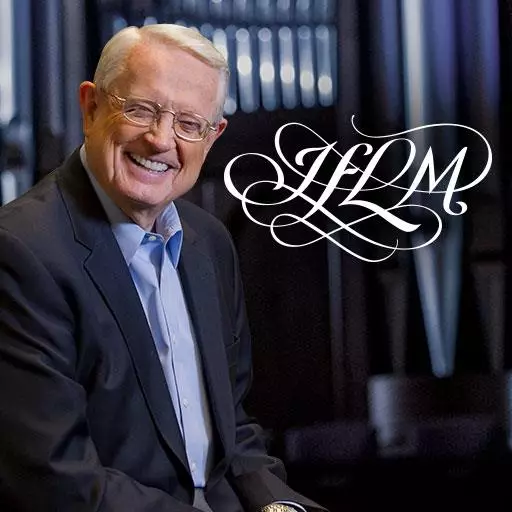
What Does Being "Filled with the Spirit" Mean?, Part 1


Christians often sense a gap between the life they’re living and the life Scripture describes—a Spirit-empowered life marked by joy, wisdom, and self-control. The problem is rarely a lack of desire. It’s a lack of understanding about what “being filled with the Spirit” actually means.
From Ephesians 5:15–21, Pastor Chuck Swindoll explains Paul’s command to “be filled with the Spirit”—what it is, what it is not, and what it looks like in daily life through speech, song, thankfulness, and mutual submission.
Stop settling for a half-lived Christian life. Learn what it means to be controlled by the Spirit and walk each day in the fullness He provides!
Bill Meyer: Most Christians have never been taught what the Bible says about being filled with the Holy Spirit. So we tend to look in all the wrong places or chase the sensational, when the answer has been there all along, tucked quietly in a single verse of Ephesians 5.
You see, God never intended his children to pursue empty promises. His Word offers something far better, tangible, trustworthy access to real power for everyday life. Today on Insight for Living, Chuck Swindoll answers the essential question, "What does being filled with the Spirit mean?"
Chuck Swindoll: We are thinking about how great our God really is these days. For four Sundays, we spoke of the character of God, and we focused our time and thought on four particular characteristics of our Heavenly Father. And then we turned to the cross of Christ, and we addressed the benefits of what our Savior accomplished when he died in our behalf on that cruel cross as the climax of his reason for coming to this earth.
But our Father and our Savior have not left us without a Comforter. And though the work of the Holy Spirit is not as well-known or well-articulated or defined as the work of the Father and the Son, we do need to be aware of what the Spirit of God does and the role he plays. Today there is the all-important subject of his filling.
Very few Christians are taught the accurate teaching of Scripture regarding how to be filled with the Spirit. So we look for all other ways to make that happen, among them sensational ways, which we'll say more about later. But tucked away in the fifth chapter of Ephesians is the clear and unmistakable direction given by the Spirit of God in Scripture for us to hear and to heed, and this section has to do with the filling of the Holy Spirit.
This is not to be confused with the regenerating work of the Spirit, or the sealing work of the Spirit, or the baptizing work of the Spirit. This is the filling, and we'll explain that further as we are together today. Ephesians 5, I'll begin the reading at verse 15 down through verse 21.
"Therefore be careful how you walk, not as unwise men but as wise, making the most of your time, because the days are evil. So then do not be foolish, but understand what the will of the Lord is. And do not get drunk with wine, for that is dissipation, but be filled with the Spirit, speaking to one another in psalms and hymns and spiritual songs, singing and making melody with your heart to the Lord; always giving thanks for all things in the name of our Lord Jesus Christ to God, even the Father; and be subject to one another in the fear of Christ."
Bill Meyer: You're listening to Insight for Living. To dig deeper into today's topic on your own, be sure to purchase our Searching the Scriptures Bible study workbook by going to insight.org/offer. Chuck titled today's message with a question, "What Does Being Filled with the Spirit Mean?"
Chuck Swindoll: Jesus said that he would send the Spirit of God, and in sending him, he would also provide power. Well, some have taken that word "power" and made it, as my prof used to say, walk on all fours. Now there's power evangelism, whatever that is. There is power prayer, power preaching, power healing, power encounters, power ministry for every size and shape there may be. You can even wear power ties to carry out your power ministry on power Sundays.
If there's ever been an overused, abused word, it's "power." The Spirit of God simply provides a normal Christian life for us, an everyday, believable, authentic, Christ-like life lived out from one day to the next. I sometimes like to compare it to a normal, authentic marriage. I know there are some of you thinking about marriage today. We come back to reality.
So let me clarify. A normal, everyday, good, solid, reliable marriage is not made up of soft romantic music filling rooms full of scented candles every day. It is not sitting for hours in a bubbly hot tub together, kissing and hugging one another. After a while, both of you can't even fit in the same tub, and you don't want another one in there with you when you are there.
It is not your wife wearing two yards of Saran Wrap and a string of pearls as she crawls in bed at night. That's not the normal plan. It is not soft-footed waiters serving you a hot cup of tea as you sit on your Maui Lanai watching the surf crash against the sands of the seas. The normal married life is not getting love letters from your spouse several times a week.
It is not your husband getting ready for a shower, and as he takes his shirt off, you think of the model on the cover of GQ magazine. That's not the normal kind of husband you would expect. It's not a house full of teenagers anxious to do the supper dishes each evening, or thrilled to be told to keep their rooms spotlessly clean, or delighted to bring their grade point average up to 3.9, hopefully 4.0 before they graduate. That's not normal.
The normal married life is not getting a mother-in-law with a face like Michelle Pfeiffer and a heart like Mother Teresa. That's not the normal mother-in-law. Well, what is normal? It is the authentic. It is the real. The normal marriage is everyday living from one day to the next, faithful to one another, counting on one another to be there when times are difficult and in some cases impossible to go on without the other person.
The normal Christian life is a lot like that. It is the enablement to live a life that those without Christ can't even imagine. It is, if you will, the power to control your tongue. It is the ability to clear and clean up your thoughts. It is a way to guard you from temptation so that you don't plunge in and fall into one temptation after another.
The authentic Christian life offers you hope beyond the normal drag of the flesh. These two are always in opposition to one another. Think of them as such. The spirit life, the flesh life. The spiritual walk, the carnal walk. In order to enter the Christian life, let's compare it to buying a car. Two things are essential for you to enjoy the car that you buy. First is a set of keys.
The key lets you in the car. It'll help open the trunk or the glove box or even, once you're in, to lift the hood on the car. You can't enjoy the car without the keys. What the keys are to the car, conversion is to the Christian life. You do not enter the Christian life because you're born into a Christian family, or because you attend a church where the Bible is taught, or even because you learn verses from this book called the Bible.
You enter the Christian life through the key, Christ. John writes it this way: "He who has the Son, the Son of God, has the life. He who does not have the Son of God does not have the life." You either have the key that gets you in the car or you don't. So first is the key. The second thing you need, and you'll notice it soon after getting the car, is fuel.
Now you can't pull up to your garden hose and turn on the spigot and put the hose in the tank and save money from going down to the service station and put water in your tank. No, the engine is meant to run on a fuel. To the amazement of some people, and certainly I'm one of them, a number of people in the family of God think they can live their life out in the flesh and everything will run along as God planned it.
When you operate in the flesh, the engine shuts down. The goal is to operate in the Spirit. What the fuel is to the car, the Spirit of God is to the authentic normal Christian life. It is not a miracle a day to keep the devil away. In fact, someone has put it very well: if miracles were every day, they'd be called regulars. But they're miracles, and they rarely occur.
And by the way, your finding a parking space at Nordstrom's at Christmastime is not a miracle. Please, it's not. It just so happened a car pulled out and you pulled in. Hopefully. It's just that. Try your best not to make even the remarkable event miraculous. Miracles happen instantaneously and they lack anyone's ability to explain them.
I have a friend who had cancer of the tongue. He asked me to pray along with a handful of his friends, and we prayed for him. He had the X-rays. He took the X-rays to get a second opinion at Mayo's, and somewhere between the physician in Dallas and the physician at Mayo that examined the same X-ray, the cancer was gone.
No one could explain it to the point where the people at Mayo Clinic said, "These are not the right X-rays." They just couldn't explain it. Another example: God, for some sovereign reason and for his purpose, healed my friend of that cancer on the tongue. I have other friends I prayed for and they died with the disease.
A more common response is: it does take its toll on you and you are rarely miraculously healed. But sometimes, certainly God is able to do that. But that's a miracle. The spiritual life, the normal filling of the Spirit doesn't have anything to do with a miracle. It has to do with putting the fuel in the tank and engaging the gears and driving, carrying on your life.
Now look at Colossians chapter 2. Just before we get over to Ephesians, look at Colossians 2. That's one of the little four small letters in the New Testament. Galatians, Ephesians, Philippians, and Colossians. Look at this second chapter, verse 6. I love this verse because of its simplicity. "Therefore as you have received Christ Jesus the Lord." That's the key.
That's the key in the ignition that turns on the engine. That's the key that gets you inside. You do not claim to be a Christian if you have not received Christ Jesus the Lord. If you do, it's erroneous. He who has the Son has the life. He who has the key can start the car. Just as you have received Christ Jesus the Lord, that's the key, now the fuel: "so walk in Him."
That's the Spirit of God at work, fueling, engaging your life in an authentic manner. The longer I live, the more I place a high priority on authenticity. I don't know of anything that impresses the lost world more than this combination: an authentic life and a joyful attitude. Those things are contagious.
How could you be this real and how could you be this joyful in a world like this in which we live? The way you live has nothing to do with the circumstances around you. That's what makes it such a phenomenal life to offer individuals. Now turn from here to John chapter 14. Let's do a quick little review on where we've been.
John 14, remember, is the conversation that followed the Last Supper. Jesus is with his faithful eleven. Judas has left. Jesus is teaching them about the life yet to come. He tells them in John 14 verse 16—remember this is at the Last Supper, he's going to be with them only a few more hours—"I will ask the Father, and He will give you another Helper, that He may be with you forever."
See those words? "That He may be with you forever." Down in verse 17, we read: "He abides with you and will be in you." So the promise is: when you come to Christ, now that we are at the time of the Spirit's working and the Spirit's filling and the Spirit's indwelling, when you come to Christ, you have the Spirit of God living within you.
Before I go any further, let me tell you a wasted prayer is, "Lord, send me your Spirit." If you're a Christian, you have the Holy Spirit. That's like praying, "Lord, be with us today." It's a very common prayer. It's a wasted prayer. He is with us. In fact, his Spirit lives within every believer. It's called the indwelling of the Holy Spirit.
And if you are in Christ, Christ is in you. With Christ comes as well the Holy Spirit. You have the Spirit, and he permanently lives within you. Now look at Acts 1:8. Not only do we have the Holy Spirit permanently indwelling in us, we now have God's enablement. Jesus Christ promised the Holy Spirit—that's the first point.
Second, the Spirit of God has now come and lives within us permanently. And the third is: the Holy Spirit will come with power. Verse 8: "You will receive power when the Holy Spirit has come upon you, and you shall be my witnesses in Jerusalem, in Judea, in Samaria, even to the remotest part of the earth." One of the great missionary verses. In fact, it's a verse for all believers.
We live our lives with an eye toward the world around us. We don't become a closed clan, just a tight little clique of people just living unto ourselves. That's the sign of a cult. A cult does that. But in authentic, Christ-like Christianity, we live for the purpose of reaching the world with the message of the Savior.
So the Holy Spirit will come with power, and we know now he has come. Third, we now have God's enablement. See the word "power"? It's the word from which we get our word "dynamic" or "dynamite." Dunamis is the word. It's a word I call divine enablement. Divine enablement. Because I have the Spirit, I have within me the controls to handle my flesh.
I can't handle it on my own. I couldn't all the time I was without Christ. But once I came to Christ, I got the key to the car, I got the fuel for the tank, and I engaged the gears, and when I do, the Spirit of God takes over and overcomes the fleshly drive within me. The drive to react, the drive to strike back, the drive to get even, the drive to throw a temper fit, the drive to have my own way.
On and on we could list them for the rest of the afternoon. This is the work of the Spirit as he now provides divine enablement. I made a quick list of them in my study. We have an inner dynamic to handle life's pressure. We are now able to be joyful regardless. We have the capacity to grasp the deep things of God that we could never understand on our own without the help of the Spirit.
We have little difficulty maintaining a positive attitude toward life—being unselfish, being servants, living humbly before one another. We have a keen sense of intuition. As we get into the text of Scripture, God begins to reveal to us his mind. We'll look more at that next time. We can be vulnerable and open. We can share our hurts, our needs, our brokenness.
We rely on the Spirit to intercede for us in ways that we can't even do for ourselves. We have an internal filtering system so that when we are in the presence of error, we detect, we discern that it is error. We can actually live a life worry-free. My list goes on and on because we have the Spirit of God living within us.
Those things are different. That was not true before he lived there. With him comes the power, the enablement to live above the drag of everyday life. One more turn before we get to Ephesians. Look at 1 Corinthians chapter 6. I want you to see what you are as a living, breathing Christian. 1 Corinthians chapter 6 concludes verses 19 and 20 with some terribly important information.
"Do you not know"—and by the way, he's writing to people in the first century. Can you imagine the people in the 21st century who don't know this? Even people that had been in a church that Paul founded. "Do you not know," says the apostle, "that your body is a temple of the Holy Spirit who is in you?" So put that down, if you're taking notes.
Your body is a temple of the Holy Spirit. What does that mean? It means he resides there. He lives there. He indwells your person. You don't have to ask for him to come in. He lives within. And because he dwells within, his desire is to be in control of your lips and eyes and ears and actions and thoughts and reactions and motives.
But we are the temple of the Holy Spirit who is in you, whom you have from God. And you know what that means? That means you're not your own. If you are inhabited by someone else, you're not your own. You're able to pull off what you could never do on your own. Another illustration. I love the piano. I would love to be able to play the piano.
When I sit down, the piano groans when I begin to play it. It knows it's not being played well. However, if I were to bring into our home a man named Van Cliburn, and he gets himself ready and sits down at the piano, our piano sounds like the way a piano ought to sound. And I stand back and go, "That is fantastic. That is wonderful."
Our piano is so happy, and so are all of us who are listening to you today. And what if Van Cliburn said to me, "You know what, Chuck? I have the ability to give you my person so that you can play like this." And I say, "You're kidding." He goes, "No. Okay, you ready?" And I say, "Yeah." Suddenly I'm Van Cliburn. All right.
So I sit down and I'm playing Chopin's Polonaise and Beethoven and Bach, and I'm doing all this Mozart work. I'm playing some great hymns. It's wonderful. And I am amazed at this ability to do what I could never have done on my own. And then I start thinking, "Hey, I'm pretty good." I start sounding like chopsticks all over again.
You know why? Because when you're operating in the power of the Spirit, you don't operate for your own glory. If anything's being carried out, it's being carried out for God's glory. We just read you're not your own. You're going back to play chopsticks, and you can't play unless you're under the control of the one who has come to live within you.
In a simple and fragmented way, that is what it is to be under the control of the Spirit. You're not your own. That means your goal in life is not to get what you want. Can I go further? It means it's not all about you, in spite of what you may hear today. You're not that great shakes. I mean, when you look deep enough, what you find is just gross depravity. You're not in life for yourself. We're not our own. We've been bought with a price. So what are we supposed to do? Look at verse 20, end of the verse, 1 Corinthians 6:20. Because of this, we are to glorify God in our body.
Bill Meyer: Chuck Swindoll has identified the heart of the matter. The spirit-filled life isn't about pursuing what we want. It's about surrendering to the one who bought us at an infinite cost. That kind of surrender sounds radical in a world that insists that life is all about me. But here's the promise. When we stop grasping for control and start yielding to the Spirit of God, something remarkable happens.
This is Insight for Living. Chuck titled today's message with a question, "What Does Being Filled with the Spirit Mean?" If you're ready to learn more or you're looking for a creative way to guide your small group Bible study in meaningful discussion, we invite you to request the Searching the Scriptures Bible study workbook for this series. It's called "How Great Is Our God." All the details can be found online at insight.org/offer.
If you've ever felt a quiet ache for something more than this world can offer, that's not restlessness, that's homesickness. And according to Chuck, God put it there on purpose. Those who have trusted in Jesus are, in the Apostle Peter's words, aliens and strangers on this earth, foreigners longing for our homeland.
The problem is, most of us give surprisingly little thought to where we're headed. But Insight for Living's popular Understanding Heaven Passport will change all that. In this rich, readable guide, you'll discover where heaven is, who will be there, and what you'll do for eternity. And why thinking seriously about your heavenly home gives you hope and perseverance for the journey ahead.
We invite you to download your PDF copy of the Understanding Heaven Passport. There's no cost or obligation. Just go to insight.org/heaven. Before we go, I want to remind you that Insight for Living is made possible by grateful listeners like you who give voluntary support. Why not do for someone else what someone once did for you?
You can give generously right now by calling 800-772-8888. That's 800-772-8888. I'm Bill Meyer. Join us when Chuck Swindoll continues to define what it means to be filled with the Holy Spirit tomorrow on Insight for Living.
The preceding message, "What Does Being Filled with the Spirit Mean?", was copyrighted in 2008, 2009, 2016, 2019, and 2026, and the sound recording was copyrighted in 2026 by Charles R. Swindoll, Inc. All rights are reserved worldwide. Duplication of copyrighted material for commercial use is strictly prohibited.
Featured Offer

Pastor Chuck’s audio set (CD or MP3) and companion spiral-bound workbook help you discover who God truly is—and live transformed.
Past Episodes

Video from Pastor Chuck Swindoll
Featured Offer
Pastor Chuck’s audio set (CD or MP3) and companion spiral-bound workbook help you discover who God truly is—and live transformed.
About Insight for Living
Join the millions who listen to the lively messages of Pastor Chuck Swindoll, a down-to-earth pastor who communicates God’s truth in understandable and practical terms, with a good dose of humor thrown in. Chuck’s messages help you apply the Bible to your own life.
About Pastor Chuck Swindoll
For most of his entire life, Pastor Charles R. Swindoll has devoted himself to the accurate, practical teaching and application of God's Word — anchoring every message in the transforming power of God's amazing grace. From congregations on the East Coast to the West Coast, his ministry has carried that message across the country, ultimately taking root in Frisco, Texas, where he founded Stonebriar Community Church. Yet Chuck's influence has never been confined to a single sanctuary. Since 1979, Chuck’s messages have aired on Insight for Living, one of the most widely heard programs in Christian broadcasting, carrying his voice — and the timeless truth of Scripture — to listeners around the world. That same passion for God's Word has shaped his leadership at Dallas Theological Seminary, where his tenure as president and now chancellor emeritus has helped raise up a new generation of men and women equipped and called to ministry. Few lives have touched so many, across so many places, for so long.
Contact Insight for Living with Pastor Chuck Swindoll
customerservice@insight.org
http://www.insight.org/
Mailing Address
Insight for Living
Post Office Box 5000
Frisco, Texas 75034
USA
Phone Number
1-800-772-8888