

The Holiness of God, Part 1


Most people prefer a God who is a little holier than they are—manageable, predictable, and unlikely to make demands. But that is not the God of the Bible. When Isaiah saw the real God—high and lifted up, attended by seraphim—his only response was, “Woe is me!”
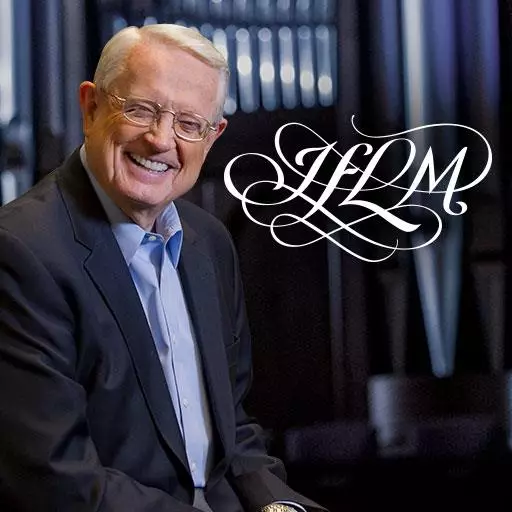
Pastor Chuck Swindoll opens Isaiah 6:1–8 to reveal a God whose holiness is utterly beyond our comfort zones. Far from paralyzing Isaiah, this vision broke him, cleansed him, and sent him on mission.
Discover what a true vision of God’s holiness can do in your life.
Guest (Male): There's a word in Scripture that stops us cold. Not a complicated word, just four letters. But it's a word so foreign to our everyday experience that most of us have quietly agreed to let it belong to another century. The word is holy.
Bill Meyer: And today on Insight for Living, Chuck Swindoll takes us 28 centuries into the past to a grief-stricken young prophet, a dying king, and a moment in the temple that would change everything. What does it really mean that God is holy? The answer may be simpler than you think and far more personal.
Pastor Chuck Swindoll: God's word is alive and it's powerful and it's sharper than a two-edged sword. And it is able to pierce to the division of soul and spirit, between the joint and the marrow, and it is a critic. It is a critic, a discerner of the thoughts and intentions of our hearts.
That's true of both New and Old Testaments. It's true of those ancient writings that are difficult for us to date to this day, all the way to the first century. We turn today some 2,800 years back in time as we open our Bibles to the sixth chapter of the prophecy of Isaiah.
Isaiah 6, an epochal moment in the life of a man whose life was marked by grief and loss, and we'll read of that in the opening lines of this first verse. May I read for you verses 1 through 8? And because of our respect for the word of God, may we stand together for the reading of the Scriptures.
In the year of King Uzziah's death, I saw the Lord sitting on a throne, lofty and exalted, with the train of His robe filling the temple. Seraphim stood above Him, each having six wings. With two he covered his face, and with two he covered his feet, and with two he flew.
And one called out to another and said, "Holy, holy, holy is the Lord of hosts, the whole earth is full of His glory." And the foundations of the thresholds trembled at the voice of him who called out, while the temple was filling with smoke. Then I said, "Woe is me, for I am ruined because I am a man of unclean lips, and I live among a people of unclean lips, for my eyes have seen the King, the Lord of hosts."
Then one of the seraphim flew to me with a burning coal in his hand, which he had taken from the altar with tongs. And he touched my mouth and said, "Behold, this has touched your lips, and your iniquity is taken away, and your sin is forgiven." Then I heard the voice of the Lord saying, "Whom shall I send, and who will go for us?" Then I said, "Here I am, send me."
Bill Meyer: You're listening to Insight for Living. To dig deeper into today's topic on your own, be sure to purchase our Searching the Scriptures Bible study workbook by going to insight.org/offer. This 12-part series is called How Great is Our God, and Chuck titled today's message The Holiness of God.
Pastor Chuck Swindoll: There are times we wonder how to get our arms around the greatness of our God. Last time we were together, we struggled with putting the whole thought of glory into everyday life. What does it mean to say that God is a God of glory?
We learned that that term means heavy. There's a magnificent heaviness about His grandeur and about the credit that ought to go to Him. He is a God of glory. But holy? What in the world does that mean?
One man put together a list that he thinks of when he thinks of holiness. Thinness, hollow-eyed gauntness, beards, sandals, long robes, stone cells, no jokes, hairshirts, frequent cold baths, fasting, hours and hours of prayer, wild rocky deserts, getting up at 4:00 AM, clean fingernails, stained glass, self-humiliation.
It's a pretty grim list, wouldn't you say? But the strange thing is, even though we hear those and we don't agree that that necessarily represents holiness, it's hard to be disengaged from it. I've circled three on the list that come to mind: beards, sandals, and long robes.
Who do you think of? Of course, you think of Jesus. Nothing wrong with any of the above. I mean, but can you picture Jesus, just for a moment—it may be hard—a mustache, faded, torn jeans, and riding a Harley? Maybe with a T-shirt on that says "Born to Ride." There's nothing wrong with any of that. It just doesn't feel holy. It just doesn't seem right.
Somehow holiness is of another era and it belongs to people who lived in maybe two centuries ago, but that's as inaccurate as it can possibly be. It has nothing to do with what we wear. It has nothing to do with what we ride or drive. It has nothing to do with facial hair. It really has nothing to do with externals.
Holiness is all about what is on the inside, inside of us. You can do all of that and 10 times besides and wind up as carnal as you have ever been in your life because holiness has nothing to do with the externals. It is all about what's inside.
As we're going to learn, it is all about being separate from, separated from a world system that has long since lost its way. That's what it's about. There lived a prophet 2,800 years ago who struggled with God's plan because the king he had gotten to know, King Uzziah, was dying—a leper.
How strange is that? A disease most of us have never seen and perhaps in a lifetime will never be around. But in those days, 2,800 years ago, it was not only debilitating, it was condemning. And this King Uzziah that had been Isaiah the prophet's king had lived such a productive and magnificent life as the king of the land all more than 50 years.
Uzziah was once a man who walked with God and served well, and as the king for all of those years over the people of the Hebrews, he protected them and their future was bright and beautiful until something snapped, you recall. And at that time pride and conceit replaced humility and brokenness.
He started believing his own stuff, reading his own clippings, and before long he pushed the limits and went too far and walked into the temple he had no right going into, into the holiest place of all, and there God smote him with leprosy. When we open our Bibles to Isaiah 6, strangely we pick up the story where Uzziah's leprosy leaves off.
This is the year King Uzziah died. We don't know if it's the day of his death, if he has already died, or I would suspect this is the year of his dying. Like some cancer patients, it lingers. It goes on and some physicians will say, "This is probably the last year." Had physicians lived in that day, they would have known. They would have said, "This is Uzziah's last."
Grieved, broken, disillusioned, perhaps disheartened, Isaiah finds his way as we will read into the temple of the Lord. And before him was a life-changing experience. I don't know what brought you into the church today—curiosity, maybe a passing fancy, perhaps it was for all the right motives.
But I have to believe in a group this size, a number of you have come broken, disheartened, maybe even disillusioned. Truth be told, you think maybe there's something here that will help turn things around for me since I've begun a long drift in the wrong direction.
You may have lost someone very meaningful to you and as a result you don't know that you can go on without him or her. And here you are, wondering what in the world an ancient passage of Scripture where things transpired 28 centuries ago would have to say to you. You might be surprised.
You might be very surprised to know it's directly related to your concept of the holiness of God. What happens to you? Let me cut to the chase. Even though we know Isaiah today as a well-known prophet who wrote one of the major books of the Old Testament, at this time in his life, none of the above is true.
He's a young man. He has been grieving the death of the king. And now Isaiah appears in the temple perhaps for the purpose of gaining insight and comfort and hope, just as you and I may do when we lose a loved one. When Isaiah walks in, he has this life-changing experience and he sees the Lord.
Can you imagine? We come to church and we see one another, but Isaiah went to the temple and he saw the Lord. He literally saw Him. And where was He? Exalted, lofty, high and lifted up. And the long robe of the Lord filled the temple where Isaiah was.
And if that wasn't enough, Isaiah looked around him and he saw the seraphim. The seraphim flying around the presence of the living God. Let me help you with this. There's a first heaven, a second heaven, and a third heaven. This is in the third heaven.
This is in the throne room of God. The throne room of God, a place you and I have never been. We can only imagine. Isaiah has been transported there in this vision and he sees into the throne room, the presence of Yahweh, the Lord Himself. And along with that, his eyes are opened to supernatural beings.
I've said for years, if we could see the presence of angels, we would all be taken back. They fill this room. They fill your home if yours is a home of believers. They accompany you on your journey. They watch over you. They are your guardians and guides, even though you may not know they're there and rarely do we even think of them.
But Isaiah's eyes are opened and he sees these angelic creatures called seraphim. Saraph is the Hebrew word for burn, to burn. When Hebrews made words plural, they didn't add an S. We would say seraphs in our English language; in Hebrew, it's seraphim, like cherub and cherubim.
These are multiple angels and we don't know their number. We don't know how many there were, but the seraphim stood above the Lord. Please observe here and in verse 6, the only two places in all the Bible where seraphim are mentioned.
There are various categories of angels and that's another subject, but this category mentioned here, only here, they are the white-hot burning brilliant presence of angelic creatures that fill the throne room of God and flood Him with praise.
We read they have two wings and with two wings they cover their faces, and two other wings they cover their feet, and with the other two wings they are flying. They are flying. Imagine that. Sometimes it helps just to have a little audio assistance. 30 million of them just went by and we didn't even notice.
They are flooding the presence of the Lord God. I was asked earlier in a service, is there any reason that they're covering their faces and their feet? We're not told why. Most likely feeling unworthy to be in the presence of the all-holy God, as you and I would feel.
And with wings they cover their face, with wings they cover their feet, and with the other two they fly. Isaiah stands as you would have stood with his mouth wide open in the temple, no longer preoccupied with his own grief and the loss of the king, realizing he is seeing what human eyes have never seen before.
And if seeing them isn't enough, he heard from them. One called to another. If you sing in choirs, you know the word antiphonal singing. That's where one part of the choir sings and then it's answered by another part of the choir. One set of voices will sing one set of lyrics and the other will answer with another, or perhaps the same set of lyrics.
I've been waiting for months for this moment. We're going to do that today. You're going to be a seraph, okay? Right down the middle of this building, to your left, all of you are going to answer first with "Holy, holy, holy." And to this side on your right, you're going to answer back "Holy, holy, holy." All right? Look angelic. Here we go. Together, sing it.
Think of being in the temple all alone, grieving, and you suddenly hear a sound like that. And we've left out part of it. The whole earth is full of His glory. These angels are announcing, "This is the Lord of hosts, Isaiah. This is the Lord of hosts. The whole earth is full of His glory."
He is now standing stunned with their presence. And if that isn't enough, the foundations of the threshold trembled. Today, we would say it was about 7.6 on the Richter scale. The foundations of this stone temple shaking, trembling with the voice of the angelic creatures sounding like a thousand Niagara Falls in one epochal moment.
And if that isn't enough, the building begins to be filled with smoke. Remarkable moment. I'd like to go on with the story, but it's time to pause and let the wonder in as we rediscover a forgotten truth. Holy, holy, holy. The three times repeated suggests the idea of infinitely holy.
What does it mean? Well, J.I. Packer, in an outstanding book titled Knowing God, puts it very succinctly. The basic idea which the word holy expresses is that of separation or separateness. When God is declared to be holy, the thought is of all that separates Him and sets Him apart and makes Him different from His creatures. It's an outstanding definition.
It isn't spooky to talk of the holiness of God. It isn't so ethereal that you can't get your arms around it. It means God is separate from all the things that contaminate and aggravate and mark our lives. And His being infinitely holy means that there is an infinite sense of His purity.
In fact, John writes in 1 John 1:5, "God is light. In Him is what? No darkness at all." We would say today, not a trace of darkness. Not a piece of dirt. Not a hint of corruption or iniquity. God is light.
Now, I would suggest right about now Isaiah is wide awake, wouldn't you think? Wouldn't you think it wouldn't be business as usual right about now? Here is a simple prophet who has not yet uttered a word of prophecy. His whole life is in front of him. He's still young.
He doesn't know the Lord will use him to communicate more about the Messiah than any other prophet who would ever live. He doesn't know he is going to contribute one of the larger books to the entire Bible. He doesn't know what's in front. He doesn't know he's going to marry a prophetess and the two of them will have two sons.
He doesn't know that ultimately, according to tradition, he would be sawn in two as a martyr. He knows nothing like that. He is now, as we are often in a moment of worship, lost in wonder and love and praise. The building is filling with smoke.
The robe is filling the temple room. The angels are announcing back and forth "Holy, holy, holy." It's deafening. And all of a sudden things change for Isaiah. "Woe is me, I'm ruined." One of the translations renders this "I'm finished. It's curtains."
I mean, being around this kind of holiness and hearing it said from the other angelic creatures and seeing with my own eyes Him sitting in blazing white light glory, suddenly he realizes how unholy he is. No one points it out. I love that. He spontaneously understands how distant he is from the one who is holy.
He says, "Woe is me, I'm ruined." Why, Isaiah? Why do you feel finished, ruined? Well, look, he tells us, "I am a man of unclean lips, and I live among a people of unclean lips. My eyes have seen the King, the Lord of hosts."
I love the way the Living Bible renders this: "My doom is sealed, for I am a foul-mouthed sinner, a member of a foul-mouthed race." Um, it may shock you for me to ask the question, but do you struggle with profanity? Don't answer out loud.
Do you, in a moment of haste, blurt out some ugly word, some coarse statement? You're not proud of that. Of course, you're not. If you were in the presence of a holy God, you would suddenly be reminded of that foul statement you made. That's exactly where Isaiah is. This isn't just a nice word to fit into the Scriptures so that God's people can read it down through the centuries. He is confessing his sin.
Guest (Male): That moment of exposure before a holy God is one every honest soul recognizes. Isaiah's instinct wasn't to argue or excuse. It was to confess. And when we truly grasp what holiness means, it changes everything—how we speak, how we live, how we see ourselves.
Bill Meyer: You're listening to Insight for Living. We're just getting started with Chuck Swindoll's 12-part study on the attributes of God. He titled this series How Great is Our God. As we begin this study together, we invite you to take advantage of the bundle of resources we have for digging deeper on your own.
It includes the Searching the Scriptures Bible study workbook and the complete collection of sermons on CD or MP3. To purchase this bundle right now, go to insight.org/offer. Chuck, we're coming up on another milestone here at Insight for Living. On June 30th, we'll close the books on another ministry year and step into our 47th year of ministry. At moments like this, it is so critical to remain laser-focused on the one we serve.
Pastor Chuck Swindoll: When Paul arrived in Corinth, he was fresh off a rough stretch. He'd just come from Athens, where the philosophers basically laughed him off the Areopagus. If you've ever poured everything you had into something and watched people shrug and walk away, and if you've ever had a message fall completely flat, you know something of how Paul felt stepping into Corinth.
And what did he decide? Quoting now, "I determined to know nothing among you except Jesus Christ and Him crucified." He didn't concoct a new strategy, not a better presentation, not something more sophisticated, more polished, more likely to impress the intellectuals. Just the cross.
Here's what 60-plus years of preaching has taught me: the moment I start trying to be impressive, I've already missed the point. The goal has never been for you to walk away thinking "What a great communicator." It's for you to walk away thinking "What a great Savior."
There's a world of difference between those two. That's the heartbeat of Insight for Living, always has been, always will be. I want every program, every single one, to be a place where someone has a real encounter with a real Savior. Not a religious experience, not a motivational moment—a genuine life-altering collision with the cross we proclaim.
As we close out our fiscal year on June 30th, I want to ask you something, not to help us, but to consider the ministry you personally have when you invest in this broadcast. Your gift travels. It reaches languages I don't speak, countries I've never visited, and people who've never heard the message we take for granted. You send it, we broadcast it, and God does what only God can do. Would you give today? The cross is worth it, my friend.
Bill Meyer: To respond to Chuck Swindoll, you can choose one of several easy ways to give a donation. Many of our listeners prefer to send a check in the mail. If that's you, address your envelope to: Insight for Living, Post Office Box 5000, Frisco, Texas, 75034.
When you give today, we'll be saying thanks by providing a brand new booklet from Chuck. In "The Cross We Proclaim," you'll discover why Jesus, through the cross, doesn't ignore your past, but redeems it. A copy is yours with a gift to support Insight for Living.
Our address again is: Post Office Box 5000, Frisco, Texas, 75034. You can also call us at 800-772-8888 or give online at insight.org/donate. I'm Bill Meyer. Join us when Chuck Swindoll continues his series about the attributes of God called How Great is Our God Monday on Insight for Living.
Featured Offer

Pastor Chuck’s audio set (CD or MP3) and companion spiral-bound workbook help you discover who God truly is—and live transformed.
Past Episodes

Video from Pastor Chuck Swindoll
Featured Offer
Pastor Chuck’s audio set (CD or MP3) and companion spiral-bound workbook help you discover who God truly is—and live transformed.
About Insight for Living
Join the millions who listen to the lively messages of Pastor Chuck Swindoll, a down-to-earth pastor who communicates God’s truth in understandable and practical terms, with a good dose of humor thrown in. Chuck’s messages help you apply the Bible to your own life.
About Pastor Chuck Swindoll
Charles R. Swindoll has devoted his life to the accurate, practical teaching and application of God's Word. Since 1998, he has served as the founder and senior pastor-teacher of Stonebriar Community Church in Frisco, Texas, but Chuck's listening audience extends far beyond a local church body. As a leading program in Christian broadcasting since 1979, Insight for Living airs in major Christian radio markets around the world, reaching people groups in languages they can understand. Chuck's extensive writing ministry has also served the body of Christ worldwide and his leadership as president and now chancellor of Dallas Theological Seminary has helped prepare and equip a new generation for ministry. Chuck and Cynthia, his partner in life and ministry, have four grown children, ten grandchildren, and six great-grandchildren.
Contact Insight for Living with Pastor Chuck Swindoll
customerservice@insight.org
http://www.insight.org/
Mailing Address
Insight for Living
Post Office Box 5000
Frisco, Texas 75034
USA
Phone Number
1-800-772-8888