

The Holy Spirit 6: Leading of the Spirit


Eric Alexander brings us lessons from Psalm 25 regarding the Holy Spirit, the indwelling instructor who guides us into God’s ways. Understand how the Spirit aligns our thoughts with the mind of Christ, allowing us to discern God’s will through biblical principles. Fix your eyes upon Him and rest in His will on Hear the Word of God.
Eric Alexander: We have thought together about the doctrine of the Holy Spirit at these services, about his person and his ministry. We have ranged over a number of different areas on which we have sought to focus, to clarify our thinking, and to help our understanding concerning the distinct and divine personality of the Holy Spirit. He is indeed a distinct person in the Trinity and a divine person.
We have thought about his ministry in regeneration, whereby he raises men into life in Christ. We have thought about his ministry in illumination, where he causes the Scriptures to be written and enables us to understand them. We have thought about his ministry in transformation, where he touches our life and character and has the great aim to change us from one degree of glory into another, even as by the Spirit of the Lord.
We thought on another evening about the theme of the gifts of the Holy Spirit, and on yet another about the fruit of the Holy Spirit. Last Sunday evening our theme was the fullness of the Holy Spirit. This evening, I want to bring this series to a conclusion (or at least I think it will be a conclusion—that is, until the next time) by speaking with you and thinking with you about the theme of the leading of the Holy Spirit.
Because the Holy Spirit is not only an indwelling inspirer of new motives and desires in our lives and an indwelling intercessor who teaches us to pray, he is also an indwelling instructor to guide us into God's ways. In 1 John chapter 2, the apostle says, "You have been anointed by the Holy One. His anointing teaches you about everything." This you discover is the experience of the apostles. They ascribe the ordering of their steps and the guidance of their ways to the Holy Spirit.
Paul is forbidden by the Holy Spirit, for example, to go into Asia in chapter 16. The church declares in Acts 15 that it seemed good to the Holy Spirit and to us. He speaks in Romans 8 and again in Galatians 5 of being led by the Spirit. So it is an important theme biblically for us to address ourselves to, and that is what I want us to do this evening.
So that our thinking might be biblical, I want us to come to this familiar 25th Psalm. If you have your Bible open there, you would find it a help, I'm sure, because I want to refer to it fairly frequently where a major theme of the psalmist is a plea that God by his Spirit would guide him in his ways. In verses 4 and 5, for example, "Make me to know thy ways, O Lord. Teach me thy paths. Lead me in thy truth and teach me, for thou art the God of my salvation; for thee I wait all the day long."
That plea in the psalm is joined with a conviction that God does guide his children into his perfect will. Verse 9: "He leads the humble in what is right and teaches the humble his way." Again in verse 12: "Who is the man that fears the Lord? Him will he instruct in the way that he should choose." Now I want us to try to learn some of the lessons of the psalm this evening regarding seeking and knowing that leading of the Spirit, which is certainly one of the offices of the Holy Spirit in Scripture and an area in which most of us need instruction and counsel from God.
I think it's a significant thing for us at the beginning to note the circumstances in which the psalmist is living at this particular time. It's obvious that he was troubled and perplexed and didn't know where to turn. He felt under pressure from many different spheres and enemies and feared that he might take a wrong turning at this particularly important part in his life. You get all of this from verse 16 onwards where the psalmist cries, "Turn thou to me and be gracious to me, for I am lonely and afflicted. Relieve the troubles of my heart and bring me out of my distresses. Consider my affliction and my trouble and forgive all my sins."
He cries in verse 20, "O guard my life and deliver me. Let me not be put to shame; I take refuge in thee." The psalmist's great concern, then, is that he might know God hedging his way around, leading him into his ways, prompting him as he has major decisions to take clearly. He rests on this conviction: "The meek will he guide in judgment; the meek will he teach his way." Here is God by his Holy Spirit as our instructor and guide in life's pathway.
Now, this godly man is in the midst of this situation. As he seeks to discover the counsel and teaching of God by which his life is to be ordered, there are in the psalm certain biblical principles by which our thinking needs to be shaped as we consider together this theme of the leading, the instruction, the guidance of the Holy Spirit. Endless books have been written on it and endless questions have been asked about it, and you will recognize that I do not for a moment presume that I'm going to solve all your problems about this whole matter of seeking and finding the will of God this evening.
But there are guidelines. As so often in coming to Scripture, it is discerning the guidelines of Scripture, the great principles by which we think and act, that we will find the way forward. Now there are five particular areas on which I want us to focus this evening as we turn to this psalm. The first is this: there is a basic attitude which lies behind this appeal for guidance, and it is one of an absolute and exclusive trust in God.
That is the position from which the psalmist begins to do all his inquiring and thinking. He begins from the place of an absolute and exclusive trust in the wisdom and goodness and love and providence and sovereignty of God. That is where his foundation lies, as he tells us, for example, in verse 2: "O my God, in thee I trust. Let me not be put to shame." He reaffirms it in verse 20: "O guard my life and deliver me. Let me not be put to shame, for I take refuge in thee."
Now what that means is this: it means that the psalmist has come to see certain elements in the character of God which have led him to say, "I have an absolute confidence and trust in God—in his character and nature, in his power and authority, in his goodness and grace, in his willingness to lead his people, in the perfection of his purpose and his readiness to communicate these to me as his child." I am perplexed and in trouble, he says, but the basic attitude of my life is this (verse 1): "To thee, O Lord, I lift up my soul. O my God, in thee I trust." In verse 5: "For thee I wait all the day long."
Now, what has produced this trust and confidence is what the psalmist has come to know of God. That is really what the psalm is full of, as you find is true in so many of the psalms. If you look beyond the outward message of the psalm to what lies behind some of these glorious convictions of the psalmist, you discover that here are men who at an extraordinary depth have come to know God.
Here is a great principle, my Christian friends, that we need to establish at the beginning: knowing God is always primary to knowing God's will. The fundamental issue in Christian experience is not finding some kind of formula that anybody can provide you with whereby you will discover the will of God in four easy stages. The fundamental issue is: have you come to know the God who has revealed himself in Scripture so that you have come to trust him? So that you know his ways, you have become acquainted with his plans and purposes, you have acquainted yourself with his character, and so you are able utterly to trust yourself to him.
Now I say that is where the psalmist begins from. While I don't suggest for a moment that that solves everybody's problems about discovering the will of God, so much of our wrong thinking would be avoided if we began from the place where the psalmist begins, which is this glorious affirmation of his knowledge of God. Do you notice how he rehearses all sorts of different elements in God's character? In verse 5 his saving power, in verse 6 his tender mercy and steadfast love, in verse 7 his goodness, verse 8 his justice, verse 10 his faithfulness.
You see what he is saying? He has discovered God in all these glorious manifestations of his character. He has come to know him and to say, "Therefore, in thee will I confidently trust." Now we are often in the situation, are we not, that we have to prove someone's character before we're able to trust them. It is because of what we know of one another often that we are not able to trust one another.
Isn't this true? If I make an arrangement to see you at half-past two in the afternoon and I turn up at three o'clock, you might make some excuse for me and say, "Well, he's probably been held back." But if I do it three weeks running, and if I go on doing that kind of thing, you will begin to say there is a flaw in his character somewhere. He doesn't keep time very well, and we're unable to have confidence and trust in him. We do this with each other. It is what we know of each other's character that makes us able or unable to trust one another, to have absolute confidence in one another.
Now if you multiply that by infinity, it is only as we have come to know God that we will really be able to trust him even at times when his ways are mysterious and his wisdom is past our understanding. But this whole attitude which the psalmist shows is an attitude of absolute trust. It's frequently described in the psalms, particularly in terms of the eyes. Do you notice it coming out in verse 15 of the psalm? "My eyes are ever towards the Lord."
"The eyes of all wait upon thee, O Lord, and thou givest them their food in due season" (Psalm 145). Psalm 123: "As the eyes of servants look to the hand of their master and the eyes of the maiden to the hand of her mistress, so our eyes wait upon thee, O Lord." It is the expression of confidence. You know how a child will do if their parent is in the room and somebody is asking a question and the child's eyes go instinctively to the place where they have confident trust. That is the posture of the psalmist.
Now I labor this issue, my dear friends, because I think it is of fundamental importance. Is this the posture of your life? Is this how you live? Because you see, there is absolutely no point in somebody who doesn't live like this, whose interest is not in getting to know God, suddenly getting hold of some principles for understanding his will and saying, "Now I want to apply these. Can you assure me that this is watertight, and I'll understand the will of God if I apply A, B, C, and D?" You need to begin from this principle of a confident trust in God whose character you long to know more and more.
This is where the psalmist begins. It is this element of trust which is lacking when we doubt the goodness of God's will when we find it uncomfortable or when we doubt its wisdom because we find it mysterious. Now linked with this basic principle is the next, which I put in this way: a consecration of ourselves to do the will of God can never be divorced from a concern to know it. A consecration of ourselves to do the will of God can never be divorced from a concern to know it.
Now you can see how important this is if you look at the human sphere. You know how we react when somebody asks us to do something for them at the human level. Somebody may say to you, "Will you do something for me?" and nine times out of ten, you will protect yourself—and wisely—by saying, "It depends what it is." What you are saying in responding in that way is, "I do not believe in your infallibility. I have no confidence that what you are going to ask me is either good for you or possible for me, so I protect myself with this verbal device: it depends what it is."
We are right, as I say, to do that, because to give carte blanche to someone and say, "Yes, I will do whatever you ask," would be foolish. But in the presence of God, and as he says to us, "Will you do what I'm going to ask you?" there is absolutely no place for the rejoinder, "It depends what it is." But my dear friends, is not much of our difficulty with the will of God in this very realm, that that is exactly what we are saying?
When God speaks to us, we hedge ourselves around with this protection. The psalmist is bearing witness to us here in the spirit and posture in which he speaks. When his eyes are to the Lord, it is the eyes of a servant to the hand of his master. That is the posture. A consecration to do the will of God must always precede an inquiry as to what it is.
Now you will notice what the psalmist says in verse 9: "He leads the humble." Some of the versions have "the meek will he guide in judgment; the meek will he teach his way." That word is a very interesting one. It's sometimes used in ancient Semitic usage for the condition of the animal which needs to be broken in order to be used and useful. In Psalm 32:9, it's interesting that the psalmist says, "Be not like the horse or mule which needs to be held on the rein."
Now the point about that is that the horse or mule without understanding needs to be curbed with bit and bridle because it is stubborn and refuses to be led. The point about the word "meek" or "humble" is that it describes a spirit which is teachable and leadable. Now here we come to the very core of the great qualification for knowing the leading of the Spirit, and that is that we have allowed the Holy Spirit to exercise that primary ministry of bringing us under the lordship of Jesus.
You will remember that the Holy Spirit's great ministry is to exalt and glorify the Lord Jesus Christ, to apply to our lives his absolute lordship and sovereignty over every area of our life. We may not, you see, seek to divide asunder the Holy Spirit's ministry and say to him, "I would like you to give me wisdom in case I make mistakes and suffer for them, but I do not want to submit my life and will to the lordship of Jesus." Because that's the high road to confusion about the will of God and not the road to discovering it.
My dear friends, we need to be really clear about this. For many people—and I say this with a great concern for what I've seen in the lives of so many—for many people, the real problem of guidance is a problem of a stubborn will that needs to be broken that it might be led. This is the psalmist's posture. May I say that that applies not only to our wills but to our minds? We need teachable minds which will be ready to be instructed in God's ways.
That is why it is such an important thing to bring your mind before you come to the word of God and deliberately and willingly to submit it to the instruction and counsel of the Holy Spirit. Because a consecration to do the will of God is always primary to discovering it. Here's the third principle: the psalmist exhibits a certain spirit within the psalm in which he seeks God's guidance and his will. There is a spirit in which he approaches the whole issue, and I want to draw your attention to this because I think it's of great importance.
You may be wondering, when is he going to come to the rules for seeking the guidance of God? Well, I just want to underline for you again that it is the general approach we make to this issue which is of cardinal importance. What is the psalmist's spirit with which he comes? Well, you will notice from the psalm it is a prayerful spirit. That is the whole constitution of the man's character and nature. He's a praying man.
So he comes in this particular situation to God as a man of prayer. So much of the psalm is just the outpouring of the man's heart as he cries to God to show him, teach him, guide him, lead him in the right way. That should be both a general and a special attitude—general in our daily walk with God and the world, and especially when we are faced with some crucial decision or problem. A praying spirit is perhaps the primary atmosphere of this man's life.
But you notice in the second place he exhibits a persevering or patient spirit. Verse 5: "Lead me in thy truth and teach me, for thou art the God of my salvation; for thee I wait all the day long." Now it is another great characteristic of this psalmist, you see, that he is ready to wait for God. He has not come into the presence of God and said, "I need to know the answer to this by tomorrow morning at nine o'clock." He is saying, "I am ready to wait. It is for thee I wait all the day long."
Sometimes one of the things that we greatly need as we are seeking God's wisdom and counsel about some particular area of our life is patience. One of the things God is working into our character when he deals with us in this way and keeps us waiting is just to teach us what it is to wait on the Lord, to wait all the day long. In this hurried life that we are in the midst of, so many of us with so many pressures upon us and deadlines to meet and occasions when we need to be here and there and ready at a particular time, we need to learn this quality of waiting on God.
Sometimes God keeps us waiting for this very reason. Hudson Taylor once wrote to a young missionary who was perplexed about God's will: "One of our greatest dangers at certain times," he says, "is to take a precipitate action or make a rash judgment just because we have not been patient enough to wait upon God." There is nothing in the world that God would rather teach us than to make us wait upon him. We need to learn that we are to submit our wills not only to God's will but also to his timetable.
Now that's an immensely important truth, and it is part of the spirit in which the psalmist seeks the leading of God. A praying spirit, a persevering spirit—and you notice he also comes to God with a penitent spirit. That is in verses 6 to 8, for example: "Be mindful of thy mercy, O Lord, and of thy steadfast love. Remember not the sins of my youth or my transgressions; according to thy steadfast love remember me. Good and upright is the Lord; therefore he instructs sinners in the way."
Verse 11: "For thy name's sake, O Lord, pardon my guilt, for it is great." What the psalmist is saying, you see, is that he recognizes his proneness to go wrong. He is not confident in himself. He comes to God as a needy sinner who is so prone to error. He recognizes that the mystery and glory of God's grace is that he guides sinners in his way and redeems them into his paths. So there is a spirit—a spirit of prayer, a spirit of perseverance, a spirit of penitence, the very reverse of pride and self-interest and self-assertion in the presence of God.
Now it is only at this point that we are ready to deal with the question that most of us are most interested in, which is the manner or method in which God guides us by his Spirit. What is it that the psalmist here is basically asking for? Here is where we come to the essential issue of the manner in which God guides us. What is he asking for? Is he asking for some great experience where he is going to hear the voice of God speaking to him in a dream or a vision?
Is he asking for some overwhelming sense of an assurance that is written in blue flashes in the sky? On the contrary, what the psalmist is simply asking for, do you notice, is instruction? That's what he's praying for—for a deeper acquaintance with God's ways, for teaching in God's truth. Notice verse 4: "Make me to know thy ways, O Lord. Teach me thy paths. Lead me in thy truth and teach me."
Basically, I have to say to you this evening that this is how God fundamentally guides his children. He instructs us in his ways. He enables us to think through situations with the mind of Christ and gives to us godly judgment. Verse 9 in the Authorized Version reads: "The meek will he guide in judgment." Now this is where most of our mistakes are made, as I believe, in our whole approach to the subject of guidance, because so much of the association in our mind is between the leading of the Spirit and the feelings of the Christian.
So we combine the two together. All of us do it, one way or another. We use the phrase, "I felt led to do this or that." Although the phrase is common amongst us, it is an expression of something that we have put together which Scripture in fact does not put together. That is the guidance of God, the leading of the Spirit, and our own feelings or emotions. On the contrary, what God does is to put together the leading of God and the instructing or teaching of his people.
So the psalmist prays: "Teach me. Instruct me. Lead me. Show me thy will." Now the reason he does that is quite simply that God is a rational God, and he has made us his rational creatures. He therefore generally guides us as Christian believers by instructing us in his ways, by enabling us taught by Scripture to assess situations with godly judgment and, in the light of the general teaching of his word, to come to a wise, God-honoring conclusion.
Now, if I am not sure, it is wisdom to seek the spiritual judgment of someone who is better instructed in Scripture and in the ways of God than I am, and who is seeking the same spiritual goals as I am seeking. So the psalmist in Psalm 32 and at verse 8 says, "I will instruct you and teach you the way you should go. I will counsel you with my eye upon you. Be not like a horse or mule without understanding, which must be curbed with bit and bridle, else it will not keep with you."
Now the point about the parallel is, you see, that the horse or the mule does not have understanding, is not open to instruction. It needs that force to be brought upon it. It needs to be curbed by some external hand. But contrary to that, the Christian believer, the godly man or woman, is to be led by the Spirit by being instructed, by being given wisdom by God and responding to his counsel. When his people wander from his ways and go out of his will, God cries in Deuteronomy 32:29, "O that they were wise, O that they would consider."
It is this lack of godly biblical judgment that the psalmist so often speaks to us about. John Wesley, in the same spirit, once said to someone who was asking him about how he discovered the will of God and how he knew the leading of the Spirit: "God," he said, "generally guides me by presenting reasons to my mind for acting in a certain way." Now that is not to minimize the ministry of the Holy Spirit in guiding us through inward prompting or overwhelming conviction or whatever.
But if I may quote Dr. Packer to you in this connection in some of the most important words that he has written about this subject: "The true way," he says, "to honor the Holy Spirit as our guide is to honor Holy Scripture through which he guides us." Now I emphasize this because I have known Christian people who have been driven by the most irrational inner urges to all sorts of quite extraordinary situations and sometimes have involved other people in a mixture of tragedy and comedy.
Dr. Packer cites in one of his books the case of one particular woman who would not put on an article of clothing without seeking the guidance of God as to whether this was the clothing God wanted her to put on on that particular day. I've known a student who had this particular view of guidance that God would suddenly come and give him an overwhelming conviction of what is right. He woke up in the middle of the night and cried out, "Where should I be?" and he said to me, "God said to me, 'You should be down in the middle of the city. There is somebody there I have for you.'"
Down into the middle of the city he went at three o'clock in the morning and found that it was deserted and there was nobody there. He went with great genuineness of purpose, but do you see that he was misled as to how God generally guides his children? He generally guides them by forming their mind to think with the mind of Christ, by giving them access to his wisdom in Holy Scripture, and then enabling them to form judgments of particular situations because of this.
This attitude to guidance is, of course, a distortion both of the nature of God and of the whole doctrine of the Holy Spirit's purpose in his ministry to us, which is to lead us into the truth through Holy Scripture. The Holy Spirit never guides us contrary to Holy Scripture. Listen to the words of John Newton, which I've often referred to in talking with people about this subject. Indeed, I think I've probably given to people this quotation more than any other as they have been puzzled about the will of God.
Newton is asking in this excellent book, "The Letters of John Newton," "How does God guide us?" In general, he guides and directs his people by affording them in answer to prayer the light of his Holy Spirit, which enables them to understand and love the Scriptures. The word of God is not to be used as a lottery, nor is it designed to instruct us by shreds and scraps which, detached from their proper place, have no determinate import.
But it is to furnish us with just principles, right apprehensions to regulate our judgment and affections, and thereby to influence and direct our conduct. They who study the Scripture in a humble dependence upon divine teaching are taught to make a true estimate of things around them by treasuring up the doctrines, precepts, promises, examples, and exhortations of Scripture in their mind. Daily comparing themselves with the rule by which they walk, they grow into an habitual frame of spiritual wisdom and acquire a gracious taste which enables them to judge of right and wrong with a degree of readiness and certainty, as a musical ear judges of sound.
Now that is how God generally and fundamentally guides his people. He schools and instructs us in Holy Scripture. He acquaints us with his ways. He gives us the great principles by which he acts and draws us by the ministry of that same Spirit into such close fellowship with him and into a conformity of our will to his that we get what Newton calls a gracious taste and the judgment like the judgment of a musical ear judging sound, so that we know immediately the difference between what is in harmony with the will of God and what is in cacophony.
You know what it's like. My dear mother, who is now in glory, had many gifts, but one of them was not a musical ear. She could not tell the difference between harmony and disharmony and had no idea whether people were grossly out of tune or not. Sometimes on Sunday evenings when we had people at home, we used to have somebody who would sit down and play the piano. Now my brother happened, contrary to my own experience, to be an outstanding pianist, and he used to sit and listen, and my mother would be there too.
The person who was playing would sit down at the piano, and they would create some fearful discords. My mother would genuinely say, "How beautiful that was. That's lovely playing," she would say. "Marvelous, you're very gifted." My brother was cringing down almost to floor level in agony because of the thing. It was so discordant. But you see, he had an ear that was trained to judge what was in harmony and what was not.
My dear friends, as God labors in our lives by his Spirit, that's what he wants to produce in us. It's people in whose lives God has done that that you will find me consulting if I am concerned to have clarity about God's will. There is no four or five steps into understanding the will of God divorced from that whole world of knowing God, being acquainted with his ways, and having a gracious taste for his will.
Now let me say to you that in certain areas of our lives and in certain situations, what many of us may need is not guidance but obedience. Most of us know that, I think, fairly well, don't we? It is out of the background of a life that is submitted to the will of God that we're going to discover its nature in a particular area. But I discover that there are people who will come—you may have found friends coming to you, and they've been to all sorts of other people before—they are going round not because they want to discover the will of God but because they want a particular answer and nobody's given it to them yet.
So they hope that you may do so. What they so often need is not guidance but obedience. Let me emphasize it again: the Holy Spirit will never guide you contrary to Holy Scripture. So the Holy Spirit will never guide you to marry an unbeliever, for example. Never. When people come to me and say, "Now I believe God is guiding me in this direction, I felt led to them and believe that it is right and God has been speaking to me and I've been having all sorts of marvelous experiences with them," what I have to say is that God never guides us contrary to his word. Never.
It's possible that when somebody may be speaking about a certain feeling that they may have when they're in the presence of somebody else, they're really describing not biblical guidance but a form of glandular condition. It's a grave error to mistake that for guidance. Of course you feel good in the presence of the other person; be ridiculous to think you didn't. But it's got nothing to do with the guidance of God. He never leads us contrary to Holy Scripture.
Now let me just say finally that there are blessings in the fifth place which follow such waiting on God to be taught his ways. In verse 13, the psalmist says, "He himself shall abide in prosperity, and his children shall possess the land. The friendship of the Lord is for those who fear him." Do you notice that this is the ultimate outcome? This is the key to what it is all about: it is the friendship of the Lord.
It is not that we are coming to some stranger, you see, to ask him for his advice on certain things. It is that we are knowing what it is to have a friendship with the Lord, and that is for those who fear him. They fear God most who obey him best. Let me say a final word, for time has gone and you have been so patient this evening. But then you're on holiday, aren't you? That's a good thing.
But let me say a final word to any who may feel that they have got out of the will of God. I am bound to say to you this evening that it is the God who restores the erring who speaks in this psalm, and failure in this sphere is never final. Let me hold up as witness to that for you Jonah, who needed not guidance about where he should go but obedience about going in the will of God.
But God did not leave him alone. He pursued him and went after him to the very depths of the sea because he cares about having his children in his will. My dear friends, here is a conviction we need to have: God cares about having you in his will. He is not detached from that. He cares deeply about it, so much so that he pursued Jonah to the ends of the earth and the depths of the ocean and then he restored him and spoke to him a second time.
Jonah rose and went. Oh, I beg you in the Lord's name, don't let that happen too often. Do not presume upon the patience of God. If you have no particular problem about guidance this evening, I say to you: rest in his will now. Come to him with an utter and absolute trust and say to him, "My eyes, my eyes are upon you, and by the gracious power of your Holy Spirit, I will not allow them to wander anywhere else." He will lead you into his ways and instruct you in his paths. Let us pray together.
Heavenly Father, we bless you for your fatherly care and concern for your children. This evening we draw near to you to ask that you will take us up and teach us your word. Imprint it into our hearts deeply, and grant that we may learn to obey it. For the glory and praise of our Lord Jesus Christ we ask. Amen.
Mark Daniel: You're listening to "Hear the Word of God" with the Reverend Eric Alexander, a minister in the Church of Scotland for over 50 years. To access more Bible teaching from Reverend Alexander, visit hearthewordofgod.org, where your generous contribution will help us sustain and grow this ministry. That's hearthewordofgod.org. You could choose instead to mail a check to this address: 600 Eden Road, Lancaster, Pennsylvania 17601. Or call 1-800-488-1888. This program is a presentation of the Alliance of Confessing Evangelicals. I'm Mark Daniel. Thank you for listening. Please join us again next time for Eric Alexander and "Hear the Word of God."
Featured Offer
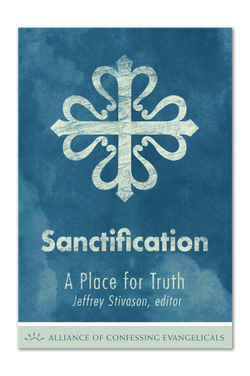
Those who are in Christ have been justified before God. But salvation means much more; it means that we are sanctified, that God actually leads us into holiness. As Michael Allen and company explain, our holiness is carried out in the present work of our sovereign, loving God. In Christ we are given life, not simply in name, but in fact. Praise the Lord, who delivers His children through every weakness. Though you struggle with sin, do not be discouraged; it is God who works in you, "both to will and to work for his good pleasure" (Phil. 2:13).
Past Episodes

Featured Offer
Those who are in Christ have been justified before God. But salvation means much more; it means that we are sanctified, that God actually leads us into holiness. As Michael Allen and company explain, our holiness is carried out in the present work of our sovereign, loving God. In Christ we are given life, not simply in name, but in fact. Praise the Lord, who delivers His children through every weakness. Though you struggle with sin, do not be discouraged; it is God who works in you, "both to will and to work for his good pleasure" (Phil. 2:13).
About Alliance of Confessing Evangelicals
The Alliance of Confessing Evangelicals exists to call the twenty-first century church to a modern reformation that recovers clarity and conviction about the great evangelical truths of the gospel and that then seeks to proclaim these truths powerfully in our contemporary context.
About Alliance of Confessing Evangelicals, Inc
The Alliance of Confessing Evangelicals is a broadcasting, events, and publishing ministry that exists to call the twenty-first century church to a modern reformation. Our broadcasts/podcasts include
The Bible Study Hour
with James Boice,
Every Last Word
featuring Philip Ryken,
Mortification of Spin
with Carl Trueman and Todd Pruitt,
Theology on the Go
with Jonathan Master and James Dolezal,
and Dr. Barnhouse & the Bible
with Donald Barnhouse.
These broadcasts air daily and weekly on stations in the United States and Canada and on the Internet. Event audio includes the Philadelphia Conference on Reformed Theology, the Reformed Bible Conference, and many others.
Contact Alliance of Confessing Evangelicals with Alliance of Confessing Evangelicals, Inc
Alliance@AllianceNet.org
http://www.alliancenet.org/
Alliance Of Confessing Evangelicals
600 Eden Road
Lancaster, PA 17601
1-800-956-2644