Sekulow
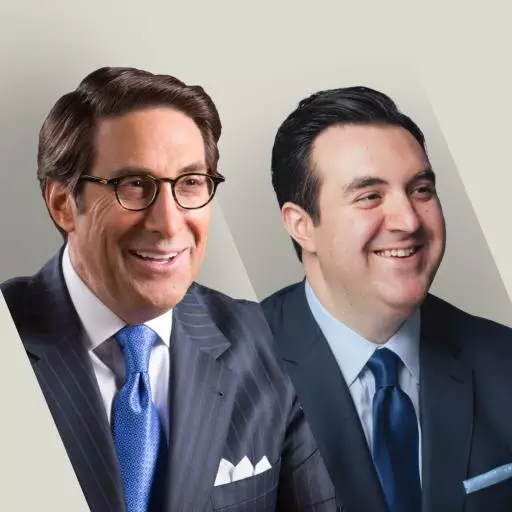
Logan Sekulow and Will Haynes discuss a shocking update in the James Comey 8647 controversy.
Logan Sekulow: Welcome to Sekulow. We made it to a Thursday, everybody. Will Haynes is in studio. We've got CC Heil joining us a little bit later. We're going to have a packed show, but I want to hear from you. 1-800-684-3110. Get on the air today.
How many times can we talk about James Comey's seashells? I feel like we continually talk about the man's seashell issues, but here we are. There's new revelations, and these new revelations are somewhat the most human version of this, which is him going, "Huh, I wonder if people could take this out of context" before he decided to post it.
"Hey, honey. Honey, can you look up on your phone real quick? Can you Google—do a little quick Goog—what's 86 mean? Just to make sure I'm not going to ruffle too many feathers." And she responded with it. Again, this is what happens when we get a deep dive here. The deep dive is not only this interesting shell formation that he posted on social media; we know he at least now took a second to think about it.
Will Haynes: Well, this is what's crazy when you look at this, but also maybe not surprising because he was the former director of the FBI. But this all comes out of a response from the government in this case because James Comey and his attorneys had filed a motion to suppress some of the evidence against him as well as requesting a Franks hearing. That would be trying to get things thrown out, saying that basically the prosecutors are being disingenuous with this case, as he has said from the beginning. That's his entire defense—that, of course, he didn't mean it as a threat to the President.
The problem is that the evidence shows what appears to be him crafting an alibi to get away with posting this, which also shows that he knew maybe this could have been taken in a bad way. Two minutes before he posted it, Comey's wife texted him a screenshot of the definition of "86" that said "to get rid of" or "refuse service." Again, some conversation had to have been had to lead to this. And I believe he said he was with his wife at the time; they were walking around.
Logan Sekulow: Just old Grandpa Comey.
Will Haynes: That's right. The crazy timeline is that he took the alleged photo of the shell formation at 1:56 p.m. In the story, he was walking with his wife on the beach at the time. Then she texted him the exculpatory definition—the one that's the clear one—two minutes before he posted the social media post on Instagram.
Over an hour after he takes the photo, he then decides, "I'm going to post it," and says—maybe we are extrapolating here—but, "Honey, look that up. Make sure I'm in the clear before I post this." She looks it up and screenshots the definition, texts it to him two minutes before he makes the official post.
So, it's not also like he stumbled upon it and says, "That's clever. Snap. Upload." No, he took the photo of the shell formation in question more than an hour before he actually made the post on Instagram. Now, this is what they, I assume, are trying to say—is, "Look, it's an alibi. Look, I knew it wasn't about that. I have no intent for it to be a threat."
Logan Sekulow: Does that really show? Or does it show a very crafty man? To me, it shows that you thought that it could be. So you are already saying, "I thought that this could be construed as a threat to the President of the United States. Maybe I need to look it up just to make sure."
That means there's a question there. Look, good for his wife. Sixty-five years old, knowing how to screenshot. I think that's actually a pretty impressive victory. Let's just say that. I think I'd have to walk a lot of people through screenshotting. Phone lines are open for you: 1-800-684-3110. That's 1-800-684-3110. We are getting close to wrapping up this week and wrapping up our Impact Match. Be a part of it today. That's at ACLJ.org where your donations are effectively doubled by other ACLJ champions and members ready to unlock their pledge. We'll be right back.
Welcome back to Sekulow. We've got some phone lines open at 1-800-684-3110. For those of you just joining us—and a lot of you, I can see, are—we'll give you a bit of an update. You may remember James Comey was walking around the beach. He saw what he called an interesting shell formation that said 86-47. Took a picture of it and got himself in a little bit of hot water when he posted it on social media. People were saying, "Man, it looks like you were trying to threaten or at least call for violence against the President of the United States."
Well, there's a little bit more details. He, of course, denied that. "No, that's not what I meant. I just thought it was a fun thing. Apologies, whatever." Of course, that sent him into a whirlwind of legal issues. And now, through new information that has been released, we know he at least questioned this decision. We're jumping a little bit to a conclusion here, so I'll say that.
We know that somebody in his world at least questioned the decision of whether he should be posting or not because two minutes—over an hour, by the way, after he took the picture—two minutes before he posted it, his wife texted him a screenshot explaining at least an odd definition of 86-47. Now, what that doesn't show is any sort of physical harm or threats. It just means "to get rid of."
But there's a reason that he at least thought—at least we can jump to that conclusion—a reason he thought that maybe some due diligence should be done here, that maybe people would construe this as some sort of threat to the President of the United States. And here we are. Now, let's not forget. We've got to play the highlights a little bit here, because this is not anyone who is what? We know he loves the camera. We know he has not been shy about that.
But we also know that this is not the first time he's been in hot water. The man has been a proclaimed, loud-and-proud leaker to the press, was committing a lot of what could be debatably crimes during all of this controversy. Of course, meddling in the election, even to the behest of the Democrats. Remember getting involved with the Hillary Clinton situation, saying, "We have all of these truckloads of emails and all the things that she had done" couple days before the election.
But, nothing's going to happen. And then we also know he was intentionally sending information to people to leak to the press.
Will Haynes: That's right. And once again, it wouldn't be surprising that an individual that did this—what we're about to play—to show memos specifically to manipulate the system to get a leak to the press to try to get a special counsel, would think ahead of time, "Hey, before I post this, Honey, text me the screenshot of the definition so it's in our records for when I get investigated that I can show, 'Look, we had this.'"
Logan Sekulow: Or at a minimum, your wife said, "Maybe you shouldn't do this. Let's look it up." That could be an explanation.
Will Haynes: But the other thing, too, is that they were together. That means there was a discussion about this. He said they were walking together on the beach and the fact that she texted the screenshot, as if to memorialize this, something that he's very fond of. As well as some of the messages they got later from their friends—we'll talk about that in a minute. But would it be surprising that someone that said this in an interview? This is bite 16, about why and how he tried to get a special counsel. Let's play bite 16.
Guest (Female): Did you show copies of your memos to anyone outside of the Department of Justice?
James Comey: Yes.
Guest (Female): And to whom did you show copies?
James Comey: I asked—President tweeted on Friday after I got fired that I better hope there's no tapes. I woke up in the middle of the night on Monday night because it didn't dawn on me originally that there might be corroboration for our conversation, there might be a tape. And my judgment was I needed to get that out into the public square. And so I asked a friend of mine to share the content of the memo with a reporter. Didn't do it myself for a variety of reasons, but I asked him to because I thought that might prompt the appointment of a special counsel. And so I asked a close friend of mine to do it.
Guest (Female): And was that Mr. Wittes?
James Comey: No.
Guest (Female): Who was that?
James Comey: A good friend of mine who's a professor at Columbia Law School.
Will Haynes: So, once again, he lays that out there that he leaked memos to a friend at Columbia Law School, which, if you've been following this, there's a lot of other rabbit trails we can go down with that friend. But what was the reason? To try and prompt the appointment of a special counsel. And one, he was successful; he manipulated the system there. But also there, "It didn't dawn on me there might originally be corroboration for our conversation." This is how he thinks.
So, the fact that a photo he took at 1:56 p.m., and then at 3:12 p.m. his wife texts him the definition of "86" and that does not include anything threatening, when even the government shows, "Hey, if you just Google this and you look at the data," this was even before the conversation erupted because of his post, it was very easy to find that many people took it as a threat of violence, meaning to kill or murder. But then two minutes later, he makes the social media post.
That kind of sounds like the kind of thing a guy who would leak to the New York Times memos to get a special counsel would plan in advance. It just kind of rings true to quote his former colleague, John Brennan. And then an hour after that, almost two hours really, it was at 4:52, a friend reached out to his wife, very upset about the content of that, saying, "Your Trump Derangement Syndrome has gone too far. Why are you doing this? Don't you know some people will see that as a threat?"
There's other layers to this, too. James Comey was selling a book at the time that was about rhetoric online being a vector for getting people to do things—marching orders, so to speak. That was a plotline in his book. He had to have been thinking about that, especially with all these alibis that he gets out there. There's other text messages, too, Logan, that show him between his publisher saying, "I mean, it wasn't my intent, but if it sells books, I'm okay with it."
Logan Sekulow: I'm never shocked with any of this because also I know that people will claim that social media rhetoric and all those things—and by the way, I'm totally on board with the idea of us becoming a much more civilized, debating country where we actually can have these discussions. However, it's only one-sided. It seems to be, "Yeah, I'm in favor of something like this and being better and not forcing people to go to extreme measures because of stuff they see on a screen if it reflects me in the way that I want to be reflected."
But if it's the other political party or the shoe's on the other foot, then all of a sudden all is fair. I don't like that at all, and I feel like there's way too many people who believe that. I want to take a phone call, though. Let's go to Will in Indiana on line 2. Will, go ahead.
Guest (Male): Yes, I'd like to thank you for what you do. I just wondered if this would make his wife a co-conspirator.
Will Haynes: So, what is interesting is the reason we're seeing this is because of their motion—the Comey defense team's motion to try and get certain information thrown out. But the fact that there's this timeline, we know that she made public statements as well—the wife—that there could be an avenue if that's what the Department of Justice wants to do to look into that. I don't know. Publicly she's not been charged with anything that I am aware of. But yes, if it goes down that line and that they were saying to each other—one would probably have to flip on the other to get there—but the fact of it seems just so coordinated.
"Hey, let's memorialize this conversation of ours." And regardless of—in his mea culpa post, he said, "I had no idea that some people used that language as meaning something violent." One, a lot of people pointed out that's absurd. You were the FBI director. You worked against mobsters. You know that that was terminology that would be used. But on top of that, it also goes to show this evidence they have shows that they were having that conversation.
There is no other reason, even if it is purely innocent, not just trying to memorialize it, and they got mad at each other and were in separate rooms and she texted a screenshot instead of talking to him because they were just on a walk on the beach. But even if that's the answer, it shows they were having the conversation that some people could take this differently.
Logan Sekulow: They could take it wrong. And I think that to me shows so much intent and so much information that we now have. It wasn't just a flippant, "I took this picture, three seconds later I posted it, I didn't think about it." This is a discussion that was happening internally with him and his wife about whether it was worth them taking this risk.
We only got a minute left. When we get back, we're going to talk about some new reports that the ACLJ are working on. CC Heil is going to be joining us. I want you to go ahead and get on hold, though: 1-800-684-3110. That's 1-800-684-3110 if you want to be on the air today. Also, we are at the 20th here. We are really closing in on the end of our Impact Match. Be a part of it today. Go to ACLJ.org/impact and have your tax-deductible gift doubled dollar-for-dollar. Go to ACLJ.org/impact and have your gift doubled today.
Welcome back to Sekulow. The work of the ACLJ continues. Senior Counsel for the ACLJ CC Heil is joining us right now, who is involved in all of our cases as well internationally. There are some disturbing but also not so shocking things happening out of the world of the United Nations. And of course, an ACLJ report has come out that I'm sure you were part of here that really shows the true double standard that comes out of something like the UN in terms of the way they treat every other country and how they treat Israel.
CC Heil: Well, you're right. So this is the 63rd session of the Human Rights Council. Each session, which there's three each year, we have the opportunity to submit written submissions and then we have the opportunity following that to do oral interventions, which we take every single opportunity that we're given. And this time, it's always kind of a decision: what are we going to cover? And it just happened to follow the United Nations Secretary-General Guterres had visited Syria.
Syria's not the bastion of human rights protection. He's in Syria, and he takes that time that he is in Syria not to address Syria's human rights issues; he actually praises them and pledges support to Syria. Guess what he does? He takes that opportunity to condemn Israel. And so when we're thinking about what we're going to do, I'm like, "Okay, this is just ridiculous. This bias that we've talked about over and over and over for years at the UN, we have to address this."
And we're going to start off with showing even the Secretary-General, even when he's in Syria, he can't waste a moment to condemn Israel. So when we put this report together, we highlight every single issue where the UN literally is always targeting Israel with baseless criticism. We show that since 2006, the General Assembly has condemned Israel 187 times, which you might think, "Okay, well, that's no big deal."
But then when you think they've only condemned Iran and North Korea 11 times. Eleven! So you have the General Assembly 187 times. Then you go to the Human Rights Council. They've condemned Israel 116 times. And once again, Iran, I think, only got 18 and Venezuela four. So it's ridiculous. And I can keep going on how it continues and continues.
Logan Sekulow: I think when people ask about the importance of us being there, some of it is to just hold a mirror up and say, "Hey, look what's happening. Look what you are doing, UN. Look at the way you are treating this situation." Because if no one is there to even hold them accountable, then this is what happens. So when we think about how we have to get involved in the UN, this is a big part of it, which is to somewhat show them what they've actually done.
CC Heil: Right. I mean, we even point out you have to address certain issues under agenda items. They have 10 agenda items. And we even pointed out, "Look, your agenda items, they're general." It's like Agenda 1 is organizational and procedural matters. Then you have annual reports, or promotion and protection of human rights, or racism. But Agenda 7 is totally right against Israel about the human rights situation in Palestine and other occupied Arab territories.
Logan Sekulow: They're even using the word "occupied."
CC Heil: Absolutely! Absolutely. So it's like even your agenda items are absolutely biased. Like, you cannot get away with it. And we, again, I can point out more—the Commission of Inquiry, which we point out all the time, does these reports. They have a 94-page report condemning Israel for targeting Palestinian children. Only out of that 94-page report, only 13 pages address any children. And these are the things they say: "Well, girls are forced to wear veils."
How is that Israel's fault? That is not an Israel thing. Israel does not force Palestinian girls to wear veils. But they don't have any allegations. So it is just false. And we point that out. We point out that the Office for the Coordination of Humanitarian Affairs on the occupied Palestinian territory in 2021, they dismissed the head because she had the audacity to criticize rocket attacks from Gaza against Israeli citizens.
And so she gets dismissed. So again, 1,462 UNRWA workers were members of Hamas. No problems there. It is ridiculous. We point out just item after item, and then we just say, "Look, you need to take an honest look at your own work and the work of your sister organs, and you need to address this. Because this is not justice. You are not following your mandate when you are targeting the one democratic country in the Middle East."
Will Haynes: Well, and I think CC, one thing that we've talked about here—one, the importance for us to be there, that we actually are able to utilize the UN many times in some of our cases of false detention. You've had a lot of good progress working with some of the organizations at the UN. But it's not just us filing reports like this. The fact that we can file reports like this are because of all the hard work we put in at the UN.
We make sure we file in every UPR. We make sure that we are there in person, sending videos, that we are a known entity and to some degree because of that, earn the respect of the UN—not just always criticizing it, but participating in it. So it's, yes, these are very good work products. But it's also all of the work that you and your team have to put in at the UN for it to even be remotely taken seriously because you have to earn the respect to even hold that mirror up.
CC Heil: Yeah, it's great. Like you said, we have great relationships. I even have great personal relationships with a lot of the special procedures. So like the Working Group on Arbitrary Detention, and they do a lot of good work. And so we absolutely maintain those good relationships. But we do also want to hold the United Nations and the Human Rights Council—when they are wrong, we need to tell them they're wrong.
And we need to make sure that people who rely on these reports and think that, "Oh, it's the UN, so it's the gospel," that we're pointing out it's not. There is bias when you're talking about Israel. There is bias, and you have to seek the truth.
Logan Sekulow: I see a lot of comments coming in. Someone said, "What a job to try to even speak truth to the UN." So I understand, CC, you probably understand that more than anyone.
CC Heil: There are times when I am sitting there, especially when we are talking about Israel, that I tell the team, "Please watch my back," because I don't know if somebody's going to come in and stab me because I am literally a lot of times the only person that is sitting there taking the position that Israel has the right to defend themselves.
Logan Sekulow: And that's why we've got to be there. And look, thankfully we have that opportunity. I don't think people understand that. It's not like anyone could just walk into the UN. We have a special clearance to do all of this.
CC Heil: That's right. And only the people with the NGOs that have that status can do that. And so we take that opportunity, we take it seriously. And I say this all the time; I know people think the UN is useless, but guess what? It's there, and that's where the member states meet. So we're going to be there speaking the truth.
Logan Sekulow: Absolutely. And thankfully we can be there, whether it's through the ACLJ, through our European Center, whether it was ACLJ Jerusalem, whatever it needs to be. Our whole work that we do internationally, of course, it's not just limited to the United States of America, but a lot of it is the interest of the United States of America.
Thank you, CC, for joining us. Look, we've got a second half hour coming up. Don't go anywhere if you are watching online. If you're listening on terrestrial radio, you may need to join us online. That's at ACLJ.org, YouTube, Rumble, Facebook. We're broadcasting live there 12:00 to 1:00 p.m. Eastern time each and every day. Be a part of the show. If you're listening to this a little bit later on and you want to catch the rest of the show, it's always archived however you get your podcasts.
Easy, go to ACLJ.org, you can download the ACLJ app. But again, whatever podcast player of choice or on YouTube, you can always find us archived immediately following the show. That being said, we're starting to wrap up our Impact Match. Be a part of this. This is our short break, so you've got about one minute until we're back. And in that one minute, I encourage you to go to ACLJ.org. Have your donation doubled today. We'll get into more details of that coming up.
Featured Offer
Featured Offer
About SEKULOW
The American Center for Law and Justice (ACLJ) focuses on constitutional law and is based in Washington, D.C. The ACLJ is specifically dedicated to the ideal that religious freedom and freedom of speech are inalienable, God-given rights. In addition to providing its legal services at no cost to our clients, the ACLJ focuses on the issues that matter most to you — national security, protecting America's families, and protecting human life.
About Jay Sekulow
An accomplished and respected judicial advocate, Sekulow has presented oral argument before the U.S. Supreme Court in twelve cases in defense of constitutional freedoms. Several landmark cases argued by Sekulow before the U.S. Supreme Court have become part of the legal landscape in the area of religious liberty litigation; these cases include Mergens, Lamb's Chapel, McConnell v. FEC, Operation Rescue v. National Organization for Women, and most recently Pleasant Grove City v. Summum.
In 2009, Townhall Magazine named Sekulow to its "Townhall of Fame" and recognized him as "one of the top lawyers for religious freedom in the United States." In 2007, the Chicago Tribune concluded that the ACLJ has "led the way" in Christian legal advocacy. In 2005, TIME Magazine named Sekulow as one of the "25 Most Influential Evangelicals" in America and called the ACLJ "a powerful counterweight" to the ACLU. Business Week said the ACLJ is "the leading advocacy group for religious freedom." Sekulow's work on the issue of judicial nominees, including possible vacancies at the Supreme Court, has received extensive news coverage, including a front-page story in The Wall Street Journal. In addition, The National Law Journal has twice named Sekulow one of the "100 Most Influential Lawyers" in the United States (1994, 1997). He is also among a distinguished group of attorneys known as "The Public Sector 45" named by The American Lawyer (January/February 1997). The magazine said the designation represents "45 young lawyers outside the private sector whose vision and commitment are changing lives."
Sekulow brings insight and education to listeners daily with his national call-in radio program, Jay Sekulow Live!, which is broadcast throughout the country on nearly 850 radio stations. Sekulow also hosts a weekly television program, ACLJ This Week, which tackles the tough issues of the day. He is also a popular guest on nationally televised news programs on ABC, CBS, NBC, CNN, FOX News, MSNBC, CNBC, and PBS.
Contact SEKULOW with Jay Sekulow
jsekulow@aclj.org
http://aclj.org/
American Center for Law and Justice
PO Box 90555
Phone: 757-226-2489
1-800-684-3110
1-877-989-2255