
Oneplace.com

Church and the State, Part 2

May 14, 2026
00:00
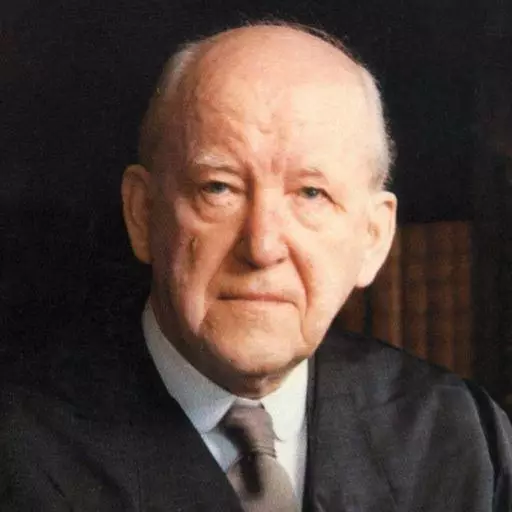
Does church history hold importance for believers today? Why should Christians look to the past for insight into doctrine instead of looking to Scripture alone? In the second part of his series on the church and the state, Dr. Martyn Lloyd-Jones chastises the arrogance of believers who say church history is not important. In this sermon on Romans 13:1–7 titled “Church and the State (2),” he argues for the wisdom of modern believers’ consideration of men and women of history handling difficult questions of their faith. This is particularly enlightening as one considers the relations of church and state. Dr. Lloyd-Jones continues his historical look at these particular relations through consideration of the view that the church and the state are essentially different and distinct. He provides four distinctions to consider: their difference in origin, the object from which they were instituted, the power given to them by God, and the way their functions are carried out. The teachings of Ulrich Zwingli and John Calvin are given special attention by Dr. Lloyd-Jones as their beliefs are foundational to the development of the influential Belgic Confession and Westminster Confession. These confessions have direct implications for Presbyterian congregations today. Listen as Dr. Lloyd-Jones expounds on the value of learning from church history as he continues discussing the relations of the church and the state.

Dr. Martyn Lloyd-Jones: I am going to read again the first seven verses of the 13th chapter of Paul's Epistle to the Romans, which we are considering at the present time. It is very vital that we should bear what the apostle says here in our minds and remember it in detail.

Let every soul be subject unto the higher powers. For there is no power but of God; the powers that be are ordained of God. Whosoever therefore resisteth the power, resisteth the ordinance of God, and they that resist shall receive to themselves judgment, damnation. For rulers are not a terror to good works, but to the evil. Wilt thou then not be afraid of the power? Do that which is good, and thou shalt have praise of the same.

For he is the minister of God to thee for good. But if thou do that which is evil, be afraid, for he beareth not the sword in vain. For he is the minister of God, a revenger to execute wrath upon him that doeth evil. Wherefore ye must needs be subject, not only for wrath, but also for conscience sake. For for this cause pay ye tribute also, for they are God's ministers, attending continually upon this very thing. Render therefore to all their dues: tribute to whom tribute is due, custom to whom custom, fear to whom fear, honor to whom honor.

We have arrived at the point at which we are considering, in the light of that teaching, the whole vexed, difficult, perplexing question of the relationship between the Church and the State. We have arrived at that as the result of considering the teaching here concerning the State and the character of the State, the Christian's view of the State, and his relationship to it in general. Having dealt with the individual Christian, we are considering the relationship between the Church and the State—Christians as members of the Church—so the total position of the Church as over and against, or in relation to, the State.

We saw last Friday that this question arises quite inevitably because, as Christians, we belong to the Church and to the State. Many of the things that are dealt with by the State are also dealt with by the Church and vice versa. There are many reasons why this problem of necessity arises, and it always has arisen ever since the beginning of Christianity. We have seen that there are two main ideas with regard to this relationship between the Church and the State. The first is one that regards them as one—that the Church and the State are one. The second view is that they are essentially different and distinct.

Last Friday, we considered the first—that the Church and the State are one. We saw that there were two main divisions and ideas with regard to that. The first was the Roman Catholic view, where the Church dominates the State. The second was what is generally called Erastianism, the view which teaches that the State dominates the life of the Church—the kind of thing you have in the Church of England and in general in the Lutheran churches. We gave you a little of the history showing how these views came into being during the passing of the centuries.

Now we come this evening to the second great division with regard to this matter, the second main view, which is that the Church and the State are essentially different. What are the reasons for drawing this distinction? On what grounds should we say that the Church and the State are not one, as the other views have held, but that they are quite distinct—essentially distinct and separate? There are some four main answers to that question.

To start with, the Church and the State are essentially different in their origin, by which I mean the way in which they have come into being. The State comes from God as the universal sovereign ruler of the universe, whereas the Church arises from the Lord Jesus Christ as the Mediator. The State is something broader and wider. We believe that the world was created by God, the world belongs to God, and that God is the governor of the whole universe. In that character and capacity, God has brought into being the State. The powers that be are ordained of God.

That has nothing to do with salvation directly. It is God as the moral governor of the universe. But the Church, as we see so clearly in the New Testament, is something that comes into being as the result of the mediatorial or saving work of the Lord Jesus Christ. The Church comes into being in that way. That has been the traditional way of looking at this matter. Indeed, you will often find that people put it like this: the State belongs to the order of nature. It is a part of God's dealing with the universe from the standpoint of nature, whereas in the case of the Church, we are not in the realm of nature but in the realm of grace.

There has been some dispute amongst reformed and Protestant teachers with regard to that. There are those who say that you shouldn't have this distinction between nature and grace, that that is not a truly accurate way of looking at this matter. They would substitute for that two divisions of grace. They would say that there is saving grace, special grace, and particular grace, but they would say that there is also general grace, or what they call common grace. They prefer that division and that distinction.

So you don't say so much that the Church belongs to the realm of grace and the State belongs to the realm of nature. You say rather that the Church belongs to the realm of special grace, saving grace, and particular grace, whereas the State belongs to common grace. This is a teaching that we should be familiar with because it has many important emphases. It really would put it like this: that God deals with everybody through grace in Jesus Christ, and that the Holy Spirit deals with everybody, not only with the believer and the Christian but also with the unbeliever.

They would put it in terms of the operations of the Holy Spirit. The Holy Spirit deals with a believer directly and immediately and in a very special manner—convicts him of sin, gives him the gift of faith, produces regeneration, baptizes him into the body of Christ. All these we are familiar with in the matter of our redemption and salvation. But the teaching is that the Spirit also deals with others, and He does so by operating upon them in a more general manner, in giving them gifts and abilities.

In other words, this teaching is concerned to say that there is nothing which is natural in the sense that it arises out of nature apart from God. The teaching can be put like this: God made man in His own image, and he was perfect, and the whole universe was perfect. But man sinned. What happens? There is a new relationship between God and men. Here comes this division. Some are brought to salvation, but the others are not entirely abandoned. God deals with the rest through common grace.

God did not abandon the world and the totality of mankind when man sinned. God brought into being the powers that be to restrain evil, to put a check upon sin and the manifestations of sin. This is a part of common grace. God is acting in a gracious manner with regard to His ultimate purpose. This is a part of it. They are not saved, but they are restrained, and they come under the influence of the Spirit of God.

Of the two, this is a better way of putting it—that it's better not to talk about a contrast between grace and nature. It is better to talk about particular or special grace, saving grace if you like, and common grace. The point being that God is concerned even about the unregenerate and has dealings with them and does certain things to them—not in a saving sense, but from the standpoint of law, order, peace, government, and things of that kind.

I think the more you contemplate it, the more you will see that it is important that we should remind the world as it is today that there is nothing outside God's government and God's influence. Though men may deny it, they nevertheless are under the influence of the Spirit of God. The humanistic world doesn't realize that most of what it stands for and does is really the result of the operation of the Spirit of God upon them. In spite of themselves, that is what is happening to them. The first point is that the Church and the State differ in their origin—special grace and common grace.

Secondly, there is an obvious difference between them when you consider them from the standpoint of the primary object for which they were instituted. Why was the Church ever instituted? She was instituted for spiritual ends and purposes, for the welfare of believers. The Church has been instituted in order that she may preach the Word—preach it to the unsaved world to evangelize, but not only that—to provide fellowship for God's people, to provide instruction in righteousness, to expound the scriptures, to give help and aid, to administer the sacraments. The Church has been instituted and has been brought into being for the good and the welfare of believers, for God's children, for God's people.

But this is not true of the State. The primary function of the State is a wider one, and what we are told here in these seven verses that we are considering. He is a minister of God to thee for good. He is here to execute wrath upon him that doeth evil and to reward those who do good and to give praise to those who do good. The whole function and the primary object of the two is essentially different. The State is concerned with preserving peace and external good order. It is not concerned with a spiritual object, whereas the Church is essentially spiritual and concerned primarily with these spiritual matters.

Then the third difference between the two is in the power which has been committed to them respectively by God. Take the Church first. What is the power that is given to the Church? The power given to the Church is the power of grace. The Church has no coercive power. The Roman Catholic Church does the exact opposite and teaches and believes the exact opposite—that she has coercive power. Other sections of the Church have been guilty of the same error.

But any reading of the New Testament should make it plain and clear to us that the Church has no coercive power. It is the power of persuasion, the power of grace. I can best put that to you in a quotation from Martin Luther, who seemed to me to have great clarity of understanding with regard to this matter. He, referring to the Roman Church, says, "With a death sentence, they solve all argumentation." He admits that there may be cases where, in the interest of tranquility, troublesome persons may be banished from the country, but Luther was opposed to bodily punishment for heresy.

Heresy can never be restrained with force. It must be grasped in another way. This is not the sort of battle that can be settled with the sword. The weapon here to be used is God's Word. If that does not decide, the decision will not be effected by worldly force, though it should drench the whole world with blood. Heresy is a thing of the soul; no steel can put it out, no waters can drown it. God's Word alone can destroy it. That's a very clear statement of the fact that the power that is given to the Church is not a coercive power; it is the power of grace.

But we have been reminded by these verses that the power that is committed to the State is essentially coercive, for he beareth not the sword in vain. The power of the State is always a coercive power. The ultimate limit, as we have seen, is capital punishment, but all along the line and short of that, it is a coercive power. So there is an obvious distinction between the State and the Church again.

Lastly, in the fourth place, there is a very distinct difference between the way in which the functions of the two are carried out in the matter of the people or officers who are appointed in order to do that. In the case of the Church, you remember the lists that are given in various places in the New Testament: first apostles, secondarily prophets, evangelists, pastors and teachers, elders and deacons. Those are the officers of the Church.

But when you come to the State, you find something entirely different. Here you have the magistrate—the chief magistrate, the king, the queen, the emperor, or whoever it may happen to be. It is an entirely different order with various dignitaries and functionaries working under this supreme authority of the supreme magistrate or governor. This is made perfectly plain as you read the Bible both in the Old Testament and in the New.

So there you see you have got four very real reasons for saying that the Church and the State are not one, but that they are essentially different—different in their very essence. This was the kind of thing that was rediscovered and recaptured at the time of the Protestant Reformation. It had become lost at the time of Constantine, but it was given to the Protestant reformers to realize this and, in a measure, to restore this vital and essential distinction.

It has occurred to me that some of you perhaps may wonder why I spend so much time with this historical survey. There are people I have met at times who regard themselves as being ultra-spiritual and think that they demonstrate that ultra-spirituality by saying you shouldn't be bothered about history. Why don't you come straight to the scriptures, and why don't you expound the scriptures? I don't care what people have said in the past.

There are people who hold a view like that and think that a Christian minister who reminds you of the history of the past is really being not very spiritual and becoming almost secular. My only reply to that kind of criticism is that that is sheer arrogance on your part if you hold that view. What right have we to assume that our interpretation of Scripture alone is right? It is arrogance for this reason: there have been men and women in the Church throughout the centuries, and God has raised up great men, notable men, spiritually-minded men. Are we to ignore all that they have thought and said and done?

It is arrogance to do so when we are confronted by momentous questions like these, and when we know that those who have gone before us have been confronted by them and that in the past it has often led to bloodshed, to terrible persecution, and to war. Surely, modesty alone and humility should make us very careful and anxious to avail ourselves of any help or aid we can lay our hands on. I have known people who don't believe in using commentaries. They say, "I have got the Holy Spirit in me, and there is the Word." They can do it all.

I have known people who have even gone to extremes beyond that. I remember a poor man once who was saying things which were rather foolish, and it was pointed out to him that he was contradicting the teaching of the Apostle Paul, to which his reply was he didn't care what Paul said; the Spirit in him told him. You see the folly of such arguments. We should thank God for all help and all aid.

This matter which we are now considering is so important at the present time, owing to certain tendencies that are evident in the world. I am not only thinking of the fact of the condition of affairs in China at this very moment and the position of Christian people there, and indeed others in other countries behind the Iron Curtain. It is our duty to be thinking of these people, helping them as we can, and praying for them.

But on top of it all, there is this trend back to Rome and our certain knowledge that that church, when she does have authority and power, invariably exercises it. It may well be that some of the younger members of this congregation may have to face positions such as the Protestant reformers had to face in their day and generation and the Puritans and Covenanters and others after them. Whether you like it or not, you may be involved in all this, and therefore we must consider it. Surely we ought to learn something from history. If we can't, we are doomed to make the same mistakes. We know that these men in their day and generation, as we today, tried to face these matters honestly and biblically. And yet, I think we can venture to say, having considered all in the light of the teaching of the Scripture, that they were defective at certain points.

The movements we are concerned about particularly are these: Ulrich Zwingli, one of the leaders in this matter who comes in the historical order next to Martin Luther. Luther first, Zwingli second, and Zwingli comes before Calvin from the mere standpoint of chronology and of dates. He died in 1531, whereas Calvin did not publish his institutes and become known until 1536. Zwingli had considerable influence upon the mind and the thinking of Calvin.

Zwingli's ideas were that of a theocracy, which means the rule of God right through the whole of life, State included. Only that he puts his emphasis primarily upon the teaching of God. He believed that the Church and the State belonged together as naturally as the body and the soul in man. What a soul is to a man and his body, so he said the Church is to the State. While he recognized that they were distinct and denounced the Roman Catholic view, while he emphasized that they were distinct, he did advocate this union between them.

He said that the secular power, the State, should supervise the discipline of the Church. But then, on the other hand, he said that the Bible was to be the code of law of the government of the State. He said that the validity of civil law depends upon its conformity to the scriptures. He went so far as to say that if the government of a country ceased to be Christian or fell short of being truly Christian, then you should rebel against it and have a revolution. He believed in fighting for these matters, and he actually did die in battle himself with his sword in his hand—a great tragedy to me—in 1531.

There was this interrelationship, this cooperation. It was the business of the State to enforce discipline, but the Church would tell the State what to do. Indeed, the Church told the State what acts to pass in a sense because it must all be governed by the scriptures. He was really a pioneer in those views. Some of the people called Anabaptists had similar ideas to him and for a while he cooperated with them, but they separated and the Anabaptists became more and more extreme and wouldn't recognize the State at all and wanted to impose a theocracy, so he parted with them and became very bitter against them.

But those were the teachings of Zwingli. These had much influence upon the thinking of the towering genius of them all in many ways, John Calvin. It is very interesting to notice that Calvin, while he has a good deal to tell us about Church and State, never actually defined a kind of doctrine of the State. He made references to it and said things in practice, but he did not work out in detail his views on the nature of the State and the relationship therefore between the Church and the State. That is not a criticism of him. When you consider that man's life, when you consider what he did, when you consider all the expositions of the books of the scripture that he gave, and the advice he was constantly being called upon to give, not only by the state of Geneva to which he belonged, that city-state, but the way in which so many in other lands—this country included—depended upon him.

The astonishing thing is that he was able to do what he did. All honor to these men. They were called upon to do one big work, and they had not the time nor the opportunity to work out everything in detail. And so it has come to pass that Calvin has not given us a clear, unmistakable teaching with regard to this whole question of the relationship between the Church and the State. He did certain things and he said certain things, but he never worked it out in a systematic manner.

He believed that the Church and the State are distinct; both are ordained of God quite definitely. He says that their spheres are essentially different, but they must nevertheless work together. In other words, his tendency was to identify them though he said they were distinct and different. For practical purposes, he regarded them as one. For instance, if you wanted to be a citizen of Geneva, it was absolutely necessary for you to make a profession of faith in Christ. You couldn't be a citizen if you didn't do that.

Of course, the result was that everybody made a profession of faith in Christ, practically. There were some who rebelled now and again, but generally speaking, because of this, they all laid claim to a faith in Christ, and so they were citizens of Geneva. So Geneva was a church, as it were; all the citizens belonged to the church. He said that the State, in addition to its duty of safeguarding peace and order, must also see to it that the right kind of doctrine and worship be maintained, and also that sins against the first table of the Mosaic law, the Ten Commandments, should be punished.

If you have Calvin's Institutes, you read in Book 4. Calvin deals with that quite plainly and clearly. He also then went on to say that the State in turn must conform its laws to the divine law. The relationship between the Church and the State in Geneva was a somewhat confused one, and indeed, Calvin had to fight most of his life over this matter. At times, he would submit to the State. In fact, Calvin did teach that it is the duty of every man to submit absolutely to the sovereignty of the State. He made certain exceptions to that.

The ministers of the Church are chiefly the ones to say what is right religion. Calvin naturally could not allow the State to settle Church matters upon the basis of its principles. The officers of the Church were thus to be the judges in State affairs involving religion and morals. You see, religion is a part of the function of the State according to his teaching. But the Church is to be the judge in State affairs involving religion and morals.

This then was the situation. In spite of the admission that the State is sovereign and must be obeyed as long as this can be done without sin, yet the Church dictated to the State in matters of religion and morals and demanded that the State help to Christianize the world and permeate the social order and the whole civilization with the ethical principles of Christianity—with force, where this becomes necessary. Zwingli had expressed the same principle. The overthrown Roman Catholic practice of using the State for realizing the ideals of the Church again came back into Protestantism by the back door. Calvin really got back to that position. Having protested against Rome and objected to it, in practice, he really went back to the old Roman Catholic position and said that the Church could use the State in order to bring its own purposes to pass.

Most important for us to bear it in mind because he had such influence, not only upon England but still more upon Scotland, indeed upon the Low Countries—Holland in particular—and eventually upon Presbyterianism throughout the entire world. The famous confession that is followed by the Dutch Reformed Church and the various divisions from it and of it in Holland today and in the United States: they go by what is called the Belgic Confession of 1561.

This is what it says about magistrates in Article 36 of the Belgic Confession: "We believe that our gracious God, because of the depravity of mankind, hath appointed kings, princes, and magistrates, willing that the world should be governed by certain laws and policies to the end that the dissoluteness of men might be restrained and all things carried on among them with good order and decency. For this purpose, He hath invested the magistracy with the sword for the punishment of evildoers and for the praise of them that do well.

"And their office is not only to have regard unto and watch for the welfare of the civil state, but also that they protect the sacred ministry and thus may remove and prevent all idolatry and false worship, that the kingdom of Antichrist may be thus destroyed and the kingdom of God, the kingdom of Christ, promoted. They must therefore countenance the preaching of the Word of the Gospel everywhere that God may be honored and worshipped by everyone as He commands in His Word.

"Moreover, it is the bounden duty of everyone of what state, quality, or condition soever he may be, to subject himself to the magistrates, to pay tribute, to show due honor and respect to them and to obey them in all things which are not repugnant to the Word of God, to supplicate for them in their prayers that God may rule and guide them in all their ways and that we may lead a quiet and peaceable life in all godliness and honesty. Wherefore, we detest the error of the Anabaptists and other seditious people and, in general, all those who reject the higher powers and magistrates and would subvert justice, introduce a community of goods, and confound that decency and good order which God hath established among them."

There, you see, is an outworking of the teaching of John Calvin. With regard to the early Puritans in this country, they were all, you remember, within the Church of England. They were clergymen, but they were Puritans; they objected to the incomplete reformation of the Church in England with the matter of wearing the surplice and various vestments and with regard to the sacrament and so on. But the Puritans in general simply carried over this teaching which was in vogue in the Church of England and therefore come under the heading we considered last Friday evening.

About 1570, there was a division in the ranks of the Puritans. A man called Thomas Cartwright, who was the Regius Professor of Divinity in Cambridge, began to teach Presbyterian ideas. The view of Presbyterians with regard to this whole question of the relationship of the Church and the State is in no dispute at all, as it is laid down quite plainly in the Westminster Confession of Faith.

Chapter 23 of the Westminster Confession of Faith: "Of the Civil Magistrate." It's very similar to the Belgic Confession. "God the supreme Lord and King of all the world hath ordained civil magistrates to be under Him over the people for His own glory and the public good, and to this end hath armed them with the power of the sword for the defense and encouragement of them that are good and for the punishment of evildoers.

"It is lawful for Christians to accept and execute the office of a magistrate when called thereunto, in the managing whereof as they ought especially to maintain piety, justice, and peace according to the wholesome laws of each commonwealth, so for that end they may lawfully now under the New Testament wage war upon just and necessary occasions.

"The civil magistrate may not assume to himself the administration of the Word and sacraments or the powers of the keys of the kingdom of heaven; yet he hath authority, and it is his duty to take order that unity and peace be preserved in the Church, that the truth of God be kept pure and entire and all blasphemies and heresies be suppressed, all corruptions and abuses in worship and discipline prevented or reformed, and all the ordinances of God duly settled, administered, and observed. For the better effecting whereof, he hath power to call synods to be present at them and to provide that whatsoever is transacted in them be according to the mind of God."

That is what the Presbyterians believed, and those who adhere to the Westminster Confession of Faith should still believe. This was in 1643. You see the power that is given there to the magistrate. He can call synods and attend at them. This is the case even where he doesn't happen to be a Christian man himself. They say infidelity or difference in religion does not make void the magistrate's just and legal authority nor free the people from their due obedience to him, from which ecclesiastical persons are not exempted, much less hath the Pope any power of jurisdiction over them in their dominions or over any of their people, and so on.

But I want again to be quite fair. They laid that down in 1643, and of course, it was an extension of the teaching of John Calvin and the teaching that John Knox, who had spent years in Geneva with John Calvin, had imbibed from Calvin and therefore tended to introduce into Scotland. But John Knox was followed by a very great man called Andrew Melville. While he, in general, held to these ideas, I must read to you a most wonderful statement which he made on one occasion. He was constantly in trouble with James VI of Scotland, who became James I of England. They met together on one occasion to discuss these matters. He was pointing out that the king was arrogating too much power to himself and interfering too much in the church.

This is how Andrew Melville addressed His Majesty King James VI of Scotland: "Sir, we will always humbly reverence Your Majesty in public, but since we have this occasion to be with Your Majesty in private, and since you are brought to extreme danger both of your life and crown, and along with you the country and the church of God are like to go to wreck for not telling you the truth and giving you faithful counsel, we must discharge our duty or else be traitors both to Christ and you. Therefore, sir, as diverse times before I have told you, there are two kings and two kingdoms in Scotland.

"There is King James, the head of this commonwealth, and there is Christ Jesus, the king of the church, whose subject King James VI is, and of whose kingdom he is not a king, nor a lord, nor a head, but a member. Sir, those whom Christ hath called and commanded to watch over his church have power and authority from him to govern his spiritual kingdom both jointly and severally, the which no Christian king or prince should control and discharge, but fortify and assist; otherwise, they are not faithful subjects of Christ and members of his church. Sir, when you were in your swaddling clothes, Christ Jesus reigned freely in this land in spite of all his enemies; his officers and ministers convened and assembled for the ruling and welfare of his church, which was ever for your welfare, defense, and preservation when these same enemies were seeking your destruction and cutting off."

There was that element always present. You see the difficulty once more with all these men was this whole question of authority. That is where it seems to me is the point at which Christian men have always gone astray. In their search for some tangible authority, the tendency always has been to give too much power to the State. And there, I think you see it clearly shown in the Belgic Confession and in the Westminster Confession of Faith. But you have, at the same time, this amazing insight and protest of a man like Andrew Melville. Of course, it tended to vary from individual to individual.

Next time, I want to tell you about how the American colonists, the pilgrim fathers and their descendants, handled this matter, and I want to tell you also how the free churches really came into existence. Then, in the light of all this, we can come back and consider the teaching of the scripture. Let us pray.

O Lord our God, we come back unto thee and we are again reminded of how frail and fallible we all are. Thou hast brought us into a large and into a wealthy place. We would thank thee, O God, more than ever for thy Word. We do thank thee also for all thy servants throughout the centuries. We thank thee for their labors, for their toil, for their concern about these things, for the honesty thou didst give them, for the courage thou didst give them.

O God, forgive us that as a generation we are so ignorant of our privileges and often ignorant of the fact that they were bought for us at the price of blood and of life. O Lord, we pray thee to have pity and to have mercy upon us and to give us a living concern in this our day and generation, this age of change and of confusion and of opportunity. O God, make us wise and give us an understanding of the times in which we live. Above all, enable us to apply the truth of the teaching of thy Word to these times in order that thy holy name may be honored in all ways.

And now, may the grace of our Lord and Savior Jesus Christ, and the love of God, the fellowship and the communion of the Holy Spirit, abide and continue with us now this night and evermore. Amen.

This transcript is provided as a written companion to the original message and may contain inaccuracies or transcription errors. For complete context and clarity, please refer to the original audio recording. Time-sensitive references or promotional details may be outdated. This material is intended for personal use and informational purposes only.

Featured Offer

FREE GUIDE: 6 Keys to Overcoming Spiritual Depression

Find peace and comfort this season with your complimentary guide that includes access to 6 free bonus sermons on overcoming spiritual depression from Dr. Martyn Lloyd-Jones, one of the church’s most beloved Bible teachers. Topics include: true Christians can and do struggle with depression, recovering the joy of your salvation, dealing with crippling guilt over past sins, dealing with yesterday’s haunting regrets, encouragement to keep moving forward, and understanding God’s purpose for suffering.

About From the MLJ Archive

From the MLJ Archive is the Oneplace.com hosted ministry of the MLJ Trust. Our mission is to promulgate the audio ministry of Dr. Martyn Lloyd-Jones.


About Dr. Martyn Lloyd-Jones

Dr. Martyn Lloyd-Jones (1899–1981) has been described as "a great pillar of the 20th century Evangelical Church". Born in Wales, and educated in London, he was a brilliant student who embarked upon a short, but successful, career as a medical doctor at the famous St Bartholemew's Hospital. However, the call of Gospel ministry was so strong that he left medicine in order to become minister of a mission hall in Port Talbot, South Wales. Eventually he was called to Westminster Chapel in London, where thousands flocked to hear his "full-blooded" Gospel preaching, described by one hearer as "logic on fire". With some 1600 of his sermons recorded and digitally restored, this has left a legacy which is now available for the blessing of another generation of Christians around the world — "Though being dead he still speaks".

Contact From the MLJ Archive with Dr. Martyn Lloyd-Jones

Mailing Address
PO Box 953
Middleburg, VA 20118
