
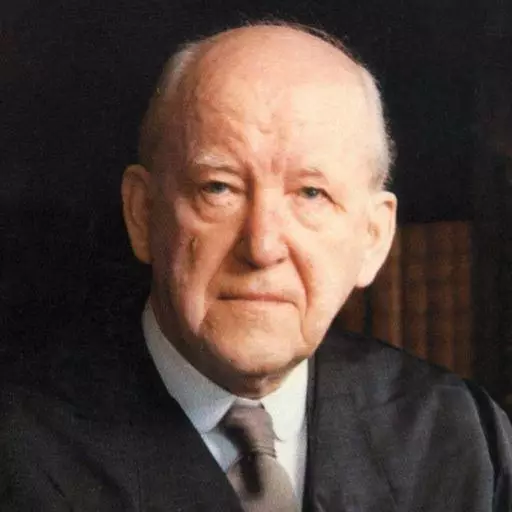
Spiritual Gifts, Part 1


Martyn Lloyd-Jones: We come this evening in a study of the Epistle to the Romans to the sixth verse in the 12th chapter, the 12th chapter of Paul's Epistle to the Romans, verse six: "Having then gifts differing according to the grace that is given to us, whether prophecy, let us prophesy according to the proportion of faith."
Here we come to the practical application and outworking of the principles that the Apostle has been laying down. It is most important we should carry in our minds exactly what the Apostle is doing here and what he is setting out to do. Having laid down his great doctrine in the first 11 chapters, he now comes to the practicalities, to the living of the Christian life.
He tells us that the great overriding principle we must bear in mind here is this: that we hand over ourselves completely to God, present our bodies a living sacrifice, which is our reasonable service. We must not be conformed to this world, but we must be transformed, especially in the matter of the renewing of our mind, that we may prove what is that good and acceptable and perfect will of God.
Renouncing this self-life, which is the worldly life, we begin to think of ourselves and all we do in terms of this new relationship that is in Christ Jesus. Negatively, he puts that by saying that every one of us should not think of himself more highly than he ought to think, but to think in a sane manner, soberly, according as God has dealt to every man the measure of faith.
He is dealing with the life of the Christian in the church. One of the greatest causes of trouble at the beginning and throughout the running centuries since in the life of the church has been that men and women have got into trouble over their varied gifts and positions in the church. This seems to have been the case with almost all these New Testament churches.
The Apostle deals with it here; he deals with it in extenso, as we know, in the first Epistle to the Corinthians, and it emerges in many other places. It has been very largely due to the exercise of the gifts that are given to us as Christian people. The way to approach all this is to realize that God has dealt to every man the measure of faith.
God deals it, God gives it out. You do not determine it; God determines it. He says we should look at it like this. People get into trouble about these matters because they will persist in failing to understand the nature of the church. They do not realize the unity of the church. They get a wrong view of themselves because they do not always think of themselves as parts of the church.
He uses his great illustration of the body. As we have many members in one body, and all members have not the same office, that is the truth about the body. So we, being many, are one body in Christ, and every one members one of another. We have worked that out. We have dealt with this: the church as the body of Christ.
We have seen how we should therefore always think of ourselves. Not as isolated individuals, not as individuals who are merely added together, but we are all parts of this great body. The body is greater than the part, and the head is the greatest of all. We are all subsidiary, and we all have our varying functions.
He has stressed this great principle of the unity of the body. If ever I think of any gift I have or anything I may chance to do apart from this great principle of the unity of the whole, I not only do my work badly, I have a wrong view of my work, and the whole body will tend to suffer.
He takes up some of the particular gifts and shows us how we should exercise them. This man always does the same thing. Every man has his method, and here is the Pauline method again to perfection. You would have thought that it was perfectly plain now, but he is not satisfied. Having then gifts differing according to the grace that is given us.
He sums up in a phrase what he has been putting to us as a statement in verse three and as he has put it in terms of the illustration of the body in verses four and five. Shall I say once more that the whole essence of the art of teaching is repetition. He never takes anything for granted. Having then gifts differing according to the grace that is given us, whether prophecy, ministry, and so on.
We have to start this evening with his summary of the doctrine. This is most important and particularly important at the present time. It is most interesting to observe and read what is happening round and about us at the present time and listen to people talking. So many of the difficulties and most of the confusion, if not indeed all of it, arise from the fact that people will speak and write in terms of their prejudices rather than of the plain teaching of the Scripture.
It is almost incredible how men can put themselves in print with the Scripture in print there before them, a mere manifestation of their own prejudice. I was reading an example of this only this afternoon, in which a man writing about speaking in tongues actually says with 1 Corinthians 14 in front of him, that the people who did this in Corinth were obviously the more emotional and less intelligent types.
The Apostle Paul has already said, "I thank God that I speak in tongues more than you all." The Apostle Paul becomes just an emotional, unintelligent type. It is incredible that people should say such things. Thank God that we have the Scripture before us, and thank God that the Apostle goes on repeating these things.
Having therefore gifts differing according to the grace that is given us. What does this tell us? Here is the first principle: the gifts that we have, any gift that we have, is always according to the grace that is given us. Let us remind ourselves again of this. The Apostle repeats it; I must repeat it.
The gifts that he is talking about here are not our natural gifts. We all are born with certain natural gifts. They differ tremendously. He is not dealing with them. He is dealing here now with these spiritual gifts which are given to us as members of the church and which are meant to be exercised in the body for the benefit of the whole church and through the church to those who are outside.
Gifts that the Apostle is dealing with are gifts that are only given to those who belong to the body. They are only given to those who are born again. He is only dealing with these special spiritual gifts that are given alone to those who are truly Christian. I am not saying members of the church, but those who are truly Christian.
They are the people really who alone are members of the body of Christ. I am not talking about the visible church so much as of the true church, which is his body. The Apostle puts this in 1 Corinthians 12, verse 11: "But all these worketh that one and the selfsame Spirit, dividing to every man severally as he will."
He decides which gift to give to each. That is a categorical statement. All these worketh that one and the selfsame Spirit, dividing to every man severally as he will. That has been the teaching in the whole of 1 Corinthians 12. He says that there are diversities of gifts but the same Spirit, differences of administrations but the same Lord, diversities of operations but it is the same God which worketh all in all.
Specifically in the 11th verse, it is the Spirit who divides to every man severally as he will. That is the crucial statement. It is the most important statement. It is the great overriding, overarching principle of 1 Corinthians 12, 13, and 14. If we do not start with this and are clear about this, we are bound to go astray somewhere in our understanding of these spiritual gifts.
There is a problem here, and it is our business to face problems and not to evade them. Whether we can solve them is another matter, but at any rate, we have to face them. There is that categorical statement that he divides or dispenses, or the word that is used here in Romans 12:3, "According as God has dealt to every man the measure of faith."
All those expressions bring out this point: that it is God the Holy Spirit who decides what particular gift to give to each particular Christian. He is the Lord, and the lordship of the Spirit is the great thing that is emphasized. Here is the problem that arises. Did you notice the last verse in this 12th chapter of 1 Corinthians? Did you notice the first verse of the 14th chapter?
Covet earnestly, he says, covet earnestly the best gifts. Yet show I unto you a more excellent way. And in 1 Corinthians 14:1: "Follow after charity and desire spiritual gifts, but rather that you may prophesy." On the one hand, we are told that it is the Spirit who decides, but then he tells us to covet earnestly the best gifts.
Actually, they should have used exactly the same translation in 1 Corinthians 14:1 as they did in 1 Corinthians 12:31. It is the same word in the original, but here it is desire; it means covet earnestly. How do you reconcile these two things? If it is the lordship of the Spirit, if it is he who decides what to give to each one, how can we covet earnestly?
The way we do so is first of all to be quite clear as to what the Apostle is saying in 1 Corinthians 12:31. I am reading here from the authorized translation: "Covet earnestly the best gifts, and yet show I unto you a more excellent way." Unfortunately, that is a wrong translation.
What is so interesting is this: the wrongness of the translation is not confined to the old authorized version. The New English Bible is even worse. That has got it like this: "And now I will show you the best way of all." That is equally bad. I have looked up the other translations: Revised Version, Revised Standard Version, and they are all the same. They have all made the same mistake.
The mistake is to introduce this idea of a comparative. That leads to an entirely false interpretation and exegesis of this statement. You know how this is popularly interpreted in evangelical circles and in other circles at the present time. They say it means the Apostle says, "Covet earnestly the best gifts, and yet I have a more excellent way to show you."
They say the Apostle is teaching here not to be bothering about these gifts; you should go in for the graces. He says the mistake you are making at Corinth is that you are interested in the gifts. What you should be interested in is love. They say this is the more excellent way. All these people talking about their gifts and so on, they say the Apostle says all this is wrong.
What we must go in for is love. They say that very largely because of this wrong translation "more excellent way." Quite apart from the exact translation, it cannot possibly mean what that interpretation tells us for this reason: if the Apostle is telling them not to be concerned at all about gifts but only to seek the grace of love, why does he start his statement by saying, "Covet earnestly the best gifts"?
Having given his great hymn of love in the 13th chapter, back he comes to it again in the 14th chapter, first verse: "Follow after charity certainly and, as well, desire spiritual gifts." He is not brushing the gifts aside and saying the one thing to seek for is love. They then misinterpret the whole of the 13th chapter in the same way.
They say he says here quite plainly that these various things are going to pass away. Charity never fails, but whether there be prophecies, they shall fail; whether there be tongues, they shall cease. They are not so careful always to say, "Whether there be knowledge, it shall vanish away." They say the Apostle is teaching that these gifts were only temporary, and that once we had the New Testament scriptures, they would be no longer necessary.
They say there have never been such gifts since the apostolic age, and it is very wrong to seek them and to look for them at any other time and particularly now. But what he says about tongues and prophecies, he says also about knowledge. To be consistent, you have to say that since we have had the scriptures, knowledge has passed away.
The whole thing is wrong. The Apostle is contrasting here what is true of the church while she is still on earth and what will be true of us all as members of the church when ultimately we are glorified, when we shall know even as we are already known. Isn't this extraordinary: "I show you a more excellent way," no, not gifts, but the grace of love.
He tells us in the last verse before he brings in this doctrine of love, in the first verse immediately afterwards, in both of them he says, "Covet earnestly the best gifts. Certainly follow after charity and desire spiritual gifts." It is almost inconceivable that people should put these up as opposites and say that the gift of love puts the other out of court and that he is telling us not to consider it.
That is not interpretation; that is prejudice. Because there are difficulties about this whole doctrine of gifts, you evade the whole thing by saying the Apostle does not believe in them at all; he says go in this better way, the way of love. Merely to look at the scriptures should have saved them from that. The translation unfortunately is wrong also. There is no comparative in the original statement.
It was very interesting to me in looking up this matter to find that the man who deals with this translation in the best and clearest and most perfect manner is none other than the great Charles Hodge. It is interesting for this reason: Dr. Charles Hodge held the view that these gifts really did end at the time of the Apostles. I have already dissented from that view.
He was an honest expositor and translator. When he comes to this, he has to say quite plainly and clearly that there is no comparative at all. There is nothing in the original about a more excellent. He is not saying that one thing is more excellent than another. What he is saying is this: "Yet show I unto you a way according to excellence."
That is what the Apostle actually wrote: "A way according to excellence." Or if you like, "An excellent way" or "A way of excellence." That is what he is going to show them. He goes on to point out very rightly, and it seems to me it is the only possible true explanation of this whole statement. He says what the Apostle is saying is: "I will show you the way par excellence to obtain these better gifts."
That gives us the key to the understanding of this passage. It fits in with 1 Corinthians 14:1. "Follow after charity." You put that first. "Then desire the spiritual gifts," and you will get them in the right proportion and you will never abuse them. That is the way in which you do this. I show you a way par excellence to obtain these gifts.
The Apostle says in 1 Corinthians 12:31, "Seek the better gifts." He is very concerned about that. He goes on with that in the 14th chapter. The trouble in Corinth was that they were not seeking the better gifts. There are some gifts which are better than others. He says seek the better gifts.
He makes it quite plain to them that they are putting first what should not be put first, but which he invariably puts last, namely tongues. He says seek the better gifts. Moreover, I show you an excellent way to do so. That is the meaning of 1 Corinthians 12:31. The Apostle, far from saying that they must not go in for gifts at all nor seek them, is telling them to covet them earnestly.
The way to do that is to covet them earnestly in terms of love. If you do not do so in terms of love, they will be useless. Even these gifts. He goes on to say that: "Though I speak with the tongues of men and of angels, and have not this charity, this love, it becomes sounding brass, tinkling cymbal," and so on with the various other gifts.
This is a most important point. It still leaves us with our problem. We have got rid of this completely false exegesis which thinks it can solve the problem so simply by saying that even Paul in his day was against exercising and seeking of gifts, so how much more so now. We have got rid of that.
The problem is this one: how do we reconcile this statement that the gifts are dispensed and distributed to us according to the will and the lordship of the Spirit, with this exhortation to us to covet earnestly the best gifts? What do we make of this? The word coveting is a very strong word. It means an intense desire.
I must say it again: how anybody can say that the Apostle Paul discouraged people to seek gifts passes my comprehension. He goes out of his way to use one of the strongest words he could have ever found: intense desire, covet. He repeats it in 1 Corinthians 14:1. Do all you can, it means, in terms of desiring to obtain these gifts.
Dr. Hodge helps us to arrive at the right solution to our problem. He uses a comparison. How do you reconcile those two things? He says let me give you another problem. How do you reconcile these two things: that salvation is the sovereign gift of God, and yet the scriptures exhort us to seek salvation? "Strive to enter in at the strait gate." Seek it for all you are worth.
It is the same dilemma; it is the same problem. It is the same principle that is involved: the sovereign giver, and yet the intense desire on the part of the receiver. What is the explanation? Surely there is no essential contradiction between the two. He is saying that it is right for us to have within us a desire to be of value and of service in the body of Christ.
That is right and good, as long as it is always within the terms of the doctrine of the church as the body of Christ and its unity and its oneness and the principle of love. We should all of us as Christian people be filled with a burning desire to see the success of the kingdom of God in this visible form of the church.
We should all be most anxious for that success and be anxious to do all we can to further that and to be of service and of use. That is something which is right and you should all have it. You should not be lazy in the church and you should not say let somebody else do it, I am only going to get the benefits; I never study, I never think, I never pray, I leave it all to the preacher.
That is all wrong. You should all be keenly anxious and desirous of playing as great a part as you can in the life and the functioning of the church. But always that your coveting is limited by your understanding of the doctrine of the church as the body of Christ. You must never transgress that.
If your desire transgresses that, it becomes ambition. It becomes a false ambition, and that is always wrong. Not only that, it must never transgress the law of love. You must not be anxious to be functioning in the church in order that you may be great and important. That is self now. That is the puffing up that he talks about, and it makes you despise others and impatient with others.
The coveting is right as long as it is safeguarded by the doctrine of the body and the great principle of love. As long as it is governed by those two considerations, he says this is always right. He lays down his teaching: covet earnestly the best gifts, the better gifts. What are they? He will tell us that in 1 Corinthians 14.
He says the better gifts are those that profit the body. I am hoping to perhaps put this before you a little more clearly later, but let me put it like this now: take the comparison that he works out in 1 Corinthians 14 between tongues and prophecy. He says go in for prophecy. Follow after charity and desire spiritual gifts, but rather that you may prophesy.
Prophecy is the thing that is most profitable unto the church. He is so consistent with himself. Think of the whole thing, he says, not in terms of your personal enjoyment. Think of it in terms of the benefit and the edification of the church. So covet earnestly above everything else these better gifts, and they are better because they are of greater benefit and of value and of edification to the whole body of the church.
They are not better in any other sense. That is the sense in which in these three chapters he uses this comparative here of which is better and which is not so good. The first rule then is: covet earnestly the better gifts, those that are most profitable for the whole body, not for you personally. Secondly, the best way of all of coveting these better gifts is to follow after love, to make certain that you are filled with a spirit of love.
If you want to function in the church in terms of the better gifts, put your eye first of all on love. Be a person who is filled with love. He says the man who is filled with love is the man whom God can most safely trust with the better gifts. He cannot trust the other man; he will misuse them to himself and his own aggrandizement and his own self-glorification.
If you really want the better gifts, go in for love, then you will get the better gifts. God will be able to trust you with them. As they are then used in this wonderful spirit of love, they will be of inestimable value to the life and the growth of the whole of the body, the church. That is the second principle.
The third is this one: covet earnestly the better gifts, do so by making sure that your heart is filled with this love that is shed abroad alone by the Holy Spirit in your heart. Always be content with the gift that is given you. It is all right to covet the better, but if you are not given it, do not sulk, do not grumble, do not complain.
Do not be like the man who was given one talent and hid it in a napkin. That is the thing our Lord condemned. The Apostle is inculcating the same principle. If you find that you are not given one of these which you must regard as better gifts, but are given some very ordinary gift, one of these less comely things that he talks about, do not grumble and say I am not being dealt with fairly.
You are violating the law of love. You are altogether wrong. You have forgotten the whole doctrine of the church as the body of Christ. Covet the best. But if it is his will that you are one of the others, say thank God that I am in the body at all. Thank God that he deigns to use me in any way.
Say with David, "I would sooner be a doorkeeper in the house of my God than to dwell in the tents of the ungodly." That is the principle. There it seems to me is the way in which we reconcile these two statements. There is nothing wrong in your having an intense and an earnest desire on condition that you are right in those three respects: the doctrine of the body, the doctrine of love, and this doctrine that we are content with whatever part or place or portion is ours to his glory and to his praise.
That being the doctrine, let's draw a few deductions from it. These are the ones I think that are rather important at the present time. First, you must never talk about claiming a gift. There is no such thing as claiming a gift. If it is a question of claiming a gift, we might all have the same gifts.
We would all go in for the same thing, we would all want the same thing, and we would all have the same thing. You must not use the term claim. Earnestly desire, but you cannot go beyond that, especially with its three qualifications. Never talk about claiming. It is a contradiction of his sovereignty as the giver.
Secondly, all are obviously and clearly not meant to have any one gift. The whole teaching of these three chapters is to show us that that is not the case and cannot be the case. The Apostle has put it in terms of his own illustration of the body: "The body is not one member, but many." He is dealing with gifts, remember.
"If the foot shall say, 'Because I am not of the hand, I am not of the body,' is it therefore not of the body? If the whole body were an eye, where were the hearing? If the whole body were hearing, where were the smelling?" But now has God set the members every one of them in the body, as it has pleased him.
And if they were all one member, where were the body? He is dealing with the question of spiritual gifts. Therefore, I say that all are obviously not meant to have any one particular gift. Listen again: "Are all apostles? Are all prophets? Are all teachers? Are all workers of miracles? Have all the gifts of healing? Do all speak with tongues? Do all interpret?"
Could anything be plainer? Yet there are people who say that all who are baptized with the Holy Ghost should have one particular gift. It is true of the church at Corinth that they did not have this one gift, all of them. Perfectly clear, he says so. They do not all speak with tongues.
That is when you have lost your balance and scriptural position, and you get your loss of balance and one thing is put in the center and this is everything. It is unscriptural; it is wrong. The third deduction I draw is this, and this is another important one: it is not in the province of any man to give a gift to another.
That is the province and the prerogative of the Holy Spirit. The Apostle Paul could not give to other people the gift of speaking in tongues. I can prove that to you. In 1 Corinthians 14:5, he says this: "I would that ye all spake with tongues." I would. He could not enable them to do so; he could not help them to do so.
He said it would be quite pleasing in my sight if you all did speak in tongues. You do not actually, but I would that ye all spake with tongues. But I would be still more anxious that you should all prophesy, for greater is he that prophesieth than he that speaketh with tongues, except he interpret, that the church may receive edifying.
The Apostle Paul had not got it in his power, great apostle as he was, to give this gift to others. My fourth deduction is still more urgently needed. In the light of this teaching, you and I must never do anything in any way to try to produce this gift, either in ourselves or in anybody else.
It is the gift of the Holy Spirit. We can desire, but we cannot produce. We cannot help in any way at all. It is he who gives and dispenses to every man severally as he will. You can read in certain modern literature instructions to people. They say, "Do you want to speak in tongues? Are you coveting the gift of speaking in tongues? Very well, we can help you."
They will sometimes invite you to come to another room after a meeting, and there they will tell you what to do. They have actually put it into print. This is the kind of thing they say: "Do you want to speak in tongues? Well then, the first thing you do is this: surrender your jaw. Relax your jaw. Surrender your tongue. Utter any sound that comes to you and go on repeating it."
In other words, you have got to start this off, and when you have surrendered your jaw and your tongue and you have started uttering sounds, you will then probably find it will come, and you will speak in tongues. Not only is there no such teaching in the New Testament, but I solemnly and sincerely suggest to you that it is entirely contrary to and a contradiction of the teaching of the New Testament.
This is the gift of the Spirit. Look at the Apostles in that room on the morning of the Day of Pentecost. Did they surrender their jaws and tongues? Did they utter odd sounds? Of course the thing is ridiculous; they knew nothing about it. They found themselves speaking in tongues. It is obviously the same everywhere. This is the gift of the Spirit.
You cannot help him; he does not need your help. If it is something that he gives, it is even wrong to attempt to help him or to aid him. This is a gift. And he decides. You do not decide, "I am going to have the gift of tongues," and no other man can say, "I will help you to get it."
It comes very near to me to blasphemy. It is the Spirit who decides which gift to give. And it is the Spirit alone who can give the gift. If you start trying to help or to aid the Spirit, you are sinning against him. Still worse, you are exposing yourself to psychological influences, even to the influences of evil spirits.
I am not suggesting that people who speak in tongues as the result of this kind of procedure are all devil-possessed, but I am seriously suggesting that some of them may be and that others are undoubtedly the victims of a psychological process. The thing is unscriptural. It is wrong. It is a violation of a fundamental statement which is made so plainly in the scriptures.
He gives to each one severally as he wills. Paul could not give this gift to the people in Corinth. It was not in his power. And there is not a word of instruction anywhere to people to tell them what to do in order to get the gift. No, the most we do is desire, covet earnestly, with the proviso, but nothing beyond that.
Any attempt to move beyond that is not only to be unscriptural, it is indeed to come very near sinning in a very serious manner against the Blessed Holy Spirit himself. It is certainly to open the door to other strange, eerie, occult influences which are ever ready and waiting to pounce and to bring the work of the Holy Spirit into disrepute amongst us.
This is a very important matter, especially at this present time when there is a new interest in these things. I am one of those who believes that the baptism with the Holy Ghost is something distinct and separate from regeneration. I am so concerned lest that great doctrine should get into disrepute because of muddled, unscriptural teaching with regard to speaking in tongues.
There have been men baptized with the Holy Ghost throughout the centuries like Whitefield, the Wesleys, Moody, Finney, and the rest. Not one of them ever spoke in tongues. They never tried to. They never tried to surrender their jaws or to utter sounds. It is all wrong, it is unscriptural, and it is historically wrong.
Let's be clear about these things. Covet earnestly, but you must not go any step beyond that. He gives and he decides who to give and what to give to each and every particular one. My next general principle therefore is this one: we all are given some particular gift. Every member of the body has his gift and his part and his place and his function.
It seems clear that some have more than one gift. It is obvious the Apostle Paul had. You take the list he gives in 1 Corinthians 12, and it becomes very clear that he had several of the gifts. He spoke in tongues; he thanks God that he spake in tongues more than them all. He worked miracles, gift of healings.
You may have more than one. What is important is that we all realize that each and every one of us has a particular gift as a member of the body of Christ. The next thing that he emphasizes is that they differ. These gifts, he says, differing according to the grace that is given to us. This was the thing that they had gone astray about at Corinth.
They had forgotten this differing. They all wanted to be the same. They all wanted to speak in tongues in particular. That was the Corinthian error. The Apostle deals with it in the way I have been showing you. Let's be clear that we understand this also. We are not all meant to have the same gift.
We are not all meant to be the same, and we are not all meant to do the same thing. How often have I had to deal with this point in my pastoral experience. There are so many here tonight who can confirm what I am going to say because they have passed through this themselves.
It generally happens if an intelligent young man is converted, I could almost predict that the thing was going to happen: he will very soon be assuming that he is meant to be a preacher. But all are not meant to preach. All Christian men are not meant to preach. Or he may feel that he has to go into full-time work.
It is amazing how these things repeat themselves. A conscientious, able man is converted. He feels it is no use going on any longer as whatever I may be, as a schoolteacher or man in business. Every Christian has got to be in full-time service. There is no such teaching in the Scripture at all.
It seems to me that to take that and assume that is a denial of this whole analogy of the body. We are not all meant to be preachers, full-time workers, or foreign missionaries. This really has been most grievous. You are familiar with the teaching: the need is the call. In a missionary gathering, they put on pressure in that way.
They say to the people who are here, you need not wait and ask yourself questions; here is the need. They will put up a series of missionaries: the need in Africa, the need in Asia, the need in South America. There is this appalling need. They say then the need is the call. That is completely unscriptural.
If the need is the call, everybody should go and respond. But they are not meant to; they cannot. You have to have certain gifts before you can possibly respond to such a call. To say the need is the call is to show an ignorance of the doctrine of the New Testament concerning the call.
When God calls a man to do a particular task, he gives him the ability to do so. He always gives him the necessary gifts that he may be able to function in that particular manner. The principle we have to grasp is: gifts differing. We have all got a gift; they are not all the same. We have to recognize that and be perfectly happy about it on all sides.
There is a statement in the Old Testament that always seems to me to put this in a particularly memorable and graphic manner. It is something that happened in the story of the children of Israel, in the life of King David, recorded in 1 Samuel 30. This was the incident. While David and his men were away, some of the Amalekites had come and sacked the town of Ziklag where David had been living.
They had carried away the wives of the men and their goods. David comes back and he is determined to go and do something about this. He collected 600 men and off they went to conquer these Amalekites, to get back the women and the goods. After they had gone a certain distance, 200 of these men became quite exhausted and they could not go any further.
David said to them, "You stay here looking after the stuff, and I and the other 400 we will go on and we will do this work." They went and they did it. Then this is what you read, 1 Samuel 30:20-25: "And David took all the flocks and the herds, which they drove before those other cattle and said, 'This is David's spoil.'
David came to the 200 men, which were so faint that they could not follow David, whom they had made also to abide at the brook Besor. They went forth to meet David and to meet the people that were with him. When David came near to the people, he saluted them. Then answered all the wicked men and men of Belial, of those that went with David, and said, 'Because they went not with us, we will not give them aught of the spoil that we have recovered, save to every man his wife and his children, that they may lead them away and depart.'"
This is an immortal statement made by David. Then said David, "You shall not do so, my brethren, with that which the Lord has given us, who has preserved us and delivered the company that came against us into our hand. For who will hearken unto you in this matter? But as his part is that goes down to the battle, so shall his part be that tarries by the stuff. They shall part alike."
It was so from that day forward, that he made it a statute and an ordinance for Israel unto this day. I am going to say something in expounding that which will shock you as I close. Do you as a Christian feel a bit ashamed of yourself because you are not a foreign missionary? Do you feel that you are less a member of the body of Christ because you are not on the foreign field or because you are not a man in the whole-time ministry such as I am?
If you do, you are very wrong. It is a failure to understand this doctrine of the church as the body of Christ. We are all in it together. One man is in the front line, the other is watching the stuff at home, but the man who is watching the stuff at home is as essential and as vital as the man in the front line.
As David laid down, he has to be an equal sharer. I believe that that principle is carried on in the New Testament. What is important is that you be a member of the body of Christ, that you have your gift, and you exercise that holy to the glory of God. You do not care what it is, but you are a part of the whole enterprise, and you will get your reward.
You will hear the words as much as the man who was in the front line, "Well done, thou good and faithful servant." The man who looks after the goods at home, the man who is faithful in his ministry in the home church, is as much acting according to the gift given to him by the Spirit as is the man who has gone over the seas and who may be suffering the hardships of the front line.
Am I discouraging people to go into the foreign mission work? I am not. What I am saying is this: no man should go to the foreign mission field unless he is absolutely certain that he is called of God. He must not go just because there is a need. No man must decide to go into the ministry. It is God who calls.
Whatever the task, whatever the position, he decides, he calls, and he alone can equip for the work. Because this principle is so forgotten and denied in practice in the carnal zeal and enthusiasm of people, it becomes true to say, and this I believe is statistically correct, that of all the people in the United States in America in recent years who have volunteered in terms of the need is the call and have gone to the foreign mission field, I read that two out of every three of them never go back after their first furlough.
They serve for one period only and realize during that one period that they were never called. The fact is they should never have been there. If they had been scriptural, they would never have been there. He decides, he calls, he equips. God willing, we will go on with this next Friday.
O Lord our God, we thank thee again for thy blessed Holy Word. We are more than ever conscious of our need of it, of its correction, its reproof, its instruction in righteousness. O God, forgive us that we do not read it as we should, that we do not know it as we should.
Above all, forgive us that we have so often allowed our prejudices and preconceived ideas even to overrule thy Word and our understanding of it. Lord have mercy upon us and forgive us all, for we have all been guilty. Keep us, we pray thee, in that childlike state and condition that is ever ready to submit to the Word and to receive the illumination and the instruction of thy blessed Spirit.
Hear us, O Lord, and grant us now thy blessing as we part from one another, and grace to meditate further upon these things to work them out in terms of the Scripture. May the grace of the Lord Jesus Christ, and the love of God, and the fellowship and the communion of the Holy Spirit abide and continue with us now this night and evermore. Amen.
Featured Offer

Find peace and comfort this season with your complimentary guide that includes access to 6 free bonus sermons on overcoming spiritual depression from Dr. Martyn Lloyd-Jones, one of the church’s most beloved Bible teachers. Topics include: true Christians can and do struggle with depression, recovering the joy of your salvation, dealing with crippling guilt over past sins, dealing with yesterday’s haunting regrets, encouragement to keep moving forward, and understanding God’s purpose for suffering.
Past Episodes
This ministry does not have any series.
Featured Offer
Find peace and comfort this season with your complimentary guide that includes access to 6 free bonus sermons on overcoming spiritual depression from Dr. Martyn Lloyd-Jones, one of the church’s most beloved Bible teachers. Topics include: true Christians can and do struggle with depression, recovering the joy of your salvation, dealing with crippling guilt over past sins, dealing with yesterday’s haunting regrets, encouragement to keep moving forward, and understanding God’s purpose for suffering.
About From the MLJ Archive
From the MLJ Archive is the Oneplace.com hosted ministry of the MLJ Trust. Our mission is to promulgate the audio ministry of Dr. Martyn Lloyd-Jones.
About Dr. Martyn Lloyd-Jones
Contact From the MLJ Archive with Dr. Martyn Lloyd-Jones
info@mljtrust.org
http://www.mljtrust.org/
PO Box 953
Middleburg, VA 20118