

Oneplace.com

A Biological Prophecy: Pandemic, Part 2

March 10, 2026
00:00

The aftereffects of the COVID pandemic continue to impact almost every aspect of life. Is there something believers should be doing during this time? Dr. David Jeremiah offers biblical insights and practical strategies to help you move forward with renewed spiritual energy.

References: Matthew 24:7

Guest (Male): The after-effects of the COVID pandemic continue to impact almost every aspect of life. Is there something believers should be doing during this time? Today on Turning Point, Dr. David Jeremiah offers biblical insights and practical strategies to help you move forward with renewed spiritual energy. Listen now as David introduces the conclusion of his message, "Pandemic: A Biological Prophecy."

Dr. David Jeremiah: That future prophecy we're talking about had a profound effect on all of us as we experienced some of it during COVID-19. How we responded to that was a good indication of how most of us respond to life. We stood up and we stood strong, and we walked through it together, and we came out better than we were before. I remember the first Sunday after that happened that we were on the internet, and I spoke to more people in one setting on that day than I've ever spoken to in my life because everybody was tuned in to listen to what God has to say.

That's what prophecy does when it happens; that's what it will be like in the future. We're finishing up our discussion today on a biological prophecy, the pandemic of the future, and we'll get started on that in just a moment. First, let me tell you that you can get all the material from this series by going to our website, which is davidjeremiah.org. There you will see pictured the full-length book called "Where Do We Go From Here?", a study guide that goes with that, and CDs and DVDs of the series.

Let me encourage you to take the opportunity to share this material with your small groups. Get involved in a small group study on the subject of "Where Do We Go From Here?". It's very relevant; everybody will want to talk about it, and they'll all have thoughts about how the Bible intersects with their life. It will be a robust study and one that will be a blessing to you. Here's how you do it: if you're the facilitator of your Bible study, you get the book. You will have the chance to read every chapter before you go to the study. Get study guides for everybody in your group so that they have something to follow as they come along, and then get together every week and talk about the things the Bible says are going to happen in the future.

You will have a great time, and we've prepared this material with you in mind. I hope you'll take advantage of it. We're going to do that right now as we go to the second part of the biological prophecy. This is part two, and we open our Bibles together at this moment.

The prophet Ezekiel predicted a coming war in which Russia and its coalition armies will try to destroy the nation of Israel. I believe that will happen in the early days of the Tribulation. When God intervenes, the evil coalition will be destroyed by monumental convulsions on the earth, by military confusion, by calamities and fire and brimstone, and finally, major plagues. The Lord predicts in Ezekiel 38:22, "I will bring him to judgment with pestilence and bloodshed."

It will take seven months to bury the bodies from that bloodshed. I remember reading that in Ezekiel and thinking, "That's outlandish. That's unbelievable." So many people are going to die that it will take them seven months to bury all the people that died during that pandemic. Try to imagine it: unburied bodies everywhere, causing a sickening stench and a malignant plague. As I saw the pictures of the body bags and temporary morgues being utilized to care for those who died in New York City, I thought of what Ezekiel said.

It's not that the pandemic was fulfilling Ezekiel's prophecies, but it was serving as a faint preview of what's ahead. In other words, what we thought couldn't possibly happen in a sophisticated world like you and I live in, it happened. In Revelation 9:18, we're told that a third of the earth perishes by various plagues caused by demonic forces. In Revelation 11, another part of the prophecy of the Tribulation, two supernatural witnesses have power to strike the earth with all plagues as often as they desire.

That warning isn't limited to pandemics, but let's just say I have a greater understanding of how the Tribulation events will take place. When you read these sections of the Bible, read them carefully and prayerfully and look for emerging trends. The events of Revelation no longer seem implausible to me; indeed, they seem to be impending. They seem like they could happen. Who could have ever believed that the world could be strangled to a stop by a plague? But we watched it, we saw it, we witnessed it, it frightened us, and we didn't know where it was going. COVID-19 has taught me that everybody's vulnerable, and it's taught me that the Bible's credible. The Bible knows what it's talking about.

Here's a third lesson that we should take away from this: the uncertainty of life. Contagions remind us of the uncertainty of life. Did you expect your schedule to be wiped out for an entire year before this happened? Were you prepared for your children to be shut out of their classroom? For your vacation or your wedding to be canceled? For your workload to shift to your kitchen table? No one expected to stay away from church for weeks or months. How terrible for those who were laid off or whose businesses failed. Few people had their pantries stocked with sanitizers, masks, and toilet paper. Who could have known?

Earlier in this message, I mentioned the patriarch Job. Do you remember how he explained the sudden deconstruction of his life? Here's what he said: "My days are swifter than a runner; they flee away, they see no good. They pass like swift ships, like an eagle swooping on its prey." Or Job 14:1-2: "Man who's born of woman is of few days and full of trouble. He comes forth like a flower and fades away; he flees like a shadow and does not continue." How uncertain and how precious are our days. I took that away from this. I don't have any guarantee, nor do you, that I will have tomorrow. I have only the day that God has given me. How precious is that day, and how important should it be for us to give thanks to God for the days He has given us as His gifts.

I've learned about the vulnerability of everybody; nobody's safe from this. I've learned about the credibility of the Bible. I've learned about the uncertainty of life, and I've also learned about the sufficiency of Jesus Christ. The virus points us to Jesus. As He was preparing to finish His earthly work and return to heaven, He told His disciples this: "These things I have spoken to you, that in Me you may have peace. In the world you will have tribulation; but be of good cheer, I have overcome the world."

Notice Jesus didn't say, "In the world you will have tribulation, and I have overcome tribulation." No, He said, "In the world you will have tribulation; I've overcome the world." He doesn't just overcome the event; He overcomes the environment in which the event happens. He doesn't just overcome tribulation; He overcomes the world in which tribulation happens. That's incredible. He comes to us in the midst of the struggle, when the battle is almost unbearable and the circumstances are impossible, and with a voice of absolute certainty and strength, He speaks to us of peace and bestows encouragement and raises our morale and fills us with strength.

He says, "My peace I give to you; not as the world gives do I give you. Let not your heart be troubled, neither let it be afraid." I found Jesus in a new and special way during COVID-19. I found out that He was enough, that no matter what was going on that was frightening and we didn't have any answers to it, we had one answer and His name was Jesus. When we talked to Him, He helped us, and we got through this because we believed and counted on the one who has promised never to leave us or forsake us.

Okay, there you go. We've had the pandemic, and we've learned some things from it. But the question that's been in my heart as I've been working on this series is: where do we go from here? Now that this has happened to us, now that we've experienced it, where do we go from here?

First, let me suggest that we prioritize our prayer life. I don't ever like to mention that because I know it always makes people feel guilty. There's not one of us in this room who doesn't have moments of feeling bad because we don't pray like we should. If you think I'm saying this because I pray like I should, I'm not. I'm in the midst of this with all of you. We all ought to pray more; we ought to pray better. The people of earth have prayed more than ever before. The more problems, the more prayer.

But what kind of prayers have we prayed? Biblical prayers are the best kind, and I love this prayer of Jehoshaphat in 2 Chronicles 20. It's been ringing in my mind through all of this; it's highly appropriate for today. King Jehoshaphat was in a crisis, and multiple armies were headed toward his little nation of Judah. He responded with masterful spiritual leadership. He was determined to trust God and to lead his nation to do the same. He didn't merely trust the Lord in the face of military defeat; he was ready to trust God for any disaster looming ahead.

This is his prayer: "Lord, if disaster comes upon us, sword, judgment, or pestilence, or famine, we will stand before this temple and in Your presence, for Your name is in this temple, and cry out to You in our affliction, and You will hear us and You will save us." In verses five through twelve, he offered this model prayer. He appealed to God's character, His promises, and His actions of the past. The prayer ended with these superb words: "We have no power against this great multitude that is coming against us, nor do we know what to do, but our eyes are on You."

I remember when I first saw this, I was in a rough place in my life, and I took those last two phrases and made a little poem out of it and listened to that poem in my heart every day: "Lord, we don't know what to do, but our eyes are on You." That's what you do when you don't know what to do: you keep your eyes on the Lord. He knows what to do. So many of our prayers should end with a line like this. This is the posture of the Christian: appeal to God's character, confess your inability, put your eyes on the Lord, and trust Him. When you can't see your way through, when you don't know what's going on, when you're wondering where this is going to take us, you don't know what the answers to those questions are, but one thing you know is God is in His heaven, He's occupying His throne, He's in charge, and you can trust Him. So you put your eyes on Him, and you put your destiny in His hand. Where do we go from here? We prioritize our prayer life.

Here's something else I've learned: we sacrificially serve other people. The best thing you can do when you're under pressure is quit thinking about yourself and think about other people. That'll do more for you than anything you can imagine. During the early days of the pandemic, I remember hearing the stories of people for the first time in their lives being hungry; they couldn't get food. For several weeks, we devoted the morning hours of Friday to feeding the hungry.

We packed boxes with staples like toilet paper, paper towels, and soap, and then we put another box together with food. When people drove in front of our sanctuary Friday morning, we had people out there in six lanes, and we popped their trunk open and put that food in their trunk and sent them on their way. Before they left the parking lot, we added a gallon of milk and a loaf of bread. We had somebody actually bake the bread for us, and we paid for what it cost to bake it, so we had fresh bread for everybody who came through the line.

Then we would pray for them as they came by; we would ask them if it was all right if we prayed with them, and we prayed for those families. By the time we were finished with this, we had touched more than 1,800 different families. We had given out 27,000 boxes of food and prayed with hundreds of families as they rolled down their windows to say thank you. As Martin Luther put it, "If you wish to serve Christ and wait on Him, very well, you have your sick neighbor close at hand. Go to him, serve him, and you will surely find Christ by serving your neighbor." What we've learned in our own lives is when pandemics come, when things come you don't understand and you don't know what they're all about, don't just think about yourself. Look around and see that there are people out there who are worse off than you are by a long shot. Find a way to serve them. Prioritize your prayer life and serve others sacrificially.

And here's one, maybe you did this and maybe you didn't. I remember one day feeling badly that I hadn't done it and doing it: count your blessings. We're still here. If nothing else is true of the pandemic, we're survivors; we're here. When we are feeling the pressures of an unexpected pandemic, we need to get our calculators out and start counting our blessings. John 1:16 says, "From His abundance we have all received one gracious blessing after another." Paul wrote this: "Blessed be the God and Father of our Lord Jesus Christ, who has blessed us with every spiritual blessing in the heavenly places in Christ."

Everybody says, "Don't ever say 2020 in my presence again. I don't ever want to hear that word. We want to put that behind us." But God blessed us even during that time. I wish I could tell you all the ways God has blessed us and He's blessed many of you as well. Have we had problems? Yes. Do some of them still exist? Yes. But oh, what happens to us when we take a moment and thank God for all the blessings that we have. God has blessed us with every spiritual blessing, the Bible says, in heavenly places. The Bible says, "In everything give thanks, for this is the will of God in Christ Jesus concerning you." So prioritize your prayer life, sacrificially serve other people, count your blessings, and here's one: stay calm and carry on.

Oh, how wonderful it is to be in the presence of someone who's in the same mess you're in and notice they have a sense of calmness that's beyond who they are as a person. It comes from God. When you fill yourself with gratitude for what God has done, you begin to get a kind of quiet confidence in the midst of all that's happening. I felt that often when I would come here to preach; there wasn't anybody here, we had the camera, and it seemed so strange to me. But oftentimes I would walk in here and I would sense the power of God in this place and sense that He was in charge, and I had a confidence.

Then I would find out how God used the message that I preached to nobody all over the country and other places in the world. I had that confidence, and He gave me a sense of calmness. The Bible says that God has not given us a spirit of fear, but He's given us a spirit of power and of love and of a sound mind. In other words, God created your human imagination to be a powerful force. It can create beautiful visions of a desirable future, or it can conjure up the worst-case scenario. These dark products of the imagination can put you in the grip of fear, a place God would never have you go.

The Bible tells us we're to bring every thought into captivity unto God. That means don't let those negative thoughts control your life. When an unhealthy thought enters your head—"I'm sick, all is lost, I'm going to die"—examine it in light of the knowledge of God. Does this thought have any basis in reality? If not, take it captive; don't give it free run in your mind. Don't let it lead your imagination away from God's goodness into unhealthy fear. You are in charge of your mind. Someone said your mind is like an airport and thoughts are like the airplanes flying over; you can let them land if you want to, or you can tell them to keep on going. So prioritize your prayer life, sacrifice and serve others, count your blessings, stay calm and carry on, and then do the next thing.

We have to keep busy with whatever God assigns us day by day. This was a lesson we learned in our family. When we were first quarantined at home, we realized how easy it would be just to float along with no schedule: get up later, don't get dressed until 10 or 11 o'clock, no schedule, no plan, no objective. The thing we couldn't understand is at the end of the day, we were more tired than we'd ever been in our life. How did that work? How could you be so tired when you weren't doing anything?

It didn't take us very long to figure out that that wasn't how we wanted to live our lives during that time. We quickly realized that if we do that, we would be exhausted every day. Living life without a plan leads to discouragement and fatigue. Many people went through that during COVID. So we learned the power of doing the next right thing. In other words, we learned to just keep doing what we were doing, the work assigned to us, the best we could.

If I can't preach to everybody, I'll preach here. If I can't preach to the whole church, I'll preach to whoever can listen. The pandemic might change the type or intensity of our work, but as long as God keeps us on this earth, He's got something for us to do. I found encouragement from some words by J.R. Miller, who wrote: "We try to settle our duty in large sections. We think of years rather than moments, of life work rather than individual acts. It is hard to plan a year's duty; it is easy to plan for one short day. No shoulder can bear the burden of a year's cares all gathered up into one big load, but the weakest shoulder can carry without weariness just what belongs to one day." So when you're going through stress like this, just do the right thing that's next.

That's how Jesus teaches us to live. Emily Freeman has written extensively about this. In one of her books, she said so often right after Jesus performed a miracle, He gave the person a simple thing to do. To the leper He said, "Tell no one, but go and show yourself to the priest." To the paralytic He said, "Get up, pick up your stretcher, and go home." To Jairus and his wife after raising their daughter from the dead, when He had their full and complete attention and when chances were great He could get them to swear their lives away for His sake, He did not perform a lecture without dedicating their lives to Him or about what grand plans He had for their girl now that she was alive. Instead, He told them, "Give her something to eat."

After raising their daughter from the actual dead, the one thing Jesus told them in the face of their rapt attention was, "Go make lunch." Rather than a life plan, a clear vision, or a five-year list of goals, the leper, the paralytic, and Jairus and his wife were given clear instructions by Jesus about what to do next, and only next. What I discovered and what I'm sure many of you discovered was I didn't need to know how the whole day was going to work; I needed to know what I needed to do next. I needed to get up; maybe I needed to go to the store. Do what's next; do the next right thing. Just keep marching to the plan and don't ask for so much information in the future.

The disciples at the beginning of this message wanted to know how the Lord was going to resolve all the issues of the end time, and Jesus didn't tell them. He doesn't owe us that; He owes us only the fulfillment of His promise that He will lead us day by day, moment by moment. Emily Freeman made this discovery about Jesus and the art of doing the next right thing during her last two years of college. Because parking on campus was a nightmare, she'd arrive an hour early to find a space, and during her extra hour, she began listening to Elisabeth Elliot's radio program.

One day, Elisabeth quoted an old poem. Though Elisabeth had updated the language slightly, it still had its rustic simplicity. That poem profoundly impacted Emily, and she tracked down the original. It was called "Do the Next Thing." It was written by Minnie Paull, who was a writer, musician, and a pastor's wife, and Elisabeth revised the poem. This is the poem that impacted Emily, and it has touched me too.

Fear not tomorrows, child of the King,

trust them with Jesus and do the next thing.

Do it immediately, do it with prayer,

do it reliantly, casting all care.

Do it with reverence, tracing His hand,

who placed it before you with earnest command.

Stayed on Omnipotence, safe 'neath His wing,

leave all results and do the next thing.

If I could challenge us all to do one thing, it would be that. Don't get caught up in what's going to happen next month or next week. That doesn't mean you don't think about the future, but you can get so caught up in the details of the future that it paralyzes you from doing anything in the present. What I found during this time was when I would say, "Okay, Lord, what do You want me to do today? What's next?", I would do the next thing and I was freed up because God was there to show me what came after that. But if I wanted to sit down and say, "Okay, by the end of this day," it never worked because everything was so uncertain.

Every day is uncertain. It's not like it used to be. There's so much that we don't know and we can't control. But if I could just encourage you, prophecy always has a reminder for us, and this is the reminder: there is coming a day when all these things that Jesus predicted would happen will happen. Was the pandemic part of it? It might have been, and it might not have been. We don't know for sure, but what we do know is it was meant to teach us some things, and we have learned those things. Let's carry those lessons over into our lives and let's live for Jesus even if we don't know what's going to happen next week or tomorrow or this afternoon. Let's get up and do the next thing that God has called us to do and know in your heart that if you are obedient that way, there's no way God is not going to lead you step by step.

I really believe in that perspective on the will of God. If you want to get stressed about God's will for you in the future, you can do it. But my recommendation is you ask God to help you know what He wants you to do today and do that. When you keep doing the "todays" of your life, you'll get to the future and you'll be in the right place. I've known so many people over the years who have gotten so far out in the future and they're worrying about the will of God that life has passed them by and they're not doing the things God wants them to do now. That's a tragedy, and that's not the way we should function as we relate to future truth.

So, just a little practical admonition there as we go forward. Tomorrow, we're going to talk about economic chaos, a financial prophecy, and I think you'll be surprised at some of the things we will learn together. Don't forget to ask for your copy of "Understanding Biblical Prophecy" when you send your gift to Turning Point during the month of March. It's our way of saying thank you for your gift and building you up in your faith. We'll see you next time.

Guest (Male): Today's message from Dr. Jeremiah came to you from the Appel Room at Jazz at Lincoln Center in New York City. How is this ministry drawing you closer to God? Let us know by writing to Turning Point, P.O. Box 3838, San Diego, California 92163. Visit our website at davidjeremiah.org/radio or call 800-947-1993.

Ask for your copy of David's new book, "Understanding Biblical Prophecy," a 30-day Bible study. It's yours for a gift of any amount. You can also download the free Turning Point mobile app to instantly access our content. Search in your App Store for the keywords "Turning Point Ministries." Visit davidjeremiah.org/radio for details. That's davidjeremiah.org/radio. This is David Michael Jeremiah. Join us tomorrow as we continue "Where Do We Go From Here?" on Turning Point with Dr. David Jeremiah.

This transcript is provided as a written companion to the original message and may contain inaccuracies or transcription errors. For complete context and clarity, please refer to the original audio recording. Time-sensitive references or promotional details may be outdated. This material is intended for personal use and informational purposes only.

Featured Offer

Understanding Biblical Prophecy

Don't Just Wonder About Your Future. Understand It.


Understanding Biblical Prophecy


In a world filled with uncertainty, the timeless truths of biblical prophecy offer profound comfort and divine perspective. Yet, for many, these sacred texts can seem complex and intimidating. How can we decipher God's plan for the future and apply its wisdom to our lives today?

Video from Dr. David Jeremiah

About Turning Point

Turning Point's Mission: Delivering the Unchanging Word of God to an Ever-Changing World


About Dr. David Jeremiah

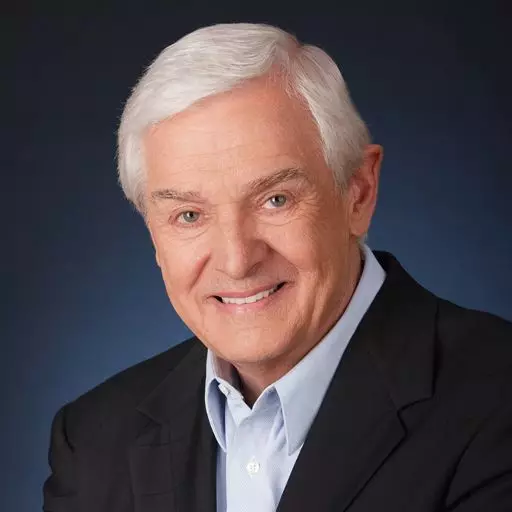
Dr. David Jeremiah is the founder of Turning Point for God, an international broadcast ministry committed to providing Christians with sound Bible teaching through radio and television, the Internet, live events, and resource materials and books. He is the author of more than fifty books including The Book of Signs, Forward, and Where Do We Go From Here?  David serves as senior pastor of Shadow Mountain Community Church in San Diego, California, where he resides with his wife, Donna. They have four grown children and twelve grandchildren.


Contact Turning Point with Dr. David Jeremiah

Mailing Address
USA
Turning Point
PO Box 3838
San Diego, CA 92163

CANADA
PO Box 70509 RPO Oak St
Vancouver, BC V6M 0A3

UNITED KINGDOM
PO Box 1532
Hemel Hempstead
HP1 9QX
Phone Number
USA
1-877-998-0222

CANADA
800-946-4300

UNITED KINGDOM
0800-058-2856
